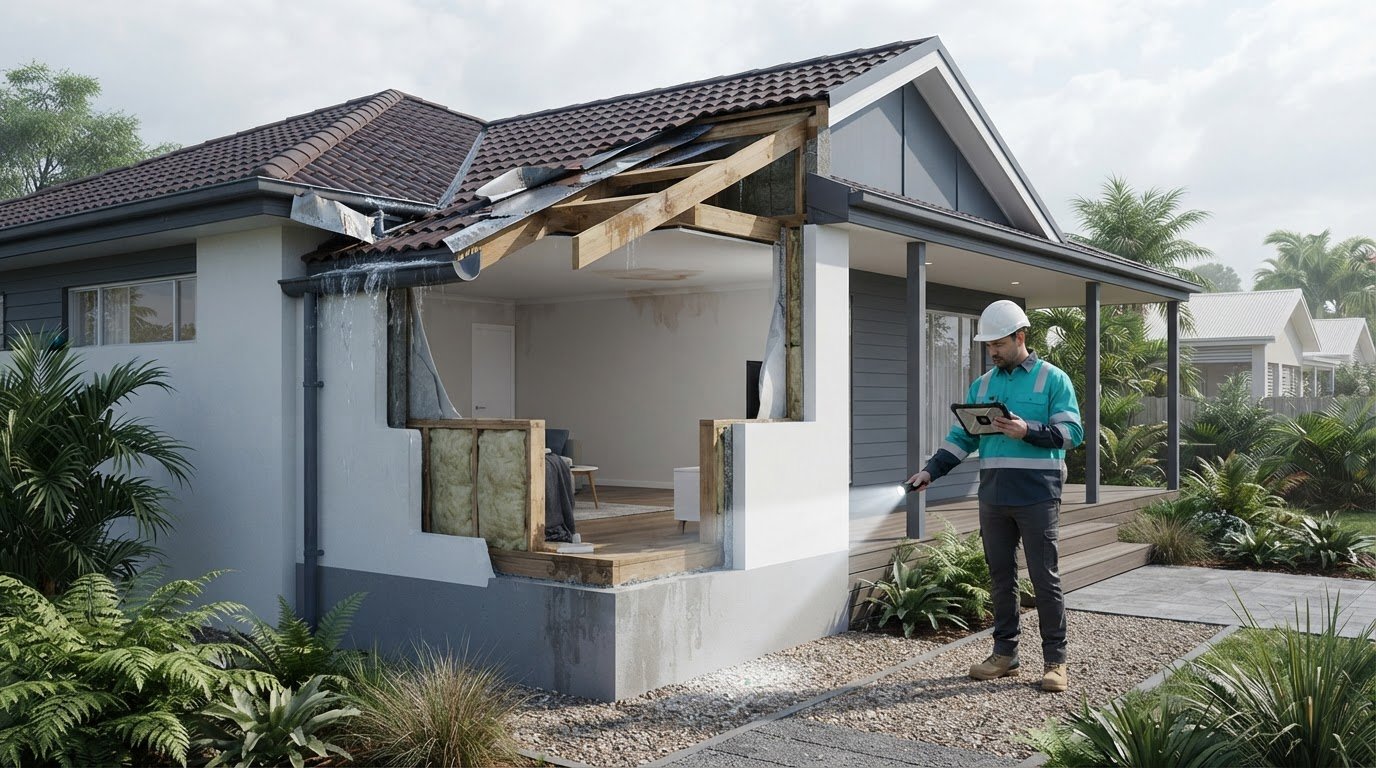
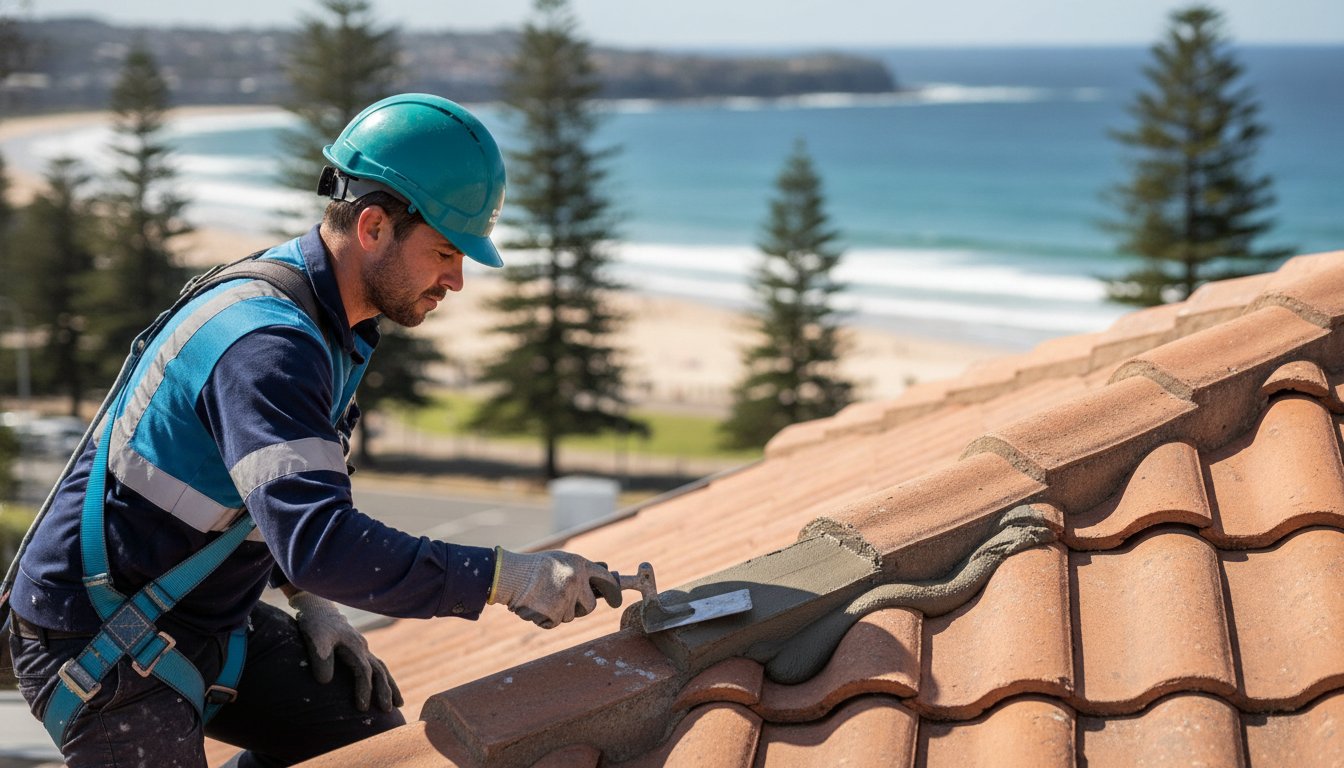
Is the salt air that makes Manly Beach so iconic secretly dismantling the structural integrity of your home from the top down? For many local homeowners, the classic orange hue of a heritage roof is a point of pride, but the reality of coastal living often brings a hidden burden. You’ve likely noticed the persistent moss growth or felt a pang of anxiety when the Bureau of Meteorology issues a severe weather warning for an East Coast Low. When it comes to terracotta tile roof repair Manly Beach residents often fear that a few cracked tiles or a minor leak will inevitably lead to a massive, budget-breaking replacement.
We understand that preserving the character of your property while ensuring it remains watertight is a delicate balance. You want a home that stands up to the elements without losing its historic charm. This guide provides expert local advice on protecting your roof from the unique challenges of the Pacific coastline. We will explore how to assess the real state of your roof bedding, the importance of marine-grade flashing, and how professional restoration can extend your roof’s lifespan for years to come. You’ll learn how to identify early warning signs before they become emergencies, ensuring your home stays dry and secure.
Key Takeaways
- Understand how Manly’s salt-heavy micro-climate accelerates the deterioration of ridge caps and mortar bedding.
- Discover why removing old, brittle sand-and-cement mortar is vital for maintaining structural integrity during intense coastal storms.
- Learn how to evaluate whether your property requires targeted terracotta tile roof repair Manly Beach or a more comprehensive restoration to preserve its heritage look.
- Identify the critical link between functional roof plumbing and tile health to prevent water from backing up under your bottom row of tiles.
- Gain insights into choosing a specialist who understands the specific waterproofing and flashing needs of Manly’s diverse architectural styles.
Terracotta Tile Roof Repair in Manly Beach: Dealing with Coastal Elements
Manly Beach homes face a relentless combination of high humidity and salt-laden winds. While terracotta roof tiles are prized for their exceptional thermal mass, which helps maintain comfortable indoor temperatures during Sydney’s sweltering summers, the coastal micro-climate presents specific challenges. Effective terracotta tile roof repair Manly Beach requires more than just replacing a few cracked units; it demands a technical understanding of how marine environments interact with fired clay over several decades.
The durability of terracotta is legendary, but it isn’t invincible. In a coastal setting, the primary threat isn’t just the wind or rain, but the very air itself. Identifying the early signs of failure is critical for avoiding expensive structural damage. If you notice orange grit in your gutters or tiles that seem to be “shedding” their top layer, your roof’s protective integrity is already compromised.
The Impact of Salt Air on Terracotta Tiles
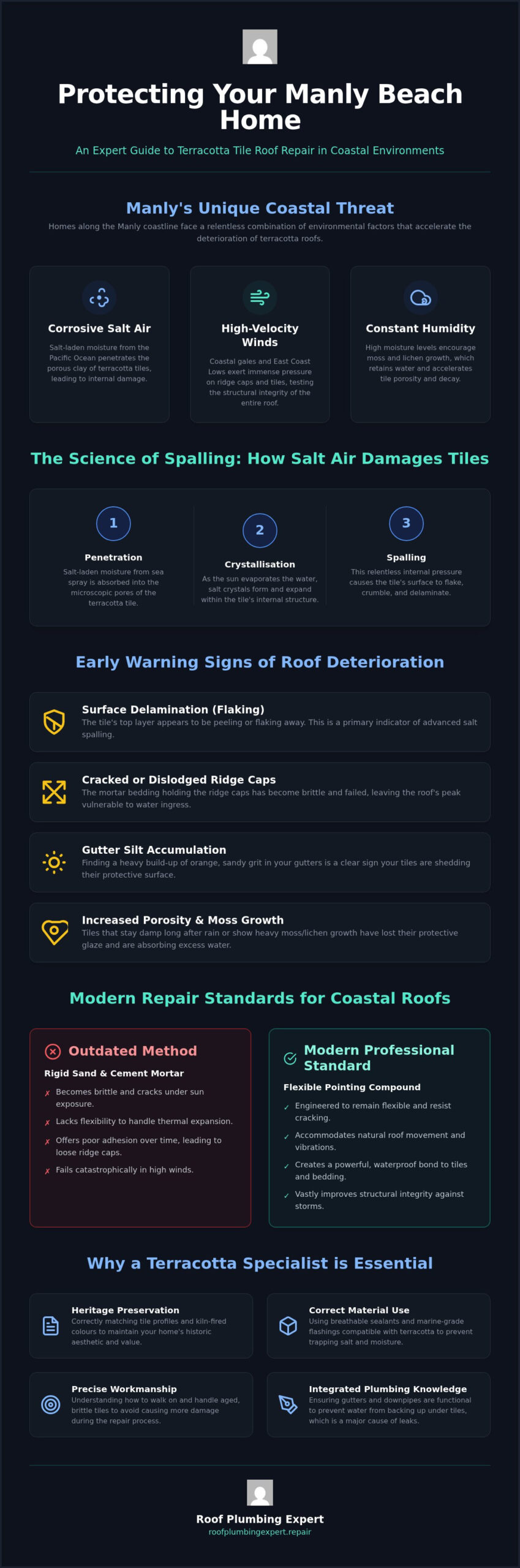
Salt spray is the primary antagonist for any roof within a kilometre of the shoreline. When salt-laden moisture settles on the roof, it penetrates the microscopic pores of the clay. As the water evaporates, the salt crystallises and expands within the tile’s structure. This internal pressure causes the surface to flake or crumble, a process known as “spalling” or “fretting”.
Homes on the Manly beachfront or the Eastern Hill are at a significantly higher risk than those just a few kilometres inland. The constant exposure to the Pacific swell means the salt concentration is perpetually high. Salt spalling is the primary cause of terracotta decay in coastal NSW.
Common signs of salt-driven failure include:
- Surface Delamination: The tile appears to be peeling or flaking in thin layers.
- Gutter Silt: A heavy accumulation of orange-coloured sandy deposits in the guttering system.
- Increased Porosity: Tiles that stay damp for long periods after rain, often leading to heavy lichen or moss growth.
Why Terracotta Requires a Specialist Touch
Aged terracotta is far more delicate than modern concrete alternatives. Walking on an old roof without the correct technique can cause more damage than the storm you’re trying to fix. For heritage properties in Manly, matching the specific tile profile and kiln-fired colour is essential for preserving the building’s aesthetic and historical value. Generic replacements often stand out like a sore thumb and can even lead to fitment issues that cause leaks.
Many general repairs fail because they don’t account for tile breathability. Terracotta is a natural material that needs to manage moisture exchange. If a roofer applies a generic, non-breathable sealant, they risk trapping salt and moisture inside the clay, which accelerates internal decay. Specialist terracotta tile roof repair Manly Beach focuses on precision waterproofing and ensuring that all flashing and bedding materials are compatible with the original substrate. We prioritise the long-term health of the roof by using trade-specific techniques that respect the material’s unique properties.
The Mechanics of Repair: Re-bedding, Pointing, and Sealing
Maintaining the structural integrity of a coastal roof requires a methodical approach to its mechanical components. The ridge caps, which sit at the peaks and hips of your roof, act as the primary defence against water ingress. These caps are held in place by bedding, a specific mortar mix that provides a solid foundation. Over years of exposure, the impact of coastal elements causes traditional sand-and-cement mortar to become brittle and lose its grip. When this bedding fails, ridge caps can shift or even blow loose during high-wind events.
Modern standards for terracotta tile roof repair Manly Beach have evolved. We no longer rely solely on rigid cement. Instead, we use flexible pointing compounds that are designed to move with the natural expansion and contraction of the building. This flexibility is essential for homes near the ocean, where temperature fluctuations and coastal gusts put constant pressure on the roof’s structure.
Re-bedding vs. Re-pointing: What Is the Difference?
Many homeowners use these terms interchangeably, but they serve different purposes. Bedding is the structural mortar that secures the tile to the roof frame. Pointing is the protective outer layer that seals the joint. In older Manly cottages, you might see “weeping” joints, where white calcium deposits streak down the tiles. This indicates that the internal mortar is breaking down and allowing moisture to seep through.
Our professional process follows a strict sequence to ensure long-term durability:
- 1. Strip: We mechanically remove all old, degraded mortar from the ridge lines to create a clean surface.
- 2. Bed: We lay fresh, high-quality mortar to level and secure the ridge caps in their correct position.
- 3. Point: We apply a UV-stable, flexible pointing compound over the bedding to create a watertight, elastic seal.
Repairing Cracked and Slipped Tiles
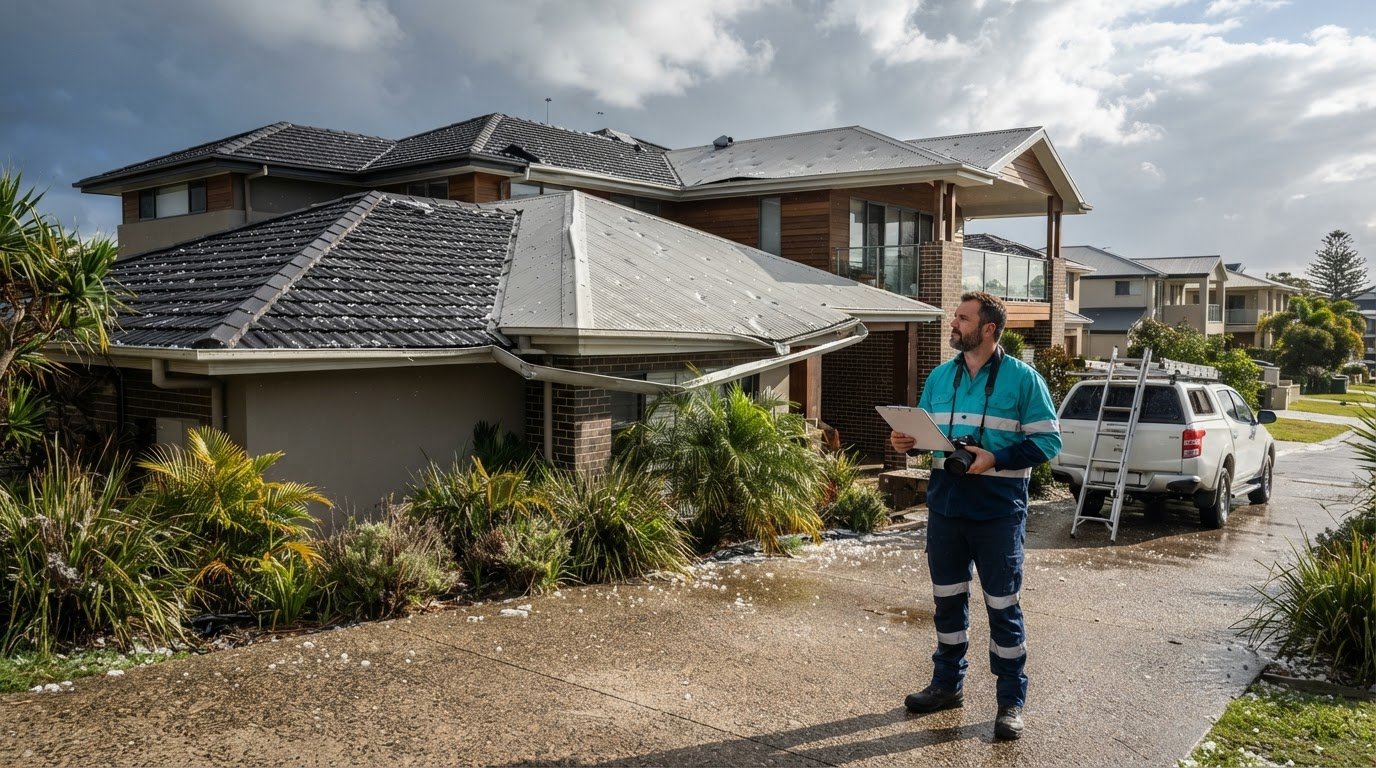
Coastal storms often reveal “invisible” hairline cracks in terracotta. These fissures might look harmless from the ground, but they act as conduits for water during heavy Manly rain events. A common mistake is attempting to patch these gaps with silicone. Silicone is a short-term fix that eventually peels away from the clay surface, often trapping moisture and accelerating tile rot. It’s a temporary bandage that frequently fails during the next East Coast Low.
We always recommend a full replacement of damaged units with like-for-like terracotta tiles. This ensures the interlocking water-courses remain functional, allowing the roof to shed water as originally designed. If you’ve noticed tiles shifting or water stains appearing on your ceiling, it is wise to arrange a professional roof leak detection and repair service to identify the exact source of the problem. Precision is key when dealing with terracotta tile roof repair Manly Beach, as one poorly fitted tile can compromise the entire section.
Assessing Your Roof: Restoration vs. Full Re-roof
Deciding between ongoing maintenance and a total overhaul is a pivotal moment for any Manly property owner. Terracotta tiles are designed to last over 50 years, but the harsh Pacific environment often dictates a different timeline. You need a clear framework to determine if your roof is a candidate for targeted terracotta tile roof repair Manly Beach or if the structural decay has progressed beyond the point of simple fixes. Balancing the heritage value of a Federation cottage against the functional needs of a modern home requires a direct assessment of the material’s current state.
For many residents, the aesthetic appeal of fired clay is irreplaceable. However, some homeowners are increasingly choosing to pivot toward low-maintenance alternatives. Transitioning to Colorbond roofing Sydney has become a notable trend in the Northern Beaches, especially for those seeking better resistance against coastal gusts and salt spray without the need for periodic re-pointing.
When is Restoration the Right Choice?
Restoration is a viable, high-value option when the underlying structure remains sound. If your tiles still possess their core strength and the internal sarking is free of major tears, a professional roof restoration Sydney can extend the life of your roof by 10 to 20 years. This process involves high-pressure cleaning to remove decades of salt and lichen, followed by the re-bedding and re-pointing work described in previous sections.
Applying a high-quality glaze during restoration does more than just improve the colour. It creates a non-porous barrier that prevents salt from entering the clay pores. This is a practical way to preserve the historic character of a Manly home while ensuring it remains watertight during the next storm season.
Warning Signs That You Need a Full Re-roof
There comes a point where restoration is no longer a sound investment. If salt spalling has affected more than 20% of your tiles, or if you notice sagging along the ridge lines, the roof’s structural integrity is likely compromised. Widespread internal water damage often indicates that the tiles have become too porous to shed water effectively. In these cases, continuing to pay for terracotta tile roof repair Manly Beach is often less efficient than a complete replacement.
Utilising roof leak detection NSW services is the most reliable way to make this call. A specialist can identify whether leaks are isolated to specific flashing failures or if they are systemic across the entire roof plane. While a full terracotta replacement is a significant undertaking, the long-term ROI is often higher than metal for heritage properties, as it maintains the home’s market value and historical authenticity.
The Role of Roof Plumbing in Tile Protection
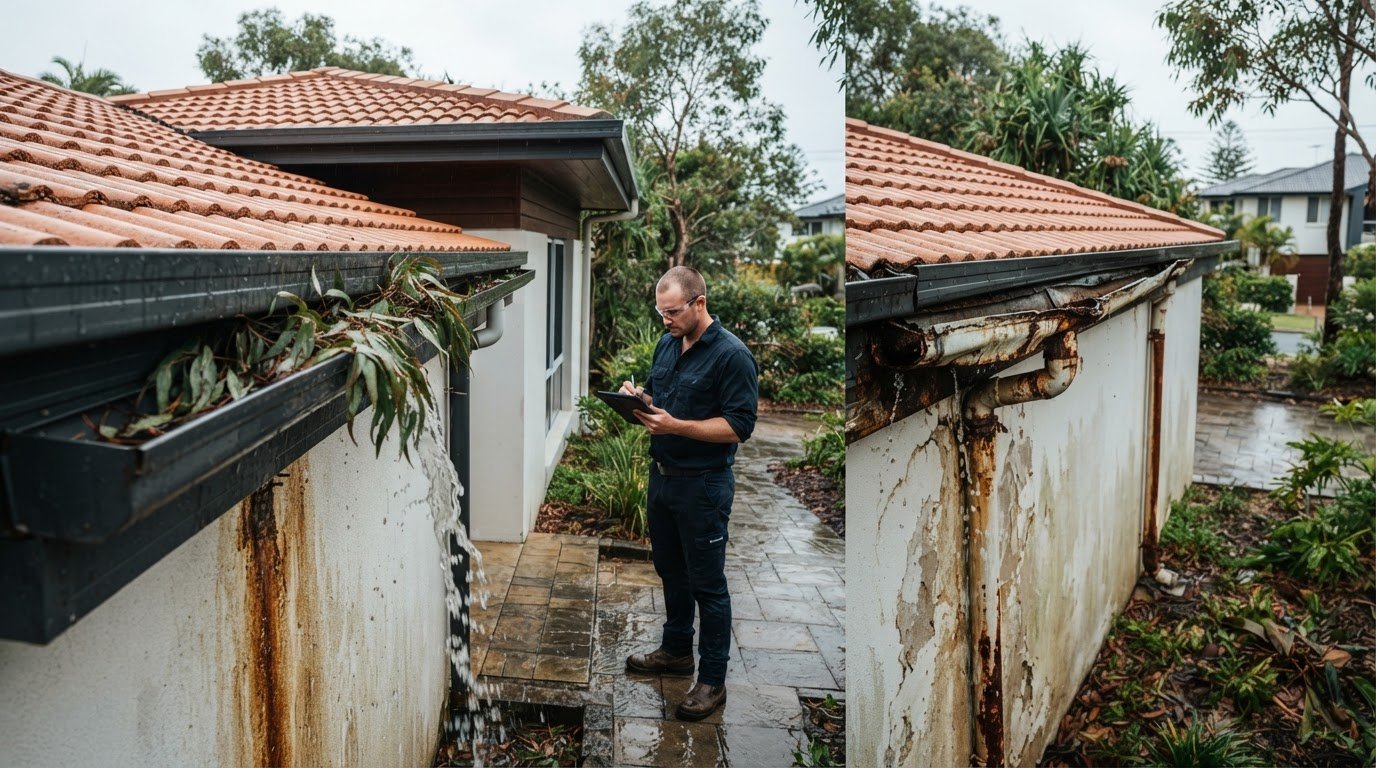
A roof is a complete system, not just a collection of clay tiles. Homeowners who overlook external water management often find themselves needing premature terracotta tile roof repair Manly Beach. When gutters become blocked by the heavy leaf loads from local Norfolk pines and eucalyptus trees, water has nowhere to go but up. During intense coastal downpours, this “back-flow” forces water under the bottom row of tiles, bypassing the natural water-course and soaking the timber battens. This moisture trapped against the timber eventually leads to rot and structural instability, causing tiles to slip out of their original alignment.
The synergy between your tiles and your drainage system is absolute. If one fails, the other is soon to follow. In the Manly micro-climate, the combination of high winds and salt spray means that your roof plumbing must be in peak condition to prevent internal dampness. We often find that what appears to be a major tile failure is actually a simple case of neglected maintenance in the valleys or downpipes.
Flashing and Waterproofing: The Roof’s Weakest Links
Traditional lead flashing is often the first component to fail on older terracotta roofs. While the tiles themselves might last a century, the metal seals around chimneys, skylights, and valleys are vulnerable to the constant salt air. Salt accelerates the oxidation of these metals, leading to pinhole leaks that are difficult to spot from the ground. Ensuring robust roof waterproofing Sydney for these transition points is essential for long-term security. Without functional flashing, even the best-laid tiles cannot keep a home dry. In Manly’s marine environment, metal components often corrode at twice the rate of those found in inland suburbs, making regular inspections a necessity rather than an option.
Guttering Solutions for Coastal Tile Roofs
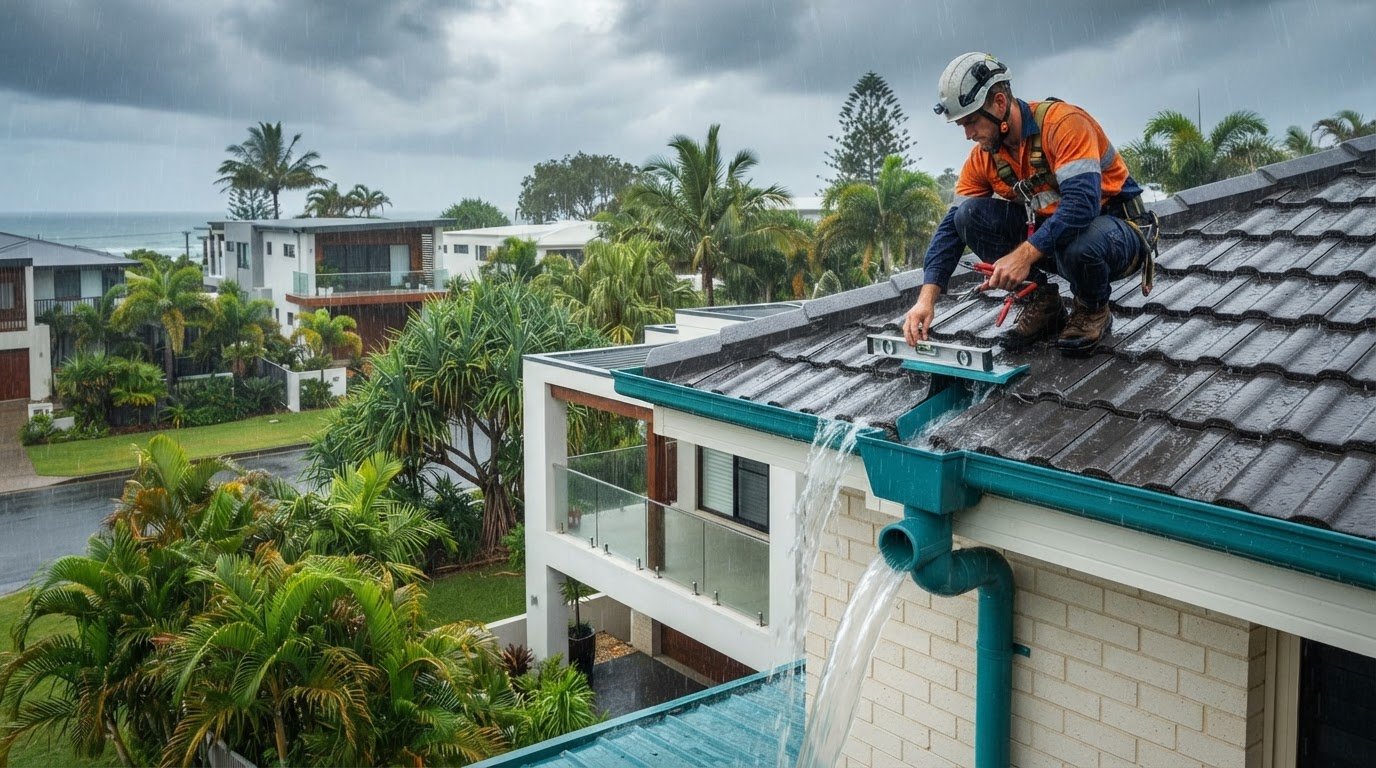
Manly’s weather patterns often involve short, violent bursts of rain that overwhelm standard drainage systems. Standard gutter profiles frequently overflow because they cannot handle the volume. We often recommend expert gutter and downpipe installation NSW specifically designed for high-capacity flow. This proactive approach protects the eaves and prevents water from entering the wall cavities. Approximately 40% of tile roof “leaks” are actually gutter or flashing failures rather than broken tiles. If your gutters are sagging or showing signs of rust, they are likely compromising the tiles they are meant to protect. To ensure your home remains watertight through the next East Coast Low, it’s wise to arrange a professional gutter and roof plumbing assessment today.
Choosing a Specialist for Terracotta Repair in Manly Beach
Selecting the right contractor for terracotta tile roof repair Manly Beach requires a balance of technical skill and deep local experience. Manly’s architectural landscape is diverse, featuring everything from century-old Federation cottages on the Eastern Hill to contemporary beachfront designs. A specialist must possess the knowledge to source rare heritage tile profiles that match the original aesthetic while simultaneously understanding the modern waterproofing requirements of a complex roofline. Without this specific local insight, repairs often look like mismatched patches rather than seamless restorations.
Structural integrity is the priority, which is why choosing a licensed roof plumber is essential. In NSW, roofing work must comply with strict Australian Standards to ensure the building remains weather-tight. When you are reviewing a quote, look for total transparency regarding material specifications. A reputable specialist will detail the exact grade of flashing and the specific flexible pointing compounds they intend to use. You should also look for clear workmanship guarantees that protect your investment against the relentless marine environment. Avoid vague estimates that skip over the technical details of bedding and water-course alignment.
Questions to Ask Your Roofing Contractor
Before signing a contract, it is vital to vet your professional with specific technical questions. Their answers will reveal whether they understand the unique pressures of coastal roofing or if they are simply applying inland methods to a marine zone. Consider asking the following:
- Do you use flexible pointing or traditional mortar? For coastal durability, flexible pointing is the only correct choice to handle building movement and wind loads.
- How do you handle salt-affected tiles during a repair? A specialist should identify tiles with advanced fretting and recommend replacement rather than attempting to seal a crumbling surface.
- Are you licensed for both roof tiling and roof plumbing? This dual expertise is necessary to manage the intersection of tile health and drainage performance.
The Roof Plumbing Expert Difference
At Roof Plumbing Expert, we approach every project with “marine-grade” thinking. We recognise that a home in Manly Beach faces significantly higher corrosive pressure than a property just a few kilometres inland. Our focus is on long-term durability, ensuring that every component of your roof system is designed to withstand salt air and intense East Coast Lows. We pride ourselves on a steady, dependable presence, providing transparent communication and clear explanations of our diagnostic process.
Our team acts as a practical partner in your home’s maintenance, valuing functional excellence over quick fixes. We understand the stress that a leaking roof causes, and we aim to alleviate that burden through professional authority and reassuring reliability. We are the seasoned specialists who protect Northern Beaches homes from the elements, one tile at a time.
Contact Roof Plumbing Expert for a professional inspection in Manly Beach today.
Securing Your Home Against the Pacific Elements
Maintaining a heritage roof in a marine environment requires a technical strategy that prioritises structural integrity over quick fixes. You’ve seen how salt air can compromise tile porosity and why flexible pointing is essential for withstanding intense coastal gusts. Proactive maintenance, including clear gutters and functional flashing, is the most effective way to avoid the high costs of a full replacement. When you invest in professional terracotta tile roof repair Manly Beach residents can rest easy knowing their property is prepared for the next East Coast Low.
Our team of Licensed NSW Roof Plumbers are specialists in coastal salt-air repairs, bringing the precision needed to protect your home’s unique character. We stand by our results with a 10-year workmanship guarantee, providing the long-term security your family deserves. Don’t wait for the next storm to reveal a hidden leak. Book your expert terracotta roof inspection in Manly Beach today and take the first step toward a watertight future. Your property is in capable, experienced hands.
Frequently Asked Questions
How often should a terracotta roof in Manly Beach be inspected?
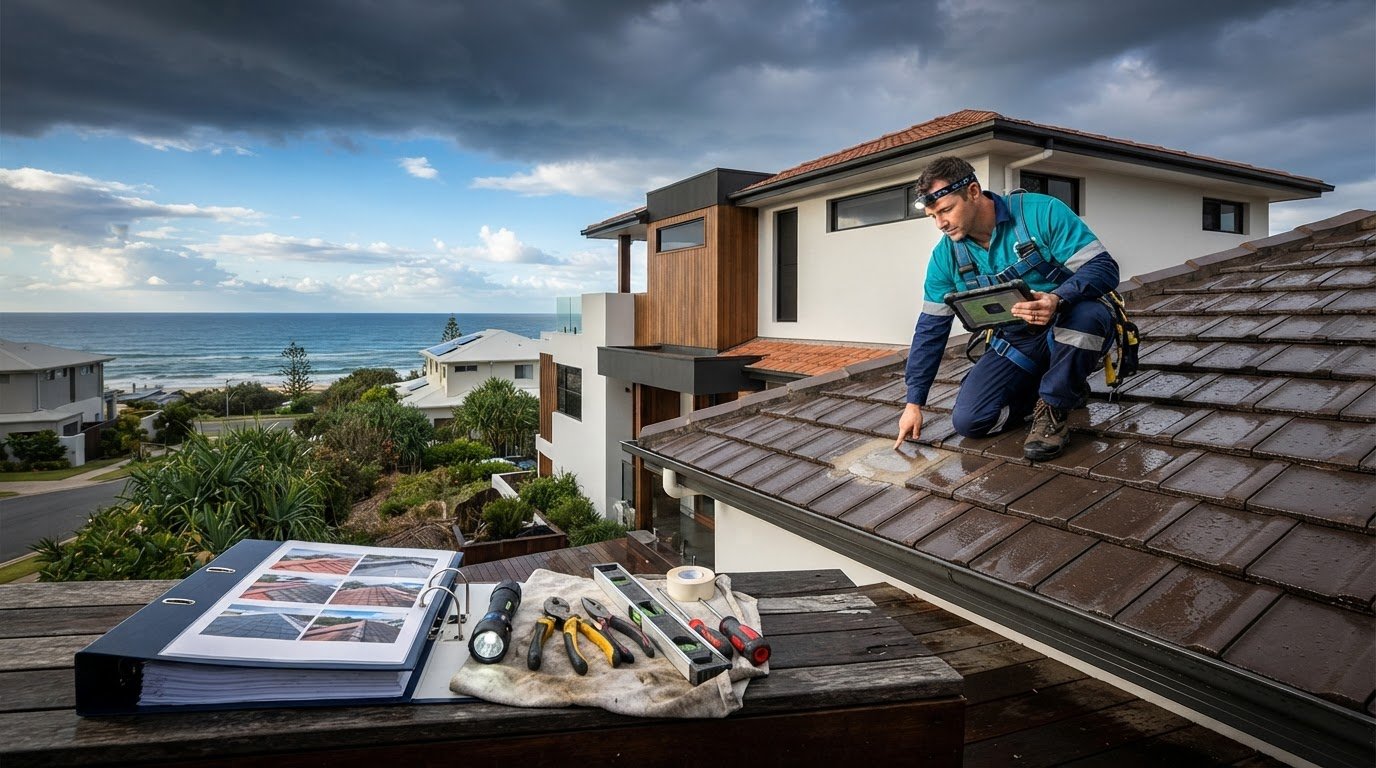
You should have your roof inspected at least once every two years or after any significant East Coast Low. In Manly Beach, the constant exposure to salt spray and high humidity accelerates the deterioration of mortar bedding and metal flashing. A regular check allows a specialist to identify fretting tiles or cracked pointing before they lead to structural leaks. Early detection is the most effective way to manage the long-term costs of property maintenance.
Can I pressure clean my own terracotta tiles?
We don’t recommend DIY pressure cleaning for aged terracotta tiles. Fired clay becomes brittle over time, and a high-pressure water jet can easily shatter tiles or strip away the protective glaze. Even worse, an inexperienced operator often forces water under the tiles and into the roof cavity, causing immediate internal damage. Professional cleaning involves specific pressure settings and safety equipment to ensure the roof remains watertight while removing lichen and salt.
Why are my terracotta tiles crumbling on the edges?
This crumbling is usually caused by a process called salt spalling or fretting. In a coastal micro-climate, salt-laden moisture penetrates the porous clay and expands as it crystallises. This internal pressure causes the surface and edges of the tile to flake away. If you notice orange grit in your gutters, it is a sign that your terracotta tile roof repair Manly Beach needs to be prioritised to prevent the tiles from becoming structurally unsound.
Is it better to repair terracotta or switch to Colorbond in a coastal area?
The choice depends on whether you value the heritage aesthetic and thermal mass of terracotta or the low maintenance of metal. Colorbond is highly durable in marine environments and eliminates the need for future re-pointing. Many Manly homeowners prefer terracotta to preserve the historical character and resale value of their property. We can assess your roof’s current condition to help you determine which material offers the best long-term ROI for your specific home.
What is the average cost of terracotta roof repointing in NSW?
The cost of repointing in NSW is generally calculated by the linear metre and depends on the total length of the ridge caps and hips. Factors such as the pitch of the roof, the height of the building, and the extent of the existing mortar damage will influence the final quote. While we don’t provide fixed pricing without an inspection, a professional assessment will give you a transparent breakdown of the necessary materials and labour required for your project.
How long does a terracotta roof restoration typically take?
A standard terracotta roof restoration typically takes between three and five days to complete, depending on the weather. This timeline includes the initial high-pressure clean, tile replacements, re-bedding of ridge caps, and the final application of flexible pointing. Since the work is weather-dependent, we carefully monitor local forecasts to ensure that the mortar has sufficient time to cure before any rain arrives. We aim for an efficient process that minimises disruption.
Do I need to move out of my house during roof repairs?
You don’t need to move out of your home while we perform roof repairs. All work is conducted externally, so your daily routine can continue as normal inside the house. We maintain a clean worksite and ensure that all debris is removed at the end of each day. Our team prioritises clear communication and safety, ensuring that you are informed of our progress without requiring you to vacate the premises during the project.
Will repairing my roof tiles stop the moss from coming back?
Repairing individual tiles won’t stop moss from returning, but a full restoration including a high-pressure clean and anti-fungal treatment will. Moss and lichen thrive on the porous surface of aged terracotta, especially in the humid air of the Northern Beaches. By sealing the tiles with a high-quality glaze after terracotta tile roof repair Manly Beach, we create a non-porous barrier that makes it much harder for organic growth to take root in the future.