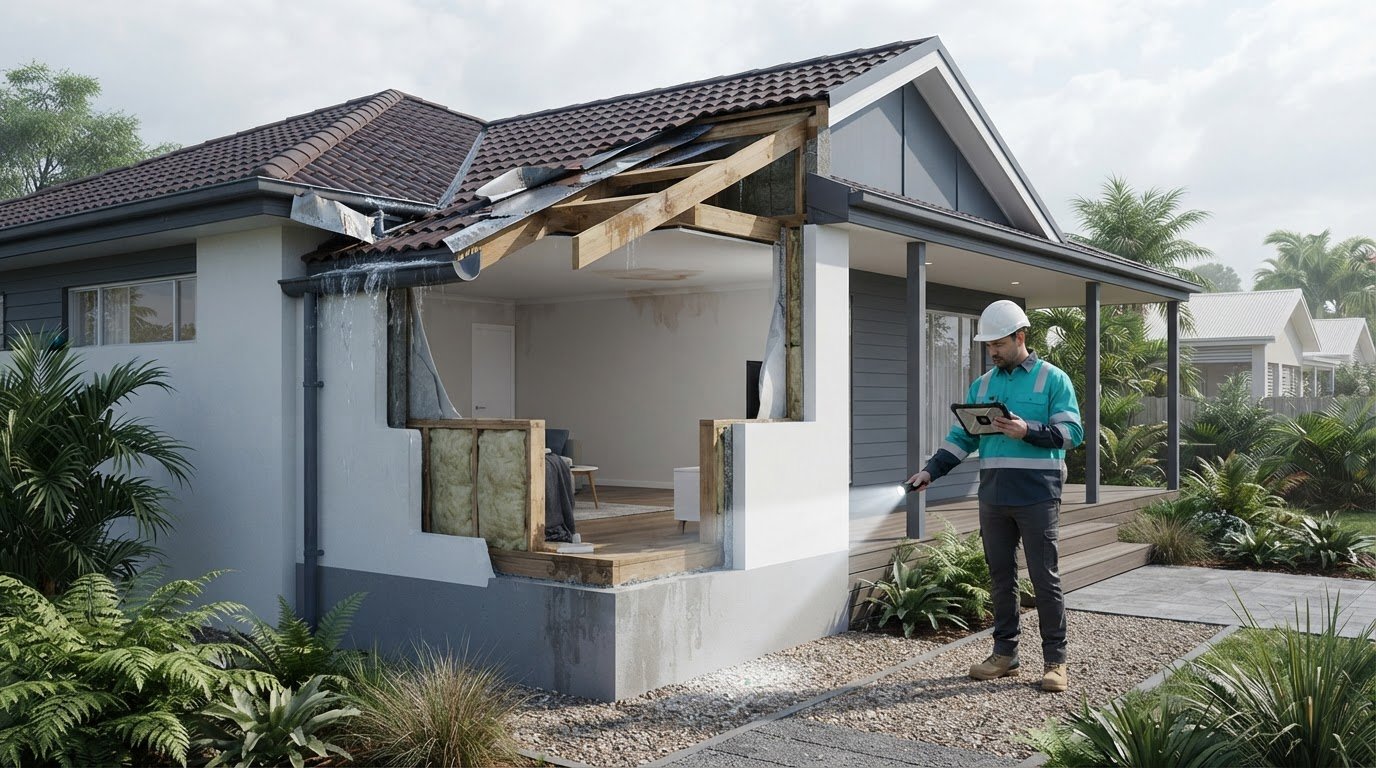
What if the most expensive membrane in the world can’t save your home from a leaking roof? It’s a frustrating reality for many locals who find themselves patching up the same damp spots year after year. Most homeowners agree that the stress of recurring leaks and the looming cost of internal water damage is enough to keep anyone awake during a Sydney storm. This guide will help you secure a permanent, leak-free system by exploring the most effective methods for roof waterproofing Sydney properties in our harsh, salt-heavy coastal climate.
You’ll learn why a holistic roof plumbing strategy is the only way to manage water flow before it has a chance to pool and cause structural issues. We’ll break down the confusion between liquid and sheet membranes while highlighting the critical 2026 updates to Australian Standard AS 4654. From understanding mandatory drainage slopes to the necessity of licensed certification for NSW building compliance, this overview provides the technical clarity you need to protect your investment and gain genuine peace of mind.
Key Takeaways
- Learn why Sydney’s high humidity and intense UV radiation require specific waterproofing materials to prevent premature failure.
- Compare liquid-applied and sheet membranes to determine the most durable solution for your specific roof geometry and usage needs.
- Discover how to address the unique drainage challenges of flat roofs and the importance of sarking and repointing for tile roof integrity.
- Understand how coastal salt spray accelerates corrosion and why selecting UV-stable products is essential for effective roof waterproofing Sydney wide.
- Find out why hiring a specialist roof plumber ensures your waterproofing works in harmony with your property’s entire stormwater drainage system.
What is Roof Waterproofing and Why is it Critical in Sydney?
What is waterproofing? In the context of your home, it’s the application of an impervious layer designed to block water ingress into the building’s internal structure. For homeowners in our harbour city, roof waterproofing Sydney properties is a specialised task that goes far beyond simple leak repair. It involves creating a continuous barrier that can withstand the unique environmental pressures of the New South Wales coast.
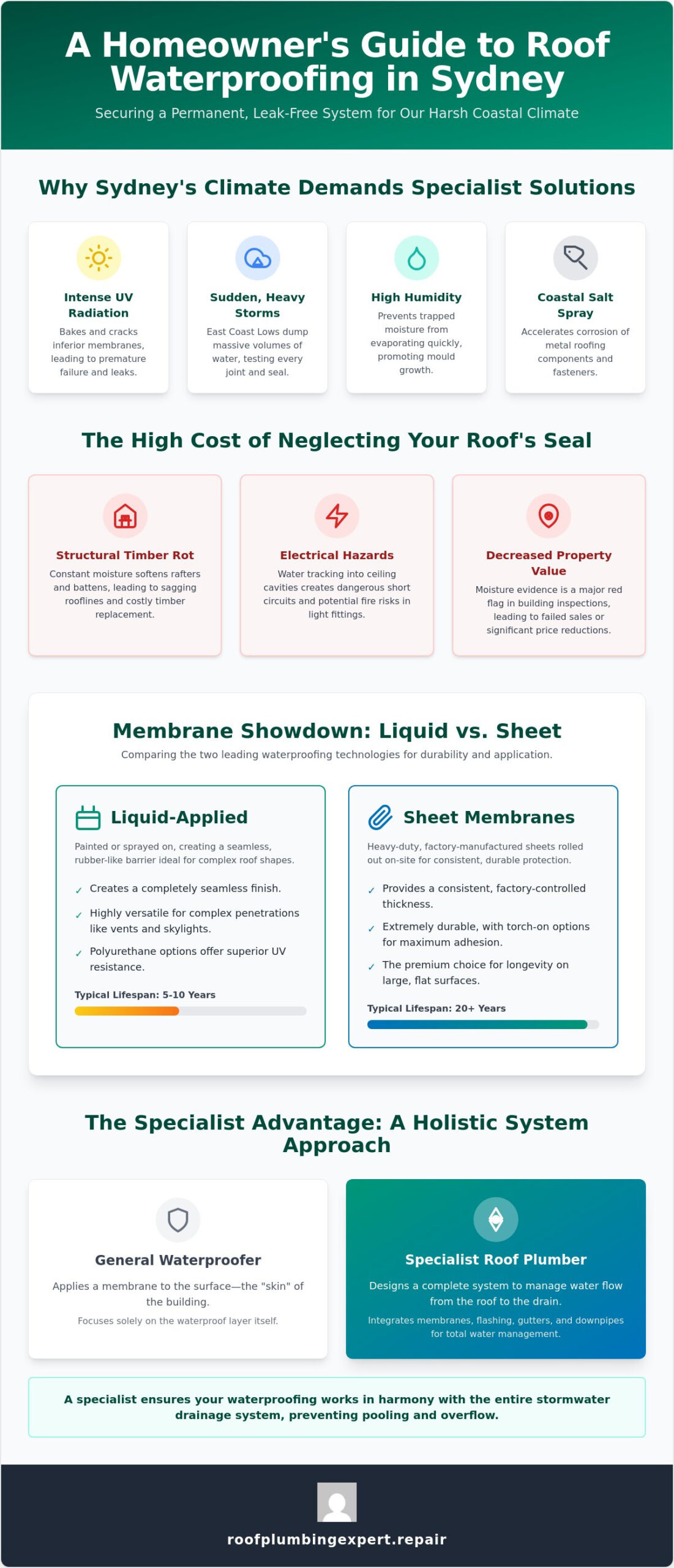
Sydney’s climate is notoriously punishing on building envelopes. We experience extreme UV radiation that can bake and crack inferior membranes, coupled with high humidity that prevents moisture from evaporating quickly. When an East Coast Low hits, the resulting sudden storms dump massive volumes of water that test every joint and flashing. Relying on reactive repairs after you see a ceiling stain is a risky strategy. Proactive waterproofing ensures your home remains dry during these peak weather events, protecting your structural integrity and preventing the hidden growth of mould in ceiling cavities.
The Consequences of Neglecting Your Roof’s Seal
Ignoring a compromised roof seal leads to a chain reaction of property damage that is often invisible until it’s too late. Water doesn’t just sit; it migrates through the smallest gaps to cause significant issues:
- Structural timber rot: Constant moisture softens rafters and battens, leading to sagging rooflines and the high cost of total timber replacement.
- Electrical hazards: Water frequently tracks along electrical conduits into ceiling cavities, creating short circuits and fire risks in light fittings.
- Decreased property value: Evidence of moisture ingress is a major red flag during building inspections, often resulting in failed sales or significant price reductions.
Roof Plumbing vs. General Waterproofing
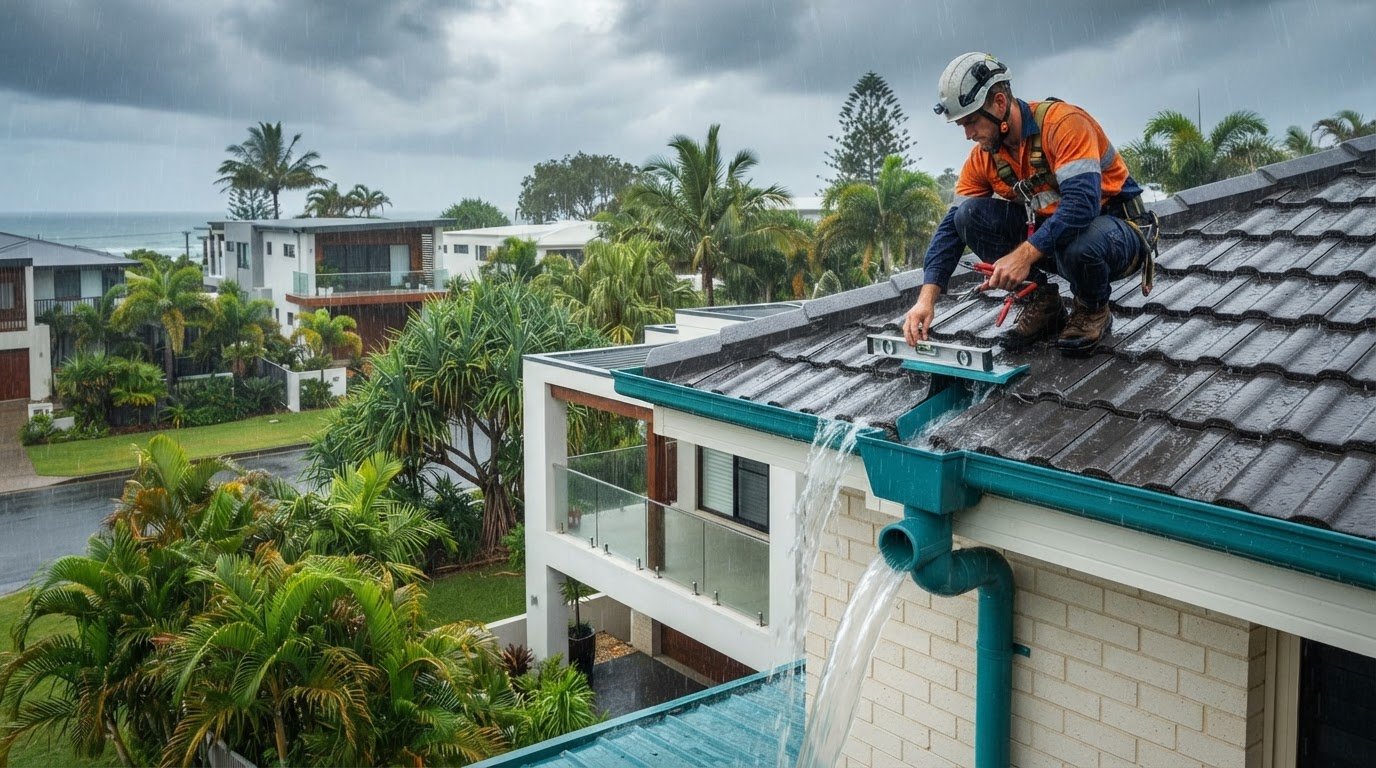
A common mistake is hiring a generalist for a task that requires a deep understanding of hydraulic flow. While a general waterproofer might apply a membrane, a specialist roof plumber looks at how water actually moves across your roof. This expertise is vital because waterproofing isn’t just about the “skin” of the building; it’s about managing the volume of water through the entire drainage system. Gutters and downpipes must be perfectly aligned and sized to ensure water doesn’t pool and overwhelm the waterproof barrier during heavy rain. Roof waterproofing is a holistic system that integrates high-quality membranes with precision flashing and efficient drainage to ensure water is diverted away from the building structure.
Types of Roof Waterproofing Membranes and Materials
Selecting the right material is the cornerstone of effective roof waterproofing Sydney. Not all products are suited to the intense thermal expansion our properties face. You must choose a system that adheres perfectly to your specific substrate while remaining flexible enough to bridge minor structural movements. Using the wrong material often leads to premature cracking, which invites water to seep into your ceiling cavity.
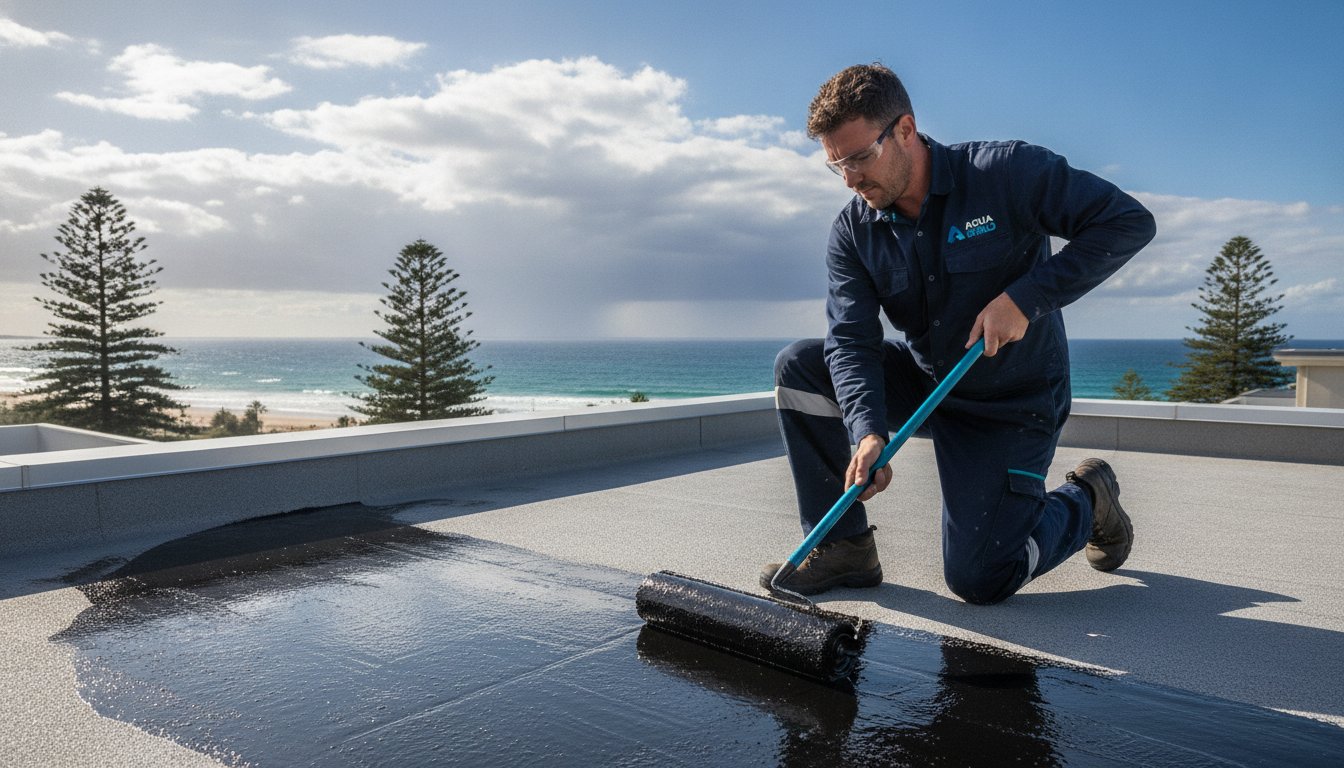
Liquid-applied membranes are a versatile choice for many residential projects. These products are painted or sprayed onto the surface, creating a seamless, rubber-like barrier. They are particularly effective for waterproofing around complex penetrations like skylight surrounds, vents, and chimneys where sheets might struggle to seal. For exposed rooftops, polyurethane coatings are the preferred liquid option. They offer superior UV resistance and don’t become brittle under the harsh Australian sun. While cementitious waterproofing is excellent for rigid structures like water tanks, it often lacks the elasticity required for Sydney’s metal or concrete roofs, which can reach 70 degrees Celsius in mid-summer. Every installation we perform adheres to the Australian Standard for waterproofing membranes to ensure long-term reliability.
Liquid vs. Sheet Membranes: Which Wins?
Liquid systems are highly adaptable and easy to maintain. They are ideal for residential repairs or roofs with numerous obstacles. However, their lifespan usually ranges between 5 to 10 years depending on the specific product quality and environmental exposure. Sheet membranes, such as bituminous torch-on or PVC, are the heavy-duty alternatives. These are manufactured in a factory and rolled out on-site to provide a consistent thickness. While they are more labour-intensive to install, they can last over 20 years. For commercial buildings or large flat-roof strata complexes, the durability of a torch-on sheet system often justifies the higher initial investment. If you’re concerned about the current state of your seal, a professional roof leak detection and repair assessment can help identify the best material for your needs.
The Role of High-Quality Roof Flashing
Flashing is the most common point of failure we see in Sydney. It’s the metal transition piece that directs water away from joints, valleys, and wall junctions. If your flashing is corroded or poorly installed, even the most expensive membrane will fail. Modern systems utilise high-grade materials like lead-free alternatives, copper, and Colorbond flashing to ensure a watertight seal. If your current flashing is showing signs of rust or lifting, you should consult a specialist for Roof Flashing Replacement NSW. This component is the primary line of defence in any holistic waterproofing strategy.
Choosing the Right Solution for Your Roof Type
Every roof profile in Sydney presents a distinct set of vulnerabilities. While a heritage tile home in the inner west has different needs than a modern coastal apartment, the goal remains the same: total water exclusion. Successful roof waterproofing Sydney projects depend on matching the correct membrane or sealing technique to the specific substrate and pitch of the structure. A one-size-fits-all approach usually results in failure within the first few seasons of Sydney’s erratic weather. For a comprehensive overview of precision-engineered approaches that meet the latest Australian Building Standards, exploring the available roof waterproofing solutions NSW homeowners can rely on is an essential first step.
For traditional tile roofs, waterproofing is less about a single coating and more about the integrity of the layers beneath. High-quality sarking acts as a secondary waterproof skin, catching any moisture that bypasses the tiles during heavy storms. We also focus on precision repointing and ridge capping to ensure the most exposed parts of the roof remain watertight. Without these elements working in unison, even a new roof can suffer from internal dampness and timber rot.
Waterproofing for Flat Concrete Roofs
Flat roofs are notoriously difficult because they often suffer from “ponding,” where water pools in depressions rather than draining away. Under the 2026 updates to Australian Standard AS 4654, a mandatory minimum 1:100 slope is now required for drainage on all roofs and balconies. This fall is essential to prevent standing water from placing constant hydrostatic pressure on your membrane. If your flat roof or terrace is a trafficable area, we select high-durability membranes that can withstand foot traffic and furniture without puncturing. Common failure points in Sydney flat roofs often involve poorly designed parapet wall junctions and blocked internal drains that cause water to back up under the waterproof layer. Understanding the true source of water ingress in these complex structures is why professional roof leak detection NSW specialists are so valuable before any remedial waterproofing work begins.
Protecting Metal and Colorbond Structures
Metal roofing is ubiquitous across the suburbs, yet it’s often poorly waterproofed by generalists who don’t understand thermal movement. On a typical 35-degree day, a dark Colorbond sheet can expand significantly. Traditional rigid sealants can’t cope with this constant movement and will eventually pull away, creating a path for water ingress. We manage this by using specialised EPDM boots and flexible flashing for all roof penetrations. This ensures that as your roof moves, your seals move with it. If you’re considering upgrading to a more resilient roofing system, our complete guide to Colorbond roofing Sydney homeowners trust explains why this material is engineered to handle our harshest local conditions. For those with architectural features, professional Skylight Waterproofing Sydney is essential to ensure these windows to the sky don’t become internal waterfalls during a summer downpour. Ensuring these penetrations are sealed with UV-stable materials is the only way to achieve a permanent, leak-free result.
The Sydney Factor: Coastal Salt and UV Resistance
Sydney’s geography is beautiful, but it’s notoriously brutal on building materials. If you live in a coastal suburb like Mainly Beach, salt spray is a constant atmospheric factor that accelerates the corrosion of roof components. Standard galvanised products often fail prematurely in these zones because the salt air eats through protective coatings at an accelerated rate. For effective roof waterproofing Sydney residents must prioritise materials specifically engineered for high-salinity environments. This involves selecting UV-stable membranes that won’t become brittle or crack under the relentless Australian sun, which can reach extreme levels on our exposed coastal rooftops.
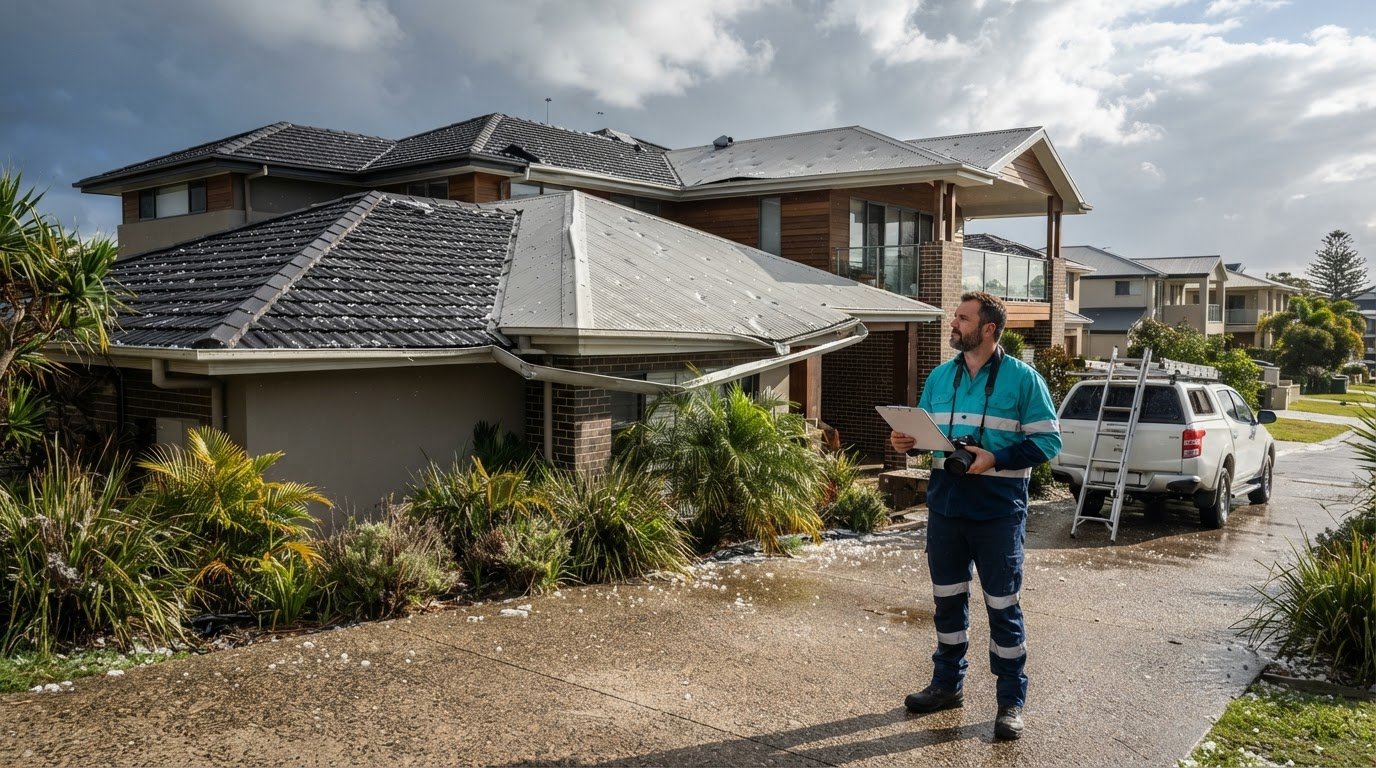
The 2026 updates to Australian Standard AS 4654.2 have introduced stricter requirements for external waterproofing to combat these environmental pressures. These regulations now mandate rigorous UV-exposure testing for all membranes to ensure they don’t delaminate or lose elasticity over time. When an East Coast Low brings torrential rain and gale-force winds, your waterproofing system is the only barrier standing between the elements and your ceiling. Following these NSW building codes ensures your home remains compliant and, more importantly, dry during extreme weather events that are becoming increasingly common along the coast.
Coastal Property Maintenance Tips
Living near the ocean requires a more frequent maintenance schedule to prevent structural decay. Regular wash-downs of metal roof components with fresh water help remove salt deposits before they can cause “tea staining” or deeper pitting corrosion. You should check your flashing and gutters for small brown spots, as these are often the first signs that the protective coating is failing. For properties within one kilometre of the shoreline at Mainly Beach, using stainless steel or high-grade aluminium flashing is a wise investment to ensure the long-term integrity of your roof waterproofing Sydney system. These materials offer superior resistance to the chemical reaction between salt and moisture that typically destroys standard steel.
Preparing Your Roof for Storm Season
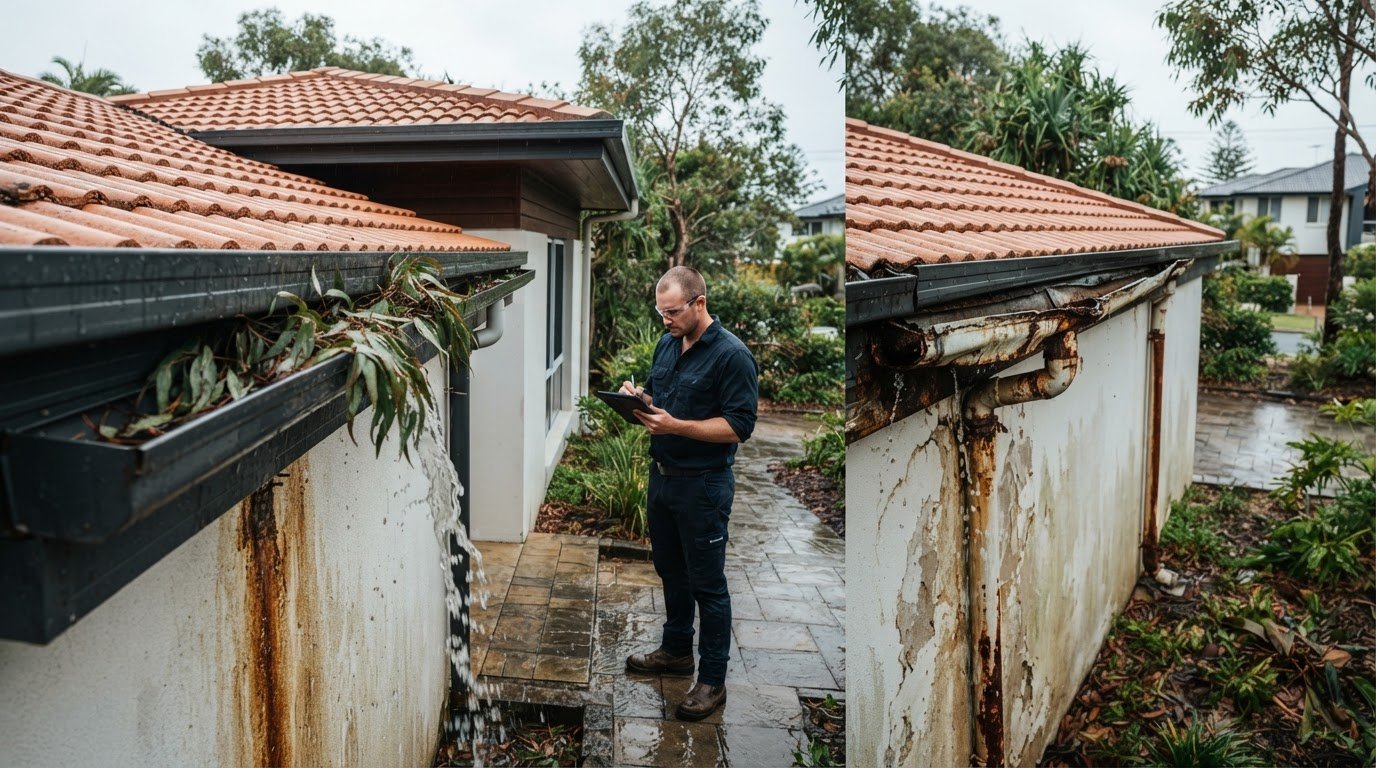
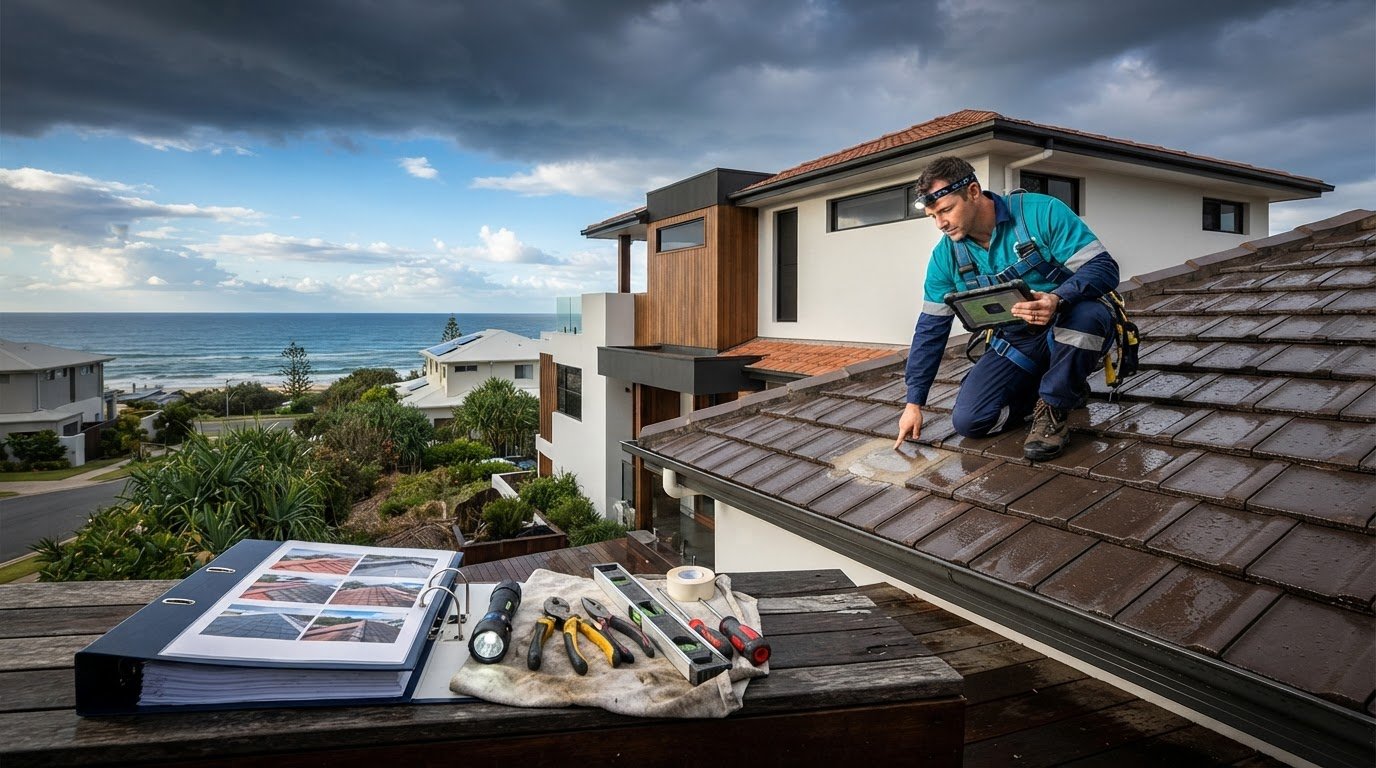
Proactive preparation is the best way to avoid the high cost of emergency repairs. Before the heavy summer rains arrive, ensuring your drainage system is clear is vital. Blocked gutters and downpipes cause water to back up under the eaves, which often leads to internal flooding and ceiling damage. Late autumn is the ideal time of year to schedule a professional Sydney roof inspection to identify any vulnerabilities before the storm season begins. You should also verify the integrity of your valley irons and rain heads to ensure they can manage the high-volume runoff typical of our local climate. Ensuring these systems are free of debris prevents the hydrostatic pressure that often leads to membrane failure.
If you’re concerned about how the salt air is affecting your property’s seal, contact us for a professional roof leak detection and repair to secure your home against the elements.
Why Hire a Specialist Roof Plumber for Waterproofing?
Hiring a generalist might result in a waterproof membrane being applied, but hiring a specialist ensures you get a dry home. Roof waterproofing Sydney is fundamentally a hydraulic engineering task. It’s about managing water volume as much as it is about sealing a surface. A specialist roof plumber understands the “skin” of the roof, but they also possess a deep understanding of stormwater management. This means they can identify if your recurring leaks are caused by a failing membrane or if your downpipes are simply too small to handle a Sydney deluge. When the source of water ingress isn’t immediately obvious, a thorough roof leak detection NSW process is the essential first step before any waterproofing solution can be properly specified.
Instead of just treating the symptom with a quick patch, a roof plumber looks for the root cause. This often involves correcting poor roof pitch or reconfiguring flashing to eliminate water traps. When you engage a licensed specialist, you benefit from comprehensive warranties that cover both the high-performance materials and the structural plumbing work. This dual protection is something a general waterproofer simply cannot provide. We focus on the entire system to ensure that every drop of rain is directed safely away from your internal ceilings.
The Roof Plumbing Expert Difference
Our expertise extends across all major roofing systems, including Colorbond, metal deck, and traditional tile. We specialise in complex roof leak detection and the seamless integration of gutters and downpipes. This local knowledge is backed by a thorough understanding of NSW roofing regulations and council requirements. We don’t believe in quick fixes that fail after six months. Our commitment is to long-term property protection, ensuring every component of your roof works in harmony to shed water efficiently during the heaviest East Coast Low.
Your Leak-Free Checklist
When you are reviewing a professional waterproofing quote, look for specific details on substrate preparation and membrane thickness. A cheap quote often omits the necessary cleaning or priming required for a lasting bond. Before you sign a contract, ensure the following steps are included in the scope of work:
- Compulsory flood testing: Under the updated 2026 standards, a 24-hour flood test is a critical step to verify the integrity of the seal before any finishing layers are applied.
- Pressure testing: All penetrations and flashings should be tested under simulated storm conditions to ensure they can withstand high-wind rain.
- NSW Licensing: Verify that the contractor holds a valid licence for both roof plumbing and waterproofing, as this is essential for your insurance and property resale value.
To secure your property and gain genuine peace of mind, booking a professional assessment is the first step toward a permanent solution. Our team provides the technical clarity and trade expertise required to deliver a system that stands up to the Sydney climate for decades.
Secure Your Property with Long-Term Waterproofing
Protecting your home from the unpredictable Sydney climate requires more than just a surface-level coating. You’ve seen that successful roof waterproofing Sydney projects rely on a combination of UV-stable membranes and a perfectly functioning drainage system. By addressing the root cause of water ingress and ensuring compliance with the 2026 Australian Standards, you can prevent the costly structural damage caused by hidden leaks and coastal salt corrosion.
Don’t wait for the next East Coast Low to test your roof’s integrity. As licensed NSW roof plumbers and specialists in Colorbond roofing Sydney and metal roofing, we provide expert leak detection and remedial waterproofing services tailored to your property’s unique profile. We focus on functional excellence so you can enjoy total peace of mind during the storm season. Request a Professional Roof Waterproofing Quote from Roof Plumbing Expert today to ensure your home remains a dry, safe sanctuary for years to come. Getting your roof right the first time is the best investment you can make for your property’s future.
Frequently Asked Questions
How much does roof waterproofing cost in Sydney?
The total investment for your project depends on several variables, including the roof’s surface area, the complexity of the geometry, and the condition of the existing substrate. A straightforward application on a small terrace is less involved than a large-scale project that requires structural repairs or pitch correction. It’s best to book a detailed site assessment to understand the specific requirements for your property’s long-term protection.
How long does a typical roof waterproofing membrane last?
The lifespan of your system depends heavily on the material selected and its exposure to environmental stressors. Liquid-applied membranes typically offer reliable protection for 5 to 10 years, whereas high-quality sheet membranes can last well over two decades with proper maintenance. Sydney’s intense UV radiation and salt spray can accelerate material degradation, so choosing a product with proven resistance to these elements is essential for longevity.
Can I waterproof my roof myself or do I need a professional?
You must engage a licensed professional for all regulated waterproofing work in New South Wales. Attempting a DIY application is a violation of state regulations and will likely void your property insurance. Professional installation ensures that the work complies with Australian Standards and provides you with the necessary waterproofing certificate required for future insurance claims or the eventual resale of your home.
What is the best waterproofing material for a flat concrete roof?
High-performance sheet membranes, such as TPO or bituminous products, are often the most durable choice for flat concrete surfaces. These materials provide a consistent thickness and handle the hydrostatic pressure of pooling water effectively. Regardless of the material, your roof must meet the mandatory 1:100 drainage slope required by the 2026 updates to AS 4654 to ensure the membrane performs as intended without failing.
Does home insurance cover roof waterproofing and leak repairs?
Most standard home insurance policies don’t cover general waterproofing or repairs related to wear and tear. Insurance is designed to protect against sudden and accidental events, such as storm damage or impact from a fallen tree. If your roof leaks because of neglected maintenance, your claim will likely be rejected. Maintaining a robust waterproof barrier is considered a homeowner’s responsibility to protect the building’s structural integrity.
How do I know if my roof needs waterproofing or just a simple repair?
Identifying the scale of the issue requires a professional diagnostic inspection. If you have a single, isolated leak, a simple repair to a cracked tile or a piece of flashing might be enough. However, widespread dampness, bubbling paint, or a membrane that has reached the end of its service life suggests that a comprehensive roof waterproofing Sydney solution is necessary to prevent structural rot.
Is roof waterproofing required by law for Sydney renovations?
Yes, waterproofing is classified as a “critical stage” of construction and renovation under NSW Fair Trading guidelines. Any work performed on external roofs must comply with the National Construction Code and the relevant Australian Standards. You are required by law to have this work inspected and certified by a licensed professional before it is covered by other materials, ensuring the installation is fit for purpose.
Can you waterproof a roof while it is raining?
No, you cannot apply waterproofing membranes during rain or on damp surfaces. The substrate must be completely dry and clean to ensure the membrane adheres correctly. Trapped moisture under a new layer will cause the system to bubble and fail almost immediately. Professional contractors monitor local weather patterns to ensure a dry window for both application and the necessary curing time to guarantee a watertight result.