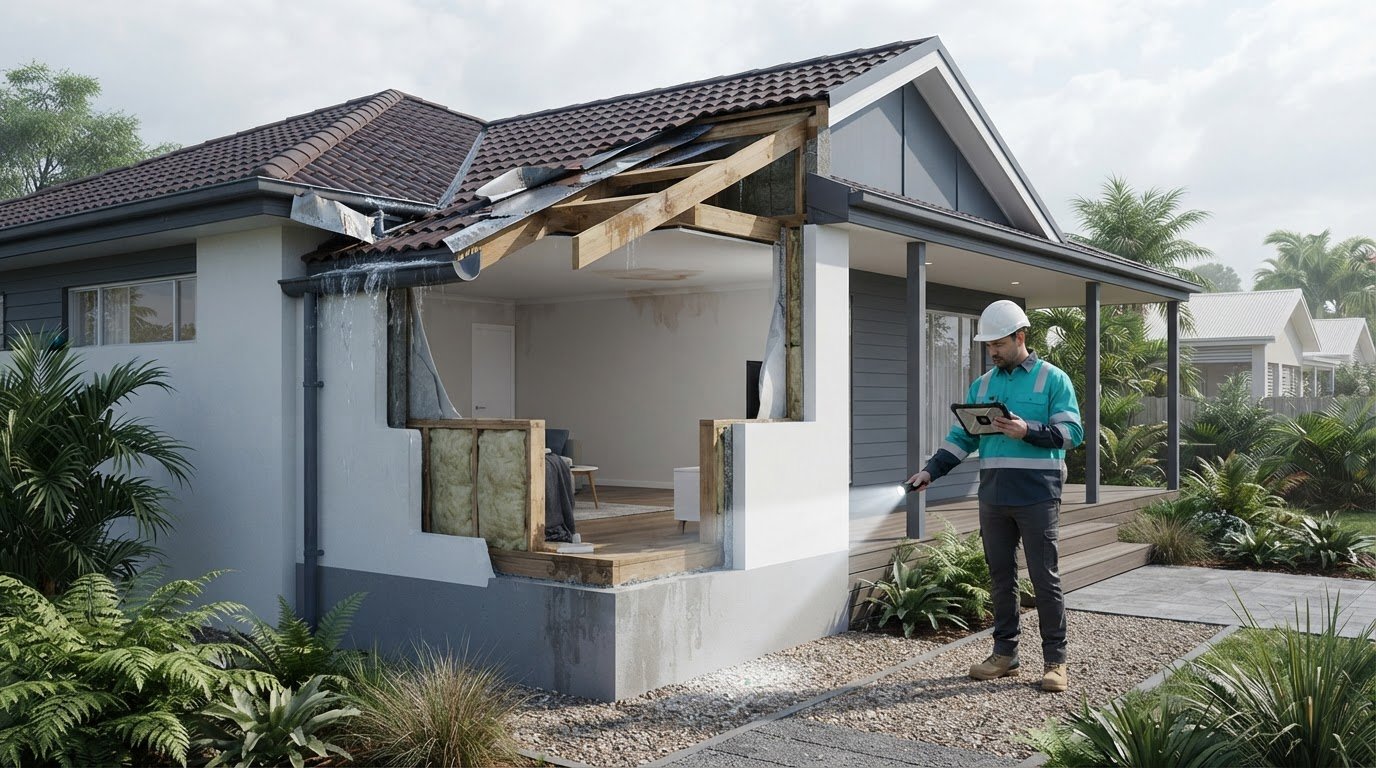
You wake up at 2:00 AM to the rhythmic thud of water hitting your bedroom floor during a heavy New South Wales downpour. You grab a bucket, look up at a growing brown stain on the ceiling, and wonder how a single drip can feel so overwhelming. It is a scenario many homeowners face, especially when a mystery leak only appears during the most intense storms, leaving you to wonder where the water is actually getting in.
It is completely normal to feel anxious about hidden mould growth or structural rot while worrying that a repairer might overcharge you for a fix that doesn’t work. You deserve clarity and a permanent solution rather than a temporary patch. This guide to professional roof leak detection NSW is designed to give you that peace of mind. You will learn how to identify the true source of water ingress before it causes costly structural damage to your property.
We will walk you through the specialist detection process, explain the importance of modern height safety standards updated in 2026, and show you how to find a reliable roof plumber who understands the unique demands of the local climate. By the end, you will have a clear roadmap to restoring the integrity of your home and protecting your investment for the long term.
Key Takeaways
- Understand that professional roof leak detection NSW is a systematic process used to trace water from the entry point to the exit, preventing long-term structural rot.
- Learn why local weather patterns like East Coast Lows require specialised waterproofing and flashing to withstand intense downpours.
- Discover the common signs of hidden ingress, such as ceiling stains or bubbling paint, and why addressing them early prevents the need for a full roof restoration.
- Find out why professional tracing is more reliable than DIY attempts, as water often travels along rafters far from the visible drip point.
- Recognise the safety risks of navigating steep or wet roofs and how a specialist roof plumber provides a clear path from diagnosis to permanent repair.
Understanding Roof Leak Detection in the NSW Climate
Professional roof leak detection NSW is a systematic process used to identify every precise point of water ingress within a building’s external structure. It is not a matter of guessing where a drip originates; instead, it involves tracing the exact path water takes from the outside environment to your interior ceiling. Roof leak detection is a technical diagnostic service that uses specialised tracing methods rather than relying on a simple visual inspection. This distinction is vital because a “mystery leak” that only appears during certain weather conditions is often far more complex than obvious, visible storm damage like a fallen branch or a missing tile.
Why NSW Storm Patterns Challenge Local Roofs
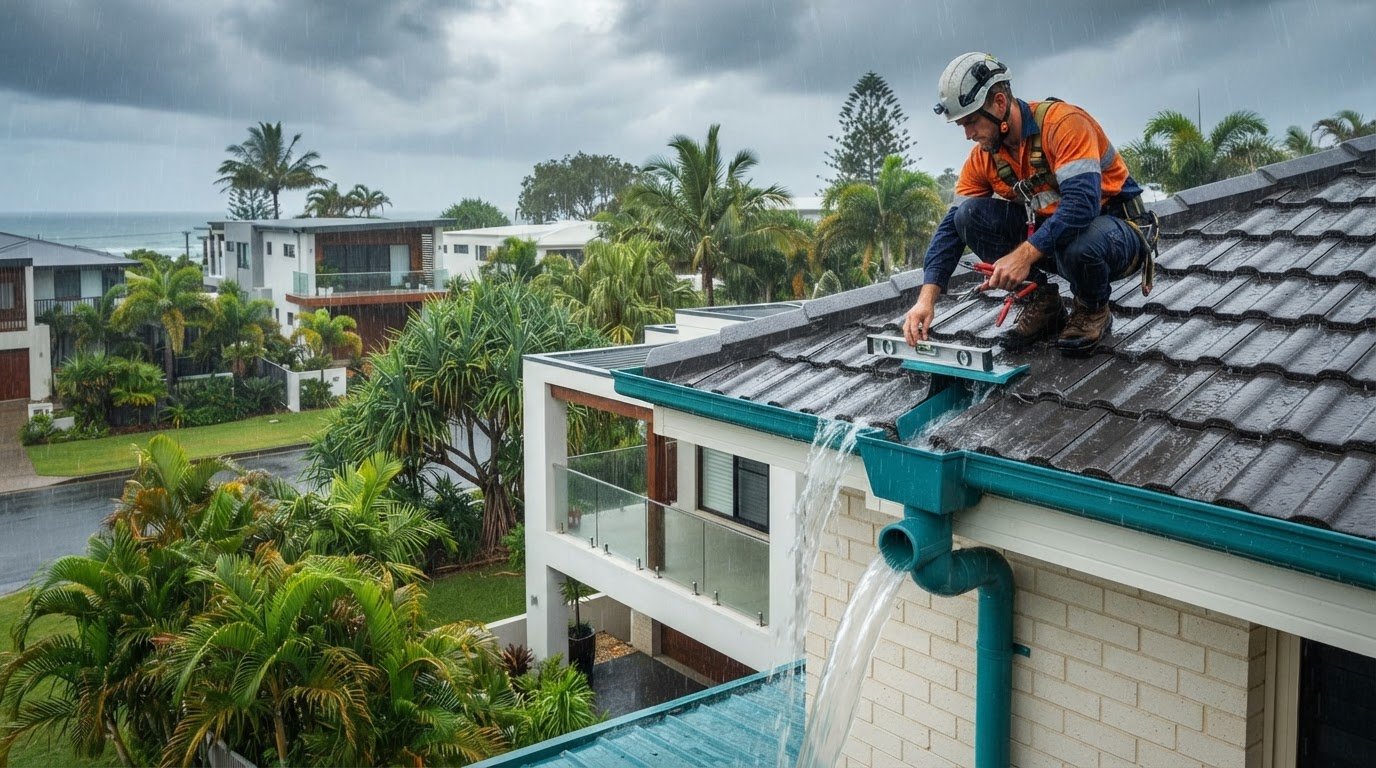
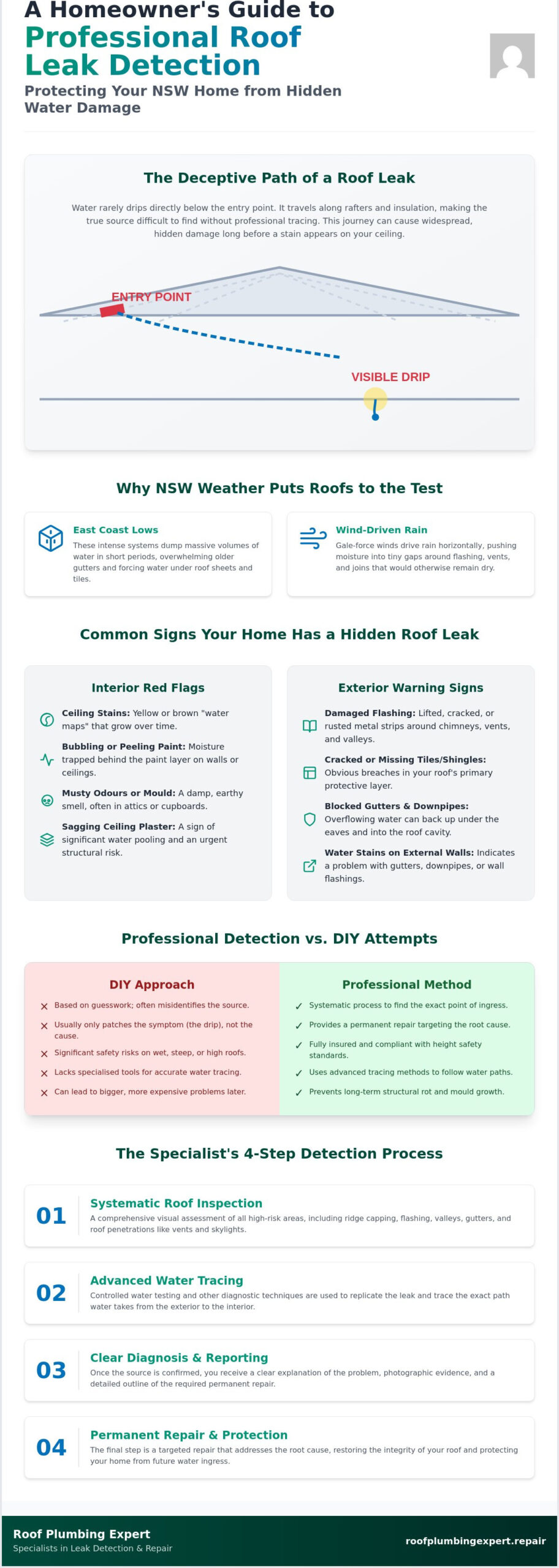
Homes across New South Wales face unique environmental pressures, particularly from East Coast Lows and sudden, high-intensity downpours. These weather events dump massive volumes of water in short periods, often exceeding the design capacity of older guttering systems. When gutters can’t keep up, water often backs up under the roof sheets or tiles. Wind-driven rain is another significant threat, as gale-force winds can force moisture horizontally into gaps that would remain dry during vertical rainfall. This is a primary reason why many property owners require assistance with a roof leak after heavy rain Sydney. These storms act as a stress test for your home, exposing tiny failures in waterproofing that are impossible to spot in fair weather.
Roof Plumbing vs. Internal Plumbing: Knowing the Difference
It’s a common misconception that all plumbers handle roof issues. In reality, roof plumbers are specialists who focus exclusively on the “envelope” or the external skin of the property. While an internal plumber manages high-pressure pipes and bathroom fixtures, a roof plumber is trained in the physics of water shed and structural protection. They possess the specific tools and height safety equipment needed for high-level diagnostics on complex roof shapes and materials like Colorbond. Accurate roof leak detection NSW ensures that the source is stopped at the root rather than just treating the interior symptoms.
A specialist inspection focuses on critical components that a generalist might overlook. This includes checking the integrity of gutters, downpipes, and the complex joins between different roof sections. Understanding roof flashing is essential here, as these thin pieces of metal are the primary defence for chimneys, valleys, and skylights. If these components aren’t installed or maintained with precision, they become the most likely source of persistent, hidden leaks. By choosing a dedicated specialist, you ensure that the person on your roof knows exactly how these materials should behave under the pressure of a coastal storm.
Common Signs Your NSW Home Has a Hidden Roof Leak
Catching a leak early is the definitive way to avoid the massive expense of a full roof restoration. Water is inherently deceptive. It follows the path of least resistance, often running down the length of a rafter or along the top of a ceiling batten before finally dripping onto your plasterboard. Because of this gravity-led travel, an entry point at the ridge cap might result in a puddle several metres away on the opposite side of the house. This complexity is why professional roof leak detection NSW is vital for tracking the true source rather than just patching the spot where the drip appears.
Homeowners should perform a “ground-level” inspection after every major East Coast Low or heavy downpour. Use a pair of binoculars to scan for displaced ridge capping or debris trapped in the valleys. Inside the home, a musty smell in the attic or visible mould growth on structural timbers is a primary indicator of a long-term, slow-release leak that is quietly rotting your home’s frame. Knowing the full range of signs of roof water damage can help you act before the damage spreads to your electrical systems or insulation.
Interior Red Flags: What Your Ceilings are Telling You
Look for “water maps,” which are yellow or brown circular stains that expand over time on your plasterboard. These stains indicate that water is pooling above the ceiling and soaking through the material. If you notice bubbling paint or a sagging ceiling, you are dealing with an urgent emergency. Under NSW Fair Trading urgent repair laws, a serious roof leak is classified as an essential repair that requires immediate attention to prevent structural failure. These symptoms often stem from metal roof leak repair NSW issues where fasteners have backed out or the underlying sarking has failed, allowing moisture to bypass your primary defences.
Exterior Warning Signs: From Gutters to Ridge Caps
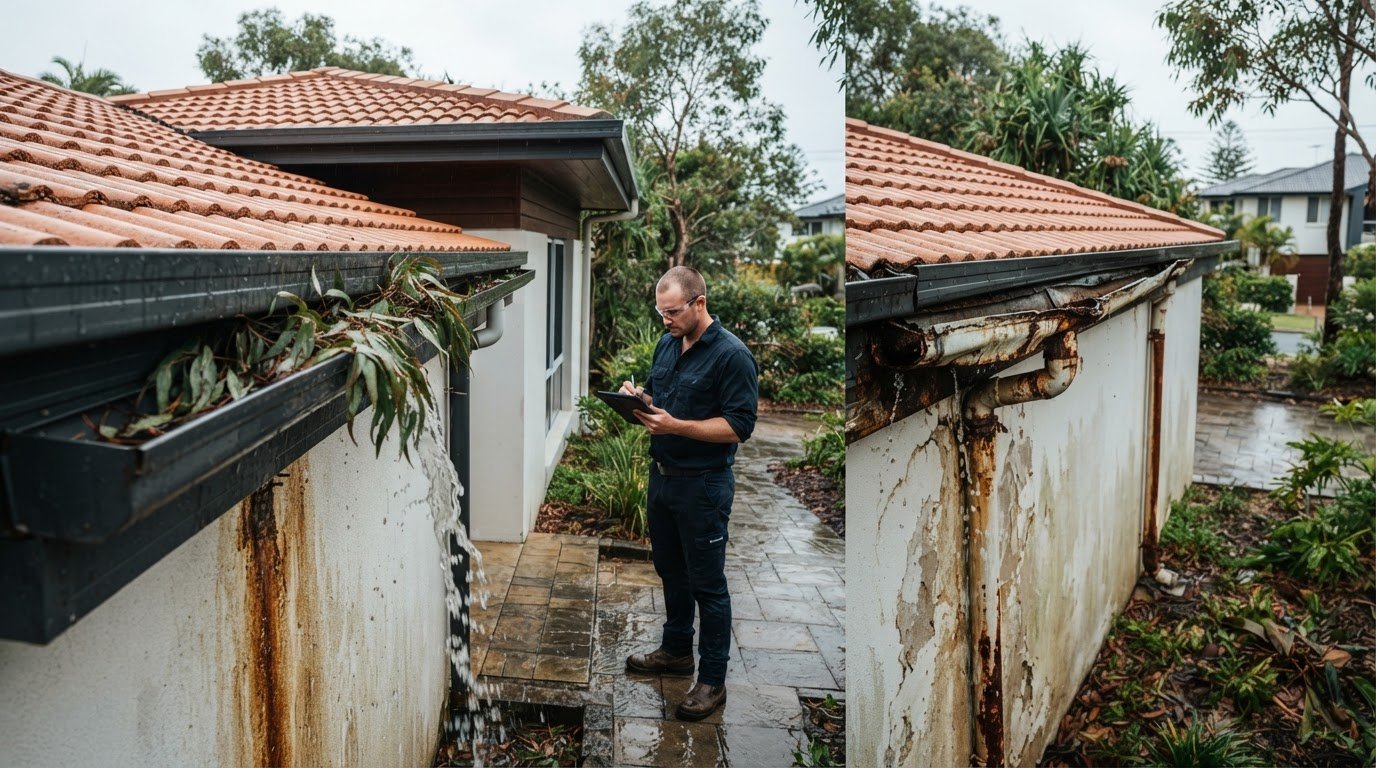
Different materials show distress in different ways, so your inspection must be specific to your roof type. For tile roofs, look for cracked, slipped, or displaced tiles that break the uniform pattern of the roof. On Colorbond roofs, check for sheets that show signs of corrosion or loose “teks” screws where the rubber washers have perished. Unlike tiles, metal roofs often leak due to capillary action, where water is sucked upward between overlapping sheets during heavy rain. Blocked gutters are another frequent culprit; when water cannot escape down the pipes, it pools and flows backward under the eaves and into your wall cavities.
A simple DIY detection tip is to enter your roof cavity during a bright day and turn off all artificial lights. If you see pinpricks of daylight where there shouldn’t be any, you have found a potential entry point for rain. While these DIY checks are helpful for initial spotting, they do not replace the precision of professional roof leak detection NSW. If you suspect your home’s envelope has been breached, you should consult a specialist roof plumber to secure your property before the next storm cycle begins.
The Science of Professional Leak Detection: How Experts Find the Source
Professional roof leak detection NSW is a technical discipline that relies on physics rather than guesswork. While a homeowner might see a drip and assume the hole is directly above, a specialist understands that water is a master of disguise. Experts use a methodical process to “trace” the moisture path, often starting from the interior damage and working backward through the roof cavity to the external breach. This rigorous approach is far more reliable than a DIY glance because it accounts for the way water clings to structural members through surface tension, allowing it to travel several metres horizontally before falling.
Visual Inspections vs. Technical Diagnostics
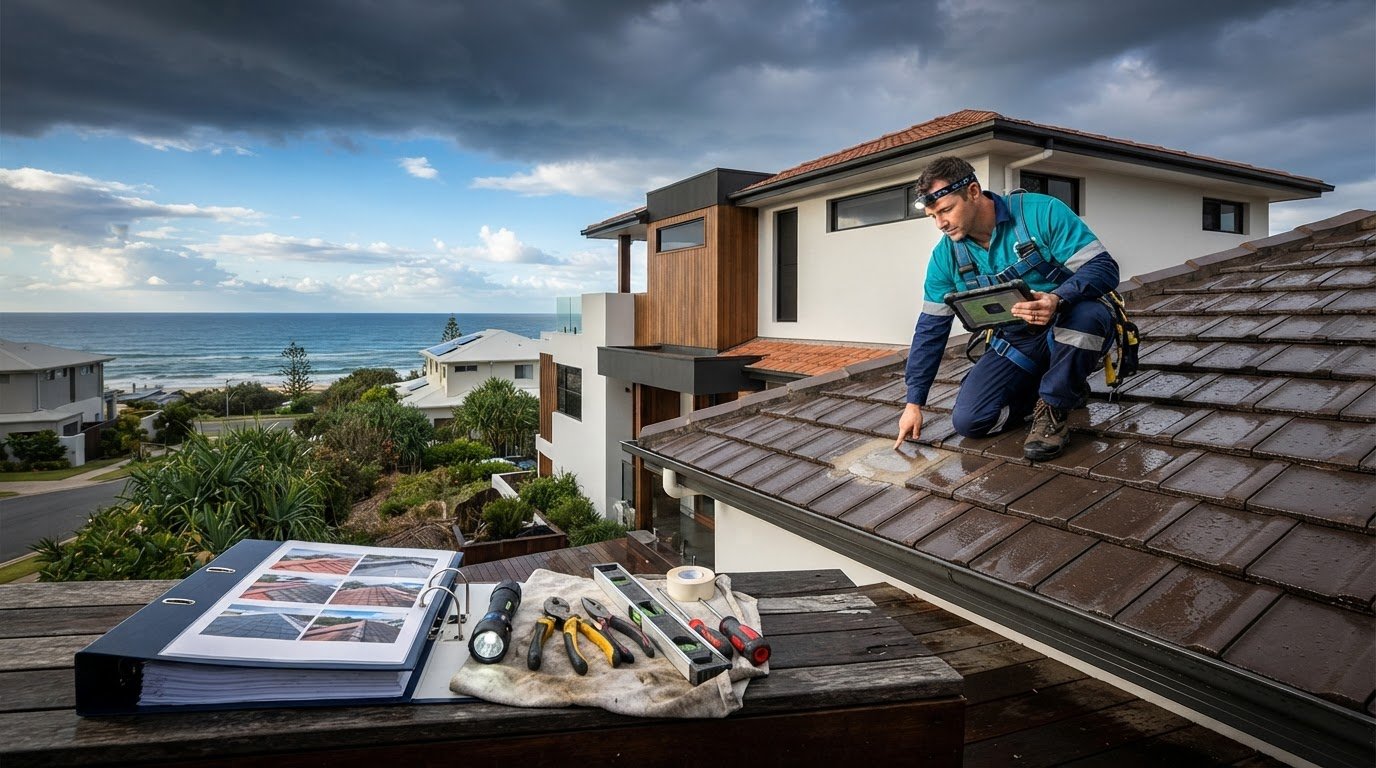
Specialists begin by scrutinising high-risk zones like valleys, gutter joins, and the complex bends in flashing. However, visual checks are only the first step. Technical diagnostics often involve thermal imaging cameras that detect temperature variations behind plasterboard or under tiles. These cameras reveal moisture plumes that are invisible to the naked eye, allowing the plumber to see exactly where the dampness is concentrated. This diagnostic phase often includes an assessment of the roof waterproofing Sydney homeowners rely on, ensuring that the existing barriers meet the rigorous standards of the National Construction Code (NCC).
When a leak is particularly stubborn or only appears during specific weather conditions, experts use controlled flood testing. By applying water to specific sections of the roof in a systematic sequence, they can replicate the effects of a storm without the chaos of a real downpour. This is especially critical for testing “penetrations” such as skylights, solar tubes, and heater flues. These areas are prone to failure if the sealant has perished or the flashing was incorrectly installed, making them prime targets for professional roof leak detection NSW.
Tracking Moisture Pathways in the Roof Cavity
Once inside the roof cavity, the search shifts to the “trail” left by the water. Moisture often travels long distances along rafters and battens before gravity finally forces it to drop. Sarking, the protective layer under tiles or metal sheets, plays a dual role here. While it’s designed to direct water into the gutters, a tear or sag in the sarking can trap water and dump it in a completely different area of the home, effectively hiding the original leak source. This is why a simple patch job often fails; it doesn’t account for the secondary pathways water creates once it bypasses the primary roof skin.
Professionals use sensitive moisture meters to distinguish between old, dry watermarks and active leak zones. These tools provide a digital reading of the moisture content within timber and plasterboard, allowing the specialist to confirm if a leak is current or historical. By mapping these active zones, the roof plumber can pinpoint the exact entry point on the exterior with surgical precision. This data-driven approach ensures that the resulting repair quote is based on fact, not a “best guess” that might leave you with a recurring problem during the next storm.
Why DIY Detection Often Fails on Australian Roofs
Many homeowners believe that a drip in the ceiling identifies the exact location of a breach. This is a costly misconception. Water often enters through a ridge cap or a rusted valley and travels down the slope of the roof, clinging to timber rafters until it hits a nail or a join. By the time you see the stain, the actual hole could be several metres away. Attempting roof leak detection NSW without professional training usually results in “patching the symptom” while leaving the actual cause to continue damaging your structural timbers.
DIY fixes often involve the liberal application of silicone sealant. While this might stop the drip temporarily, it frequently creates a “dam” effect. By blocking the natural drainage path designed into your roof’s profile, you trap moisture against the wood or metal. This leads to accelerated rot and can turn a simple repair into a major structural overhaul. Misdiagnosis doesn’t just waste your time; it wastes money on materials that won’t solve the problem.
The Danger of Working at Heights in NSW
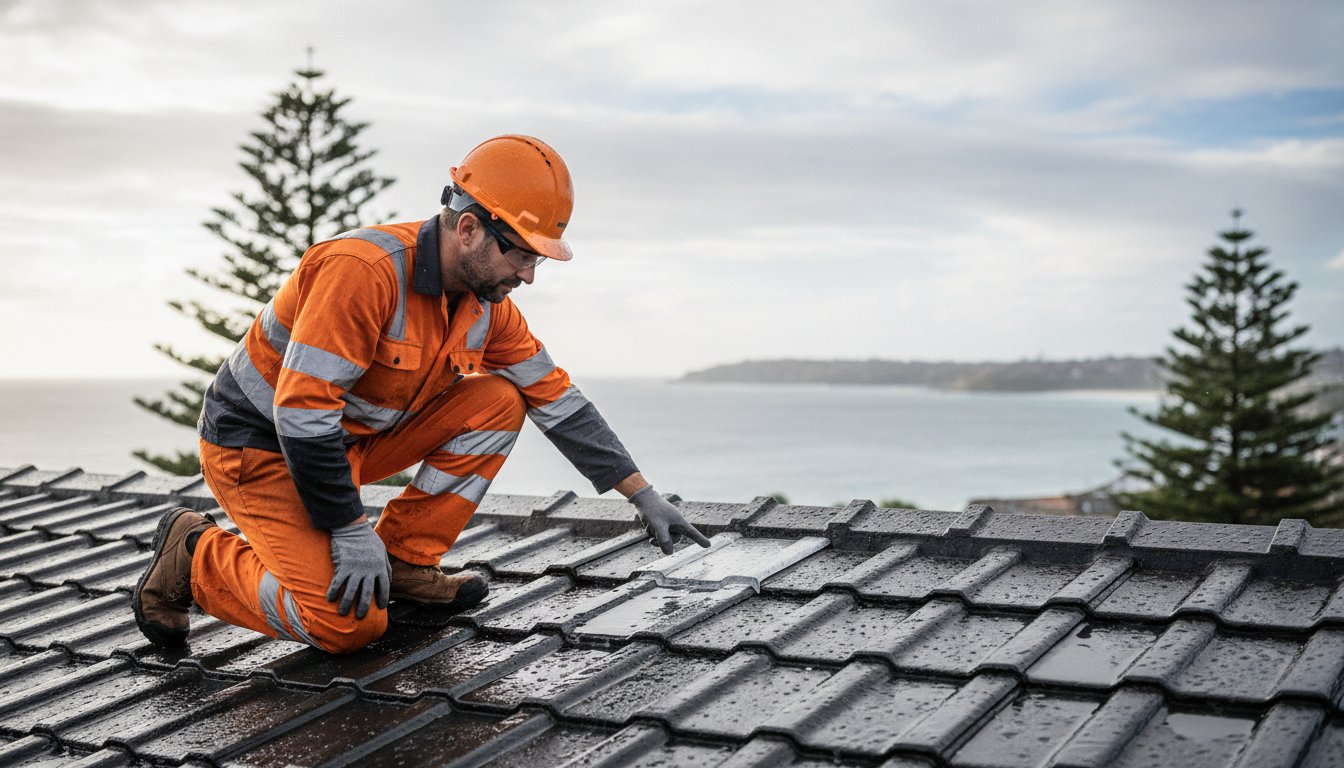
Safety is the most significant reason to avoid DIY roof work. As of July 1, 2026, the SafeWork NSW “Work on roofs” code of practice is legally enforceable, reflecting the high risk involved in these tasks. Tile roofs are particularly treacherous; they are brittle and can crack under the weight of an untrained person, creating new leaks while you look for old ones. Professional roof plumbers undergo mandatory height safety training and carry specific public liability insurance. This ensures that if further damage is found or an accident occurs, you are fully protected.
Common DIY Misdiagnoses and Their Consequences
A common mistake is assuming a leaking skylight is a failure of the glass or frame. In most cases, the issue is actually the surrounding flashing. Applying sealant to the window frame won’t fix a flashing breach. Similarly, on Colorbond roofs, using the wrong type of sealant or non-compatible metal patches can trigger galvanic corrosion. This is a chemical reaction that eats through the metal sheets, leading to widespread failure. Before you climb a ladder, it is wise to review the professional roof leak repair in North Sydney checklist to understand the technical complexity involved.
If you have discovered a mystery leak, don’t risk your safety or the integrity of your home on a guess. For a definitive diagnosis and a permanent fix, you should book a professional roof leak detection NSW service to secure your property against the elements.
Taking Action: Repairing and Protecting Your Roof in NSW
The identification of a water entry point is a significant milestone, but it is only the first step in the restoration process. The ultimate goal of professional roof leak detection NSW is to implement a permanent repair that secures your home’s envelope for years to come. Once the diagnostic phase is complete, a specialist should provide a detailed, fixed-price quote. This transparency removes the anxiety of “mystery costs” and ensures you understand exactly which components require attention, whether it is a single section of flashing or a more complex structural adjustment.
For homes in coastal areas like Mainly Beach, the choice of materials is critical. Standard galvanised steel often fails prematurely when exposed to constant salt spray. We prioritise high-quality, corrosion-resistant materials like Colorbond roofing Sydney specialists recommend, which is specifically engineered for severe coastal environments. Using the correct grade of metal and compatible fasteners is essential to prevent the chemical reactions that lead to rapid deterioration. This level of precision is what separates a temporary patch from a long-term protective solution.
From Detection to Permanent Repair
Repair outcomes vary depending on the diagnostic findings. Common solutions include re-bedding and repointing ridge caps on tile roofs or replacing perished lead flashing around older chimneys. In many cases, what appears to be a major roof failure is actually a failure of the water drainage system. Professional gutter and downpipe installation NSW is frequently the most effective way to resolve persistent leaks caused by overflow and back-flow. By ensuring water is efficiently directed away from the roof’s edge, you protect the fascia, eaves, and internal wall cavities from moisture damage.
Preventative Maintenance: Stopping Leaks Before They Start
A proactive approach is the most effective way to manage property maintenance costs. We recommend an annual roof inspection to identify minor wear and tear before it escalates into a structural emergency. Small issues, such as a loose skylight seal or a single cracked tile, are simple and inexpensive to fix when caught early. This preventative mindset is especially important given the stricter safety standards and height safety training requirements that commenced in July 2026.
Regular maintenance should also include:
- Gutter and downpipe clearing: Removing leaf litter and debris prevents blockages that force water back under the roof sheets during intense storms.
- Tree management: Keep overhanging branches trimmed back at least two metres from the roof line to prevent physical damage and reduce the volume of debris in the gutters.
- Flashing checks: Inspecting the seals around penetrations like solar tubes and heater flues ensures they remain watertight after intense summer heat.
By combining professional roof leak detection NSW with a consistent maintenance schedule, you gain the peace of mind that your home is prepared for whatever the climate delivers. A professional workmanship guarantee provides the final layer of security, ensuring that the repairs performed today will stand up to the storms of tomorrow.
Protect Your Property with Professional Oversight
Maintaining a watertight home in the unpredictable New South Wales climate requires more than just a quick fix after a storm. You now understand that a mystery drip in the ceiling is often the final stage of a complex moisture pathway that began metres away. By prioritising professional roof leak detection NSW, you move beyond temporary patches and invest in the long term structural integrity of your building. Accurate diagnosis is the only way to stop rot and mould before they compromise your living space.
Our team provides specialist Colorbond and tile roof expertise to homeowners across Sydney and Mainly Beach. As fully licensed and insured roof plumbing specialists, we focus on delivering precise diagnostics and durable repairs that withstand coastal salt spray and high intensity rainfall. Don’t wait for the next East Coast Low to test your home’s defences. Take a proactive step today to ensure your roof remains a reliable barrier against the elements.
Contact the experts for professional roof leak detection in NSW today and restore your peace of mind. Your home is your most significant investment; keep it dry and secure with help from a seasoned specialist who values functional excellence.
Frequently Asked Questions
How much does professional roof leak detection cost in NSW?
The cost for roof leak detection NSW depends on several variables, including the height of your property, the roof pitch, and the diagnostic technology required for the job. Most specialists charge a site inspection fee that covers the time taken to trace the water path and provide a detailed diagnostic report. Factors like the use of thermal imaging cameras or the need for specialised height safety equipment can also influence the final price. It is always best to request a clear breakdown of what the inspection fee includes before work commences.
Can a roof leak cause a fire if it reaches electrical wiring?
Yes, water ingress is a serious fire hazard when it interacts with your home’s electrical system. Moisture reaching light fittings, ceiling fans, or junction boxes can cause a short circuit or electrical tracking, where current flows through damp materials and generates intense heat. This heat can easily ignite timber rafters or old insulation in the roof cavity. If you notice water dripping from a light fixture or hear a buzzing sound in your ceiling, you should turn off your power at the main switchboard and call a professional immediately.
Does home insurance in NSW typically cover roof leak detection?
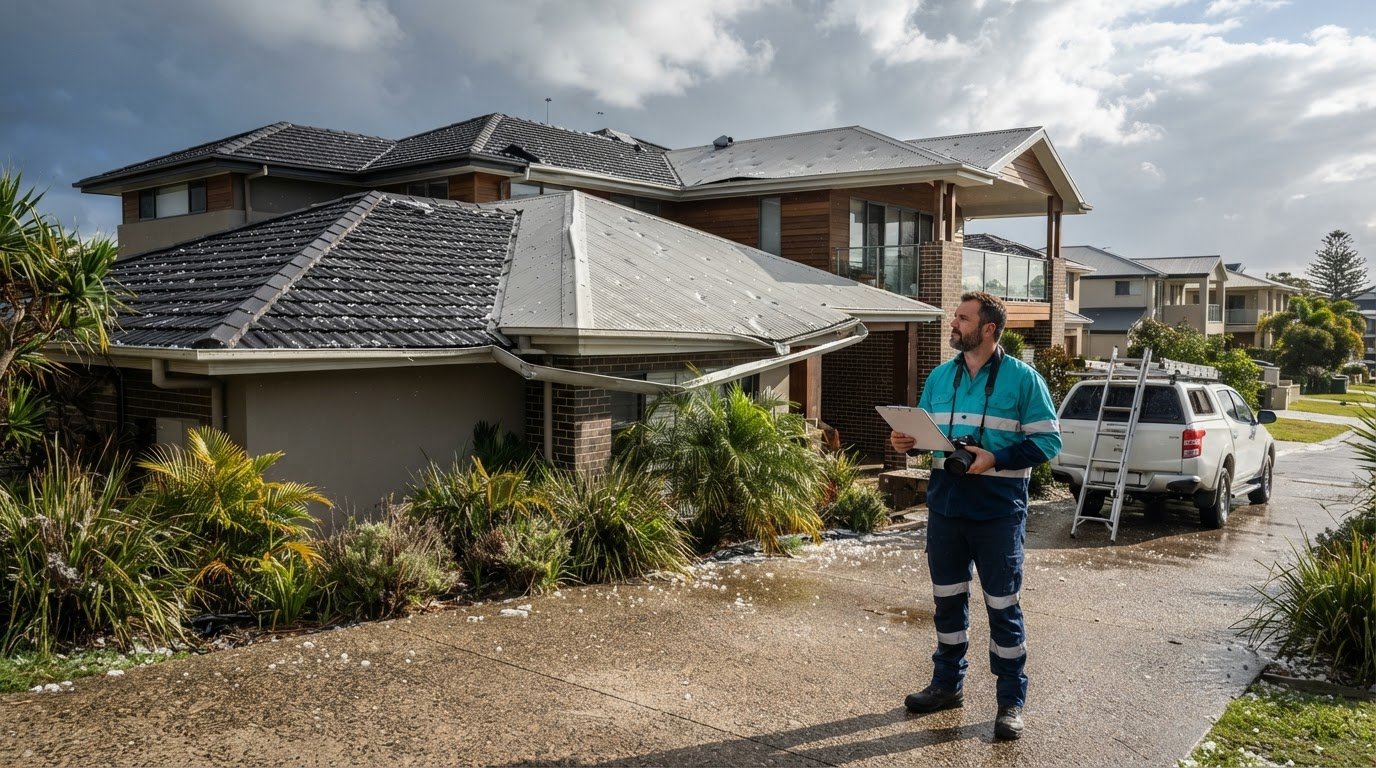
Most NSW home insurance policies cover leaks caused by “defined events” like sudden storm damage, hail, or fallen trees. However, they rarely cover leaks resulting from gradual wear and tear, rusted gutters, or a general lack of maintenance. While the insurer may pay for the internal repairs to your plasterboard, the cost of roof leak detection NSW and the actual roof repair is often the homeowner’s responsibility unless the cause was a specific, sudden accident. You should always review your Product Disclosure Statement to confirm your level of cover.
How long does a professional roof leak investigation take?
A thorough professional investigation usually takes between one and three hours. The duration depends on the complexity of your roof’s architecture and how far the water has travelled from the entry point. Tracing a “mystery leak” requires a methodical approach, often involving a mix of moisture meter testing inside the roof cavity and external flood testing on the roof skin. A seasoned specialist will take the time to ensure every potential ingress point is checked to prevent the problem from recurring during the next heavy downpour.
What should I do immediately if I find a major roof leak during a storm?
Your immediate priority is protecting your safety and minimising property damage. Move furniture away from the area, place buckets under the drips, and use plastic sheeting to protect flooring. If water is entering near electrical points, turn off the electricity at the mains. Do not attempt to climb onto your roof during a storm, as the surface will be extremely slippery and dangerous. Once the interior is as secure as possible, contact a specialist roof plumber to book an inspection for when the weather clears.
Is it possible for a roof to leak only when the wind blows in a certain direction?
Directional leaks are a common occurrence on Australian homes. Strong winds can force rain horizontally under flashing or push water upward through the overlaps in Colorbond sheets, a process known as capillary action. These gaps might stay perfectly dry during a vertical downpour but fail completely when an East Coast Low brings gale-force winds from the south or east. Identifying these leaks requires a specialist who understands how wind pressure affects different roofing profiles and materials. If you are considering upgrading to a more resilient option, our guide to Colorbond roofing Sydney homeowners trust explains how this material is engineered to resist exactly these kinds of wind-driven rain events.
Why does my roof leak even though the tiles look perfectly fine?
Visible tiles only represent the first layer of your roof’s defence. Ingress often occurs through failures in the ridge capping mortar, perished flashing around chimneys, or blocked internal valleys that are hidden from view. Additionally, the sarking under your tiles may have sagged or torn, allowing water that normally seeps through the tiles to pool and dump into your ceiling instead of flowing into the gutters. A professional inspection looks beyond the surface to find these hidden structural weaknesses. Reviewing a comprehensive checklist of signs of roof water damage can help you understand what to look for before calling in a specialist.