
What if a small ceiling stain is only the visible part of a much larger problem? The structural risks of a leaking roof can develop out of sight as moisture reaches roof framing, roof decking, insulation and ceiling materials. Even when the first sign looks minor, a leak that continues can cause serious damage.
A ceiling stain alone can’t show how far water has travelled or where it’s entering. Look for other warning signs rather than guessing at the cause. Persistent dampness, sagging or a musty smell warrant prompt attention.
This guide explains how ongoing leaks can affect a home’s structure, which signs call for an assessment and what to do safely while arranging one. Roof leak detection focuses on finding the entry point, not just treating the indoor symptom. Don’t climb onto the roof or enter an unsafe roof space. A careful assessment can help identify the damage and appropriate repairs.
Key Takeaways
- The structural risks of a leaking roof depend on where moisture travels and how supporting materials are affected, not just the size of a ceiling stain.
- Recurring dampness can gradually weaken timber and other building materials. The level of risk varies with exposure and the materials’ condition.
- Learn to recognise clues such as bubbling paint, sagging linings and persistent damp smells, and when they warrant prompt attention.
- If you notice changes, keep clear of sagging ceilings, document what you can see and arrange a roof assessment rather than climbing onto the roof.
- Effective leak repair starts with locating the water entry point and addressing relevant roof components, which may include tiles or sheets, flashing, waterproofing and drainage.
How a leaking roof can put a home’s structure at risk
A roof leak becomes a structural concern when moisture damages or weakens materials that support the roof or ceiling. Water may enter through failed flashing, a damaged tile or metal sheet, or another opening, then reach materials beneath the roof covering. If the wetting continues or recurs, those materials may deteriorate.
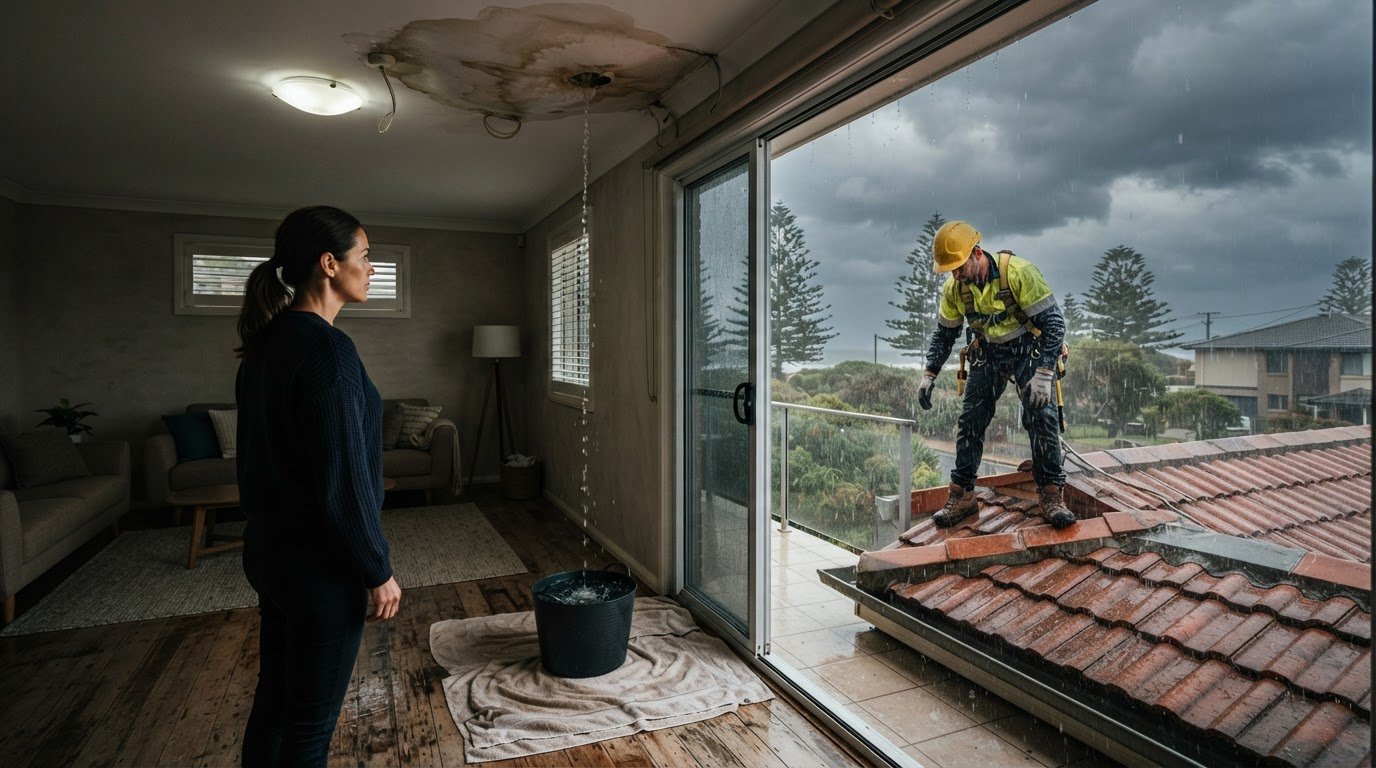
A ceiling stain shows where water has become visible, not how far it has travelled or what it may have damaged along the way. Water can run along a roof member or ceiling before dripping indoors, so the stain may be some distance from the entry point. The mark alone can’t confirm whether structural materials are affected.
Which parts of a home can a roof leak affect?
Moisture may reach roof framing, such as rafters or trusses, and the battens that support roof coverings. Roof sheeting and ceiling supports can also be affected. These components serve different roles, but damage to supporting materials can compromise how the roof or ceiling performs.
Insulation and plasterboard are also vulnerable to water. Insulation can become damp, while plasterboard may stain, soften or sag. These are usually finishes or non-structural materials, but damage can indicate that water is entering the building. On flat roofs, water can soak the decking and underlying structure, and rot may weaken the roof structure.
Why a small leak can become a bigger concern
A brief, isolated leak and repeated wetting don’t necessarily have the same effect. Ongoing moisture can cause timber to swell, soften or decay, depending on how wet it becomes, how often it gets wet and its existing condition. The extent of damage can’t be judged from a stain or the apparent size of a leak alone.
Water can travel from the roof entry point before it appears indoors. For example, a leak near a roof junction may track along framing or another surface and show up later as a ceiling mark. That makes it easy to mistake the visible symptom for the source.
The structural risks of a leaking roof depend on which materials are affected and how much moisture they’ve been exposed to. An assessment of the roof and affected areas can help establish whether the problem is limited to finishes or involves supporting components. Locating the entry point is an important part of deciding what needs attention.
How moisture from a roof leak weakens building materials over time
Damage can develop in stages. Repeated wetting keeps materials damp; over time, some may change shape, lose condition or deteriorate. The process varies from home to home. The duration and volume of water, ventilation around the affected area and the materials’ existing condition all influence the extent of damage.
Timber may swell or soften when it remains damp, and sustained exposure can contribute to decay. These are possible outcomes, not a diagnosis: a leak does not automatically mean that framing is damaged. The structural risks of a leaking roof depend on how water reaches building materials and how they respond over time.
What ongoing moisture can do to roof framing and supports
Roof framing carries loads through connected members, so prolonged dampness affecting a timber rafter, truss or support deserves attention. A change in the timber’s condition may affect its performance, but the level of concern depends on the location and extent of exposure. Fixings and connections can also be affected if water reaches them, particularly where protective coatings or surrounding details have been compromised. This doesn’t mean a connection has failed. The affected components need appropriate assessment before conclusions can be drawn.
Metal components aren’t automatically at risk of corrosion just because there’s a roof leak. Corrosion is a concern where water exposure coincides with compromised protective coatings or detailing that allows moisture to persist. An inspection can help establish whether there’s damage at the property.
How leaks can damage ceilings, insulation and internal finishes
Water reaching the ceiling space may blister or stain paint, dampen insulation, or cause plasterboard to soften and sag. Wet insulation may lose some of its insulating performance, while a drooping lining can signal that it’s holding moisture or has been affected in another way. Don’t press or probe a sagging ceiling.
Mould may develop in persistently damp areas, but its presence alone doesn’t prove that framing or other structural components have failed. It does indicate a moisture concern that warrants attention. Likewise, damaged finishes show that water has reached an interior surface, but don’t reveal the condition of concealed materials.
Finding and fixing the roof entry point addresses the source of ongoing wetting, rather than only the indoor signs. If a leak keeps returning or you suspect materials are affected, roof leak detection and repair can help identify where water is entering and guide the appropriate roof repairs.
Which warning signs may point to structural damage from a roof leak?
A new or changing mark indoors is a reason to investigate, but no single sign confirms structural damage. Stains, peeling finishes and damp smells can point to moisture exposure. The structural risks of a leaking roof depend on whether water has reached supporting materials and their condition, which can’t be established from appearance alone.
Use these clues to decide what to document and when to arrange a roof assessment. They’re indicators, not diagnoses.
| Visible sign | Possible explanation | Sensible next step |
|---|---|---|
| Ceiling stain | Water has reached the lining; the mark may remain after a leak stops or may be linked to ongoing entry. | Photograph it and note whether it changes after rain. |
| Bubbling paint or peeling finish | Moisture may be affecting the paint or surface beneath it. | Record the location and look for recurrence or spreading. |
| Sagging ceiling lining | The lining may be holding moisture or otherwise damaged. | Keep clear. Don’t press, puncture or disturb it. |
| Persistent damp or musty smell | Moisture may be lingering in a ceiling space or another concealed area. | Note where the smell is strongest and arrange an assessment if it persists. |
| Recurring leak | The entry point may remain unresolved, or water may be getting in at another roof detail. | Arrange roof leak detection to locate the source. |
Signs inside that may suggest moisture has spread
Look for changes in the ceiling’s shape as well as its surface. A stain that stays the same after a leak stops may be old evidence of water exposure; one that grows or returns can suggest water is still entering. Bubbling paint, softness or a drooping lining also warrant investigation. Keep people away from a sagging area, and don’t test it by touch.
For more examples of indoor clues, see the article on signs of roof water damage. It can help you recognise moisture symptoms, but those signs still need to be interpreted in context.
Roof and exterior clues that can accompany a leak
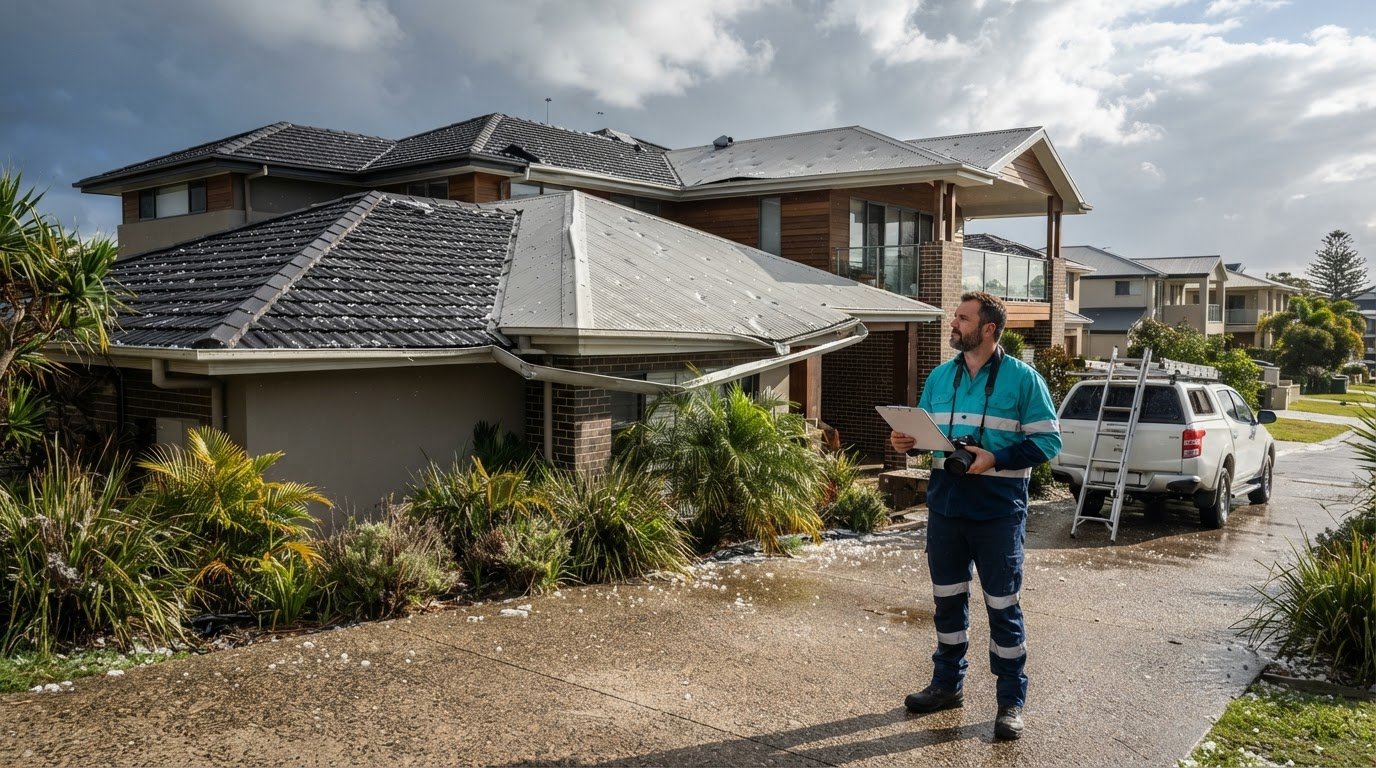
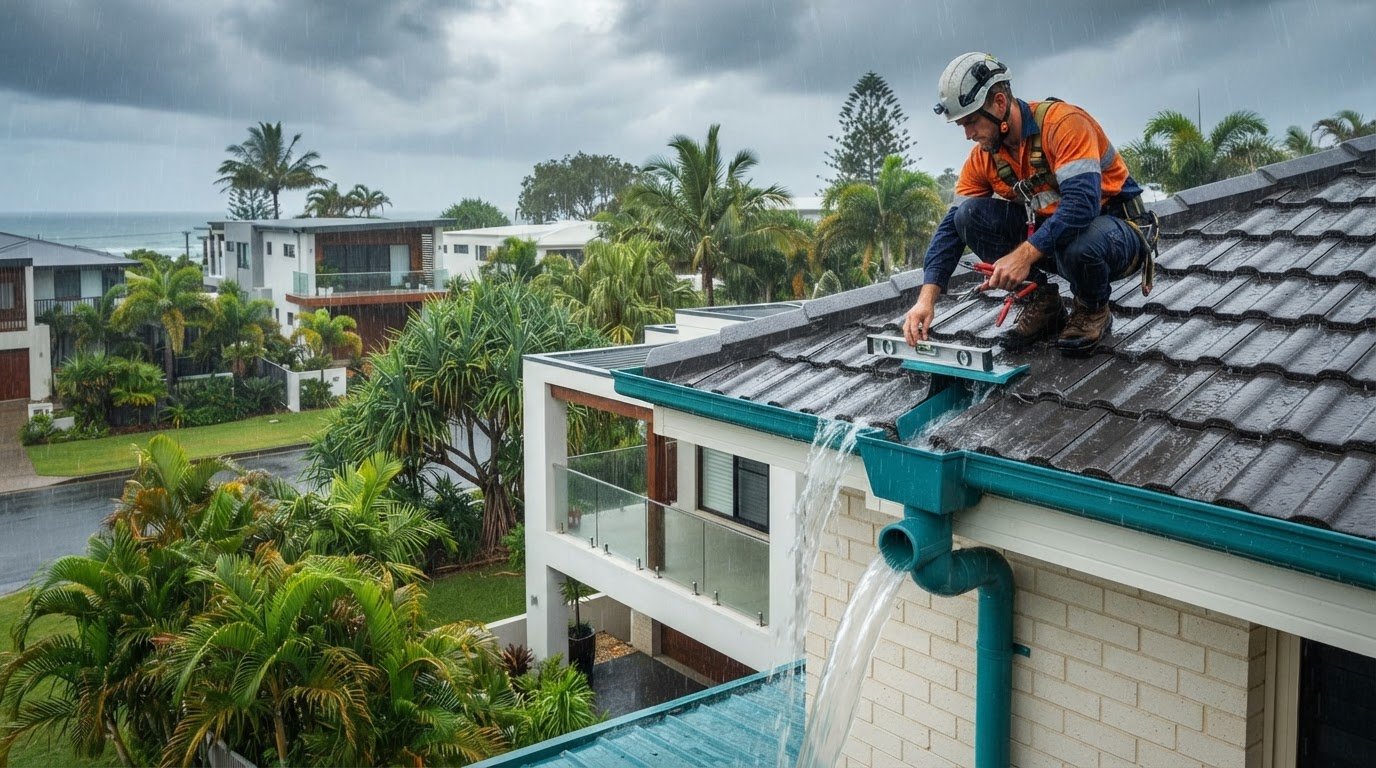
From a safe position on the ground, you may notice a displaced or damaged tile, damaged metal roof sheeting, or issues around flashing and skylight junctions. Overflowing or poorly draining gutters can also contribute to water exposure at roof edges. Don’t climb onto a roof to inspect it, especially if it’s wet or damaged.
The Roof Leak Detection NSW guide covers ways to locate possible entry points. A professional assessment can help trace water back to the roof detail involved, rather than relying on the indoor stain to identify the source.
What to do if a roof leak affects the structure
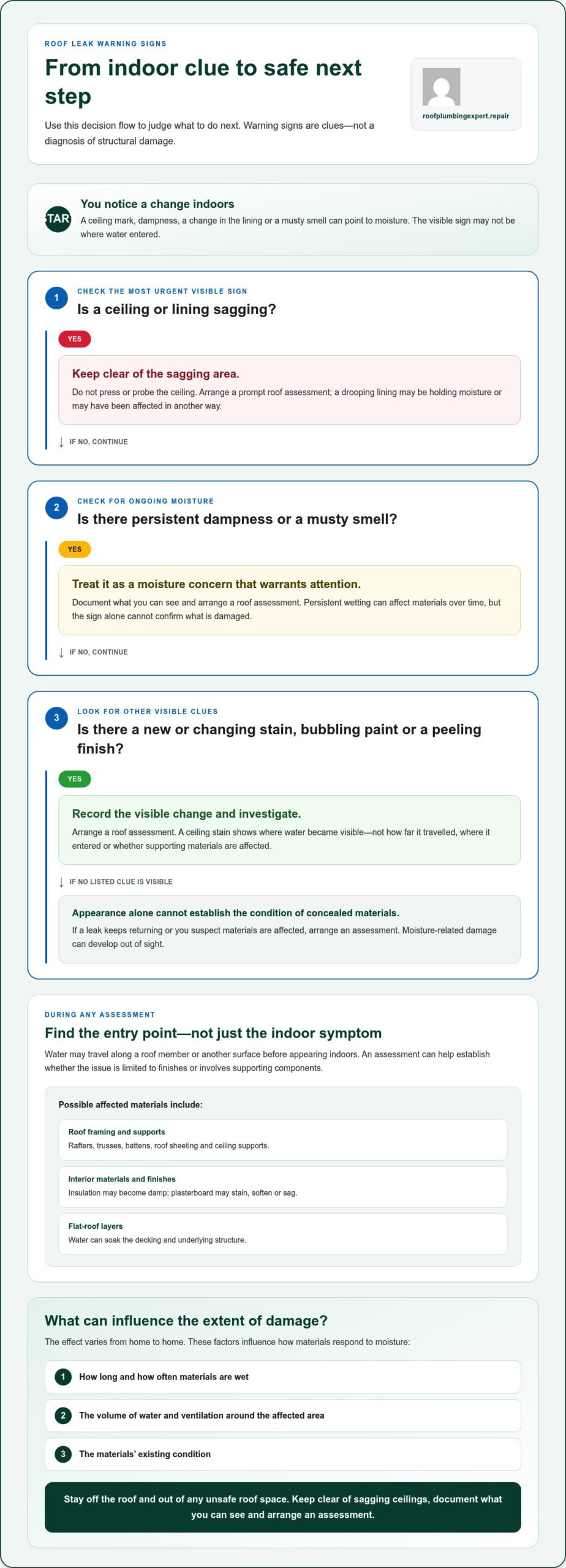
If you suspect a leak has reached roof framing or ceiling supports, put safety first. Don’t try to inspect or patch a wet or damaged roof yourself. These steps can help limit immediate risks while you arrange an assessment.
- Keep people clear of hazards. Move household members and belongings away from active drips and any visibly sagging ceiling. Don’t stand beneath a bulging or drooping lining.
- Contain drips only if it’s safe. Place a container under a leak only if you can do so without going near electrical fittings, wet electrical equipment or an unstable ceiling. If water is near electrical fittings, keep clear and don’t touch them.
- Record what you can see. From a safe position, photograph stains, bubbling paint or changes in the ceiling. Note when the leak occurs, such as during or after rain, and whether the affected area appears to grow.
- Arrange a roof assessment. Don’t climb onto the roof, walk on damaged areas or disturb wet materials. Temporary steps should never involve roof access or create electrical hazards.
Safe steps to take inside the home
Keep the area below a sagging ceiling clear, even if it isn’t actively dripping. Don’t press or puncture damaged plasterboard, or try to remove it, as its condition and what may be above it are unknown. A container can help catch water only when it can be positioned safely. Photos and notes provide a useful record of changes for the assessment.
For further immediate leak-response guidance, refer to the existing guide on emergency leaking roof repair in NSW. Follow advice that keeps you away from roof access and other hazards.
When a professional roof assessment is important
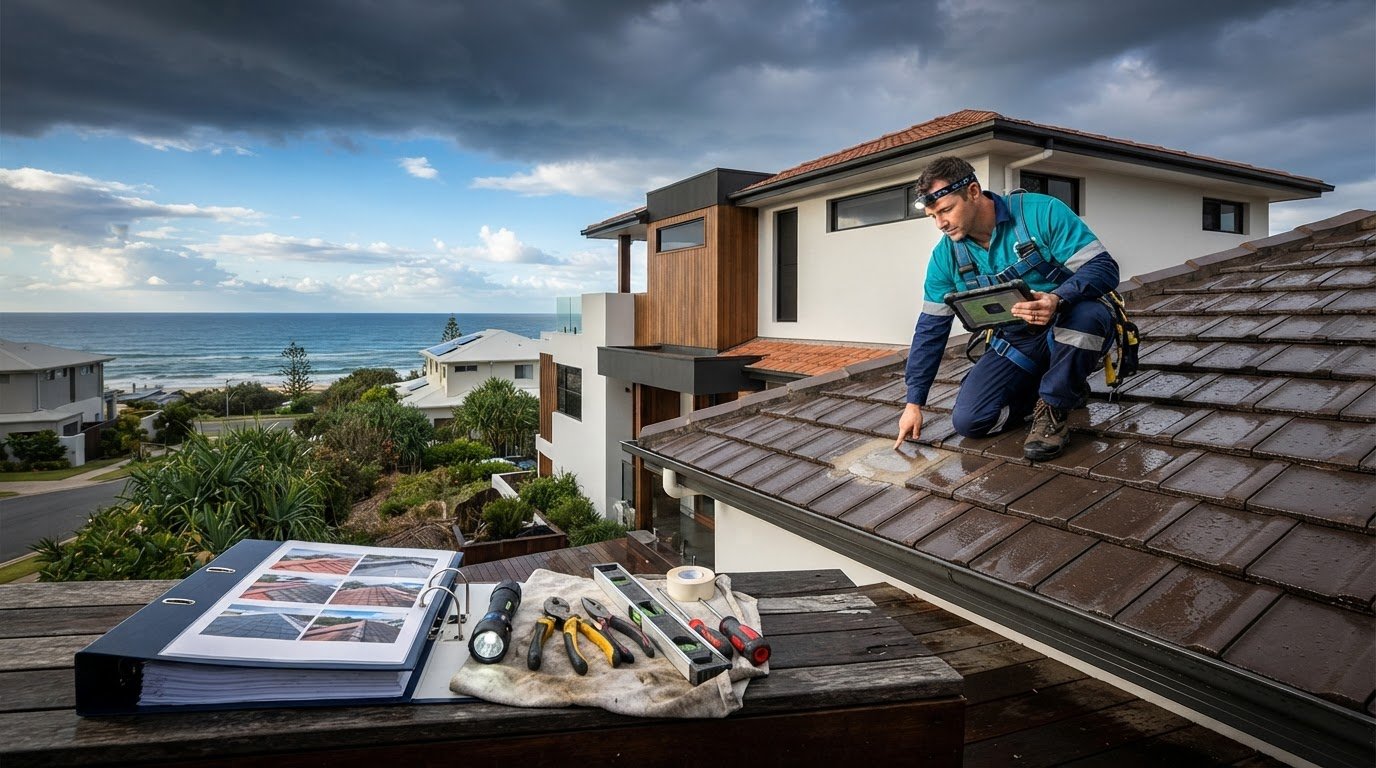
Arrange a prompt assessment if a leak recurs, a stain spreads, a lining sags or you suspect roof framing has been affected. An assessment should trace the water entry point and examine relevant roof components, rather than treating only the indoor mark. The cause may involve damaged tiles or metal sheets, flashing, waterproofing, a skylight junction or roof drainage.
For homeowners in Mainly Beach, arrange roof leak detection and repair to locate the entry point and address the roof issue. A clear diagnosis is a practical first step towards limiting further water exposure and understanding what repairs are needed.
How roof leak detection and repair can help protect the structure
Repairing an indoor stain without finding its source can leave water entering through the roof. Effective work starts by tracing the leak to its entry point, then assessing the relevant roof components. Water can travel along or across materials before appearing inside, so the visible mark isn’t always directly below the fault.
Why finding the water entry point matters
A roof assessment considers possible routes through coverings, flashings and junctions, including areas around skylights. A damaged tile or metal sheet may be the entry point, but nearby roof details may also need attention. The aim is to identify the cause rather than make assumptions based on the location of an indoor stain. For more on locating possible sources, see the Roof Leak Detection NSW guide.
Finding the source helps determine which repairs are relevant. The structural risks of a leaking roof are tied to continued water exposure, so locating and addressing the entry route is a practical step towards limiting moisture reaching the roof system. It doesn’t establish whether materials already affected need additional work.
How targeted roof repairs help limit further exposure
Once the likely cause is identified, repairs can focus on the affected components. Depending on the roof type and observed condition, this may involve repairing or replacing damaged tiles or sheets, addressing flashing, carrying out waterproofing, or correcting a drainage issue involving gutters or downpipes. Each has a different role in helping keep water out and directing it away from vulnerable roof areas.
The appropriate scope depends on the roof, the leak source and the condition of the materials. A repair can help restore a watertight roof system, but it can’t be assumed to reverse existing deterioration or prevent every future leak. If moisture has affected supporting materials, their condition may need separate assessment. A clear diagnosis helps distinguish the work needed to stop water entry from any further evaluation of damage.
Roof Plumbing Expert provides roof leak detection and repair, including work on damaged tiles, metal sheets and roof components. If you’re seeing recurring signs of a leak or are concerned about concealed moisture, arrange roof leak detection and repair to identify the entry point and discuss suitable roof repairs.
Protect your home by acting on roof leak signs
A ceiling stain is a warning of water exposure, not a reliable measure of what may be happening behind the lining. Ongoing moisture can affect timber, roof supports, insulation and finishes. The structural risks of a leaking roof depend on how far water has travelled and the condition of the materials.
Keep clear of sagging ceilings and don’t climb onto a wet or damaged roof. Document visible changes from a safe position, then arrange an assessment if leaks recur, stains spread or you suspect roof components are affected. Finding the water entry point helps guide repairs instead of treating only the indoor symptom.
Roof Plumbing Expert provides specialist roof leak detection and repairs for residential and commercial properties, including work on flashing, waterproofing, damaged roof coverings and drainage components. For a practical next step, arrange roof leak detection and repair with Roof Plumbing Expert. If you’re in Mainly Beach and have signs of a recurring roof leak, get in touch to arrange an assessment.
Frequently Asked Questions
Can a leaking roof cause structural damage?
Yes, a roof leak can damage structural materials if moisture repeatedly or persistently reaches them. Timber framing may swell, soften or decay, while metal components may corrode if protective coatings or detailing are compromised. The structural risks of a leaking roof depend on water exposure and the materials’ condition. A ceiling stain shows that water has reached an indoor surface, but an assessment is needed to establish whether supporting components are affected.
How long can a roof leak go unnoticed before it causes damage?
There’s no reliable set timeframe. Damage depends on how much water enters, how often the area gets wet, ventilation and the materials’ condition. Water can travel along roof or ceiling components before appearing indoors, so a leak may be present before you notice a stain. Don’t wait for a particular sign or time period if you suspect a leak. Record visible changes and arrange an assessment, especially if the leak recurs or the affected area grows.
What are the signs that a roof leak has damaged the structure?
Possible warning signs include a sagging ceiling or roofline, spreading water stains, bubbling paint, persistent damp smells and recurring leaks. These clues indicate possible moisture exposure, but none confirms structural damage by itself. Keep clear of any sagging lining and don’t press or puncture it. Note when symptoms appear and photograph changes from a safe position. A roof assessment can help locate the entry point and determine whether roof components may be affected.
Can a small roof leak cause a ceiling to collapse?
It’s possible for a ceiling lining weakened by water to sag or fail, but a small visible leak doesn’t automatically mean collapse is likely. The risk depends on factors such as ongoing water exposure, how much moisture the lining has taken on and its condition. Treat a bulging or sagging ceiling as a safety hazard: keep people clear and don’t touch or disturb it. Arrange a prompt assessment to investigate the leak and affected materials.
Is a roof leak a structural emergency?
Not every roof leak is a structural emergency, but a visibly sagging ceiling, a changing roofline or signs that supporting materials may be affected need prompt attention. Keep clear of unstable areas and avoid climbing onto a wet or damaged roof. If there’s an immediate danger to people inside, move away from the area and seek urgent help. For recurring leaks or suspected roof damage, arrange a professional roof assessment to identify the source and guide next steps.
What should I do first if my roof is leaking?
First, move people and belongings away from active drips or any sagging ceiling. Place a container under a drip only if you can do so safely and well clear of electrical fittings. Don’t climb onto the roof, attempt a risky patch or disturb damaged materials. Photograph visible signs from a safe position and note when the leak occurs. Then arrange roof leak detection and repair to trace the entry point and assess the relevant roof components.
Can a roof leak cause mould or damage insulation?
Yes, persistent moisture from a roof leak can dampen insulation and may contribute to mould growth in affected areas. Wet insulation may lose some of its insulating performance, but its condition depends on the extent and duration of exposure. Mould or damp smells are signs of a moisture concern, not proof that the structure has failed. If you notice recurring dampness, arrange an assessment to locate the leak and check affected roof components. Roof Plumbing Expert provides roof leak detection and repair in Mainly Beach.