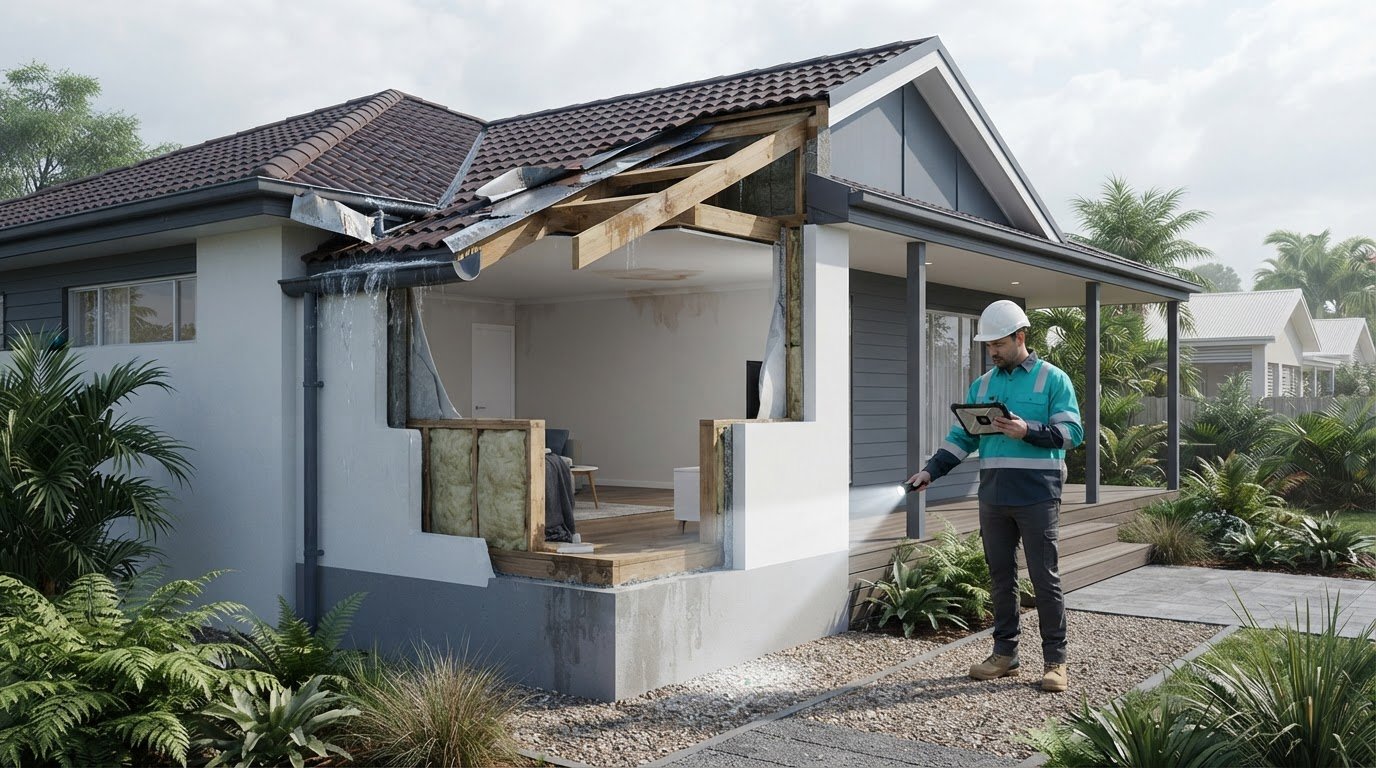
Imagine standing on your veranda during a sudden NSW summer downpour, watching helplessly as water cascades over your gutters and directly into your eaves. It’s a common but stressful sight that usually means your drainage system is failing to cope with local rainfall. When you’re looking for professional gutter and downpipe installation NSW, the goal isn’t just to hang some metal. It’s to engineer a system that protects your home’s structural integrity from the ground up.
You’ve likely noticed the difference between a sagging, rusted gutter and one that flows perfectly, yet finding the right advice between general handymen and specialist roof plumbers can be confusing. We understand that you want a reliable solution that stops overflows and looks great. This guide simplifies the process by mastering the essentials of professional roof drainage. We’ll show you how to ensure your home remains leak-free and compliant with Australian Standard AS/NZS 3500.3:2021, while using modern finishes to enhance your property’s value and long-term security.
Key Takeaways
- Understand how high-capacity systems serve as your property’s first line of defence against the unique challenges of the NSW climate and sudden storm-water surges.
- Discover why Colorbond steel is the preferred material for Australian homes and how to select profiles that maximise water-carrying capacity without compromising on aesthetics.
- Learn the essential technical standards for gutter and downpipe installation NSW, specifically the importance of “fall” to ensure efficient drainage and prevent mosquito breeding.
- Master the relationship between roof catchment areas and downpipe sizing to ensure your drainage system can handle peak rainfall intensities.
- Recognise the value of local expertise and why a specialist roof plumber is necessary for ensuring compliance with the National Construction Code and Australian Standards.
The Importance of High-Capacity Guttering for NSW Homes
A professional rain gutter system acts as the primary shield for your home. It isn’t just an aesthetic trim; it’s a critical component of your property’s structural health. In New South Wales, where weather patterns can shift from dry heat to torrential downpours in hours, your drainage must be engineered for volume. High-capacity systems are designed to capture and redirect water before it can compromise your foundations or internal ceilings. Choosing a professional gutter and downpipe installation NSW ensures that your home is prepared for these extremes rather than just reacting to them when the clouds break.
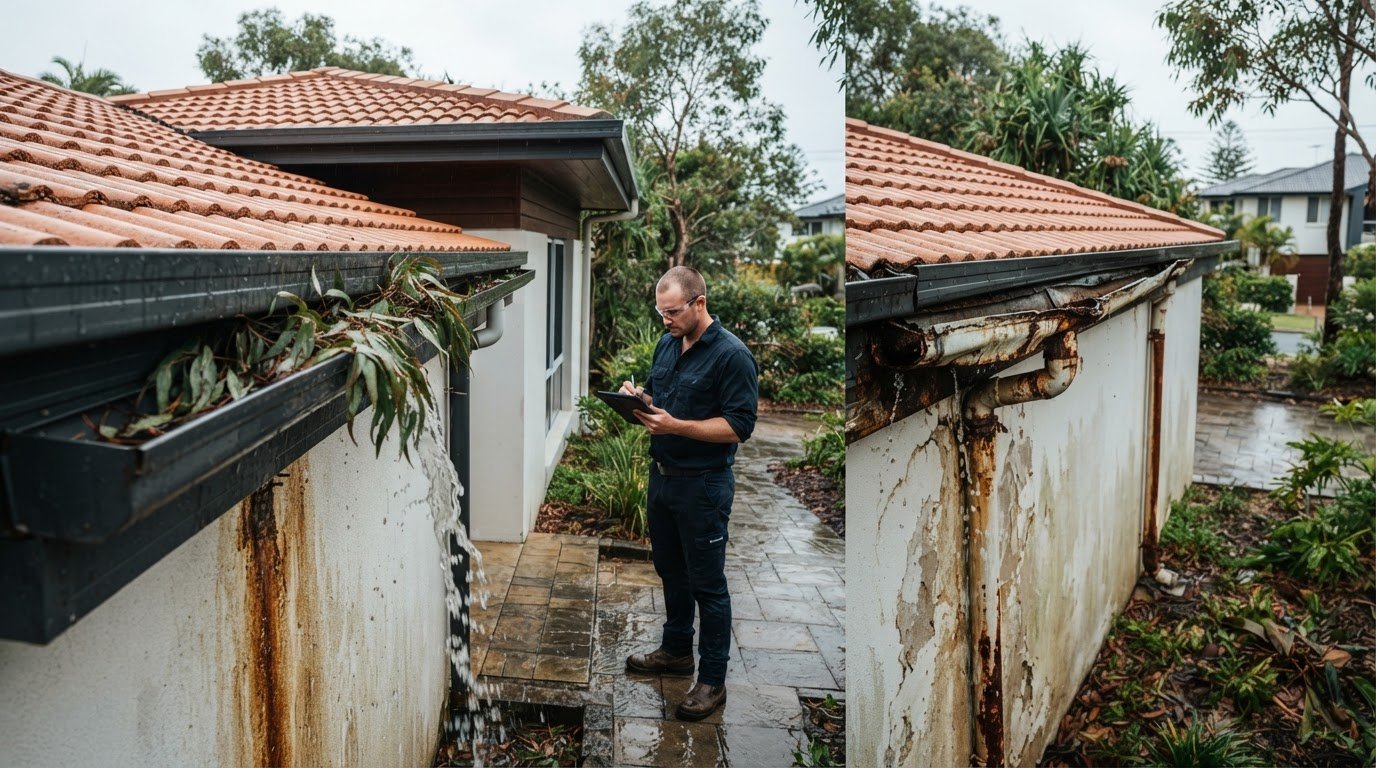
When a system is undersized or poorly maintained, the risks extend far beyond a few drips. The weight of stagnant water can cause gutters to sag, while poorly positioned downpipes fail to move volume away from the building’s footprint. This leads to soil saturation, which is a leading cause of foundation cracking and rising damp in older NSW properties. A correctly installed system manages these surges with precision, protecting your investment for decades.
Why NSW Storm Patterns Demand Better Drainage
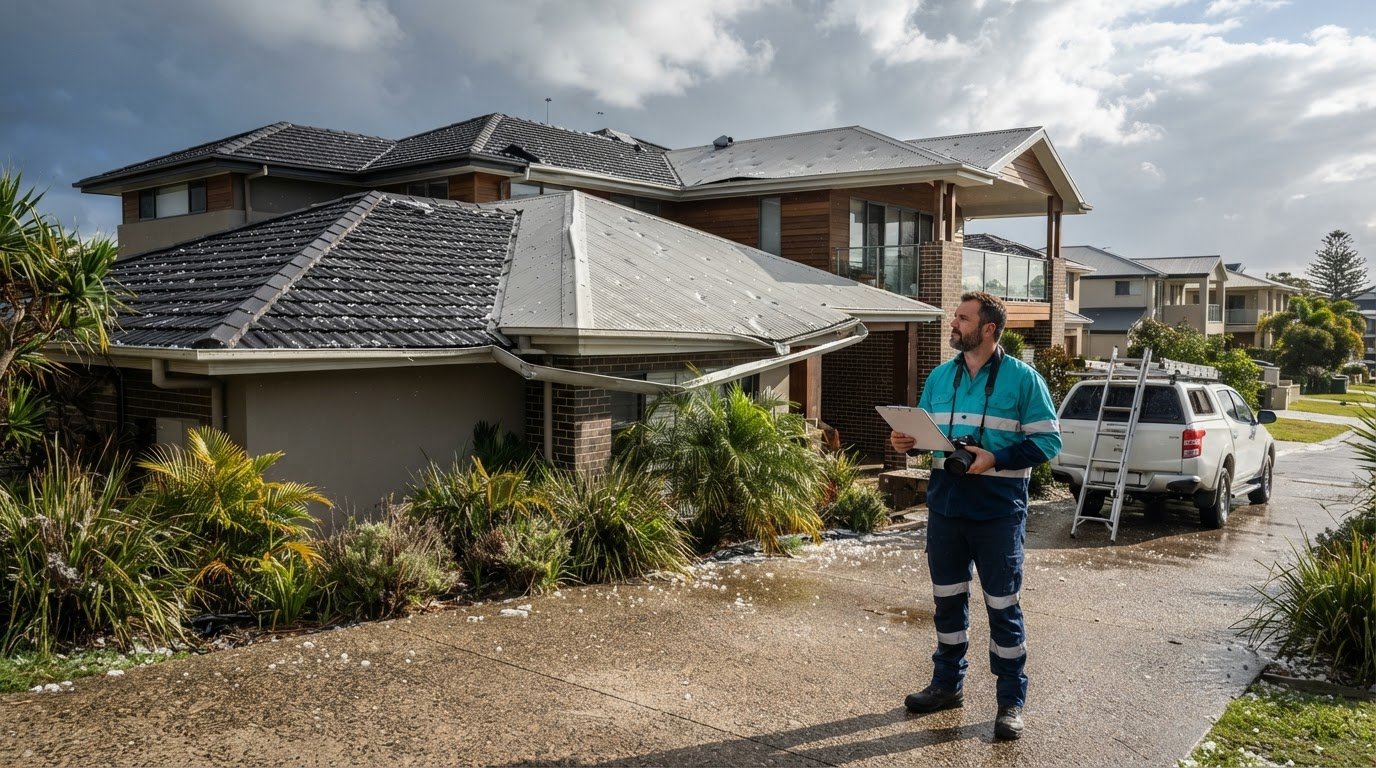
Standard residential gutters often reach their limit during the intense East Coast Lows common across the state. These storms bring high-intensity rainfall that can quickly overwhelm basic profiles. When a system lacks the necessary capacity, the water has nowhere to go but back. This “back-flow” frequently forces water under the roof sheets and into the eaves or ceiling cavities. Once water enters these spaces, it causes hidden timber rot, mould growth, and electrical risks. High-capacity drainage is the only way to ensure that even during a summer peak, the water remains outside where it belongs. If you’re already dealing with this problem, our detailed guide on how to fix overflowing gutters walks you through the exact steps to diagnose and resolve the issue before the next storm hits.
The Role of the Roof Plumber in Property Protection
There is a significant difference between a general handyman and a specialist roof plumber. While a general plumber might handle interior pipes or taps—similar to the residential and commercial services provided by Plumbing & Boilers London—a specialist focuses exclusively on external water management. This scope covers everything from the highest roofline down to the storm-water connection points. At Roof Plumbing Expert, we focus on the physical acts of diagnosing and improving these systems with technical trade terminology and precision.
A specialist understands how to integrate new gutters with existing roof flashing and waterproofing. This ensures there are no weak points where water can penetrate. We prioritize legal compliance and durability, ensuring your gutter and downpipe installation NSW meets all modern building codes. By choosing a dedicated partner, you gain the peace of mind that comes from knowing your home is guarded by a seasoned professional who understands the specific demands of the local environment.
Selecting the Right Gutter Profiles and Materials for Your Home
Selecting the right components for your property involves balancing aesthetic appeal with strict functional requirements. In New South Wales, all drainage work must adhere to the Plumbing Code of Australia (PCA), which dictates how systems manage water flow. For homeowners in coastal suburbs like Mainly Beach, the choice of material is even more critical due to the corrosive nature of salt spray. A professional gutter and downpipe installation NSW should always consider the home’s architectural era to ensure the new system complements the existing structure while providing maximum protection against the elements.
Popular Gutter Profiles in Sydney and NSW
The profile you choose determines how much water the system can carry during a storm. Different shapes offer unique benefits for various roof types and rainfall intensities:
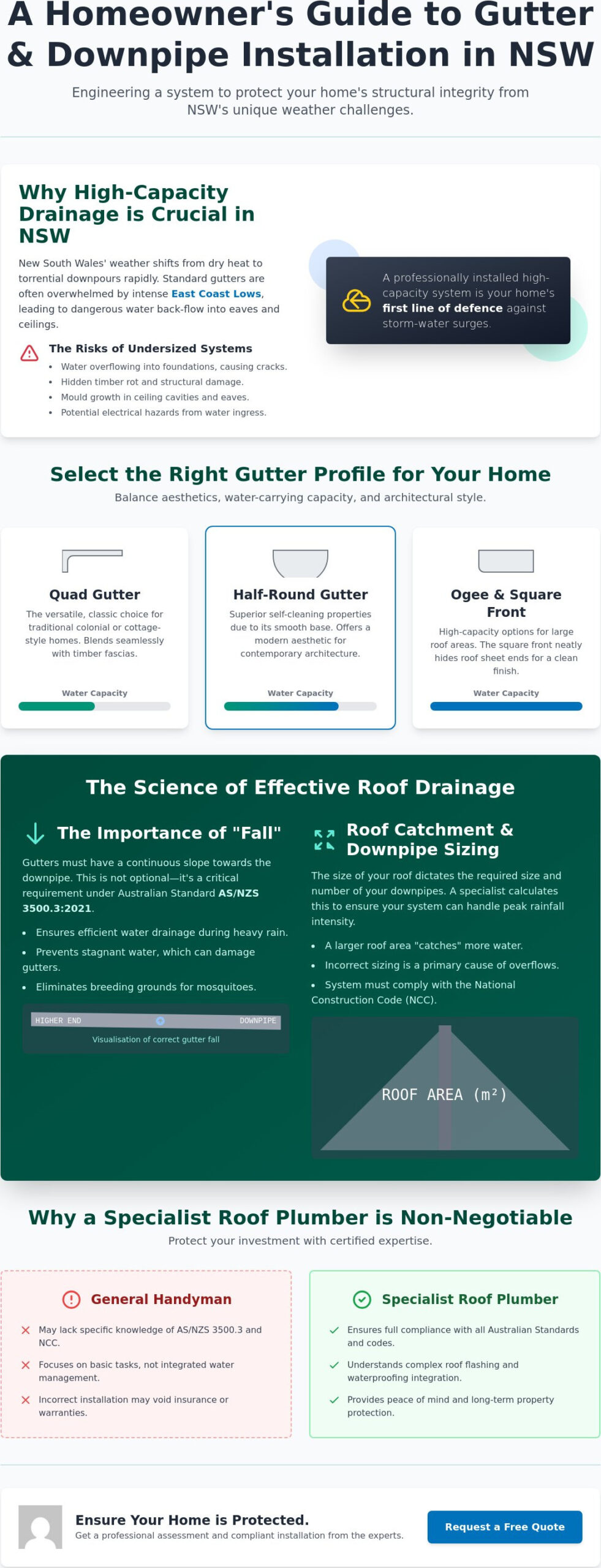
- Quad Gutter: This is the versatile, classic choice for traditional colonial or cottage-style homes. It blends seamlessly with existing timber fascias and is a staple in many established NSW suburbs.
- Half-Round Gutter: These offer superior self-cleaning properties because the smooth circular base prevents debris build-up. They provide a modern aesthetic appeal that works well with contemporary architecture.
- Ogee and Square Front: These are high-capacity options designed for contemporary homes and large roof areas. The square front is particularly effective at hiding the ends of roof sheets, creating a neat, clean finish.
Material Excellence: Why Colorbond Leads the Way
Colorbond steel remains the gold standard for Australian conditions. It features a multi-layered protection system that resists chipping, peeling, and fading under the harsh sun. Unlike older galvanised iron, Colorbond is specifically engineered to handle the thermal expansion and contraction common in our climate. For commercial or industrial applications, Zincalume provides a cost-effective alternative with high durability, though it lacks the extensive colour range of its premium counterpart.
Matching your gutters and downpipes to your roof and fascia colour creates a seamless, high-end finish that can significantly boost kerb appeal. If you’re unsure which material or profile suits your specific roofline, you can consult with our team to explore the best options for your property. We focus on selecting materials that provide a precise fit and long-term security, ensuring your home stays dry and looks exceptional for years to come.
Downpipe Sizing: The Secret to Effective Roof Drainage
Downpipes are the vertical engines of your roof’s drainage system. While gutters collect the water, the downpipes do the heavy lifting of transporting it away from your walls and foundations. A professional gutter and downpipe installation NSW is never a matter of guesswork; it requires precise hydraulic planning. If your downpipes are too small or poorly spaced, the gutters will overflow during heavy rain, regardless of how deep the profiles are. Every component must be calibrated to work as a single, cohesive unit that moves water rapidly toward the storm-water connection.
One often overlooked aspect of multi-level homes is the use of spreader pipes. These are essential for managing water that travels from an upper roof tier onto a lower section. Without a correctly installed spreader, the concentrated stream of water can strip the granules from roof tiles or overwhelm the lower gutter section. A specialist ensures these transitions are smooth and that the path to the ground-level storm-water system remains clear and unobstructed.
Calculating Catchment: How Many Downpipes Do You Need?
The number of downpipes required for your home depends on the total roof catchment area and local rainfall intensity. We calculate this by looking at the horizontal projection of the roof rather than the actual surface area. This calculation determines the litres per second that the system must handle during a peak storm event. A common mistake in DIY or general trade work is leaving “dead spots” in the guttering. These are long stretches where water pools because there is no nearby outlet. To combat this, we often recommend larger 100x75mm downpipes for high-flow areas, as they provide a significant increase in capacity over standard round alternatives.
Positioning for Maximum Efficiency
Strategic placement is vital for both performance and aesthetics. Following the 12-metre rule is standard practice; downpipes should generally be spaced every 12 metres of guttering to ensure the weight of the water doesn’t strain the brackets. We also avoid placing outlets in corners or near valleys. These areas naturally accumulate leaves and debris, which can lead to blockages if an outlet is positioned directly beneath them. If you do experience an obstruction in your vertical drainage, understanding the process of blocked downpipe repair Sydney specialists use can help you act quickly before minor debris build-up becomes a structural emergency.
When performing a gutter and downpipe installation NSW, we also consider the visual lines of your home. Downpipes should be positioned to complement the architecture, often aligned with window frames or corners to remain as unobtrusive as possible. This methodical approach ensures your drainage is highly functional while maintaining the kerb appeal of your property. Proper positioning prevents water from lingering in the system, which is the primary cause of internal rust and mosquito breeding in stagnant pools.
The Gutter and Downpipe Installation Process in NSW
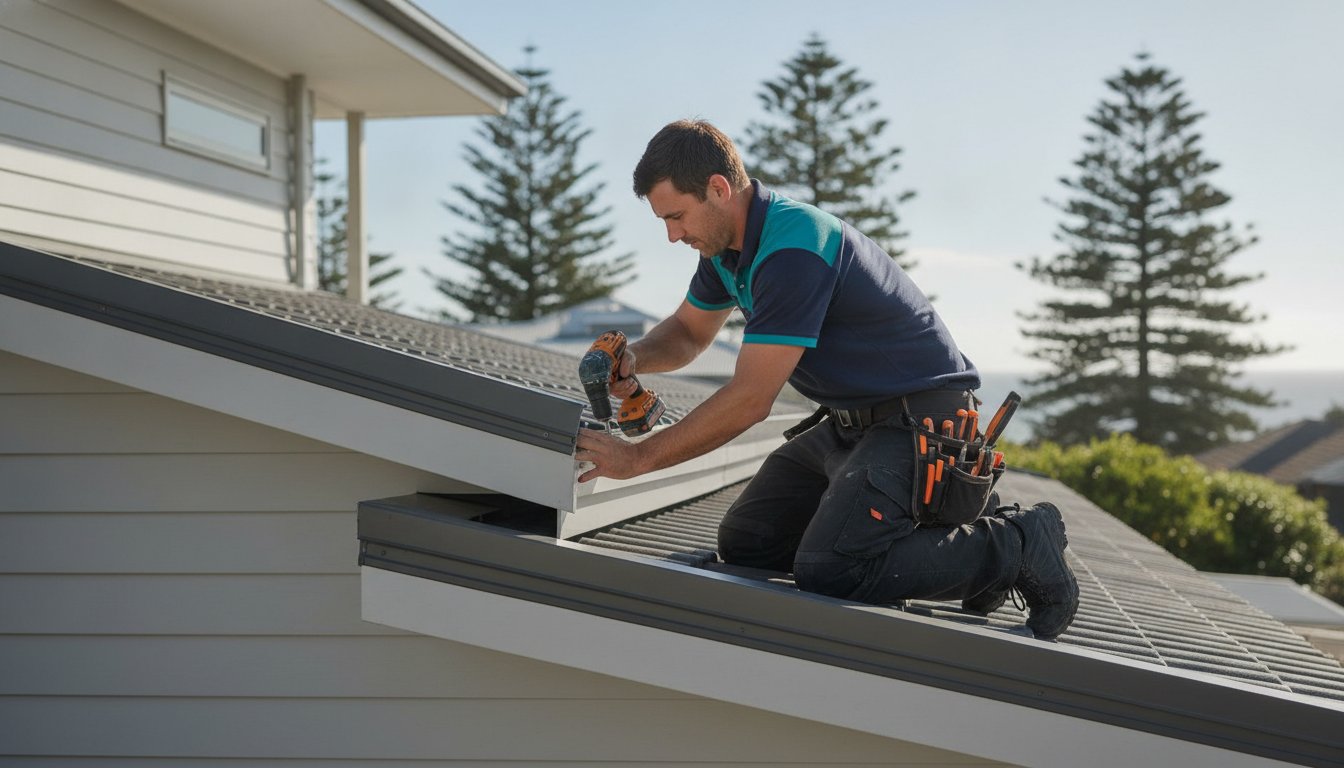
The physical act of installing a drainage system requires more than just basic tools; it demands a disciplined, methodical approach. A professional gutter and downpipe installation NSW follows a specific sequence to ensure the finished product withstands the weight of a heavy storm. Most homeowners don’t realise that water is incredibly heavy. A standard 12-metre run of guttering can hold over 100 kilograms of water during a peak downpour. If the brackets aren’t spaced correctly or the gradient is off by even a few millimetres, the entire system can fail, leading to sagging and eventual structural damage.
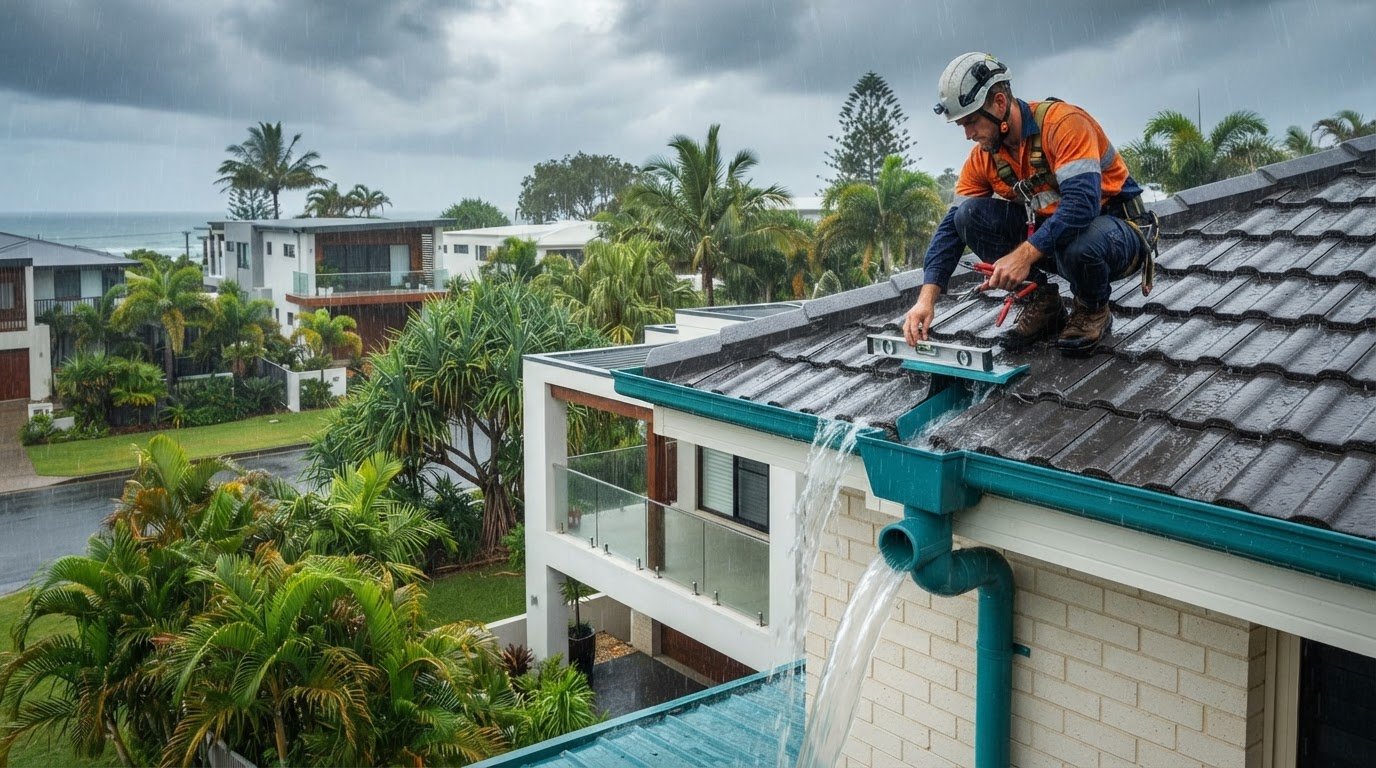
The most critical technical element is the “fall” or gradient. In NSW, eaves gutters must generally be installed with a minimum fall of 1:500. This ensures that every drop of water moves toward the downpipes rather than sitting in the channel. Stagnant water is more than just a nuisance. It accelerates internal corrosion and creates a breeding ground for mosquitoes. We use high-tension string lines to set this gradient with absolute precision before any metal is fixed to the fascia. This methodical setup is what separates a long-lasting installation from a temporary fix. Many homeowners who experience persistent overflows discover that an incorrect fall is the root cause; if this sounds familiar, our complete guide on how to fix overflowing gutters for Australian homeowners explains how to identify and correct this problem in detail.
Step-by-Step: From Removal to Final Flow Test
- Site Inspection and Removal: We begin by carefully removing old, rusted, or undersized guttering. We inspect the fascia boards for any rot that might compromise the new installation.
- Setting the String Line: This is where the engineering happens. We calculate the precise fall toward the downpipes to ensure rapid drainage.
- Securing Brackets: We fix brackets at specific intervals. This prevents the guttering from bowing or pulling away from the home under heavy rain loads.
- Sealing and Riveting: Joints are sealed using high-grade roof silicone and pop rivets. This creates a watertight finish that resists the thermal expansion common in the NSW climate.
Compliance and Standards: AS/NZS 3500.3
All roof drainage work in this state must comply with the National Construction Code and the Australian Standard AS/NZS 3500.3:2021. This standard provides the regulatory benchmark for all NSW roof plumbing, ensuring systems are safe and functional. Using a licensed roof plumber isn’t just a recommendation; it’s a requirement to maintain your home insurance validity. For contracts entered into after February 2012, a statutory warranty period of 6 years applies to your guttering installation. This provides you with long-term security and peace of mind.
If you’ve noticed your current system sagging or holding water, it’s time for a professional intervention. You can book an inspection with our specialists to ensure your home meets all modern safety standards. We take pride in functional excellence and local community standing, guarding your home against the elements with every project we complete. Our team ensures that every gutter and downpipe installation NSW we undertake is tested for flow and capacity before we leave the site.
Why Choose a Specialist Roof Plumber for Your NSW Property
Engaging a specialist for your gutter and downpipe installation NSW is about more than just finding someone with a ladder and a drill. It’s about partnering with a professional who understands how water behaves across every inch of your roofline. While general handymen might offer basic repairs, they often lack the technical training to diagnose underlying structural concerns. At Roof Plumbing Expert, we position ourselves as the definitive authority in external water management. We treat your drainage system as a high-performance engine that requires precise calibration to protect your home’s foundations and internal cavities from the ground up.
Professional installation by a licensed trade specialist significantly reduces the long-term need for emergency roof leak detection and repair. We don’t just look at the metal channels; we evaluate how they interact with your entire roofing system. This proactive approach identifies weak points in your home’s armour before they manifest as expensive internal damage. By choosing a seasoned specialist, you’re investing in a steady, dependable presence that prioritises your property’s security and your own peace of mind.
The “Expert” Difference: Beyond Simple Guttering
A specialist roof plumber brings a comprehensive perspective to every project. We understand that gutters are part of a broader ecosystem that includes Colorbond roofing, roof flashing, and waterproofing. During an installation, we often identify related issues such as failing mortar in ridges or compromised flashing around chimneys. Integrating your new drainage with services like roof restoration Sydney and repointing ensures a seamless barrier against the elements. This level of thoroughness is backed by a statutory warranty of 6 years for work over A$20,000, providing a level of legal protection that unlicensed contractors simply cannot offer.
This commitment to specialised maintenance is a hallmark of professional service across various Australian industries. For example, in the industrial sector, companies rely on biokem.com.au for expert oil filtration and analysis to protect their heavy machinery from internal degradation and ensure long-term operational reliability.
Protecting Your Mainly Beach Investment
Properties in coastal areas like Mainly Beach face unique environmental challenges that standard installations often ignore. The constant presence of salt spray accelerates corrosion in inferior materials, making the choice of high-grade Colorbond Ultra or stainless steel essential for durability. Local knowledge is invaluable here; we know which profiles handle the heavy sea mists and sudden coastal squalls most effectively. Beyond functional excellence, modern finishes play a massive role in the competitive Sydney property market. A precise, colour-matched installation enhances your home’s kerb appeal and overall market value, signalling to future buyers that the property has been maintained to the highest standards.
Securing your home against the unpredictable NSW climate requires a methodical and business-like approach to drainage. We provide clear explanations and transparent processes so you understand exactly how your investment is being protected. Don’t wait for the next East Coast Low to test your home’s limits. Protect your home today with a professional gutter and downpipe installation from Roof Plumbing Expert and gain the confidence that comes from expert craftsmanship.
Secure Your Home Against the Next NSW Storm
Protecting your property starts with a drainage system that’s engineered, not just hung. We’ve explored how technical factors like precise fall, catchment area calculations, and downpipe spacing are the real secrets to preventing internal water damage. A professional gutter and downpipe installation NSW ensures your home remains compliant with Australian Standards while handling the high-intensity rainfall common across Sydney. By choosing high-capacity Colorbond profiles, you’re investing in a durable finish that resists coastal corrosion and enhances your home’s kerb appeal.
Don’t leave your roof’s health to chance with general handymen. As licensed NSW roof plumbers and Colorbond specialists, we bring the local expertise needed to guard your home against the elements. Our methodical approach ensures every joint is sealed and every gradient is perfect; this gives you long-term peace of mind. Get a Professional Gutter and Downpipe Quote from Roof Plumbing Expert today to ensure your property is ready for whatever the weather brings. We’re here to help you protect your biggest investment with functional excellence and reliable local service.
Frequently Asked Questions
How much does gutter and downpipe installation cost in NSW?
The total investment for your property depends on the linear meterage, the chosen profile, and the complexity of the roofline. Factors such as two-storey access requirements or the need to replace rotted fascia boards also influence the final figure. A professional assessment is necessary to provide a precise quote that accounts for your home’s specific catchment area and material preferences.
Do I need a licensed plumber to install gutters in Sydney?
Yes, any gutter and downpipe installation NSW must be performed by a licensed roof plumber to comply with state regulations. This ensures the work meets the National Construction Code and Australian Standards for stormwater drainage. Hiring an unlicensed contractor can void your home insurance and leaves you without the protection of statutory warranties if the system fails during a storm.
How long do Colorbond gutters and downpipes typically last?
High-quality Colorbond steel systems are engineered to last 20 years or more when professionally installed and maintained. The material features multi-layered protection designed specifically for the harsh Australian sun and rainfall. For properties in coastal areas like Mainly Beach, we often recommend Colorbond Ultra to provide the necessary resistance against salt-spray corrosion and extend the system’s lifespan.
What are the signs that my gutters need replacing rather than just cleaning?
Visible rust holes, sagging sections, and water stains on your eaves or internal ceilings are clear signs that a cleaning is no longer sufficient. If you notice water pooling in the channels even when they are clear of debris, the original “fall” has likely failed. At this stage, a full replacement is the only way to restore functional drainage and protect your foundations from saturation.
Can I change my downpipe positions during a new installation?
You can relocate downpipes to improve drainage efficiency or enhance your home’s kerb appeal during a new installation. However, any changes must be calculated to ensure the new positions can still handle the roof’s catchment area without overwhelming the system. A specialist will assess your storm-water connection points and the 12-metre spacing rule before recommending an optimised layout for your property.
What is the best gutter profile for heavy rain in NSW?
High-fronted quad gutters and large square-front profiles are specifically designed to manage the high-intensity rainfall common in NSW. These profiles offer a larger cross-sectional area to carry more water away from the roofline quickly. It is also essential to include overflow provisions, such as slotted gutters, to ensure that water cannot back-flow into your ceiling cavity during extreme weather events.
How often should I have my gutters and downpipes inspected?
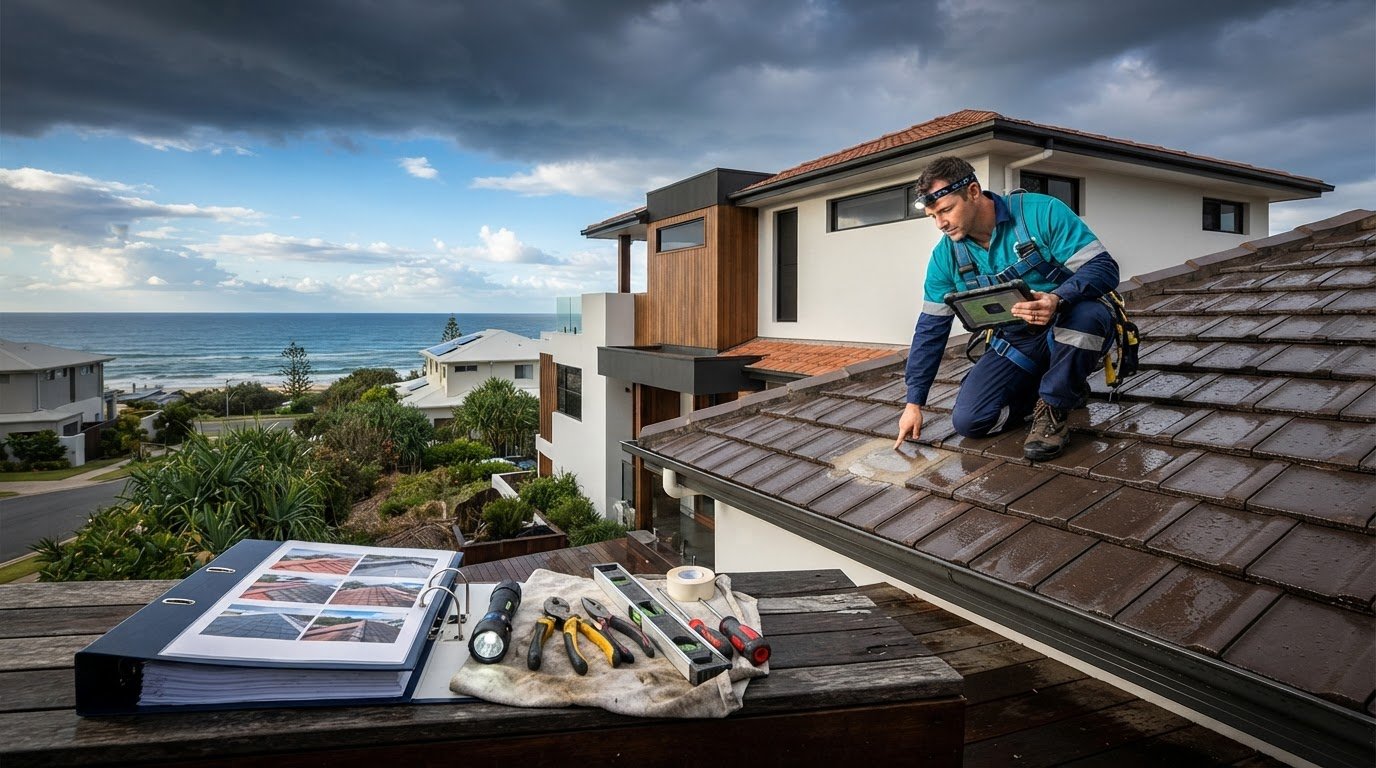
A professional inspection should be conducted at least once a year, preferably before the summer storm season. For homes with significant tree cover or those located near the coast, bi-annual checks are often more appropriate. Regular assessments allow a roof plumber to identify minor issues like bracket fatigue or joint leaks before they cause expensive structural damage to your eaves and foundations.
Does new guttering help prevent roof leaks?
Yes, a correctly engineered gutter and downpipe system is a primary defence against internal roof leaks. By rapidly redirecting water away from the roof sheets and flashing, it prevents the overflow that often forces its way under the roofline. When your drainage is integrated with professional roof restoration Sydney services and waterproofing, it ensures that even the heaviest downpours are managed safely without compromising your home’s interior. For existing properties where debris accumulation is already causing issues, prompt blocked downpipe repair Sydney services can prevent a minor obstruction from escalating into costly water damage to your foundations and ceilings.