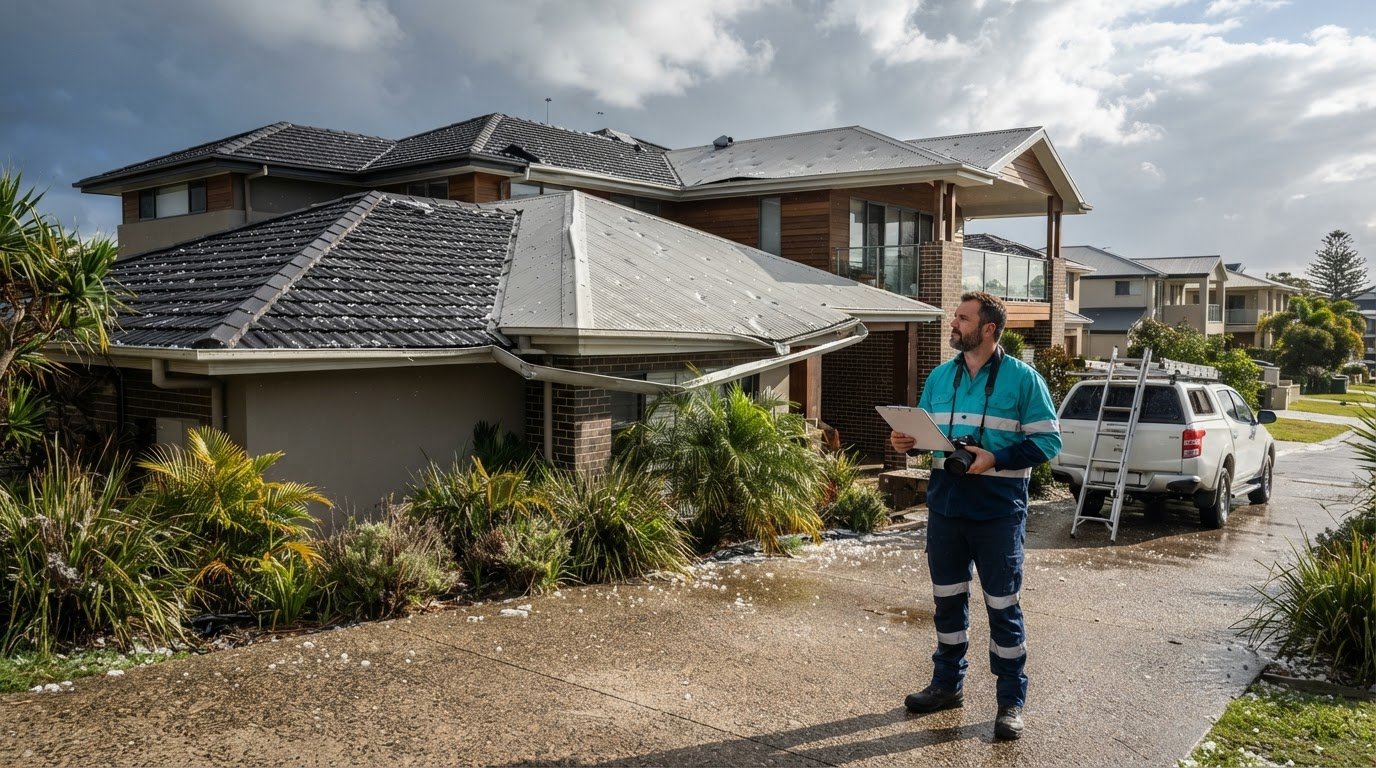
The first job after hail isn’t climbing up to inspect the roof. It’s keeping people clear of anything that may be unsafe. If you’re asking what to do after hail damage to roof, start from the ground: look for immediate hazards, stay well clear of fallen wires and avoid areas where the ceiling is sagging or water is near electrical fittings.
Hail can crack tiles, dent metal roofing, loosen flashing or damage gutters, and some problems aren’t visible from below. You don’t need to diagnose the damage yourself. Safe photos and notes about leaks or other changes can help build a clear record before cleanup or repairs begin.
This guide explains how to make safe decisions, document visible damage and understand what needs professional assessment. You’ll learn what to record, when to arrange roof leak detection or repairs, and how gutter, flashing and waterproofing work can address related damage. For property owners in Mainly Beach, the aim is straightforward: protect your household and choose the next step based on the roof’s condition, not guesswork.
Key Takeaways
- Know what to do after hail damage to roof: wait until conditions are safe, check from the ground and arrange an assessment rather than climbing up.
- Learn which signs on tiles, metal roofing, flashings, skylights and gutters may need a closer look, without assuming they mean the whole roof needs replacing.
- Record the storm date and visible damage with photos taken from safe positions, and keep receipts and written communications about temporary protection or assessments.
- Compare targeted repairs, broader restoration and replacement by the assessed extent and location of damage, not the storm alone.
- Understand when visible damage, water entry or uncertainty calls for a professional assessment and what a useful assessment should clarify.
What to do straight after roof hail damage
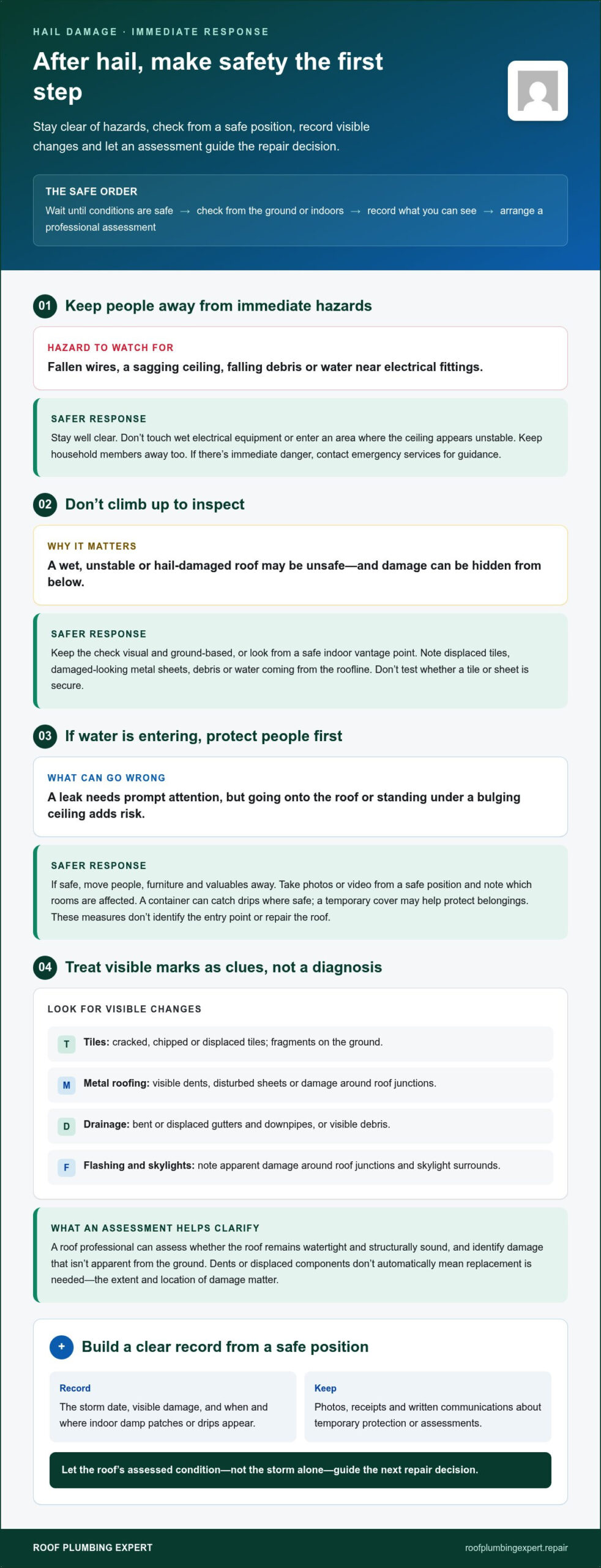
After a hailstorm, follow a simple order: wait until conditions are safe, check the roof from the ground or indoors, record what you can see, then arrange a professional assessment. Don’t climb onto a wet, unstable or hail-damaged roof. Tiles may be loose, metal sheets may be affected, and a surface that looks intact from below can still conceal damage. Hail varies in size and impact, as described in this overview of Hail, so don’t judge the roof’s condition by the storm alone.
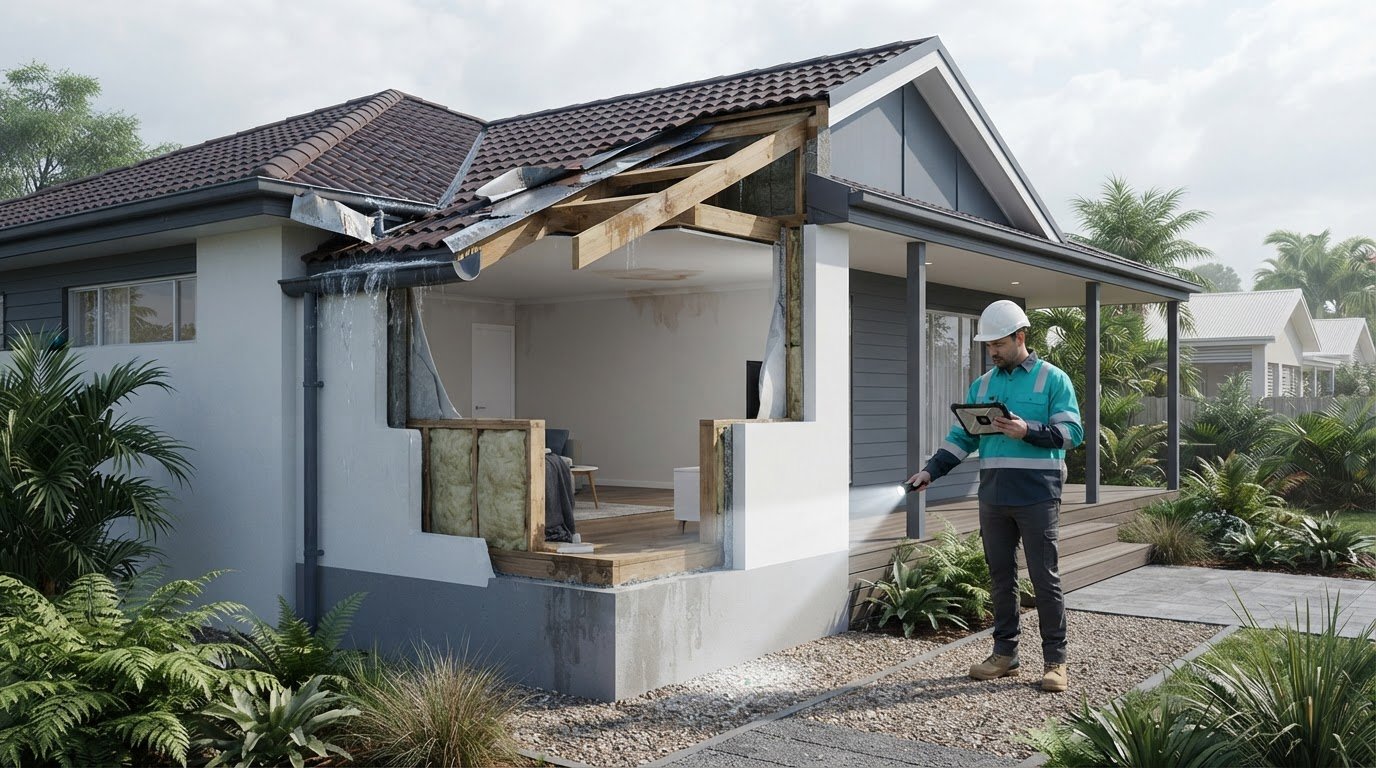
Keep clear of sagging ceilings, falling debris and exposed wiring. Water near lights, power points or other electrical fittings is a serious warning sign. Don’t touch wet electrical equipment or enter an area where the ceiling appears unstable. Keep other household members away too. If there’s an immediate danger, contact emergency services for guidance.
Is it safe to inspect a roof after a hailstorm?
Keep your inspection visual and ground-based. From a safe spot, look for displaced tiles, damaged-looking metal sheets, debris or water coming from the roofline. You can also check from a safe indoor vantage point, but don’t enter a room with a sagging ceiling or water near electrical fittings. If anything looks unsafe, keep people away until the area and roof can be assessed safely.
What should you do first if the roof is leaking?
Active water entry needs prompt attention, but that doesn’t mean going onto the roof. If it’s safe, move people, furniture and valuables away from the leak. Take photos or video from a safe position before making non-urgent changes, and note which rooms are affected. If water is near electrical fittings, stay clear and seek urgent help rather than trying to contain it yourself.
Where it’s safe, a container can catch drips and a temporary cover can help protect belongings. Don’t put yourself beneath a bulging ceiling or attempt a roof repair in wet or unstable conditions. Indoor measures can limit immediate mess, but they won’t identify the entry point or fix damaged roofing. Arrange a roof assessment to check the affected components and determine suitable next steps. Roof leak detection and repair can help identify and address damage to roof tiles, metal sheets and other roof components.
If you’re weighing up what to do after hail damage to roof, put safety first and let a professional assessment guide the repair decision. A calm, documented check is more useful than risking a climb or guessing at the extent of damage.
How to spot hail damage on roof tiles, metal roofing and gutters
Once it’s safe to look, scan the roofline and surrounding ground from a secure position. Note visible changes, but treat them as clues rather than a diagnosis. Hail can affect different roofing materials and connected components, while damage to a roof’s water-shedding layers may not be obvious from the street.
What hail damage can look like on tiles and metal roofing
On a tiled roof, look for cracked, chipped or displaced tiles, as well as fragments on the ground. On metal roofing, visible dents, disturbed sheets or damage around roof junctions may warrant closer assessment. Don’t climb up to check individual areas or try to test whether a sheet or tile is secure.
A visible mark is a clue, not confirmation of a roofing defect. A roof professional can assess whether the roof remains watertight and structurally sound, and identify damage that isn’t apparent from the ground. Dents or displaced components don’t automatically mean the roof needs replacing. The extent and location of damage matter.
Check roof drainage, flashing and skylights too
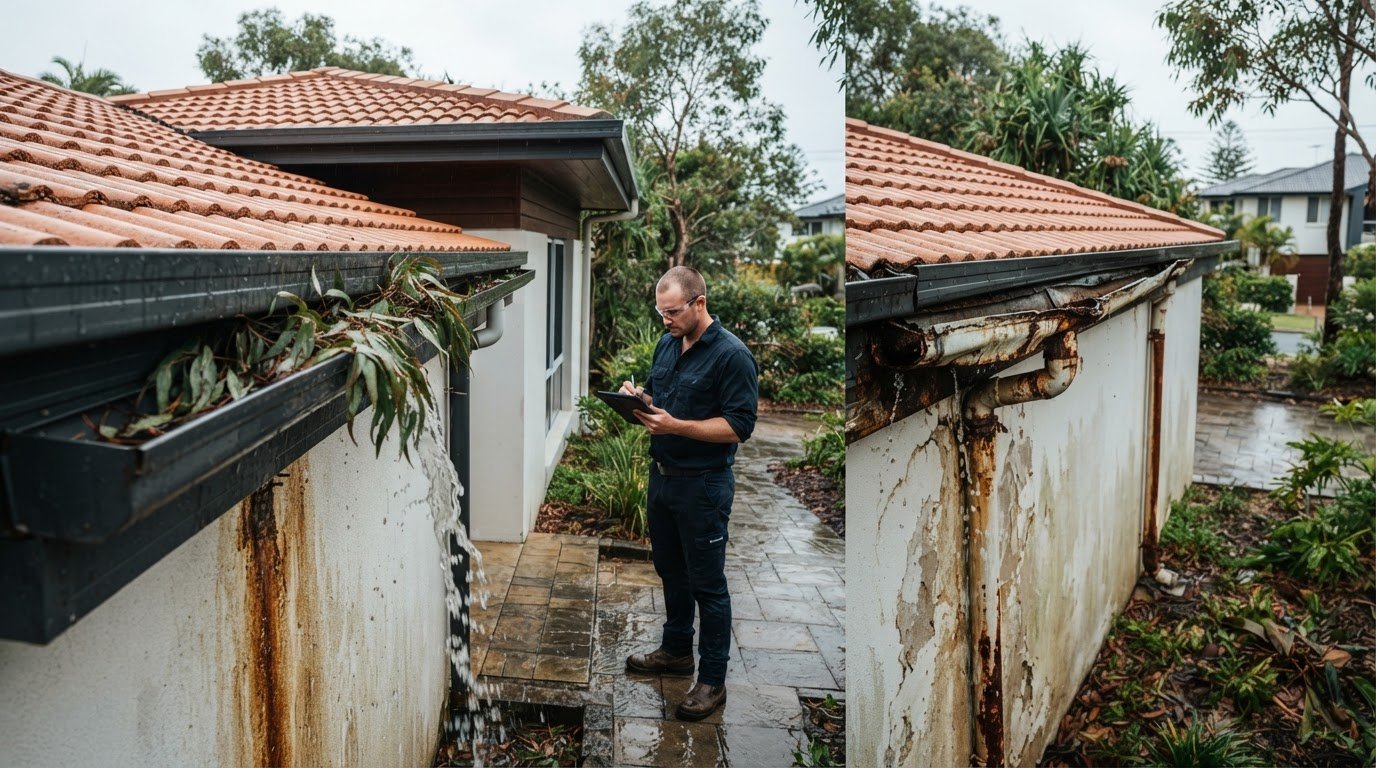
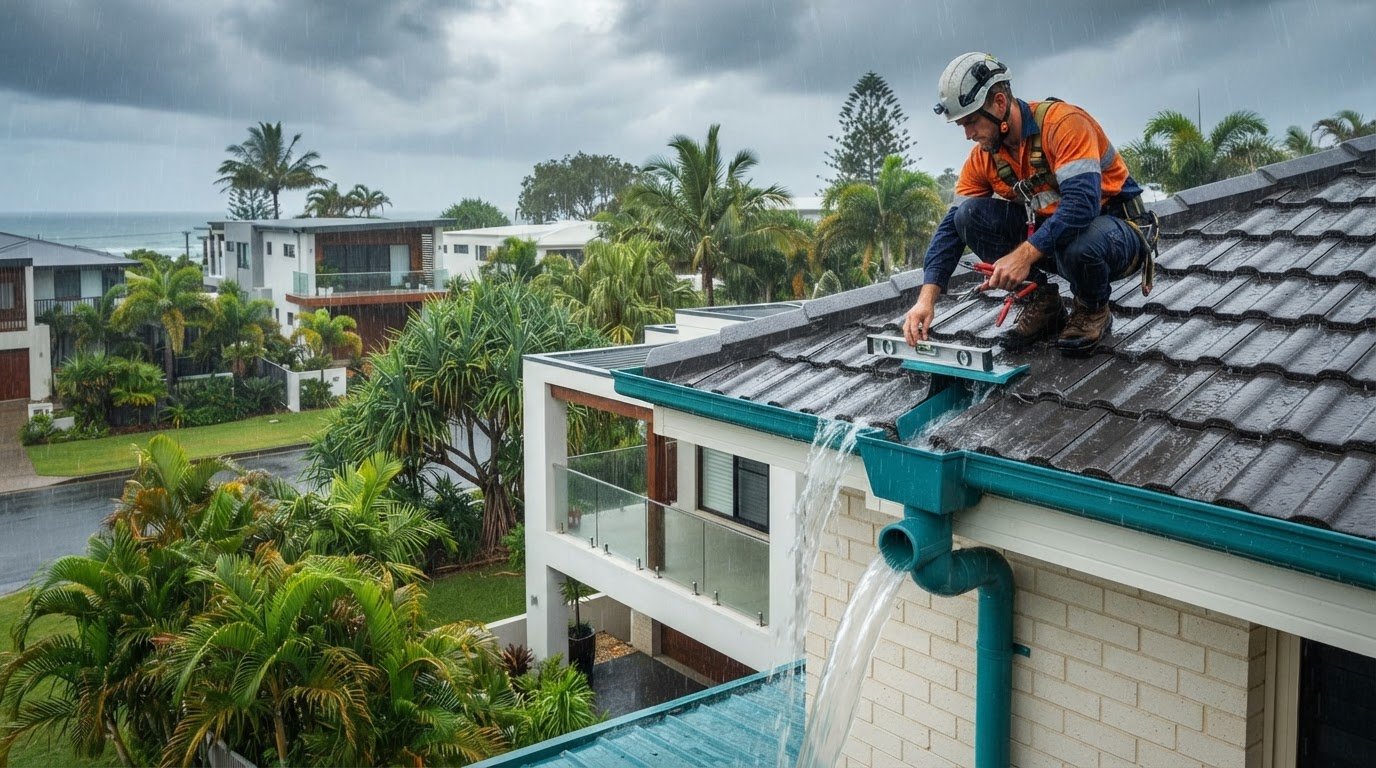
Hail and storm debris can dent, block or displace gutters and downpipes. From a safe position, note whether sections look bent or out of place, or whether debris is visible. For more on how drainage components work together, see this guide to gutter and downpipe installation in NSW.
Include roof flashing around junctions and skylight surrounds in your notes, as damage there may allow water to enter. A roof assessment can help distinguish surface marks from damage that affects a component’s function. If flashing or a skylight appears damaged, roof flashing and waterproofing or skylight repair can address the affected area.
Not every leak appears during the storm. Water may show up later, and visible signs from outside may not reveal the full extent of a problem. Watch for new damp patches or drips indoors, and record when and where they appear. The Insurance Council of Australia guidance on storm damage also outlines practical steps for documenting storm impacts.
If you’re unsure what the signs mean, a professional roof assessment can establish which components need attention before you decide on repairs. Explore roof assessment and repair options for your property in Mainly Beach.
Roof repair, restoration or replacement: how to compare the options
Hail damage doesn’t automatically mean a roof needs a full restoration or replacement. The right scope depends on the assessed extent and location of the damage, the roof’s existing condition and material, and whether related components such as flashing or drainage have been affected. A localised issue on an otherwise serviceable roof calls for a different approach from widespread damage across an ageing roof.
The repair option should follow a professional assessment of the roof’s actual condition. Use the comparison below to understand the purpose of each option, not as a diagnosis.
| Option | Purpose | May suit when assessment finds |
|---|---|---|
| Targeted repair | Address specific damaged roof components. | Damage is localised and the surrounding roof remains serviceable. |
| Broader restoration | Restore and maintain an existing roof across a wider area. | The roof has broader wear or deterioration, and its condition supports restoration. |
| Replacement | Replace the existing roof covering or roof system where repair or restoration isn’t suitable. | Damage or existing deterioration is extensive enough to make replacement the appropriate scope. |
When might targeted roof repairs be enough?
If assessment finds isolated damage while the surrounding roofing remains serviceable, targeted work may be suitable. Depending on what’s affected, this could involve repairing damaged tiles or metal sheets, or addressing flashing and waterproofing. A local repair is intended to deal with identified damage. It shouldn’t be assumed to resolve separate or concealed roof problems.
When should restoration or replacement be considered?
Widespread damage, or a roof that was already deteriorated before the storm, may call for a broader solution. Restoration addresses the condition of an existing roof, while replacement involves renewing the roof covering or system. Neither is an automatic consequence of hail. The roof material and the condition of its components help determine which approach is appropriate.
Related issues can also affect the scope. Damage to flashing, skylight surrounds, gutters or downpipes may need attention alongside the roof covering, but each component should be assessed on its own condition. For more context on restoration decisions, read this roof restoration guide.
When considering what to do after hail damage to roof, base your decision on the assessment findings: which components are affected, how much of the roof is involved, and whether the existing roof remains suitable for repair or restoration. This gives you a sound basis for comparing options without treating the storm itself as proof that replacement is needed.
How to document roof hail damage and manage temporary protection
Good records help you explain what happened and show the condition of your property. Note the storm date, the areas where you’ve noticed damage and when any water entry appeared. Keep exterior roof observations separate from indoor damage, and take photos only from a safe position. Don’t climb onto the roof for a closer shot.
What evidence should you collect for a roof damage claim?
- Exterior: Take wide shots showing the affected roof area, then close-ups of visible damage to tiles, metal sheets, gutters or downpipes from ground level or another safe position.
- Interior: Photograph water marks, drips and damaged belongings separately. Note the room and when you first noticed the issue.
- Records: Keep the storm date, assessment notes, relevant receipts and written communications together. These records document events and work arranged, but don’t determine whether an insurer will accept a claim.
Check your insurance policy and contact your insurer about its claim process, evidence requirements and any steps to take before repairs. Requirements can vary between policies. The Insurance Council of Australia’s storm damage guidance offers general advice on documenting damage and managing a severe storm’s aftermath.
How can you limit further damage without climbing onto the roof?
If it’s safe, move valuables away from indoor drips and place a suitable container beneath the leak. Keep clear of sagging ceilings and water near electrical fittings. Don’t walk on the roof or try to install a tarp in unsafe conditions. Temporary indoor protection can reduce damage to belongings, but it won’t locate or repair the roof entry point.
Keep notes if you arrange temporary mitigation or a roof assessment, including relevant receipts and written communications. For signs that a leak may need further investigation, read this guide to roof leak detection in NSW.
If you’ve recorded visible damage, arrange a professional roof assessment to identify affected components and suitable repairs. Arrange a roof assessment for your property in Mainly Beach.
When to arrange professional hail-damage roof repairs in NSW
Arrange a professional assessment if you can see cracked or displaced roofing, notice water entering the home, or aren’t sure whether the roof is still in sound condition. Don’t wait for a ceiling stain to spread before acting on signs of a leak. An assessment can help identify which components need attention and what repair options suit their condition.
What should a professional roof assessment clarify?
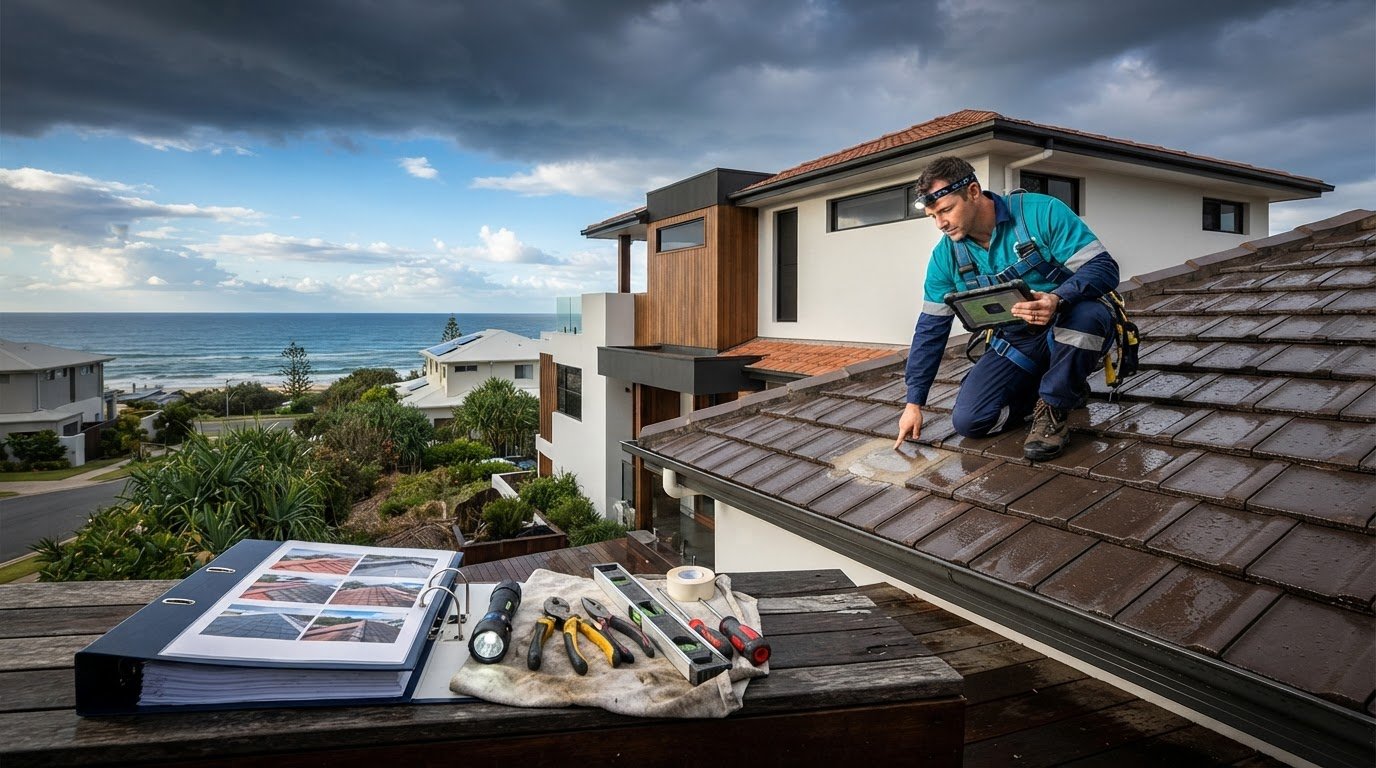
A useful assessment connects observations to specific locations and components. It should explain what was inspected, record visible damage and note areas that may need further attention. Findings can cover roof tiles or metal sheets, roof junctions, flashing, skylights, gutters and downpipes where relevant.
The assessment can then set out a suitable repair scope, such as work to a damaged roof section or related flashing. It may also explain whether broader restoration or replacement should be considered based on the roof’s assessed condition. No assessment can promise that every concealed issue will be found, but clear findings help you understand what has been observed and what action is proposed.
Documented findings give you a sound basis for choosing repairs that match the roof’s assessed condition. If water is entering the home, mention where it appears and when you first noticed it. That information can help connect indoor signs with the roof areas requiring investigation.
What happens after the roof damage is assessed?
Next steps depend on the findings. Localised damage may call for roof leak detection and repair, while a roof with broader deterioration may warrant consideration of restoration. Replacement may be appropriate if the assessed condition shows that repair or restoration isn’t suitable. Hail alone doesn’t determine which option is needed.
Related work should follow the same evidence-led approach. If the assessment identifies storm-related damage to gutters or downpipes, those components may need repair or replacement. If flashing, waterproofing or a skylight surround is affected, addressing that point can help manage water entry. Consider each part of the roof system according to its condition, rather than assuming it needs work because hail occurred.
If you’re still weighing up what to do after hail damage to roof, a professional assessment can turn visible signs and leak concerns into a clearer repair plan. Roof Plumbing Expert provides roof leak detection and repairs, along with related roofing and drainage work across NSW, including in Mainly Beach. Arrange a roof repair assessment with Roof Plumbing Expert.
Take the next step with confidence
After hail, keep people safe, document visible signs from the ground and avoid assuming that dents or displaced roofing mean the whole roof needs replacing. If you’re deciding what to do after hail damage to roof, use a professional assessment to understand which components are affected and what repair scope suits their condition.
Roof Plumbing Expert provides roof leak detection and repair for residential and commercial properties across New South Wales, including Mainly Beach. If the assessment identifies related issues, gutter and downpipe, flashing, waterproofing or skylight work can also help address damage to the roof system.
For clear guidance on your roof’s condition and practical repair options, arrange a roof repair assessment with Roof Plumbing Expert.
Frequently Asked Questions
What should I do first after hail damages my roof?
First, wait until the storm has passed and conditions are safe, then check from the ground or indoors. Keep clear of sagging ceilings, fallen debris and exposed wiring. Record visible damage from a safe position, note any water entry and arrange a professional assessment if you spot damage or aren’t sure about the roof’s condition. If you’re deciding what to do after hail damage to roof, don’t climb up to investigate.
Can I inspect my roof after a hailstorm?
You can make a visual check from the ground or a safe indoor vantage point, but don’t walk on or climb onto a wet, unstable or hail-damaged roof. Look for visible changes such as displaced tiles, debris or damaged-looking gutters. Avoid areas beneath sagging ceilings or near water and electrical fittings. If you’re in Mainly Beach and unsure whether the roof is safe, keep people clear and arrange a professional assessment.
How do I know if hail has damaged my roof?
Possible signs include cracked or chipped tiles, dents or disturbed metal sheets, damaged flashing, displaced skylight surrounds, and dented or blocked gutters and downpipes. These observations are clues, not a confirmed diagnosis, and the roof may have less visible damage too. Note the location of signs and watch for later water marks or drips indoors. A professional assessment can help establish which roof components are affected and what action may be suitable.
Should I contact my insurer before repairing hail damage?
Check your policy and contact your insurer to understand its claim process and any evidence or repair steps it requires. Policy terms and requirements vary, so don’t assume that another homeowner’s process will apply to your claim. Photograph visible damage from a safe position and keep assessment notes, relevant receipts and written communications. If temporary protection is needed to limit further damage, record what was done and discuss the situation with your insurer.
Can hail-damaged roof tiles be repaired without replacing the whole roof?
Yes, targeted repairs may be suitable if damage is localised and the surrounding roof remains serviceable. The appropriate work depends on an assessment of the tiles, roof condition and any affected components such as flashing or waterproofing. A few damaged tiles don’t automatically mean the whole roof needs replacement. A professional can explain whether repair is appropriate or whether broader restoration or replacement should be considered.
What should I do if my roof leaks after a hailstorm?
Keep people away from the leak if the ceiling is sagging or water is near electrical fittings. If it’s safe, move belongings and place a container beneath indoor drips, then record the affected area. Don’t climb onto the roof or attempt an unsafe tarp installation. Arrange a roof assessment to identify the entry point and suitable repair. Roof Plumbing Expert provides roof leak detection and repair across New South Wales, including for property owners in Mainly Beach.
Can hail damage gutters, downpipes and skylights as well as the roof?
Yes. Hail or storm debris may dent or block gutters and downpipes, while flashing or skylight surrounds may also be affected. These components help manage water around the roof, so damage can contribute to drainage problems or water entry. Visible marks don’t confirm the extent of the issue. A professional assessment can identify which components need attention and whether gutter, downpipe, flashing, waterproofing or skylight repair is appropriate.