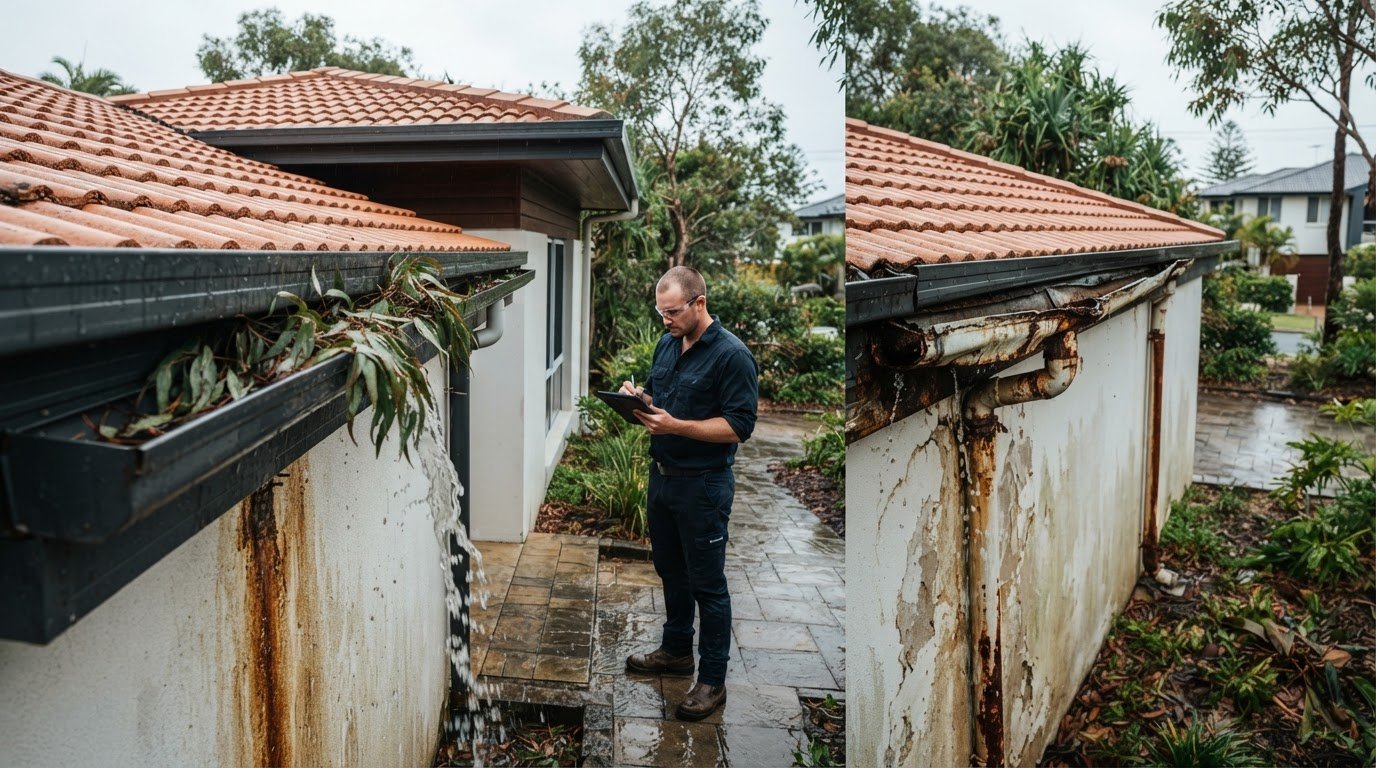
What if an overflowing gutter doesn’t need replacing at all? In leafy areas, including parts of Mainly Beach, leaves can block water flow even when the gutter itself is sound. The more telling signs gutters need replacing are usually persistent or widespread, rather than a single blockage or isolated leak.
It’s understandable to worry when you spot sagging sections, rust or water marks near the eaves. These clues can point to deterioration, but they don’t all mean the same thing. Clearing debris or repairing one damaged area may be enough; recurring leaks or damage across several sections call for a closer assessment.
This homeowner’s checklist explains how to distinguish leaf-related overflow from ongoing gutter failure, what warning signs you can safely observe from the ground, and when to arrange a professional assessment. Note where water spills, whether the problem returns after cleaning and which sections appear affected. These details help a roof-plumbing specialist assess whether a local repair or gutter and downpipe replacement is the practical next step.
Key Takeaways
- One overflow or stain doesn’t automatically mean replacement; look for signs gutters need replacing that recur or affect multiple sections.
- Use recurrence, how widely the problem appears and the gutter’s visible condition to distinguish cleaning, a local repair and a replacement assessment.
- Check from the ground, taking photos and noting where water spills or damage appears. Don’t climb onto the roof to inspect gutters.
- Overflow and staining can have several causes along the path from roof edge to gutter and downpipe, so a single symptom may not reveal the fault.
- For a professional assessment, record symptom locations, dates, photos and whether leaves or other debris were visible.
Signs Gutters Need Replacing: What to Check First
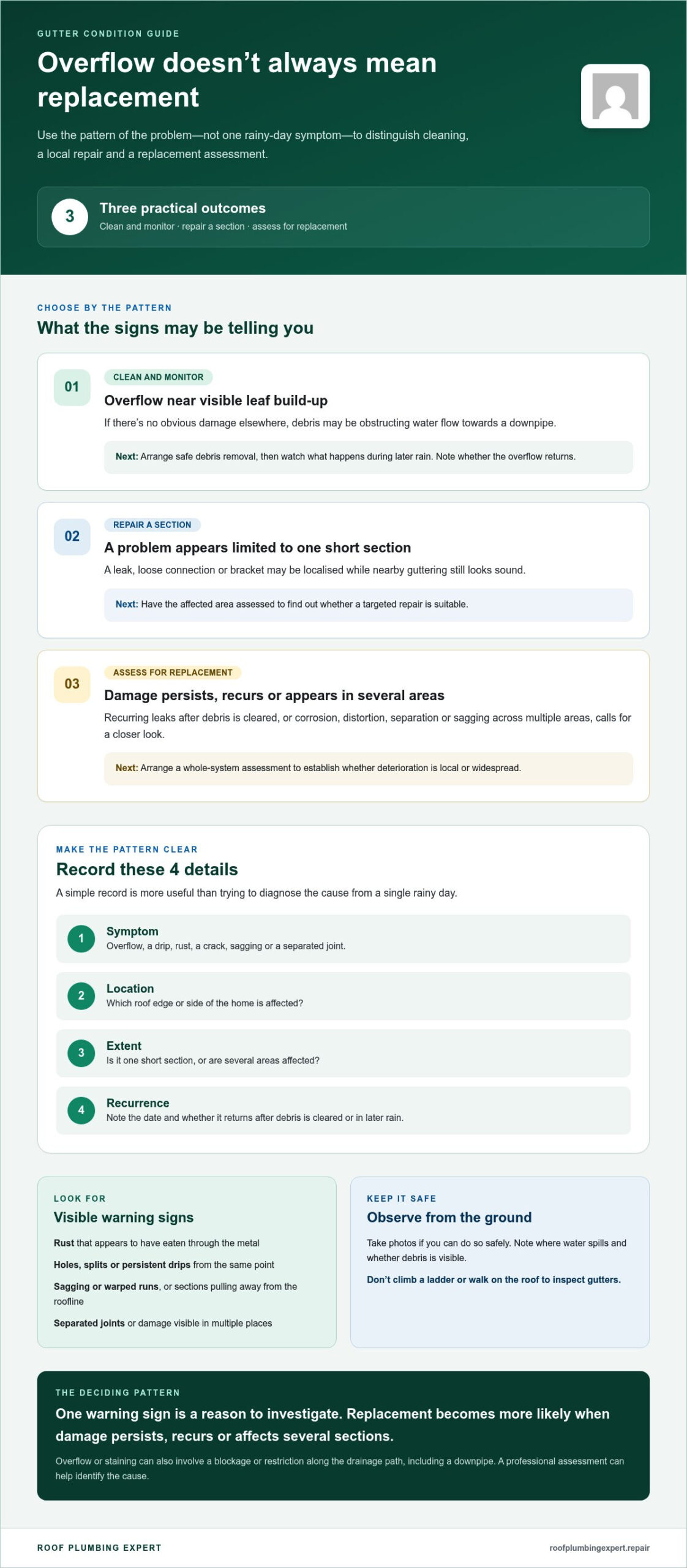
One overflow or water stain doesn’t automatically mean the whole gutter system needs replacing. Leaves can obstruct water flow, while a loose joint or local impact may cause a problem in just one spot. Start by recording four things: the symptom, its location, how far it extends and whether it returns. This gives you a clearer picture than trying to diagnose the cause from a single rainy day.
Gutters collect rainwater at the roof edge and direct it towards downpipes. A general overview of how a rain gutter works can help explain why faults at different points may produce similar symptoms, such as overflow or staining. For your checklist, focus on the pattern: is the issue isolated, or does it appear across several sections?
Which visible gutter problems deserve attention?
Look for rust that appears to have eaten through the metal, visible holes, splits or drips that continue from the same point in wet weather. These signs warrant closer assessment, though they don’t prove that full replacement is necessary. Note whether water is escaping from a seam, the gutter base or an area near a downpipe.
Also watch for a sagging or warped run, sections that appear to pull away from the roofline, and joints that have separated. These may point to failed supports or deterioration beyond one small area. Record whether the damage is confined to a short length or visible in multiple places, and photograph it from the ground if you can do so safely.
When can leaves make healthy gutters look faulty?
Leaf litter and other debris can obstruct the path to a downpipe, causing water to back up and spill over during rain. If overflow happens where debris is visible, a blockage may be contributing. If it continues after the gutter has been safely cleared, or occurs alongside rust holes, separation or sagging, the system needs a closer inspection.
Don’t climb a ladder or walk on the roof to check. Observe from the ground, and note where water spills and whether debris is visible. If debris is safely cleared, compare what happens during later rain rather than relying on the first observation alone.
A warning sign is a reason to investigate; replacement is more likely when damage persists, recurs or affects several sections. Use a simple record to make the pattern easier to assess:
- Symptom: Note overflow, a drip, rust, a crack, sagging or a separated joint.
- Location: Identify the roof edge or side of the home where it appears.
- Extent: Record whether one short section or several areas are affected.
- Recurrence: Note the date and whether the symptom returns after debris is cleared or in later rain.
This checklist helps separate a one-off blockage from signs gutters need replacing. If deterioration appears widespread or leaks keep returning, a professional gutter assessment can establish whether the problem is local or whether gutter and downpipe replacement is the practical next step.
How to Tell Gutter Replacement from Cleaning or a Local Repair
A useful decision comes from the pattern of symptoms, not one dramatic downpour. Consider whether the problem returns after debris is cleared, whether it’s confined to one spot or appears in several areas, and whether the gutter looks physically sound. This comparison helps you decide what to observe next, but an inspection is needed to confirm the cause.
| Possible outcome | What the pattern may suggest | Practical next step |
|---|---|---|
| Clean and monitor | Overflow occurs near visible leaf build-up, with no obvious damage elsewhere. | Arrange safe debris removal, then observe the area during later rain. Note whether overflow returns. |
| Repair a section | A leak, loose connection or bracket appears limited to one short section, while nearby guttering looks sound. | Have the affected area assessed to determine whether a targeted repair is suitable. |
| Assess for replacement | Leaks recur after debris is cleared, corrosion or distortion affects multiple areas, or sections continue to separate or sag. | Arrange a whole-system assessment to establish whether deterioration is local or widespread. |
When may cleaning or a small repair be enough?
Overflow that coincides with visible leaf build-up may be a blockage symptom rather than evidence of failed gutters. If the obstruction is safely cleared and the overflow stops, monitor the area during later rain. A single loose connection or bracket may also be localised, but its condition and the surrounding gutter still need assessment. Don’t assume cleaning or a small repair has solved an overflow that keeps returning.
When do signs point towards broader gutter failure?
Concern increases when several sections show corrosion, distortion or separation, or when leaks recur in different locations. Persistent leakage after debris is cleared deserves further assessment, as do symptoms that return after a local repair. A whole-system inspection can help determine whether multiple faults share a cause or whether replacement is the more practical option.
Replacement decisions depend on how far the damage extends and whether it persists, not on one isolated symptom. The gutter is only one part of the drainage path. A blocked or restricted downpipe, or an issue where water is meant to discharge, can also contribute to overflow. Note where water spills, whether it’s near a downpipe and if the same area leaks after the gutter has been cleared.
If the pattern remains unclear, a professional gutter and downpipe assessment can help identify whether the fault is local or widespread. That distinction matters when deciding whether a targeted repair or gutter and downpipe replacement is appropriate. The signs gutters need replacing are more persuasive when physical deterioration and recurring problems appear together.
A Safe Gutter Inspection Checklist for Leafy Areas
You can gather useful evidence without getting onto the roof. A ground-level check helps you track where water escapes and whether the same symptom returns, rather than relying on memory after a storm. Don’t climb a ladder, walk on the roof or handle loose, sagging or unstable guttering. Leave roof-level inspection and repair to a professional.
Use this routine after rain, when you can safely see the roof edges and the ground around your home:
- Observe from a safe position. Look for water spilling over the gutter, dripping from a joint or running down the exterior. Note which side or section is involved and whether the symptom appears during steady rain or only heavier downpours.
- Check for visible debris. From the ground, note whether leaves appear to be sitting in the gutter or gathered near a downpipe. Record what you can see, but don’t reach up to remove debris or test whether the gutter is secure.
- Photograph what’s visible. Take photos from a stable spot on the ground. Include a wider view to show the location, then a closer view only if you can capture it safely. Keep the original images so their dates remain useful.
- Record the observation and check again. Write down the date, weather conditions, location and symptom. After later rainfall, observe the same area again and note whether the issue has returned or changed.
What should homeowners record after rain?
Be specific: “water drips near the front corner” is more useful than “gutter leaks”. Note whether water overflows at an edge, escapes from a joint or runs down the exterior wall, and whether the gutter looked leaf-filled from your viewing position. Date each photo and entry. Comparing records can show whether a mark was a one-off event or a recurring issue in the same place.
How can leafy surroundings change what you observe?
Trees close to the roof can mean more leaves and small branches reach the gutter. Record nearby trees and where debris appears to collect, especially if build-up is visible during separate observations. Repeated leaf litter may help explain overflow, but it doesn’t by itself prove the gutter needs replacing. Rather than relying on a set checking schedule, let what you safely observe guide the next step.
Dated notes help a roof-plumbing specialist understand the pattern without relying on a single snapshot. Share the locations, photos and whether you could see debris. If overflow continues or visible damage appears to spread, a professional assessment can determine whether the concern is local or affects a wider section of the gutter system. These records make it easier to discuss the signs gutters need replacing without attempting a roof-level diagnosis yourself.
What Gutter Warning Signs Can Reveal About the Roof Drainage System
Water moves from the roof surface to the roof edge, into the gutter, through a downpipe and towards a suitable discharge point. A problem anywhere along that route can affect what you see outside. Overflow doesn’t automatically mean the gutter has failed: debris, restricted flow or an issue with the downpipe may also contribute. The location and timing of the symptom help put it in context.
Could a downpipe or gutter fall affect drainage?
Yes. If water can’t move freely through the gutter and downpipe, it may back up and spill over. The visible outlet may look clear while the problem is elsewhere in the connected system. From the ground, note where water first spills, whether it’s near a downpipe and where it appears to discharge. Don’t climb up to inspect the gutter’s fall or try to clear a roof-level restriction.
Record whether overflow happens along a length of gutter or at one point. A low or sagging section may hold water, while a downpipe restriction can affect the gutter feeding into it. These observations are useful clues, not a diagnosis. A professional assessment can trace the external roof-plumbing system and establish whether the issue is local to one component or involves more of the run.
What might stains near eaves or walls indicate?
A stain below the roof edge is a clue, not proof that the gutter is the source. Water escaping from a gutter may mark nearby surfaces, but roof leaks or flashing issues can create overlapping signs. Note where the stain begins, whether it changes after rain and if you can see overflow or dripping above it. Don’t rely on the stain alone to identify the fault.
Keep exterior observations separate from any signs of water entering the home. A damp area inside may relate to a roof leak, but its position doesn’t confirm the entry point. If symptoms suggest water may be getting in elsewhere, a roof leak detection and repair assessment can help investigate the source. This is particularly relevant when a stain persists without visible gutter overflow.
When reviewing the signs gutters need replacing, consider the whole water path rather than treating each mark as an isolated fault. Record the location of overflow or staining, where the downpipe is, whether debris was visible and whether the symptom returns after rain. If damage is visible in several gutter sections, recurring leaks or water marks deserve professional assessment to determine whether the cause is local or widespread.
- At the roof edge: Note overflow, drips and visible separation.
- Along the gutter run: Record pooling or staining visible from the ground.
- Near the downpipe: Observe where water backs up or spills.
- At the discharge point: Note whether water appears to reach its intended outlet.
These details help a roof-plumbing specialist distinguish gutter deterioration from a drainage restriction or a possible roof leak, and decide whether repair or replacement warrants closer consideration.
When to Arrange a Gutter Assessment in NSW
Arrange a professional assessment when leaks keep returning, corrosion appears across multiple sections, guttering is visibly sagging, or overflow persists after visible debris has been cleared. One symptom doesn’t automatically mean replacement is needed. An assessment establishes whether the fault is local, affects several parts of the system or relates to drainage elsewhere.
Roof Plumbing Expert assesses gutter and downpipe installation and replacement needs for residential and commercial properties across NSW, including Mainly Beach. The assessment considers the guttering’s visible condition alongside the reported symptoms, helping clarify what work is appropriate rather than assuming replacement is inevitable.
What information helps make an assessment useful?
A concise record gives the assessor a clearer starting point. Share what you’ve observed from the ground and avoid climbing up to investigate. Include where the symptom appears, when you first noticed it, whether it has returned and whether leaves or other debris were visible. Mention whether overflow happens during rain or seems to follow a build-up of debris.
- Dates: Note when you saw the leak, overflow or other change.
- Locations: Identify the affected roof edge, gutter section or downpipe area.
- Photos: Include dated ground-level images of visible damage or water marks.
- Pattern: Record whether the symptom recurs, spreads or changes after rain.
- Debris: Note if leaves were visible near the affected area.
This information helps distinguish a recurring issue from an isolated event and adds context when symptoms may have more than one cause. The recommended work should reflect the condition found during assessment: a local fault may call for a targeted response, while deterioration across the system may warrant considering replacement.
What happens when replacement is the right next step?
A specialist assesses the condition of the gutters and downpipes before recommending work. The assessment helps identify whether the damage is limited to one section or affects the wider drainage system. If replacement is supported by the inspection, planning the work around the condition found helps restore a route for rainwater away from the roof edge and building.
For homeowners considering replacement, a gutter and downpipe assessment is a practical starting point. It can clarify what the visible symptoms mean and whether installation or replacement is appropriate for the property. A clear explanation of the findings helps you make an informed decision and focus on effective roof drainage.
If recurring leaks, widespread corrosion, sagging or repeated overflow are raising concerns, share your dated notes and photos with Roof Plumbing Expert. The signs gutters need replacing should be judged by the condition and extent of deterioration, not by one observation alone.
Protect your home with a clear next step
Deciding what to do is easier when you have a record of what the gutters are doing, not just a suspicion that something is wrong. If the signs gutters need replacing keep appearing, use your observations to move from uncertainty to a practical plan. A professional assessment can clarify whether the issue calls for a local repair or gutter and downpipe replacement.
Roof Plumbing Expert specialises in gutter and downpipe installation and replacement, as well as roof leak detection and repair for residential and commercial properties across NSW, including Mainly Beach. To discuss what you’ve observed, arrange a gutter assessment with Roof Plumbing Expert.
You don’t need to diagnose the fault yourself. A considered next step can help protect your property and give you greater confidence before the next downpour.
Frequently Asked Questions
What are the most common signs gutters need replacing?
Common signs gutters need replacing include rust holes, splits, recurring leaks, widespread corrosion and sections that have sagged or pulled away from the roofline. The combination matters: a small isolated defect may be repairable, while damage appearing across several sections deserves a broader assessment. From the ground, note whether the gutter’s shape looks uneven and whether water escapes from more than one point during rain.
Can blocked gutters look like they need replacing?
Yes. A blockage can cause water to back up and spill over, making sound guttering appear faulty. For example, overflow near a roof valley might coincide with a visible mass of leaves, while other sections look intact. If the symptom stops after debris is safely cleared, blockage may have been involved. If overflow continues, or visible deterioration accompanies it, arrange an assessment rather than assuming the blockage explains everything.
How do I know whether to clean, repair or replace gutters?
Base the decision on the cause, extent and persistence of the problem. If visible debris is linked to a one-off overflow, safe cleaning followed by observation may be reasonable. A fault limited to one connection may suit a targeted repair after assessment. Repeated leaks, corrosion in several places or widespread distortion point to a need for a whole-system review. For a property in Mainly Beach, an assessment can clarify the appropriate next step.
Is sagging guttering a sign it needs replacing?
Sagging is a warning sign, but it doesn’t automatically mean every gutter needs replacement. A section may have loose or failed supports, or the gutter itself may be distorted or deteriorated. Look from the ground for a dip that remains visible and note whether it holds water or appears alongside leaks. A roof-plumbing specialist can assess the gutter’s condition and determine whether a local repair or wider work is warranted.
Can overflowing gutters cause damage to a house?
They can contribute to water reaching areas it should drain away from, including eaves, fascia or exterior walls. The actual risk depends on where the water goes and whether the overflow recurs; a single spill doesn’t confirm damage. Watch for new or worsening marks near the roof edge and record when they appear. Persistent overflow warrants investigation so the source can be identified and further exposure reduced.
How often should gutters be checked in leafy areas?
There isn’t one suitable checking interval for every home, because nearby trees and debris levels differ. Pay attention after strong winds or heavy rain, and when you notice leaves shedding near the roof. From the ground, look for visible build-up or water spilling over, then make a note of what you see. If debris returns quickly or symptoms keep recurring, an assessment can help determine whether blockage or another fault is involved.
Should I replace all my gutters if one section is leaking?
Not necessarily. A leak at one joint or short section may be local, while similar leaks or corrosion elsewhere could indicate broader deterioration. The condition of the surrounding guttering and downpipes helps determine the scope of work. Avoid deciding based on the leak alone. A specialist assessment can establish whether a targeted repair is appropriate or whether replacement across a larger area should be considered.
Can I check for gutter damage without climbing onto the roof?
Yes. From a stable position on the ground, look for visible sagging, separated sections, rust marks, overflow and water running down exterior surfaces. Use a phone camera’s zoom to record details if they’re difficult to see, and note the date and location. Don’t climb a ladder, walk on the roof or handle unstable guttering. In Mainly Beach, Roof Plumbing Expert can assess roof-level gutter and downpipe concerns.