
Imagine waking up after a heavy Sydney downpour to find a faint, tea-coloured stain on your bedroom ceiling. While it might look like a minor cosmetic blemish, it’s often the first warning of a much larger structural problem lurking in your roof cavity. Most homeowners feel a genuine sense of anxiety when they spot these marks, especially with the rising costs of building materials and the frequency of intense coastal storms. You’re likely worried that a small drip today will lead to an expensive structural repair bill tomorrow.
It’s a common concern, but catching the signs of roof water damage early can save you thousands in long-term property damage. We understand that technical roofing jargon can be confusing, so we’ve stripped away the mystery to provide a clear, professional perspective. This guide walks you through a practical checklist of what to look for on your tiles, metal sheets, and guttering. You’ll learn how to spot early warning signs before they escalate, giving you the peace of mind that your home remains a safe, dry sanctuary for your family.
Key Takeaways
- Identify internal indicators like coffee-coloured ceiling rings and bubbling paint that signal trapped moisture within your roof cavity.
- Learn to recognise the external signs of roof water damage, including cracked tiles, compromised flashing, and drifting structural components.
- Understand how guttering and downpipe failures, such as fascia rot and water back-flow, can lead to significant eaves damage.
- Discover specific red flags for metal roofing, from corroded lap joints to perished rubber washers on TEK screws that compromise waterproofing.
- Follow a clear sequence of professional next steps to document damage for insurance and secure your home against the Sydney elements.
Interior Signs of Roof Water Damage: What Your Ceilings are Telling You
Your ceiling often acts as the first warning system for structural issues. While some Water damage is obvious, other indicators require a more discerning eye. One of the most critical signs of roof water damage is the appearance of ‘coffee-coloured’ rings. These brown or amber stains occur when rainwater picks up dirt, tannins from timber, and dust as it migrates through your roof cavity. By the time it reaches your plasterboard, it’s a concentrated mineral deposit that signals a breach in your home’s exterior.
Bubbling or peeling paint is another urgent red flag. When moisture becomes trapped between the plaster and the paint film, it creates a pocket of water or damp air. If you see paint losing its adhesion, don’t just scrape and repaint. The underlying cause is almost certainly a failure in your waterproofing or roof plumbing. Similarly, visible sagging in your ceiling linings suggests that the plasterboard has absorbed significant weight. Plasterboard loses its structural integrity when saturated; this can lead to a sudden ceiling collapse if the weight of the water and wet insulation becomes too great.
Identifying Active vs. Historical Leaks
Distinguishing between an old stain and a current crisis is vital for prioritising repairs. A simple ‘touch test’ can help, provided you can reach the area safely. Active leaks feel cold or damp to the touch, whereas historical damage often feels dry and brittle. However, water rarely travels in a straight line. It frequently enters through a cracked tile or failed flashing, runs down a rafter, and drips onto the ceiling several metres away. Professional roof leak detection NSW services use thermal imaging and moisture meters to map these hidden paths, ensuring the source is fixed rather than just the symptom.
Mould and Mildew Growth Patterns
Persistent musty odours usually point to a damp roof cavity. You should distinguish between condensation mould, which often appears as fine grey speckles in poorly ventilated bathrooms, and leak-related mould. Leak-driven mould is typically more concentrated and aggressive. Common hotspots include the corners of rooms or the area directly surrounding skylights. Ignoring these damp signs of roof water damage poses health risks to your family, as mould spores can circulate through your home’s ventilation system. If you smell dampness but can’t see it, the mould is likely growing on the topside of your ceiling panels or within your insulation.
Exterior Red Flags: Inspecting the Structural Integrity of Your Roof
While interior stains confirm a problem exists, the exterior of your home reveals the source of the failure. Most signs of roof water damage begin with a breach in the outer skin of the building. In the harsh Sydney climate, heavy rain and high winds often cause roof tiles to ‘drift’ or slip from their original position. Even a single slipped tile creates a direct entry point for water to bypass your sarking and soak into the timber rafters below. Over time, these small gaps allow moisture to accumulate, leading to slow-burning structural rot that is often invisible from the ground.
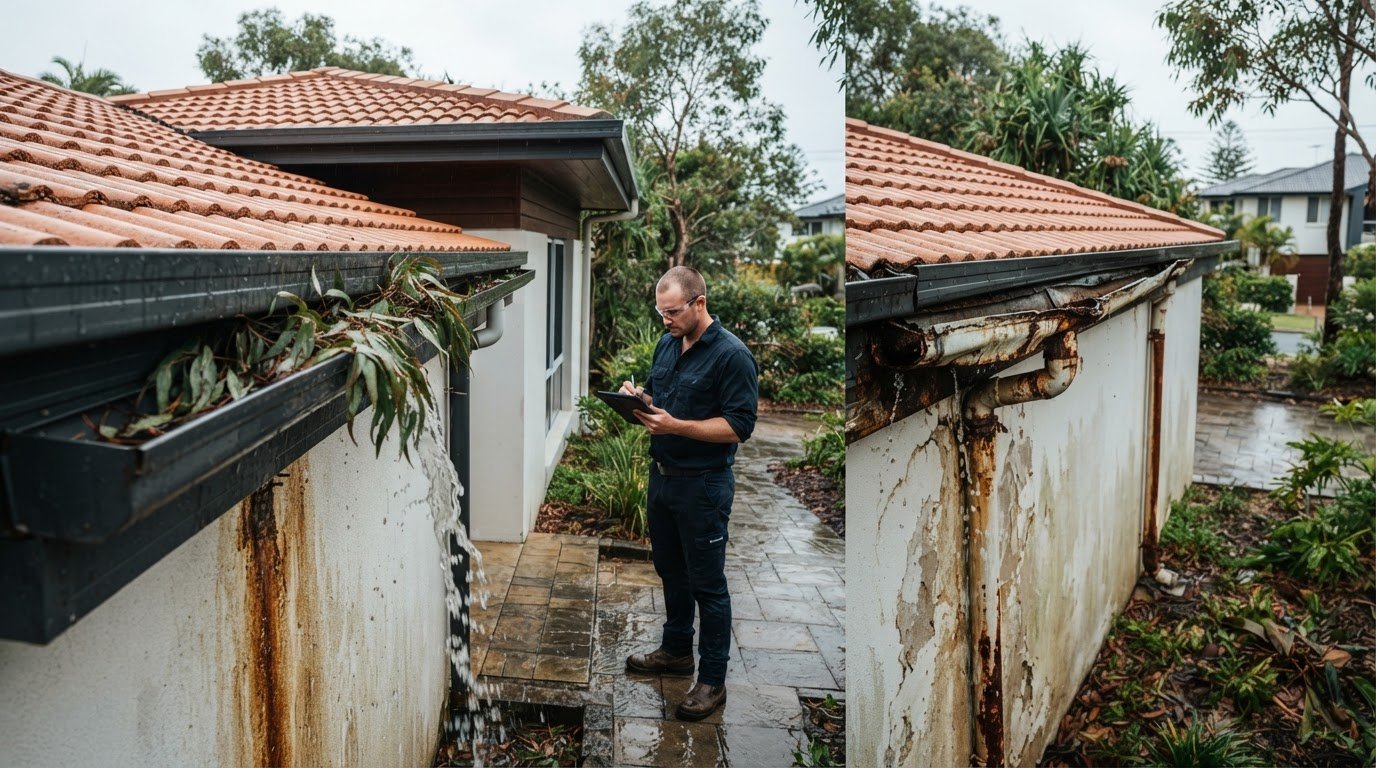
Debris build-up is another common but overlooked external threat. When leaves, twigs, and sediment collect in your roof valleys, they act as a dam. During a downpour, water cannot flow freely into the guttering. Instead, it ‘backs up’ under the tiles or metal sheets. This constant pooling of water eventually finds its way through the smallest gaps in your roof’s defence. Regularly clearing these valleys is a simple way to prevent major issues, but if you notice water overflowing from the sides of your valleys, the damage may already be underway.
The Danger of Compromised Flashing
Flashing is the metal shielding installed around chimneys, skylights, and where different roof planes meet. It’s the most common point of failure for residential leaks. You should look for rusted metal, lifting strips, or sealant that has cracked due to UV exposure. If your flashing is compromised, water will flow directly into the wall cavities. This is a specialised task that requires precision. If you notice gaps around your chimney or vents, it’s time to arrange professional roof leak repair in North Sydney to secure these critical joints.
Tile and Bedding Decay
The mortar that holds your ridge caps in place is known as bedding. Over decades, this mortar becomes brittle and begins to crack or fall away. Modern roof restoration involves repointing, which is the application of a flexible acrylic compound over the bedding to create a watertight seal. You can check your ridge cap integrity by looking for missing chunks of cement or loose caps along the peaks of your roof. A visual checklist for ridge integrity includes:
- Visible cracks in the mortar lines
- Loose or rattling ridge caps during windy weather
- Gaps where the ridge cap meets the field tiles
- Moss or lichen growth, which indicates the mortar is holding moisture
Identifying these issues early allows for targeted repairs rather than a full replacement. If you are concerned about the state of your tiles or ridge caps, a professional roof restoration and repointing service can extend the life of your roof by years while protecting your home’s structural core.
Guttering and Downpipe Failures: The Source of Most Water Damage
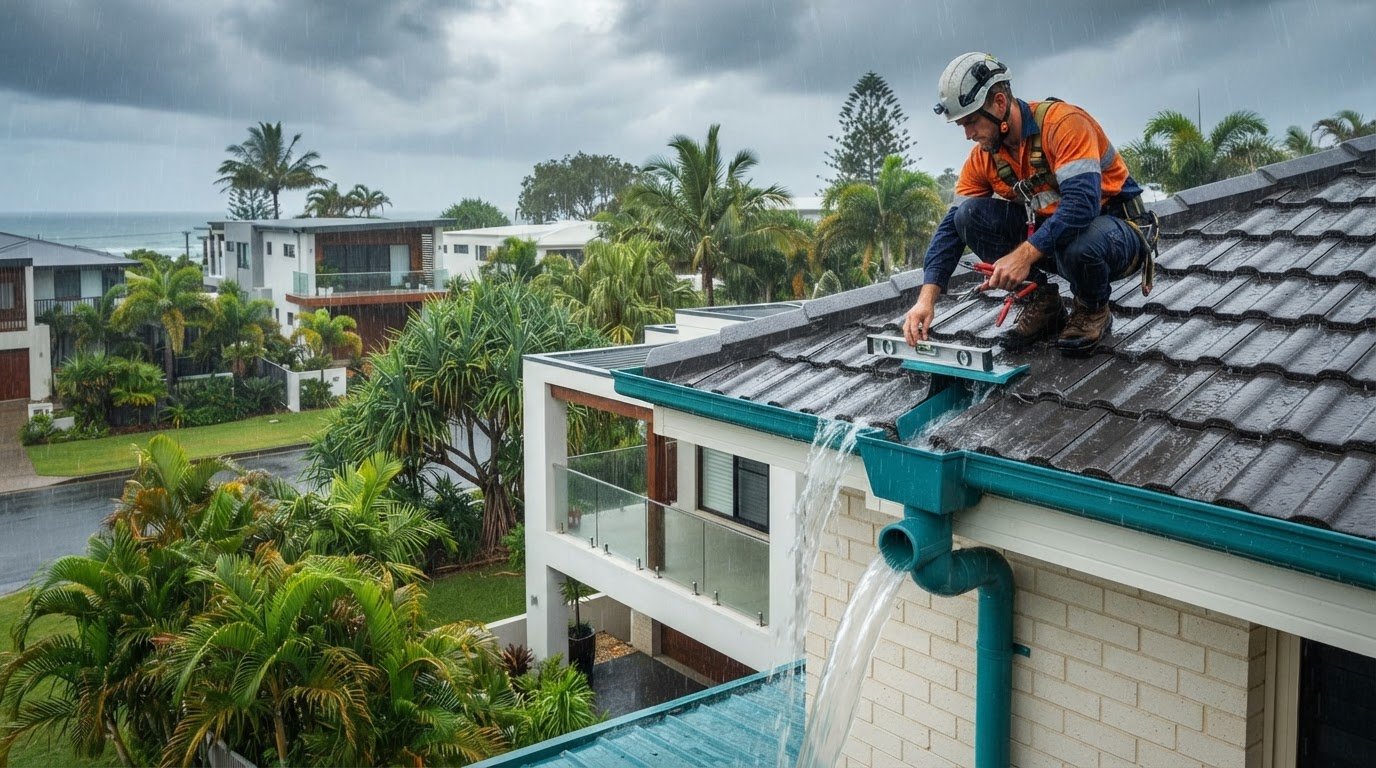
Many homeowners focus exclusively on the condition of their tiles or metal sheets, yet the roof plumbing system is often the true culprit behind structural issues. Gutters and downpipes are designed to manage massive volumes of water during Sydney storms. When these systems fail, they don’t just leak; they redirect water into the very parts of your home that are most vulnerable to rot. One of the most telling signs of roof water damage is soil erosion or ‘trenching’ directly beneath the gutter line. If you notice a distinct line of displaced soil or mulch around your home’s perimeter, it’s a clear indicator that water is overshooting your gutters rather than flowing through the downpipes.
Material failure in the gutters themselves is also common, particularly in older installations. You should look for small rust spots or ‘pinholes’ in metal guttering. These might look insignificant, but they allow water to drip constantly onto the timber fascia boards. Over time, this moisture causes the gutters to pull away from the house as the timber rots and the brackets lose their grip. A sagging gutter is more than a cosmetic eyesore; it’s a structural warning that the drainage pitch has been compromised, leading to stagnant water and further corrosion.
Overflowing Gutters and Blocked Downpipes
You can often spot signs of overflow even when the weather is perfectly dry. Look for dried watermarks, silt streaks, or ‘tiger stripes’ on the front of your gutters. These marks prove that water has been backing up and spilling over the edge. This ‘back-flow’ is particularly dangerous because it often flows backwards into the eaves and wall cavities. If you see these indicators, it may be time to consult a specialist regarding gutter and downpipe installation NSW to ensure your drainage system can handle the local rainfall intensity.
Fascia and Soffit Damage
The fascia (the board the gutter is mounted to) and the soffit (the underside of the eaves) provide critical protection for your roof’s edge. Rotting timber fascias are a primary symptom of long-term gutter failure. Similarly, peeling paint or dark stains on the soffits indicate that moisture is being trapped behind the gutter line. Because these areas are often high up and difficult to see, we recommend checking them from the ground with binoculars after a storm. If the timber feels soft or looks warped, the moisture has likely already reached the ends of your rafters, which can lead to expensive structural repairs if left unaddressed.

Specific Signs for Colorbond and Metal Roofing
Metal roofing is a staple of Australian architecture, known for its durability and sleek profile. However, metal systems present unique signs of roof water damage that differ significantly from tiled roofs. In coastal environments like Sydney, salt spray and high humidity can accelerate corrosion, particularly at the lap joints or eave ends. You should look for small bubbles in the paint or “white rust,” which indicates the protective zinc coating has been compromised. If you notice significant chalking or fading of the finish, the material’s ability to shed water and reflect heat is declining, making the sheets more prone to micro-cracking.
Physical abrasions are another red flag. Scratching or scouring of the protective coating often occurs from overhanging branches or during previous tradesman access. These scratches expose the raw metal to the elements, leading to localised rust that eventually eats through the sheet. Spotting these signs of roof water damage early prevents a minor scratch from becoming a full-sheet replacement. Metal roofs are tough, but they aren’t invincible against neglect.
Fastener and Sealant Failure
The most common entry point for water on a metal roof isn’t a hole in the sheet, but a failure of the fasteners. Sydney’s extreme temperature fluctuations cause metal sheets to expand and contract daily. This movement often causes TEK screws to work loose over time. More importantly, the rubber EPDM washers beneath the screw heads eventually perish due to UV exposure. Once these washers become brittle and crack, they no longer create a watertight seal. Maintaining your Colorbond roofing Sydney involves regular inspections of these fasteners to ensure they remain tensioned and intact.
Lap Joint and Valley Leaks
Metal roofs are susceptible to a phenomenon called capillary action. This occurs when water “climbs” upward between two overlapping metal sheets or under a flashing. If the original sealant in these lap joints has dried out or was insufficient, water can be drawn into the roof cavity even during light rain. You should also inspect box gutters and valleys for signs of sealant failure or pooling water. Because metal requires specific handling, it’s essential to use metal roof leak repair NSW techniques that account for thermal movement. If you’ve spotted rust or loose sheets, contact us for a professional roof inspection to secure your home’s structural integrity.
Next Steps: Professional Diagnosis and Prevention
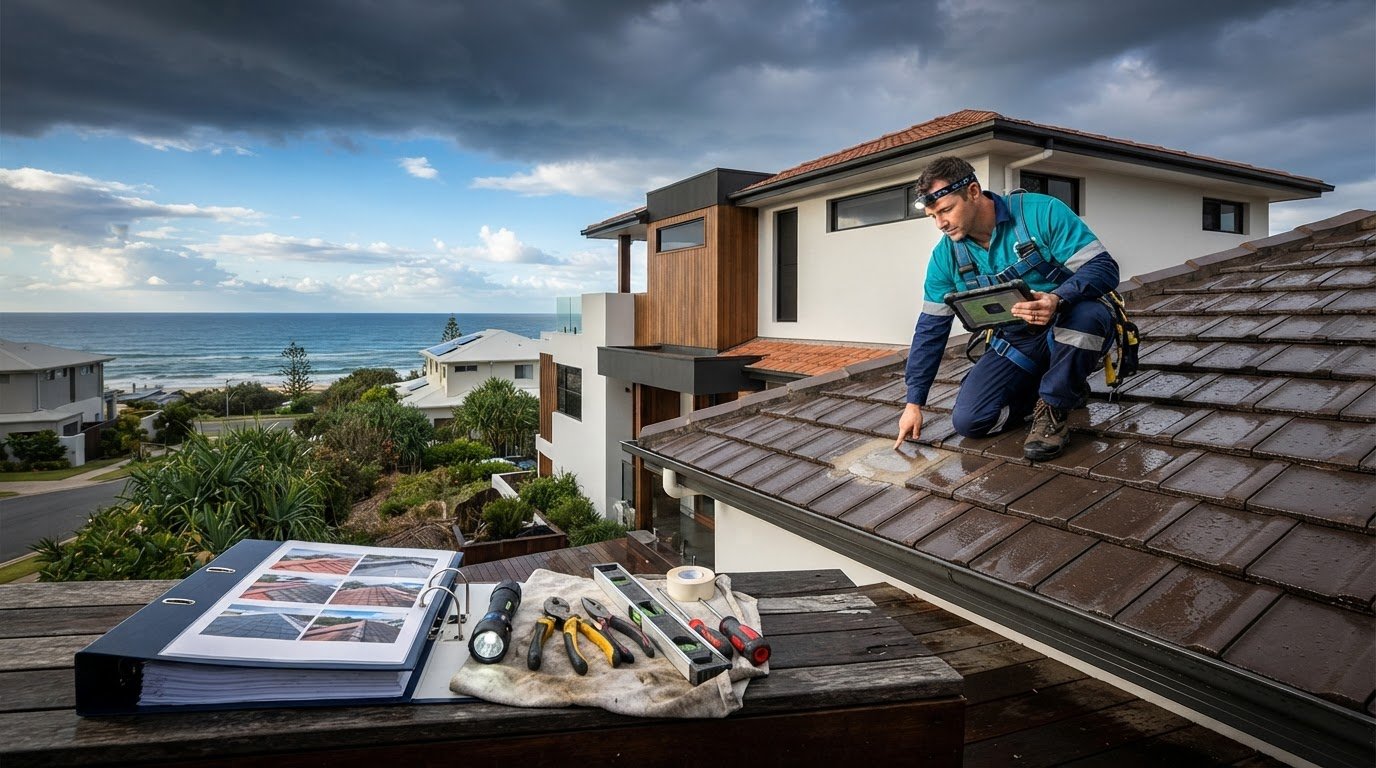
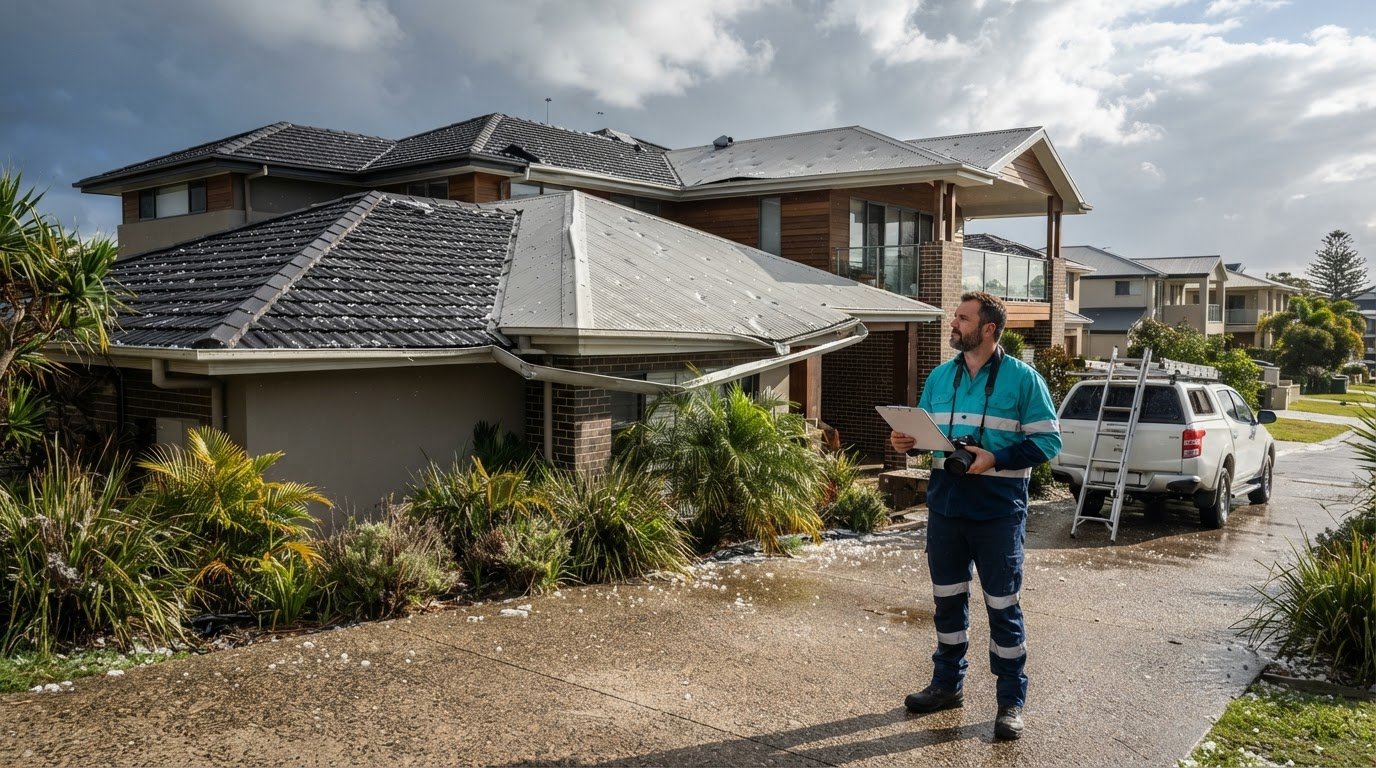
Once you have identified the signs of roof water damage, taking immediate and methodical action is the only way to protect your home’s structural core. Your first priority should be documentation. Take clear, high-resolution photos of all visible damage, including ceiling stains, peeling paint, and any external issues you can see from the ground. Recording the specific dates of heavy rain events alongside these photos provides a vital paper trail for insurance purposes. If it is safe to do so from ground level, clear any obvious blockages from the bottom of your downpipes. Do not attempt to climb onto the roof, as wet surfaces and compromised structures pose significant safety risks.
The transition from identifying a problem to resolving it requires a specialist’s eye. Arranging a professional roof plumbing inspection in Mainly Beach ensures that the source of the leak is found, not just the symptom. Following the inspection, you should establish a long-term maintenance plan. This plan acts as a roadmap for your property’s health, moving you from a reactive “emergency repair” mindset to a proactive strategy that ensures long-term security. A steady approach to maintenance prevents the accumulation of minor faults that lead to expensive structural failures.
The Value of Expert Leak Detection
Many homeowners attempt a DIY ‘patch’ with silicone or bitumen tape, but these temporary fixes often trap moisture inside the roof cavity, accelerating timber rot. Professional detection is a far more precise process. We use thermal imaging technology to detect temperature variances caused by moisture behind your walls and ceilings. This is particularly effective for diagnosing a roof leak after heavy rain Sydney storms, where water may have travelled several metres from the actual entry point. Pressure testing and moisture meters provide a definitive diagnosis that DIY guessing simply cannot match.
Preventative Maintenance for NSW Homes
Given the intense UV exposure and coastal conditions in NSW, we recommend a professional roof and gutter inspection at least once every 12 to 18 months. This frequency allows for the early detection of perished washers, cracked mortar, or minor corrosion before they escalate. Extending the life of your gutters and flashing is often as simple as maintaining clear drainage paths and ensuring fasteners remain tensioned. Taking these small, preventative steps provides genuine peace of mind and guards your home against the elements. Book your specialised roof inspection with Roof Plumbing Expert today.
Protecting Your Property for the Long Term
Identifying the early signs of roof water damage is the most effective way to prevent a minor leak from becoming a structural nightmare. We have explored how faint ceiling discolouration, compromised flashing, and guttering failures act as early warning systems for your home. These indicators demand prompt, professional attention before the next heavy Sydney downpour. Ignoring a small drip today often leads to much larger expenses when timber rot and moisture damage take hold of your roof cavity.
As specialists in Colorbond and metal roof plumbing, our team offers expert knowledge of the specific weather patterns affecting NSW. We provide comprehensive leak detection and guttering solutions from our local Mainly Beach base, ensuring every diagnostic is precise and every repair is durable. Don’t leave your home’s safety to chance or rely on temporary DIY patches that only mask the underlying problem. Taking a proactive approach now will guard your property against the elements and provide genuine peace of mind. Secure your home against the next storm—contact Roof Plumbing Expert for a professional inspection.
Frequently Asked Questions
Is a small water stain on the ceiling an emergency?
A small water stain should be treated as a serious warning sign that requires immediate investigation. It indicates that rainwater has already bypassed your home’s external defences and saturated your insulation or plasterboard. Ignoring a minor mark can lead to a sudden ceiling collapse or electrical hazards if the moisture reaches light fittings or internal wiring.
How much does it cost to fix roof water damage in Sydney?
The cost to rectify roof damage in Sydney depends on the extent of the structural decay and the specific roofing materials involved. Minor repairs to flashing or individual tiles are naturally less intensive than replacing entire Colorbond sheets or repairing rotted timber rafters. We recommend a professional assessment to determine the specific scope of work required to secure your property.
Can I repair a leaking roof myself using silicone sealant?
Using silicone sealant as a DIY fix is generally discouraged because it rarely provides a permanent solution. Silicone often fails to bond correctly with weathered roof tiles or metal surfaces, and it can trap moisture against structural timbers, which accelerates rot. Professional repairs involve identifying the root cause and using specialised materials like flexible pointing or new metal flashing.
What happens if I ignore signs of roof water damage?
Ignoring signs of roof water damage leads to progressive structural deterioration and significantly higher repair bills in the future. Moisture trapped in the roof cavity encourages aggressive mould growth, which poses health risks to your family. Over time, the timber rafters will lose their load-bearing capacity, potentially compromising the safety of the entire roof structure.
Does home insurance cover roof water damage in NSW?
Home insurance in NSW typically covers water damage resulting from sudden and accidental events, such as a severe storm or a fallen branch. However, many policies exclude damage caused by gradual wear and tear or a lack of regular maintenance. It’s essential to review your Product Disclosure Statement to understand your specific coverage regarding roof plumbing failures.
How do I find where a roof leak is coming from?
Finding the source of a leak often requires tracing the path of water through the roof cavity during or after a rain event. Water rarely drips directly beneath the entry point; it frequently runs down rafters or along the topside of the ceiling before pooling. Specialists use thermal imaging and moisture meters to pinpoint these hidden paths without the need for invasive testing.
What are the first signs of a leaking skylight?
The first signs of a leaking skylight include condensation between the glazing layers or visible water streaks on the internal frame. You might also notice bubbling paint or damp patches on the ceiling immediately surrounding the skylight unit. These issues are often caused by perished rubber seals or blocked drainage channels within the skylight’s flashing system.
How often should I have my roof plumbing inspected in Mainly Beach?
Residents in Mainly Beach should arrange a professional roof plumbing inspection every 12 to 18 months. The local coastal environment introduces salt spray that can accelerate the corrosion of metal components and fasteners. Regular checks ensure that your gutters, downpipes, and flashing remain watertight against the intense coastal storms common in the region.