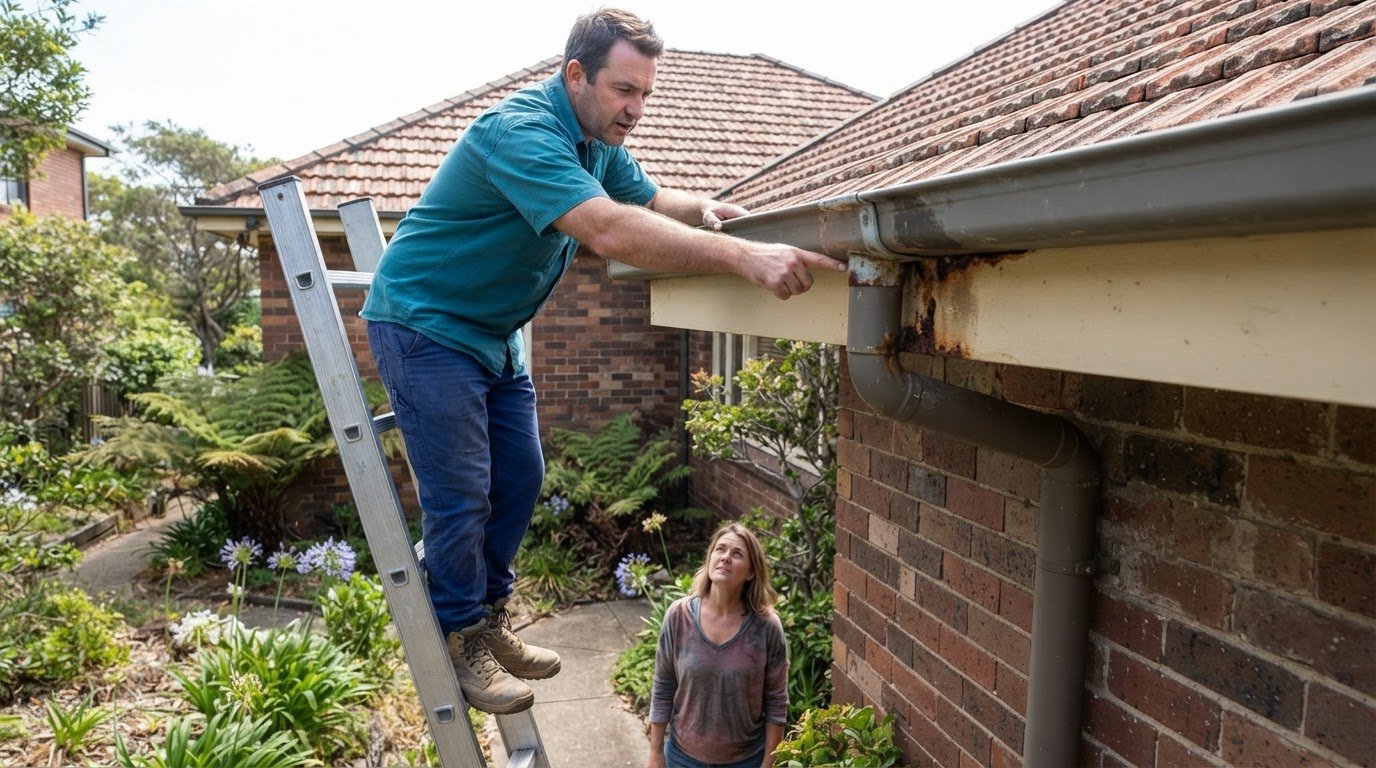
A leaking roof doesn’t automatically need replacing. For a Manly Beach property, Roof Plumbing Expert provides roof leak specialists servicing Fairlight to assess where water is entering and whether targeted repairs may resolve the problem. The extent of damage and condition of the surrounding roofing help determine the right approach.
It’s understandable to worry that a ceiling stain or recurring drip signals a larger issue. Small leaks can spread and cause further damage if left untreated, so locating the source matters as much as repairing visible symptoms.
This guide explains how roof leak detection works on metal and tile roofs, what can affect the cost of an assessment, and how repairs are approached. It also covers signs of broader roof damage, helping you understand what a professional inspection can establish and what work may be needed next.
Key Takeaways
- Arrange a professional roof inspection before agreeing to repairs; the source and extent of the leak shape the scope of work.
- Metal and tile roofs have different components and potential leak points, so diagnosis needs to suit the roof material.
- For intermittent leaks, controlled water testing can help trace where water is entering when the source isn’t immediately obvious.
- Persistent leaks can point to wider roof damage, so understanding the condition of surrounding areas helps guide the next steps.
How much does roof leak detection cost in Sydney?
For a Mainly Beach property, the cost of roof leak detection depends on the roof, access and investigation required. A professional inspection helps locate the source and define the repair scope before work is approved. This matters because a ceiling mark may not be directly below the point where water enters.
Upfront roof repair quotes
The price depends on the case and is provided after a quote request. Factors include roof material, access, leak location, testing required and the extent of repairs. A quote should distinguish investigation from proposed repairs and describe the affected areas, materials and tasks.
For example, repairing a tiled roof may involve different work from fixing a metal roof junction or skylight surround. Read the scope to see whether it addresses the suspected cause, not just the visible damage inside your home.
Inspection before repairs
A professional inspection traces water from the affected ceiling or wall towards likely entry points. The roofer assesses roof coverings, joins, flashing, valleys and gutters, then considers whether water could be travelling from another part of the roof.
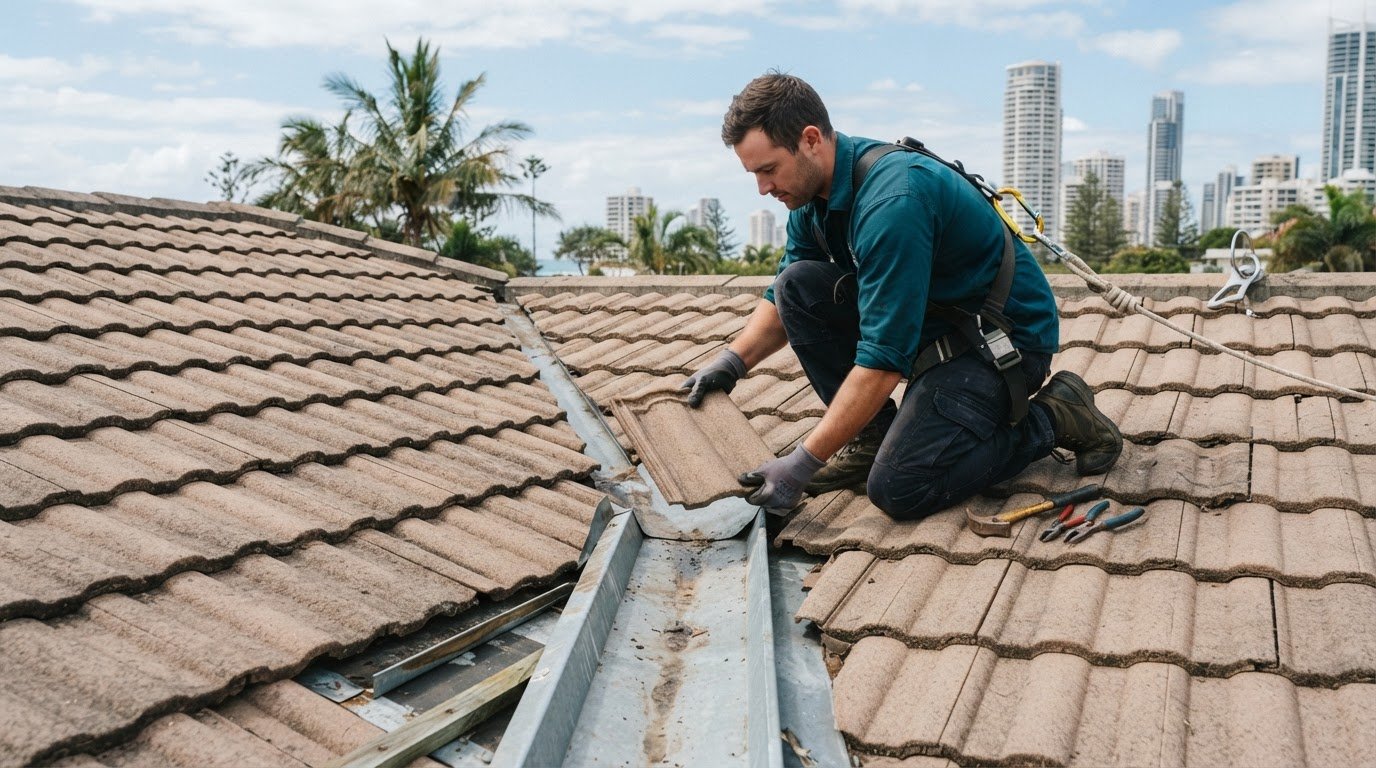
On a tile roof, the inspection may include checking for cracked tiles and loose ridge bedding. Metal roofing calls for checks of sheets, fasteners and junctions. If water appears near a skylight, its surrounding flashing is another area to assess.
There isn’t one qualification that applies to every roof repair in NSW. The relevant credentials depend on the work involved, so distinguish the inspection from the repair scope before agreeing to the work.
In Mainly Beach, look for a roofing specialist who can trace leaks and explain suitable repairs for your roof type. Clear inspection findings connect the proposed work to the source of the water.
Home insurance cover depends on the policy wording and circumstances of the leak. Policies may treat sudden damage, gradual deterioration and maintenance differently. Inspection findings can help describe the roof’s condition when you discuss a claim with your insurer.
The timing of a smaller repair depends on the identified fault, access and work required. A straightforward repair differs from work requiring replacement materials or restoration, so an inspection helps establish a practical scope and schedule.
Roof leak detection and repair for metal and tile roofs
Roof materials and junctions shape how specialists trace a leak and plan repairs. Metal roofing, terracotta tiles and low-pitch sections each need an approach suited to their construction.
Repairs across roof types
For tiled roofs, specialists inspect tiles, ridge capping and bedding for damage or movement. Repairs may involve replacing a broken tile or re-cementing loose sections. Slate and terracotta also require material-appropriate handling so the repair suits the existing roof covering.
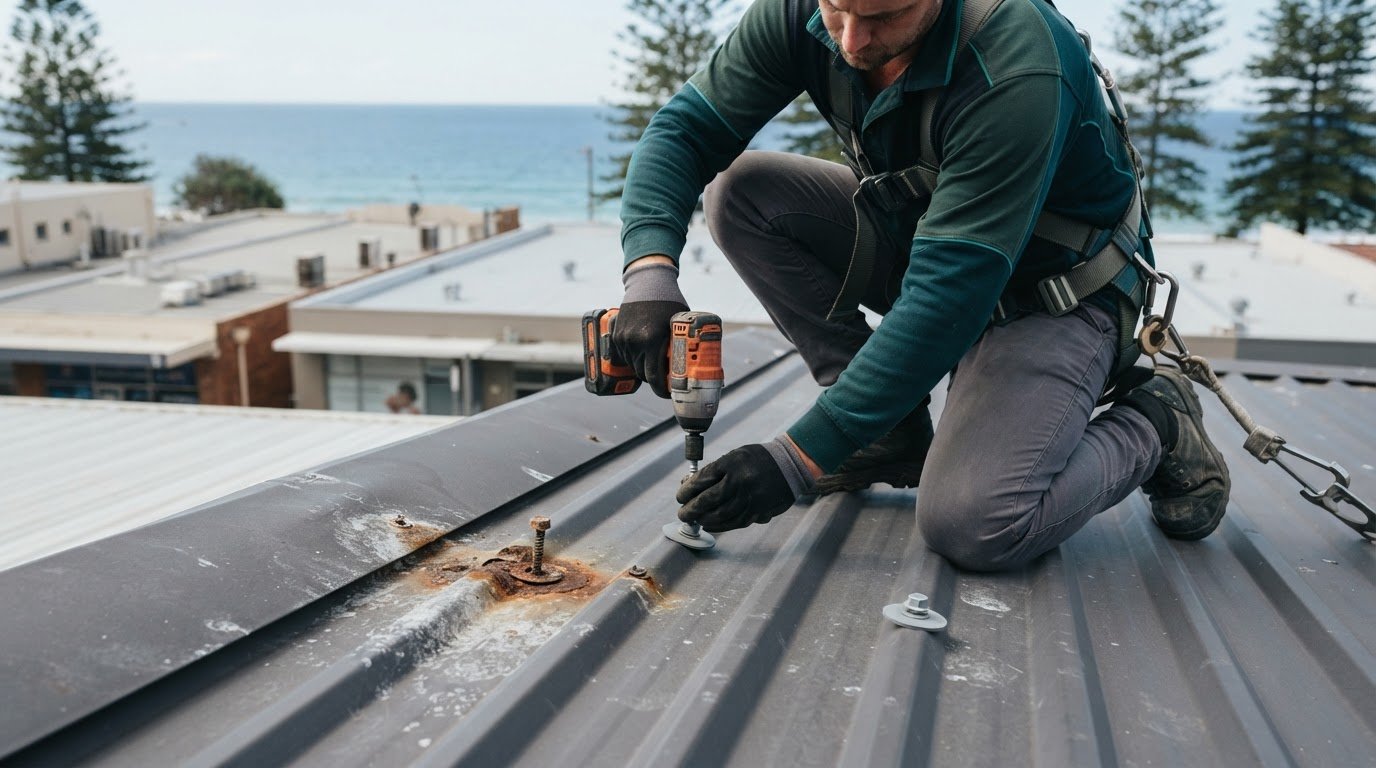
Metal roofs require checks around sheet joins, fasteners, valleys and roof penetrations. Flat and low-pitch roofs need close attention to drainage paths and junctions, where failed details can let water in. An inspection helps distinguish a local fault from damage affecting a wider roof area.
Roof leak specialists can provide detection and repair, Roof Flashing & Waterproofing, and skylight repairs where those areas are involved. The work required depends on the leak source and roof type.
Metal roof and flashing repairs
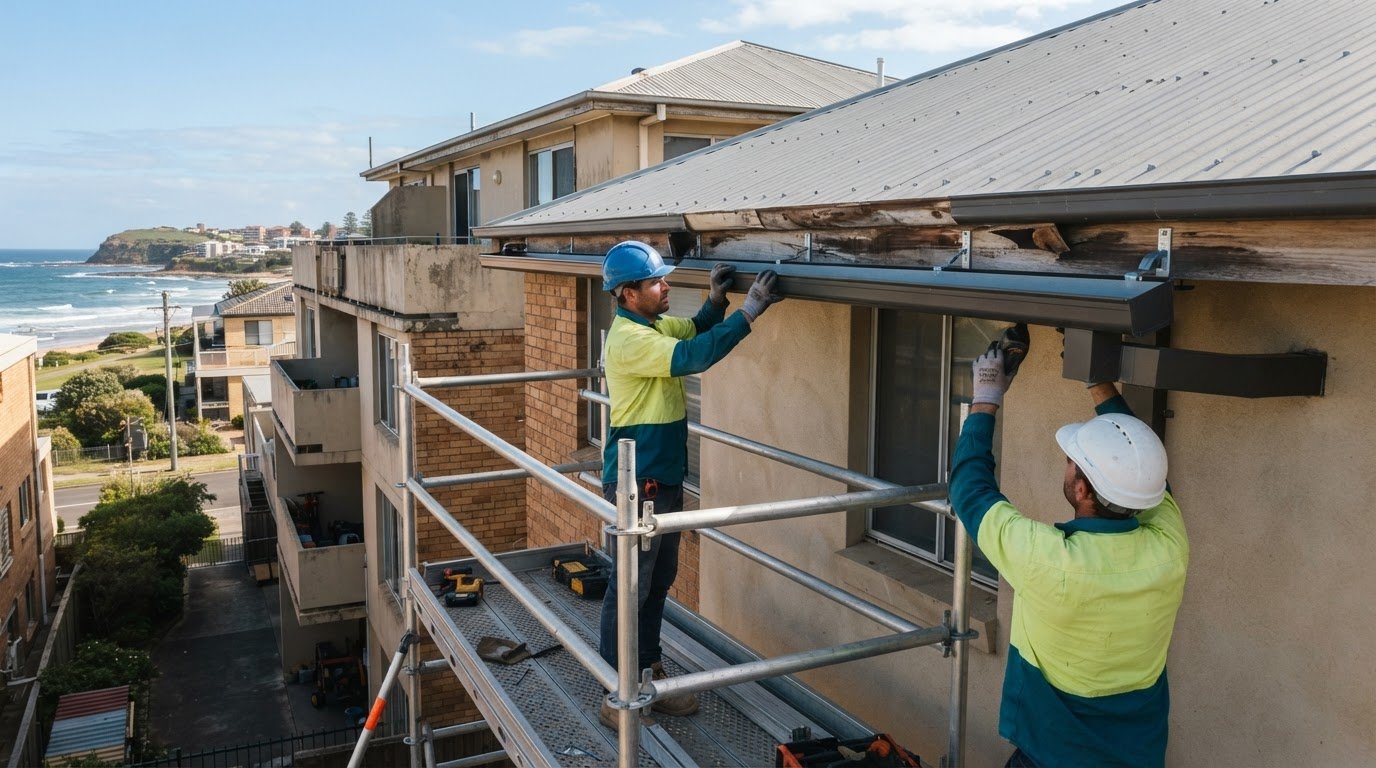
On a metal roof, a specialist examines sheets and connections, then traces water entry around penetrations and flashing. Damaged flashing may need repair or replacement to restore a sound junction. At a Fairlight home, rubber dektite flashings were fitted around pergola roof posts to seal their connection with a new flat roof.
Metal roofing work is described under AS 1562.1, while tile work is described under AS 2049/2050. These identifiers help distinguish the relevant roofing standards by material. A repair plan should identify the affected section and explain whether it involves flashing, sheets or adjoining roof components.
A full roof replacement isn’t automatically required for a leak. Inspection findings help establish whether targeted repairs will address the fault or whether broader work is needed. Ask for the repair scope to identify the affected materials and junctions, such as roof capping or flashing, rather than describing only the visible ceiling stain.
For a leak involving a metal roof junction, roof flashing and waterproofing may be relevant to the repair scope.
Professional controlled water testing for intermittent leaks
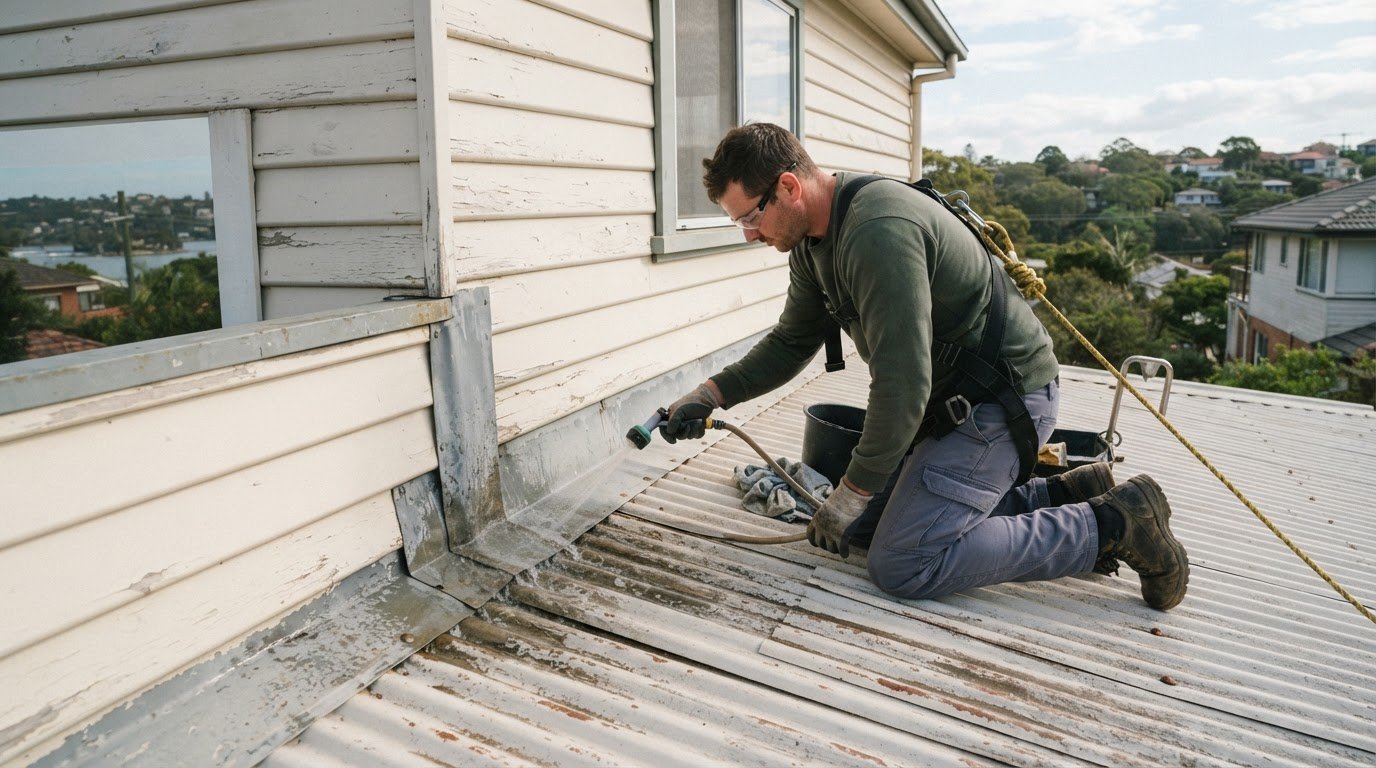
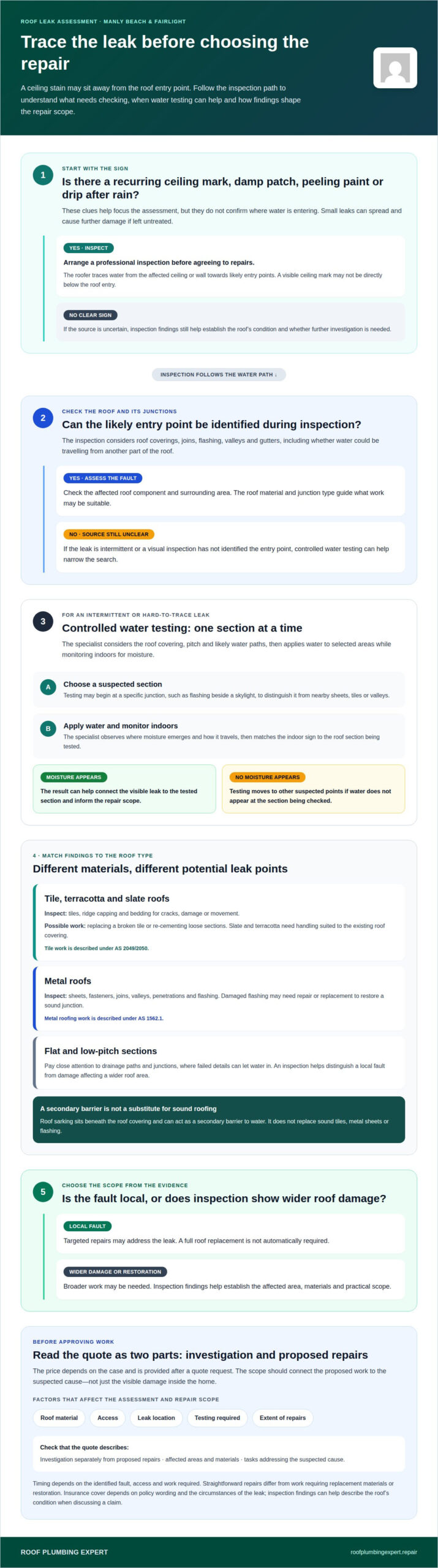
A roof may leak only in certain wind or rain conditions, making the entry point hard to locate. In Fairlight, controlled water testing can narrow the search: water is applied to selected roof areas while the specialist monitors indoors for signs of moisture.
The test is methodical. The specialist considers the roof covering, pitch and likely water paths, then tests one section at a time. Starting with a specific junction, such as flashing beside a skylight, helps distinguish it from nearby sheets, tiles or valleys. Testing moves to other suspected points if water doesn’t appear.
During leak detection, the specialist observes where water emerges and how it travels. A ceiling stain may be away from the roof entry point, so it’s important to match the visible mark to the tested roof section. This controlled process can help locate intermittent leaks that a visual inspection alone hasn’t identified.
Common causes include cracked tiles, displaced ridge pointing, failed flashing, damaged roof materials and blocked drainage paths. Warning signs include a recurring ceiling mark, peeling paint, damp patches or dripping after rain. These clues help focus the assessment, but the entry point still needs to be traced before repairs begin.
Roof sarking sits beneath the roof covering and can act as a secondary barrier to water. It doesn’t replace sound tiles, metal sheets or flashing. If sarking is damaged or water has travelled beneath it, the specialist needs to assess the affected area and how moisture is getting past the roof materials above.
For persistent leaks in Fairlight, repeated patching without locating the source can leave the underlying fault unresolved. A specialist uses test results to identify the relevant repair, such as restoring pointing, addressing flashing or repairing a damaged roof section. This diagnosis focuses the work on the cause, not just the interior symptom.
Managing larger roof leak problems
A leaking roof may need more than a local patch if water has affected several roof areas. Left unaddressed, a leak can contribute to structural instability and potential mould growth. The key question is whether the fault is confined to one component or surrounding materials also need repair or replacement.
When a leak is discovered in a Fairlight home, a specialist assesses the entry point, affected roof sections and visible internal signs. The findings guide the response: a local fault may suit a targeted repair, while widespread deterioration may call for broader restoration work. Even an emergency leak needs diagnosis, not an assumed full roof replacement.
Consider the roof as a connected system. Damaged tiles, ridge bedding, flashing, valleys and gutters can each affect how water moves. A blocked valley may compound another fault, while moisture beneath roof coverings can signal that the problem extends beyond the ceiling stain. Cleaning gutters and valleys supports water flow, but won’t repair damaged roofing materials.
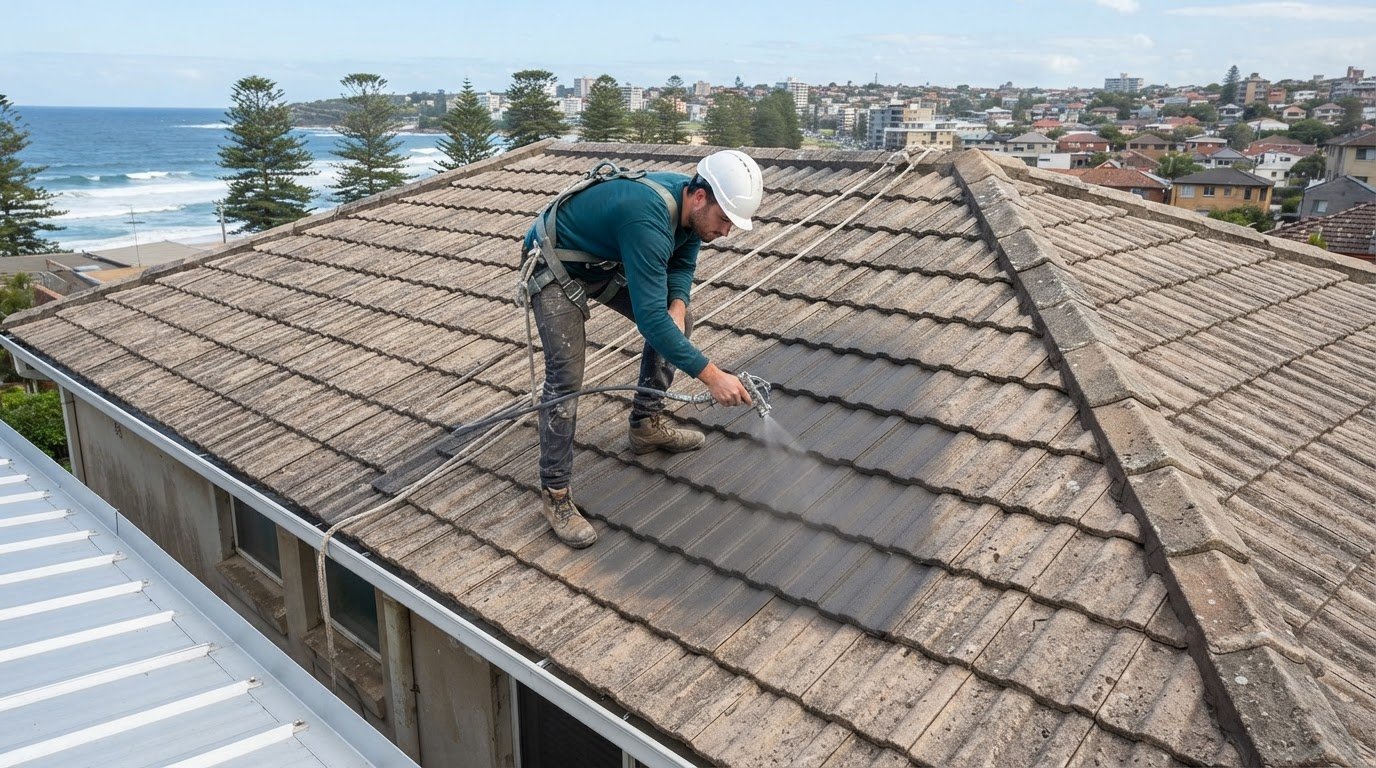
A Fairlight roofing project shows how larger work can involve several distinct tasks. It included stripping existing tiles from a rear pitched roof section in preparation for a new roof. The work also included cleaning gutters and valleys, re-pointing ridge caps and re-cementing loose tiles where needed. These steps address different parts of the roof, not just one visible leak.
That distinction matters when choosing between repair and replacement. Specialists use the roof’s condition, affected area and required work to define the scope. Replacement may be considered where damage is broader, but a leak alone doesn’t establish that the whole roof needs replacing. Before approving the work, ask for the inspection findings and proposed scope to be clearly explained.
If a leak has spread beyond one roof section, arrange a roof leak assessment to identify the damage and discuss appropriate repairs.
Roof Plumbing Expert: Roof Leak Detection & Repair
Roof Plumbing Expert provides roof leak detection and repair for Fairlight properties with recurring leaks, unexplained ceiling marks or damage that needs professional assessment. The work focuses on tracing the water entry point and identifying a suitable repair, rather than assuming the entire roof needs replacing.
If inspection findings point to wider roofing needs, related work can include Colorbond Roofing, Gutter & Downpipe Installation, or Roof Restoration & Repointing. Clear findings help you understand how the leak relates to the roof’s condition and which work addresses the problem.
If water is entering around a skylight, skylight repair or replacement may also be appropriate. Contact Roof Plumbing Expert to discuss a roof leak at your Fairlight property.
Take the next step towards a sound roof
Make the next conversation practical. Note where water appears inside, when it becomes visible and whether the leak has returned after previous work. These details can help a roofing specialist understand the problem at your Mainly Beach property.
If you began by searching for roof leak specialists in Fairlight, focus your next step on the location and needs of your Mainly Beach home. Ask for a clear explanation of the inspection findings and repair scope so you can understand whether the proposed work suits your property.
Roof Plumbing Expert can discuss roof leak concerns and relevant roofing work. Contact Roof Plumbing Expert for help and take a considered step towards resolving the leak.
Frequently Asked Questions
How can a specialist tell if my roof is repairable?
A specialist assesses whether the fault is localised and whether surrounding roof components remain serviceable. For example, isolated damage to a tile or metal sheet may allow a targeted repair, while deterioration across adjoining sections can require broader work. The condition of the roof covering, junctions and supporting components helps determine whether repair is practical or replacement should be considered.
Can you find a roof leak when it isn’t raining?
Yes. A specialist can inspect the roof in dry weather and use controlled water testing to reproduce the leak. For an intermittent problem, describe when water appears, such as after wind-driven rain or only near a particular room. This context can guide which roof area or penetration is tested first, without waiting for another storm.
Do you offer warranties on your roofing work?
Roof Plumbing Expert describes its work as “Licensed, Insured & Guaranteed”. That wording doesn’t define a warranty period or coverage conditions, so don’t assume every future leak is covered. Before work starts, review the written scope and any guarantee terms provided for that specific repair. Keep the paperwork with your property records in case questions arise later.
Why is my ceiling leaking when the roof looks fine?
Water can travel beneath roof coverings before appearing on a ceiling, so the visible drip may be away from the entry point. A roof can also look intact from the ground while a concealed junction, skylight surround or valley lets water through. A specialist traces the water path and checks the relevant roof details, rather than relying only on what’s visible indoors.
What are typical roof leak repair costs in Fairlight and nearby Northern Beaches suburbs?
The price depends on the case and is provided after a quote request. Factors include roof material, access, leak location, testing required and whether the work involves a local repair or broader restoration. In Fairlight and nearby Northern Beaches suburbs, an inspection helps establish the scope before repairs are approved. Roof Plumbing Expert also has a local focus on Mainly Beach.
Do Fairlight roof leak specialists offer emergency or same-day callouts?
Roof Plumbing Expert is typically attending within 24 hours, and same-day service is often available for urgent cases. When arranging help for a Fairlight property, describe whether water is actively entering the home, which room is affected and the roof type if known. These details help communicate the situation clearly and support an appropriate response.