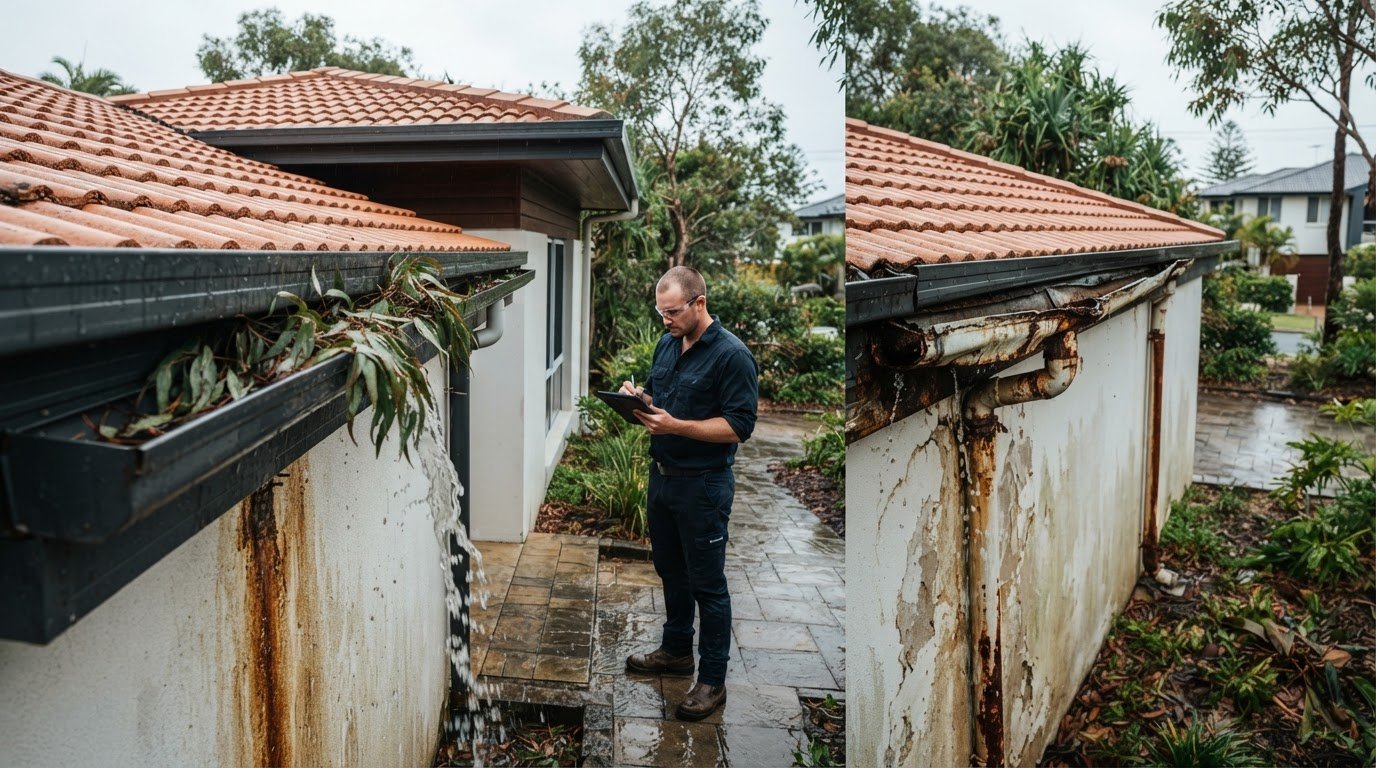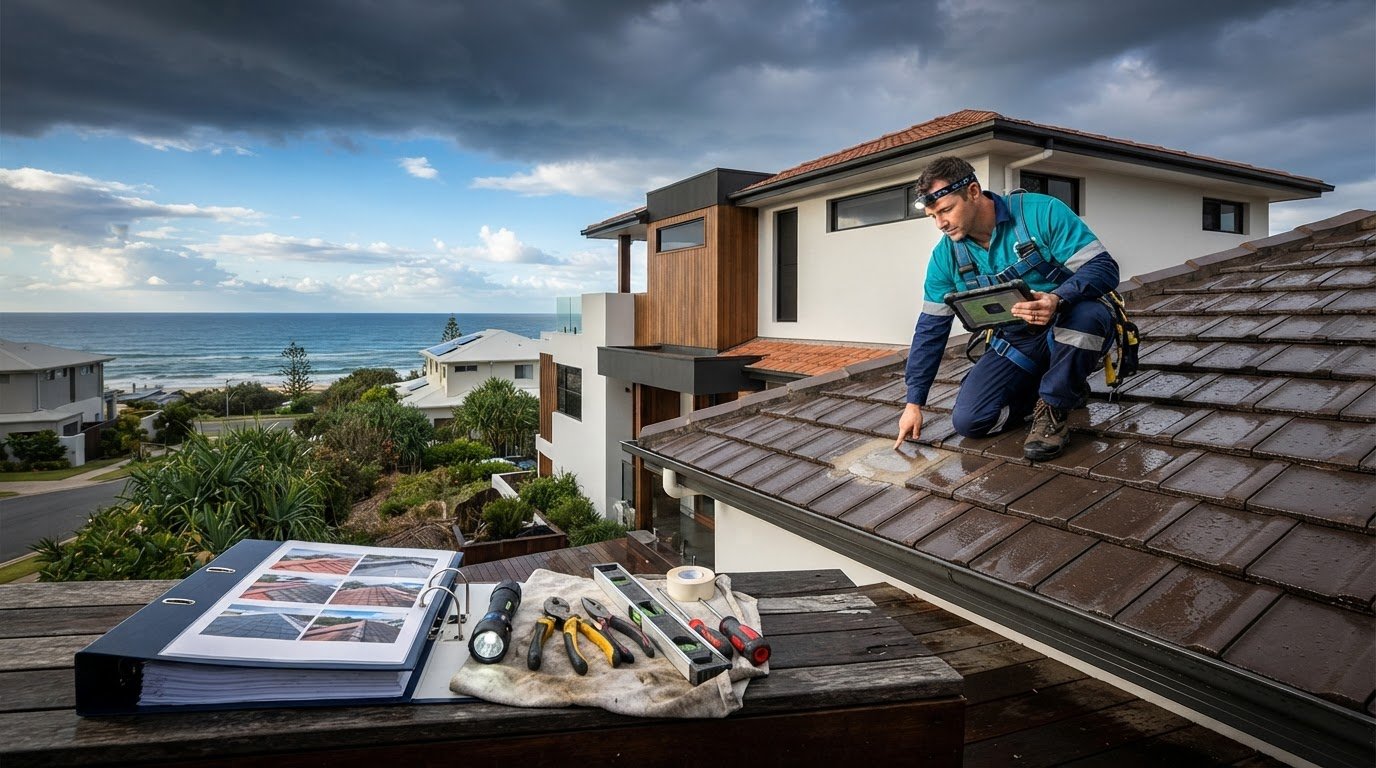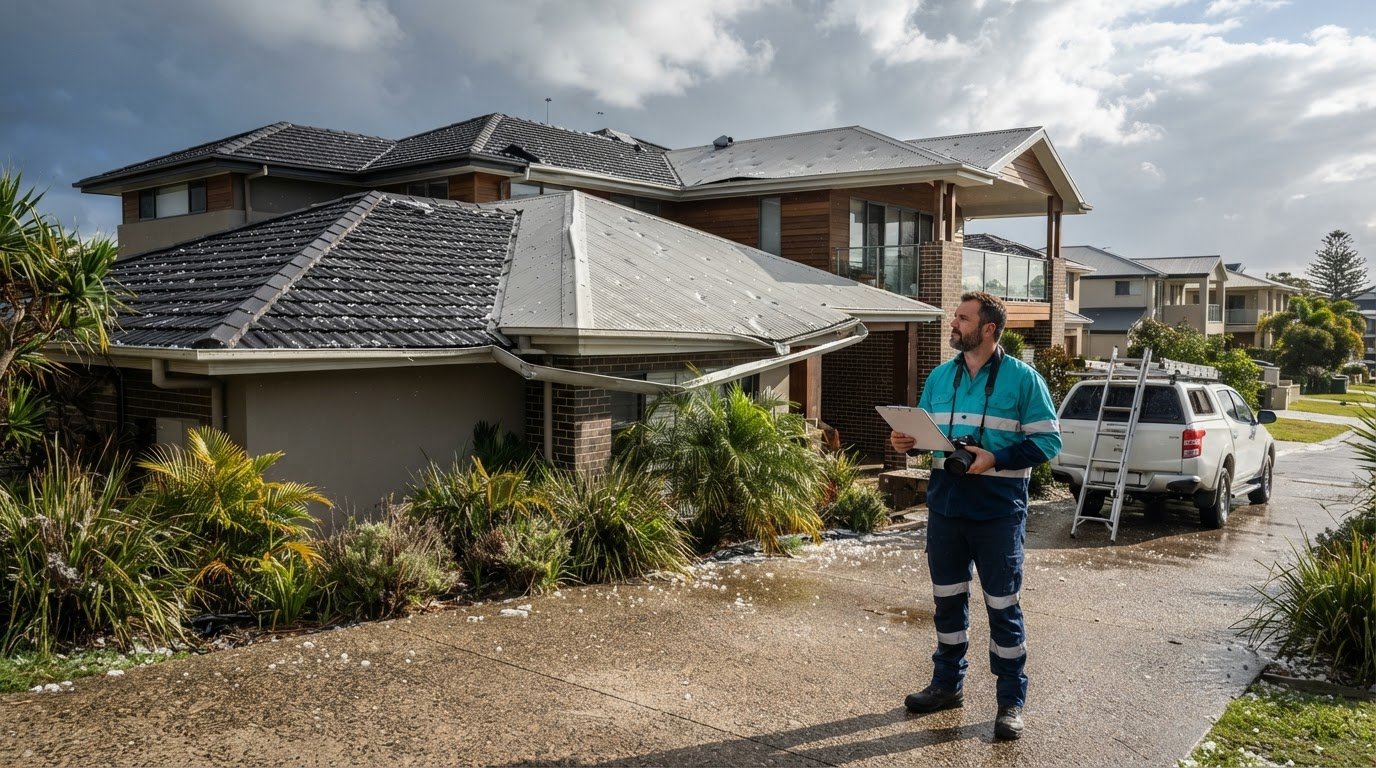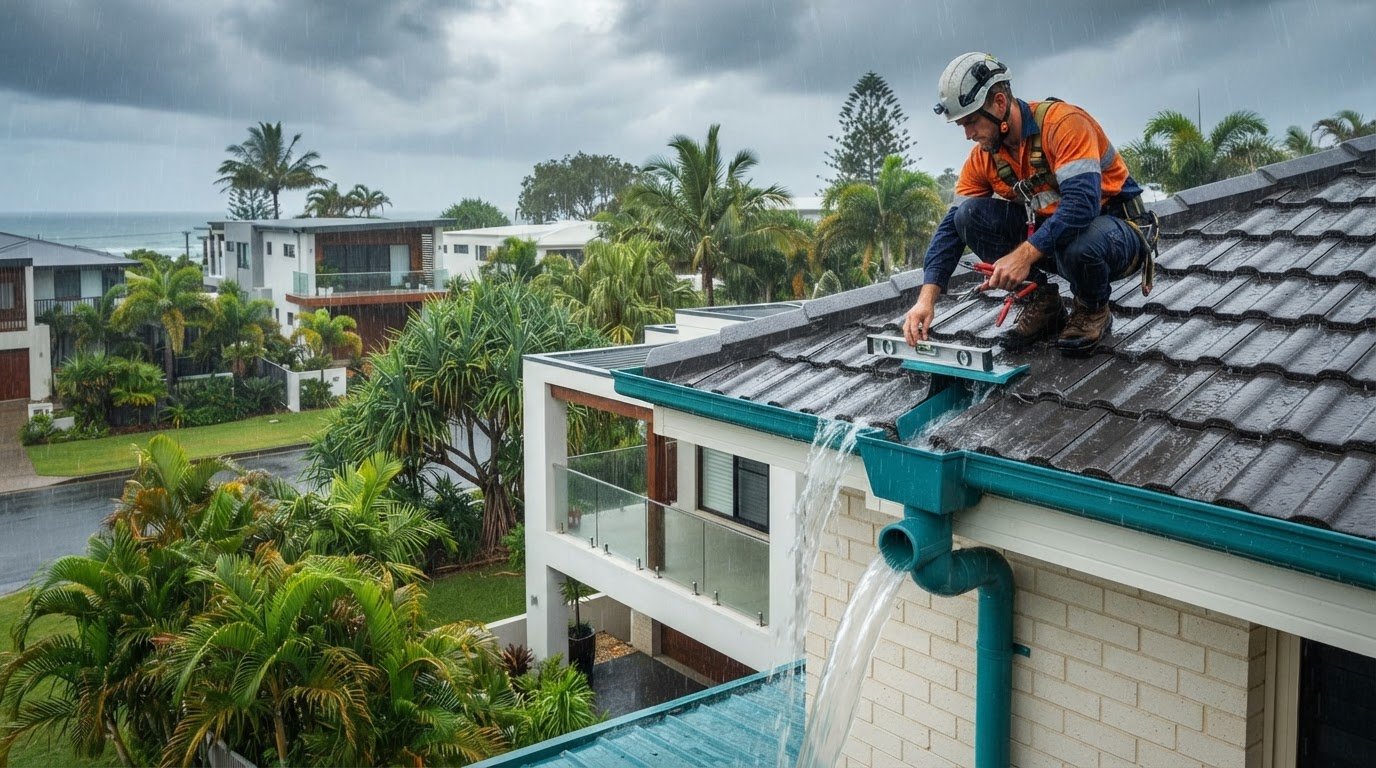

What if restoring your roof isn’t the best-value option, even if it appears less disruptive than replacement? The ROI on roof restoration depends on the roof’s actual condition, the work included and the repairs that may still be needed. For a property in Mainly Beach, start with the roof’s condition and a clearly defined scope, not a headline promise of savings or a fixed payback period.
It’s reasonable to want to know whether restoration will protect your property and make financial sense. Comparing restoration with targeted repairs or full replacement can be difficult when quotes cover different work, or when projected energy savings and resale benefits are uncertain.
This guide explains how to assess the costs and potential benefits of each option without assuming a guaranteed return. You’ll learn how roof condition and property needs shape the decision, what to include in an ROI comparison, and what project evidence to review. A clear scope, supported by a condition-led assessment, helps you judge whether restoration, repointing and necessary roof repairs are appropriate for a durable, watertight roof.
Key Takeaways
- Assess ROI on roof restoration using benefits you can reasonably attribute to the work, not assumed savings or a guaranteed payback.
- Use the ROI formula as a starting point, then test how well each estimate is supported by evidence.
- Compare restoration, targeted repairs, replacement and delaying work by scope, remaining risks and disruption.
- Gather roof condition findings and itemised project details so you can identify exclusions, repair needs and estimate assumptions.
- Relate restoration, repointing and roof repairs to the roof’s diagnosed condition before weighing up the project’s value.
What Does ROI on Roof Restoration Actually Mean for Your Property?
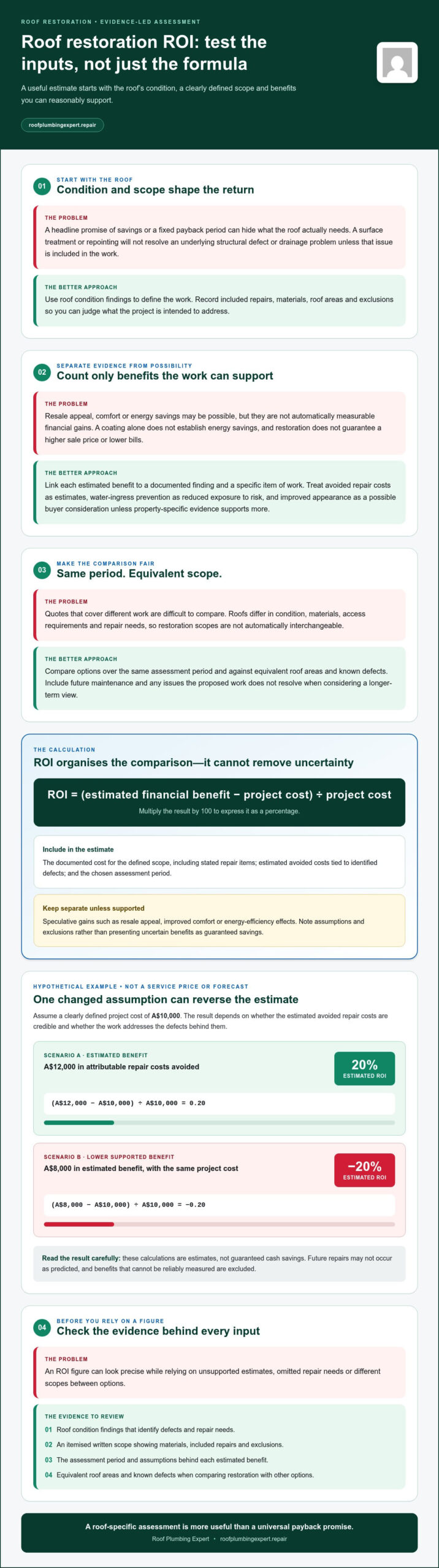
Return on investment (ROI) compares a project’s cost with the financial benefits that can reasonably be attributed to it over a chosen period. For roof work, those benefits might include repair costs avoided because identified defects were addressed. The time period matters: a short-term view may capture immediate repairs, while a longer one must account for future maintenance and any issues the restoration doesn’t resolve.
That makes the ROI on roof restoration an assessment, not a promise. Restoration is an asset-maintenance decision intended to address the roof’s condition and protect the property. It doesn’t automatically produce a profit, a higher sale price or lower energy bills. Those outcomes depend on the roof, the work completed and how the property is used.
Keep evidence-based benefits separate from possibilities. If an inspection identifies deteriorated pointing or damaged roof components, the scope may address defects that could otherwise lead to further repair work. Any avoided cost is still an estimate, not a guaranteed saving. Water-ingress prevention is best understood as risk reduction: resolving a known vulnerability can help protect the building, but it can’t guarantee that leaks or related damage will never occur.
Appearance and buyer appeal may also matter, particularly if you’re preparing to sell. Treat them as considerations rather than proven financial gains unless you have property-specific valuation evidence. Likewise, don’t count energy savings simply because a restoration includes a coating. The coating type, roof design and other building factors affect any outcome. Benefits of Roof Coatings in Restoration offers background on roof coatings and their application.
Which roof restoration benefits can be assessed financially?
Start with documented findings and link each proposed benefit to a specific item of work. For example, if an inspection identifies failed pointing and the scope includes repointing, you can assess the repair need being addressed. Record potential avoided work as an estimate, water-ingress prevention as reduced exposure to risk, and improved appearance as a possible buyer consideration, not a confirmed valuation increase. For a Mainly Beach property, use findings from that roof rather than assuming that another property’s repair history or exposure will be a useful comparison.
Why there is no universal roof restoration payback period
Roofs differ in condition, materials, access requirements and the work needed, so restoration scopes aren’t directly interchangeable. A surface treatment or repointing won’t resolve an underlying structural defect or drainage problem unless that issue is included in the work. The property’s use and the period being assessed affect the comparison too. Roof restoration ROI depends on project-specific inputs, not a universal payback period.
How to Calculate ROI on Roof Restoration Without Overstating the Numbers
A simple formula can organise your comparison, but it can’t make uncertain benefits certain. Calculate ROI over a defined period using the cost of the proposed work and only the financial benefits you can reasonably support. Apply the same period and equivalent roof scope to each option, such as restoration and targeted repairs, so the comparison is meaningful.
ROI = (estimated financial benefit − project cost) ÷ project cost
To express the result as a percentage, multiply it by 100. The inputs matter more than the arithmetic. Include only benefits that relate to the work and the period being assessed, and keep possible resale appeal, comfort or energy-efficiency effects separate unless you have evidence to quantify them. General guidance, such as the Industry Standards from the NRCA, can provide roofing context, but it doesn’t establish the condition or likely financial outcomes of a particular roof in Mainly Beach.
Here’s a hypothetical example, not a service price or forecast. Assume a clearly defined project cost of A$10,000 and A$12,000 in estimated, attributable repair costs avoided over the chosen assessment period. The calculation is (A$12,000 − A$10,000) ÷ A$10,000 = 0.20, or 20%. That result depends entirely on whether the estimated avoided costs are credible and whether the work actually addresses the defects behind them.
Test the assumption before relying on the result. If the supported benefit were A$8,000 rather than A$12,000, the same project cost would produce an estimate of negative 20%. This illustrates how changing one input can change the conclusion. Neither result guarantees cash savings: future repairs may not occur as predicted, and the calculation excludes benefits that can’t be reliably measured.
What figures should a roof restoration ROI estimate include?
Build the estimate from the written scope, not a headline total. Record the proposed materials, included repairs and exclusions, then note the assessment period and assumptions behind each estimated benefit. Keep supportable avoided costs separate from speculative gains such as resale appeal or improved comfort. A condition report and itemised scope help show what the calculation covers and where uncertainty remains. When comparing options for a Mainly Beach property, check that each estimate refers to the same roof areas and known defects.
- Project cost: the documented cost for the defined scope, including stated repair items.
- Potential avoided costs: estimates tied to identified defects and supported by inspection findings.
- Other possible benefits: resale, comfort or energy considerations, listed separately unless reliably quantified.
- Assessment assumptions: the chosen period, unresolved issues and any excluded work.
How to interpret a positive or negative estimate
A positive figure doesn’t prove you’ll receive cash savings or a higher sale price. A negative figure doesn’t automatically make the work poor value either, particularly if the comparison leaves out property-protection needs. Compare like-for-like scopes, not headline totals: a lower estimate may exclude repairs included in another option. A condition-led roof restoration assessment can help clarify which work the estimate is actually evaluating.
Roof Restoration vs Repair or Replacement: Which Option Makes Financial Sense?
The most cost-effective option is the one that addresses the roof’s actual condition without paying for work it doesn’t need or leaving significant defects unresolved. Restoration can be poor value if the scope improves the roof’s surface but fails to address water entry, damaged components or other underlying issues. A condition assessment should establish whether restoration is suitable before you compare likely costs and benefits.
Use the comparison below to identify what each option needs to resolve. Disruption varies with access, property layout and the extent of work involved. For a property in Mainly Beach, compare the work against its own roof condition and drainage needs rather than relying on a generic description of what restoration includes.
| Option | Scope and unresolved risks | Likely disruption | Evidence to compare |
|---|---|---|---|
| Restoration | May combine surface work with repointing and identified repairs. Defects outside the scope, including structural or drainage issues, can remain unresolved. | Work takes place across the roof, so consider access and the effect on the property during the project. | Condition findings, written scope, repair items, materials, exclusions and the treatment of known defects. |
| Targeted repair | Addresses specific faults, such as a localised leak or damaged section. Deterioration elsewhere may still need attention. | May be more localised, depending on the fault and access required. | Evidence locating the fault, repair details and any related roof areas that remain untreated. |
| Replacement | Replaces the roof rather than treating its existing surface. The proposed work still needs to account for relevant roof and drainage conditions. | Typically involves broader work across the roof; the project scope determines the disruption. | Findings that explain why existing materials or components can’t be suitably restored, plus the replacement scope and specifications. |
| Delay | No immediate work is completed. The identified defect remains, and its condition may change. | No project disruption now, but later work may become more involved if the issue worsens. | Current condition findings, known risks and a clear basis for monitoring or revisiting the decision. |
When restoration may be preferable to replacement
Restoration may warrant consideration when the roof remains serviceable and the inspection identifies deterioration that the proposed scope can address. Repointing and necessary roof repairs can form part of that work, supporting a durable, watertight roof. Suitability can’t be decided by roof material or age alone; it depends on the actual condition and whether the scope resolves the identified issues.
When repair, replacement or further investigation may be wiser
Widespread damage, recurring water entry or signs of a deeper defect call for careful comparison with targeted repairs, replacement or further investigation. A surface finish can’t substitute for fixing an underlying fault. Check that the scope explains what will be repaired and what remains outside it. The roof restoration process guide outlines the broader work involved. For a sound ROI on roof restoration, compare options against the same condition findings and clearly defined work.
A Practical Checklist for Assessing Roof Restoration ROI in NSW
A useful comparison starts with a clear record of the roof’s condition and the work proposed. For a property in Mainly Beach, consider its actual exposure, roof design and use rather than assuming every NSW roof faces the same conditions. A home and a commercial property may also have different access needs and priorities. Connect each proposed task to a finding, then judge what that work is intended to address and what may remain outstanding.
What to record before comparing restoration estimates
Bring the available roof information together before weighing up options. Include inspection observations, maintenance records and a written scope so you can see whether the proposed work responds to the issues identified. If water entry is part of the concern, the NSW roof leak detection guide provides useful context on tracing leaks and related roof problems.
- Roof details: note the roof type, areas assessed and any access limitations recorded.
- Condition findings: list visible defects, signs of deterioration and the location of known leaks.
- History: record previous repairs, maintenance and whether water entry has recurred.
- Proposed work: keep the estimate, inspection notes, repair items and stated exclusions together.
- Property context: note how the building is used and any local exposure or access factors relevant to the scope.
Keep observations distinct from conclusions. A stain inside the property, for example, signals a concern but doesn’t by itself identify the roof defect responsible. Record what has been observed and what the proposed work says it will address.
How to compare assumptions and project scope
Read each estimate line by line. Check that the same roof areas and restoration tasks are included before comparing totals. One scope may include repointing or specific roof repairs while another excludes them. Separate work needed to address identified defects from optional finish or appearance items, then note what remains unresolved.
- Which inspection finding does each task relate to?
- Are repairs, materials and treated roof areas described clearly?
- What exclusions could leave a known issue untreated?
- Are benefits such as reduced future repairs supported by findings, or based on an assumption?
- What assessment period is used, and are the same assumptions applied to each option?
For the ROI on roof restoration, treat uncertain resale, comfort or energy outcomes as scenarios rather than guaranteed financial returns. That keeps the comparison honest and makes it easier to see which inputs are evidence-based and which are uncertain. A condition-led assessment and clearly scoped work give you firmer ground for a decision.
For a property in Mainly Beach, review the roof restoration assessment process to understand how roof condition and proposed work inform the decision.
How Roof Plumbing Expert Helps You Make a Sound Restoration Decision
Roof Plumbing Expert provides roof restoration, repointing and roof repairs, relating the proposed work to the property’s identified condition. For owners in Mainly Beach, the practical starting point is to connect each roof concern with the relevant repair or restoration task, rather than rely on a generic claim about value or a guaranteed financial return.
Turning roof condition into a project-specific scope
Findings should explain what needs attention and how the proposed scope responds. If the roof has deteriorated pointing, repointing may be considered alongside restoration. If inspection identifies damaged areas or signs of water entry, relevant repairs may also need to be addressed. The key is to understand which items are included and what remains outside the work, rather than treating a surface finish as a complete solution.
Roof Plumbing Expert provides roof leak detection and repair, restoration and repointing, along with roof flashing and waterproofing services. These services address different parts of an external roofing system, so the work should match the issue identified. Any estimate of avoided repairs or other financial benefits should remain conditional on the confirmed condition and documented scope. This makes it easier to see what the work is intended to resolve, where uncertainty remains, and which assumptions shouldn’t be mistaken for guaranteed savings.
- Condition: What roof issue or deterioration has been identified?
- Scope: Which restoration tasks, repairs or repointing are included?
- Limits: Are there defects or related concerns that remain unresolved?
- ROI assumptions: Are projected benefits supported by findings, or are they possibilities?
A sound recommendation may favour restoration, targeted repair or another option, depending on the roof and the evidence. Restoration isn’t automatically right for every property. If significant defects sit beyond the proposed scope, comparing alternatives may be more useful than relying on a headline estimate of return.
What a useful next step looks like for Mainly Beach property owners
Start with the concerns you’ve observed, such as recurring water entry, damaged roof areas or the need to maintain the property. Explain how the building is used and what you want the work to achieve. That context keeps the discussion practical and focused on your roof, rather than generic claims about value, resale or payback.
For a Mainly Beach property, see how Roof Plumbing Expert approaches roof restoration, with the work guided by the roof’s condition and the concerns you’ve identified.
Make Your Next Roofing Decision with Confidence
The next step is to turn your roof concerns into a clear decision about what the property needs. Rather than treating ROI on roof restoration as a target to promise, use it to assess whether the proposed work is supported by the roof’s condition and your priorities. A well-defined scope gives you a practical basis for deciding what to address now and what to keep under review.
Roof Plumbing Expert provides roof restoration, repointing and repair services across NSW, including service for property owners in Mainly Beach. Its specialist roof plumbing work also includes leak detection, flashing and waterproofing, helping connect roof concerns with the relevant work under consideration. The aim is a measured discussion grounded in your property, not a blanket prediction about savings or resale value.
If you’re ready to discuss your roof’s condition and restoration goals in Mainly Beach, contact Roof Plumbing Expert about your roof restoration options.
Frequently Asked Questions
Is roof restoration a good investment?
Roof restoration can be worthwhile when the roof’s condition and proposed work align with your objectives for the property. For a Mainly Beach owner, that may mean addressing identified deterioration to support the building’s ongoing use. The ROI on roof restoration isn’t guaranteed: avoided repairs depend on the defects present, and resale outcomes vary. Compare the documented scope with realistic repair and replacement alternatives rather than assuming restoration automatically increases property value.
Can roof restoration increase property value?
A maintained, presentable roof may influence how buyers perceive a property, but any valuation effect depends on the home and local market conditions. Restoration alone doesn’t guarantee a higher sale price or change a formal valuation. If you’re preparing a Mainly Beach property for sale, treat buyer appeal as a possible benefit, separate from the project’s measurable costs and repairs supported by roof findings.
How much value does roof restoration add to a house?
There’s no reliable universal figure for the value roof restoration adds. The result depends on the roof’s condition, the type of property, the work completed and the local market at the time of sale. Avoid relying on a general dollar amount or percentage as a forecast for a Mainly Beach home. If resale value is central to your decision, discuss valuation with a qualified property professional and assess the roofing work separately.
How long should a roof restoration last?
A roof restoration’s outcome depends on the roofing material, existing condition, workmanship, ongoing maintenance and exposure at the property. Without evidence specific to the roof and proposed work, a generic lifespan shouldn’t be treated as a promise. Before deciding, understand which components are being restored and what care may be needed afterwards. Use documented project details and maintenance information, rather than an assumed service life, in your ROI estimate.
Can roof restoration be completed in stages?
Roof restoration may be staged, but the roof’s condition and the connection between tasks determine whether that approach is suitable. For example, separating finish work from priority repairs may affect how well the overall scope addresses a known defect. Don’t delay urgent repairs simply to spread the work over time. A project-specific scope can identify which repairs need priority and explain how sequencing affects the assessment.
Does home insurance cover roof restoration?
Insurance cover depends on your policy, the cause of damage, applicable exclusions and your insurer’s assessment. Don’t assume routine maintenance or roof restoration will be covered. Review your policy wording and discuss a specific claim directly with your insurer, including what evidence they require. Keep any potential insurance contribution out of an ROI estimate until the cover and amount are confirmed in writing.