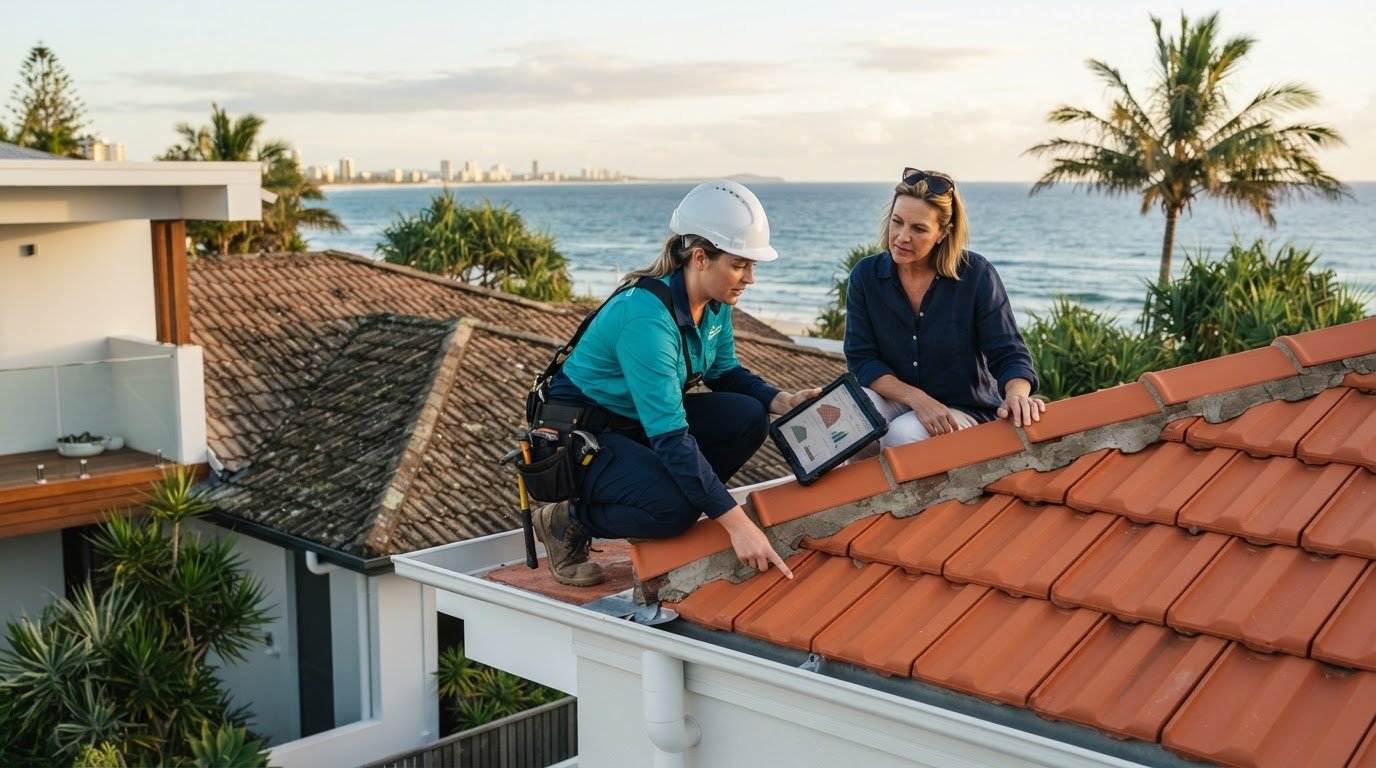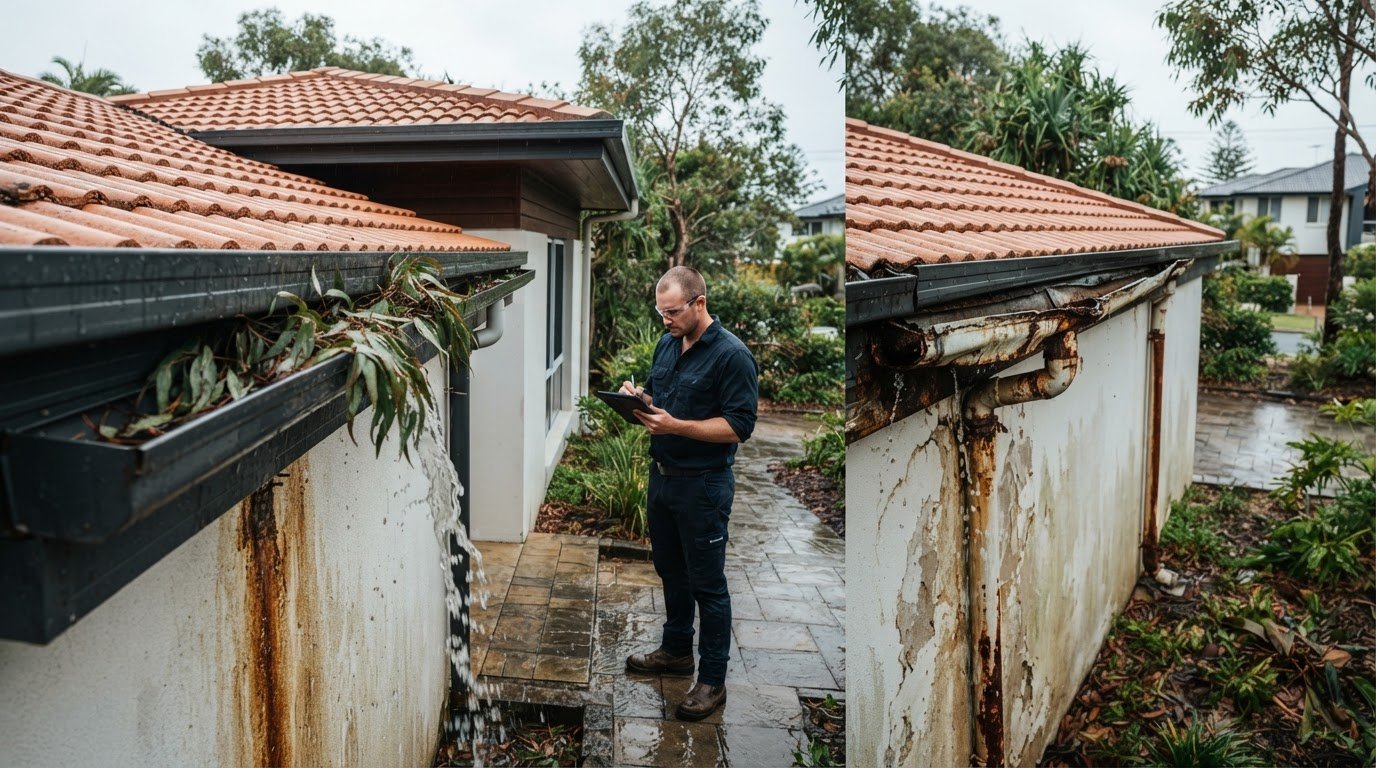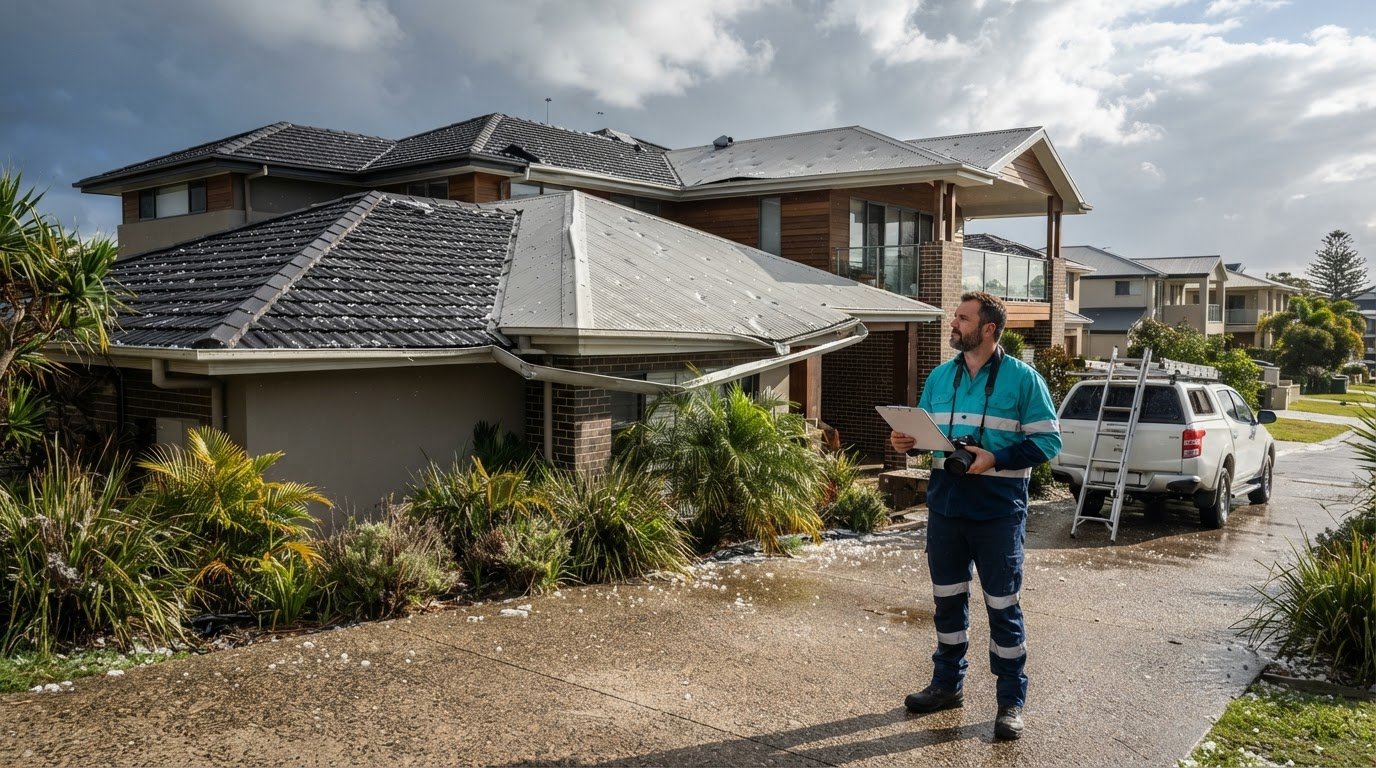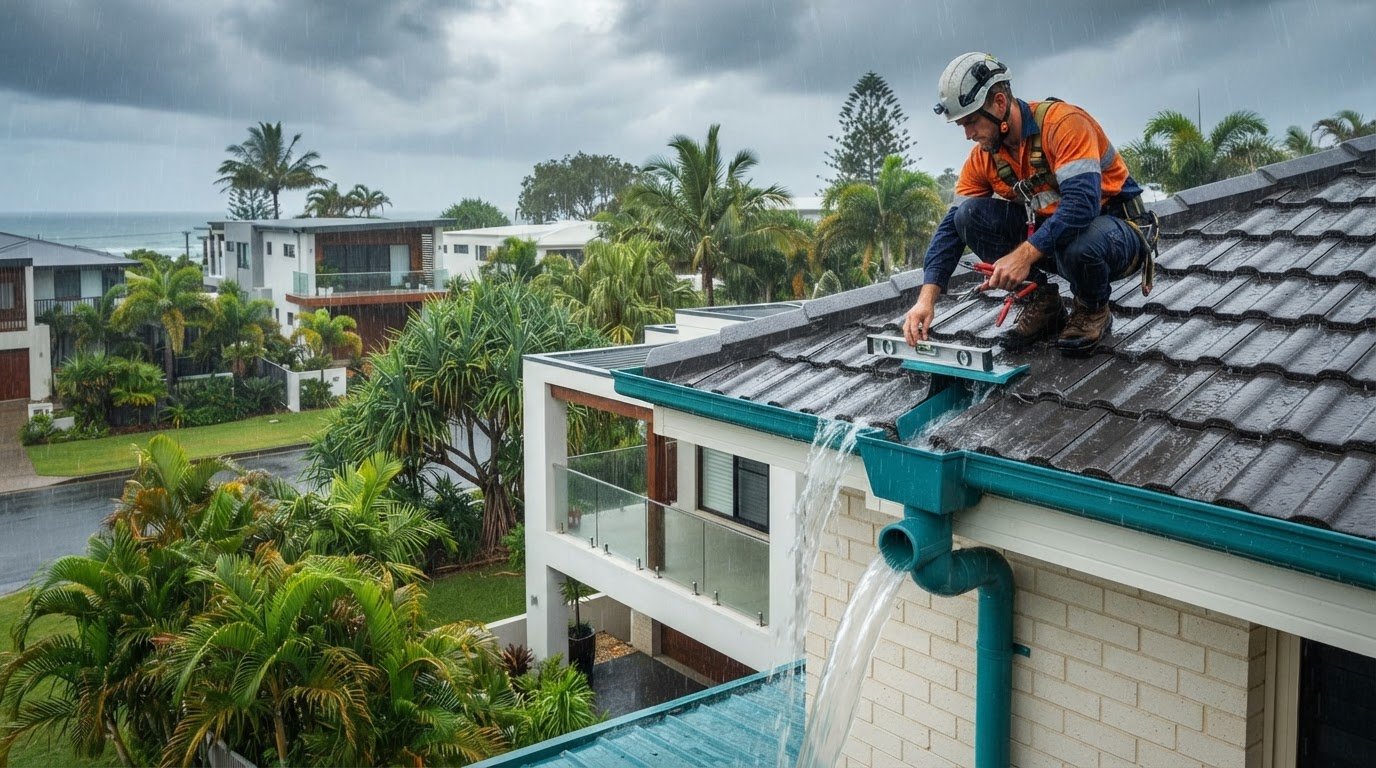
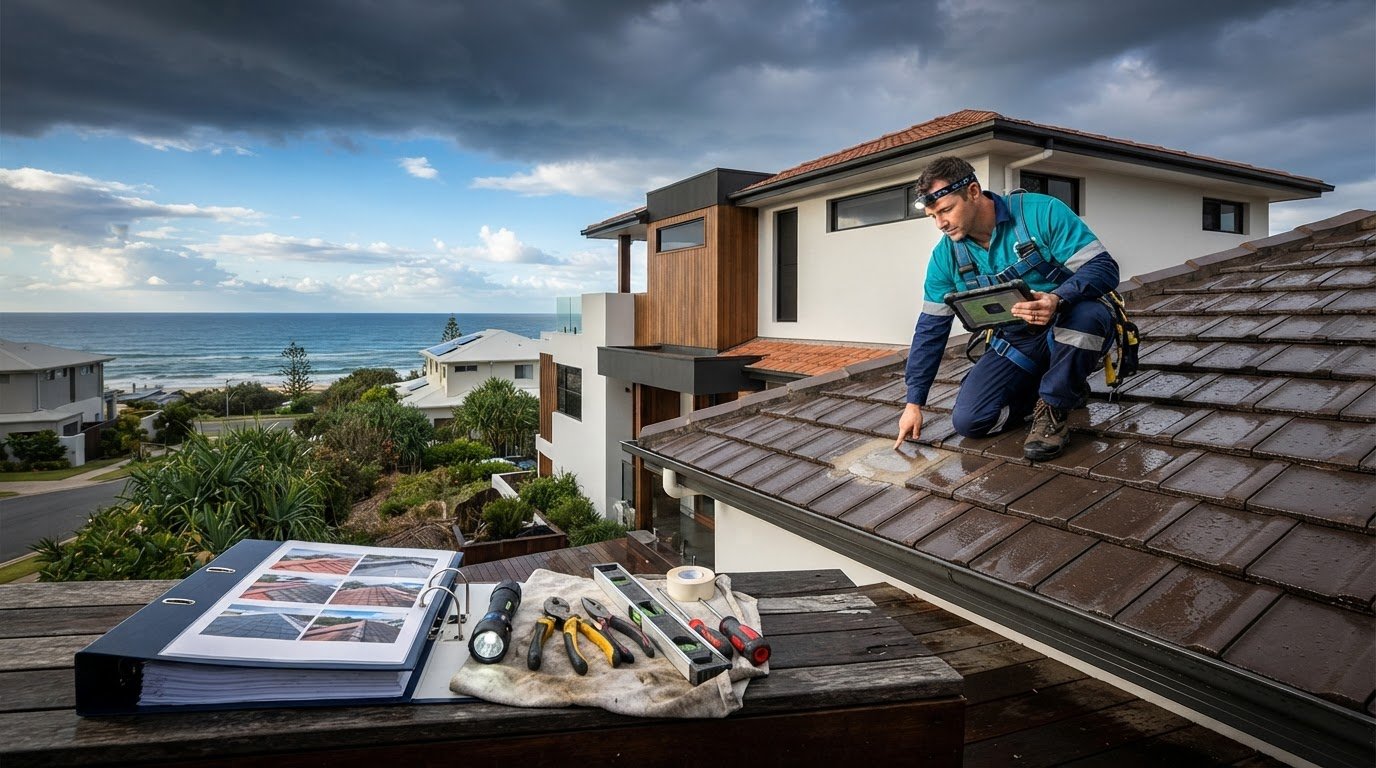
A leak appears after a storm, but is the cause damaged roofing, a faulty installation or a material defect? The answer can affect what’s covered, which is why having warranty on roofing work explained clearly matters before repairs begin. A warranty isn’t a blanket promise that every leak or storm-related problem will be fixed at no cost.
It’s understandable to expect protection after paying for roofing work. The key is knowing the difference between a manufacturer’s cover for materials and a contractor’s cover for workmanship, then reading the written terms for exclusions, responsibilities and claim steps. Australian Consumer Law guarantees may also apply to services, but they don’t guarantee a particular claim outcome.
This guide explains what roofing warranties may cover, how written terms can differ and what records to keep if a defect appears. You’ll learn which details to clarify before work starts, why a clear scope matters for jobs such as roof leak detection and repair, and what practical steps to take if a problem develops at your property in Mainly Beach.
Key Takeaways
- With warranty on roofing work explained, you can distinguish cover for workmanship from cover for roofing materials and components.
- Compare the written scope, start date, duration, exclusions and claim process before work begins.
- Keep dated photos, invoices, product details and repair records together so you can refer to them if an issue arises.
- If you spot a possible defect, put safety first, document what you can see and review the relevant warranty terms before taking the next step.
- Clear records can help connect the roofing work performed, from leak repairs to flashing and waterproofing, with the concern you need assessed.
What does a warranty on roofing work mean?
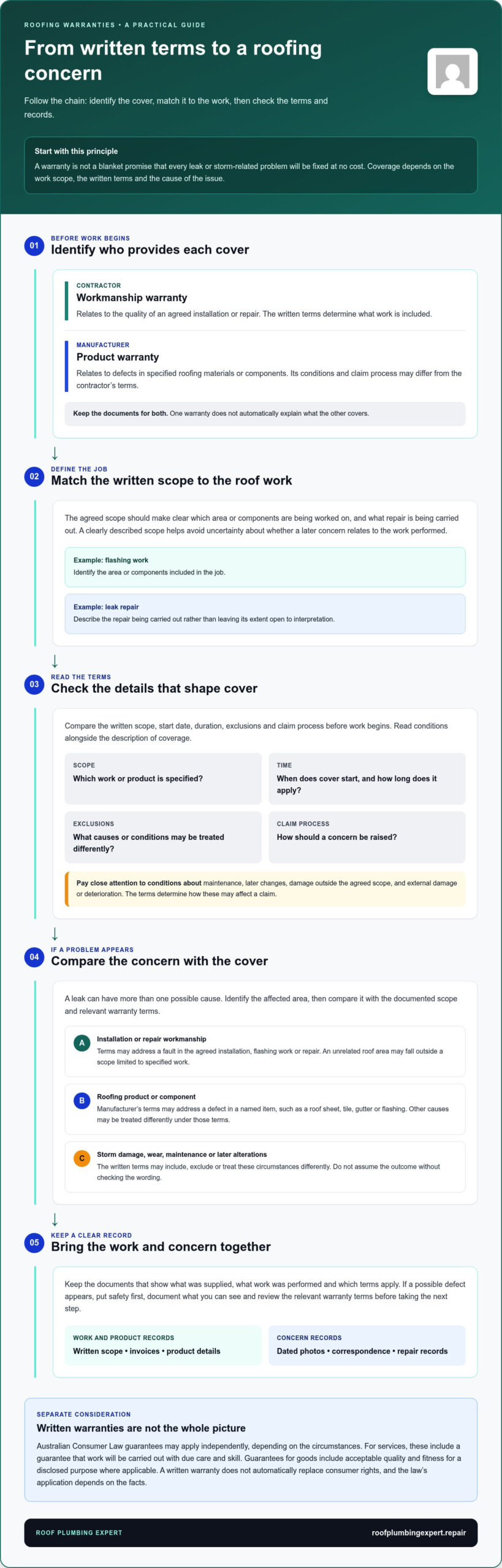
A warranty sets out specific promises and conditions for work performed or products supplied. For roofing, it helps define what may be addressed if a problem arises, how long the stated cover applies and how to raise a concern. The word “warranty” alone doesn’t tell you what’s protected. The written terms and the agreed scope of work do.
There can be two separate warranties to understand. A contractor’s workmanship warranty relates to the quality of an installation or repair, while a manufacturer’s product warranty relates to defects in roofing materials or components. Their coverage, conditions and claim processes may differ. For a broader introduction to the term, see What is a Warranty?
What can a roofing workmanship warranty address?
Coverage depends on the written terms and the work agreed. If a job involves roof flashing, the scope should identify which area or components are being worked on. For a leak repair, it should describe the repair being carried out, rather than leave its extent open to interpretation. These examples don’t establish that a particular issue is covered; the warranty wording determines that.
A workmanship concern could relate to how an included installation, flashing detail or repair was completed. Damage from a later event, maintenance needs or a problem with an unrelated roof component may be treated differently under the terms. Because a roof leak can have more than one possible cause, identify the affected area and compare it with the documented scope to understand what the warranty may address.
Is a written warranty the same as a legal guarantee?
No. Contractual warranty terms describe specific promises made under an agreement or product warranty. Consumer protections are a separate source of rights that may apply independently, depending on the circumstances. Read a written warranty alongside the contract, rather than treating it as a complete statement of every right available to a homeowner.
In Australia, the Australian Consumer Law (ACL) provides consumer guarantees for services and goods in relevant consumer transactions. For services, these include a guarantee that work will be carried out with due care and skill. The ACL also includes guarantees relating to goods, such as acceptable quality and fitness for a disclosed purpose, where applicable. How these protections apply to a particular roofing job depends on the facts and the law.
Written warranty terms set out specific cover; they don’t automatically replace consumer rights that may apply independently. A clause in a warranty document shouldn’t be assumed to remove those rights. If a disagreement arises, the written scope, invoices, correspondence and applicable consumer protections can all be relevant. This is general information, not legal advice, and it can’t determine the outcome of an individual claim.
The practical starting point is to identify who is responsible for the workmanship and who provides any product warranty. Keep the documents that explain each one. This distinction gives you a clearer basis for understanding the terms before work starts and responding if a concern appears later.
What may roofing warranties cover, and what may they exclude?
A roofing warranty doesn’t cover every problem that happens on a roof. Its scope depends on the promise made, the work described and, where relevant, the manufacturer’s product terms. A workmanship issue and a defect in a roofing product are different concerns, even if both result in a leak. The practical rule is simple: coverage depends on the work scope, the warranty wording and the cause of the issue.
Workmanship cover versus roofing-material cover
A contractor may provide written terms for workmanship, while a manufacturer may provide a separate warranty for a product. Depending on the relevant terms, workmanship cover may address how an agreed installation or repair was completed. Product cover may address a defect in a specified item, such as roof sheets, tiles, gutters or flashing. These are examples, not promises of cover. Keep the contractor’s and manufacturer’s documents together so you can see which terms apply to each part of the job.
| Issue | What may be covered | What may be excluded or treated differently |
|---|---|---|
| Installation or repair workmanship | If the written terms include it, they may address a fault in the agreed installation, flashing work or repair. | If the terms limit cover to the specified work, a fault in an unrelated roof area may fall outside that scope. |
| Roofing product or component | If the manufacturer’s terms apply, they may address a defect in a named product, such as a roof sheet, tile or gutter. | If the terms exclude certain causes or conditions, damage from handling, installation or another source may be treated differently. |
| Storm damage, wear or maintenance | If the written terms expressly include the relevant issue, they may set out how it is assessed. | If the terms exclude external damage, deterioration or neglected maintenance, those conditions may affect a claim. |
| Later alterations | If the terms allow changes, a later alteration may not affect the stated cover. | If unauthorised work is excluded, an alteration to the covered area may affect how a claim is assessed. |
Common exclusions and conditions to understand
Read exclusions and claim conditions alongside the coverage description. Look for wording about maintenance, changes made after the work, damage outside the agreed scope and the process for reporting a concern. Examples in the table aren’t universal rules; only the specific written terms can show whether a condition applies to your roof.
A storm can expose an existing weakness, cause fresh damage or do both. The event alone doesn’t establish whether a warranty applies or is excluded. The cause, affected component, prior condition and relevant terms all matter. Wear over time and maintenance history may also be relevant, so avoid assuming a leak has a single cause before the roof is assessed.
Consumer guarantees under Australian Consumer Law may apply independently of a voluntary warranty. The ACCC explains how warranties and consumer guarantees differ in its guidance on Australian Consumer Law and roofing warranties. This general information doesn’t determine the outcome of a particular claim.
If a leak’s source or the affected roof area is unclear, Roof Plumbing Expert’s roof leak detection and repair service can help identify the issue and the area that needs attention.
How to compare roofing warranty terms before work begins
Before agreeing to roofing work, compare the written terms with the quote and scope. A headline duration is only useful if you know which work it applies to, when it starts and how to raise an issue. For warranty on roofing work explained in practical terms, focus on the detail behind the promise, not just the number of years shown in a document.
Which details should the written terms spell out?
Use the table to compare documents side by side. Fill in the details from the actual terms rather than assuming they’re standard. If a point is missing or unclear, get a written explanation before work begins.
| What to compare | What to look for |
|---|---|
| Covered work | Does the scope identify the roof area, repair or installation, and any related flashing or waterproofing? Check whether the warranty refers to the same work as the quote. |
| Materials | Are the roofing products or components identified? Note whether product cover is documented separately from workmanship terms. |
| Start date | Find the date from which the stated cover runs. The document may define this by reference to completion, installation or another event, so use its exact wording. |
| Duration | Record the stated period and check which parts of the work it applies to. Durations vary; don’t assume a longer headline period means broader cover. |
| Exclusions and conditions | Look for limits relating to maintenance, later alterations, damage or specific components. Check whether any conditions require action from you. |
| Claim procedure | Note how and when to report a concern, who to contact and what evidence may be requested, such as photos, invoices or product details. |
Compare like with like. A quote for a local leak repair isn’t directly comparable with one that includes broader roof work, even if the warranty duration appears more generous. A detailed quote should describe what will be inspected, repaired or replaced and identify any relevant limits. That scope gives you a reference point if a later concern arises.
How NSW consumer protections fit into the comparison
Contractual warranty terms are commercial promises set out in an agreement or product document. Australian Consumer Law may provide consumer guarantees separately, depending on the transaction and circumstances. These protections shouldn’t be treated as interchangeable with a written warranty. The ACCC’s warranty guidance explains the distinction between warranties and consumer guarantees.
For NSW-specific building protections, consult current NSW Fair Trading guidance before relying on any rule, eligibility criteria or time limit. Requirements can depend on the nature of the work and other circumstances, so don’t assume every roofing job has identical statutory coverage. Legal requirements and a contractor’s commercial warranty are separate matters; check the current rules rather than relying on a duration stated in a quote alone.
Keep the quote, scope, contract and warranty documents together, and make sure the final paperwork reflects the work agreed. Clear records make it easier to identify which terms relate to the roof area or component in question.
What to do when you find a possible roofing defect
A new leak or visible change can be worrying, but a measured response helps protect people, preserve useful evidence and explain the issue clearly. A defect doesn’t automatically mean a warranty applies. First deal with any immediate safety risk, then record what you can observe and check the terms for the relevant work or product.
How to document a roof problem safely
Stay off the roof. Take dated photographs from the ground or another safe position, and don’t climb a ladder or roof to get a closer view. If there’s water entering the home, keep clear of electrical hazards and take reasonable steps to protect belongings only if it’s safe to do so. If there’s an immediate danger, prioritise people’s safety over collecting evidence.
Make a brief timeline while details are fresh. Record when you first noticed the issue, the weather at the time and any changes since, such as a damp patch growing or water appearing in a different place. Describe what you can see without diagnosing the cause. A stain indoors, for example, is evidence of a visible sign, not proof of which roof component failed.
- Take clear, dated photos of visible signs from a safe location.
- Note when the problem appeared, weather conditions and changes over time.
- Gather the quote, contract, invoices, payment records and relevant warranty documents.
- Keep product details and records of previous inspections or repairs, including their dates and scope.
How to raise a concern and follow up
Review the relevant terms for the contact method, notification timeframe and evidence requested. Send your concern using the stated process, and keep a copy of the message and any attachments. If the terms don’t set out a clear process, use a written method that records what you sent and when.
Keep the notification factual. Identify the property, the work or product involved, when the issue became apparent and the signs you’ve documented. Attach relevant records, then request written acknowledgement and the next steps for assessment. Avoid stating that a particular cause is certain or that the issue must be covered. A roof assessment may be needed to establish what is happening and whether it relates to the documented work.
If the matter remains unresolved, consult current NSW Fair Trading guidance on building and renovation complaints to understand the available options. The right pathway can depend on the work and circumstances, so treat general information as a starting point rather than legal advice. This approach to warranty on roofing work explained keeps the record clear without assuming how a claim will be decided.
If you’ve noticed a leak at your Mainly Beach property, arrange roof leak detection and repair with Roof Plumbing Expert to identify the affected area and determine the practical next step.
Roofing work and warranty clarity: practical next steps
Clear paperwork won’t determine whether a future issue is covered, but it does help show what was agreed and where the work was done. Before roofing work starts, line up the quote, scope, material details and written warranty terms. Keep them together with a clear process for reporting a concern. That gives you a practical reference if the roof needs attention later, without assuming a particular warranty or outcome applies.
How a clear roofing scope supports better decisions
A useful scope identifies the affected roof area and describes the intended work. “Investigate a leak near the rear roofline” is a starting point; the written scope should clarify what inspection or repair is included. Flashing work is distinct from tracing a leak, even if the two relate to the same area. For background on leak investigation, the guide Roof Leak Detection NSW: The Complete Guide to Protecting Your Home covers why identifying the source matters.
Before work begins, use this short checklist to make the documents easier to follow:
- Scope: Note the roof area and the inspection, repair or installation agreed.
- Materials: Record the relevant products or components, including roof sheets, flashing or waterproofing materials where specified.
- Written terms: Keep workmanship and product warranty documents, and note their stated duration, conditions and exclusions.
- Records: Save the quote, contract, invoices, product information and dated photos of visible conditions before and after the work.
- Contact process: Record how to report a concern and any notification steps set out in the terms.
This detail is useful for larger work as well as a targeted repair. For example, a Colorbond roofing scope should make the work area and relevant materials understandable, while flashing and waterproofing documents should describe the parts addressed. Clear descriptions make it easier to distinguish the completed work from other roof components if a concern arises.
When a roof assessment can help
An assessment can be useful when water appears indoors but the source or extent of a leak isn’t clear. Water may travel from the entry point before becoming visible, so a ceiling mark alone may not show which roof area needs attention. Roof leak detection can help investigate the issue; the appropriate repair, flashing or waterproofing work depends on what the assessment finds.
Keep your observations and paperwork available so the roof condition can be considered alongside any earlier work. This is especially helpful if the concern relates to a repaired area, roof flashing or a section of Colorbond roofing. The documents support a clearer discussion, but they don’t guarantee that a particular warranty applies.
Roof Plumbing Expert provides roof leak detection and repair, gutter and downpipe installation, Colorbond roofing, restoration, flashing and waterproofing services for properties in Mainly Beach. Arrange an assessment to identify the roof issue and understand what work is needed.
Make your next roofing decision with confidence
Your roof’s paperwork can become a useful record of its condition and repair history. Keep assessment notes with invoices, product information and photos, so future work can be considered in context rather than treated as an isolated problem. That record can also help you explain what has changed if another leak or concern appears.
With warranty on roofing work explained, the next step is to get a clear picture of the roof issue before deciding what work is needed. Roof Plumbing Expert provides specialist roof plumbing and guttering services across New South Wales, including leak detection and repair, Colorbond roofing, flashing and waterproofing. An assessment can help clarify the affected area and inform the work scope, without assuming any particular warranty applies.
Arrange a roof assessment with Roof Plumbing Expert and take the next step towards a clearer plan for your home in Mainly Beach.
Frequently Asked Questions
How long does a warranty on roofing work last in Australia?
There’s no single duration for every Australian roofing job. Contractual workmanship and manufacturer warranties have their own written periods, while statutory protections depend on the state or territory and the type of work. In NSW, statutory warranty periods for residential building work are six years for major defects and two years for other defects, subject to eligibility and applicable rules. Check current NSW Fair Trading guidance for your project before relying on a time limit.
Does a roofing warranty cover leaks after heavy rain?
It may, if the leak relates to work or a product included in the warranty and the terms cover the cause. Heavy rain alone doesn’t establish whether the issue is covered. For a property in Mainly Beach, note when the leak appeared, which rooms or roof areas are affected and whether the symptoms continue after the weather clears. Share those observations through the relevant claim process, without assuming the source or cause.
Can a roofing warranty transfer to a new owner?
Sometimes, but transfer isn’t automatic for every warranty. Check the document for terms such as “transfer”, “subsequent owner”, registration requirements or a deadline to notify the issuer after a sale. A product warranty may have different transfer conditions from a contractor’s workmanship terms. If you’re buying a home, request the original roofing paperwork and any transfer confirmation, then retain them with your property records.
Can a contractor refuse a warranty claim?
A contractor may dispute or decline a claim if the reported issue falls outside the agreed work, an exclusion applies or the claim doesn’t meet the stated process. Ask for the reasons in writing and identify the specific term relied on. A refusal under a voluntary warranty doesn’t by itself settle whether other consumer protections apply. Keep the response and supporting records, and consult NSW Fair Trading guidance if you can’t resolve the matter.
Does a roofing warranty cover storm or hail damage?
It depends on the warranty wording and what caused the damage. A product defect or workmanship problem that becomes visible after a storm is different from damage caused by hail or wind, and the event alone won’t establish coverage. Photograph visible damage from a safe location, record when it occurred and keep any storm-related correspondence. Check the roof warranty terms and your home insurance policy, as they address different forms of protection.
What documents should I keep after roofing work?
Keep the signed contract, detailed quote, final invoice and proof of payment, along with workmanship and manufacturer warranty documents. Save product names or identifiers, care instructions, completion records, dated photos and any messages about changes to the agreed work. For a Mainly Beach property, a simple folder organised by job date and roof area can make records easier to find later, particularly if another assessment involves the same section.
Can later roof repairs affect an existing warranty?
They can, depending on the original terms, the repair location and how the later work affects the covered area. For example, changes to flashing near a previously repaired leak may complicate efforts to identify the source of a new problem. Before arranging further work, review any alteration or maintenance conditions and keep the new scope, invoice and photos. Don’t assume all cover is cancelled; the relevant terms and circumstances matter.