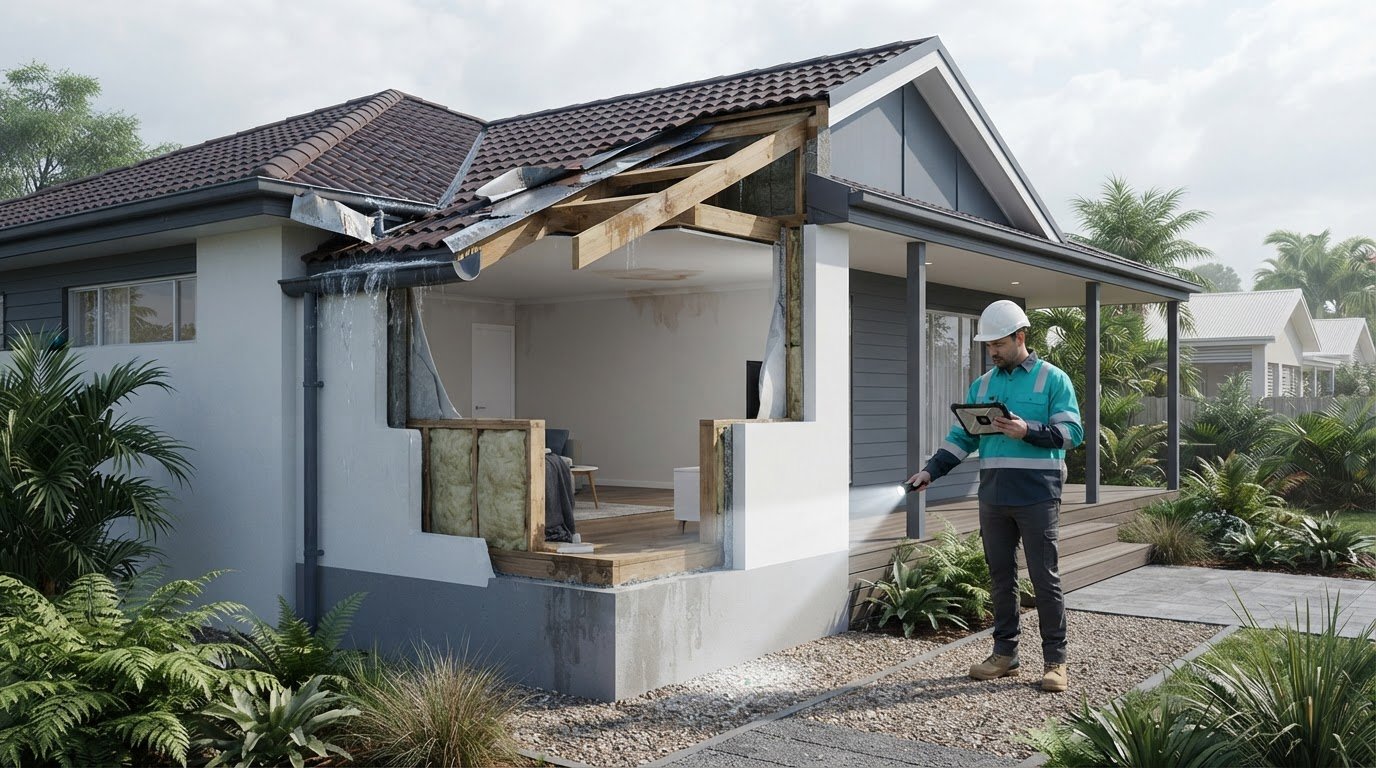
What if the small cracks in your ridge capping are actually a signal that your entire roof structure is under threat? Most homeowners in New South Wales understand that maintenance is part of the job, but the uncertainty surrounding roof repointing cost NSW often leads to hesitation. It’s natural to worry about being overcharged by “roof cowboys” or feel confused by the technical difference between rebedding and repointing. You want a secure, watertight home without the stress of hidden fees or poor workmanship that fails after the first summer storm.
This guide provides a transparent breakdown of what you should expect when budgeting for roof repairs in 2026. We’ll clarify the distinction between lineal and square metre pricing models while highlighting the latest SafeWork NSW safety standards that affect project costs. By the end of this article, you’ll have the confidence to evaluate quotes like a professional and the peace of mind that comes from knowing your property is protected against the elements. We’ll examine the shift toward flexible pointing compounds and the specific factors, from roof pitch to site access, that influence your final investment.
Key Takeaways
- Learn why modern flexible pointing compounds are essential for maintaining a watertight seal on your ridge capping in the harsh NSW climate.
- Discover how roof size and pitch directly influence the roof repointing cost NSW homeowners can expect to pay for professional labour and materials.
- Understand the technical difference between rebedding and repointing so you only pay for the level of structural repair your roof actually requires.
- Spot the critical warning signs of mortar failure, such as loose ridge tiles or visible cracks, before they lead to expensive internal water damage.
- Gain the knowledge to verify NSW Fair Trading licences and insurance, ensuring your roof restoration is handled by a qualified specialist.
What is Roof Repointing and Why Is It Vital for NSW Homes?
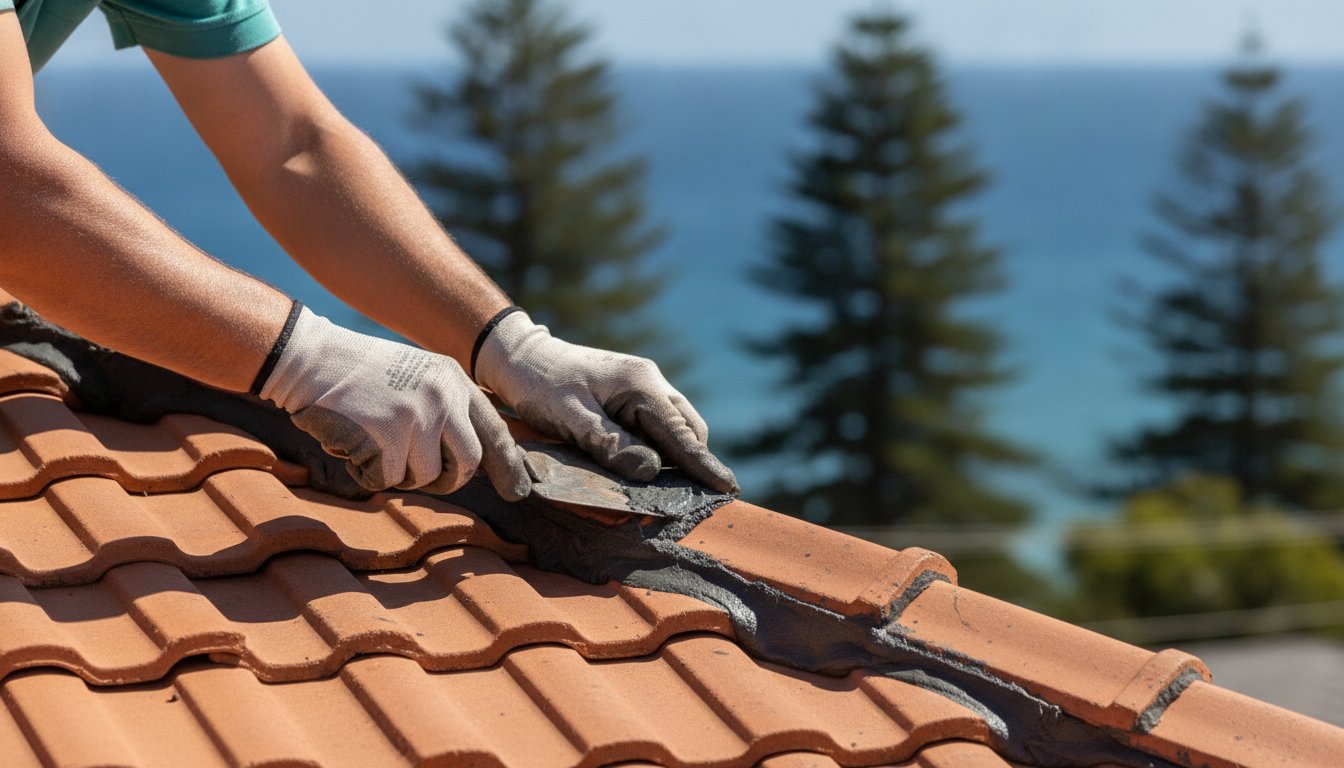
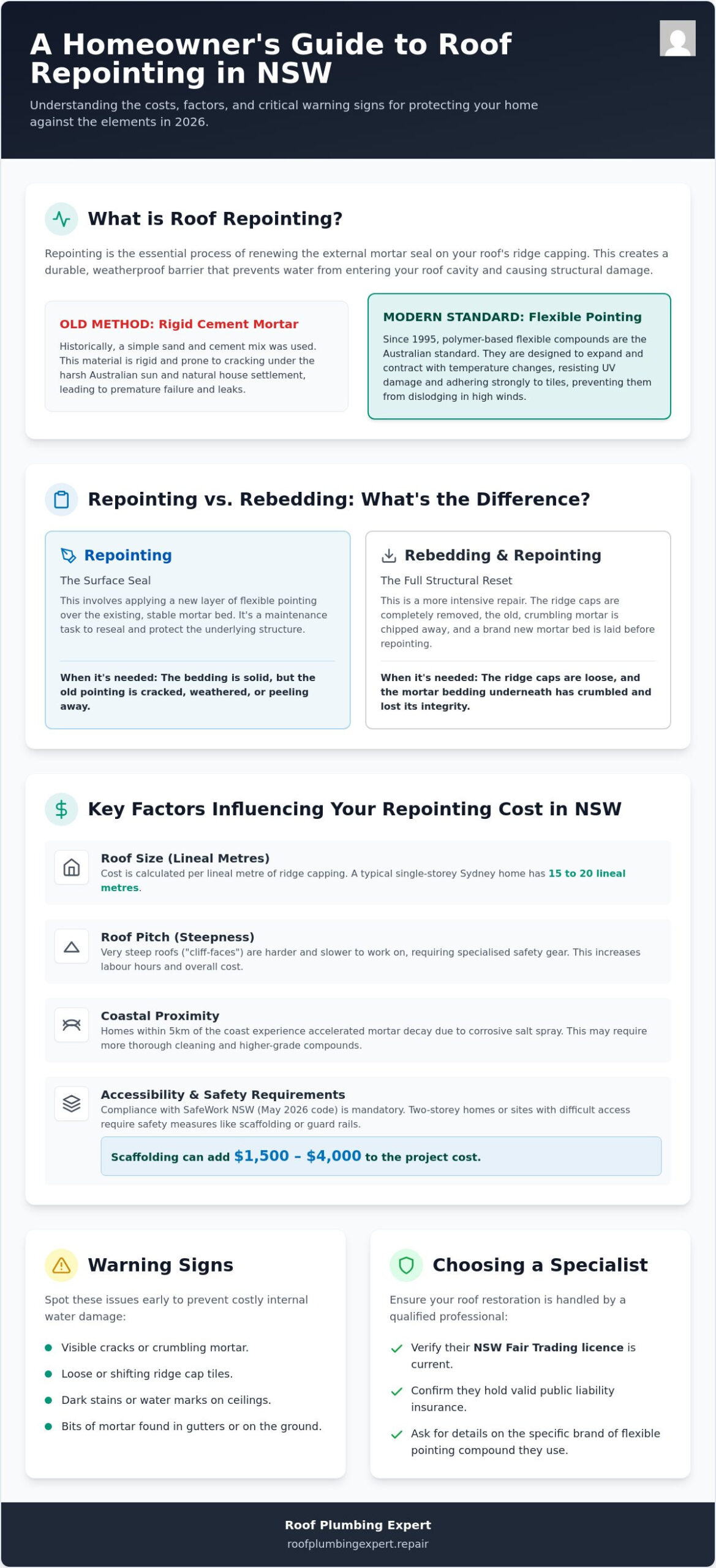
Understanding what is repointing is the first step in maintaining a durable, weatherproof home. In a roofing context, repointing is the process of renewing the external seal over your ridge capping to prevent water ingress. This ridge capping system consists of three main components: the ridge tiles that sit at the peaks, the mortar “bedding” that holds them in place, and the “pointing” layer that seals the edges between the tiles and the roof. Since 1995, flexible pointing has been the modern Australian standard for all residential tile roofs.
For homeowners concerned about the roof repointing cost NSW contractors charge, it helps to understand that this isn’t just a cosmetic upgrade. It’s a structural necessity. NSW weather is notoriously tough on building materials. Heavy subtropical rains and corrosive coastal salt spray quickly degrade traditional mortar, making regular maintenance non-negotiable for property protection. In coastal areas like the Northern Beaches or Wollongong, salt can accelerate the breakdown of old mortar beds, leading to early failure if left unsealed.
The Evolution from Cement to Flexible Pointing
Historically, ridge tiles were finished with a simple mix of sand and cement. While rigid, these mixtures often fail under the intense Australian sun. They lack the ability to move. As your house settles or temperatures fluctuate, traditional cement cracks and crumbles. Flexible compounds are different. These polymer-based materials are designed for expansion, contraction, and high UV resistance. They act like a strong adhesive, ensuring ridge tiles don’t blow off during the high-wind events common in the Sydney basin and regional NSW. This durability is a key factor when evaluating the long-term roof repointing cost NSW residents face, as modern materials last far longer than old-school mortar.
The Role of Ridge Capping in Roof Integrity
Think of the ridge capping as the spine of your home. It sits at the highest peaks where the roof faces the most direct punishment from the elements. If the pointing fails, water is no longer directed safely away from the internal roof cavity. Instead, it seeps into the bedding and eventually through your ceiling. A professional specialist ensures the new layer is thick and properly adhered to both the tile and the bedding. This creates a permanent barrier that keeps your roof cavity dry and your structural timbers safe from rot. A cheap “skim coat” might look good from the ground, but it won’t withstand a NSW summer storm. Investing in a high-quality repoint today prevents a much more expensive full restoration or structural repair down the track.
Key Factors Influencing Roof Repointing Costs in NSW
Determining your roof repointing cost NSW depends on several physical variables. Every job starts with a measurement of the ridge capping in lineal metres. A standard single-storey home in Sydney usually has between 15 and 20 lineal metres of ridge capping. However, the total price isn’t just about length. We also look at the pitch of the roof. Steep roofs, often called “cliff-faces” in the trade, require more time and specialised safety gear because movement is restricted. When a tradie can’t walk freely on the surface, the labour hours naturally increase.
Coastal decay is another major factor that often goes unmentioned in generic price guides. In suburbs like Mainly Beach or Cronulla, salt spray accelerates the breakdown of traditional mortar. This salt crystallises inside the bedding, causing it to expand and crack the pointing from the inside out. If you live within five kilometres of the ocean, your roof likely requires a more thorough cleaning and a higher grade of flexible compound to resist this corrosive environment. Ignoring these local conditions often leads to premature failure and higher long-term expenses.
Accessibility and Safety Requirements
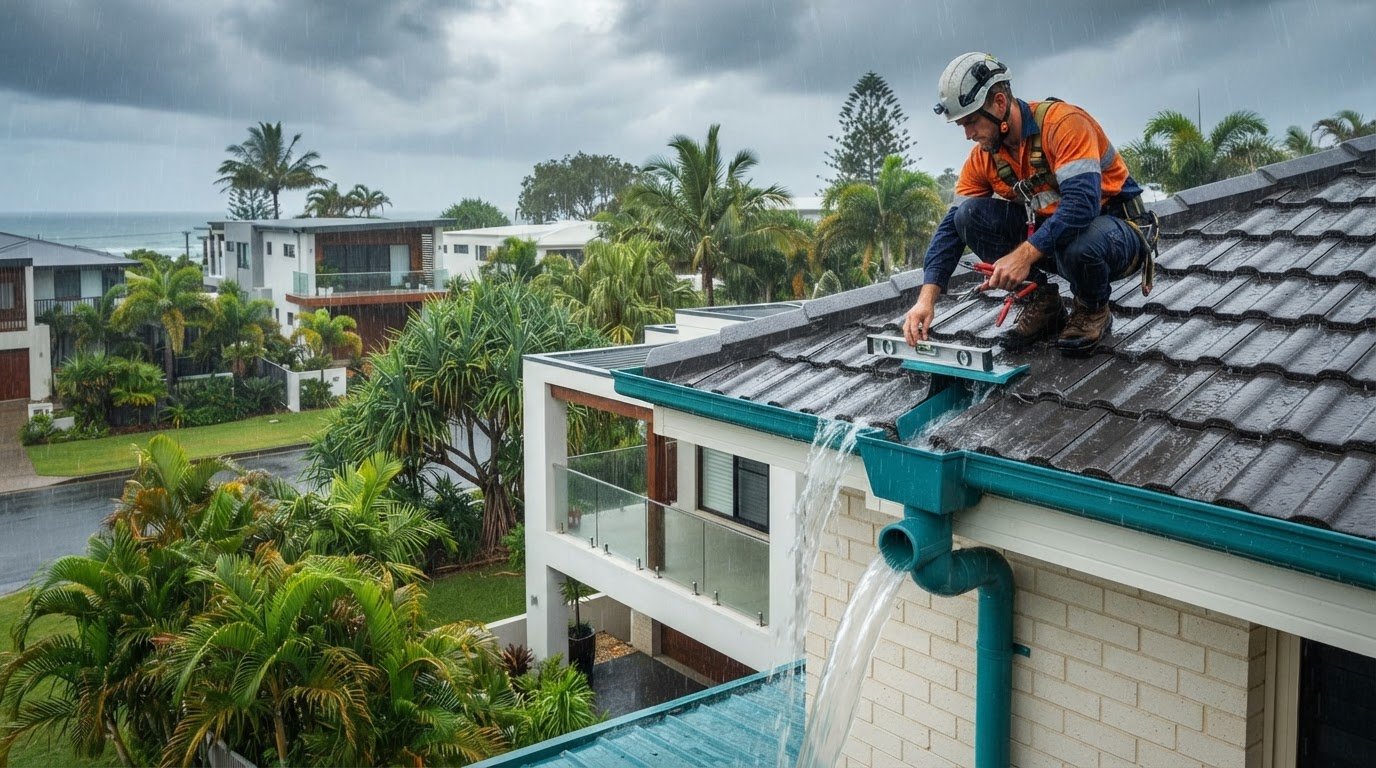
Safety isn’t optional, and it significantly impacts the final quote. Since the new SafeWork NSW code of practice commenced on May 22, 2026, there are stricter requirements for managing health and safety risks on roofs. For two-storey homes or properties with difficult access, we must factor in scaffolding or perimeter guard rails. Scaffolding alone can add $1,500 to $4,000 to a project. This ensures the work complies with the NSW Guide to Standards and Tolerances. Narrow blocks or overhanging trees also slow down the process, as getting materials and waste onto the roof takes more manual labour.
Material Quality and Colour Matching
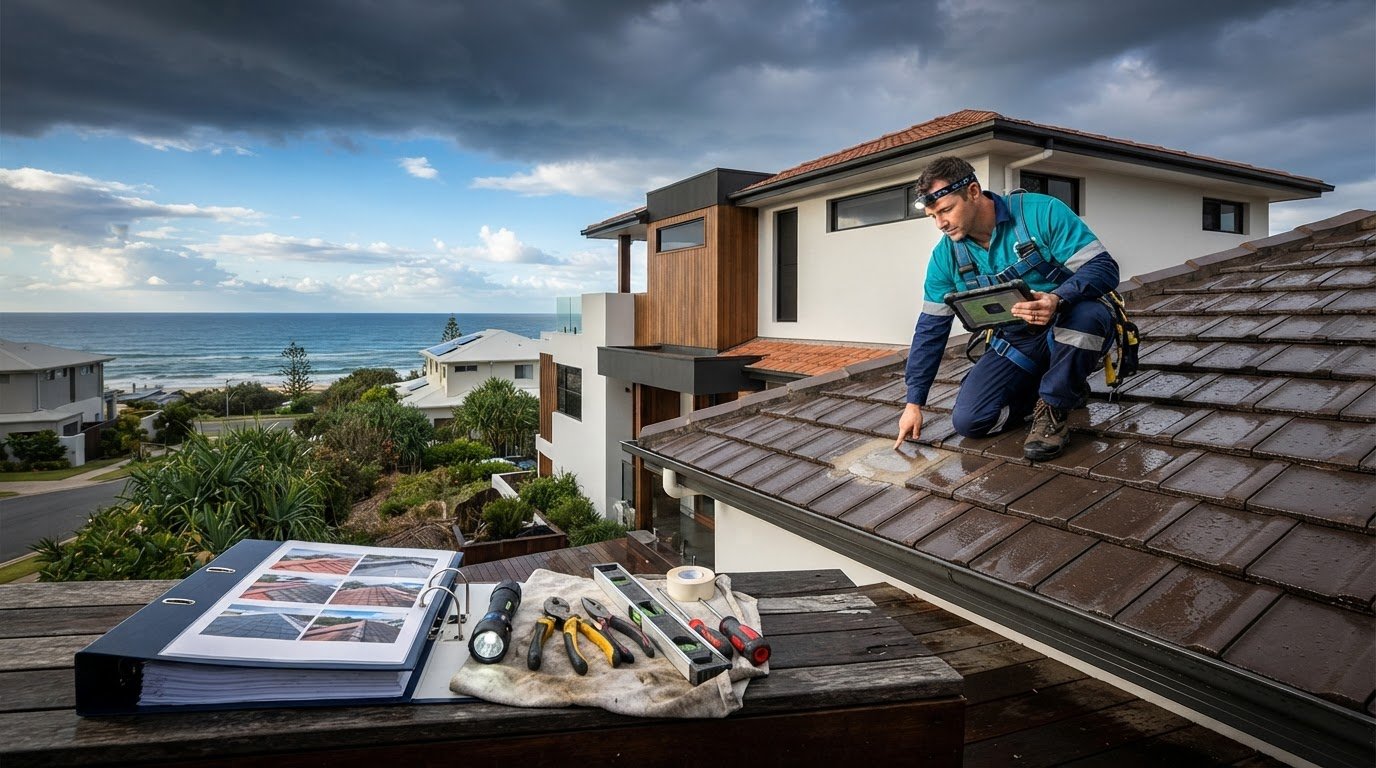
Using the right materials is vital for a long-lasting finish. Premium flexible compounds are designed to handle the expansion and contraction of the NSW climate. While cheaper mixtures might save money upfront, they often crack within 24 months. We also take time to match the pointing colour to your existing tiles for a seamless look. This involves more than just picking a bucket off the shelf; it requires an eye for detail to ensure the repair doesn’t stand out. If you aren’t sure about the current state of your ridge capping, you can book a professional roof inspection to see if you need a simple repoint or a full rebed.
The current condition of your roof is the final piece of the puzzle. If the underlying mortar “bedding” is crumbling or has detached from the tiles, a simple repoint won’t fix the problem. You would be throwing good money after bad. A full rebed involves stripping the ridge tiles and replacing the foundation mortar, which is more intensive but necessary if the structural foundation has failed. Identifying this early prevents hidden costs from surfacing mid-job.
Repointing vs. Rebedding: Understanding the Price Difference
Homeowners often use the terms “rebedding” and “repointing” interchangeably, but they represent two distinct levels of structural repair. Repointing is the process of applying a fresh layer of flexible sealant over the existing mortar. It serves as the external skin that keeps water out. Rebedding is far more intensive. It involves stripping the ridge tiles completely, removing the old, brittle sand and cement, and laying a brand new mortar foundation. Because rebedding requires significantly more manual labour, material handling, and debris disposal, it represents a larger portion of the roof repointing cost NSW homeowners see on comprehensive quotes.
Think of the bedding as the foundation of a wall and the pointing as the protective render. If the foundation is crumbling, no amount of high-quality render will keep the structure stable. When we assess a roof, we look at the structural integrity of that underlying bed. If the foundation has failed, a simple repoint is a temporary fix that will likely fail during the next major weather event. A professional approach ensures you only pay for the work that is actually required to keep the home watertight.
When Is Rebedding Non-Negotiable?
There are clear physical signs that your roof has moved beyond a simple repoint. If you can physically shift a ridge tile with your hand, the bond between the tile and the bedding has detached. We also use the “hollow sound” test. Tapping a ridge tile with a tool handle reveals a specific echo if the mortar underneath has crumbled into dust. When the bedding is in this state, it can no longer support the weight of the tiles or the tension of the flexible pointing compound. Attempting to point over failed bedding is a waste of money; the new material will have nothing solid to grip, leading to visible cracks within months.
Pricing Models: Lineal Metre vs. Square Metre
Confusion often arises when comparing quotes because different contractors use different units of measurement. In NSW, the most accurate way to price ridge work is by the lineal metre. This measures the actual length of the ridge capping being serviced. Square metre pricing is generally reserved for full roof restorations that include high-pressure cleaning and painting of the entire roof surface. If a quote for ridge work is provided in square metres, it can be difficult to tell exactly how much of the “spine” is being repaired. A professional, transparent quote should clearly state the lineal metres involved and specify that the price includes high-pressure cleaning of the ridges and the complete removal of old mortar debris from your gutters. For Sydney homeowners specifically, our guide to expert roof repointing Sydney provides a detailed breakdown of what a lasting, professionally applied flexible seal should include.
Warning Signs: When to Request a Roof Repointing Quote
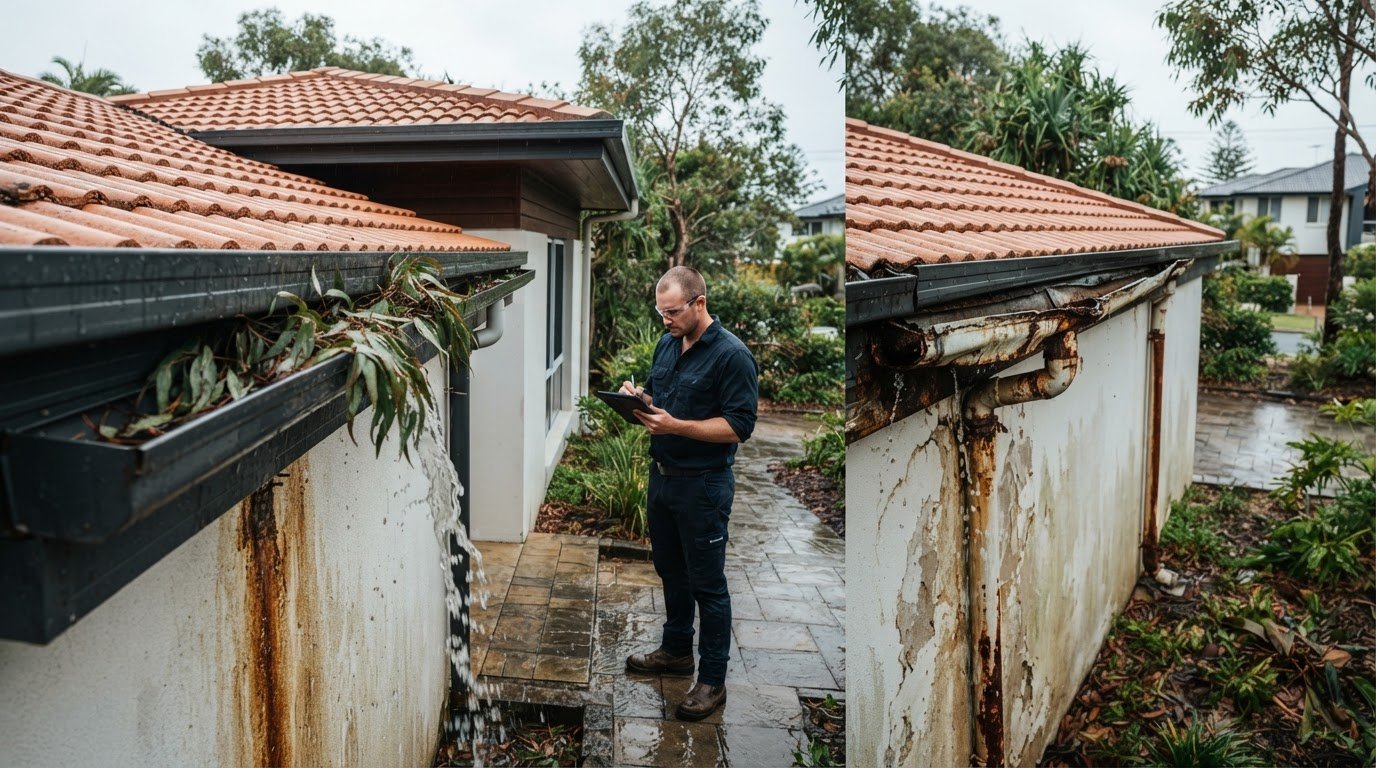
Identifying the right time to call a specialist can save thousands in structural repairs. You don’t need to be a tradie to spot the early signs of failure. Start by looking at the ridge capping from the ground or a safe distance. If you see visible cracks or missing chunks in the mortar, the waterproof seal is already compromised. A common issue missed by inexperienced operators is the blockage of weep holes; these small gaps are essential for allowing internal moisture to escape. Loose ridge tiles that shift or rattle during heavy winds are another critical indicator. These gaps allow wind-driven rain to enter your roof cavity, which can lead to timber rot before you even notice a drip in the lounge room.
Check your gutters and downpipes regularly for mortar grit or “sand.” As traditional cement bedding breaks down, it washes into the guttering system. This debris is a clear signal that the foundation of your ridge capping is eroding. If you notice internal water stains on your ceilings, particularly near the peaks or along the line of a ridge, the pointing has likely failed. While you might consider the roof repointing cost NSW homeowners face as a significant investment, ignoring these signs often leads to far more costly internal damage. If your inspection also reveals broken or cracked roof tile repair Sydney homeowners should address promptly, as even a single hairline fracture can allow moisture to penetrate the roof cavity and compound the damage caused by failing ridge pointing.
Coastal Considerations for NSW Homeowners
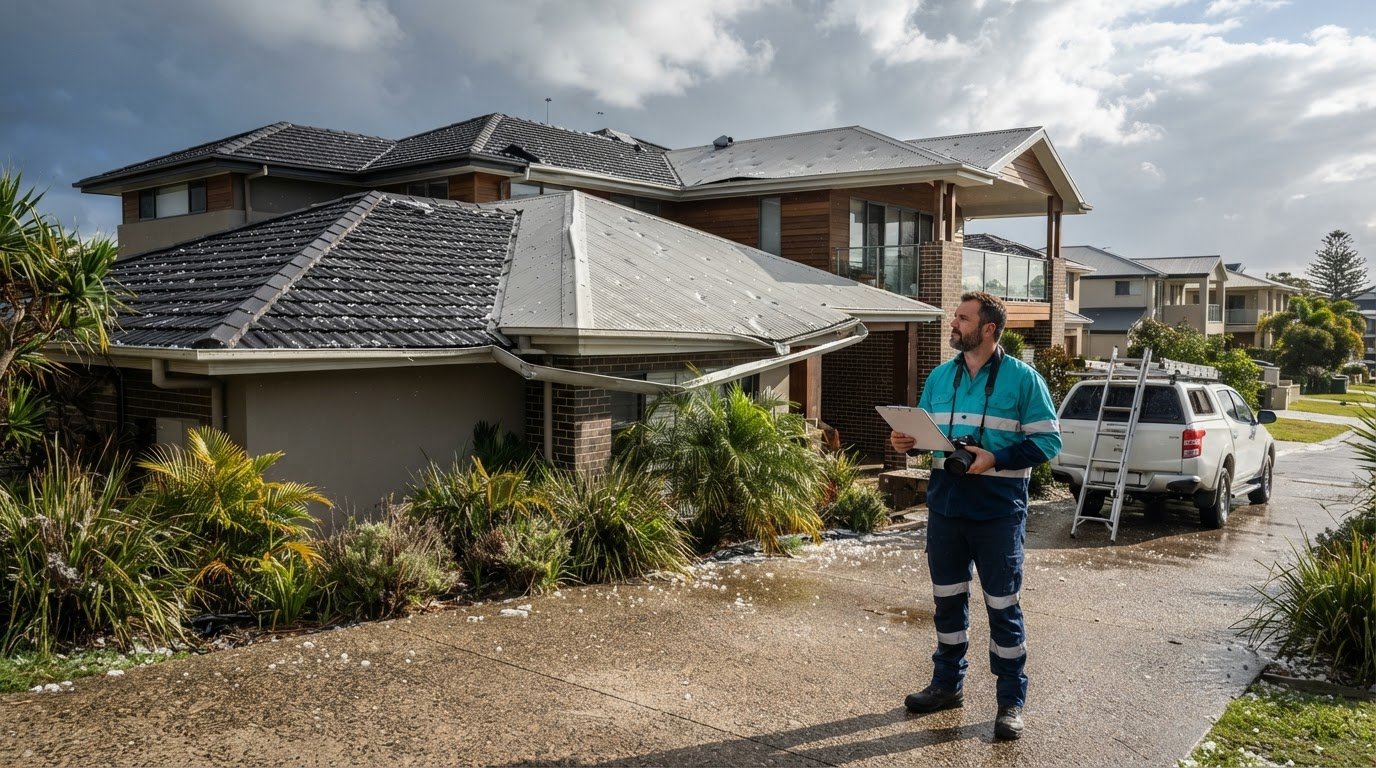
Suburbs like Mainly Beach or the Illawarra coast face unique environmental pressures. Salt air is highly corrosive and accelerates the decay of cement-based mortar much faster than in inland areas. We often see ridge capping that looks fine from a distance but has completely detached due to salt crystallisation. This makes your home vulnerable during East Coast Lows. These intense weather systems bring gale-force winds and torrential rain that can easily strip compromised ridge tiles from a roof. Scheduling an annual inspection is a proactive way to manage your property and is significantly cheaper than calling for emergency repairs in the middle of a storm.
The “Ghost Leak” Phenomenon
Failed pointing is a primary cause of what we call “ghost leaks.” These are leaks that appear in your ceiling but don’t seem to align with any obvious hole in the roof. Because water follows the path of least resistance, it often enters through a hairline crack in the ridge pointing and travels along the rafters for several metres before dripping onto the plasterboard. This makes precise roof leak detection vital for identifying the true source of the issue. A professional assessment will determine if the water ingress is a simple pointing failure or something more complex. If you’ve spotted any of these red flags, it’s best to request a professional roof assessment to protect your home’s structural integrity.
Choosing a Specialist for Roof Restoration in NSW
Selecting the right contractor is just as important as the materials used on your ridge capping. In New South Wales, structural water management is a regulated trade. Hiring a licensed roof plumber ensures that your project complies with state building standards and protects your home’s warranty. While a general handyman might offer a lower initial roof repointing cost NSW residents often find that these “cheap” quotes skip vital preparation steps. Proper restoration requires high-pressure cleaning to remove lichen and oxidisation, followed by a specific primer to ensure the flexible pointing compound adheres correctly to the bedding.
Before signing any agreement, verify the contractor’s credentials through NSW Fair Trading. A professional specialist will carry current public liability insurance and a valid trade licence. This documentation is your primary protection against subpar workmanship or accidental damage during the project. Beyond safety, a high-quality restoration performed by an expert adds significant curb appeal and resale value to your property. It demonstrates to future buyers that the home has been maintained with a focus on long-term structural integrity rather than quick, cosmetic fixes.
Why Specialised Roof Plumbing Matters
A qualified roof plumber views your roof as a complete ecosystem. They understand how water moves from the highest ridge down through the tiles and into the gutter and downpipe system. This holistic approach is vital for preventing internal moisture issues. For example, a specialist ensures that weep holes are correctly installed in the bedding. These small gaps allow any water that gets behind the tiles to drain away safely. Without them, moisture becomes trapped, leading to timber dampness and mould growth. This “Seasoned Specialist” approach provides the peace of mind that your home is guarded by someone who understands the technical nuances of NSW’s building codes.
Vetting Your Quote: What to Ask
When you receive a quote for roof repointing cost NSW services, look for specific line items rather than a single lump sum. Transparency is a hallmark of a reliable service provider. Ask your contractor the following questions to ensure you are comparing like-for-like services:
- Is high-pressure cleaning of the ridges included? Pointing will not stick to dirty or mossy surfaces.
- Which brand of flexible pointing compound will be used? Ensure they use a product tested for the Australian climate.
- Does the quote include a written warranty? You want a guarantee that covers both the materials and the labour.
- Are safety rails or scaffolding included in the price? This is a legal requirement for many NSW homes.
Ready to secure your home against the next storm season? Get a professional roof restoration quote from our experts today.
Secure Your Home Against the Elements Today
Maintaining a watertight roof is a fundamental aspect of property ownership in New South Wales. We have explored how the distinction between rebedding and repointing affects your total investment and why the use of modern flexible compounds is the only way to achieve a lasting seal. Understanding the roof repointing cost NSW homeowners face allows you to make an informed decision based on structural necessity rather than guesswork. Whether you are dealing with coastal salt spray or preparing for the next summer storm, proactive maintenance prevents minor cracks from turning into major internal damage.
Our team of NSW Licensed Roof Plumbers brings specific expertise in coastal property protection to every project. We are specialists in Colorbond and tile restoration, ensuring your ridge capping remains the strongest line of defence for your family. Don’t wait for a “ghost leak” to appear in your ceiling before taking action. A professional assessment today can save you from the stress of emergency repairs tomorrow.
Request a Professional Roof Repointing Assessment
Taking the first step toward a secure roof provides immediate peace of mind. Your home is your most significant asset; let’s ensure it stays protected for years to come.
Frequently Asked Questions
Is $6,500 too much for roof repointing in NSW?
Whether $6,500 is a fair price depends entirely on the size of your roof and the complexity of the work. If the quote includes high-pressure cleaning, rebedding of all ridge tiles, and the use of premium flexible compounds on a multi-storey home, this figure represents a comprehensive restoration. However, for a simple repoint on a small single-storey cottage, it would be significantly above the market average. Always ensure the quote specifies exactly which materials and safety measures are included.
How long does modern flexible roof repointing last?
Modern flexible pointing compounds typically last between 10 and 15 years before they require maintenance. Unlike traditional cement mortar, these materials are designed to expand and contract with the natural movement of your home and the extreme temperature shifts of the NSW climate. Regular inspections every few years can help identify minor wear before the waterproof seal fails completely. Coastal properties may see a slightly shorter lifespan due to salt exposure.
Can I repoint my own roof to save on costs?
You can technically repoint your own roof, but it isn’t recommended for several safety and structural reasons. Working at heights requires specialised safety equipment and training to comply with NSW health and safety regulations. Additionally, poor application can trap moisture or fail to bond correctly. This often leads to a higher roof repointing cost NSW homeowners must pay later to have the work professionally redone and the damage corrected.
Will roof repointing stop my roof from leaking?
Roof repointing will stop leaks that are specifically originating from the ridge capping system. If water is entering through cracked field tiles, failed valley irons, or damaged flashing, repointing the ridges won’t solve the problem. A professional assessment includes a thorough inspection to ensure the source of the leak is correctly identified. This ensures the repair work targets the actual cause of water ingress rather than just the most visible symptoms. For issues related to damaged tiles specifically, our guide on cracked roof tile repair for Sydney homeowners provides a detailed checklist to help you assess and address the problem correctly.
What is the difference between bedding and pointing?
Bedding is the thick mortar foundation that holds the ridge tiles in place, while pointing is the thinner, flexible layer applied over the top. The bedding provides the structural height and support for the tiles. The pointing acts as the waterproof skin that seals the edges and protects the mortar underneath. You can’t have a successful repoint if the underlying bedding has already crumbled or detached from the roof tiles.
How often should a tile roof be repointed in Sydney?
A tile roof in Sydney generally requires repointing every 10 to 15 years to maintain its structural integrity. Homes in coastal suburbs may require more frequent attention because salt air degrades mortar foundations faster than in inland areas. Keeping an eye on the condition of your ridge capping after major storm events is a wise practice for any homeowner. Identifying small cracks early can prevent the need for a full rebedding service. For a comprehensive overview of what professional roof repointing Sydney specialists recommend for long-term protection, our dedicated Sydney guide covers the full process from inspection through to final application.
Does roof repointing include cleaning the gutters?
Most professional roofing quotes include cleaning the gutters as a standard part of the cleanup process. During the preparation phase, high-pressure cleaning and the removal of old mortar often send debris into the guttering system. A reputable specialist will ensure all sand, grit, and old cement are cleared out to prevent blockages in your downpipes. It’s always best to confirm that gutter cleaning and debris removal are written into your formal quote.
What happens if I ignore cracked roof pointing?
Ignoring cracked pointing leads to progressive water damage within your roof cavity. Small hairline fractures allow moisture to seep into the bedding, which causes it to swell and eventually crack the ridge tiles further. Over time, this moisture rots structural timber battens and ruins ceiling plasterboard. In extreme cases, compromised ridge tiles can become loose and blow off during high winds, posing a significant safety risk to people and property below.