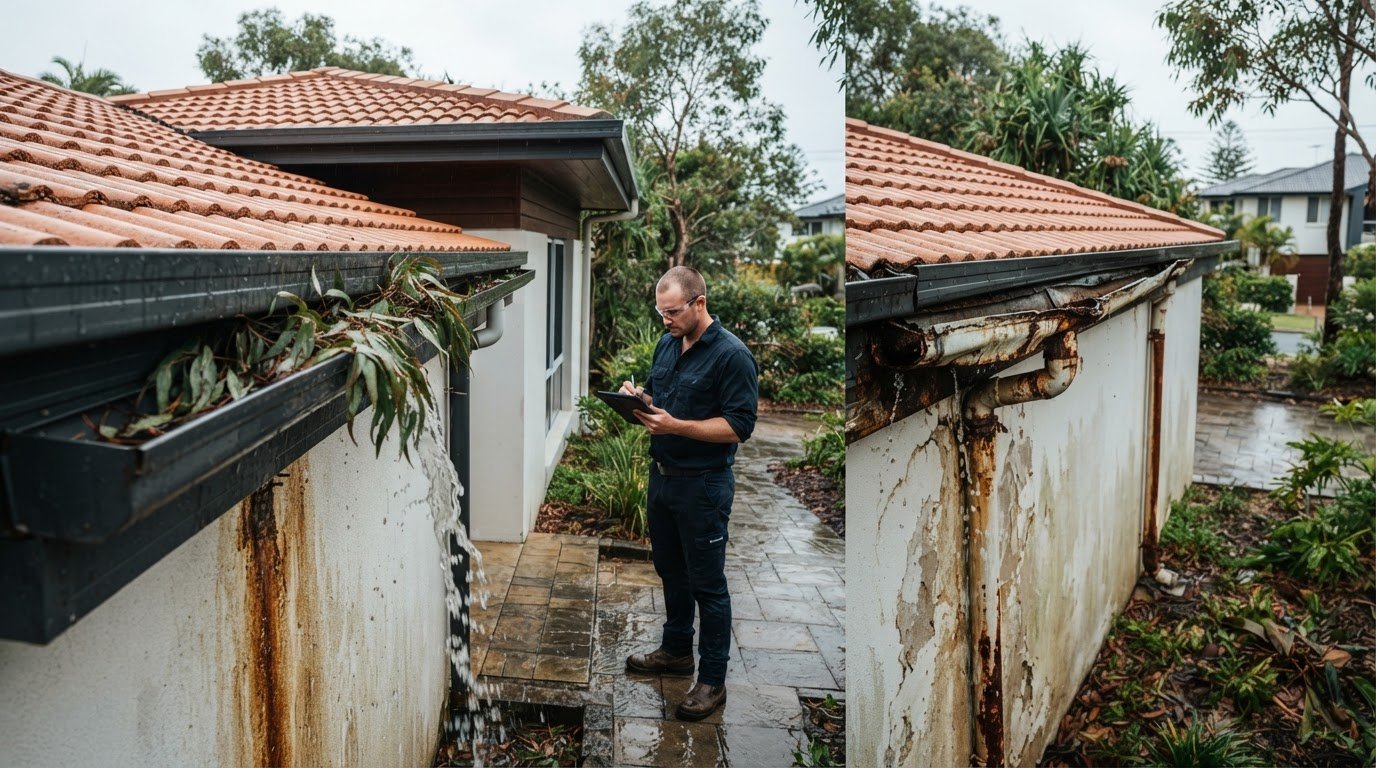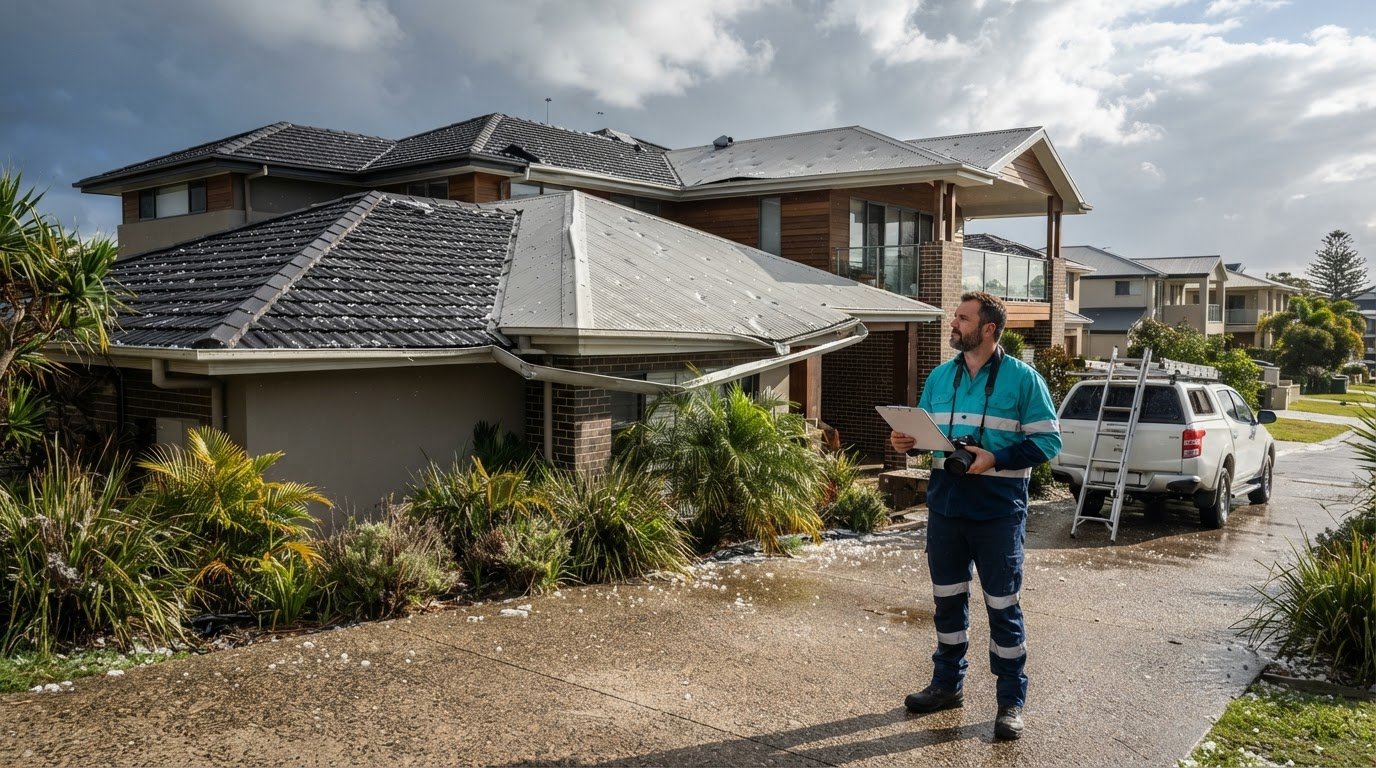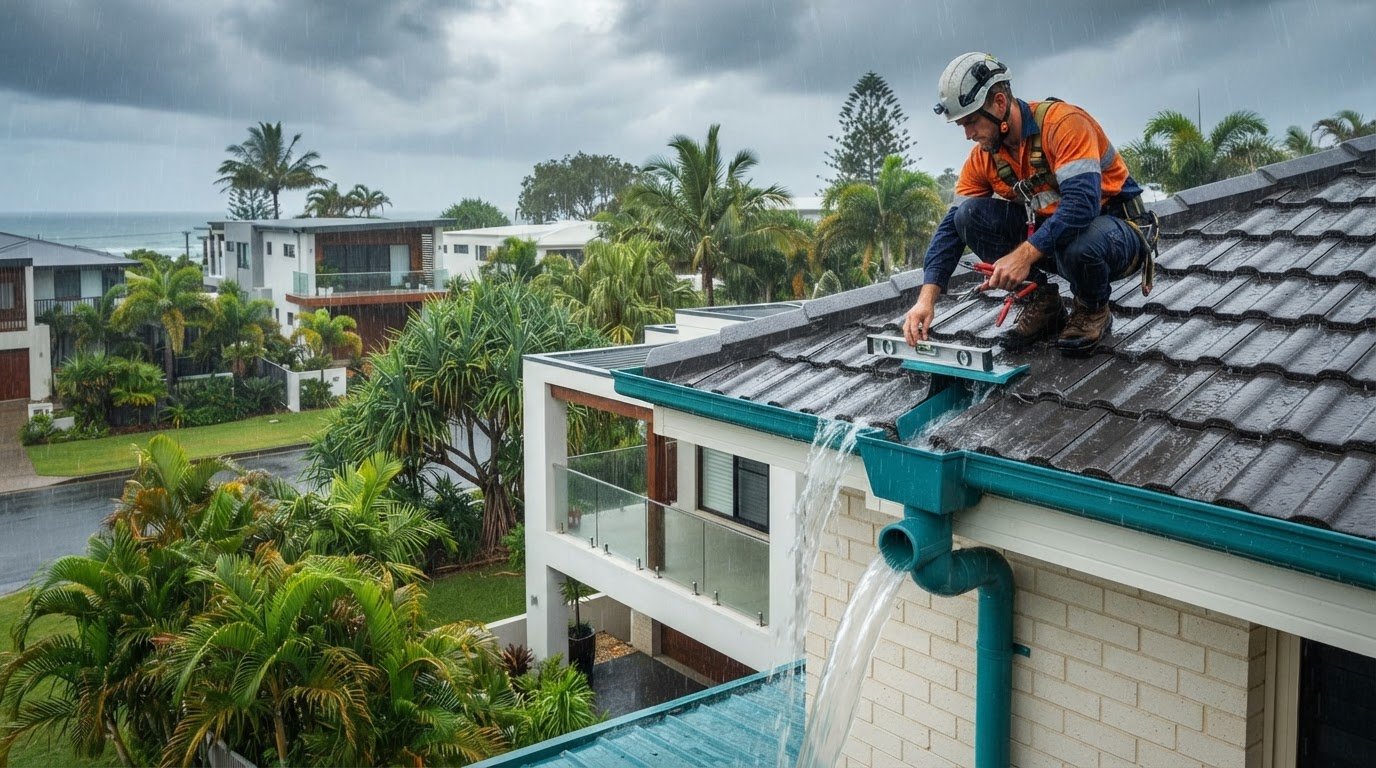

Nearly 40% of Australians have experienced water leaks in their homes due to severe weather, often caused by a drainage system that simply can’t keep up. You’ve likely stood on your verandah during a summer downpour, watching helplessly as water cascades over the edge like a waterfall. It’s a stressful sight, especially when you consider the potential damage to your fascia boards, eaves, and even your home’s foundation. If you’re wondering how to fix overflowing gutters before the next storm hits, you aren’t alone. Many homeowners find that even clean gutters can fail if the original installation didn’t account for local rainfall intensity or the correct gutter fall.
This guide provides the exact steps you need to diagnose, fix, and prevent these overflows to keep your property watertight. We’ll show you how to stop the immediate leak and determine if your system meets the National Construction Code requirements for downpipe spacing and pitch. From identifying undersized components to mastering safe maintenance, you’ll gain the specialist knowledge required to protect your home from the elements and ensure long-term peace of mind.
Key Takeaways
- Understand why extreme weather events like East Coast Lows can overwhelm your drainage system, regardless of how often you clean your channels.
- Learn how to fix overflowing gutters by diagnosing structural issues such as incorrect fall or sagging brackets that prevent proper water flow.
- Discover the effective way to use a high-pressure hose to flush out hidden blockages and verify the hydraulic integrity of your downpipes.
- Recognise the signs that your home requires professional gutter and downpipe installation to replace damaged fascia boards and ensure a watertight seal.
- Implement long-term prevention strategies, including bi-annual inspections and high-quality leaf mesh, to safeguard your home’s foundation from erosion.
Why Your Gutters Overflow During Heavy Rain
Gutter overflow is rarely just a matter of a few stray leaves. It is a hydraulic failure that occurs when the volume of water entering the channel exceeds the discharge capacity of the downpipes. In Australia, our homes must withstand intense weather events like “East Coast Lows” that can dump significant rainfall in a matter of minutes. These storms test the limits of even the most well-maintained systems. Learning how to fix overflowing gutters begins with understanding Rain gutter basics and how they are designed to manage these sudden surges.
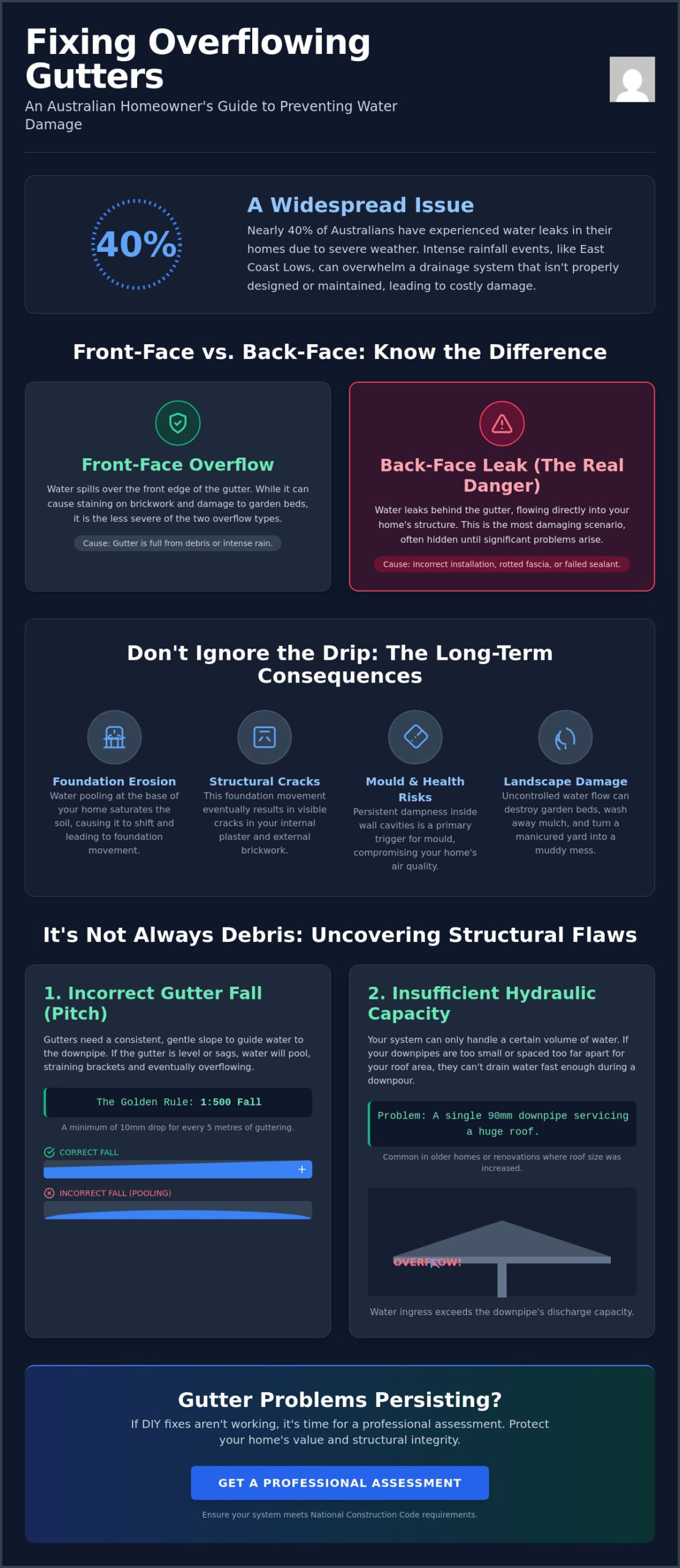
There is a critical distinction between a “front-face” overflow and a “back-face” leak. When water spills over the front, the gutter is simply full. While this can stain brickwork, it is less immediately damaging than a back-face leak. If water flows behind the gutter and into the eaves, it can saturate your internal wall cavities and ceiling insulation. This often happens because the gutter was installed without a sufficient overflow gap or because the pitch has shifted over time. Without a clear path forward, the water finds the path of least resistance: straight into your home’s structure.
The Anatomy of a Gutter Failure
Identifying where the water escapes is essential for a permanent fix. Water might spill over the front edge, leak behind the channel, or drip from failing joints. Back-flow is the most concerning scenario. It often leads to rotted fascia boards, which are the timber or metal beams that support your gutter brackets. When these boards soften due to moisture, the gutters begin to sag. This sagging ruins the “fall” or pitch of the system, causing water to pool in the middle of the run rather than flowing toward the downpipe. Once the structural integrity of the fascia is compromised, a simple cleaning won’t solve the problem.
The Dangers of Neglecting Overflows
Leaving an overflow unaddressed invites long-term structural decay. When water sheets off the roof and pools at the base of your home, it causes foundation erosion. This saturation leads to soil movement, which eventually manifests as cracks in your internal plaster or external masonry. In our climate, persistent dampness in wall cavities is a primary trigger for mould growth. This can compromise the air quality inside your living spaces before you even notice the physical dampness. Beyond the house itself, uncontrolled water can wash away expensive landscaping and garden beds, turning a well-kept yard into a muddy mess during a single heavy downpour.
Diagnosing the Root Cause: It’s Not Always Just Leaves
If you have cleared out every leaf and twig but still see water cascading over the edge, the problem isn’t debris. It’s likely a failure in the system’s design or structural alignment. To understand how to fix overflowing gutters in these cases, you need to look at the “fall” and the hydraulic capacity of your downpipes. When a system is clean but still spills, it usually means the water has nowhere to go fast enough, or it is being directed the wrong way by gravity.
Most Australian homes require a minimum fall of 1:500. This means for every five metres of guttering, there should be at least a 10mm drop toward the downpipe. If the gutter is level or has “back-pitch” where it tilts away from the outlet, water will pool. This stagnant water creates heavy loads that strain brackets and attracts mosquitoes during humid summer months. Over time, the weight of this standing water can cause the gutter to pull away from the fascia, creating a gap where water can leak into your eaves. If your system is clean but still failing, a professional roof leak detection and repair specialist can identify these hidden hydraulic bottlenecks and structural misalignments.
Checking the Gutter Fall and Pitch
You can check the pitch yourself by placing a spirit level along the base of the gutter channel. You are looking for a consistent downward slope. In many older Sydney properties, house settling or rotted fascia boards cause “low spots” where the gutter sags between brackets. Water should always move toward the downpipe at a consistent, gentle slope. If you find sections where the bubble stays centred or moves the wrong way, the brackets need to be re-aligned or replaced to restore the correct flow and prevent water from sitting in the channel.
Hydraulic Capacity: Are Your Downpipes Too Small?
Hydraulic capacity is the amount of water your system can discharge in real-time. A common issue in older suburbs is the use of single 90mm round downpipes to service massive Colorbond roof spans. Metal roofs shed water much faster than old terracotta tiles, which can absorb a small amount of moisture. During a heavy downpour, the sheer volume of water can “choke” the downpipe entry point, creating a whirlpool effect that slows down drainage. This causes the gutter to back up and overflow even when there isn’t a single leaf in sight. If your roof catchment area is large, you might need additional downpipes or high-capacity rectangular versions to handle the load effectively and prevent “sheeting” water from damaging your home’s foundation. In severe cases where corrosion or physical damage has compromised the pipes themselves, professional downpipe replacement Sydney specialists can assess whether your existing pipes need to be upgraded to cope with modern rainfall demands.
How to Fix Overflowing Gutters: A Step-by-Step DIY Guide
If you have identified that the issue isn’t a major structural failure, you can take practical steps to resolve the spill. Learning how to fix overflowing gutters often begins with a methodical maintenance routine that goes beyond a quick sweep of the eaves. You need to rule out the most obvious causes before moving on to more technical repairs. By following a logical progression, you can restore the system’s capacity and ensure your home remains protected during the next storm.
Start by inspecting the brackets and joints. Over time, the weight of wet debris or standing water can cause brackets to loosen or sag. Use a cordless drill to tighten any loose fasteners, ensuring the gutter is pulled flush against the fascia board. If you notice water dripping from the seams, dry the area completely and apply a bead of high-quality roof and gutter silicone to the internal joint. This creates a flexible, watertight seal that can withstand the expansion and contraction of Australian metal roofing materials.
Clearing Blockages Safely
Ladder safety is paramount when working at heights. Always ensure you have a second person spotting you from the ground and that the ladder is positioned on firm, level soil. Use a dedicated gutter scoop or even a sturdy old kitchen spatula to remove compacted organic matter. It’s best to work away from the downpipe entry to avoid pushing debris into the vertical drop. Removing this “sludge” prevents it from entering your stormwater system, where it can cause much more expensive blockages underground.
Flushing and Testing the Flow
Once the channels are clear, use a garden hose to simulate a heavy rain event. Watch the water as it approaches the downpipe. You want to see a strong vortex forming at the entry point, which indicates the downpipe is drawing water efficiently. If the water pools or backs up despite the channel being clean, you likely have a clog in the downpipe elbows. A plumber’s snake or a high-pressure hose attachment can often dislodge these stubborn obstructions without needing to dismantle the metalwork. Finally, inspect the “shoe” at the base of the downpipe to ensure the connection to the stormwater drain is clear of silt and roots.
When DIY Isn’t Enough: Structural Repairs and Upgrades
Sometimes, even a thorough cleaning doesn’t stop the spill. Knowing how to fix overflowing gutters occasionally requires admitting that the system itself is no longer fit for purpose. When structural integrity fails or the original design cannot cope with modern rainfall volumes, a professional gutter and downpipe installation NSW becomes the only viable solution to protect your eaves and foundation. These upgrades move beyond simple maintenance and address the hydraulic physics of your roof.
Structural failure often hides behind sagging metal. If your gutters are pulling away from the house, the issue is frequently the fascia board behind them. Timber fascia boards that have been subjected to years of moisture eventually rot, becoming too soft to hold gutter spikes or bracket screws. In these cases, installing new brackets is a temporary fix at best. A permanent resolution involves replacing the rotted timber and re-securing the system to a solid base. This ensures the gutter maintains its intended pitch over the long term.
Addressing Sagging and Structural Failure
To test your fascia, look for signs of “sponginess” or visible wood decay where the brackets meet the board. If the support is compromised, the entire run will lose its fall, leading to the pooling issues discussed in previous sections. Re-pitching a long run of guttering is a precise task that requires professional tools to ensure a consistent 1:500 slope. Additionally, if you find that water backs up despite clear channels, the blockage may exist deep within the underground stormwater system. This requires specialised blocked downpipe repair Sydney to clear silt or root intrusions that are inaccessible to a standard garden hose.
Upgrading for Modern Australian Storms
Older drainage systems were often designed for less intense weather patterns. If your gutters consistently overflow during heavy downpours, upgrading to larger 125mm or 150mm profiles can provide the necessary volume to manage the surge. High Front gutters are a popular choice for their sleek appearance, but they must be installed with overflow slots to prevent water from backing up into the ceiling. Using Colorbond steel for these upgrades offers superior durability and corrosion resistance, ensuring your investment stands up to the harsh Australian sun and salt air. For homes with complex rooflines, adding extra downpipes or high-capacity rain heads can prevent the system from “choking” during a deluge. When ageing or corroded pipes are contributing to the problem, arranging a downpipe replacement Sydney assessment can determine whether new Colorbond or Zincalume pipes are needed to restore full stormwater capacity. If you suspect your system is undersized, contact an expert for a full gutter and downpipe installation assessment today. Before committing to a full system replacement, it’s also worth understanding the new gutter installation cost Sydney homeowners typically face, so you can budget accurately for materials, labour, and compliance requirements.
Long-Term Prevention and Professional Gutter Maintenance
Preventative care is the most cost-effective way to manage your home’s drainage system. While earlier sections detailed how to fix overflowing gutters once a failure has occurred, a proactive approach stops the spill before it starts. Implementing a bi-annual cleaning schedule is the industry standard for Australian properties. Performing these checks at the end of autumn and the start of spring ensures your channels are clear before the peak storm seasons arrive. Trimming overhanging branches is equally vital. This reduces the volume of leaf litter and discourages birds from nesting in your eaves, which is a frequent cause of sudden, high-volume blockages.
A professional roof plumbing inspection every two years provides a level of detail that a quick DIY check cannot match. A specialist will examine the structural integrity of your brackets and the condition of the internal sealant at the joints. They also verify that the hydraulic integrity of the system remains intact after heavy weather events. This methodical oversight ensures that minor issues, such as a slightly shifted pitch or a loose downpipe connection, are resolved before they lead to foundation erosion or internal water damage.
The Role of Gutter Guards
Installing high-quality gutter guards or leaf mesh can significantly reduce maintenance frequency. For homes surrounded by eucalyptus trees, fine steel mesh is often the best choice. It prevents thin needles from entering the channel while allowing high-velocity water to pass through. It’s a mistake to view these products as a “zero maintenance” solution. They are “easier maintenance” tools that still require an occasional surface sweep. Professional installation is critical here to ensure the mesh doesn’t interfere with your roof flashing or create gaps under your tiles that could invite leaks.
Why Professional Inspections Matter in Manly Beach
Homeowners in coastal suburbs like Manly Beach face unique environmental challenges. Salt air is highly corrosive to metal structural components. In older galvanised systems, this often leads to “pinholing,” where tiny rust spots allow water to weep into the fascia boards. These leaks are often invisible from the ground but cause significant timber rot over time. A seasoned specialist can identify these early signs of material fatigue before a major failure occurs. Keep your home dry and secure with a professional roof restoration Sydney assessment to ensure your entire system is prepared for the next East Coast Low.
Secure Your Home Against the Next Storm
Protecting your property from water damage requires more than just a quick ladder climb after the rain starts. We’ve explored how a failing drainage system often stems from hydraulic bottlenecks or structural shifts like rotted fascia boards. By mastering the basics of how to fix overflowing gutters, you can address minor leaks and restore the correct fall to your channels. However, when the issue involves undersized downpipes or significant structural decay, professional intervention is the only way to ensure your roof remains watertight during an East Coast Low.
Don’t wait for the next deluge to test your eaves. As specialist roof plumbers in NSW and Colorbond steel experts, we provide the precision required for expert leak detection and repair. Whether you need a simple re-pitching or a complete system upgrade, our team is here to help. Get a Professional Gutter Assessment from Roof Plumbing Expert today to safeguard your foundation and enjoy total peace of mind. Your home is your most valuable asset; keep it dry with a system built to last.
Frequently Asked Questions
Why do my gutters overflow even when they are clean?
Clean gutters usually overflow due to hydraulic failure or incorrect pitch. If the downpipes are too small for the roof area, the system cannot discharge water fast enough during a surge. Alternatively, the gutter may have shifted over time, creating a “low spot” where water pools and spills over the front edge before reaching the outlet. This is common in older homes where the building has settled or brackets have loosened.
How much fall should a gutter have per metre?
Eaves gutters must be installed with a minimum fall of 1:500 according to Australian Standard AS/NZS 3500.3:2021. This equates to a 2mm drop for every one metre of guttering. Without this consistent slope, water will pond in the channel, which leads to mosquito breeding and accelerated corrosion of the metal. If your gutters are level or tilting away from the downpipe, they will fail even if they are completely free of debris.
Can I fix an overflowing gutter from the ground?
You can clear loose debris using telescopic gutter cleaning tools, but structural repairs require ladder access. Adjusting brackets, re-pitching the run, or sealing leaking joints cannot be done effectively from the ground. For safety and precision, most homeowners find that how to fix overflowing gutters involves working at the roofline or hiring a specialist. If you’re uncomfortable working at heights, it’s safer to have a professional handle the diagnosis and repair.
Are my gutters too small for heavy rain in Sydney?
Many older Sydney homes have drainage systems designed for lower rainfall intensities than we currently experience. If your roof has a large catchment area but only a few 90mm round downpipes, the system will likely “choke” during a summer storm. Upgrading to larger rectangular downpipes or adding extra outlets can resolve this capacity issue. A professional assessment can determine if your current system meets the National Construction Code requirements for your local area.
Will gutter guards stop my gutters from overflowing?
Gutter guards prevent debris blockages, but they won’t fix structural issues like incorrect fall or undersized pipes. In some cases, poor-quality solid guards can cause water to “overshoot” the gutter during heavy rain, spilling straight onto the ground. High-quality mesh is generally the better option for Australian conditions as it allows water to enter the channel while keeping leaves out. They reduce maintenance frequency but still require an occasional surface clean.
How do I know if my downpipe is blocked underground?
A tell-tale sign of an underground blockage is water backing up and spilling out of the “shoe” or the joint where the vertical pipe meets the ground. If the gutter is clean but the downpipe remains full of water during a hose test, the obstruction is likely in the stormwater line. These clogs are often caused by silt build-up or tree root intrusions that require specialised equipment to clear and prevent further foundation damage.
Does home insurance cover damage from overflowing gutters?
Most Australian insurers may reject a claim if the damage is deemed a result of poor maintenance. If your gutters overflowed because they were full of leaves or were visibly sagging, it’s often considered a preventable issue. You should check your Product Disclosure Statement (PDS) for specific exclusions. Regular inspections and cleaning are necessary to ensure your policy remains valid for water damage caused by extreme weather events.
What is the best gutter profile for heavy rainfall?
High-capacity profiles like 150mm half-round or large square-front gutters are best for managing heavy volumes. These profiles hold a greater volume of water and allow for faster discharge into the downpipes. It’s essential to choose a profile with built-in overflow slots or “high front” designs with gaps. These ensure that if the system does reach capacity, the water spills away from your fascia and eaves rather than backing up into your ceiling. If you’re weighing up which profile suits your home and budget, reviewing a detailed breakdown of new gutter installation cost Sydney pricing can help you compare material grades and profile options before requesting quotes.