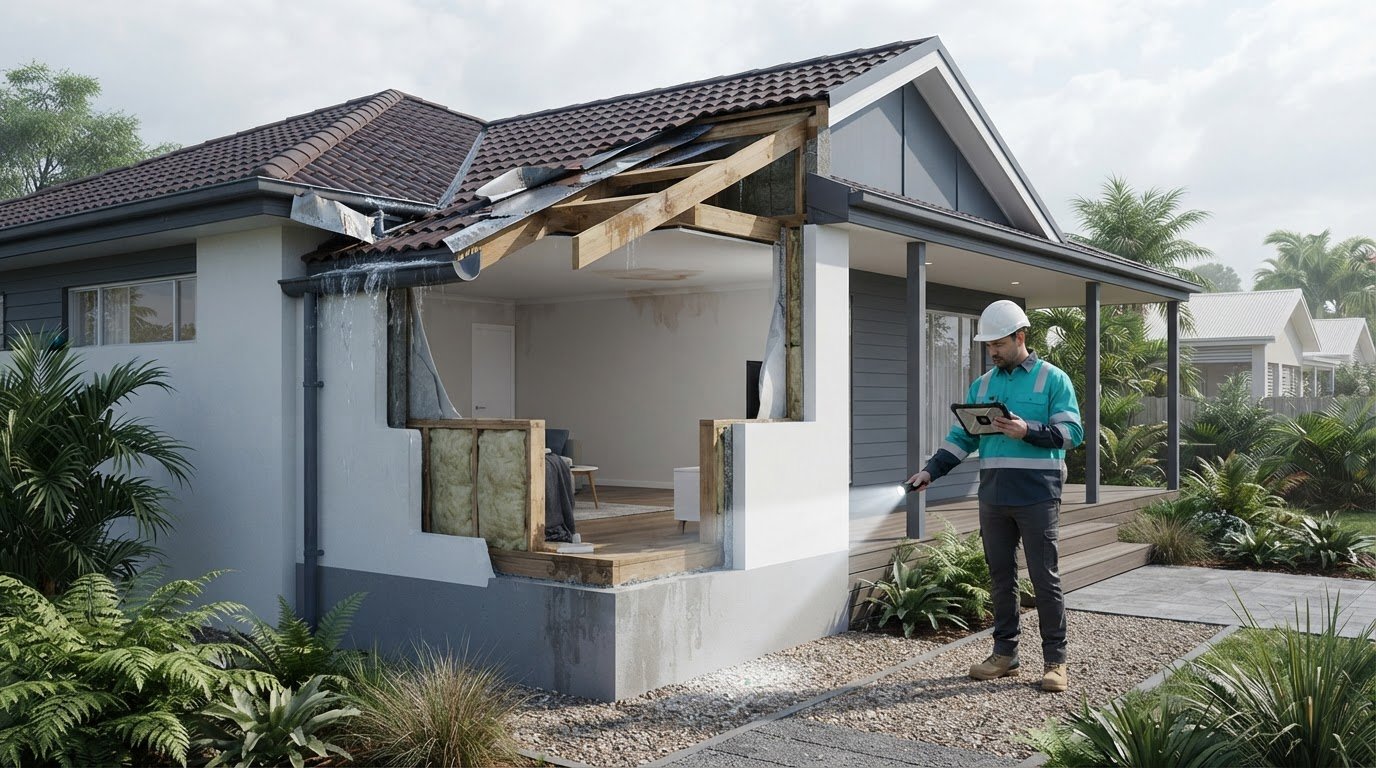
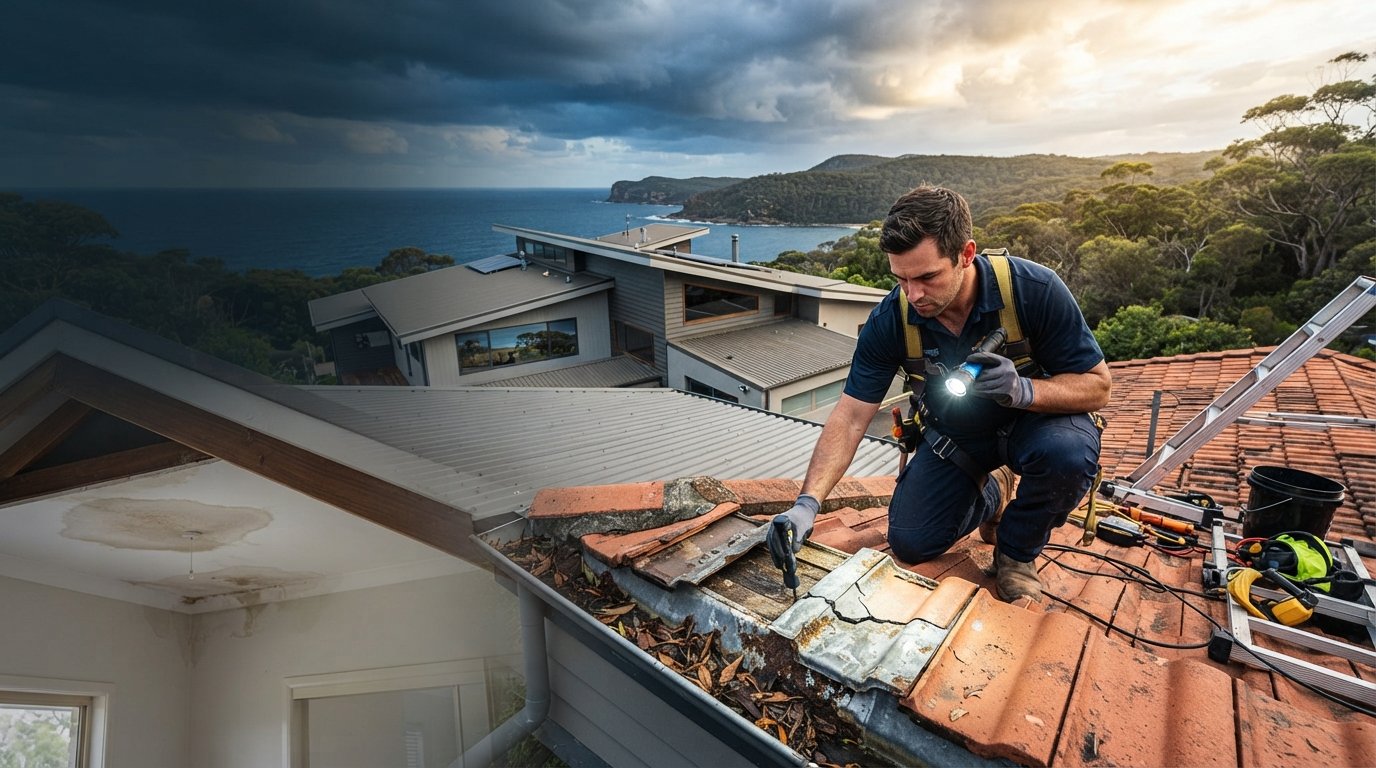
What if that tiny drip in your ceiling isn’t a simple repair, but the final warning sign of a failing water management system? For many NSW homeowners, a damp patch represents the start of a stressful search for answers while fearing the high cost of structural repairs. Understanding the common causes of roof leaks is the first step toward regaining control over your home’s integrity. It’s completely normal to feel overwhelmed when water starts entering your living space, especially when you aren’t sure if the problem requires a general plumber or a specialised roof professional.
We’ve designed this guide to help you identify the hidden culprits behind water damage before they escalate into major financial burdens. You’ll learn how to secure your property against the harsh Australian elements by looking at everything from compromised flashing to blocked gutter systems. We will walk through the specific signs of wear that affect local homes and provide actionable steps to prevent further damage. By the end of this article, you’ll have a clear understanding of your roof’s condition and the confidence to choose a reliable local specialist to protect your investment for the long term.
Key Takeaways
- Learn why the harsh Australian sun causes UV fatigue in roofing materials and how to distinguish between minor cosmetic issues and serious structural failures.
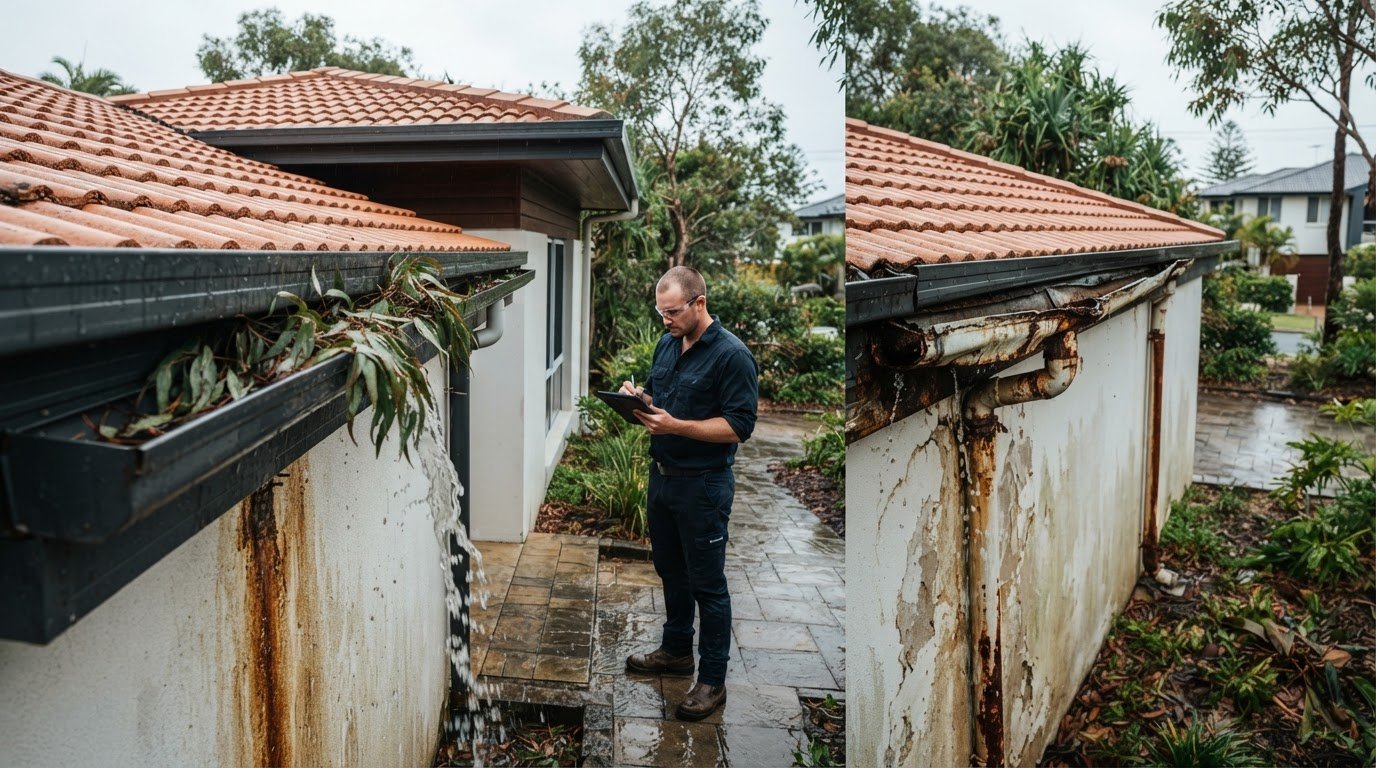
- Discover how blocked guttering and downpipes act as common causes of roof leaks by forcing water back under your roof line during intense Mainly Beach downpours.
- Identify the critical role of roof flashing and why penetrations like skylights or chimneys are often the first points of failure in a storm.
- Understand why finding the source of a drip is more complex than it appears and why professional leak detection is essential for a permanent fix.
- Gain actionable insights into preventative maintenance to secure your NSW property against extreme weather and avoid expensive emergency repairs.
Damaged Roof Materials: Tiles, Metal, and UV Fatigue
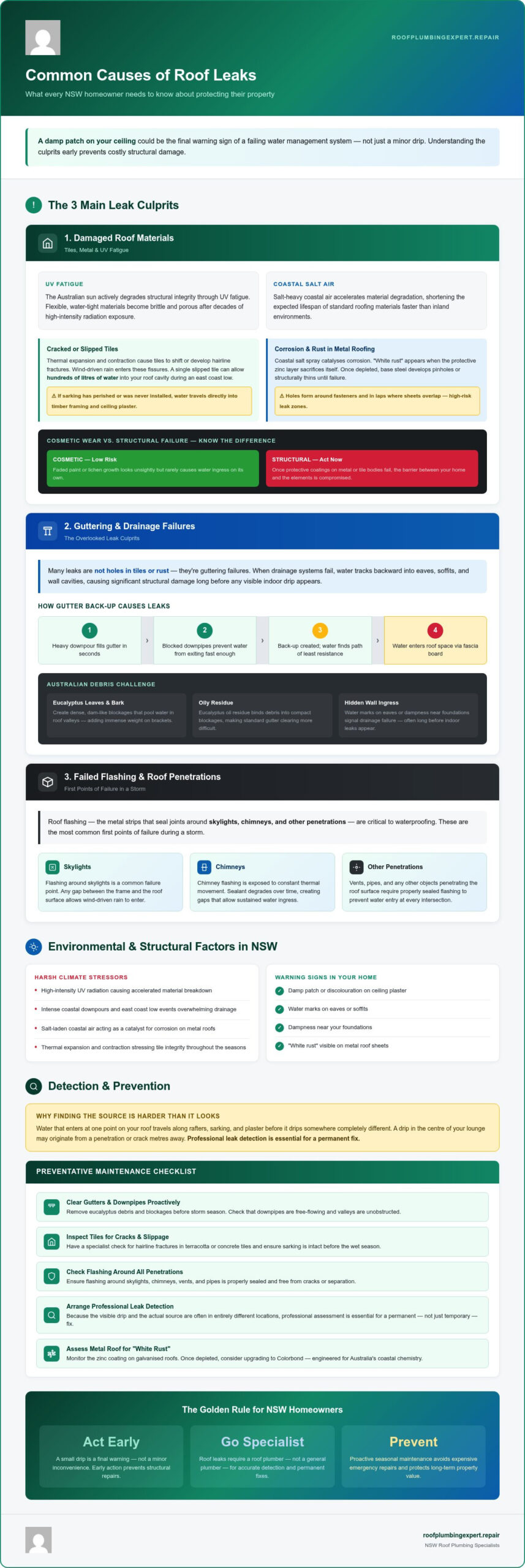
The Australian sun is relentless. It doesn’t just fade your roof’s colour; it actively degrades the structural integrity of your materials through a process called UV fatigue. For homeowners in coastal NSW, this environmental stress is one of the primary common causes of roof leaks. Materials that were once flexible and water-tight become brittle and porous after decades of exposure to high-intensity radiation.
Distinguishing between cosmetic wear and structural failure is critical for long-term property protection. Faded paint or lichen growth might look unsightly, but they rarely cause water ingress. However, once the protective coatings on metal or the structural body of a tile fail, the barrier between your home and the elements is compromised. In the salt-heavy air of Mainly Beach, these processes often accelerate, shortening the expected lifespan of standard materials.
Cracked or Slipped Roof Tiles
Tiles are designed to shed water, but they are not a sealed system. They rely on overlap and a secondary barrier known as sarking. Over time, thermal expansion and contraction cause tiles to shift or develop hairline fractures. These “small” cracks in terracotta or concrete are deceptive. During a heavy downpour, water doesn’t just sit on the tile; it’s driven into these fissures by wind pressure.
If your sarking has perished or was never installed, that water travels directly into your timber framing and ceiling plaster. This is why cracked roof tile repair Sydney homeowners invest in is so vital. It isn’t just about fixing a single tile; it’s about ensuring the entire shedding system works as intended before the storm season hits. A single slipped tile can allow hundreds of litres of water into your roof cavity during an east coast low.
Corrosion and Rust in Metal Roofing
For metal roofs, the enemy is often invisible until it’s too late. Coastal properties face constant salt spray, which acts as a catalyst for corrosion. You might notice “white rust” on your roof sheets, which is the protective zinc layer sacrificing itself. Once this layer is gone, the base steel is vulnerable to structural corrosion that creates pinholes or thins the material until it fails.
Holes can form around fasteners or in the laps where sheets overlap. These areas are common causes of roof leaks because they trap moisture and debris. Ensuring your roof flashing and weatherproofing is intact is a good start, but older galvanised roofs often reach a point where repairs are no longer cost-effective. Upgrading to Colorbond roofing Sydney specialists recommend provides a multi-layered defence system specifically engineered to withstand the unique chemistry of the Australian coast.
Guttering and Drainage: The Overlooked Leak Culprits
Many homeowners assume a leak is always a hole in a tile or a rusted metal sheet. In reality, guttering failures are among the most common causes of roof leaks in NSW. When your drainage system fails, water doesn’t just spill over the front edge. It often tracks backward into your eaves, soffits, and wall cavities. This hidden water ingress can cause significant structural damage long before you see a drip in your lounge room.
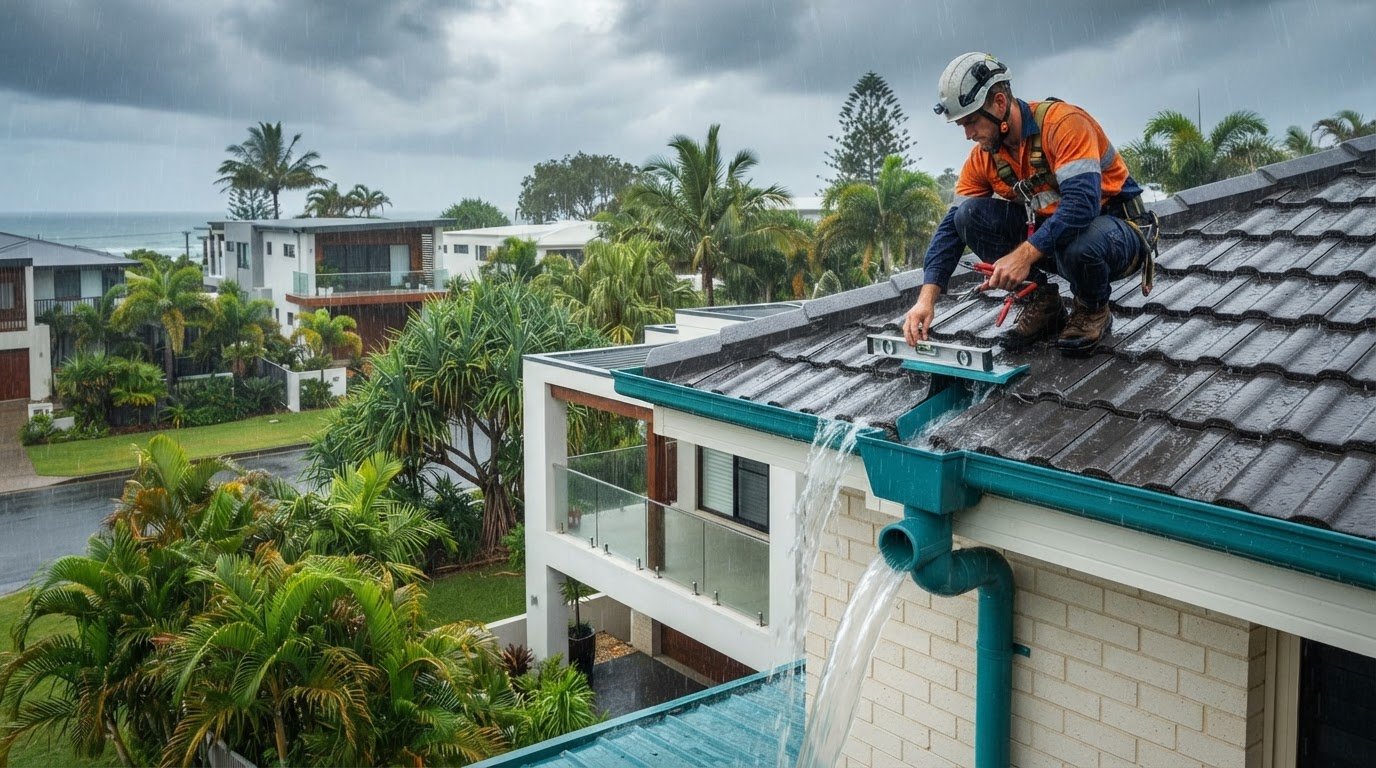
During intense Sydney downpours, a standard gutter can fill in seconds. If the water cannot exit through the downpipes fast enough, it creates a “back-up” effect. This physics of water management is simple: water will always find the path of least resistance. Often, that path leads directly into your roof space via the fascia board. If you’ve noticed water marks on your eaves or dampness near your foundations, it’s time to have a professional assess your external water management system before the next big wet.
Blocked Gutters and Downpipes
Australian homeowners deal with unique debris challenges. Eucalyptus leaves, bark, and oily residue create dense blockages that act like dams. Learning how to fix overflowing gutters starts with proactive maintenance and clearing these obstructions. Without clear passage, water pools in the “valleys” of your roof, putting immense weight on the brackets and increasing the risk of “hidden” leaks inside your wall cavities. Referencing the NSW Fair Trading building defects guidance shows that poor water shedding is a major contributor to long-term property degradation in our climate.
Incorrect Gutter Fall and Sizing
Precision is everything in roof plumbing. Gutters must have a specific “fall” or angle toward the downpipes to ensure constant flow. If they’re level or sagging, water pools and corrodes the metal from the inside out. In NSW, we frequently see older homes with undersized gutters that simply can’t handle modern storm intensities. A professional gutter and downpipe installation NSW specialist ensures your system is sized correctly for your roof’s total catchment area. This prevents the overflow issues that are common causes of roof leaks during our summer storm season.
Failed Flashing and Roof Penetrations
Flashing is the unsung hero of your roof’s water management system. It is the thin material, typically made of lead, aluminium, or galvanised steel, used to direct water away from joints, valleys, and intersections. While the main body of your roof might be in excellent condition, the areas where the roof surface meets a wall or a chimney are inherently vulnerable. These transition points are among the most frequent common causes of roof leaks because they rely on precise mechanical overlapping to remain watertight.
Every time a hole is cut into your roof for a vent, pipe, or skylight, a potential entry point for water is created. These penetrations are the weakest links in your home’s defence. While high-quality roofing materials can last decades, the sealants and rubber boots used to waterproof these gaps often have a much shorter lifespan. The intense NSW sun eventually bakes these materials until they become brittle and pull away from the surface. Identifying these failures early is vital; they are persistent common causes of roof leaks that often go unnoticed until the internal damage is significant.
Deteriorated Chimney and Vent Flashing
Chimneys and plumbing vents require specialised lead or metal aprons to shed water effectively. Over time, these aprons can crack due to the house settling or simple metal fatigue. A major risk involves “invisible” leaks, where water enters through a tiny gap in the flashing and tracks along a timber rafter. You might see a damp patch on a ceiling three metres away from the actual entry point. According to the NSW Fair Trading roof defects guidance, improper installation of these components is a leading cause of residential structural issues. Securing these complex transitions requires professional roof waterproofing Sydney homeowners can rely on for long-term security.
Skylight Seals and Waterproofing
Skylights provide beautiful natural light, but they present unique waterproofing challenges. They are subject to constant thermal movement as the glass and the metal frame expand at different rates. This movement can eventually break the bond of the perimeter seals. It is also important to distinguish between a leak and simple condensation, which often forms on the underside of the glass in poorly ventilated rooms. If you notice water dripping from the frame during rain, the seal has likely failed. For older units where the frame has warped or the glazing has perished, a full skylight replacement Sydney specialists perform is often more cost-effective than repeated, temporary patching.
Environmental and Structural Factors in NSW
The NSW climate presents a unique set of challenges that represent some of the most common causes of roof leaks. We frequently experience intense temperature swings where the mercury can jump 20 degrees in a single afternoon. This cycle causes roofing materials to expand and contract rapidly, a process known as thermal movement. Over time, this constant shifting stresses the fasteners and joints, eventually creating small gaps in the roof’s armour. Unlike standard gravity-fed rain that falls vertically, wind-driven rain during a Sydney storm is forced horizontally into these openings. It finds pathways that usually stay dry, bypassing the standard overlap of tiles or metal sheets and entering the ceiling space.
Structural settling is another environmental factor that shouldn’t be ignored. Every house moves slightly as the ground moisture levels fluctuate or the timber frame seasons. This movement is often enough to pull flashing away from a brick wall or crack the mortar in a ridge cap. While the shift might be only a few millimetres, it is enough to break a watertight seal and allow water to track down the internal side of a wall. These structural changes are often slow, meaning a leak might not appear until years after the house was built or renovated.
Storm Damage and Debris Impact
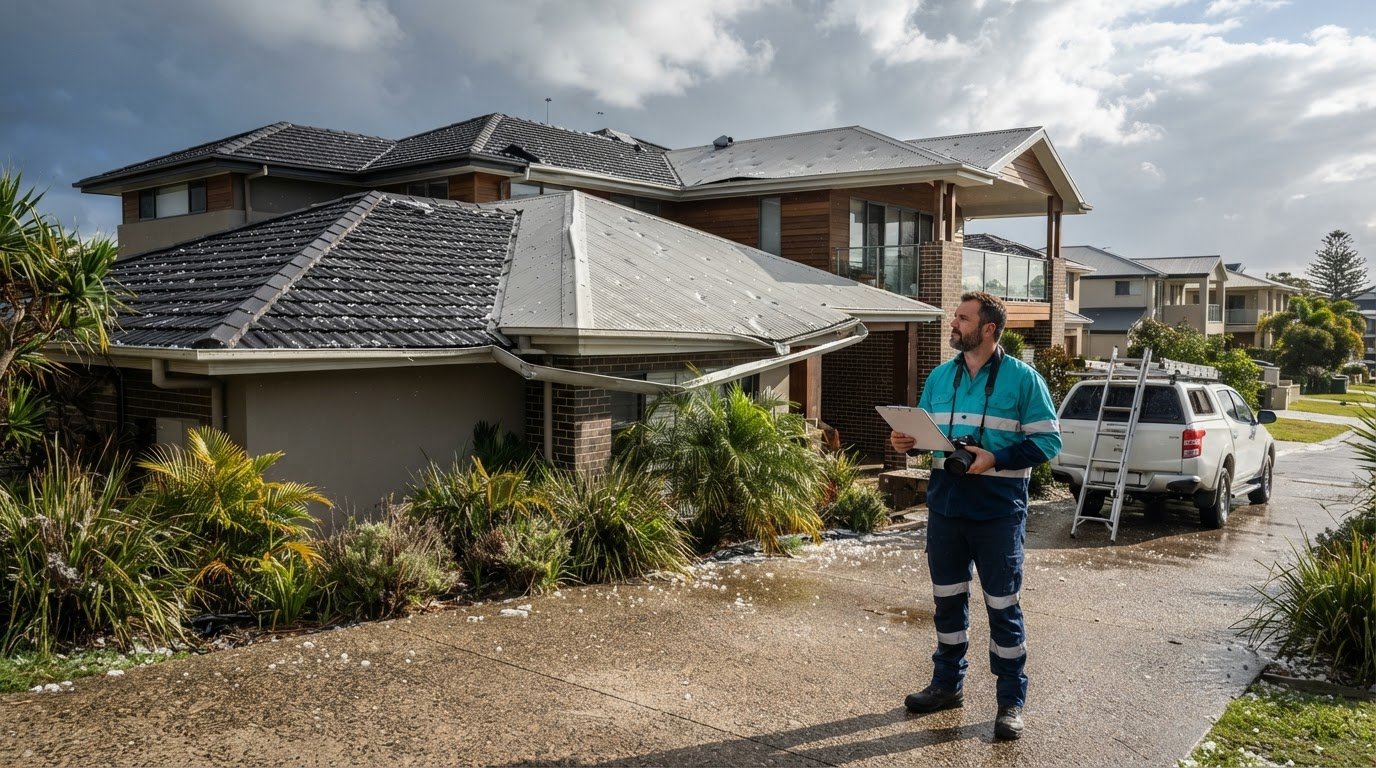
Severe weather events often leave behind more than just visible damage. Hail is a frequent visitor to NSW, and it can bruise metal roofing or create hairline fractures in concrete tiles. Even if a branch doesn’t puncture the roof, the impact can compromise the protective coating or dislodge a tile. After any major storm, it’s wise to check for debris that might be trapping moisture against the roof surface. If you suspect your home has sustained impact damage, you should request a professional roof inspection to secure your property before the next event.
Condensation and Poor Ventilation
Sometimes, the “leak” isn’t coming from the outside at all. Condensation is one of the most misunderstood common causes of roof leaks in modern homes. In winter, warm air from your living spaces rises into the roof cavity. If it can’t escape through whirlybirds or eave vents, it hits the cold underside of the roof and turns back into liquid. This moisture then drips onto your ceiling, mimicking the appearance of a traditional leak. Proper ventilation is essential to maintain a dry roof space and prevent timber rot. Diagnosing the difference between a plumbing failure and a ventilation issue requires a specialist who understands how air and water interact within the structure.
Solving the Problem: Detection and Prevention
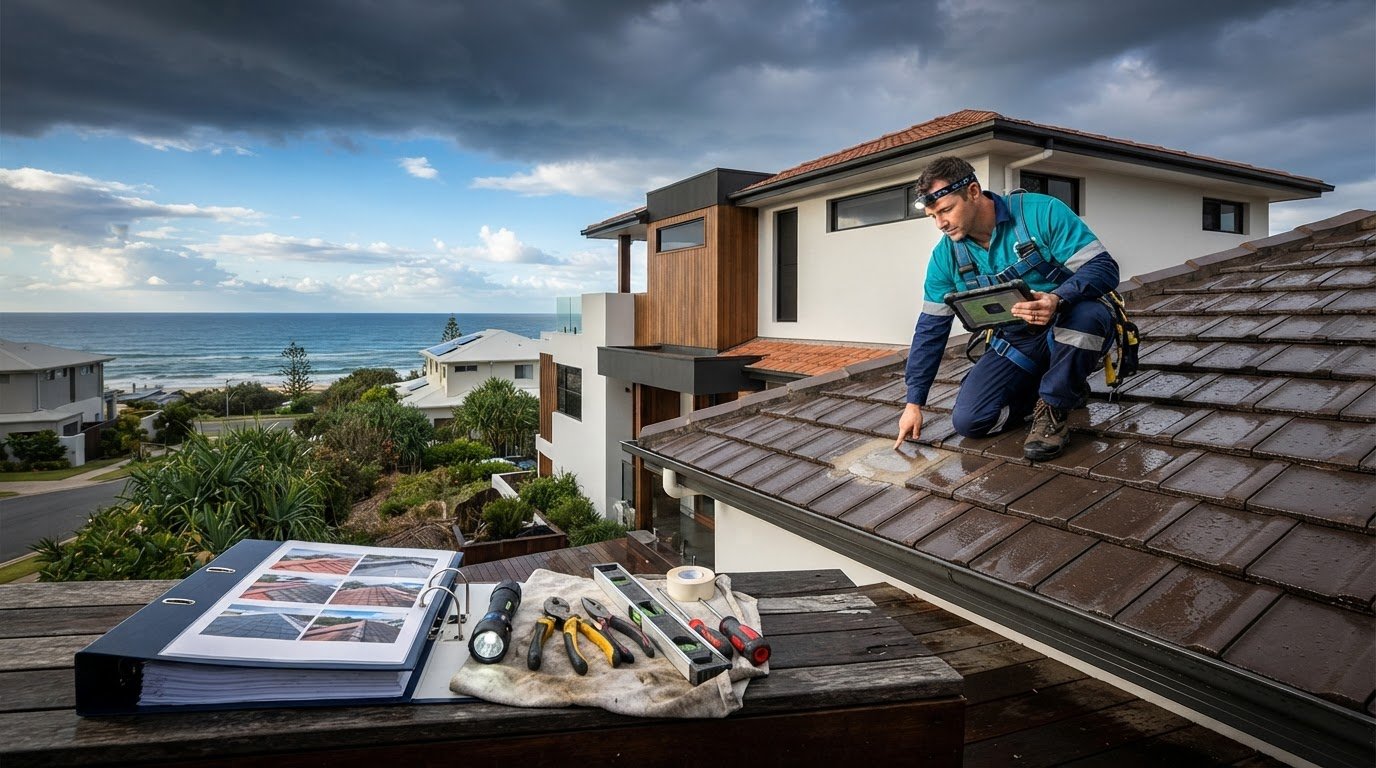
Finding a puddle on your floor is simple. Finding the specific defect on your roof that allowed the water in is significantly more difficult. Water is opportunistic; it often enters through a failed joint or a cracked tile and then travels along a timber rafter or electrical conduit before finally dripping onto your ceiling. This displacement means the visible damage is rarely directly below the source. To effectively address the common causes of roof leaks, you must move beyond visual guesswork and employ a methodical diagnostic approach that considers the entire external structure.
Professional intervention is the only way to ensure a permanent solution. An experienced roof plumber doesn’t just look for holes; they evaluate the entire water management system, from the ridge capping down to the storm water connection. Investing in a comprehensive audit allows you to identify minor issues before they become emergency structural repairs. Choosing a qualified specialist in NSW means finding someone who understands local building codes and the specific performance requirements of external plumbing systems. This proactive approach provides peace of mind and protects your home’s long-term value.
Professional Leak Detection Methods
When a visual inspection isn’t enough, we utilise advanced technology to trace the ingress path. The process of professional roof leak detection NSW specialists provide often includes thermal imaging to identify moisture pockets hidden behind plasterboard. We also perform controlled water testing, where we isolate specific sections of the roof to replicate storm conditions. This systematic testing ensures we aren’t just treating a symptom, but resolving the actual entry point. A thorough audit provides a clear roadmap for repairs, ensuring every weak point is reinforced against the next Sydney storm season.
Restoration vs. Patching
It’s tempting to opt for a “quick fix” or a tube of silicone to stop a drip. However, patching is often a false economy that masks deeper issues. If your roof is showing multiple signs of age, such as widespread corrosion or perishing mortar, a localised patch will likely fail during the next heavy rain event. This is where the long-term value of roof restoration Sydney homeowners invest in becomes apparent. Restoration involves a comprehensive overhaul of the roof surface, including repointing and resealing, which extends the life of the structure by decades. Establishing a regular maintenance schedule is the most effective way to manage the common causes of roof leaks and avoid the stress of emergency call-outs.
Protect Your NSW Property with Proactive Roof Care
Managing your home’s external integrity requires more than just reacting to a drip. We’ve explored how UV fatigue, blocked drainage systems, and failed flashing joints are the most common causes of roof leaks in our coastal climate. Whether it’s the thermal expansion of metal sheets or the subtle shifting of terracotta tiles, these issues demand a specialised understanding of how water moves across a structure. Ignoring these warning signs often leads to expensive structural damage that could’ve been prevented with a methodical audit.
Our team of specialist roof plumbers and Colorbond experts provides the technical precision needed to handle any structural concern. As a dependable NSW local service, we focus on long-term security rather than temporary patches. Book an Expert Roof Leak Detection in Mainly Beach Today to secure your property against the elements. We’re here to help you manage home maintenance with competence and transparency. Taking action now ensures your home remains a dry, safe sanctuary for your family regardless of the weather outside.
Frequently Asked Questions
Why does my roof only leak during heavy rain?
Intense rain volume can overwhelm drainage systems that usually cope with light showers. When gutters fill beyond capacity, water backs up under the eaves or through the fascia. High winds also force rain horizontally into small gaps in your flashing or under tiles that gravity-fed rain would normally bypass. These environmental pressures reveal the most common causes of roof leaks that remain hidden during dryer periods in Mainly Beach.
Can I fix a roof leak from the inside of my house?
You cannot effectively repair a roof leak from inside your ceiling cavity. While you can use buckets to catch water or dry out damp insulation, the source of the ingress is always external. Applying sealants or patches to the underside of your roof often traps moisture against your timber framing, which leads to accelerated wood rot. A permanent solution requires a professional to identify and seal the entry point from the roof surface.
How much does it cost to fix a common roof leak in Sydney?
The cost of a repair depends on the specific source of the failure and the materials required for the fix. Factors such as the height of your home, the pitch of the roof, and whether the issue involves simple tile replacement or complex flashing work all influence the final investment. Because every property in Mainly Beach has unique structural requirements, we recommend a professional audit to provide an accurate assessment based on your roof’s condition.
Is a leaking roof covered by home insurance in Australia?
Most Australian home insurance policies cover roof leaks caused by sudden, unexpected events like severe storms or impact from fallen branches. However, insurers typically reject claims if the leak is the result of gradual deterioration or poor maintenance. If your roof fails because of rusted gutters or old, porous tiles, it’s often classified as wear and tear. It’s vital to review your Product Disclosure Statement to understand your specific coverage limits.
How do I tell if a leak is coming from the roof or a pipe?
Timing is the most reliable indicator for homeowners. If the dripping only occurs during or immediately after a rain event, the issue is almost certainly related to your roof or guttering. If the leak is constant regardless of the weather, it likely involves internal plumbing systems. Since we specialise exclusively in external water management, we recommend checking your water meter or calling a general plumber if the flow doesn’t stop when the sun comes out.
What happens if I leave a small roof leak unrepaired?
Neglecting a minor leak can lead to catastrophic structural failure and significant health risks. Continuous moisture creates the perfect environment for black mould to thrive within your ceiling and wall cavities. Over time, water saturates your timber rafters, leading to rot and compromising the stability of your entire roof. Small drips are often early warning signs of common causes of roof leaks that can eventually result in total ceiling collapse if left unaddressed.
How do I find the exact spot where my roof is leaking?
Water rarely travels in a straight line, so the entry point is seldom directly above the ceiling stain. Finding the source involves tracing water marks along the rafters and looking for daylight or debris build-up in the roof cavity. Professional detection in Mainly Beach often requires specialised tools like thermal imaging cameras or pressure testing with a hose. These methods allow us to see moisture patterns that are invisible to the naked eye.
Can blocked gutters really cause a roof leak?
Blocked gutters are a primary reason for internal water damage. When leaves or debris prevent water from flowing to the downpipes, the gutter fills and the water level rises until it finds an exit. Often, this exit is the back of the gutter, where water flows over the fascia and directly into your eaves or wall cavities. Maintaining clear drainage is one of the most effective ways to prevent the common causes of roof leaks.