In Freshwater, your roof isn’t just a design choice; it’s a frontline defence against the relentless salt spray of the Tasman Sea. Investing in Colorbond roofing Freshwater ensures your home is equipped with a material specifically engineered to thrive in our unique Northern Beaches climate. Most local homeowners understand the frustration of watching traditional terracotta tiles crack or older metal surfaces bubble and flake under the coastal sun. It’s a constant battle against corrosion, salt air, and heat retention that can quickly drain your maintenance budget and your peace of mind.
We’ll show you why this material remains the premier choice for local residences and how to select the perfect profile for maximum durability and street appeal. You’ll learn how a professional installation can deliver a leak-free, low-maintenance exterior while significantly improving your home’s thermal performance during those humid summer months. This guide breaks down the essential factors for a successful coastal roof replacement, including the technical importance of specialised salt-grade finishes and the seamless integration of gutters and downpipes to protect your property for the long term.
Key Takeaways
- Understand why Colorbond steel is the superior choice for resisting coastal corrosion and reducing structural strain on your home’s timber frame.
- Discover how to select the right colour and profile for Colorbond roofing Freshwater, balancing beachside aesthetics with Solar Reflectance Index (SRI) ratings.
- Compare the long-term maintenance requirements of metal roofing against traditional tile to understand the durability benefits for Northern Beaches properties.
- Identify specific local council requirements regarding roof reflectivity to ensure your renovation project remains compliant and energy-efficient.
- Learn why professional flashing and integrated roof plumbing are the critical components of a truly waterproof coastal defence system.
Why Colorbond Steel is the Top Choice for Freshwater Homes
Selecting a roofing material in Freshwater requires a strategic approach. Our local environment is beautiful, but it’s also incredibly demanding on building materials. Salt spray, intense UV radiation, and shifting humidity levels can cause traditional materials like terracotta or concrete tiles to degrade prematurely. Choosing Colorbond roofing Freshwater provides a specialised solution designed to withstand these specific coastal stressors while offering superior structural benefits.
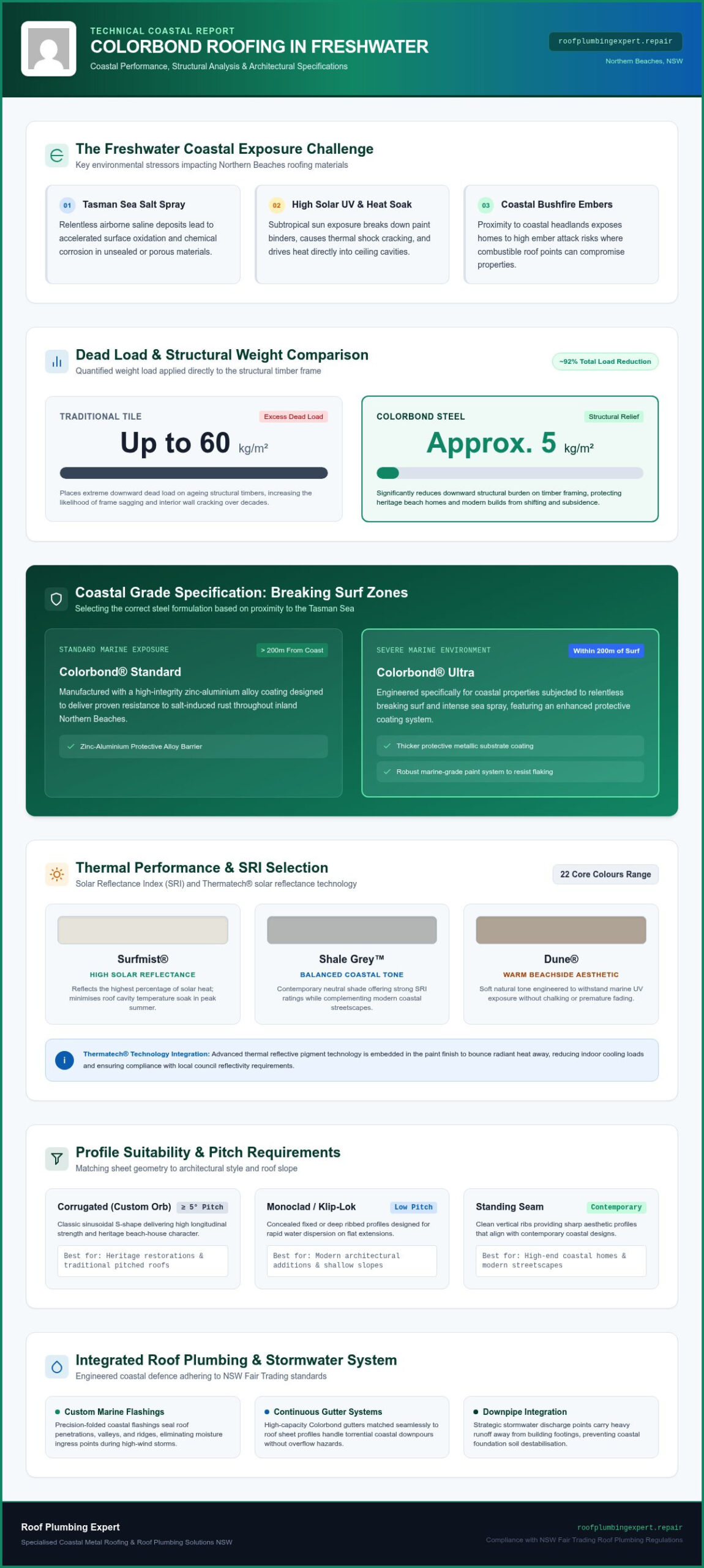
Weight is a primary factor that many homeowners overlook. A standard tiled roof can weigh up to 60kg per square metre, whereas Colorbond steel weighs approximately 5kg per square metre. This massive reduction in dead load is particularly beneficial for older Freshwater properties. It relieves the pressure on the existing timber frame, reducing the risk of structural sagging or wall cracking over the decades. Additionally, the material’s non-combustible nature offers essential protection in coastal pockets prone to bushfire risks, ensuring embers cannot easily penetrate the roof cavity.
Energy efficiency is another critical advantage. Advanced Thermatech® solar reflectance technology is integrated into the finish. This technology reflects more of the sun’s heat away from the building, which is vital during the peak of a Sydney summer. By reducing heat soak into the roof space, you can maintain a more comfortable internal temperature and lower your reliance on mechanical cooling systems.
Durability in the Northern Beaches Coastal Zone
The proximity to the Tasman Sea means your roof is in a high-corrosion zone. Colorbond steel is manufactured with a zinc-aluminium alloy coating that provides exceptional resistance to salt-induced rust. For homes located within 200 metres of the breaking surf, we typically recommend Colorbond Ultra. This specialised grade features a thicker coating and a more robust paint system specifically designed for severe marine environments. It offers a significantly longer lifespan than traditional tiles, which often suffer from salt attack that causes the material to crumble and lose its structural integrity.
Aesthetic Versatility for Modern Coastal Design
Freshwater’s architectural landscape is evolving, with many homeowners opting for sleek, contemporary designs that require clean lines. Metal profiles like corrugated or standing seam provide a modern aesthetic that tiles simply cannot replicate. These low-profile designs help maintain local streetscape harmony while providing a high-end finish. Achieving a cohesive look involves matching your roof to your gutter and downpipe installation NSW. This integrated approach ensures that every component of your external water management system works together, both visually and functionally, to protect your home from the elements.
Choosing the Right Colorbond Colour and Profile
Selecting the right finish for Colorbond roofing Freshwater involves more than just picking a favourite shade. It is a technical decision that directly impacts your home’s energy efficiency and structural performance. Every one of the 22 core colours in the range comes with a specific Solar Reflectance Index (SRI) rating. This index measures the material’s ability to reflect solar heat and release absorbed heat. In our exposed coastal environment, choosing a colour with a high SRI can significantly lower your cooling costs and improve indoor comfort.
Local favourites like Surfmist, Shale Grey, and Dune are popular for a reason. These lighter tones offer excellent thermal performance by reflecting a higher percentage of the sun’s energy. When planning a renovation, it is vital to adhere to NSW Fair Trading roof plumbing regulations, which ensure that your chosen profile and colour meet Australian standards for safety and performance. If you are uncertain about which combination best suits your property, a professional roof assessment can help identify the ideal technical specifications for your specific location.
Popular Profiles: Corrugated vs Monoclad
The profile you choose must match your home’s roof pitch. Corrugated iron remains the classic choice for heritage renovations and traditional beach houses with a pitch of 5 degrees or higher. Its iconic S-shape provides excellent strength and a timeless Australian aesthetic. For modern extensions or homes with very low-pitch roofs, profiles like Klip-Lok or Monoclad are superior. These profiles feature deeper ribs and wider pans, allowing for greater water-carrying capacity. This is a critical consideration during heavy East Coast Lows, where intense rainfall can overwhelm standard drainage systems and lead to internal leaks if the profile is incorrectly specified.
The Freshwater Colour Palette
Your colour choice should reflect the unique Freshwater beachside environment while enhancing street appeal. Cool, light tones such as Surfmist and Southerly mimic the sand, sea spray, and sky, creating a seamless connection with the coastal landscape. For those seeking a premium, contemporary finish, darker accents like Monument or Ironstone provide a sophisticated contrast against lighter cladding. While darker colours absorb more heat, they are often used effectively on smaller roof sections or paired with high-performance insulation to balance aesthetics with thermal control. The goal is to achieve a look that feels integrated into the local streetscape while providing a high-performance shield against the elements.
Colorbond vs Tile Roof Sydney: The Freshwater Verdict
The debate between metal and tile is a common one for Northern Beaches homeowners. While tiles were once the standard, Colorbond roofing Freshwater has become the preferred choice for modern renovations. The primary reason is the structural health of the building. Tiled roofs are incredibly heavy, and over decades, this weight can cause timber rafters to sag. Switching to a lightweight steel system removes tonnes of pressure from your home’s skeleton, which is particularly vital for older coastal cottages that have already endured years of structural settling.
Leak prevention is another area where metal outperforms traditional materials. A tiled roof relies on thousands of individual units and joints. Each gap is a potential entry point for water, especially when mortar pointing begins to crack due to salt air exposure. Metal roofing utilizes long, continuous sheets that run from the ridge down to the gutter. This design eliminates the vast majority of laps and joints, creating a much more reliable barrier against the elements. You’ll also find that the installation process is significantly faster. A professional team can often complete a full metal roof replacement in a fraction of the time it takes to lay and point a new tile roof, reducing the impact on your family’s daily routine.
Performance During Heavy Storms
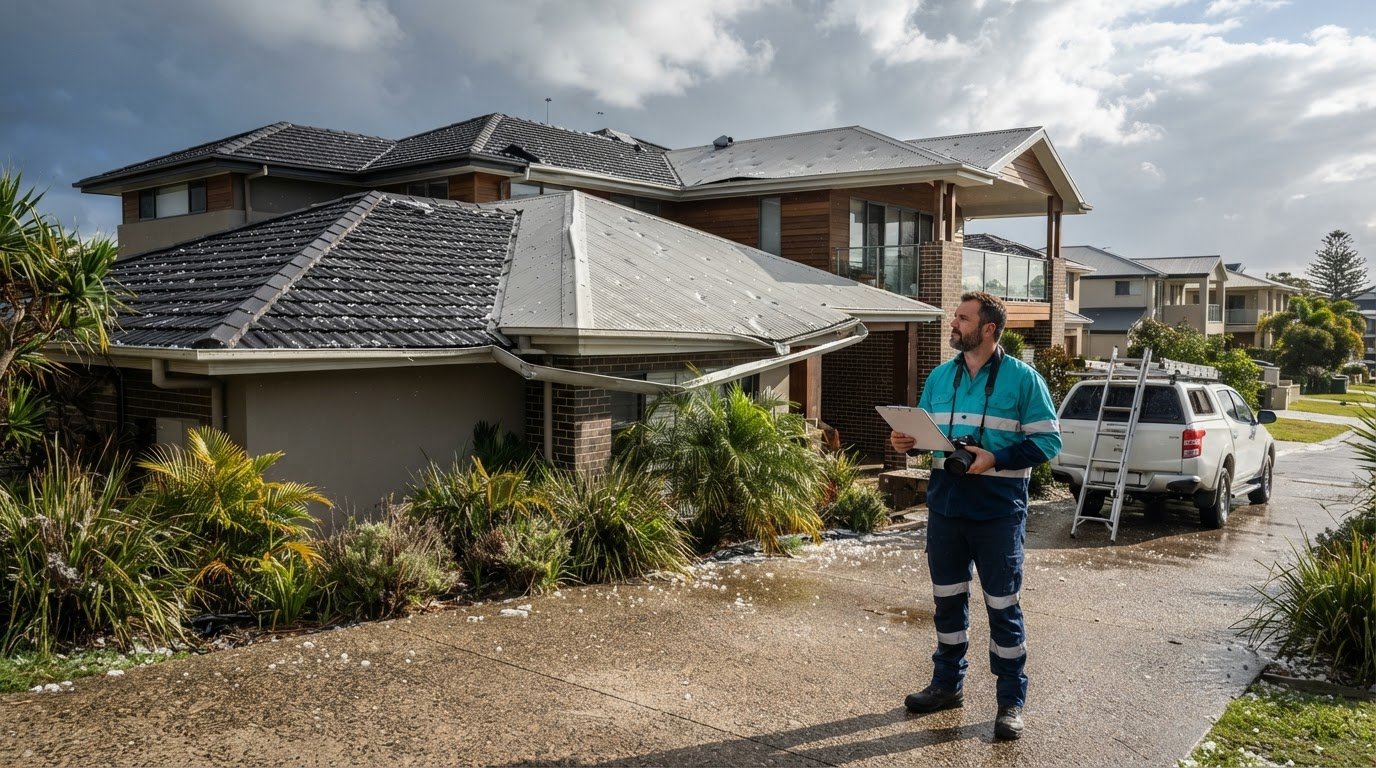
Northern Beaches residents are familiar with the intensity of East Coast Lows. These weather systems bring gale-force winds and driving rain that can easily push water under tile laps. A high-quality Colorbond roofing Sydney system is mechanically fastened to the structure, making it extremely secure during high-wind events. The large-format sheets are designed to shed massive volumes of water quickly, ensuring your internal ceilings remain dry even during the most severe coastal storms.
Long-term Maintenance and Value
A common concern is that metal roofs might be noisy during rain, but this is a myth that modern insulation technology has solved. High-performance acoustic blankets effectively dampen sound while providing the thermal regulation your home needs. Maintenance is also far simpler. While tiles require frequent checks for cracks and expensive roof restoration Sydney services like repointing, Colorbond steel generally only needs a regular wash with fresh water to remove salt build-up. This durability translates directly into higher resale value, as Freshwater buyers increasingly look for homes with low-maintenance, high-performance exteriors.
Planning Your Freshwater Roof Replacement
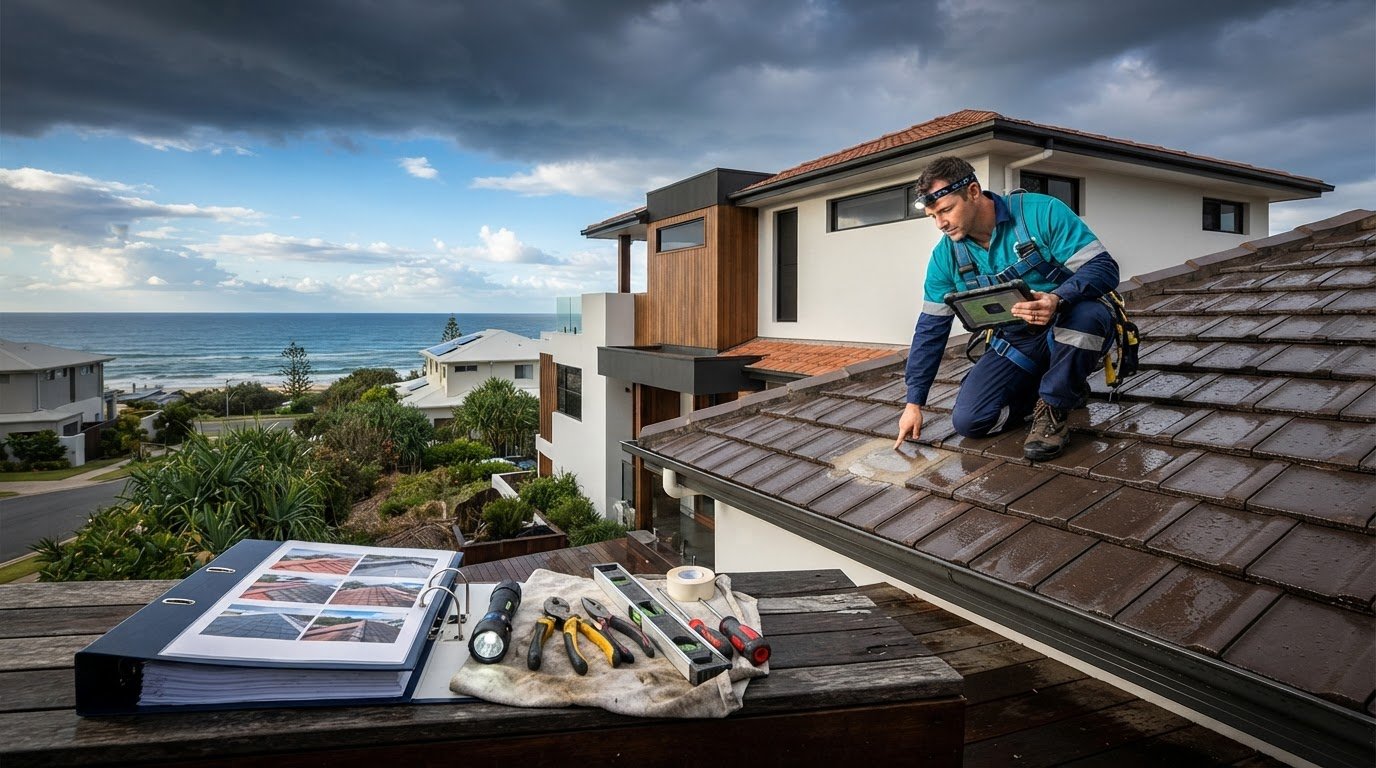
Planning a successful replacement requires more than just picking a colour. In Freshwater, we must navigate specific environmental and regulatory factors that don’t apply to inland suburbs. A comprehensive site inspection is the first mandatory step. This process allows us to assess the structural integrity of your timber frame and identify any underlying dry rot or salt-induced damage to the rafters. We also evaluate your existing insulation depth. If your current material is thin or compressed, upgrading to high-density batts with a high R-value is essential during the replacement phase to ensure your home remains thermally efficient.
Council and Heritage Considerations
The Northern Beaches Council implements specific guidelines regarding roof reflectivity and colour choice. These mandates often encourage “cool roofs” to reduce the urban heat island effect across the peninsula. While light tones are popular for their cooling benefits, certain heritage conservation pockets in Freshwater require specific palettes to maintain historical streetscape harmony. It’s essential to verify these requirements before finalising your order to avoid compliance issues. Our team can help you identify these local planning controls and ensure your project meets all necessary permit conditions before work begins.
The Installation Process
Managing the transition from old materials to new Colorbond roofing Freshwater is a methodical process that prioritises property protection. A typical residential project takes between three to five days, depending on the complexity of the roof pitch. We monitor Bureau of Meteorology (BOM) forecasts closely, only removing sections of the old roof that can be replaced and made watertight within the same day. Once the old material is cleared, we install high-performance anti-condensation sarking and safety battens. This creates a secondary drainage plane and provides a secure foundation for the new steel sheets.
The final phase involves precision flashing around chimneys, skylights, and valleys. This is where technical trade terminology like “apron flashings” and “soaker flashings” becomes critical to your home’s long-term security. We conduct a thorough site clean to remove all metal swarf and debris, followed by a final inspection to certify the work. You will receive all relevant warranty documentation and certificates of compliance once the project is complete. To begin your project with a detailed assessment of your property, you can book a professional roof inspection today.
Why Local Expertise Matters for Your New Roof
Local expertise is the difference between a roof that looks good on day one and one that remains secure after a decade of relentless salt spray. When installing Colorbond roofing Freshwater, a specialist understands that the coastal environment requires a higher standard of precision. It isn’t just about laying the sheets; it’s about how the entire system reacts to the high-wind pressures and atmospheric salinity unique to the Northern Beaches. A local contractor knows exactly where the weak points typically occur in Freshwater homes and proactively reinforces those areas during the build to prevent premature degradation.
Selecting a tradesperson who lives and works in the area ensures they are familiar with the specific weather patterns we face. They won’t just provide a generic solution; they’ll recommend the specific grades and finishes that have been proven to last on our coastline. This neighborly reliability provides a level of transparency and accountability that out-of-area contractors simply cannot match. You gain the peace of mind that comes from knowing your home is in the hands of a seasoned specialist who understands the long-term stakes of property protection in a marine zone.
Integrated Roof Plumbing and Drainage
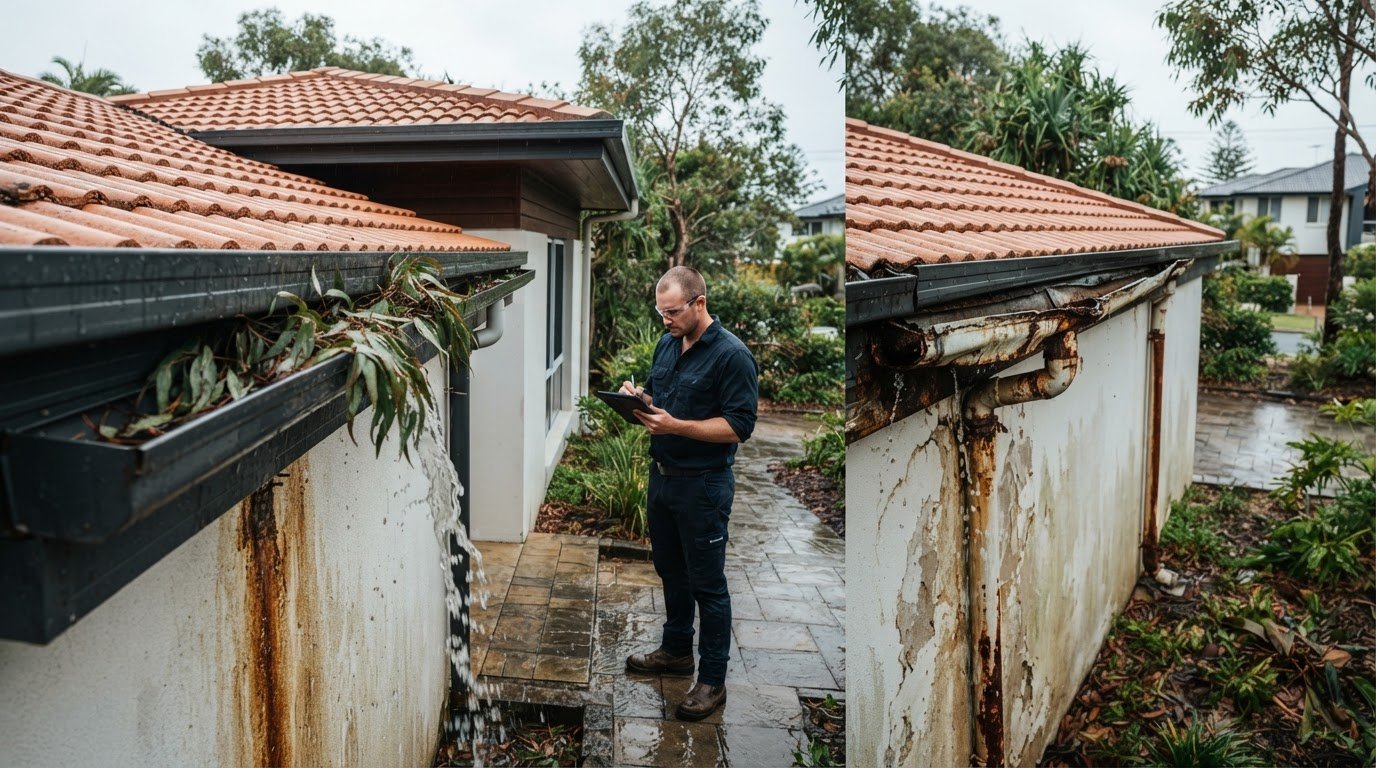
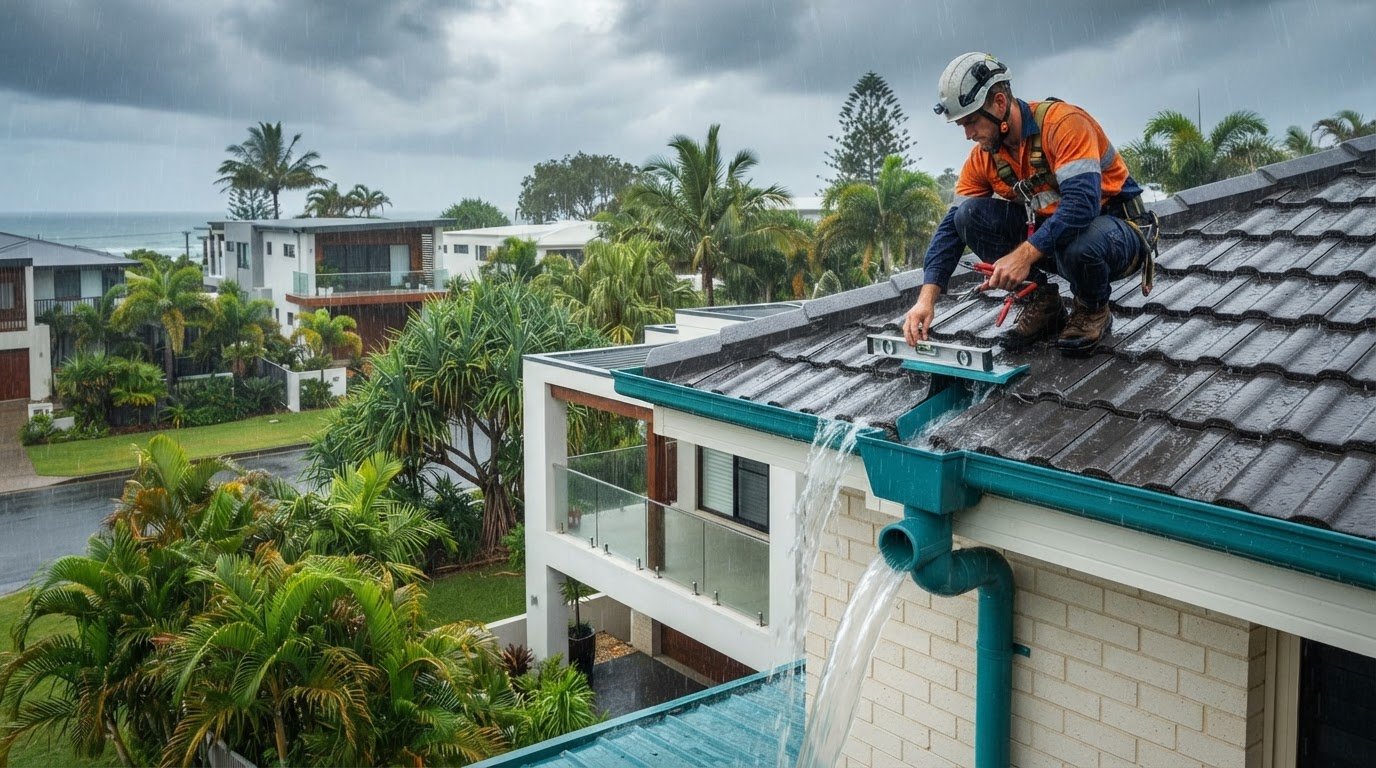
A high-performance roof is only as effective as its drainage system. If your gutters and downpipes are undersized or poorly positioned, water will inevitably back up under the eaves during an intense storm. We ensure that every installation features perfectly sized components capable of handling the volume of a typical Sydney downpour. This integrated approach includes expert roof waterproofing Sydney techniques that focus on the most vulnerable junctions of your property, such as valleys and transitions.
Custom flashing is another critical element of a waterproof system. Standard off-the-shelf solutions often fail in coastal zones where wind-driven rain can penetrate tiny gaps. We fabricate bespoke flashings for chimneys, vents, and skylights to ensure a watertight seal that accounts for the specific pitch and profile of your roof. This level of detail prevents the slow, hidden leaks that can cause structural rot long before they become visible on your ceiling.
The Roof Plumbing Expert Advantage
As a dedicated Northern Beaches specialist, we take pride in our deep connection to the local community. We don’t just install new systems; we apply years of experience in roof leak detection NSW to every project we undertake. This diagnostic mindset means we approach every Colorbond roofing Freshwater installation by identifying and resolving potential failure points before they ever become a problem, ensuring your investment is protected for decades.
Ready for a new look? Organise a Colorbond roofing quote today to secure your home’s future with a specialist who knows the Freshwater coast inside out.
Secure Your Coastal Home with a Specialist Roof Solution
Protecting your property requires a system that can withstand the unique challenges of the Northern Beaches coastline. By choosing Colorbond roofing Freshwater, you’re investing in a lightweight, high-performance solution that eliminates the structural strain of traditional tiles and provides superior resistance to salt-induced corrosion. Success relies on more than just the material; it requires precise technical execution of flashing and integrated drainage to ensure long-term security against intense coastal storms.
Our team consists of local Northern Beaches specialists with deep expertise in coastal roof plumbing. As a member of the Expert Renovation group, we provide a steady and dependable presence to handle everything from council reflectivity compliance to custom waterproofing. We’re committed to helping you improve your home’s thermal performance while ensuring a leak-free future for your family.
Get a Professional Colorbond Roofing Quote in Freshwater and take the first step toward a more durable, low-maintenance home. We look forward to providing the functional excellence and peace of mind your property deserves.
Frequently Asked Questions
Is Colorbond roofing noisy when it rains in Freshwater?
Modern Colorbond roofing Freshwater installations aren’t noisy because they include high-performance insulation blankets. These acoustic blankets sit directly under the metal sheets to dampen the sound of rain and hail. When combined with standard ceiling insulation, a metal roof is often quieter than a tiled roof during a storm. It’s a common myth that metal roofs are loud, but professional installation ensures a peaceful interior environment for your home.
How much does a Colorbond roof replacement cost in the Northern Beaches?
The cost of a replacement in the Northern Beaches depends on several variables including roof area, pitch complexity, and site access. We also consider the specific grade of steel required for your proximity to the ocean. While we don’t provide fixed prices without a site inspection, a comprehensive quote covers the removal of old materials, structural batten installation, and new roof plumbing components. Contact us for a detailed assessment of your property’s specific requirements.
Do I need council approval to change my tile roof to Colorbond in Freshwater?
Yes, you generally need council approval or a Complying Development Certificate (CDC) when changing your roofing material from tile to metal. Northern Beaches Council has specific guidelines regarding structural changes and colour reflectivity. It’s essential to verify these requirements before starting work to ensure your project remains compliant. We can assist in identifying the necessary permits and ensuring your chosen colour palette meets local energy efficiency mandates for the Freshwater area.
Which Colorbond colour is best for a beachfront property?
For beachfront properties, we recommend lighter tones from the Colorbond Ultra range. Colours like Surfmist, Shale Grey, and Dune have high Solar Reflectance Index (SRI) ratings, which help keep your home cool. More importantly, the Ultra grade is specifically engineered with a thicker protective coating to resist the severe salt spray found in Freshwater. These lighter shades also tend to mask the appearance of salt crystals better than darker charcoal finishes.
How long does a Colorbond roof last in a coastal salt-spray zone?
A Colorbond roof can last 30 years or more in a coastal salt-spray zone when the correct grade is specified. Using Colorbond Ultra is vital for homes within 200 metres of the breaking surf, as it’s built for severe marine environments. Regular maintenance, such as washing down areas not reached by rain, also extends its lifespan. This durability makes it a much more reliable long-term investment than traditional tiles in our local climate.
Can I install Colorbond over my existing roof tiles?
No, you shouldn’t install metal sheeting over existing roof tiles. This practice creates significant structural risks due to the combined weight and prevents a thorough inspection of the underlying timber rafters. A professional replacement involves removing the old tiles, checking the frame for salt damage or rot, and installing new safety battens. This ensures your new roof has a solid foundation and allows for the correct installation of anti-condensation sarking.
What is the difference between Colorbond and Zincalume?
Zincalume is a premium metallic-coated steel consisting of zinc and aluminium, while Colorbond is Zincalume with an additional baked-on paint finish. While both offer excellent corrosion resistance, Colorbond provides the aesthetic variety and extra layer of protection needed for Freshwater homes. The paint finish acts as a primary shield against UV rays and salt air, making it the superior choice for residential properties where street appeal and thermal performance are priorities.
Does Colorbond roofing make my house hotter in summer?
Colorbond roofing Freshwater actually helps keep your house cooler due to Thermatech solar reflectance technology. This technology is designed to reflect more of the sun’s heat away from the roof surface compared to traditional concrete tiles. When paired with high-quality insulation and proper roof ventilation, a metal roof significantly reduces heat soak into your living spaces. This improves your home’s energy efficiency and reduces the need for air conditioning during the peak of summer.