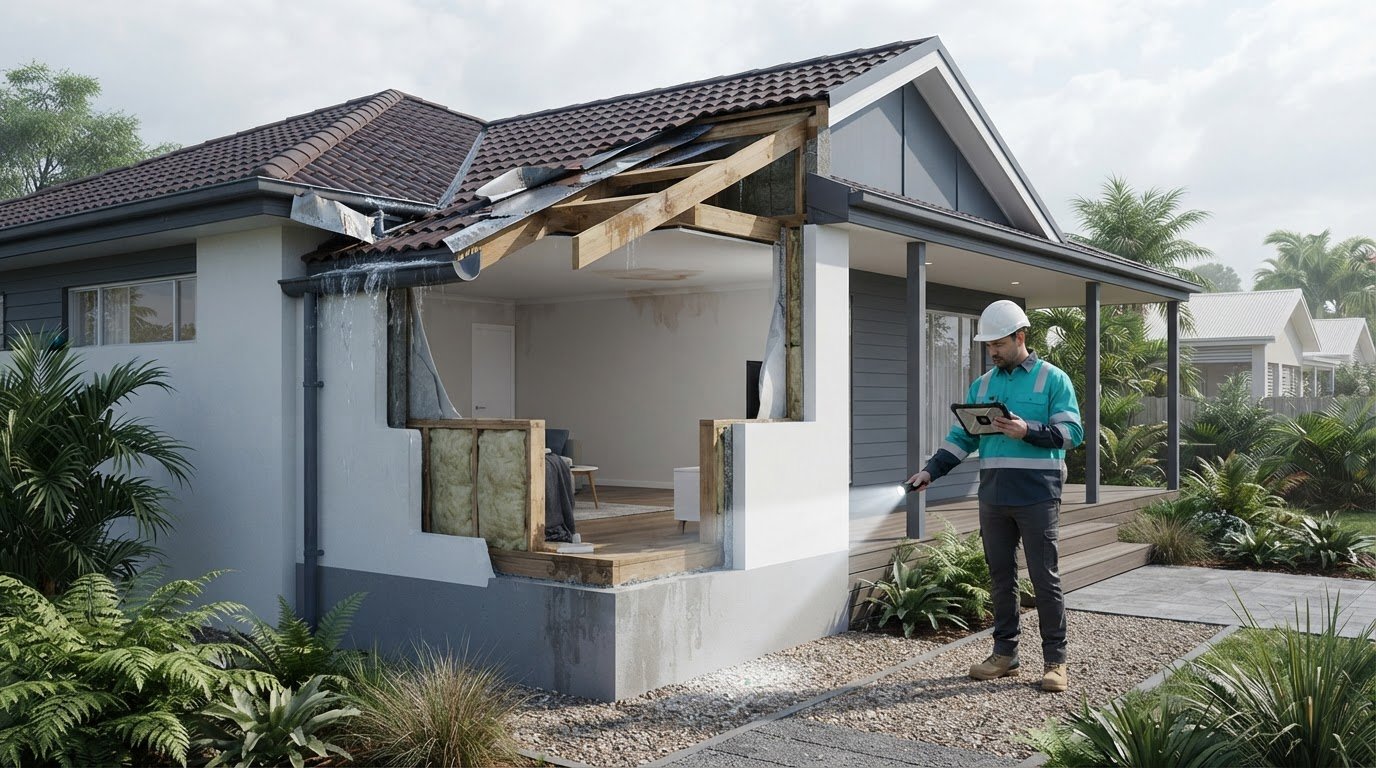
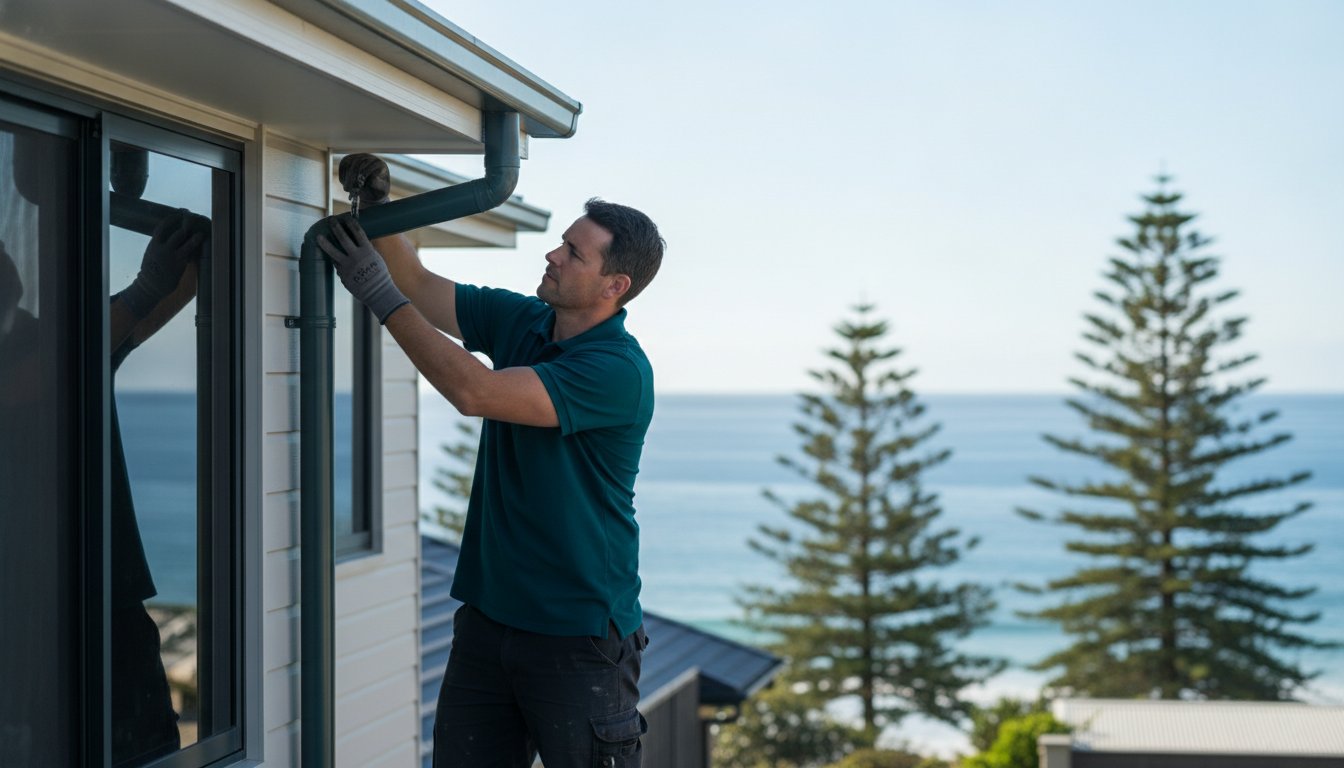
In a coastal environment like Manly Beach, your downpipes aren’t just plumbing fixtures; they’re your home’s frontline defence against a relentless marine atmosphere. Most locals know the sinking feeling of watching gutters overflow during a heavy East Coast Low or seeing standard metal brackets turn to orange rust from the constant salt spray. It’s a stressful reality that often stems from a downpipe installation Manly Beach homeowners weren’t properly prepared for, leading to avoidable leaks and compromised structural integrity.
We believe that protecting your property shouldn’t be a guessing game. You deserve a drainage system that’s built to last and fully compliant with the latest Australian Standards. By following our expert checklist, you’ll master the essentials of coastal-grade drainage and ensure your home is ready for the next big storm. We’ll walk you through selecting durable materials like Colorbond Ultra, navigating the technical requirements of the AS/NZS 3500.3:2025 standards, and identifying the hallmarks of a professional installation that stands up to the Pacific Ocean’s demands for years to come.
Key Takeaways
- Learn how poor drainage contributes to foundation damage and coastal soil erosion, and how to mitigate these risks with high-performance components.
- Understand the technical differences between standard materials and coastal-grade options like Colorbond Ultra® for long-term durability near the surf.
- Ensure your downpipe installation Manly Beach adheres to AS/NZS 3500.3 standards to prevent gutter overflows during intense storm events.
- Discover what to expect during a professional installation, from the initial site assessment to the clean removal of corroded materials.
Essential Drainage: Why Downpipe Performance Matters in Manly Beach
Your home’s roof is a massive catchment area that collects thousands of litres of water during a single storm. To understand why this matters, we first need to define the hardware. What is a downpipe? It’s the vertical component of your roof plumbing system designed to direct water away from the structure and into the stormwater network. In a high-exposure area like Manly, a standard downpipe installation Manly Beach homeowners might find elsewhere just won’t cut it. The system must be engineered to handle both the volume of water and the corrosive nature of the sea air.
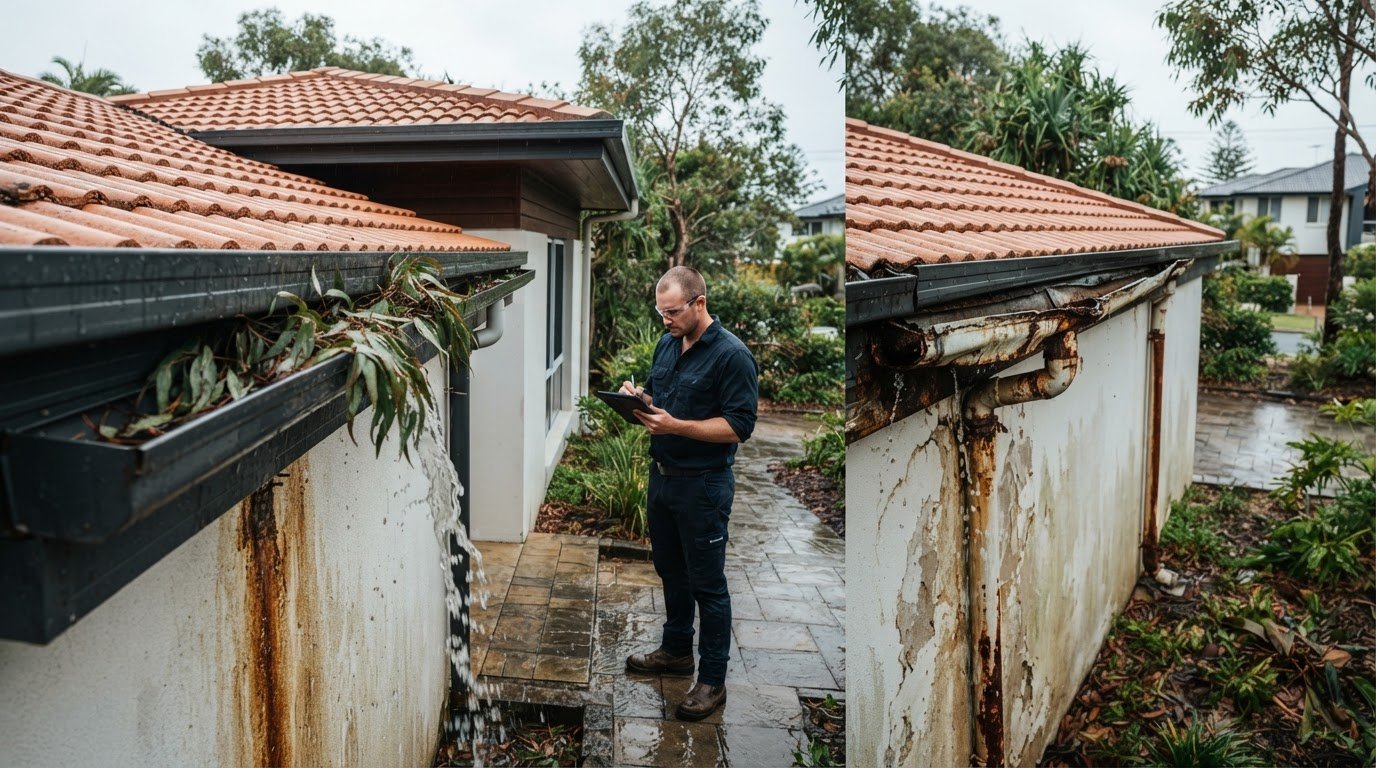
When drainage is compromised, the risks to your property are significant. Poorly managed runoff often leads to soil erosion around the perimeter of the home. Over time, this can cause the ground to shift, resulting in foundation cracks or structural instability. Identifying failure early is vital for long-term security. Look for these common warning signs:
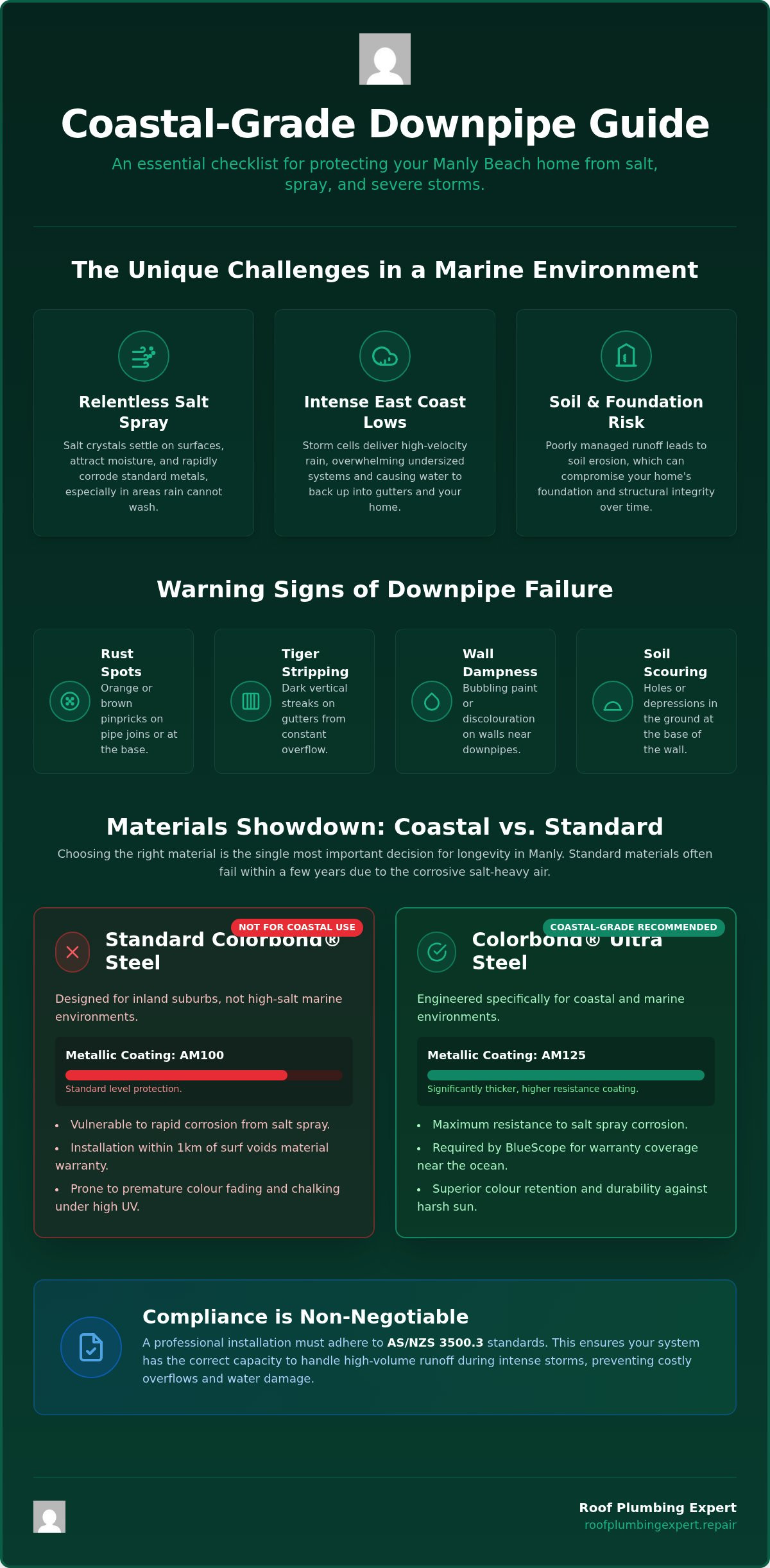
- Rust spots: Small orange or brown pinpricks appearing on the base or joins of the pipe.
- Tiger stripping: Dark, vertical streaks on the outside of your gutters caused by overflow.
- Wall dampness: Discolouration or bubbling paint on external walls behind the downpipe.
- Soil scouring: Holes or depressions in the dirt or mulch near the base of the wall.
The Impact of Coastal Salt Spray on Guttering
Manly’s micro-climate is notoriously tough on metal. Salt spray travels inland, settling on every surface of your roof plumbing. These salt crystals attract moisture, creating a corrosive electrolyte that eats through standard galvanised steel. We focus on “unwashed areas” like the back of the pipes where rain doesn’t naturally rinse away the salt. Homeowners within 1km of the surf must use marine-grade materials to prevent premature failure and ensure the system lasts more than a few short seasons.
Managing High-Volume Runoff During East Coast Lows
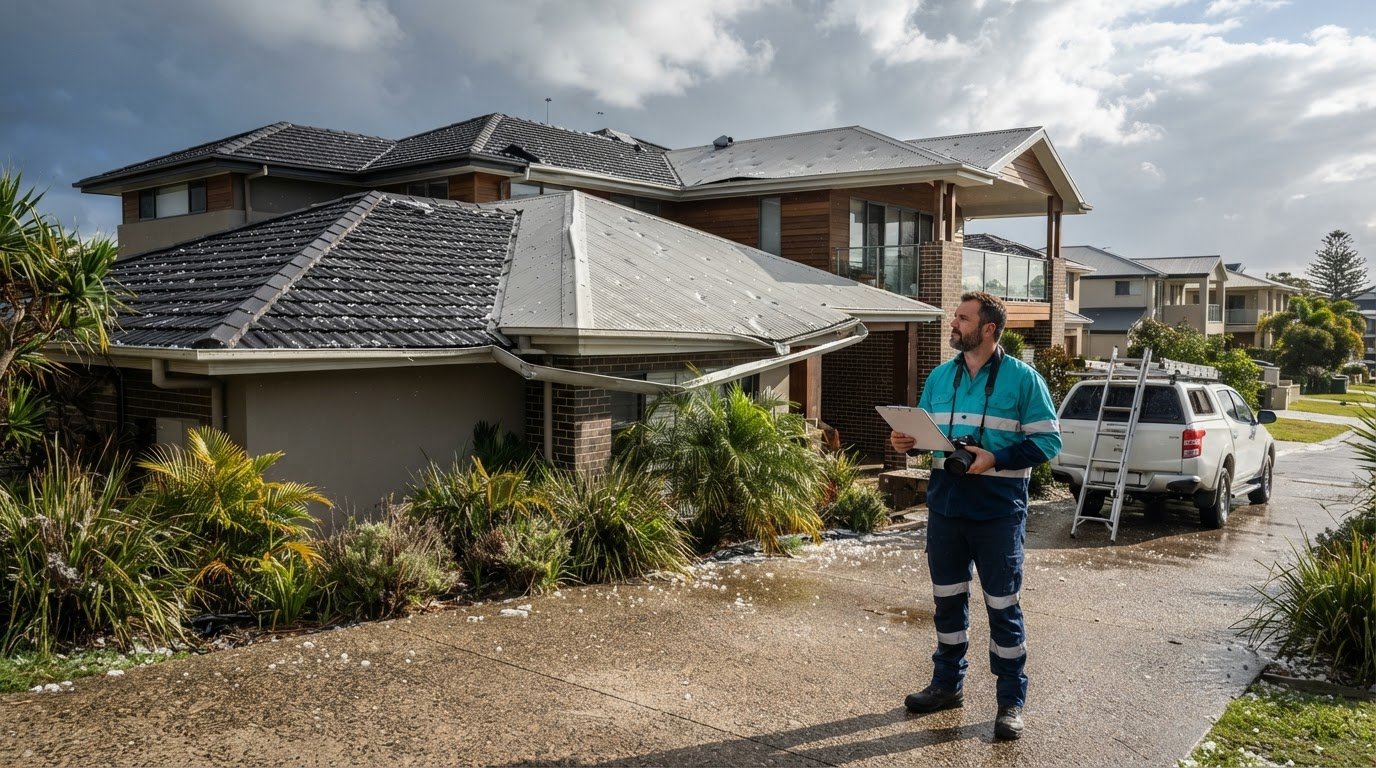
The Northern Beaches frequently face intense East Coast Lows. These storm cells deliver high-velocity rain that can easily overwhelm an undersized system. If your downpipe installation Manly Beach wasn’t calculated based on your specific roof pitch and surface area, water will back up into the gutters. This overflow often bypasses the flashing, leading to ceiling leaks and internal damage. A professional installation ensures the pipe capacity matches the potential surge, protecting your home during the heaviest coastal downpours.
The Coastal Grade Checklist: Selecting Materials for Longevity
Selecting the right material is the single most important decision for any downpipe installation Manly Beach project. Because Manly sits directly on the coast, standard materials that work in Western Sydney will often fail here within a few years. The salt-heavy air acts as a constant abrasive, meaning your choice of substrate determines whether your drainage lasts three decades or just three seasons. We recommend prioritising durability and marine-grade specifications to ensure your home remains protected against the elements.
Colorbond Ultra vs. Standard Steel for Marine Environments
The technical difference between standard Colorbond and Colorbond Ultra lies in the protective metallic coating. Standard Colorbond steel typically uses an AM100 coating, which is sufficient for inland suburbs. However, for properties within one kilometre of the surf, BlueScope Steel requires the use of Colorbond Ultra, which features a thicker AM125 coating. This provides significantly higher resistance to the salt spray that defines the Manly micro-climate.
Choosing the wrong grade can void your material warranty. BlueScope’s warranty guidelines are strict regarding distance from the ocean; if you install standard grade where Ultra is required, you won’t be covered for corrosion. Beyond structural integrity, Ultra also offers superior colour retention. High-UV coastal zones often cause standard finishes to chalk or fade prematurely, whereas marine-grade finishes are engineered to hold their pigment against the harsh Australian sun.
While metal is the gold standard, UV-stabilised PVC remains a viable option for some homeowners. It’s immune to rust, which is a major advantage in salt zones. However, PVC can become brittle over time when exposed to constant direct sunlight, and it lacks the premium aesthetic finish of steel. For heritage restorations or high-end modern builds, copper and stainless steel are the ultimate premium choices. They offer unparalleled longevity, though they require a larger initial investment. If you’re unsure which material fits your budget and location, consulting a local specialist can help clarify the best path forward.
Choosing the Right Downpipe Profile
The profile of your downpipe should complement your home’s architecture while providing efficient water transit. In Manly, we see a diverse range of building styles that require different approaches:
- Rectangular Downpipes: These are the standard for modern “Manly Flat” architectural styles. They provide a clean, minimalist look that sits flush against contemporary facades.
- Round Downpipes: Preferred for heritage restorations and Federation-style homes. Round profiles are also slightly more efficient at self-cleaning, as the circular shape creates a vortex that helps clear debris.
Your new pipes must also integrate seamlessly with your existing gutter installation Sydney system. A mismatch in capacity or material can lead to electrolytic corrosion, where two different metals react and accelerate rusting. Ensuring a uniform material match across your entire roof plumbing system is a non-negotiable step for long-term waterproofing.
Compliance and Capacity: Meeting Australian Standards (AS/NZS 3500.3)
Every professional downpipe installation Manly Beach homeowners commission must adhere to AS/NZS 3500.3:2025. This document is the definitive standard for plumbing and drainage in Australia, providing the technical framework to ensure roof systems handle peak rainfall without failing. In New South Wales, it’s a legal requirement that only a licensed roof plumber performs this work. Engaging an unlicensed tradie doesn’t just risk poor workmanship; it can also void your home insurance if a leak causes significant structural damage.
A “one size fits all” approach is a recipe for disaster during a heavy East Coast Low. We calculate the required number of downpipes by assessing your specific roof catchment area. This ensures the volume of water collected during a storm doesn’t exceed the transit capacity of the pipes. Without these precise calculations, water will inevitably pool in your gutters, leading to overflow and potential ingress into your wall cavities.
Calculating Downpipe Size for Northern Beaches Storm Intensities
We use specific rainfall intensity figures, known as ARI (Average Recurrence Interval) or AEP (Annual Exceedance Probability), to determine the correct dimensions for your drainage hardware. Manly Beach is prone to intense storm cells that require high-capacity solutions. According to the current standards, a common guideline is to provide one 90mm round downpipe for every 25 to 35 m² of roof catchment area. Catchment area refers to the total horizontal surface of your roof that collects water, including the impact of any vertical walls that shed rain onto lower sections. For many modern Northern Beaches homes, a 100x75mm rectangular pipe is the minimum requirement to ensure safe water transit during a deluge.
Strategic Placement and Overflow Provisions
Placement is just as vital as the size of the pipe itself. The standards generally dictate a 12-metre maximum spacing between downpipes to prevent gutters from becoming overloaded. We prioritise locating pipes near high-flow valley joins, as these areas receive the highest concentration of runoff. Proper placement ensures the water has the shortest possible path to the ground, reducing the weight load on your gutter brackets.
We also incorporate overflow provisions like weirs or rainheads into the system design. These components act as a safety valve for your home. If the underground stormwater pipes become blocked or overwhelmed, these weirs allow water to exit the system externally. This prevents backflow from entering your eaves or soaking into your interior ceilings, providing an essential layer of property protection.
Step-by-Step Installation: What to Expect from Professional Services
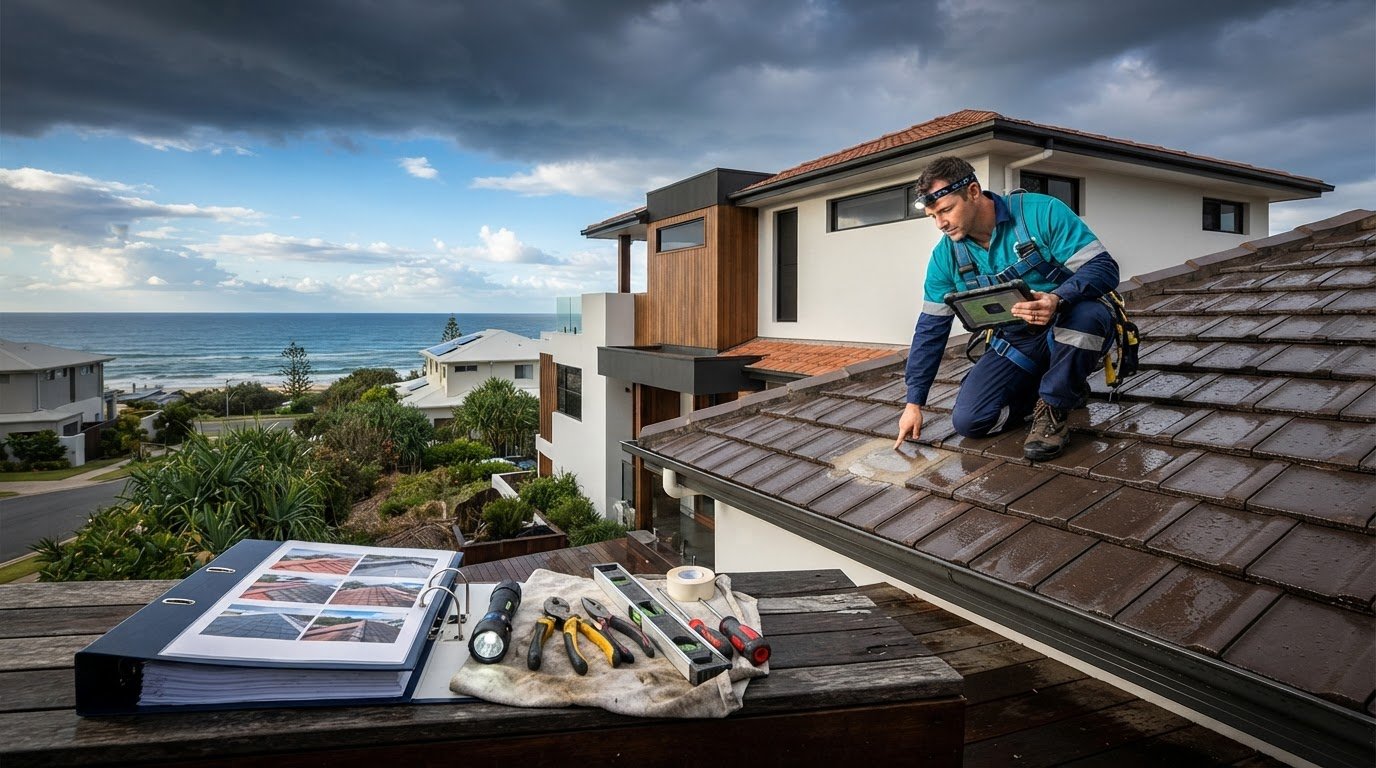
A quality downpipe installation Manly Beach homeowners can trust begins long before a tool touches the roof. We start every project with a comprehensive site inspection to diagnose the health of your entire drainage system. This isn’t just about measuring lengths; it’s about checking the structural integrity of your fascia boards and ensuring your existing gutters have the correct “fall” or slope. Without the right gradient, water will pool in the corners, leading to premature rust and overflow regardless of how new your downpipes are. Removing old, corroded components requires a steady hand to avoid damaging fragile roof tiles or splintering timber fascia boards that have been softened by years of coastal moisture.
Preparing the Roof and Gutter Connection
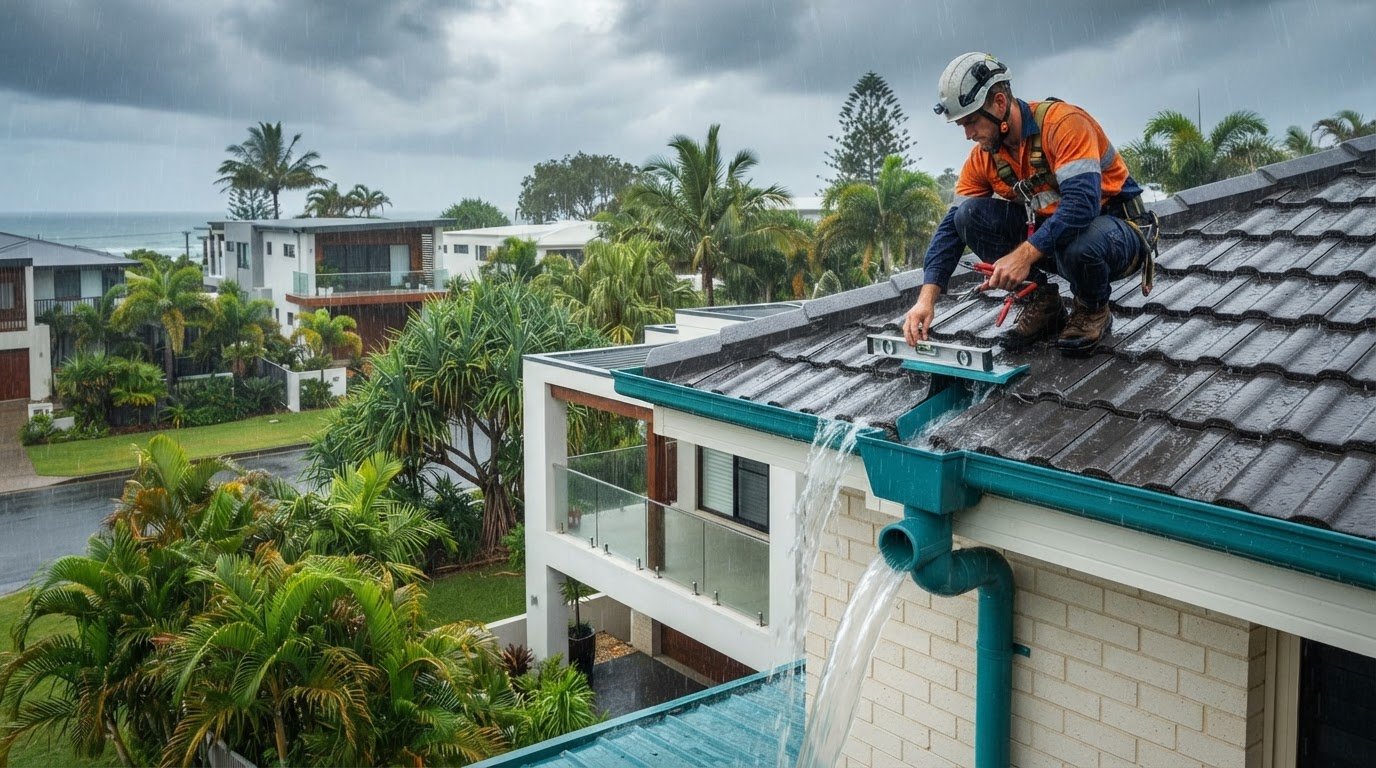
The connection point between the gutter and the downpipe, often called the “pop” or nozzle, is a frequent source of leaks if handled poorly. We cut this opening precisely to match your chosen pipe profile, ensuring the edges are clean and free of burrs that could catch leaf litter. To create a permanent, leak-proof join, we use high-quality marine-grade silicone and secure the nozzle with colour-matched rivets. This meticulous approach is part of our broader focus on roof leak detection NSW standards. By sealing these joins correctly, we eliminate one of the most common entry points for water into your eaves and wall cavities.
Securing Brackets and Stormwater Integration
In a salt-air environment, the hardware used to secure your pipes is just as important as the pipes themselves. We utilise corrosion-resistant stand-off brackets that hold the downpipe slightly away from the external wall. This gap allows for essential air circulation, preventing salt and moisture from being trapped against your home’s facade. Once the vertical runs are secure, we integrate the system with your underground stormwater pipes or rainwater tank. We ensure every connection is sealed and compliant with Northern Beaches Council regulations to prevent soil erosion near your foundations. For properties with overhanging trees, we often suggest installing leaf diverters or rain heads to stop debris from entering the underground network.
The final step in our process is a rigorous water flow test. We run water through the gutters to verify that the transit is smooth and the stormwater connection is functioning perfectly under pressure. This verification ensures your home is ready for the next heavy downpour. If you’re concerned about your current drainage, book a professional roof plumbing assessment to ensure your property stays dry and protected.
Choosing a Specialist: Downpipe Installation with Roof Plumbing Expert
Choosing a specialist for your downpipe installation Manly Beach isn’t just about finding someone with a ladder and a drill. It’s about partnering with a team that understands the unique environmental pressures of the Northern Beaches. We’ve spent years diagnosing and resolving the specific structural concerns that coastal living creates. Our approach combines technical trade precision with a deep commitment to long-term property protection, ensuring your drainage system performs exactly when you need it most.
Why Local Knowledge Matters
Manly Beach presents specific challenges that generic service providers often overlook. We understand the high wind loads and intense salt zones that define this area. This local expertise allows us to specify the correct gauges and bracket spacings required to withstand the Pacific’s reach. We’re also intimately familiar with Northern Beaches Council drainage regulations, including their specific requirements for stormwater connection and on-site detention. This familiarity prevents costly compliance issues and ensures your installation meets all local building codes. Our track record of protecting coastal properties from water damage is built on this foundation of local insight.
Our commitment to durability is reflected in our choice of materials. We exclusively use genuine BlueScope Colorbond Ultra for marine-zone projects, providing a superior level of corrosion resistance. For many homeowners, combining downpipe work with a broader Colorbond roofing Sydney project is a strategic move. This creates a unified drainage and waterproofing system covered by a single, comprehensive warranty. It eliminates the risk of different trades blaming each other for leaks and gives you the peace of mind that comes with a professionally integrated roof plumbing solution.
Book Your Comprehensive Site Inspection Today
Every durable drainage system starts with a thorough assessment. During our professional inspection, we evaluate your roof’s catchment area, check the health of your existing gutters, and verify your stormwater exit points. We look for the subtle signs of failure that others might miss, ensuring your new system is engineered for the specific demands of your property. This detailed process allows us to provide a transparent, itemised quote with no hidden extras or unpleasant surprises halfway through the job.
We believe in clear communication and functional excellence, positioning ourselves as your hardworking partner in home maintenance. Our guarantee is simple: we provide a steady, dependable presence that prioritises your home’s security. Don’t wait for the next East Coast Low to test your drainage. Organise your downpipe inspection in Manly Beach today! and let us help you guard your home against the elements.
Secure Your Home Against the Next Coastal Surge
Effective drainage is the most critical investment you can make for your property. We’ve explored how high-performance materials like Colorbond Ultra and strict adherence to Australian Standards prevent the structural decay often seen in coastal homes. A professional downpipe installation Manly Beach ensures that your system has the capacity to handle high-velocity runoff during an East Coast Low, protecting your foundation and internal ceilings from water ingress. When your roof plumbing is engineered for the marine environment, you eliminate the constant stress of overflowing gutters and salt-driven corrosion.
Our team of licensed NSW roof plumbers brings specialised local knowledge to every project. We focus on precision, durability, and compliance, using only genuine BlueScope steel products to withstand the salt-laden air. Whether you’re planning a full restoration or need immediate assistance, we provide 24/7 emergency storm support to keep your home safe when conditions turn for the worst. Don’t leave your property’s safety to chance before the next heavy rain cell arrives.
Take the first step toward a leak-free home today. Get a Professional Downpipe Assessment in Manly Beach and rest easy knowing your drainage is in expert hands. We’re here to help you guard your home against the elements for years to come.
Frequently Asked Questions
How much does downpipe installation cost in Manly Beach?
Costs for a professional downpipe installation Manly Beach residents require will vary based on material choice, building height, and site access. Coastal-grade materials like Colorbond Ultra or stainless steel often carry a higher initial investment than standard options but offer better long-term value. A professional site assessment is necessary to provide an accurate, itemised quote that accounts for the specific drainage requirements and compliance standards of your Manly property.
Do I need a licensed plumber for downpipe replacement in NSW?
Yes, you must engage a licensed roof plumber for any downpipe replacement or installation in New South Wales. This is a legal requirement under state building regulations to ensure all work complies with the AS/NZS 3500.3:2025 standards. Using an unlicensed contractor can void your home insurance and lead to significant structural issues if the drainage system fails during a major storm event on the Northern Beaches.
Which downpipe material is best for a house right on Manly Beach?
Colorbond Ultra is the recommended choice for properties located within one kilometre of the surf at Manly Beach. This material features a thicker metallic coating specifically engineered to resist salt spray and coastal corrosion. While standard steel may rust within a few seasons, marine-grade options like Ultra or high-quality PVC provide the durability needed to withstand the relentless Pacific Ocean atmosphere and high-UV exposure common to the area.
How many downpipes does my roof actually need?
The number of downpipes required depends on your roof’s total catchment area and the local rainfall intensity. As a general guideline under Australian Standards, you typically need one 90mm round downpipe for every 25 to 35 m² of roof area. However, complex rooflines with multiple valleys or steep pitches often require additional pipes to prevent gutter overloading during the intense storm cells common to the Northern Beaches region.
Can I change my downpipe profile from round to square?
You can certainly change your downpipe profile, provided the new shape maintains the required water transit capacity. Switching from a round to a square or rectangular profile is common during modern home renovations. It’s vital to ensure the new pop or nozzle in the gutter is correctly sealed and that the cross-sectional area of the square pipe matches or exceeds the drainage capacity of the original round plumbing system.
What is the difference between standard Colorbond and Colorbond Ultra?
The primary difference lies in the protective metallic coating applied to the steel substrate. Standard Colorbond uses an AM100 coating, while Colorbond Ultra features a more robust AM125 coating designed for marine environments. This extra layer of protection is essential for downpipe installation Manly Beach projects, as it prevents the accelerated oxidation caused by constant salt spray and high humidity levels near the shoreline.
How often should downpipes be inspected in a coastal area?
Homeowners in coastal zones should have their downpipes and gutters professionally inspected at least twice a year. The combination of salt buildup and wind-blown debris can lead to blockages and hidden corrosion. Regular checks allow for the early detection of rust spots or bracket failure, ensuring your drainage system remains fully operational before the arrival of the heavy rainfall typically associated with East Coast Lows that strike the coast.
Will new downpipes stop my gutters from overflowing in heavy rain?
New downpipes will stop overflows if they are correctly sized and strategically placed according to the latest hydraulic calculations. If your gutters currently overflow, it’s often because the existing downpipes lack the capacity to handle high-velocity runoff. Replacing undersized pipes with high-flow alternatives ensures water is moved off your roof quickly, protecting your eaves and foundations from the damage caused by cascading water during a heavy coastal deluge.