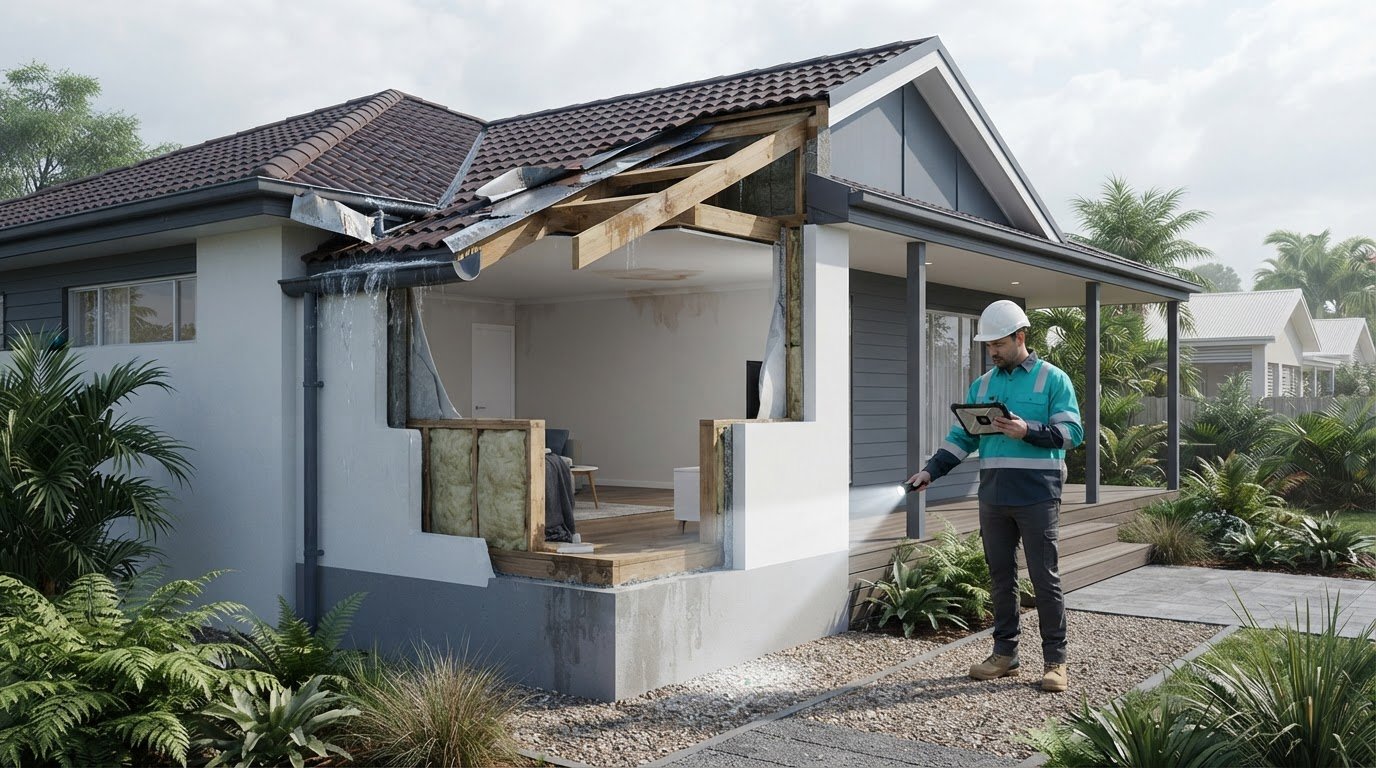
Did you know that delaying a minor roof repair in a coastal strata building can increase your eventual costs by up to fifteen times? In the high-pressure environment of the Northern Beaches, a small leak quickly evolves from a nuisance into a structural crisis that drains the capital works fund. When you are coordinating strata roof repairs Manly Beach property owners and managers often find themselves caught between rising levies and the relentless corrosion caused by salt-laden air.
It’s understandable to feel overwhelmed by complex multi-unit buildings where the line between common property and private responsibility feels blurred. You need a solution that stops the water for good and keeps the owners’ corporation compliant with the April 2026 NSW strata law reforms. This guide provides the expert technical advice required to navigate these challenges with confidence. We’ll examine the specific benefits of marine-grade materials like COLORBOND® Ultra, clarify your legal obligations under the Strata Schemes Management Act, and outline a proactive maintenance strategy that protects your property value against the elements.
Key Takeaways
- Understand why the salt-laden air at Manly Beach requires specific marine-grade materials like COLORBOND® Ultra to prevent premature structural corrosion.
- Learn how to identify common failure points in multi-unit buildings, particularly internal box gutters and undersized downpipes that struggle with coastal downpours.
- Navigate the legalities of the 2026 NSW strata reforms to ensure your 10-year capital works fund accurately covers essential strata roof repairs Manly Beach properties require.
- Clarify the distinction between common property and private lot responsibility to streamline communication and decision-making within your owners’ corporation.
- Establish a proactive bi-annual maintenance and gutter cleaning schedule to protect your building’s structural integrity and avoid the high costs of emergency interventions.
The Unique Challenges of Strata Roof Repairs in Manly Beach
Manly Beach presents one of the most demanding environments for building maintenance in New South Wales. The combination of abrasive salt spray and intense wind loads creates a unique set of variables that standard roofing solutions simply cannot handle. When managing strata title properties along the coast, the focus must shift from simple aesthetics to long-term structural resilience. The density of these buildings means that a single failure point can impact dozens of residents simultaneously, making the stakes significantly higher than in standalone residential homes.
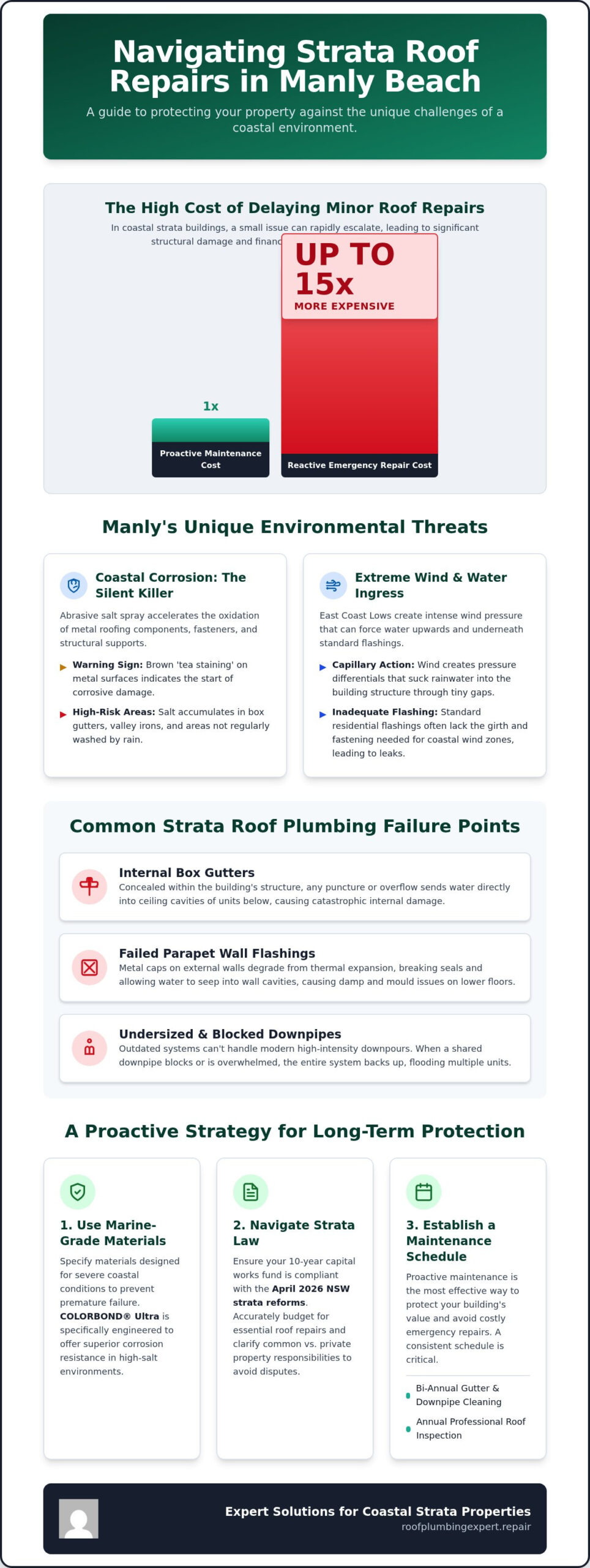
Effective strata roof repairs Manly Beach committees oversee require a deep understanding of how marine conditions degrade materials over time. Many older blocks in the area still feature original terracotta tiles or early-generation metal roofing that was never designed to withstand modern storm intensities or constant salt saturation. Delaying maintenance in this environment is a high-risk strategy. Industry data suggests that reactive repairs can cost five to fifteen times more than proactive maintenance, especially when salt has already compromised the underlying structural timber or steel fasteners.
Coastal Corrosion: The Silent Strata Killer
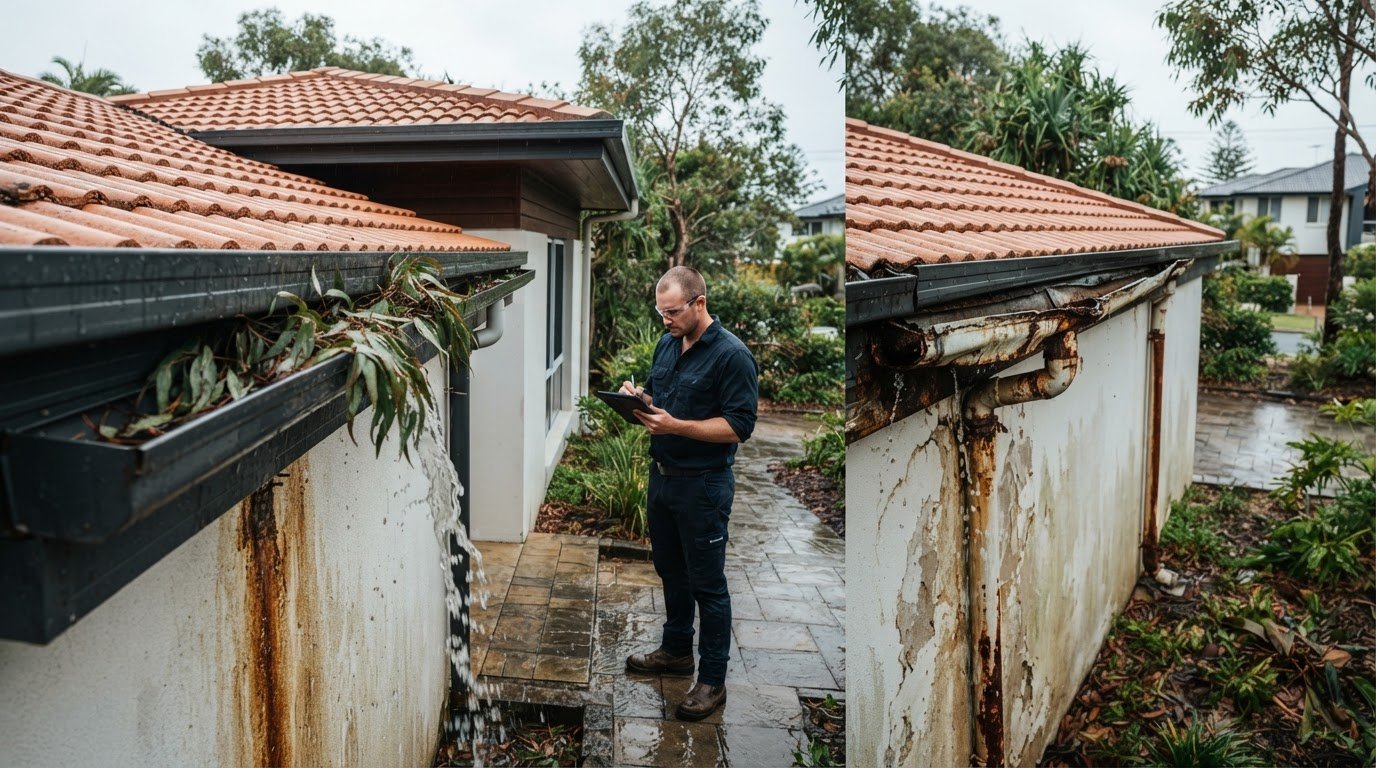
Salt air is the primary cause of premature roof failure in Manly. It doesn’t just sit on the surface; it accumulates in recessed areas like box gutters and valley irons. This leads to rapid oxidation. You might notice ‘tea staining’, which is a brownish surface discolouration on stainless steel or coated metal. While tea staining is often an aesthetic issue, it serves as a critical warning. If left unmanaged, it progresses into deep pitting and structural rust failure. Regular rinsing of non-washed areas is essential for beachside properties to remove these corrosive deposits before they eat through the metal substrate.
Wind and Water: Manly’s Storm Profile
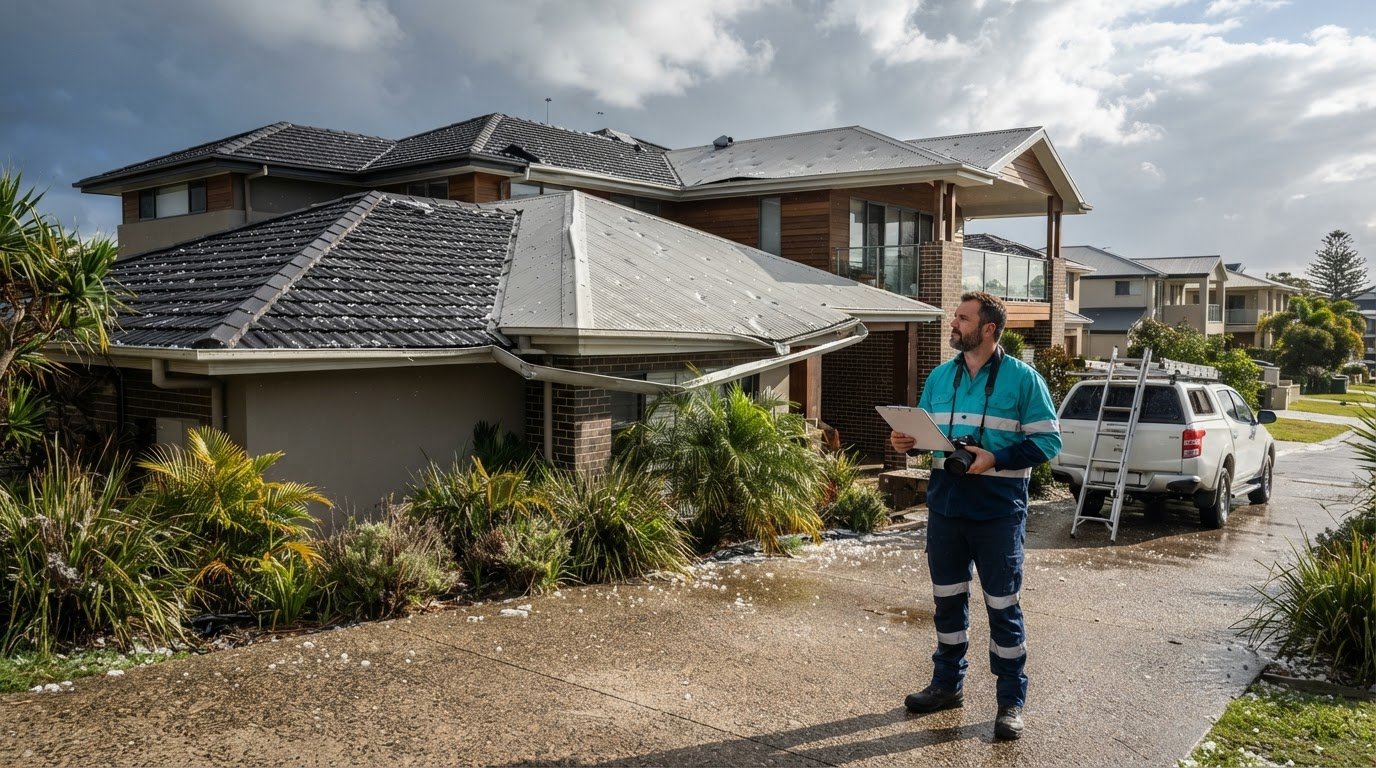
Buildings positioned on the exposed headlands of the Northern Beaches face extreme wind pressures during East Coast Lows. These winds don’t just hit the building; they create pressure differentials that can suck water upwards through gaps. This is known as capillary action. Standard residential flashing often fails in these conditions because it lacks the necessary girth and fastening frequency to remain watertight under high-velocity rain. For multi-storey strata blocks, we ensure every flashing is rated for coastal wind zones. Without this precision, water is driven under the roof sheets, leading to internal damage that often goes undetected until a ceiling begins to sag.
Common Strata Roof Plumbing Failure Points
Strata buildings in Manly Beach often feature complex internal drainage systems that differ significantly from standard residential homes. These systems are designed to move massive volumes of water quickly, but they also create hidden failure points that can lead to catastrophic internal damage. When coordinating strata roof repairs Manly Beach property managers must look beyond surface-level leaks. The most severe issues often originate from internal box gutters. Because these gutters are nestled within the building’s structure rather than hanging off the eaves, any overflow or puncture sends water directly into the ceiling cavities of the units below.
Failed parapet wall flashings represent another frequent culprit for persistent cavity leaks. These metal caps protect the top of the building’s external walls; however, as they expand and contract in the coastal sun, seals can break. This allows water to seep into the wall cavity, often appearing as damp patches or mould in units several floors down. Professional roof leak detection ensures these hidden failure points are identified before they cause structural rot or electrical hazards.
Shared Drainage and Downpipe Capacity
Many older strata blocks in Manly were constructed under outdated building standards that didn’t account for the high-intensity tropical downpours we now experience. These buildings often have undersized downpipes that simply can’t cope with modern peak rainfall levels. When a common downpipe becomes blocked with debris or reaches its hydraulic capacity, the entire stack backs up, affecting multiple lot owners simultaneously. The National Construction Code (NCC) provides the definitive requirements for contemporary drainage design to prevent these overflows. In a strata context, overflow measures act as a critical failsafe by ensuring that when a primary gutter or sump reaches capacity, excess water is diverted safely outside the building envelope rather than into the units.
Skylights and Waterproofing in Shared Spaces
Shared stairwells and top-floor units often rely on skylights for natural illumination, but these features are notorious for seal failure in high-density buildings. Over time, the gaskets and waterproof membranes surrounding the skylight frame degrade due to UV exposure and salt crystallisation. This creates a complex intersection where roof plumbing meets structural waterproofing. While residents value natural lighting, finding the balance between aesthetics and leak prevention requires high-quality flashing and marine-grade sealants. We often find that simple repairs to the surrounding roof sheets are insufficient if the skylight’s own integrated drainage channels are blocked or corroded.
Responsibility: Who Pays for Strata Roof Repairs?
Determining financial liability for strata roof repairs Manly Beach schemes face is often the most contentious part of property management. Under the Strata Schemes Management Act 2015, the owners corporation holds the legal mandate to repair and maintain common property. This includes the building’s main roof structure, gutters, and downpipes. Recent reforms effective from April 1, 2026, have introduced a mandatory standard format for 10-year capital works fund plans. This change forces committees to provide a detailed breakdown of planned roofing works and forecasted costs, including inflation. It’s a system designed to ensure major restorations are funded progressively through regular levies rather than through sudden, stressful special levies that catch owners off guard.
For newer developments in the area, a seven-year structural warranty period applies under NSW law. If major defects appear within this timeframe, the owners’ corporation should act quickly to pursue the original developer for remediation. However, proving a leak is a structural defect rather than a result of poor maintenance requires precise technical evidence. This distinction is vital because developers often argue that a lack of gutter cleaning or general upkeep caused the failure. Without a professional audit, committees can find themselves stuck in a costly legal stalemate.
Common Property vs. Private Lot Boundaries
Confusion often arises when a leak appears near a private lot boundary, such as a top-floor unit or a penthouse terrace. For example, a skylight situated within a unit’s ceiling is almost always common property because it forms part of the building’s external roof skin. Similarly, if a leak into a unit is caused by a failure in the underlying waterproofing membrane of the balcony above, it typically falls under the responsibility of the owners corporation. These membranes are classified as common property because they are essential to the building’s structural integrity. A well-managed capital works fund must account for these complex intersections to prevent legal disputes when a repair becomes urgent.
Documenting Damage for Insurance and Committees
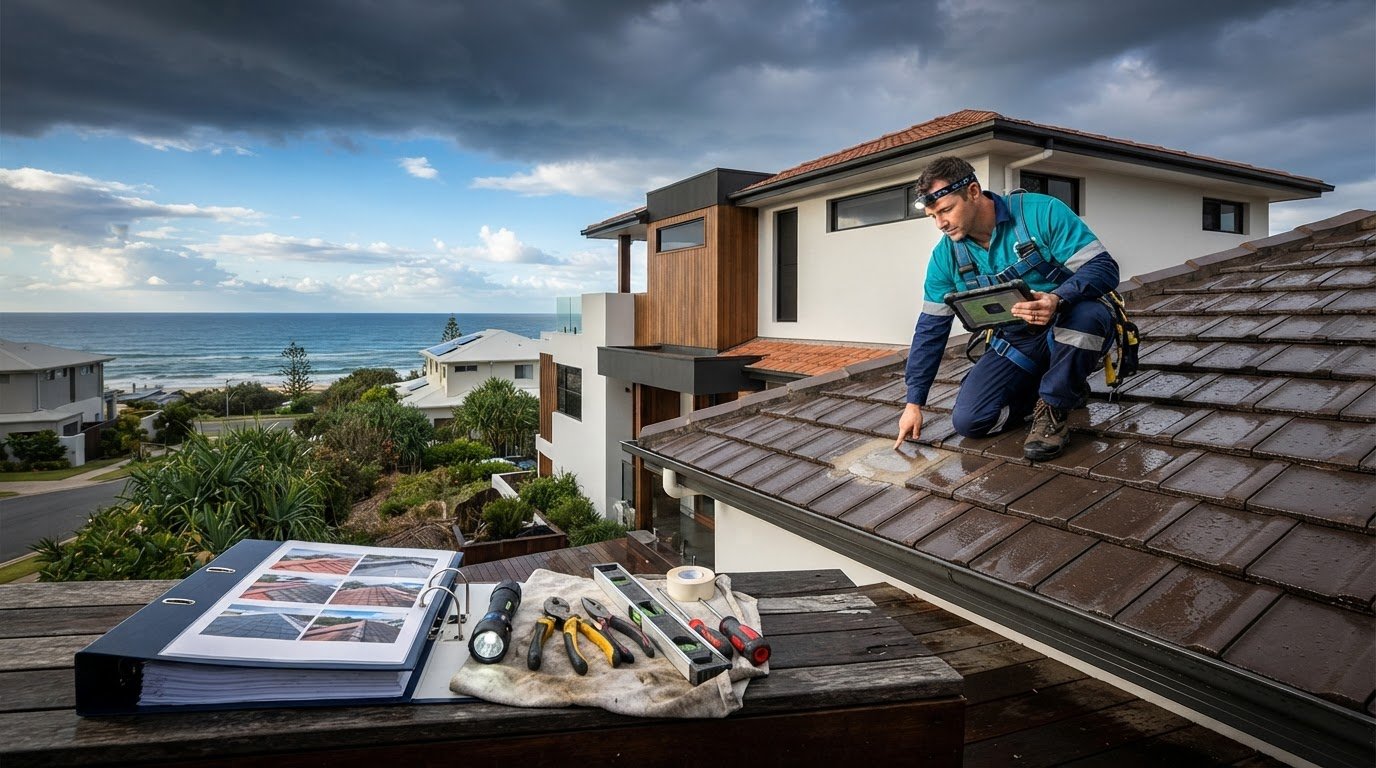
When a resident reports water ingress, the first step is always professional verification rather than immediate patching. Committees shouldn’t rely on guesswork when spending shared funds. An expert report identifies the exact source of ingress and clarifies whether the fault lies within a private lot or common property. This is where roof leak detection NSW services become invaluable. By providing a clear, evidence-based diagnosis, these reports streamline insurance claims and provide the owners’ corporation with the transparency needed to approve works. This methodical approach reduces friction between residents and the committee while ensuring the building remains compliant with the latest NSW regulations.
Coastal-Spec Solutions: Materials for Manly Longevity
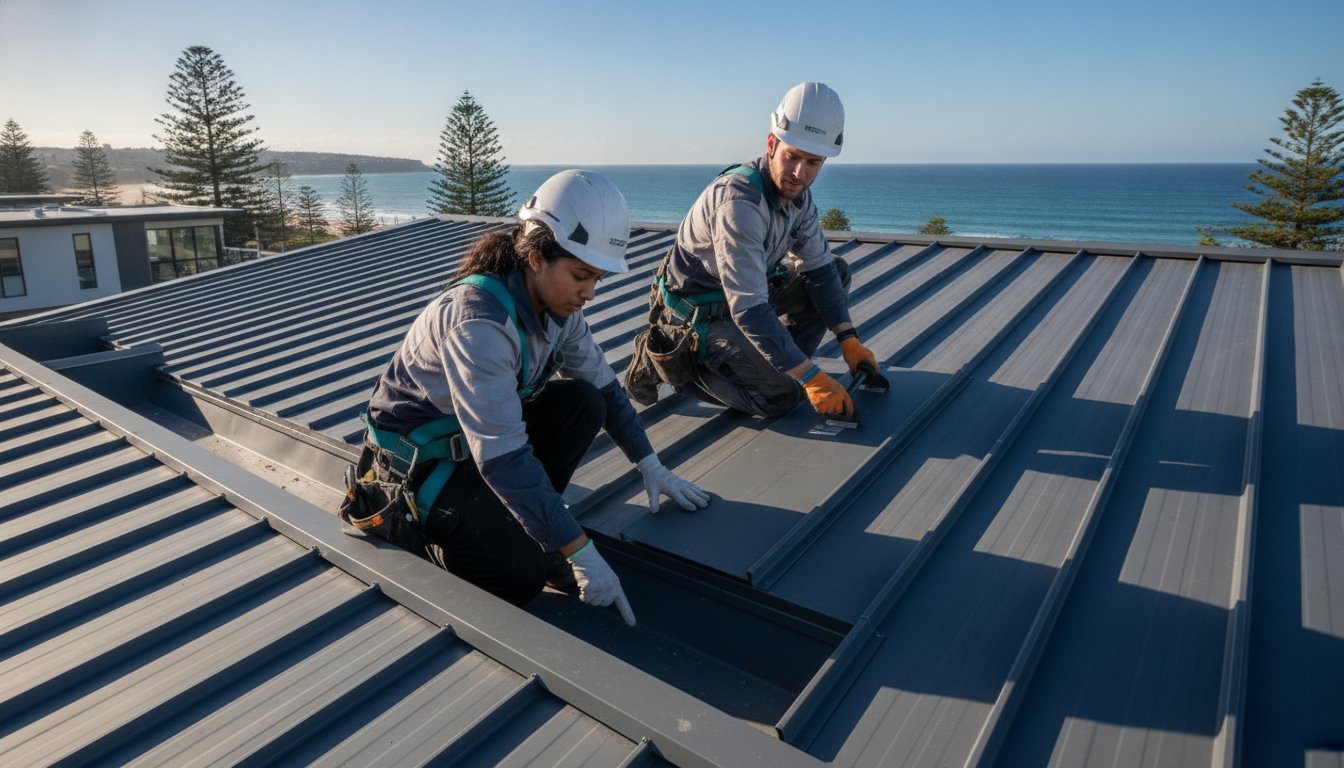
Manly Beach properties located within 200 metres of the breaking surf face extreme corrosion that standard building materials simply cannot withstand. Building materials that perform well in Western Sydney often fail here in under a decade, leading to premature structural fatigue. For effective strata roof repairs Manly Beach committees must specify marine-grade components that meet the highest durability standards. Selecting the right substrate and fasteners isn’t just about aesthetics; it’s about protecting the owners’ corporation from the cycle of constant, expensive patching.
Even the highest-quality roof sheets will fail if the screws rust out from underneath them. We exclusively recommend 316-grade stainless steel fasteners for coastal strata projects. Standard galvanised screws often suffer from ‘necking’, where the screw shaft thins due to salt exposure. This leads to sheets lifting during high-wind events, creating a significant safety risk for residents and pedestrians below. Combining these fasteners with high-performance waterproofing membranes for flat roof sections creates a unified barrier that seals the building envelope against the most aggressive weather.
The Colorbond Ultra Advantage
Colorbond Ultra is the non-negotiable standard for coastal strata roofing. While standard steel products are suitable for inland suburbs, the Ultra grade features a thicker metallic coating and a specialised pretreatment layer designed to resist salt spray. This material is engineered for severe marine environments, offering a lifespan of 40 plus years in conditions that would destroy standard metal roofing in half that time. When selecting colours, lighter tones like Surfmist or Shale Grey provide excellent heat reflection. This reduces the thermal load on top-floor units, lowering cooling costs for residents. You can view the full technical specifications in this guide to Colorbond roofing Sydney.
Guttering and Flashing Upgrades
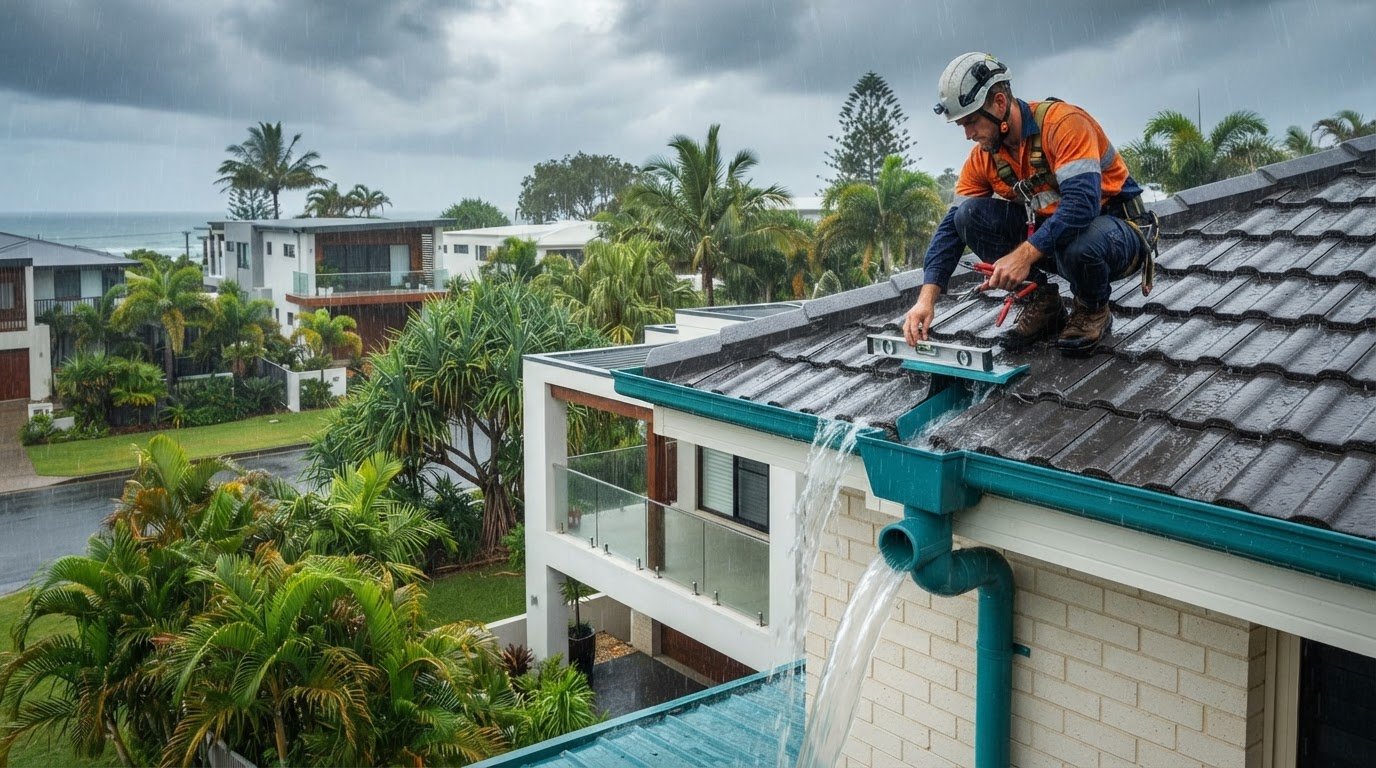
Northern Beaches rain events are reaching new levels of intensity, requiring larger-format guttering solutions to prevent internal flooding. Standard residential gutters often lack the cross-sectional area to drain a commercial-scale strata roof during a peak coastal downpour. Upgrading to high-capacity box gutters or oversized eaves gutters ensures that water is moved off the building as fast as it falls.
Flashing represents the final line of defence for your building. Standard off-the-shelf flashing often lacks the width to prevent wind-driven rain from entering complex roof-to-wall junctions. We use custom-folded flashing, tailored to the specific geometry of the strata block. This ensures a precision seal that accounts for the building’s natural expansion and contraction while keeping the cavity dry. To ensure your building is protected with the correct marine-grade materials, contact our specialist team for a coastal roof assessment.
Organising Professional Strata Roof Maintenance
A proactive approach to strata roof repairs Manly Beach committees implement is the only way to avoid the cycle of emergency levies and resident disputes. In a coastal environment, maintenance isn’t a luxury; it’s a structural necessity. We recommend a bi-annual schedule that aligns with Sydney’s seasonal shifts. A pre-summer audit ensures the building is prepared for the high-volume tropical downpours mentioned earlier, while a post-storm autumn clean removes the salt-crusted debris and organic matter that accelerate metal corrosion.
Managing major works on a high-density block requires more than just technical skill. It demands meticulous logistical planning. When we undertake repairs, we prioritise resident safety and clear communication. This includes coordinating access to private balconies, managing crane lifts if required, and ensuring all work areas are secured to prevent hazards in common areas. Strata managers value this level of transparency because it reduces their administrative burden and keeps the owners’ corporation informed at every stage of the project.
The 5-Step Strata Roof Audit
Our methodical audit process is designed to catch minor issues before they trigger a capital works fund crisis. Each inspection follows a logical progression:
- Visual inspection: We examine all shared drainage points and downpipe outlets for signs of salt buildup, physical damage, or ‘tea staining’.
- Hydraulic testing: We test internal box gutters and overflows to ensure they can handle peak rainfall without backing up into the building envelope.
- Component check: We verify the integrity of repointing and flashing on tile sections, looking for hairline cracks that lead to slow, persistent leaks.
- Fastener audit: We check for ‘necking’ or rust in screws and fasteners, ensuring the roof remains secure against intense Northern Beaches wind loads.
- Sealant review: We inspect the condition of all waterproofing membranes and skylight seals to prevent UV-related degradation and water ingress.
Choosing a Strata-Specialist Roof Plumber
Selecting a partner for your building requires thorough due diligence. A general plumber might lack the specific insurance or technical equipment needed for multi-storey strata work. You must verify that your contractor holds high-level public liability and workers’ compensation insurance tailored for commercial heights. Detailed, photographic reporting is also essential. These reports provide the visual evidence committees need to justify expenditure and approve long-term restoration plans with confidence. If you are looking for a partner who understands the unique structural demands of the Northern Beaches, you can contact Roof Plumbing Expert for a detailed strata assessment and maintenance plan.
Securing Your Building’s Future Against the Elements
Protecting a coastal strata block requires more than just reactive patching. It demands a commitment to marine-grade materials and a clear understanding of the latest NSW strata regulations. By prioritising proactive bi-annual audits and using durable solutions like COLORBOND® Ultra, you safeguard your property’s structural integrity and prevent the high costs associated with neglected maintenance. Effective strata roof repairs Manly Beach committees oversee ensure that common property remains watertight and compliant, providing peace of mind for every lot owner.
Our team provides the technical expertise and transparent communication needed to manage complex multi-unit roofing projects. We offer Specialist Strata Reporting and are Marine-Grade Material Experts. As a Fully Insured & Compliant partner, we help you navigate the complexities of coastal property protection with confidence. Get a Professional Strata Roof Assessment in Manly today to ensure your building is ready for the next storm season. Taking the first step now secures your building’s value and protects your community for years to come.
Frequently Asked Questions
Who is responsible for a roof leak in a Manly strata building?
The owners corporation is legally responsible for repairing and maintaining common property, which includes the roof and guttering system. Under the Strata Schemes Management Act, the building’s exterior is shared property managed by the committee. If a leak originates from the main roof structure or common downpipes, the cost is covered by the capital works fund. However, if the leak is caused by an unauthorised modification made by a lot owner, liability may shift.
Does strata insurance cover roof leaks caused by poor maintenance?
Strata insurance typically excludes damage resulting from gradual deterioration or a lack of reasonable upkeep. Most policies cover sudden, accidental events like storm damage or impact. If an assessor determines that a leak was preventable through regular strata roof repairs Manly Beach committees should have organised, the claim may be rejected. This leaves the owners corporation liable for both the roof repair and any resulting internal damage to individual units.
Is Colorbond suitable for strata buildings right on Manly Beach?
Colorbond is highly suitable, provided you specify the marine-grade “Ultra” steel variant for properties within 200 metres of the surf. Standard Colorbond is designed for inland use and will corrode prematurely in the salt-heavy Manly environment. Colorbond Ultra features a thicker protective coating engineered specifically for severe coastal zones. When combined with 316-grade stainless steel fasteners, it offers the durability required to withstand the corrosive Northern Beaches air for several decades.
How often should strata gutters be cleaned in the Northern Beaches?
Strata buildings in the Northern Beaches should have their gutters cleaned at least twice per year. A pre-summer clean is essential to prepare for high-intensity storm events, while a post-storm or autumn clean removes salt-crusted debris and organic matter. Buildings located directly on the beachfront or near heavy foliage may require quarterly servicing. Regular cleaning prevents blockages in internal box gutters, which are the leading cause of water ingress in multi-unit developments.
Can a lot owner repair the roof above their unit themselves?
Lot owners are strictly prohibited from performing repairs on common property, which includes the building’s roof and external plumbing. All works must be authorised by the owners corporation and performed by licensed, insured contractors. Unauthorised DIY repairs can void structural warranties and insurance policies. If a lot owner identifies a leak, they should report it immediately to the strata manager to ensure a professional assessment and compliant repair are organised through the committee.
What is the difference between roof plumbing and general roofing for strata?
Roof plumbing focuses specifically on water management systems, including gutters, downpipes, sumps, and complex flashings. While a general roofer might focus on the installation of tiles or structural sheets, a roof plumber ensures that the entire system is hydraulically sound and watertight. In a strata context, roof plumbing is critical because of the reliance on internal box gutters and shared drainage stacks that must handle massive volumes of water during coastal downpours.
How long do strata roof repairs typically take to complete?
The duration of repairs varies based on the building’s height and the complexity of the drainage system. Minor leak repairs or flashing adjustments can often be completed in a single day. However, a full restoration or gutter replacement for a large strata block may take several weeks. Factors such as weather conditions, the need for specialised height access equipment, and coordinating resident access to private balconies can also influence the overall project timeline.
What should a strata manager do if a roof leak is reported after hours?
The priority is to advise the resident on immediate risk mitigation, such as placing buckets under the leak to protect floor coverings. While some schemes have emergency protocols, the manager should contact a specialist for a professional diagnosis as soon as possible. Because we focus on structural integrity and waterproofing rather than interior plumbing, we recommend a technical assessment to identify the source. This ensures that the eventual repair addresses the root cause rather than just the symptom.