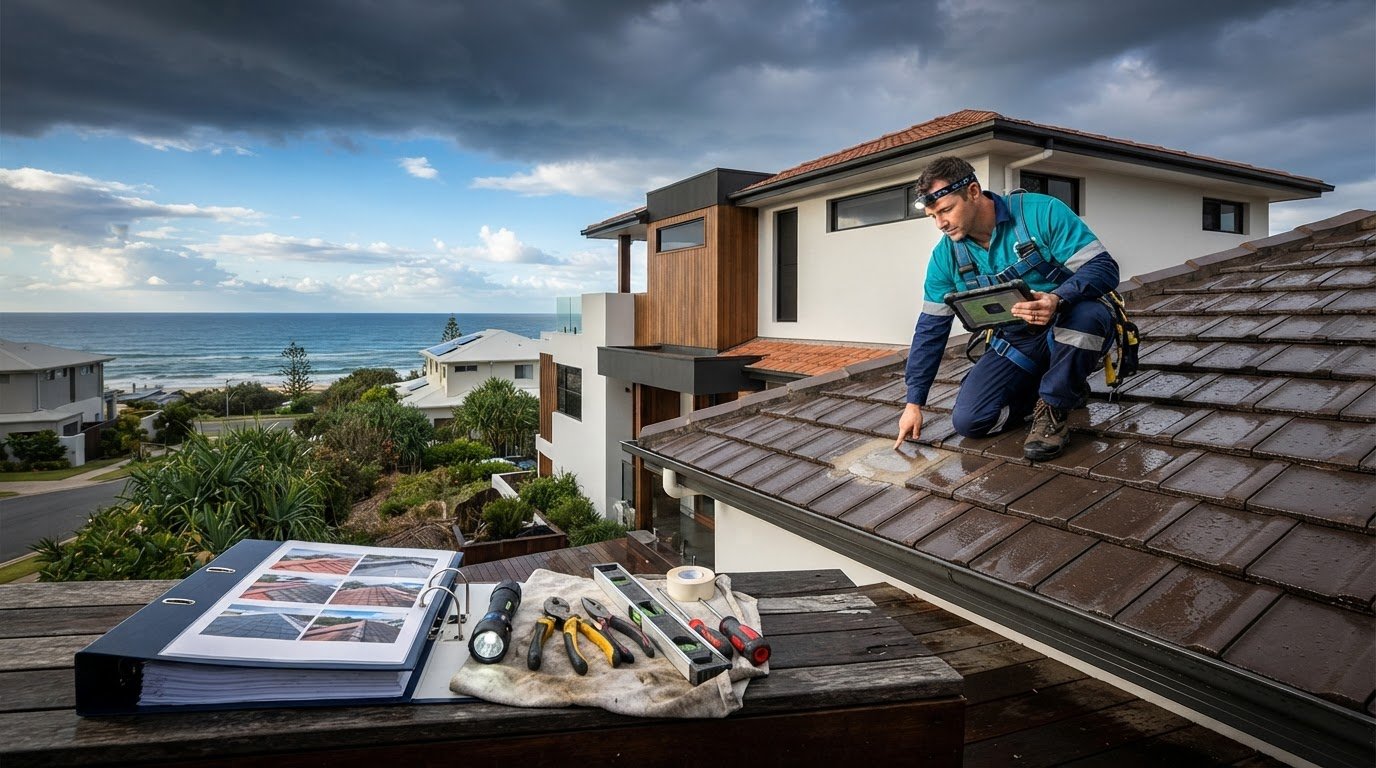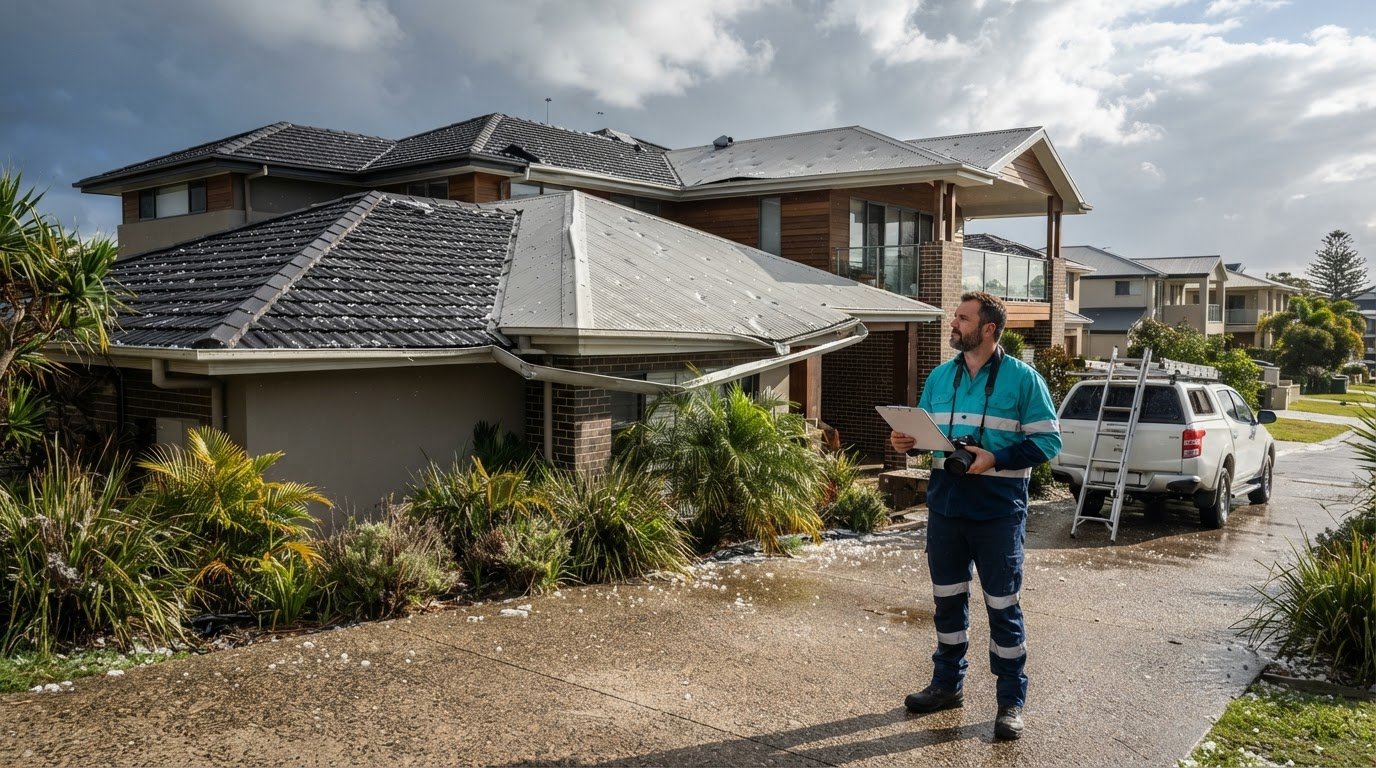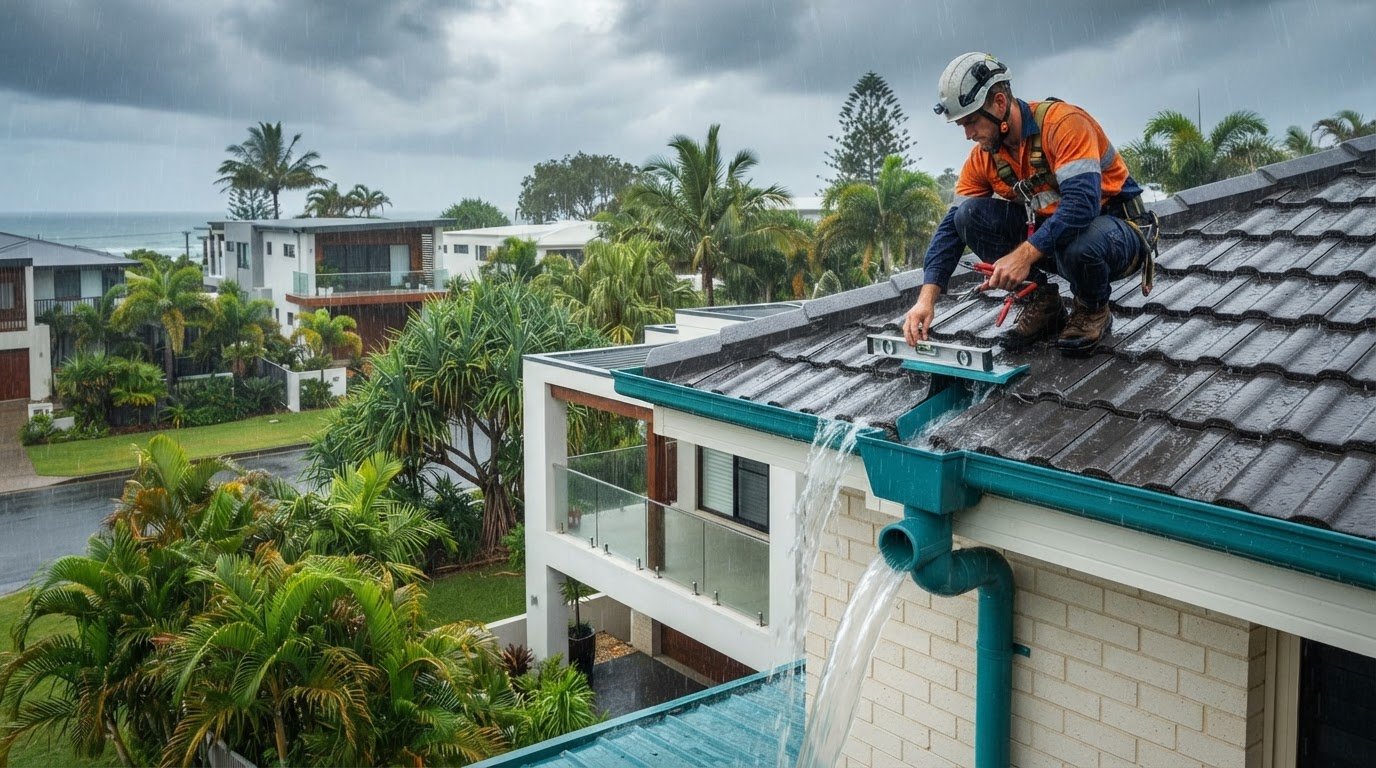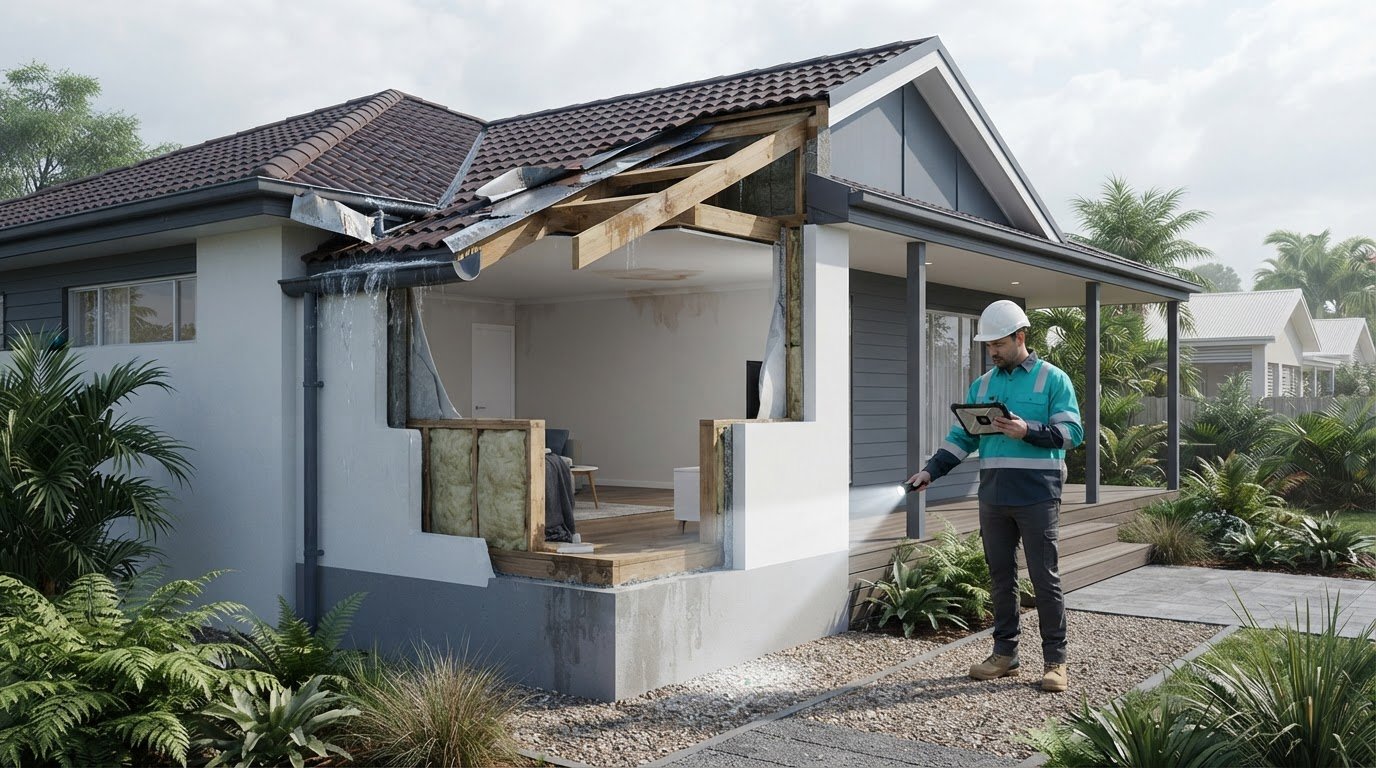
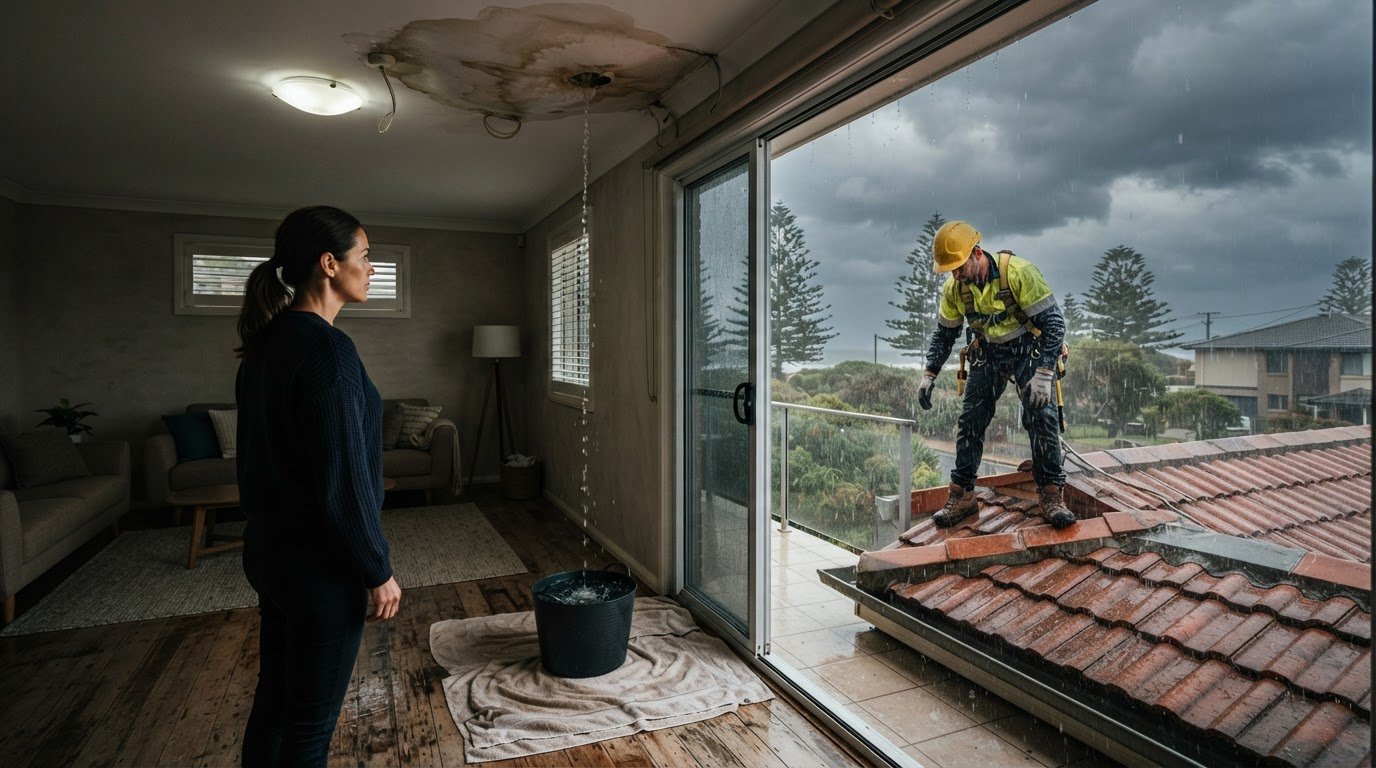
A sudden drip through the ceiling raises urgent questions: is water reaching electrical fittings, could the ceiling give way, and should you try to reach the roof? If you’re working out how to deal with a roof leak emergency, don’t climb onto the roof or attempt a repair in unsafe conditions. First, keep people clear of hazards, then limit water damage indoors only if it’s safe.
Acting calmly can help contain the immediate problem, but a bucket or towel won’t repair the roof. This guide sets out a safety-first response for Australian homes, including what to do around water near electrical fittings, how to protect belongings without creating new risks, and when to arrange professional roof repairs. It also explains why an indoor stain may not show where water is entering, and how a roof assessment can identify the source and guide a lasting repair.
Key Takeaways
- To understand how to deal with a roof leak emergency, follow a calm sequence: assess immediate danger, keep clear, protect belongings and contain water safely.
- While rain is falling, use stable containers and absorbent materials indoors, and leave roof access and temporary coverings to professionals.
- A ceiling stain may not be directly beneath the roof entry point, so don’t guess at the source based on the indoor mark alone.
- Record when the leak began, the weather conditions and visible damage. Keep photographs and receipts with your records.
- A professional roof assessment can trace water entry and identify repairs to tiles, metal sheets, flashing or waterproofing in Mainly Beach and across NSW.
How to deal with a roof leak emergency: protect people first
Move people and pets away from dripping water, falling debris, wet electrical areas and any ceiling that looks swollen or sagging. When deciding how to deal with a roof leak emergency, focus on safety before limiting damage. Water can affect building materials and household contents in different ways; this overview of the causes of water damage explains some potential impacts.
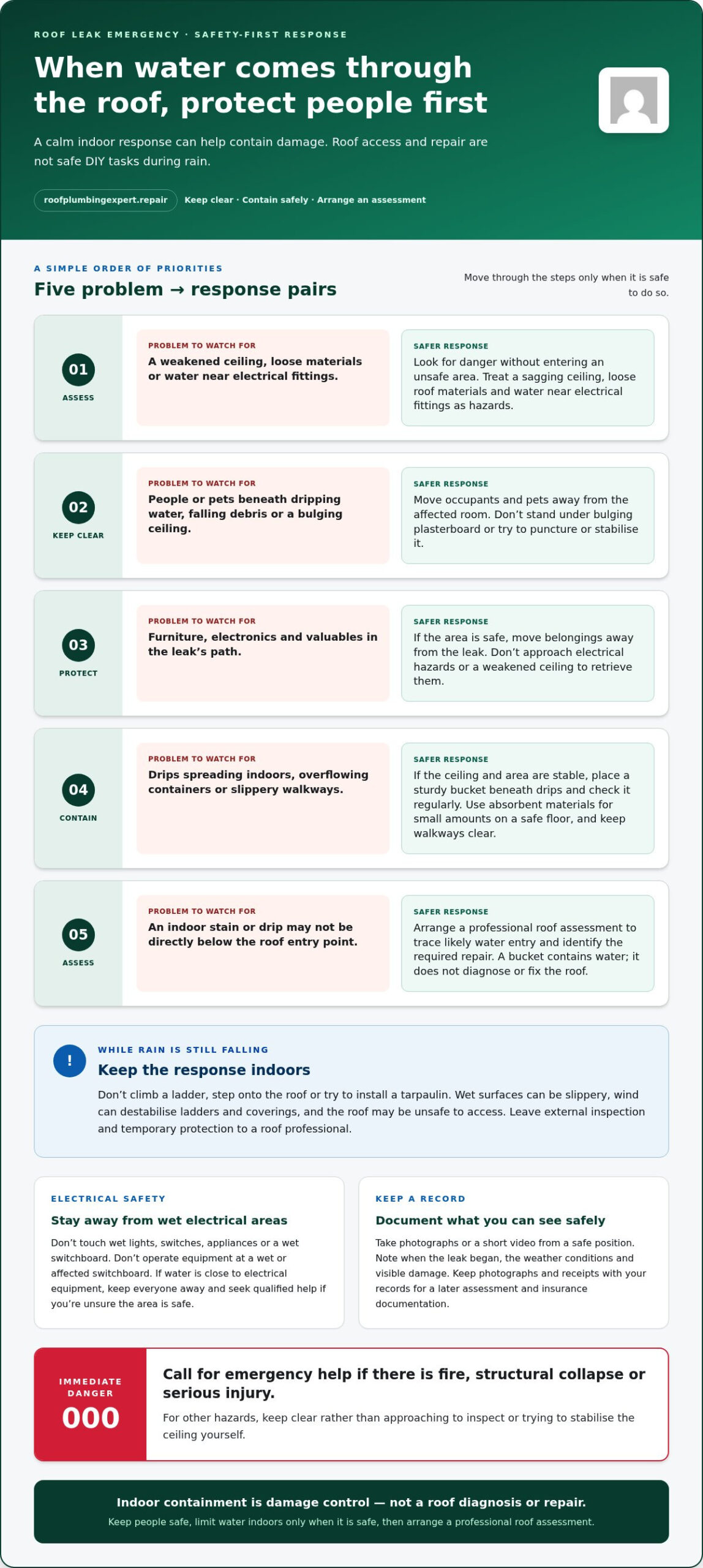
Follow this order of priorities:
- Assess the danger. Look for a visibly weakened ceiling, loose materials or water near electrical fittings, without entering an unsafe area.
- Keep clear. Move occupants and pets away from the affected room. Don’t stand beneath bulging plasterboard or try to puncture it.
- Protect belongings. If it’s safe, move furniture and valuables away from the leak.
- Contain the water. Place a stable bucket beneath drips and use absorbent materials to catch splashes. Keep walkways clear.
- Arrange an assessment. Once people are safe and immediate water is contained, organise a professional roof assessment to identify the source and required repair.
What should you do first when water enters through the roof?
Clear the area beneath the leak, especially if the ceiling is discoloured, bowed or shedding material. Don’t touch wet lights, switches, appliances or a wet switchboard. If water is close to electrical equipment, keep everyone away and seek qualified help if you’re unsure whether the area is safe. Don’t operate equipment at a wet or affected switchboard.
Only place a container or move belongings if you can do so without approaching a hazard. If water is spreading across the floor, keep people out of the area and avoid creating a slipping risk with scattered towels or containers.
When is a leaking roof an immediate safety risk?
Treat water near electrical fittings, a visibly sagging ceiling and loose roof materials as hazards. Keep clear rather than approaching to inspect or trying to stabilise the ceiling yourself. If there’s an immediate danger such as fire, structural collapse or serious injury, call 000.
Contain water indoors only when it’s safe; never climb onto a wet or unstable roof to investigate or make a temporary repair. Ladders, roof access and handling roof materials can create further danger, particularly during rain or wind. Leave roof inspection and repair to a professional.
How to deal with a roof leak safely while rain is still falling
While rain continues, keep your response indoors. Don’t climb a ladder, step onto the roof or try to install a tarpaulin. Wet roof surfaces can be slippery, wind can destabilise ladders and coverings, and the roof may be unsafe to access. A temporary covering is not a safe DIY default, and it won’t confirm that the leak has stopped at its source.
Can you put a tarp over a leaking roof yourself?
No. Rain, wind, height and slippery surfaces can turn an attempted roof fix into a serious fall risk. Stay off the roof and leave external inspection and temporary protection to a roof professional with the right equipment. Even if a tarp appears to cover the visible damage, water may be entering elsewhere, so don’t treat it as a lasting repair.
How can you limit water damage indoors?
If the ceiling and surrounding area appear stable, place a sturdy container beneath drips and check it regularly so it doesn’t overflow. Use towels or absorbent materials to manage small amounts of water on a safe floor surface, and move furniture, electronics and valuables out of the affected area. Keep walkways clear to reduce the chance of slips. If the ceiling is bulging, cracking or shedding material, stay out of the room rather than approaching the leak.
Take photographs or a short video from a safe position, showing the leak and visible damage. Note the time and conditions, but don’t go near electrical fittings or a weakened ceiling to get a clearer shot. These records can help explain what happened during a later assessment and support your insurance documentation.
Indoor containment is damage control, not a diagnosis. A ceiling stain or drip may not sit directly below the roof entry point, and rain can make the source difficult to trace. Once conditions allow a safe external inspection, a roof specialist can assess likely entry points and recommend repairs. If you’re arranging roof work in NSW, the NSW Fair Trading guidance on hiring a licensed roofer explains relevant consumer information about contracts and licensing.
After safely containing indoor water, explore professional roof leak detection and repair. A temporary measure may limit water inside, but assessment and appropriate repair are needed to address the roof defect.
Should you patch a roof leak yourself or call a roof plumber?
A bucket can catch water, but it can’t show where the roof is failing. A ceiling stain may appear some distance from the entry point because water can travel along roof framing or other surfaces before dripping indoors. Sealing the visible drip from inside won’t necessarily repair the damaged tile, metal sheet, flashing or roof junction letting water in.
Use this comparison to distinguish safe short-term steps from roof work:
| Option | What it can do | What it can’t do |
|---|---|---|
| Safe indoor containment | Catch drips, protect belongings and reduce water spreading indoors while the area is safe. | Identify or fix the roof defect. |
| Temporary protection by a professional | Help limit further water entry until conditions allow a thorough inspection or permanent repair. | Guarantee the leak source is resolved. The roof still needs reassessment and appropriate repair. |
| Permanent roof repair | Address the diagnosed fault, such as damaged tiles, metal sheets, flashing or waterproofing. | Be chosen reliably by guessing from the location of an indoor stain alone. |
When is a temporary measure appropriate?
A temporary measure may help reduce further damage while awaiting a suitable inspection or safer weather. It’s a short-term step, not a substitute for finding and fixing the cause. Don’t climb onto the roof or apply a patch yourself. If dripping continues after temporary protection, arrange reassessment rather than trying different indoor fixes based on where water appears.
What can a roof plumber diagnose that a quick patch may miss?
A roof assessment can check likely entry points across tiles, metal sheets, flashing, skylights and roof junctions. Water can move through the roof space before becoming visible, so the stain’s position may not point directly to the defect. This is particularly relevant when leaks recur, roof materials are damaged, or water appears near a skylight or flashing.
For more on how roof leak detection traces the source, read the roof leak detection NSW guide. Knowing how to deal with a roof leak emergency means recognising the limits of a quick patch: contain water safely indoors, then have the roof assessed so repairs target the underlying fault.
Roof leak: document damage and organise assessment
Once the immediate leak is contained and the area is safe, create a clear record of what happened. Useful details can help a roof specialist understand the conditions and plan an inspection. Keep your notes factual: record what you observed, not a suspected cause.
- Note when the leak began and whether it stopped or returned.
- Describe the weather, including rain and wind, and whether the leak appeared during or after it.
- Record where water appeared indoors, such as a ceiling corner, around a skylight or beside a wall.
- Photograph visible damage from a safe position. Include stains, drips and affected belongings, but don’t approach a weakened ceiling or wet electrical area for a better image.
- Keep receipts and records for immediate expenses and save copies of photographs. These may help with your own records or an insurance enquiry, but don’t assume they determine a claim outcome.
What information helps diagnose a roof leak?
Note whether the leak coincided with heavy or wind-driven rain, and whether water appeared in one spot or several. Mention nearby skylights, roof junctions or recent changes to the home as observations only. They may help guide an inspection, but the visible indoor mark doesn’t prove where water entered.
How do you know whether the leak needs more than a quick repair?
A leak that returns, spreading water stains or damp roof components can warrant a broader assessment. An inspection can consider the roof surface and related components, including flashing and drainage, to determine whether there’s an isolated defect or wider deterioration. Overflowing gutters or downpipes may also be relevant; see this gutter and downpipe installation guide for more on roof drainage.
Don’t try to diagnose the roof from the ceiling stain alone. A specialist can trace likely entry points and assess whether the problem involves damaged roof materials, flashing or waterproofing. For more on protecting the roof from water entry, read this roof waterproofing guide.
Knowing how to deal with a roof leak emergency includes following up after the immediate risk has passed. Arrange a roof assessment in Mainly Beach and share your notes and photos so the inspection can consider the leak’s timing, location and conditions. For roof leak detection and repair, arrange an assessment to identify the defect and plan the appropriate repair.
Get a lasting roof leak repair in Mainly Beach and across NSW
Once the immediate risk is under control, a professional roof assessment can move the response from temporary water containment to repairing the cause. Roof Plumbing Expert provides roof leak detection and repair across NSW, including in Mainly Beach. The assessment focuses on likely entry points and how water may be reaching the home, rather than assuming the indoor stain marks the roof defect.
What happens during professional roof leak detection and repair?
A roof specialist assesses visible damage and checks relevant roof components to identify the likely entry point. Depending on the roof and the defect, repairs may involve replacing damaged tiles or metal sheets, repairing flashing, or restoring waterproofing. The suitable fix depends on the assessment findings; one repair method won’t suit every roof or leak.
Once the defect is identified, the repair can be matched to the affected component and roof condition. The aim is to address the entry point and restore the roof’s weatherproofing, not simply cover the place where water appeared indoors. This helps distinguish an isolated fault from damage involving several roof components.
When should you arrange professional roof leak help?
Arrange an assessment if water continues to enter, the leak returns after rain, or you notice water near a skylight, flashing or a roof junction. Don’t climb onto a wet or damaged roof to investigate. Professional roof work avoids exposing you to slippery surfaces and unstable materials while allowing the likely source to be inspected properly.
Knowing how to deal with a roof leak emergency includes recognising when indoor containment has reached its limit. A roof specialist can assess tiles, metal sheets, flashing and waterproofing, then explain the repair needed for the fault identified.
For roof leak detection and repair in Mainly Beach and across NSW, arrange a roof leak assessment with Roof Plumbing Expert. A clear diagnosis is the practical next step towards restoring your roof’s weather protection.
Take the next step towards a lasting roof repair
Knowing how to deal with a roof leak emergency means putting safety first, containing water indoors only when it’s safe, and leaving roof access and repairs to a professional. Buckets and photographs can help with immediate damage control and record-keeping, but they won’t identify or fix the roof defect.
A proper assessment traces likely water entry instead of relying on the position of an indoor stain. Roof Plumbing Expert provides roof leak detection and repair across New South Wales, including repairs to damaged roof tiles, metal sheets, flashing and waterproofing. The recommended work depends on the roof component and the fault identified.
If water continues to enter, the leak returns or you’re unsure where it’s coming from, arrange a professional assessment. Arrange professional roof leak detection and repair and take the next step towards restoring your roof’s weather protection.
Stay clear of hazards, keep a record of what you observe, and leave roof work to specialists. A calm, careful response can help protect your home while a lasting repair is organised.
Frequently Asked Questions
What should I do first if my roof starts leaking?
Move people and pets away from the leak, especially if the ceiling is sagging, shedding material or water is near electrical fittings. If the area appears stable and safe, place a sturdy container beneath drips and move belongings out of the way. Don’t puncture a bulging ceiling or climb onto the roof. For an immediate danger such as fire, collapse or serious injury, call 000. These are the first steps in how to deal with a roof leak emergency.
Can I climb onto my roof to stop a leak during a storm?
No. Don’t climb onto a roof or use a ladder to investigate or patch a leak during a storm. Rain makes roof surfaces slippery, while wind can destabilise ladders and temporary coverings. Stay indoors and contain drips only if the room is safe to enter. Arrange a professional roof assessment when the roof can be inspected safely. A tarp or quick patch applied from the roof can create further risk and may not fix the leak source.
Is it safe to stay in a room with a leaking ceiling?
Only remain in the room if the ceiling and surrounding area appear stable and there are no electrical hazards. Leave and keep others clear if plasterboard is bulging, cracking or dropping debris, or if water is near lights, switches or appliances. Don’t stand under a weakened section or try to puncture it to release water. If you’re unsure about the ceiling’s condition, treat the room as unsafe and wait for appropriate help.
How can I stop a roof leak temporarily without making it worse?
Limit water indoors rather than attempting a roof repair. If the ceiling is stable, put a sturdy container under the drip, move valuables away and use towels on safe floor surfaces. Keep walkways clear and don’t touch wet electrical fittings or equipment. Avoid ladders, roof access and DIY tarpaulin installation, particularly in wet or windy conditions. These steps may reduce indoor damage, but they don’t confirm the roof defect has been repaired.
What happens if water is leaking near a light or power point?
Keep away from the water and don’t touch the light, power point, appliance, switch or switchboard if it’s wet or in the affected area. Move other people away too. Don’t operate electrical equipment to test whether it’s safe. If you’re uncertain about electrical safety, seek qualified help; if there’s immediate danger such as fire or serious injury, call 000. Arrange a roof assessment once the immediate electrical risk has been addressed.
How do roof plumbers find the source of a leak?
A roof plumber assesses the roof and traces likely water entry points rather than relying only on the indoor stain. They may inspect roof tiles, metal sheets, flashing, skylights, roof junctions and related drainage, depending on what’s relevant to the leak. Water can travel through the roof space before appearing inside, so the visible drip may not reveal the fault. The assessment helps match repairs to the affected component and its condition.
Does a ceiling water stain mean the leak is directly above it?
No. A ceiling stain doesn’t necessarily sit directly below the roof entry point. Water can move along roof framing or other surfaces before reaching the ceiling, then emerge some distance from the original defect. Note where the stain appears and when it worsens, but don’t use its position alone to decide where to patch. A roof specialist can inspect likely entry points and assess components such as flashing, tiles and metal sheets.
When should I call a roof plumber for an emergency leak?
Arrange roof leak help if water continues to enter, the leak returns after rain, or water appears near a skylight, flashing or roof junction. Keep clear of a sagging ceiling and don’t access a wet or damaged roof. For homeowners in Mainly Beach, Roof Plumbing Expert provides roof leak detection and repair, including work on tiles, metal sheets, flashing and waterproofing. A professional assessment can trace the likely source and guide the repair needed.