In 2026, Colorbond steel celebrates sixty years of protecting Australian homes, yet many owners still worry that salt air will claim their investment in less than a decade. It’s a valid concern. The Australian coast is one of the most corrosive environments on earth, and a full roof replacement is a major financial commitment that nobody wants to repeat prematurely. You’re likely asking how long does a Colorbond roof last because you want more than just a warranty certificate; you want the certainty that your home is protected for the long haul.
This guide reveals the real-world durability of Colorbond, from standard suburban blocks to high-exposure marine zones. We will examine the critical difference between manufacturer warranties and actual structural longevity. You’ll also discover an actionable maintenance plan to extend your roof’s life and why choosing the correct material grade, such as Colorbond Ultra, is the most important decision you can make for the long-term security of a coastal property. By understanding the factors that influence steel degradation, you can ensure your roof remains a dependable shield against the elements for decades to come.
Key Takeaways
- Learn how your specific location impacts longevity and exactly how long does a Colorbond roof last in both suburban and harsh marine environments.
- Discover why Colorbond Ultra is essential for properties near the ocean to maintain BlueScope warranty protection and prevent salt-spray damage.
- Master a simple biannual maintenance routine to protect unwashed areas and ensure your gutters and downpipes support the roof’s structural integrity.
- Understand the vital role of professional installation in avoiding common pitfalls like swarf-induced rust or incorrect roof pitch.
- Compare the 50-year performance of steel against heavy concrete tiles to see which material offers better protection for your home’s frame.
The Expected Lifespan of a Colorbond Roof in Australia
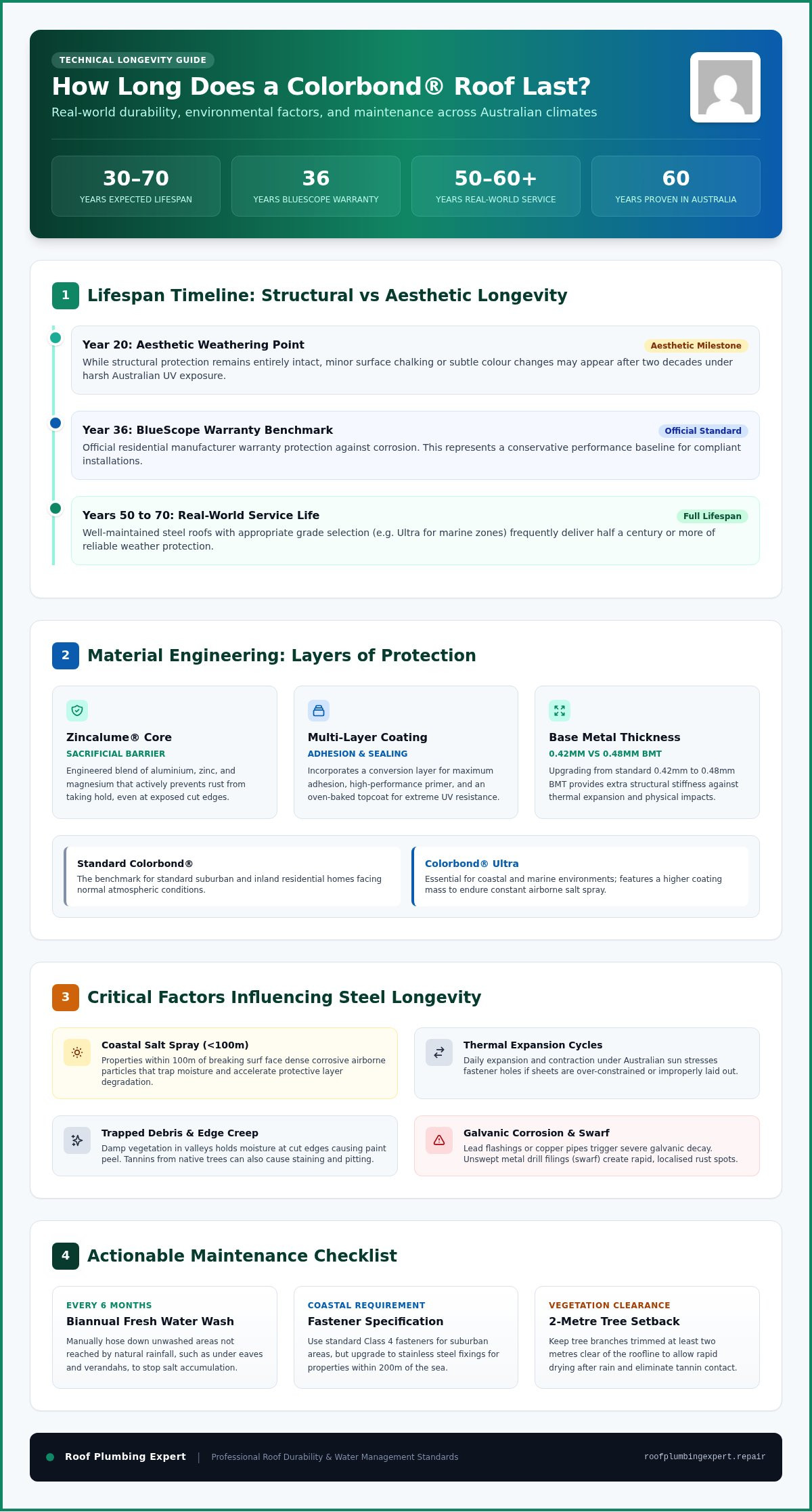
The general industry consensus on how long does a Colorbond roof last typically spans between 30 and 70 years. This broad range depends heavily on your local environment; a roof in a dry inland region will face far less stress than one situated in a high-corrosion marine zone. As specialists, we differentiate between structural integrity and aesthetic performance. While the oven-baked finish is designed for extreme UV resistance, you might notice subtle colour changes or chalking after two decades. However, the roof’s ability to keep your home dry remains intact for much longer. The foundation of this durability is the Zincalume core. This specific blend of aluminium, zinc, and magnesium creates a sacrificial barrier that prevents rust from taking hold, even at the cut edges of the sheets.
Standard vs. Premium Colorbond Grades
Choosing the right material grade is the first step in ensuring a fifty-year lifespan. In 2026, the multi-layered coating system includes a conversion layer for adhesion and a high-performance primer. For most suburban homes, standard Colorbond is the benchmark. However, for properties near the coast, Colorbond Ultra is essential. It features a higher coating mass to withstand the constant presence of airborne salts. We also look at the Base Metal Thickness (BMT). While 0.42mm is common for standard residential roofing, upgrading to 0.48mm BMT provides extra structural stiffness. This added thickness helps the roof withstand thermal expansion and physical impacts without compromising the protective layers.
BlueScope Warranty vs. Real-World Performance
BlueScope Steel offers residential warranties of up to 36 years against corrosion, which serves as a reliable industry benchmark. It’s a conservative figure, though. When we examine how long does a Colorbond roof last in practice, we often see well-maintained systems reaching 50 or 60 years of service. Reaching these milestones requires strict adherence to installation standards; you don’t want to compromise a premium product with poor workmanship. Using incompatible materials like lead flashings or copper pipes will cause rapid galvanic corrosion. Similarly, leaving metal filings, known as swarf, on the surface after drilling will lead to localized rust spots. If the installation is precise and the maintenance is consistent, your roof will likely outlast its official warranty by several decades.
Key Factors That Influence Colorbond Longevity
The environment surrounding your home is the primary variable determining how long does a Colorbond roof last. While the steel is engineered for resilience, local conditions in NSW, particularly around Mainly Beach, present unique challenges. Salt spray is a major factor. If your property is within 100 metres of breaking surf, the air is thick with corrosive particles that settle on the roof surface. Without intervention, these salts trap moisture and accelerate the degradation of the protective layers.
Thermal expansion also plays a quiet but significant role. The Australian sun causes steel sheets to expand and contract daily. If the roof is not installed with the correct fixings or if the sheets are too tightly constrained, this movement can stress the fastener holes. Over decades, this may lead to elongated holes and potential water ingress. Precision in the initial layout is essential to accommodate this natural movement without compromising the seal.
Coastal Salt Spray and Corrosion
Properties in ‘Severe’ or ‘Very Severe’ marine environments require a specific approach to maintenance. BlueScope technical bulletins specify that any areas not naturally washed by rain, such as under eaves or verandahs, must be manually washed with fresh water every six months. This prevents salt accumulation. For homes within 200 metres of the ocean, we recommend using stainless steel fixings. Standard Class 4 fasteners are durable, but in high-salt zones, stainless steel provides the highest level of protection against galvanic corrosion. If you are unsure about your home’s exposure level, a professional roof leak detection and repair specialist can assess the current state of your fixings.
Vegetation and Overhanging Trees
Overhanging branches do more than just drop leaves; they create a destructive micro-climate. Damp debris trapped in roof valleys or gutters holds moisture against the steel edge. This leads to ‘edge creep,’ where corrosion begins at the cut edge of the sheet and slowly works its way under the paint. Tannins from specific Australian trees can also react with the coating, causing premature staining or pitting. Keeping branches at least two metres away from the roofline ensures the steel can dry quickly after rain. This simple garden task is a structural necessity that significantly impacts how long does a Colorbond roof last.
Internal factors are equally important. Without adequate roof space ventilation, condensation can form on the underside of the steel sheets. This hidden moisture can lead to rust that starts from the inside out, often going unnoticed until structural damage has occurred. Ensuring a constant flow of air through the roof cavity protects the steel and helps regulate your home’s temperature.
Colorbond vs. Tile Roofs: A 50-Year Durability Comparison
When evaluating how long does a Colorbond roof last, a direct comparison with concrete or terracotta tiles provides essential context. Tiles are often perceived as lifetime materials, but their longevity comes at a cost of constant maintenance and structural stress. A primary factor is weight. Concrete tiles weigh approximately 45 to 60 kg per square metre, which is nearly ten times the weight of Colorbond steel. Over fifty years, this massive load, compounded by water absorption during heavy NSW storms, can cause timber roof frames to sag. Steel, at roughly 5 kg per square metre, places significantly less strain on the building’s skeleton, preserving the home’s structural lines.
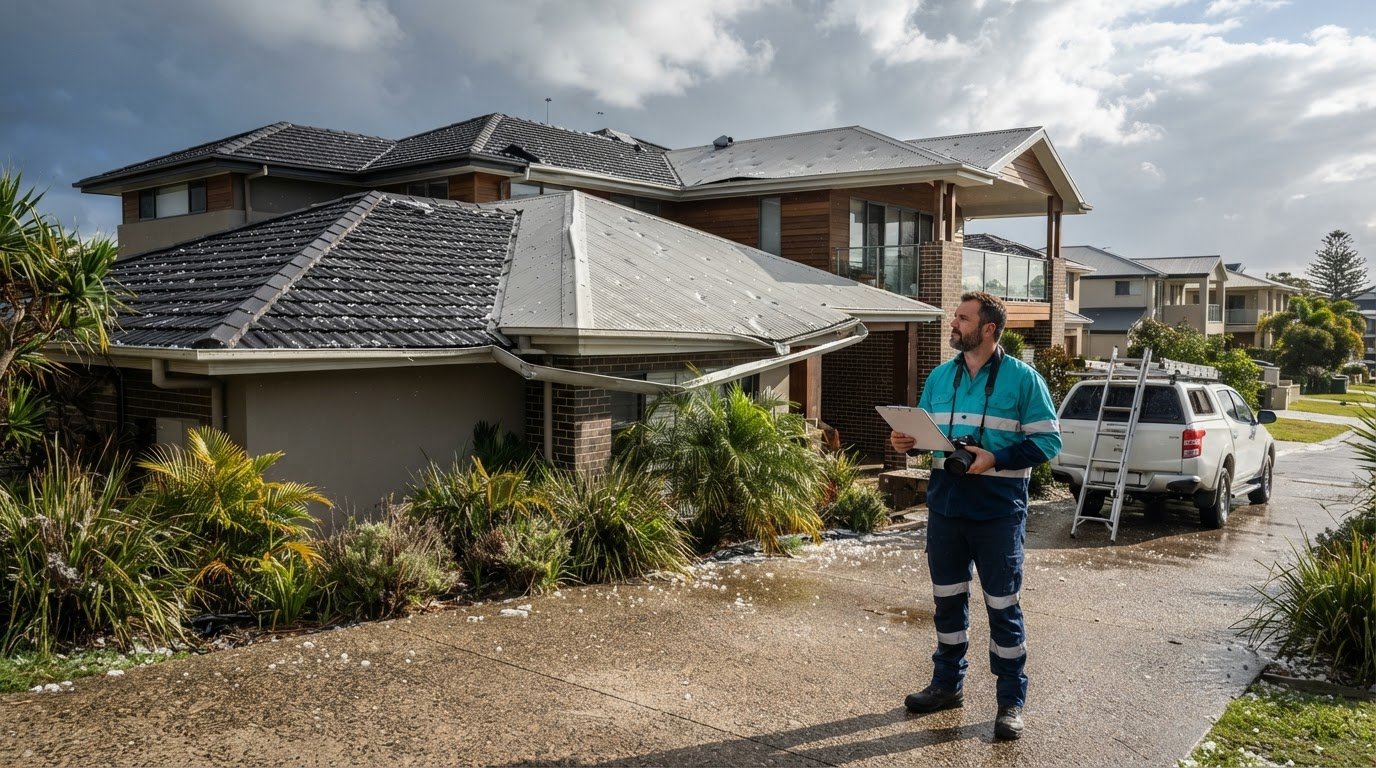
Extreme weather resilience is another area where steel excels. In a severe hail storm, tiles often crack or shatter, leading to immediate internal leaks. While large hail may dent a metal surface, the structural seal usually remains intact. For homeowners in bushfire-prone areas, Colorbond is non-combustible and certified up to BAL-FZ (Flame Zone). High winds pose a similar challenge; while individual tiles can lift or blow off, Colorbond sheets are securely fastened to the battens, providing superior uplift resistance. It’s this mechanical security that ensures the roof stays put when the weather turns volatile.
Maintenance Cycles Compared
Tile roofs generally require a major restoration cycle every 15 to 20 years. This involves rebedding and repointing ridge caps to prevent mortar failure and water ingress. In contrast, Colorbond is largely a set and forget system. Professional intervention is typically limited to a biannual gutter clean and a quick check of the fasteners. While the initial installation of steel requires precision, the long-term cost-benefit analysis favours Colorbond because it eliminates the need for expensive mortar repairs and tile replacements over its lifecycle.
Structural Integrity Over Time
The way a roof sheds water is fundamental to its longevity. Modern Colorbond roofing Sydney installations utilise advanced plumbing techniques to ensure rapid water runoff, even during torrential downpours. Unlike tiles, which can become porous and hold moisture, steel is completely impermeable. This prevents the dampness that often leads to mould growth in roof cavities. By maintaining a lightweight, dry, and secure barrier, a metal roof ensures the entire house remains protected from the top down without the risk of the frame-sagging common in older tile-roofed properties. This structural stability is a key reason why many homeowners choose to convert from tile to steel during a renovation.
Maintenance Checklist to Maximise Your Roof’s Life
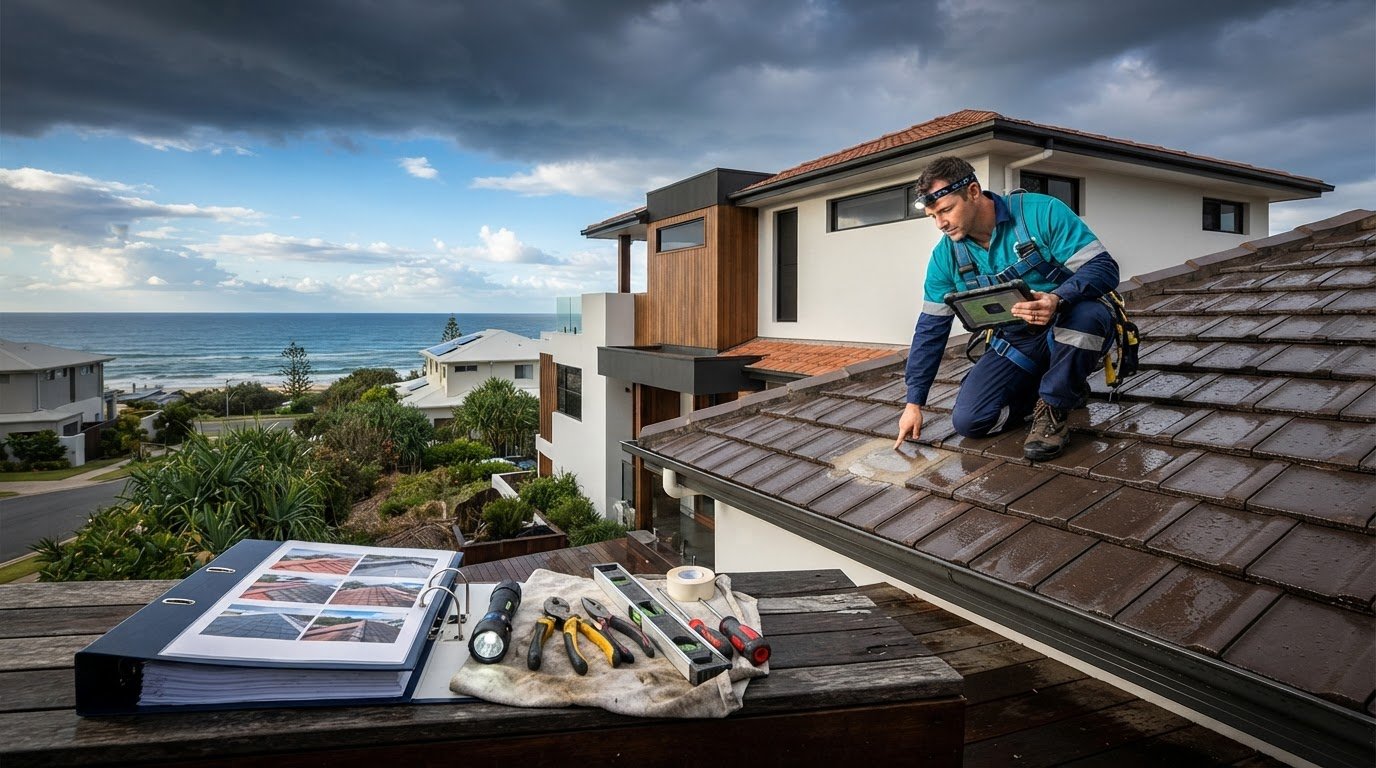
Proactive care is the primary difference between a roof that reaches its thirty-year mark and one that pushes past seventy. A simple biannual visual inspection is your best defence against the elements. You don’t always need to climb a ladder; a pair of binoculars from the ground can reveal loose flashings, displaced seals, or debris buildup. Look for anything out of place after a major NSW storm event. If you spot a deep scratch that has reached the steel core, it requires immediate attention to prevent localised oxidation from compromising the Zincalume barrier. You’ll also need to rinse ‘unwashed areas’ like the underside of eaves and verandahs, where salt and dust accumulate without the benefit of natural rainfall.
Gutter and Drainage Health
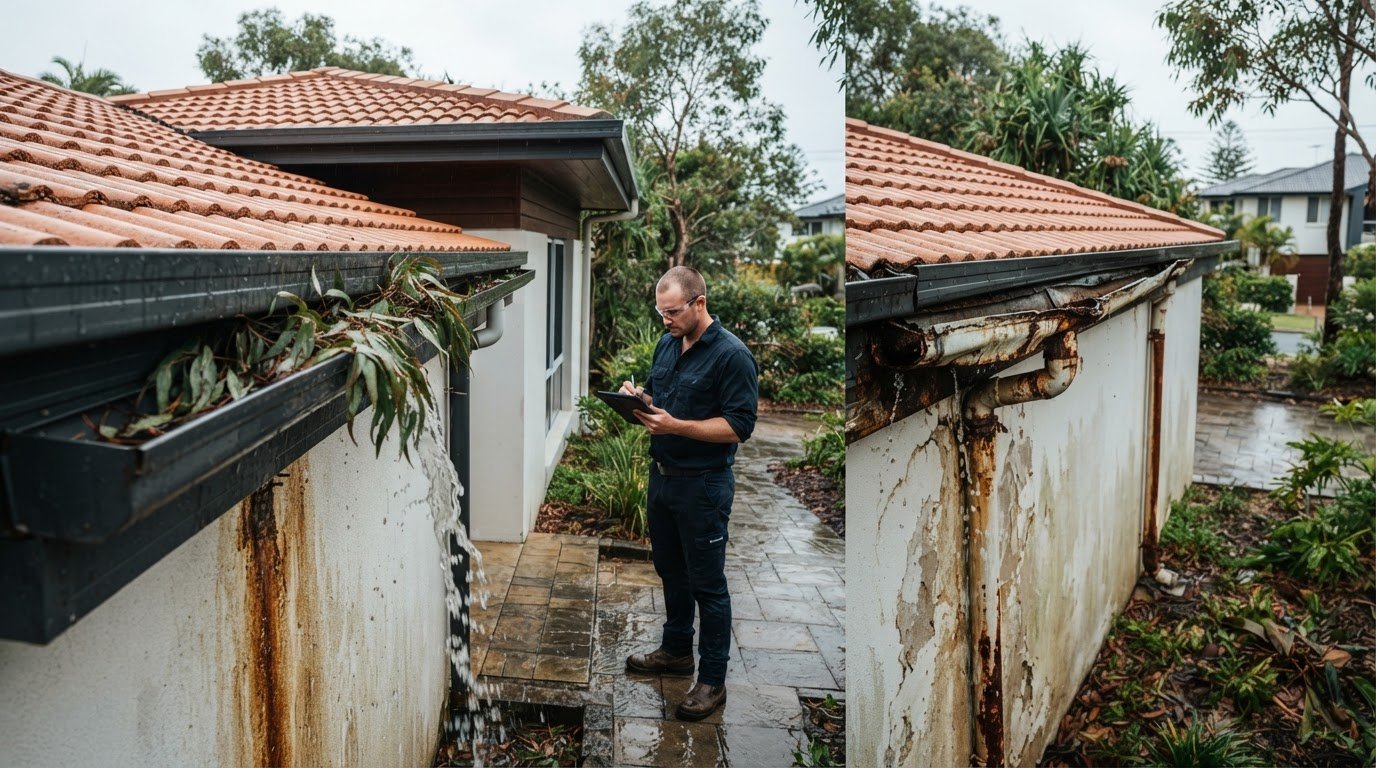
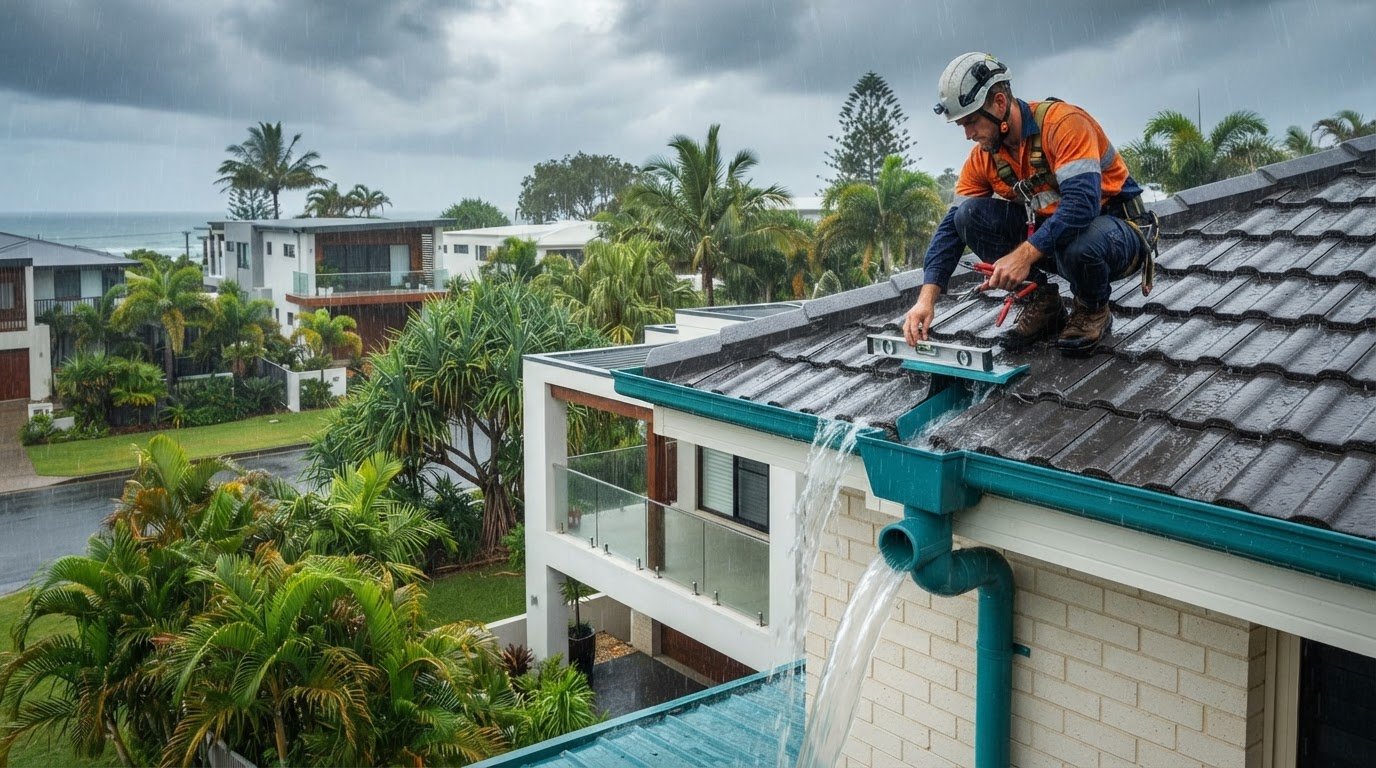
The health of your roof edges is inextricably linked to your drainage system. When gutters are clogged with organic matter and silt, water backs up under the roof sheets during heavy downpours. This constant moisture exposure is the primary cause of premature failure at the lower edges of the roof. Quality gutter and downpipe installation NSW ensures that water is diverted away from the structure efficiently, protecting the steel from prolonged dampness. Edge creep is the process where corrosion begins at the cut end of a metal sheet and migrates inward because of trapped moisture and debris. Regularly checking that downpipes have clear flow is one of the most effective ways to influence how long does a Colorbond roof last.
Professional Roof Plumbing Audits
While homeowner checks are valuable, some issues require a specialist’s eye and technical tools. Every ten years, we recommend a comprehensive audit to ensure the entire system remains watertight. This involves checking the integrity of roof flashings and skylight seals, which are often the first components to show wear. Over a decade, the neoprene washers on fasteners can perish due to extreme UV exposure. A professional ‘tighten and seal’ service replaces these small but critical components and ensures the sheets remain securely anchored against high winds.
If you suspect a hidden problem, a specialised leak detection scan can pinpoint moisture entry points before they lead to structural rot in the timber frame. Catching these issues early is the most cost-effective way to preserve your investment and extend how long does a Colorbond roof last. If your property is in a high-exposure zone or hasn’t been serviced in years, book a professional roof plumbing audit to ensure your home remains fully protected against the next storm season.
Why Professional Installation is the Foundation of Longevity
The technical precision of the installer is the ultimate deciding factor in determining how long does a Colorbond roof last. While the material itself is engineered for six decades of service, poor workmanship can compromise its integrity in a matter of months. A professional ensures the pitch and fall of the roof allow for perfect water shedding. Standard corrugated profiles require a minimum pitch of 5 degrees to prevent water from ponding on the steel surface. If water sits in the valleys or near the laps, it places the protective coating under constant hydrostatic pressure, leading to premature breakdown and corrosion. We also verify that every component is galvanically compatible. Using lead flashings or copper overflow pipes on a Colorbond roof causes an electrochemical reaction that eats through the steel, effectively voiding your warranty.
The Swarf Corrosion Problem
Swarf consists of tiny metal filings produced when cutting or drilling steel sheets. These offcuts are the most common cause of premature rust spots on brand-new roofs. If an installer is careless and leaves swarf on the surface, these hot metal fragments bond to the paint and begin to oxidise immediately. This creates localised pits that can eventually breach the Zincalume core. Our team follows a strict protocol of sweeping and washing the roof surface daily during the installation process to remove every trace of metallic debris. You can identify swarf damage by looking for clusters of small, ginger-coloured spots that don’t wash away with rain; catching this early is vital for preserving the finish.
Expert Flashing and Waterproofing
The most vulnerable parts of any structure are the penetrations and junctions, such as skylights, chimneys, and valleys. Precision flashing is required to divert water away from these points and into the guttering system. In many modern NSW homes, low-pitch or flat sections are common, where standard profiles aren’t always suitable. In these instances, roof waterproofing Sydney techniques become critical. We specify concealed-fix profiles or specialised membranes to ensure these areas remain watertight for the life of the building. A correctly installed flashing should last as long as the sheets themselves without the need for temporary silicone patches.
Roof Plumbing Expert approaches every project with a focus on long-term structural integrity. We understand that a 50-year lifespan is only possible when the foundation is laid correctly by a seasoned specialist. If you are concerned about the quality of your current installation or want to ensure your new roof is built to last, Book a Colorbond specialist to inspect your roof today. Understanding how long does a Colorbond roof last gives you peace of mind, but professional installation provides the actual protection.
Protecting Your Home for the Long Haul
A Colorbond roof is more than just a structural component; it is a long-term investment in your home’s security. Reaching a fifty or sixty-year lifespan is entirely achievable when you pair BlueScope’s advanced steel technology with specialist local knowledge. For residents in Mainly Beach and across NSW, the key to longevity lies in selecting the correct material grade and maintaining a rigorous gutter health routine. We have explored the factors that determine how long does a Colorbond roof last, from the necessity of swarf removal to the critical role of underside ventilation.
As specialists in NSW coastal roofing challenges, we focus on precision leak detection and expert guttering services to prevent structural rot. Don’t leave your property’s protection to chance. Our team provides the steady, dependable presence you need to handle every possible weather scenario. Secure your home with a professional Colorbond inspection from Roof Plumbing Expert and gain the peace of mind that comes from expert workmanship. Your roof is your home’s first line of defence; let’s ensure it stays strong for decades to come.
Frequently Asked Questions
Is Colorbond better than tiles for coastal homes in NSW?
Colorbond is often the superior choice for coastal NSW properties. Unlike concrete tiles, which can absorb moisture and salt over time, steel provides an impermeable barrier. This prevents the added weight and structural stress often seen in older tile-roofed homes. The lightweight nature of steel also means less strain on your house frame during heavy coastal storms. It’s a practical, modern solution for long-term protection in high-exposure areas.
Does a Colorbond roof rust easily near the beach?
Colorbond is highly resistant to corrosion when the correct material grade is used. For properties in Mainly Beach, we specify Colorbond Ultra to ensure the steel withstands the constant salt spray. Standard grades may show signs of edge creep if used too close to the ocean, but the Ultra range is engineered with a higher coating mass. This specific grade is the foundation of a durable marine-zone installation.
How often should I wash my Colorbond roof in Mainly Beach?
You should wash the unwashed areas of your roof with fresh water at least every six months. In Mainly Beach, salt accumulation under eaves and verandahs is a primary cause of premature corrosion. While rain naturally cleans the main sections of the roof, these sheltered areas trap corrosive particles. A simple freshwater rinse is a non-negotiable part of your maintenance routine to maximise how long does a Colorbond roof last.
Can I walk on my Colorbond roof without damaging it?
You can walk on a Colorbond roof, but it requires care to avoid structural deformation. You must always walk over the roof battens and place your weight in the pans of the profile rather than on the ribs. Stepping on the high points can cause permanent denting or creasing of the steel. For most homeowners, it is safer to engage a specialist to perform high-level inspections and avoid accidental damage.
What is the most durable colour for a Colorbond roof?
Lighter shades such as Surfmist or Shale Grey are often considered the most durable options. These colours reflect a higher percentage of the sun’s radiant heat, which reduces the surface temperature of the steel. Lower temperatures mean less thermal expansion and contraction, putting less stress on the protective coating over fifty years. While all genuine Colorbond colours are UV-resistant, lighter tones typically show the least amount of visible aging.
Does a darker Colorbond roof last longer than a lighter one?
Darker colours don’t last longer than lighter ones; in fact, the opposite is often true. Darker shades like Monument or Night Sky absorb more UV radiation, leading to higher thermal stress on the paint system. While the structural steel remains just as strong, the paint finish on a lighter roof may retain its original lustre for a longer period. Both options are durable, but lighter colours offer better thermal performance.
What happens if my Colorbond roof starts to fade?
Fading is a natural part of the aging process for any external building material. Colorbond is designed to fade evenly over several decades without flaking or peeling. If you notice significant or patchy colour loss, it could indicate a lack of regular washing or exposure to harsh industrial chemicals. In most cases, a professional cleaning or a specialised restoration coating can restore the roof’s aesthetic appeal without requiring a full replacement.
How much does it cost to maintain a Colorbond roof compared to tiles?
Colorbond is typically more cost-effective to maintain than a traditional tile roof. Tile systems require periodic rebedding and repointing of ridge caps to prevent leaks, which is a significant recurring expense. Colorbond is a set and forget material that usually only needs basic debris removal and a biannual rinse. Over the lifecycle of the building, the reduced maintenance requirements of steel often outweigh the initial installation costs and influence how long does a Colorbond roof last.