The best choice may not be the product with the most appealing name. In the skylight vs roof window pros and cons debate, labels can vary between suppliers, so compare practical features rather than relying on terminology alone.
If you’re weighing up brighter rooms against ventilation, or are concerned about heat and leaks, those are sensible considerations. The right option depends on how you use the room, whether you want fresh air from above and how the glazing can be integrated with your roof.
This guide explains the differences and helps you match each option to your room and roof design. You’ll also learn which details affect daylight, heat gain and airflow, and why correctly designed flashing and waterproofing matter around any roof opening. With those factors in view, you can make a more informed choice and understand when skylight repair or replacement may be relevant.
Key Takeaways
- Compare the skylight vs roof window pros and cons by function, not just by product label, as manufacturers may use the terms differently.
- Decide whether your room needs daylight alone or fresh air as well. Ventilation depends on the product’s design and operation.
- Consider room use, access, roof shape and existing roof materials before choosing an overhead glazing option.
- Understand how roof assessment, the opening and correctly fitted flashing contribute to weatherproofing.
- Note your room needs, roof material and any leak symptoms to help plan suitable skylight repair or replacement work.
Skylight vs roof window: what is the difference?
In everyday use, “skylight” and “roof window” can sound like clearly defined product types. In practice, manufacturers may use the labels differently. The name alone won’t tell you whether a unit opens, how it operates or where it is intended to sit.
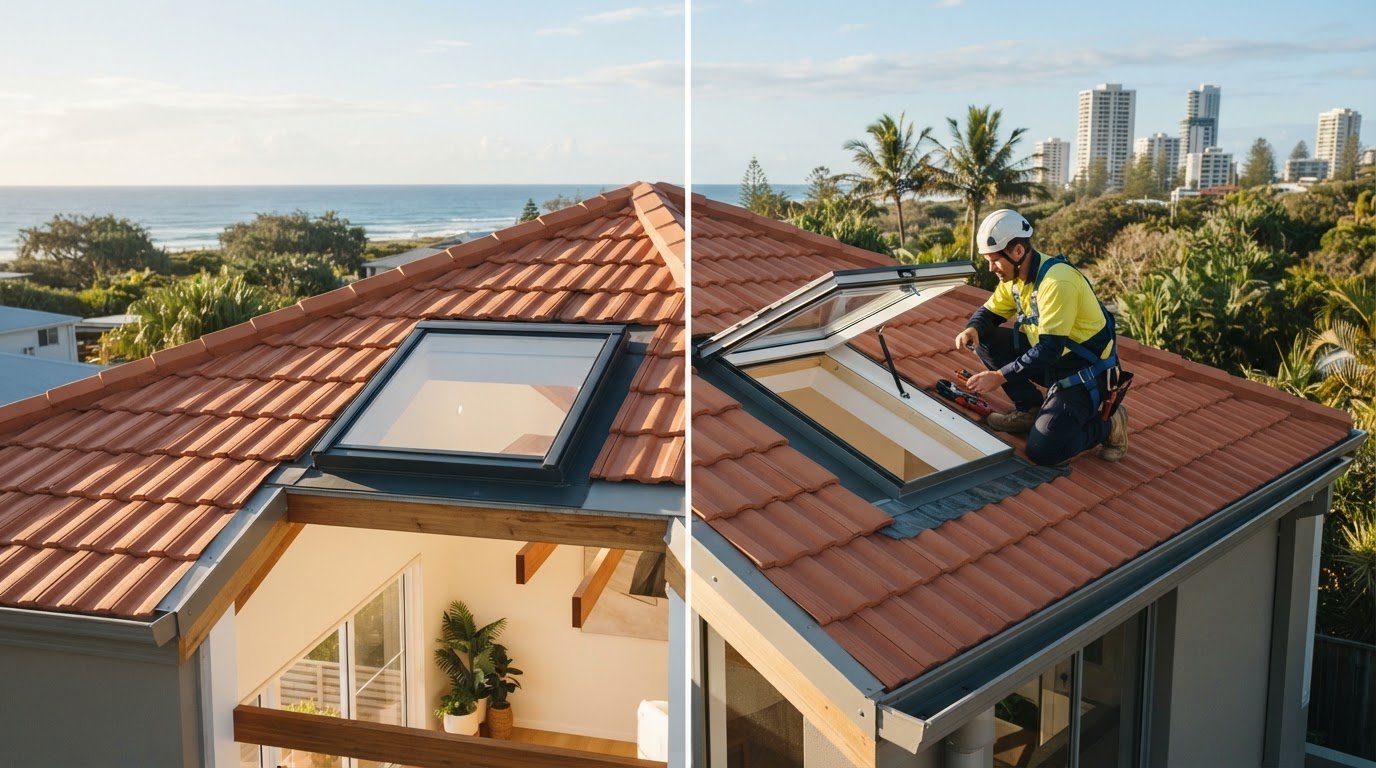
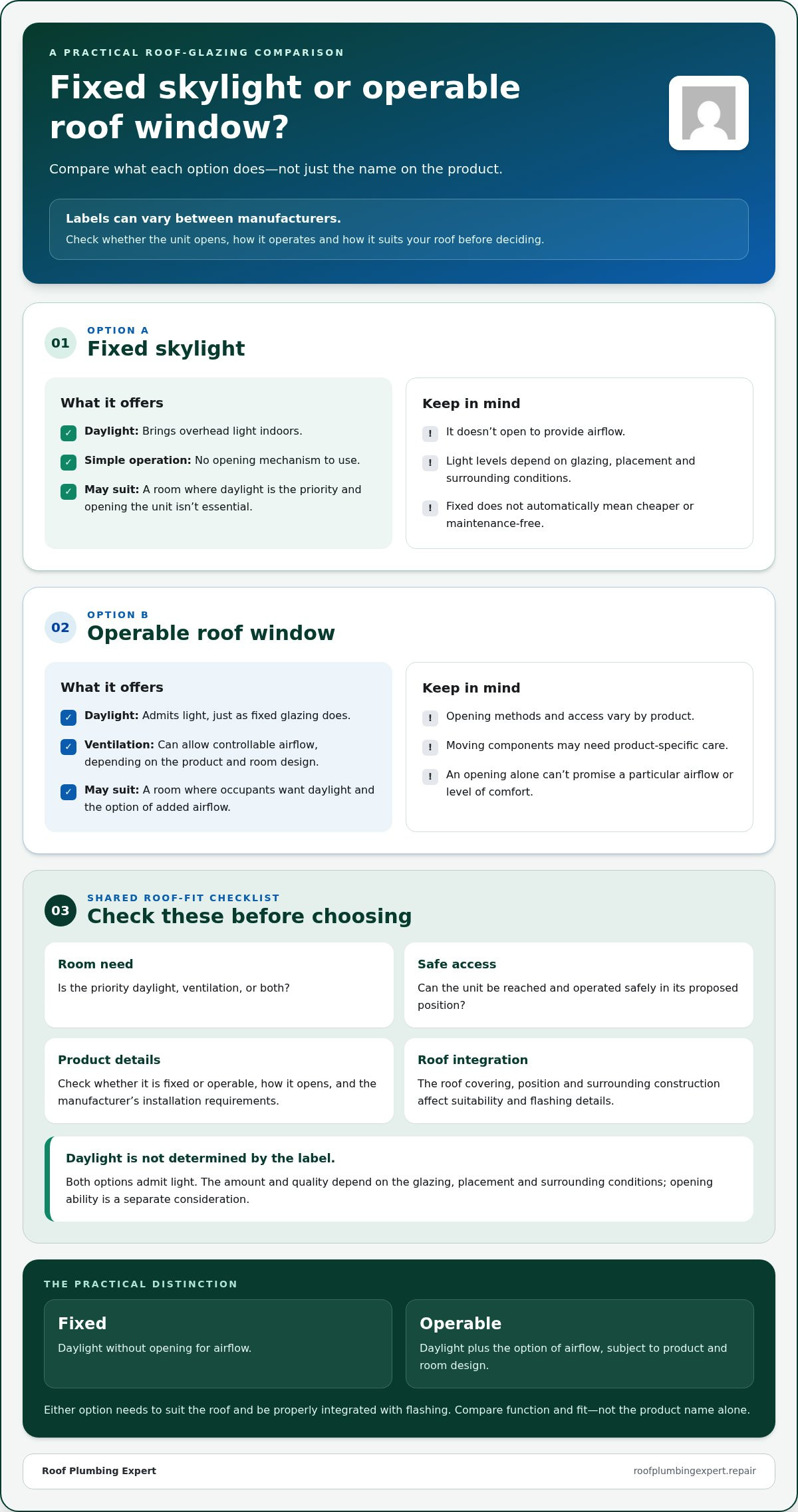
A typical fixed skylight is glazed into the roof and brings daylight indoors without opening for ventilation. A typical operable roof window provides daylight too, with an opening mechanism that lets air pass through. That’s a useful distinction, not a universal rule: some products described as skylights can open, and terminology varies between product ranges. The Skylight (Wikipedia) overview also describes roof windows as a form of skylight, illustrating why the terms can overlap.
How fixed skylights and operable roof windows differ
The practical difference is function. Fixed glazing admits light but doesn’t open for airflow. An operable model can provide both, although its opening method and operation depend on the design. Compare the product’s operating instructions and consider how you’ll reach its controls. Don’t assume the label tells you how easy it is to use.
Separate your needs before comparing options:
- Daylight: Is your main aim to brighten a dim hallway, stairwell or living area?
- Ventilation: Would opening the glazing help release warm or stale air from the room?
- Access: Can the unit be reached and operated safely in its proposed position?
These are separate considerations. A fixed unit may suit a position where you want light but don’t need to open the glazing. An operable model may better suit a room where airflow is part of the brief, provided the product and roof position are suitable.
Why the product label is not enough
A skylight is roof glazing; a roof window is often an operable, reachable form of roof glazing, but product terminology isn’t universal. Use this as a starting point, then compare the specifications. Check whether the unit is fixed or operable, how it opens, what operation requires and the manufacturer’s installation requirements.
Roof type matters as well. The roof covering, available position and surrounding construction affect how an opening can be integrated. A unit suited to one roof arrangement may not suit another, and the details affect how flashing is selected and fitted. An assessment of the roof helps establish what the existing structure and materials will allow before you settle on a product.
That’s the useful way to approach the skylight vs roof window pros and cons: compare function and fit, not just names. Once you know whether daylight, ventilation or access is the priority, the product requirements and roof conditions can guide your choice.
Skylight vs roof window pros and cons for everyday use
For everyday use, the choice comes down to what you need the glazing to do and which trade-offs suit you. Fixed glazing has a simpler function because it doesn’t open, but that doesn’t automatically make it cheaper or maintenance-free. An operable model adds a way to manage airflow, along with moving parts and product-specific care requirements.
Use this comparison as a starting point. The outcome depends on the product, its position and how it’s integrated with the roof.
| Factor | Fixed skylight | Operable roof window |
|---|---|---|
| Daylight | Provides overhead light; the amount and quality depend on glazing, placement and surrounding conditions. | Also admits daylight. The ability to open it is separate from its daylight performance. |
| Ventilation | Doesn’t open for airflow. | Can provide controllable airflow, subject to the product and room design. |
| Operation | No opening mechanism to operate, but the glazing and roof junction still need appropriate care. | Opening method and access vary. Moving components may need product-specific care. |
| Roof integration | Needs to suit the roof covering and be properly integrated with flashing. | Also needs suitable roof integration, with product requirements applying to its opening design. |
When a fixed skylight may suit the room
A fixed skylight may be a practical fit where daylight is the priority and opening the unit isn’t essential. Depending on the layout, that could include a hallway, an internal room or a bathroom where the brief focuses on light. Its fixed function keeps operation straightforward, but you still need to consider the glazing, roof position and installation details.
Light levels vary from room to room. Placement, glazing and surrounding conditions all affect the result, so a unit that works well in one part of a home may have a different effect elsewhere.
When an operable roof window may be worth considering
An operable roof window may suit a room where occupants want overhead daylight and the option of added airflow. Consider who will use it, whether it can be reached and operated safely, and whether opening it will be practical in the room’s layout. The opening mechanism varies by product, so don’t assume every model works the same way.
There are trade-offs. An operable unit has components that a fixed unit doesn’t, and its care needs depend on its design. The opening also brings weather exposure into the decision, making correct roof integration important. Ventilation performance depends on the specific product and room design; an opening alone can’t promise a particular airflow or level of comfort.
For an existing skylight, damage or signs of water entry can affect the decision as much as room function. A roof-side assessment and skylight repair and replacement can help address the condition of the glazing and its roof integration before you decide what to do next.
Which option suits your room, roof and Australian conditions?
There’s no universal winner. The right choice depends on what the room needs, whether anyone needs to open the unit and what the roof can accommodate. In New South Wales, consider the property’s exposure to sun, wind and rain too. Start with the room, then check the roof and product requirements before deciding.
Choose by the way you use the room
Overhead glazing may bring light into an enclosed room with limited daylight from wall windows. A fixed option may suit if daylight is the main aim; consider an operable model if occupants also want airflow and can reach its controls safely. Think about how the room is used each day, not just its floor plan.
Check how direct sun will fall and whether blinds, furnishings or a screen could affect glare or airflow. A kitchen bench or desk directly beneath the glazing may need different glare management from a hallway. Results depend on placement, glazing and surrounding conditions, so treat room examples as a guide rather than a guarantee.
Check the roof before settling on a type
Roof covering, pitch, framing and the proposed opening position all affect product suitability and integration. The opening needs to be coordinated with the roof material and flashing, not treated as a stand-alone fitting. Existing features or limited space between framing members may also influence where glazing can go. Assess these details for the individual roof.
For an NSW home, consider the direction the roof faces and the property’s exposure. North-facing glazing can receive consistent daylight, east-facing glazing morning sun, and west-facing glazing stronger afternoon sun that may increase heat gain. Wind and rain exposure also make sound roof integration important. These factors don’t determine the choice on their own, but they help shape it.
Glazing specifications matter too. Compare the manufacturer’s information on thermal performance and solar heat gain for the particular product and intended location. If condensation or heat control is a concern, include it in the selection rather than assuming all roof glazing performs alike.
| Room or roof consideration | Fixed glazing may suit | Operable glazing may suit | Best suited to |
|---|---|---|---|
| Daylight in an enclosed area | Where opening isn’t a priority | Where light and opening are both desired | A hallway or internal room with limited wall-window light |
| Airflow and access | Where ventilation through the roof isn’t required | Where occupants can safely operate the unit | A room where controllable airflow is part of the brief |
| Roof covering and exposure | Only where the product can be integrated with the roof | Only where its installation requirements suit the roof | A roof position assessed for framing, material, sun, wind and rain |
This is a site-specific decision, not a product-label shortcut. The skylight vs roof window pros and cons become clearer when you record the room’s daylight and airflow needs, access constraints, roof material and exposure. Those details provide a sound basis for assessing the opening and its weatherproofing.
Roof installation, flashing and waterproofing: the practical trade-offs
A fixed skylight and an operable roof window both create an opening in the roof covering. Each needs to suit the roof and be carefully integrated with flashing and waterproofing. Choosing between them is only part of the decision: the surrounding roof details determine how the opening can be formed and protected from the weather.
A sound process is methodical. First, assess the roof and its condition, then confirm the product’s installation requirements. Prepare the opening to suit the product and roof structure, then integrate flashing and weatherproofing with the roof covering. Structural alterations need appropriate expertise, so don’t treat this as a DIY cut-out.
Roof details that influence installation
Roof material, pitch, framing and the proposed opening position all shape the work. A tiled roof and a metal roof have different coverings to integrate with, while framing can affect where an opening can be placed. Product instructions matter too: specified flashing and installation details need to suit both the unit and the roof, rather than being treated as interchangeable.
Flashing is a key part of the junction. When correctly integrated, it helps direct water away from the opening and back over the roof covering. The roof’s existing condition can affect the scope as well. Damaged materials or signs of previous water entry may need attention as part of planning the work. Including roof waterproofing in the project keeps the opening’s connection to the surrounding roof in focus.
Reduce the risk of leaks and avoidable rework
The unit, flashing and surrounding roof covering must work together as one weatherproof assembly. Poor coordination can leave a weak junction, so consider product requirements and roof details before work begins. Fixed or operable, neither option removes the need for precise roof integration.
Watch for signs inside the home. Water staining near an overhead opening, damp patches or marks that appear after rain can warrant a roof leak investigation. A stain doesn’t identify the source by itself, as water can travel from another point on the roof before becoming visible indoors. Roof leak detection in NSW explains why tracing the entry point matters before repairs are planned.
Roof-side details are central to the skylight vs roof window pros and cons: the choice affects product requirements, but weatherproof performance depends on how the whole opening is integrated. For an existing skylight with damage or water-entry concerns, arrange skylight repair or replacement with roof flashing and waterproofing considered as part of the work.
Choose confidently and plan skylight work with a roof specialist
The choice is clearer once you separate the main functions: fixed glazing is for daylight, while an operable model can provide daylight and product-dependent ventilation. The right fit still depends on the room, access, roof construction and condition of the existing roof. Consider these together, not just the product name.
Before discussing a project, write down how you use the room and what you want the glazing to achieve. Note whether airflow matters, what the roof is made from and whether anyone will need to reach the controls. If there’s an existing skylight, record any operating problems and signs of water entry. These details help focus the work on practical requirements.
What to prepare before discussing a skylight project
A few clear observations can make it easier to understand the roof-side work involved. From a safe position, gather photos of the relevant roof area and any visible internal staining. Don’t climb onto the roof to take pictures. Note when stains appear, such as after rain, and whether they’re near the skylight or elsewhere. This information can guide an assessment without assuming the visible mark shows where water entered.
- Room use: Record whether daylight, ventilation or both are priorities.
- Roof details: Note the roof material and any accessible information about the proposed opening’s position.
- Access: Consider how the unit would be reached and operated.
- Existing concerns: Describe leaks, damaged flashing, staining or trouble with an existing skylight.
When roof plumbing expertise matters
Leaks, damaged flashing and weatherproofing concerns are roof-side issues. They can affect how a skylight functions and what work is appropriate. A stain indoors may not reveal the precise entry point, so consider the roof covering and junction around the opening when investigating the problem.
Roof Plumbing Expert provides skylight repair and replacement, roof leak detection, and roof flashing and waterproofing services across New South Wales. This work addresses the roof-side condition of an existing skylight, including its connection to the surrounding roof. For homeowners in Mainly Beach considering skylight work, Roof Plumbing Expert can help assess the roof details and plan the next step.
Bring your room notes, roof material, access requirements and any leak symptoms into the discussion. These details give the team a useful starting point for understanding the project. To discuss skylight repair, replacement or waterproofing, contact Roof Plumbing Expert.
In the end, the skylight vs roof window pros and cons come down to the function you need and how the opening can be integrated with your roof. Clear information and careful roof-side assessment help you plan the next step with confidence.
Turn your decision into a clear next step
Your choice doesn’t need to rest on a product label. Use what matters most in your home to guide the next step: how you want the room to feel and function, and how the roof can support the change. The skylight vs roof window pros and cons are most useful when they lead to a plan that considers the glazing and roof details together.
For an existing skylight, note what’s prompting the decision, whether that’s wear, damage, a leak or a change in how you use the room. Roof Plumbing Expert combines skylight repair and replacement with roof flashing and waterproofing expertise, providing residential and commercial roof plumbing services across New South Wales. This roof-side perspective keeps the condition of the opening and its weatherproofing in view.
Discuss your skylight repair or replacement with Roof Plumbing Expert and take the next step with a clearer understanding of your roof and project needs.
A well-considered plan starts with the home you have. You can move forward with confidence.
Frequently Asked Questions
Is a roof window the same as a skylight?
Not always. The terms can overlap, and manufacturers don’t use them uniformly. “Skylight” often describes glazing fitted into a roof, while “roof window” commonly refers to a unit designed to open. For a useful comparison, check the product’s operation, installation instructions and intended position rather than relying on its name. This is especially helpful when product descriptions use both terms for similar-looking units.
Can a roof window be installed in any roof?
No. Suitability depends on the roof’s construction, covering, pitch, framing and the product’s installation requirements. A roof window designed for one arrangement may not suit another, and the proposed opening must work with the existing structure. For a home in Mainly Beach, assess the roof in its actual setting rather than assuming a standard solution will suit every property. Don’t cut into roof framing without appropriate professional assessment.
Can you replace a fixed skylight with an opening roof window?
Sometimes, but it may involve more than exchanging one unit for another. The opening size, roof framing, covering and product requirements all affect whether a change is feasible. An operable unit may need different clearances or roof detailing from the existing fixed skylight. A roof assessment can establish the condition of the current opening and whether the surrounding roof needs repair or modification before replacement is planned.
Do skylights or roof windows cause condensation?
Condensation can form on glazing when moist indoor air meets a cooler surface; it doesn’t automatically mean the roof is leaking. Cooking, showering and limited air circulation can contribute to indoor moisture. Note whether moisture appears on the room-facing surface, around the frame or after rain. These clues can help distinguish condensation from possible water entry. Persistent moisture or damp finishes warrant investigation so the cause can be identified before repairs are chosen.
What happens if a skylight or roof window starts leaking?
Protect the room first: move belongings, catch drips if safe and keep clear of any affected electrical fittings. Don’t climb onto a wet roof or attempt a temporary roof repair. Note when the leak occurs and where water appears indoors, then arrange a roof inspection. Water can travel beneath roof coverings, so the visible stain may not be directly below the entry point. Prompt roof leak detection can help identify the source and guide suitable repairs.
How often should skylight flashing and seals be checked?
There isn’t one inspection interval that suits every product and roof. Follow the manufacturer’s care guidance and include the skylight area in routine roof maintenance. Pay attention after you notice a leak, cracked or displaced roof material, or staining inside. From the ground, look for visible changes without climbing onto the roof. A roof professional can safely assess flashing and seals, particularly if the opening is difficult to access.
Do I need approval to install a skylight or roof window in NSW?
Approval requirements can depend on the proposed work, property and applicable planning controls, so there isn’t a safe blanket yes-or-no answer for every NSW home. Before altering the roof, check the requirements that apply to your address with your local council or a suitably qualified building professional. This is particularly relevant if the work changes the roof structure or the property has planning constraints. Confirm the position before work begins.