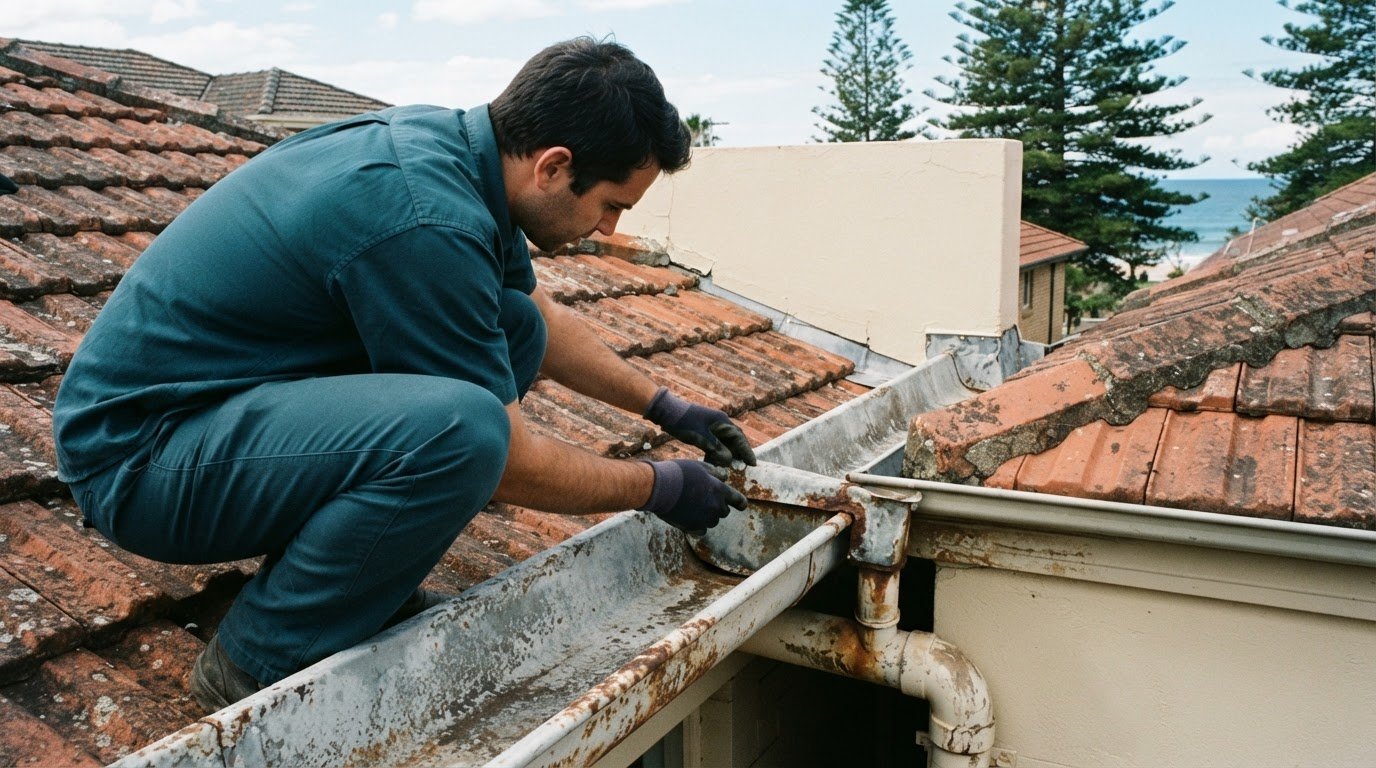
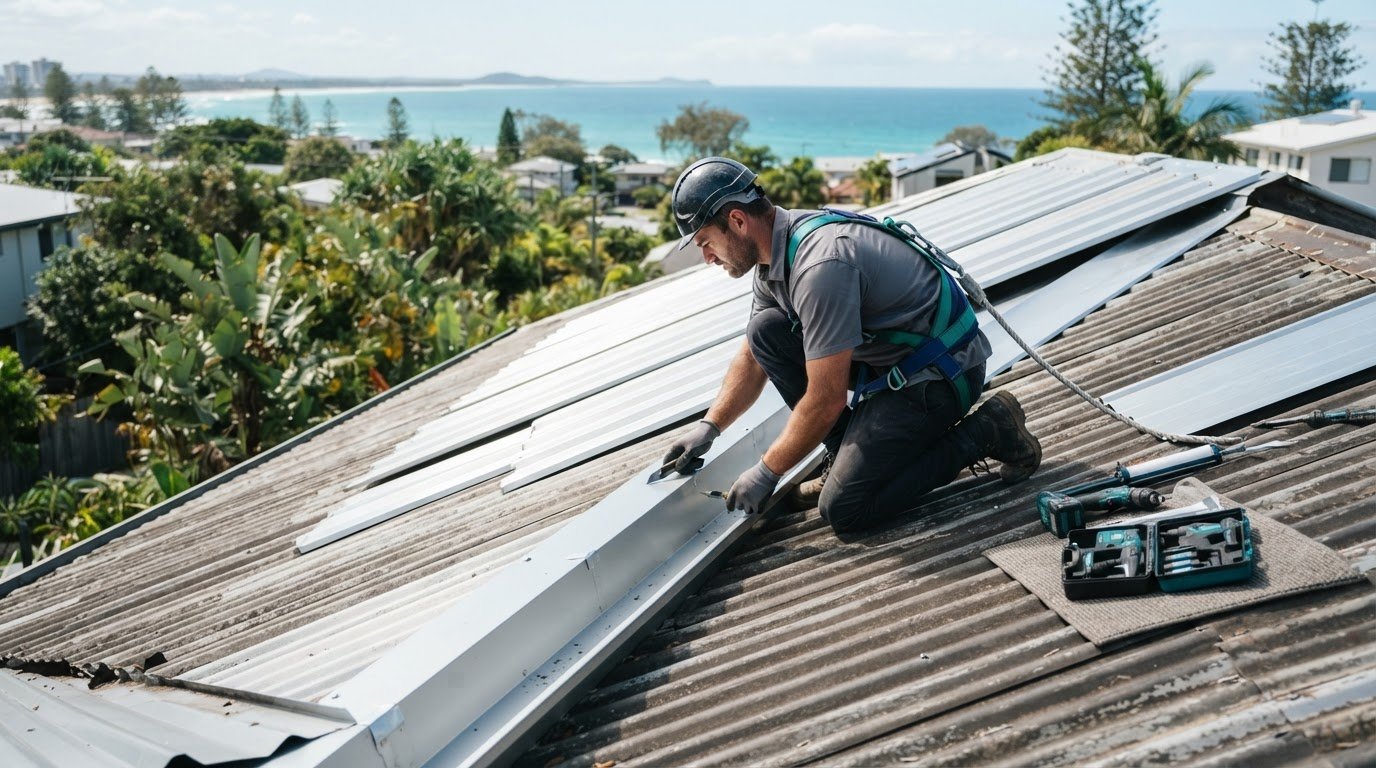
Understanding what’s involved in a roof restoration starts with an inspection of the roof surface and supporting structure. Work may include cleaning and recoating serviceable roofing, repairing damage, and replacing components that cannot be restored, such as rusted metal sheets or worn valley irons.
It’s reasonable to want a clear picture of the work before deciding whether your roof needs restoration. The right scope depends on the roofing material and the condition of its supporting structure, so restoration is more than cleaning and applying a fresh coat of paint.
This guide explains how an inspection identifies leaks and structural concerns, what repairs may be needed for different roof types, and how metal or Colorbond restoration addresses sheets, fasteners, joints and coatings. You’ll also learn how roof valleys and flashings direct water away, and why their condition matters to the finished roof.
Key Takeaways
- Restoration can clean and recoat existing roofing, with repairs chosen to suit the roof material and condition.
- An inspection helps identify leaks, damaged components and underlying structural issues that affect the scope of work.
- Rusted metal sheets, worn valley irons and damaged flashings can compromise water flow and may need repair or replacement.
- Metal and Colorbond restoration involves more than repainting: surface preparation, repairs and protective coatings all matter.
What is a Roof Restoration?
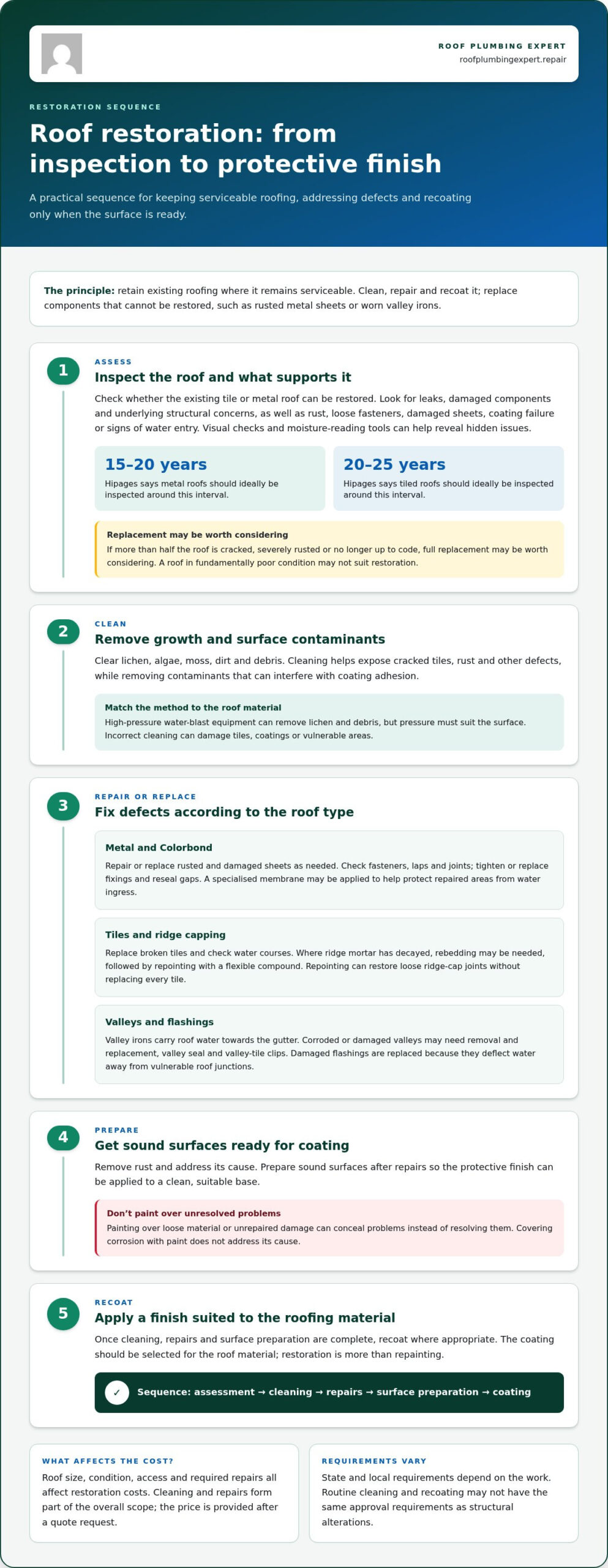
A roof restoration retains existing roofing where it remains serviceable, then cleans, repairs and recoats it. Work may include removing lichen and algae, replacing damaged components and preparing the surface for a protective finish.
Cleaning Lichen and Algae
Roof cleaning removes lichen, algae, moss and dirt from the roofing surface. Clearing this growth helps reveal cracked tiles, rust and other defects that need attention before recoating. A thorough clean also removes contaminants that can interfere with coating adhesion. The cleaning method and pressure should suit the roof material, rather than treating every surface alike.
Roof Repairs and Recoating
Repairs address damage found during inspection, such as broken tiles, corroded metal sheets or gaps around flashing. The roof is then recoated where appropriate, with the coating selected for the roofing material. This sequence matters: painting over loose material or unrepaired damage can conceal problems instead of resolving them. A roof in poor condition after about 15 years may need more than cleaning and repainting.
Restoration Costs and Requirements
Restoration costs depend on roof size, condition, access and required repairs; cleaning and repairs form part of the overall scope. The price is provided after a quote request. State and local requirements can vary depending on the work, so routine cleaning and recoating may not have the same approval requirements as structural alterations. Whether approval is required depends on the project and applicable local rules.
What does a roof restoration include in Australia? It generally includes inspection, cleaning, necessary repairs and recoating. What are the steps involved? The sequence is assessment, cleaning, repairs, surface preparation and coating.
Cleaning Methods and DIY Risks
High-pressure water-blast equipment can remove lichen and debris, but pressure must suit the roofing material. Incorrect cleaning can damage tiles, coatings or vulnerable areas. DIY roof work also exposes people to falls and can leave hidden leaks or broken components unrepaired. Licensing requirements can depend on the work and location, so check the applicable rules before hiring a builder. An unlicensed contractor may also leave repair or preparation work incomplete.
What Australian regulations or permits apply? Requirements depend on the work and local rules, particularly where structural changes are involved. How do costs and requirements vary by state and climate? Roof size and condition affect costs, while local requirements and weather conditions influence the scope and timing of work.
Roof inspection and underlying structural issues
An inspection establishes whether existing tile or metal roofing can be restored and identifies repairs needed beneath the surface. The findings help distinguish a roof that needs maintenance from one requiring replacement.
Metal Roof Rust Assessment
A metal roof assessment checks for rust, corrosion, loose fasteners, damaged sheets and coating failure. Rust around joints or fixings can let water reach underlying components, so its location and extent matter. The inspection also looks for debris and signs of water entry, helping determine whether affected sections need treatment or replacement.
Hipages says metal roofs should ideally be inspected every 15 to 20 years. Removing rust and addressing its cause helps prepare sound surfaces for repairs or a new coating, rather than covering corrosion with paint.
Professional Roof Assessments
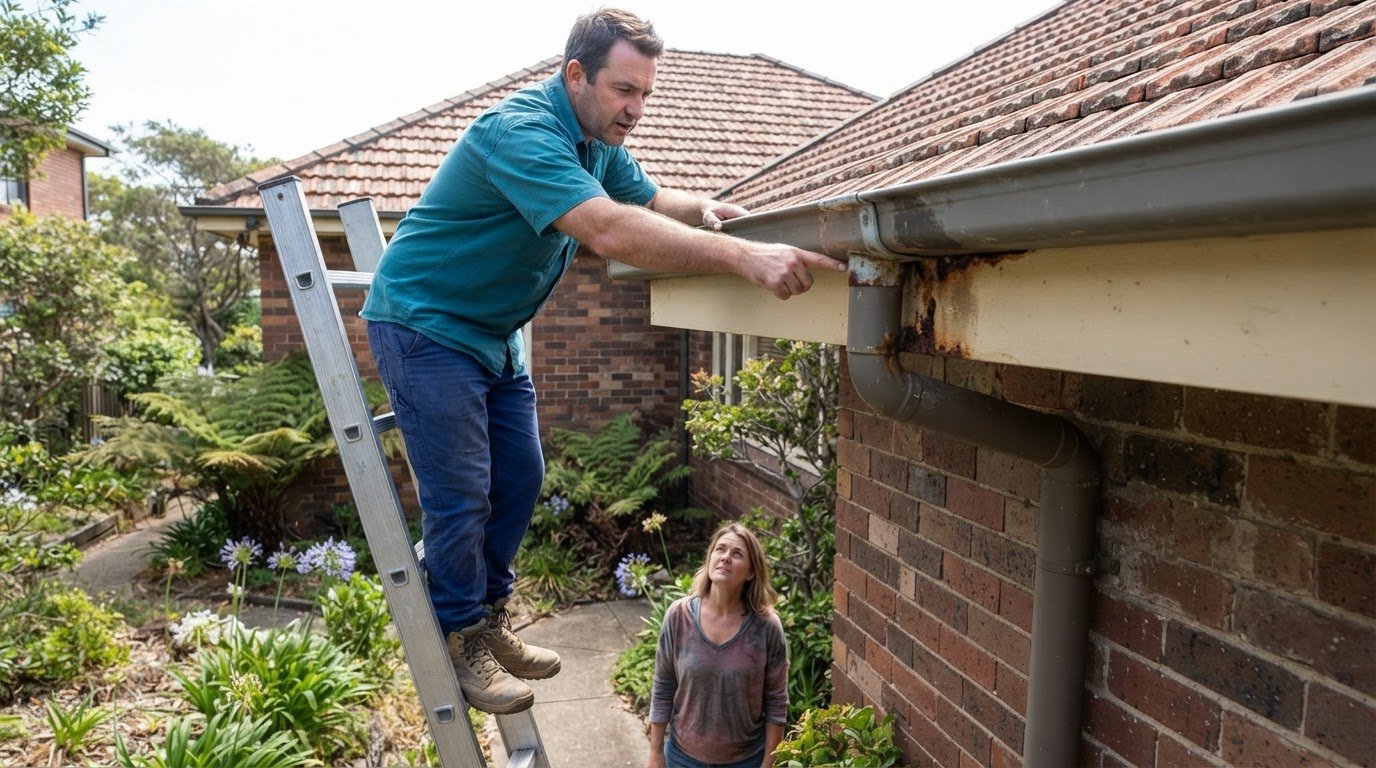
A professional assessment examines the roof surface and underlying components for leaks, gutter misalignment, oxidisation, broken framing and other structural concerns. Visual checks and moisture-reading tools can help reveal issues that aren’t obvious from the roof’s appearance. The findings guide the restoration scope and show where more extensive repairs may be needed.
Hipages says tiled roofs should ideally be inspected every 20 to 25 years. Tile and metal roofs can both be restored, but the suitable work depends on their condition and material. For example, a sound tiled roof may need local repairs, while corroded metal sheets may need replacement.
How do you know if restoration or replacement is more suitable? If more than half the roof is cracked, severely rusted or no longer up to code, full replacement may be worth considering. A roof in fundamentally poor condition may not be suitable for restoration.
Roof Restoration & Repointing can address repair needs identified during an assessment, while the inspection clarifies the work involved.
Repairing or replacing metal sheets and valley irons
Repairs address damaged roof components while retaining sound material. The work differs between metal and tile roofs, but each repair should support reliable water flow.
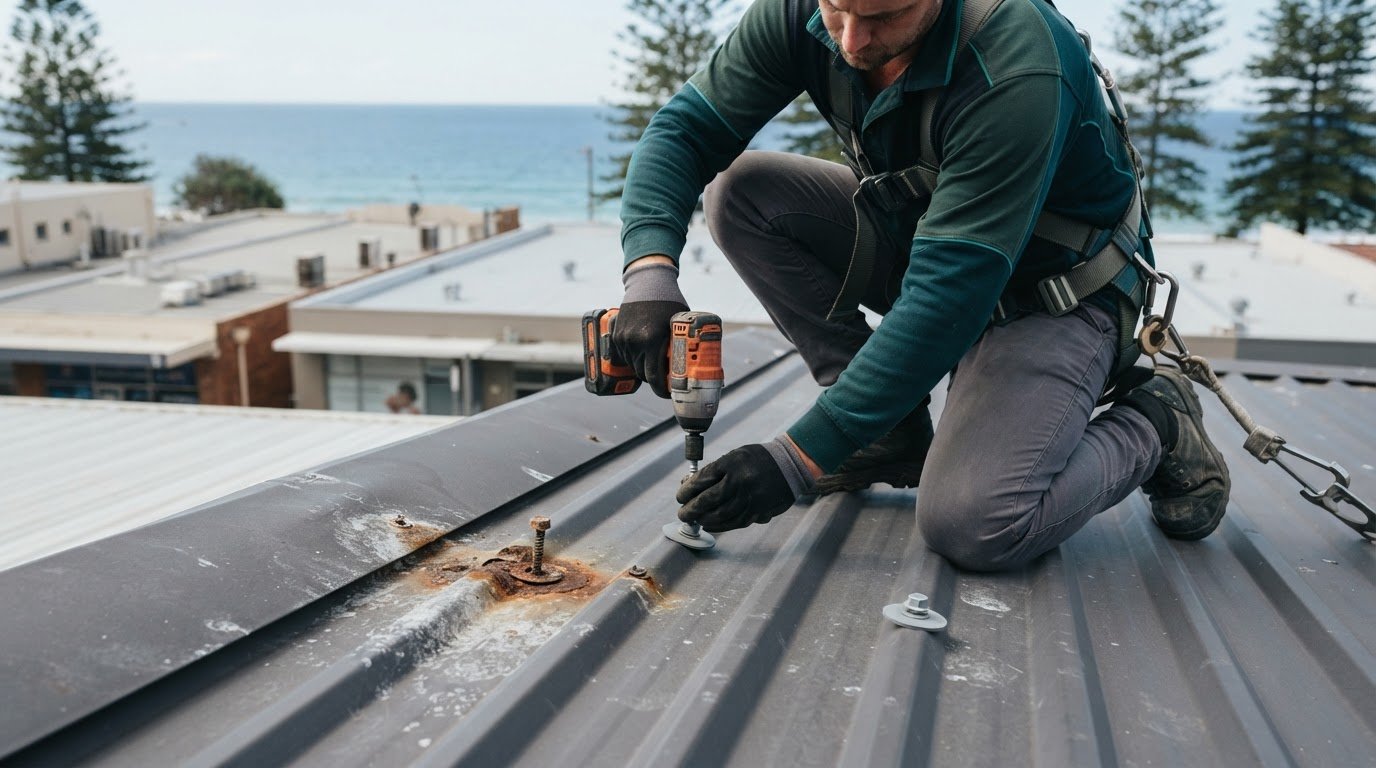
On a metal roof, rusted or damaged sheets may be repaired or replaced, depending on their condition. Roofers also inspect fasteners, laps and joints, tightening or replacing fixings and resealing gaps where needed. These details matter because water can enter around loose fasteners or sheet joins. A specialised membrane may be applied as part of metal roof repairs to help protect treated areas from water ingress.
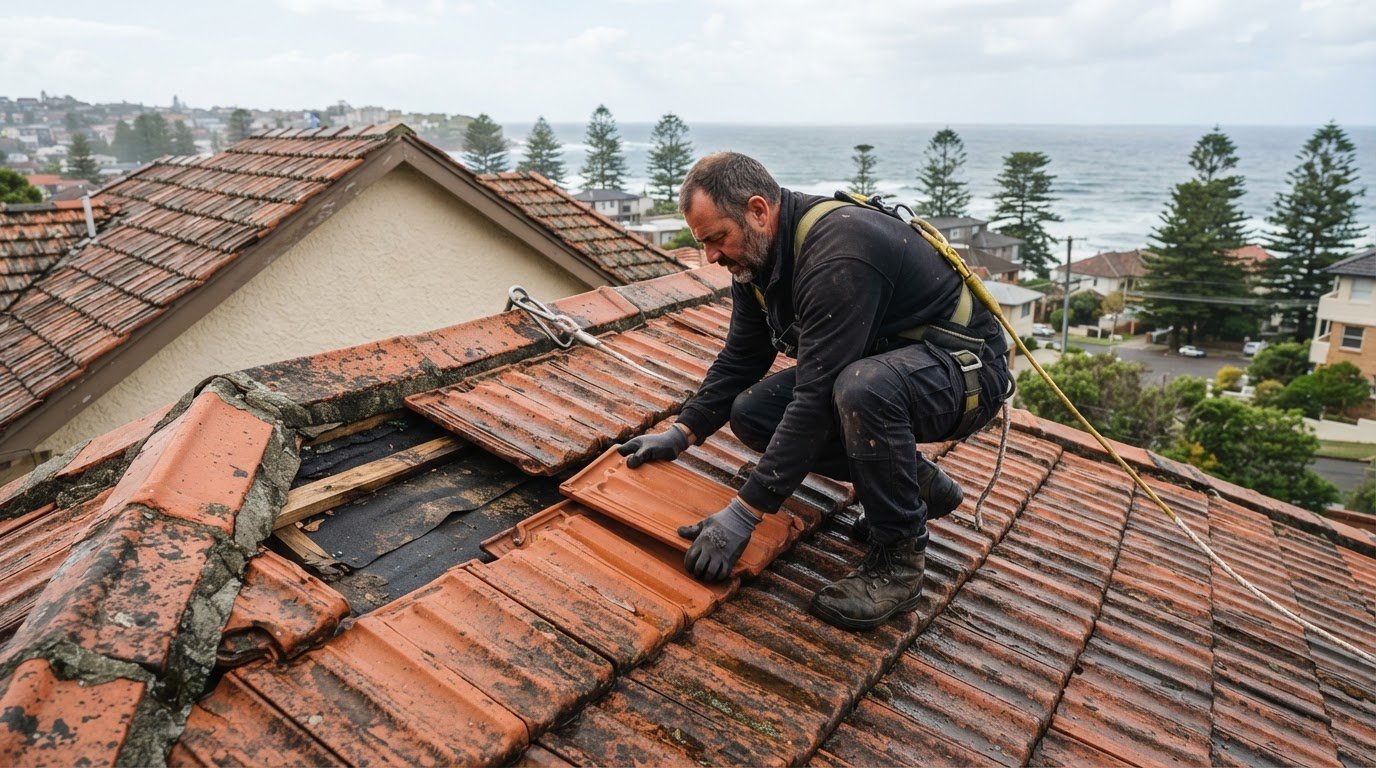
For a tile roof, broken tiles are replaced and water courses checked to help keep the roof watertight. Ridge capping may need rebedding if its mortar has decayed, followed by repointing with a flexible compound. Bedding is the mortar that holds tiles in place; pointing seals the exposed joints. Repointing loose ridge caps and cracked mortar restores those joints without replacing every tile.
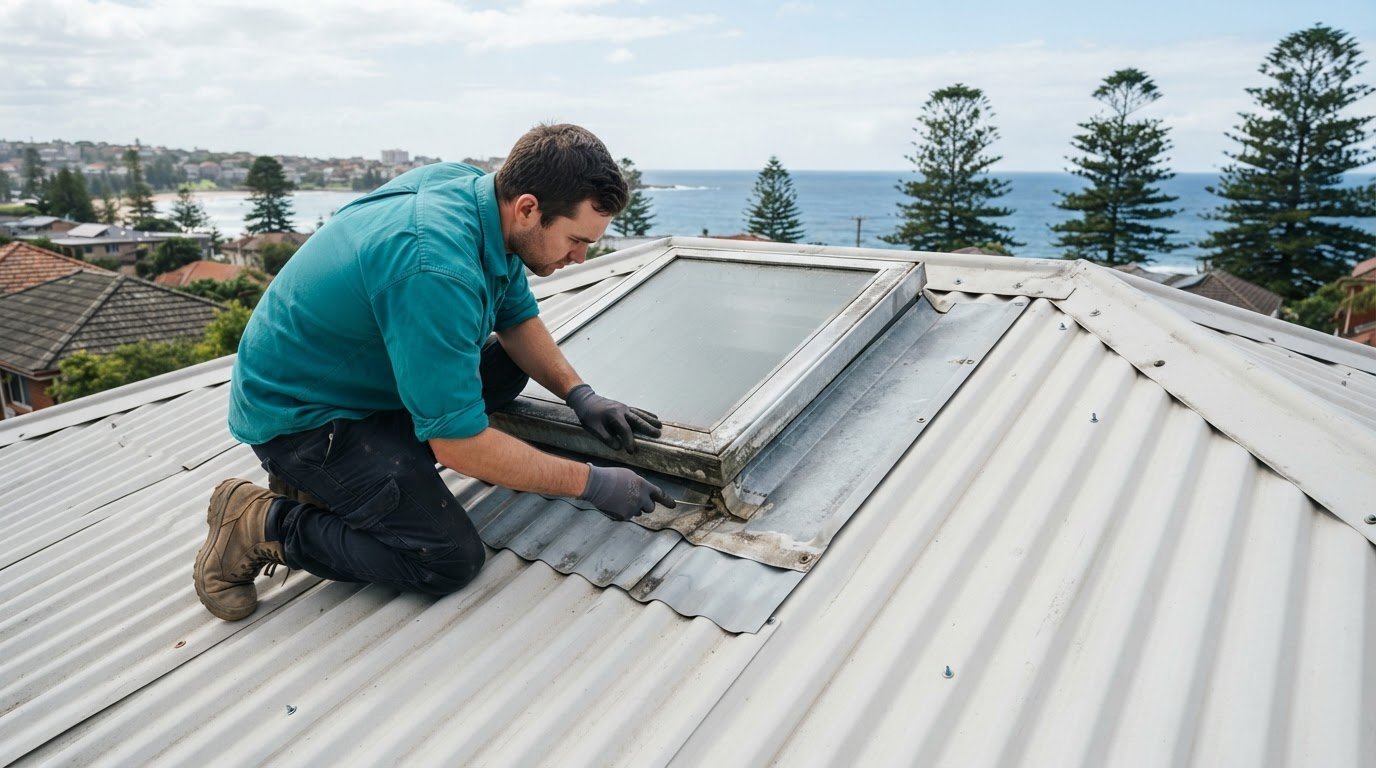
Valley irons carry roof water towards the gutter, so corrosion or damage can interrupt drainage. Restoration repairs may involve removing and replacing roof valleys, installing valley seal and clipping valley tiles in place. Damaged flashings are also removed and replaced because they deflect water away from vulnerable roof junctions. These repairs are especially relevant when a leak appears near a valley, wall or roof opening.
Minor roof repairs may include rebedding areas of decayed mortar, repointing ridges and gables, replacing isolated broken tiles or resealing a leaking joint. The right repair depends on the inspection findings, not the roof’s appearance alone. Addressing localised damage can form part of restoration; widespread deterioration may call for a broader assessment of repair or replacement options.
Where water entry points to a fault, roof leak detection and repair can help identify and address the leak source, including around roof junctions and flashing.
Metal or Colorbond roof restoration
Understanding what’s involved in a roof restoration for metal or Colorbond roofing starts with the condition of the sheets, fasteners and joints. An assessment identifies rust, cracked sections and worn areas before coating begins. A new finish cannot replace repairs to damaged roofing.
Surface preparation removes dirt, oxidation and debris, often using high-pressure water. The pressure should suit the metal surface, and weather conditions affect when cleaning and coating can proceed. Once prepared, the roof is ready for repairs and the selected coating system. This preparation helps the coating bond to a clean surface.
Rusted or damaged sheets may be repaired or replaced according to their condition. Fasteners can be tightened or replaced, and laps or joints resealed where needed. A specialised membrane may also be applied. Knowing what’s involved in a roof restoration means recognising that these functional repairs matter as much as the finished colour.
For metal or Colorbond roofing, the coating process can include high-pressure cleaning, one primer coat and two colour coats. An anti-fungal spray and a sealer or primer may form part of the preparation. The precise sequence depends on the coating system and roof surface. Each stage prepares the metal, supports adhesion or provides the final appearance.
Solar panels create an additional detail for the applicator. Around existing panels, the new coating can extend about 100 mm under their outside edge. This helps cover the roof surface beside the panels while working around the obstruction. The finished colour may refresh the roof’s appearance, but its underlying sheet condition remains central to ongoing performance.
For metal repairs or a new Colorbond finish, arrange Colorbond roofing work to discuss the roof’s coating and repair needs.
Roof Plumbing Expert: Gutter & Downpipe Installation
Roof Plumbing Expert can help when restoration findings point to roof leaks, damaged roofing, or gutters and downpipes that need attention. Matching the work to the issue matters: a leak may need tracing and repair, while worn drainage components may call for Gutter & Downpipe Installation.
For metal roofing, Colorbond Roofing and Roof Restoration & Repointing address needs identified during assessment. If the roof is serviceable but requires repairs or repointing, restoration may be the relevant next step. If damage is widespread, the inspection findings help clarify whether restoration suits the roof’s condition.
For roofing or drainage work, contact Roof Plumbing Expert to discuss the next step for your property.
Take the next step with confidence
Knowing what’s involved in a roof restoration gives you a clearer basis for deciding what your roof needs. Before work begins, use the inspection findings to understand which repairs protect the roof’s function and which improvements address its finish. This keeps the discussion focused on your property’s actual condition, rather than a one-size-fits-all scope.
Roof Plumbing Expert provides Roof Leak Detection & Repair, Gutter & Downpipe Installation and Colorbond Roofing. These services are relevant when water entry, drainage or metal roofing issues form part of your next steps. Share what you’ve noticed, such as where a leak appears or which roof area needs attention, to discuss the work.
Discuss your roof with Roof Plumbing Expert and take the next step towards a well-informed plan.
Frequently Asked Questions
Can I Stay Home During the Restoration Process?
Yes, you can remain inside during roof restoration because the work is carried out externally. Expect noise during cleaning and repairs, and allow roofers access around the outside of the house. Keep gates and exterior access points clear so materials and equipment can be moved safely. If you work from home, plan calls or quiet tasks around the noisier parts of the job.
How much does roof restoration cost in Australia?
The price depends on the case and is provided after a quote request. Main cost factors include roof size, current condition, access, cleaning requirements and required repairs. For a Mainly Beach property, the scope also depends on what the inspection finds across the roof. A written scope helps you understand what work is included and why.
How long does a roof restoration take?
A roof restoration in Australia generally takes around three to 10 working days. The timeframe depends on roof size, the repairs required and weather conditions. For example, replacing damaged sections or addressing several problem areas can extend the work compared with a roof needing fewer repairs. Weather also affects when cleaning, preparation and coating work can proceed, since each stage needs suitable conditions.
How often should a roof be restored?
A guide for tiled and metal roofs is restoration at around 20 years of age, then every 15 years. These intervals help plan upkeep, but the roof’s condition remains important. A roof with recurring leaks, visible wear or neglected maintenance may need attention sooner. Keep records of previous restoration work so inspections can consider the roof’s age, material and maintenance history.
How do roof restoration costs and requirements vary by Australian state and climate?
Costs depend on roof size, condition, access and required repairs. State and local requirements vary, particularly for structural alterations, while weather conditions can affect the scope and timing of the work.