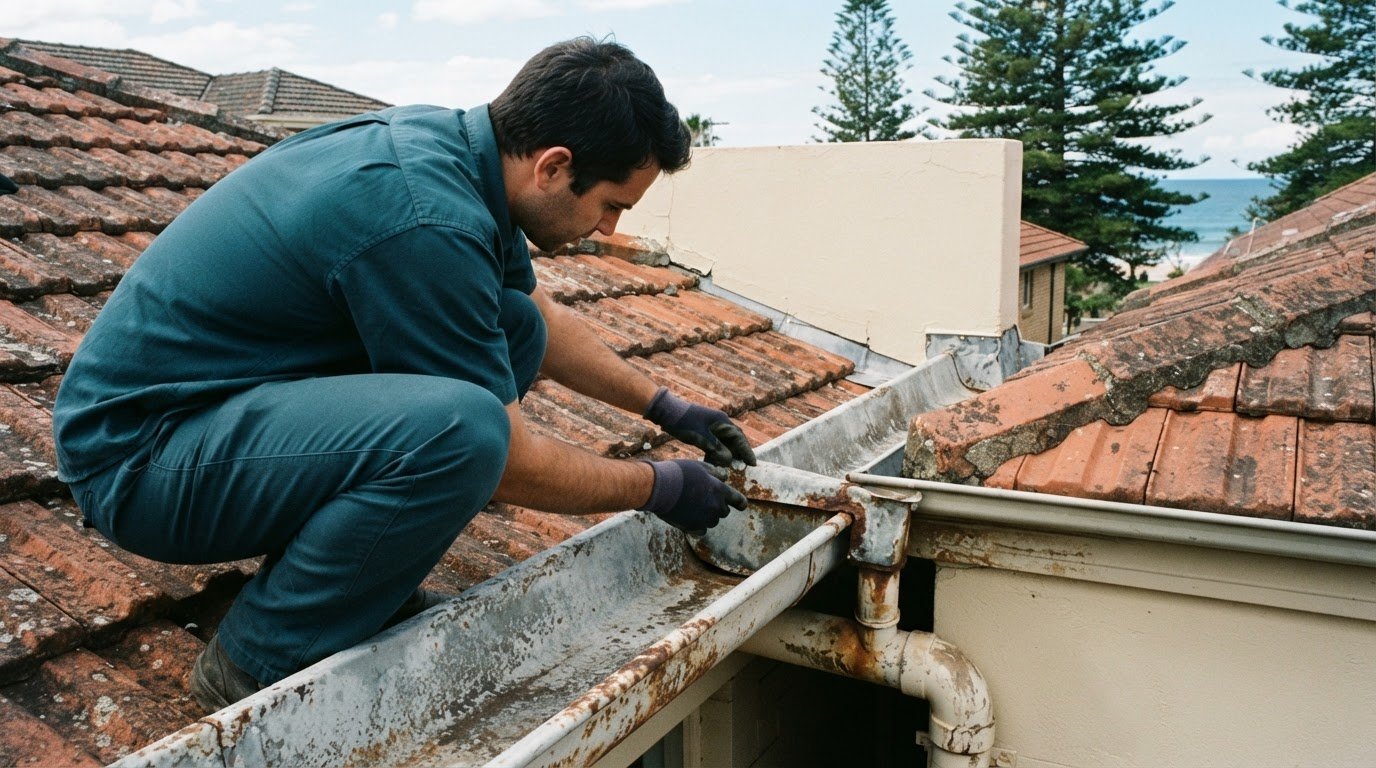
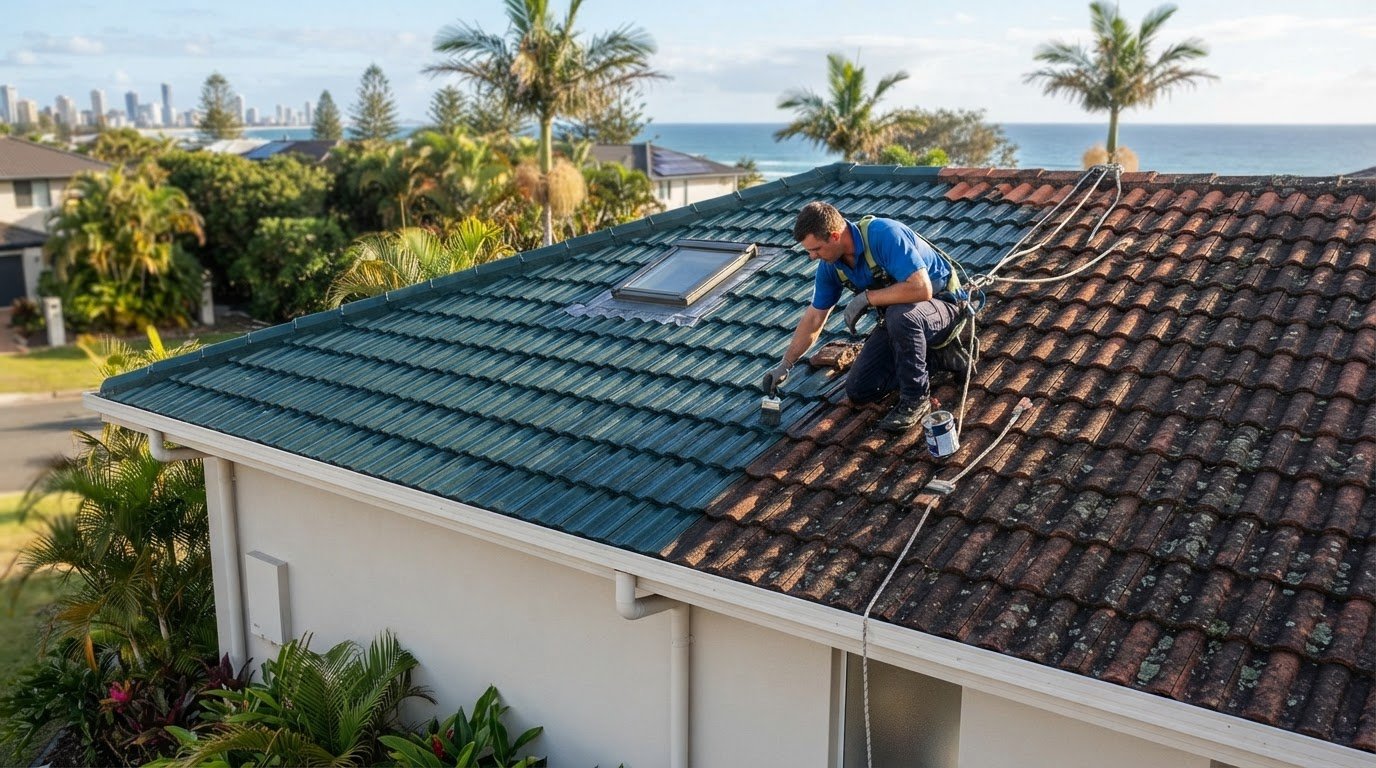
A new roof isn’t always the best answer to an ageing roof. Whether roof restoration is a good investment depends on its condition: restoration can improve the roof’s appearance and address leaks when the underlying structure remains serviceable, while widespread deterioration may make replacement more suitable. The key is to establish whether repairs and protective work can address the actual problems.
It’s understandable to weigh the cost and disruption of major roof work against the risk of letting damage progress. A clear assessment can help you decide which option is more likely to protect your home and suit your needs.
This article explains how restoration can improve indoor comfort, limit water ingress and delay replacement, as well as the warning signs that restoration may no longer be enough. You’ll also learn what the work can involve and how to judge which path makes sense for your roof.
Key Takeaways
- Look beyond a faded appearance: widespread deterioration or damage to the roof’s structure can mean restoration is no longer enough.
- Consider how roof coatings and insulation may affect indoor comfort and energy use in hot weather.
- Pay attention to early signs of water ingress, including minor leaks or ceiling cracks, before moisture affects interior surfaces and timber.
- Compare restoration with replacement based on the roof’s condition, and consider professional restoration and repointing when the existing roof can still be repaired.
At what stage is a roof restoration not enough?
Restoration is most suitable when the roof’s main structure remains serviceable, but it cannot undo extensive deterioration. The decision depends on the roof’s condition, the repairs required and the improvements you expect.
Risks and hidden costs
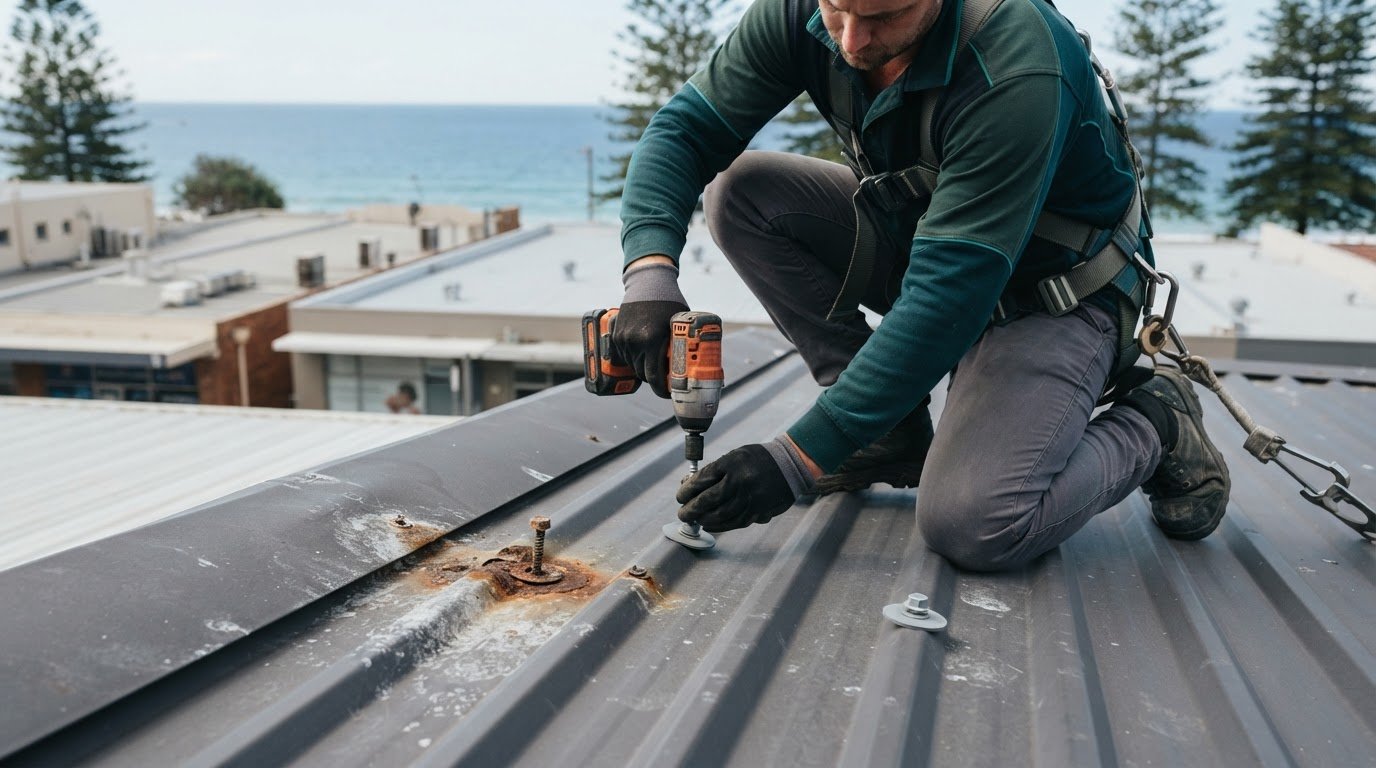
Additional repairs may be needed if an inspection reveals damage beyond the visible surface, such as cracked tiles, rusted metal sheets or loose ridge caps. This can expand the scope beyond cleaning, painting and sealing, so ask for a written description of the work and how repairs are included. A restored roof’s service life depends on its material, condition, workmanship and exposure. Restoration adds protection but does not reset the roof’s age. If damage is widespread, replacement may be more suitable.
Building rules and warranties
Australian building requirements depend on the work and the relevant state or territory rules, while warranty terms depend on the contract and products used. Restoration may involve inspecting the roof, replacing damaged tiles or metal sheets, repointing, cleaning, painting and sealing. Get the proposed work, exclusions and warranty conditions in writing. Before choosing a contractor, check the relevant licence and insurance documents for the work and location, and compare the written scope with the repairs the roof needs. This clarifies what the job covers.
Kerb appeal and property value
A clean, well-maintained roof can improve kerb appeal, while faded, stained or moss-covered surfaces may detract from it. Restoration can refresh the roof’s appearance through cleaning, painting and repairs, supporting a better presentation when selling. It does not guarantee a higher sale price, and cosmetic work cannot compensate for widespread structural deterioration. Consider condition as well as appearance: if damaged tiles, rust or loose ridge caps remain, surface improvements alone may not address buyers’ concerns. Restoration is most useful when the repairs and presentation work suit the roof’s actual condition.
Home comfort and energy efficiency
In Australian summers, a roof exposed to strong sun can transfer heat into the roof cavity and living areas. Modern roof coatings are designed to reflect solar heat instead of absorbing it. A cooler roof can reduce the strain on air conditioning during hot weather. This may improve comfort in rooms beneath the roof, especially when they heat up during the day.
Heat-reflective paint is one option to consider when assessing an existing roof. It reflects solar heat from the roof surface, helping limit heat build-up above the ceiling. It is not a substitute for insulation: coatings address heat at the roof surface, while insulation slows heat transfer into the home. Both can affect indoor comfort and how hard cooling systems need to work.
Insulation may also be considered as part of roof repair, particularly if the roof is being opened or repaired and the home’s existing insulation needs attention. Better insulation can add value for prospective buyers, while helping manage heat moving between the roof space and interior. Roof shape, existing materials and the condition of the ceiling space all influence which improvements are suitable. A roof coating alone won’t address every source of indoor heat.
To understand where heat enters, note which rooms become uncomfortable, when they heat up and whether the problem occurs under a particular roof area. A hot upstairs bedroom during afternoon sun, for example, may point to roof-space heat transfer. Combine those observations with an assessment of the roof surface and insulation before deciding on work. A practical discussion of roof restoration and repointing can help clarify whether coating the existing roof suits the comfort issue, or whether repairs and insulation deserve attention too. The best result comes from matching each improvement to the cause of heat build-up, rather than treating the roof’s appearance alone.
Preventing water ingress and internal damage
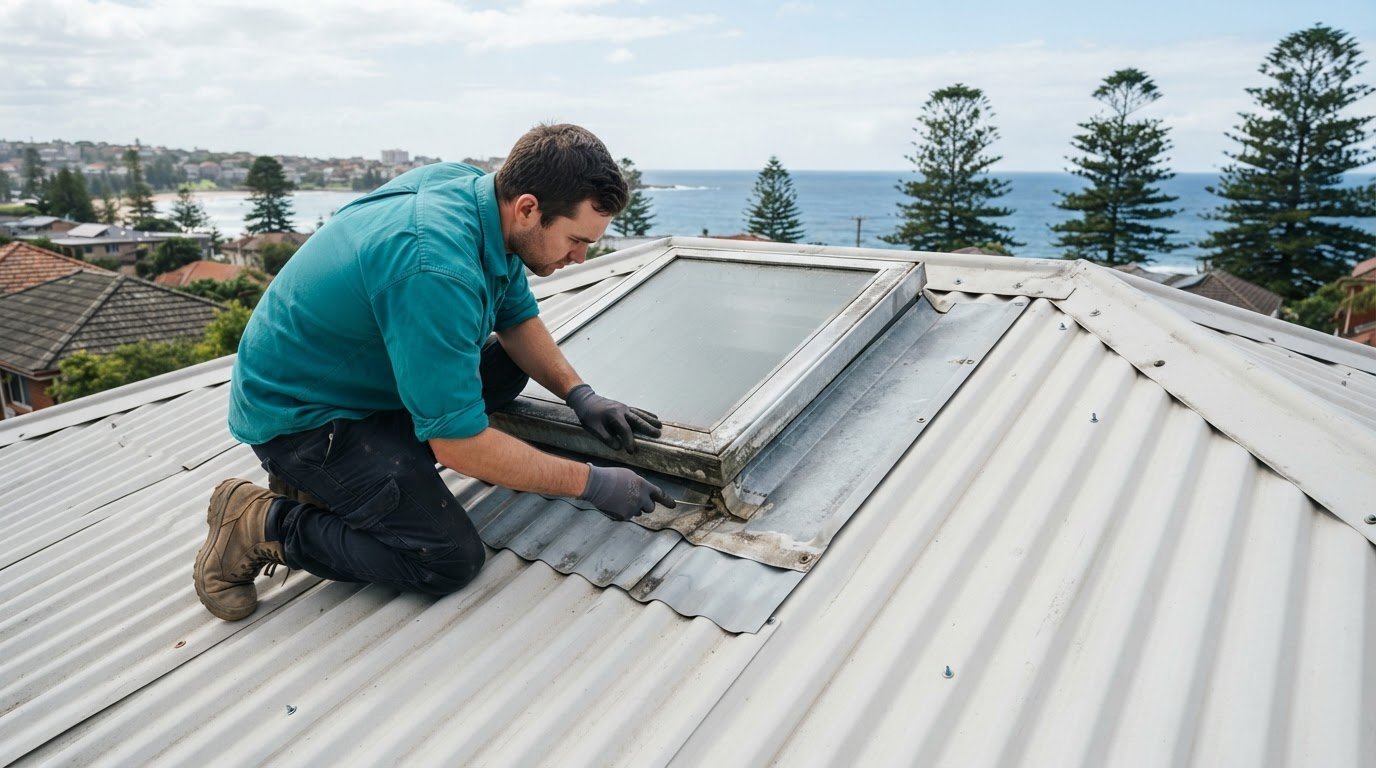
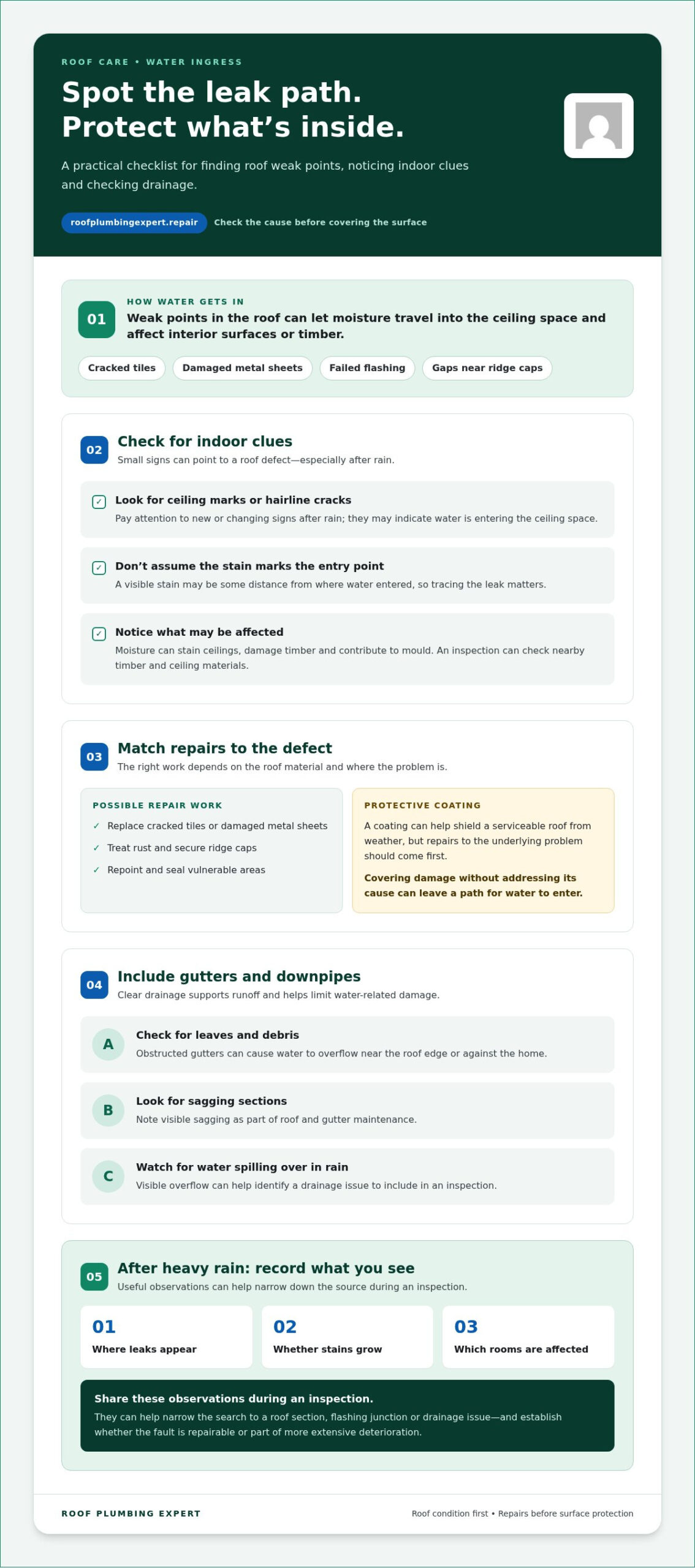
Water can enter through weak points such as cracked tiles, damaged metal sheets, failed flashing or gaps near ridge caps. Moisture may then stain ceilings, damage timber and contribute to mould. Restoration can address these entry points as well as improve the roof’s appearance, making repairs part of protecting the home rather than simply refreshing its surface.
Pay attention to a small ceiling mark or hairline crack, especially after rain. These signs can indicate that water is travelling from a roof defect into the ceiling space. The visible stain may be some distance from the entry point, so tracing the leak matters. An inspection can identify damaged roof sections and whether moisture has affected nearby timber or ceiling materials.
Repairs may include replacing cracked tiles or damaged metal sheets, treating rust, securing ridge caps, repointing and sealing vulnerable areas. The right work depends on the roof material and the defect’s location. A protective coating can help shield a serviceable roof from weather, but repairs to the underlying problem should come first. Covering a damaged area without addressing its cause can leave a pathway for water to enter.
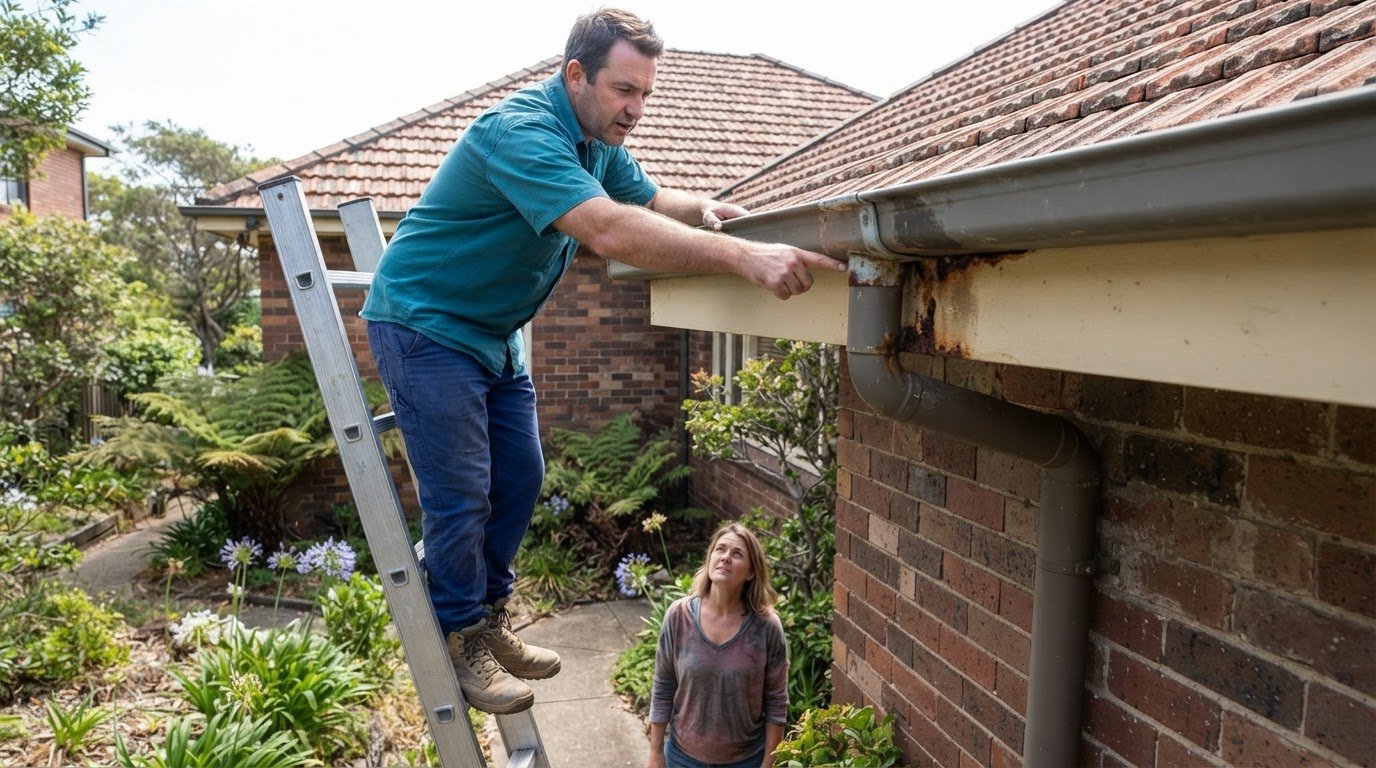
Effective water management also depends on clear gutters and functioning downpipes. Leaves and debris can obstruct drainage, causing water to overflow near the roof edge or against the home. Include gutters in roof maintenance: look for visible blockages, sagging sections and water spilling over during rain. Keeping gutters and downpipes clear supports runoff and helps limit water-related damage.
After heavy rain, note where leaks appear, whether stains grow and which rooms are affected. Share these observations during an inspection; they can help narrow the search to a roof section, flashing junction or drainage issue. Assessing minor leaks or ceiling cracks promptly can help determine whether the fault is repairable or part of more extensive deterioration, before water damage spreads through internal surfaces or timber.
Roof restoration as an alternative to replacement
Restoration can delay full replacement when the roof’s structure remains sound and damage is limited. It addresses defects on the existing roof, rather than removing the entire roof covering. Traditional roofs are generally designed to last 20 to 25 years at most, but age alone doesn’t determine whether replacement is necessary. The condition of the roof sheets or tiles, fixings, ridge caps and supporting structure matters more. Widespread deterioration or recurring leaks can point towards replacement instead.
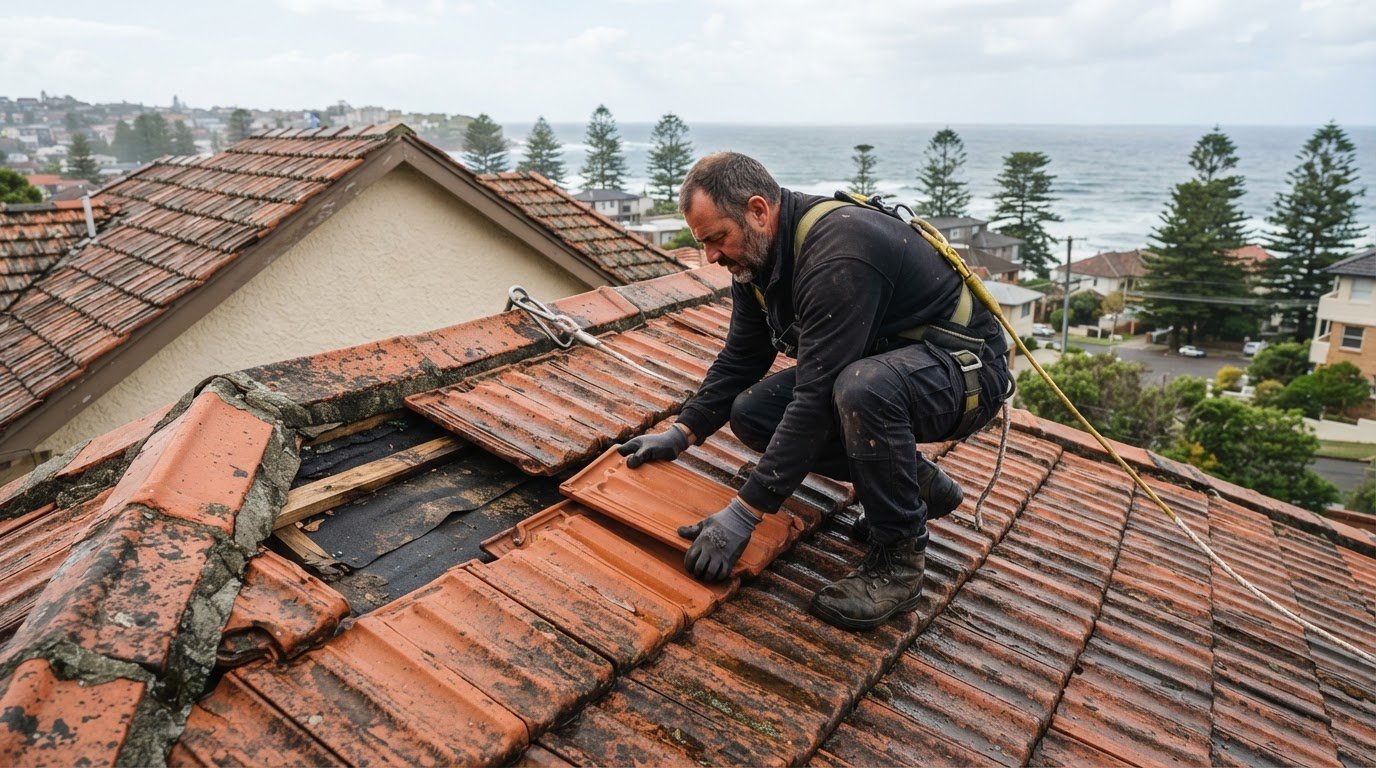
A professional restoration may begin with an inspection, followed by replacing damaged tiles or metal sheets. Depending on the roof, work can also include roof repointing and re-bedding, cleaning, painting and sealing. Cracked tiles can be replaced, rust treated and ridge caps secured as part of addressing specific defects. A protective coating can then help protect the existing roof. These repairs can add 10-15 years of protection and delay the expense of full replacement when the roof remains suitable for restoration.
The distinction is practical: restoration repairs and protects a serviceable roof, while replacement addresses a roof that no longer provides a sound base. Isolated cracked tiles or localised rust may be repairable; widespread deterioration can change the decision. A thorough inspection should identify the condition of roof components and the repairs needed. A clear scope helps you see whether restoration addresses the causes of damage or only improves the surface.
Compare the proposed restoration work with the roof’s overall condition, not just its appearance. If repairs can address the defects and the roof remains structurally serviceable, restoration may extend its useful protection. If substantial areas are deteriorated, replacement may be the more suitable long-term option. For an assessment focused on the existing roof, arrange roof restoration and repointing to identify whether repair or replacement best fits its condition.
Roof Plumbing Expert: Gutter & Downpipe Installation
Roof Plumbing Expert can assess and repair roof defects and drainage problems relevant to your restoration decision. For recurring leaks, Roof Leak Detection & Repair can identify and resolve the problem. If the roof is suitable for repair, Roof Restoration & Repointing can address roof issues. Where worn or ineffective gutters and downpipes affect runoff, Gutter & Downpipe Installation can help restore effective drainage.
These services suit different problems, so the right next step depends on what’s happening at your home. A persistent leak points to roof assessment and repair; poor drainage may call for attention to gutters and downpipes. If the roof needs a different covering, Colorbond Roofing is also available. Contact Roof Plumbing Expert to discuss your roof, or visit roofplumbingexpert.repair.
Make the next roof decision with confidence
If you’re asking whether roof restoration is a good investment, start by matching the proposed work to your roof’s condition and your priorities for the home. Note what you’ve observed, such as where leaks appear, which rooms become uncomfortable or whether the roof shows visible deterioration. These details help focus an assessment on the issues affecting your property.
Deciding whether roof restoration is a good investment also means understanding the recommended scope. Check which defects need repair and whether the existing roof is suitable for restoration. If the work does not address the cause of a leak or the extent of deterioration, ask for the reason behind the proposed approach. A clear explanation helps you weigh restoration against replacement without relying on appearance alone.
Roof Plumbing Expert can help you consider the practical next step for your roof. Discuss your roof’s restoration or repair needs and move towards a decision that supports your home’s comfort and protection.
Frequently Asked Questions
How much value does roof restoration add to a home?
There’s no fixed amount that restoration adds to a home’s value. The effect depends on the property, local buyer expectations and the roof’s condition before work begins. A tidy, functional roof can support the home’s overall presentation, but restoration alone does not determine its sale price. Consider the work alongside other property improvements and roof issues a buyer might notice during an inspection.
Does roof restoration improve resale value and buyer appeal?
Restoration can improve buyer appeal by presenting a cared-for roof and addressing visible defects before a sale. For example, resolving a persistent leak can help explain a ceiling stain and the repair behind it. Buyers assess the property as a whole, so roof work may support a stronger impression without guaranteeing a higher offer. Keep records of completed work to show what was repaired.
What are the signs a roof needs restoration or replacement?
Cracked tiles, rust, loose ridge caps, recurring leaks and water stains are signs the roof needs attention. In Mainly Beach, note where leaks appear after rain and whether the same area keeps causing trouble. Localised defects may be repairable, while widespread deterioration may point towards replacement. The key question is whether repairs can address the damage across the roof, rather than simply cover visible symptoms.