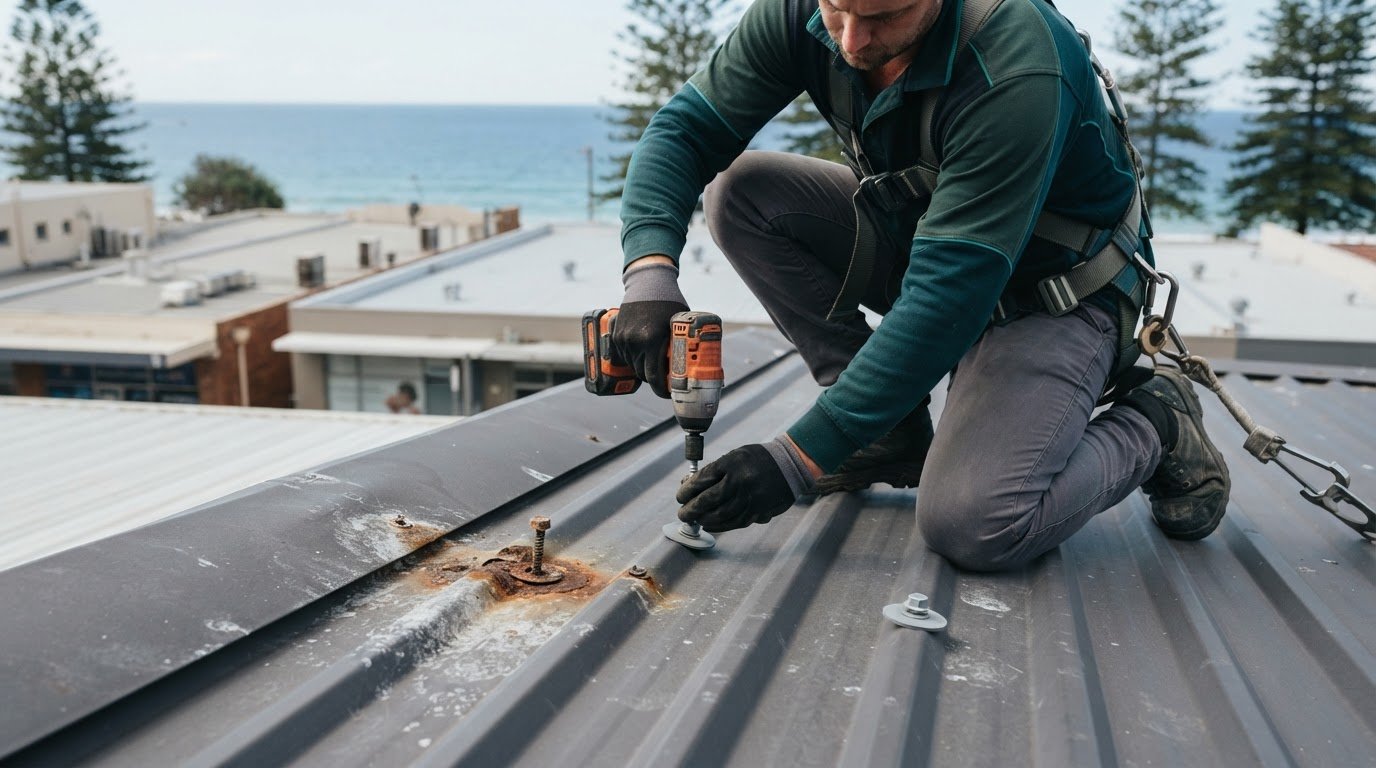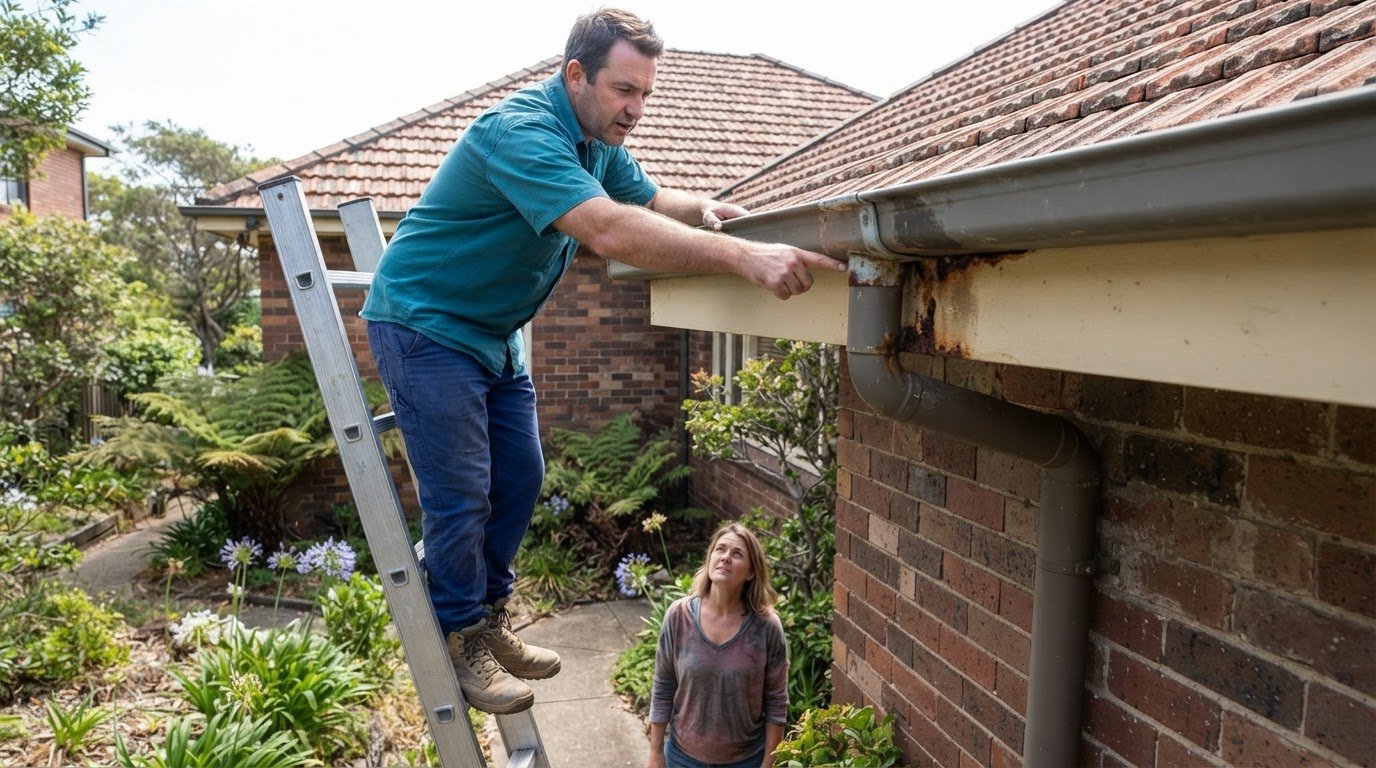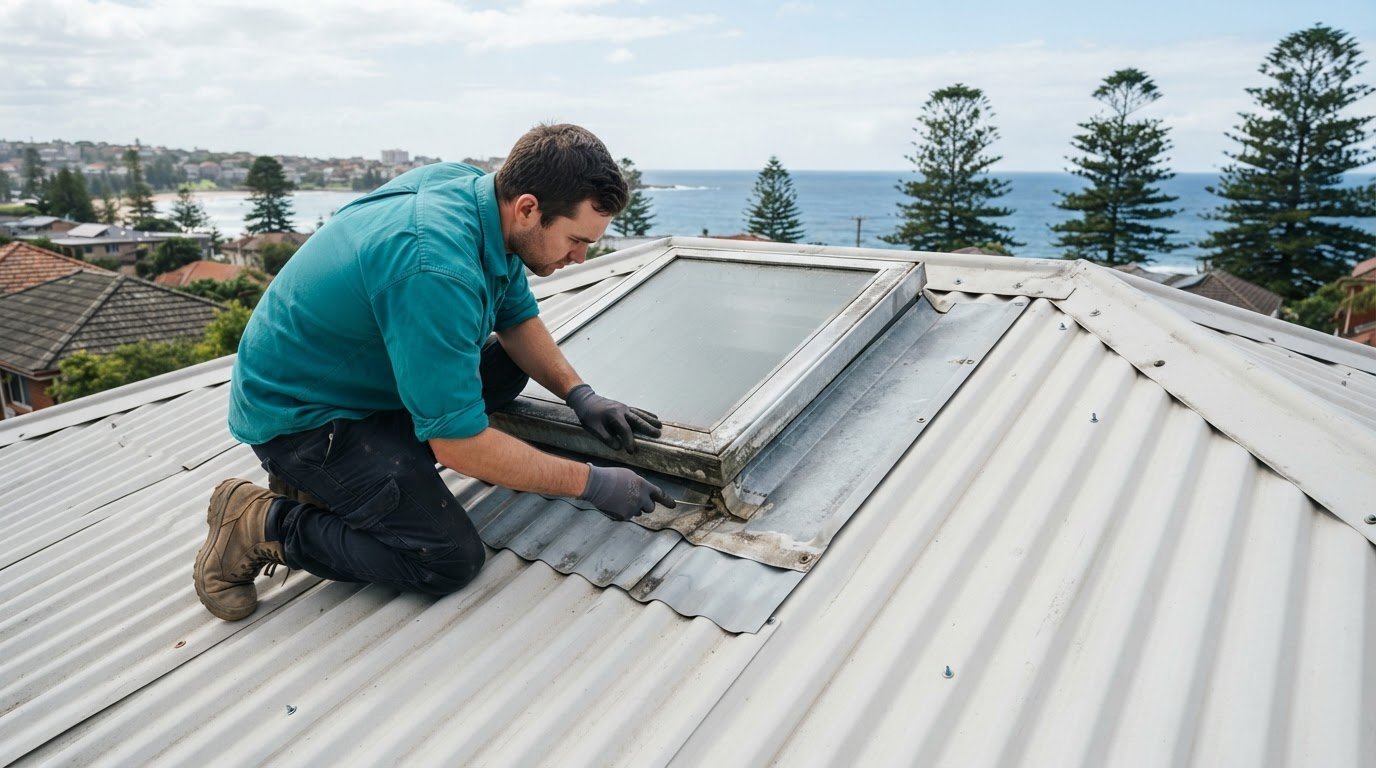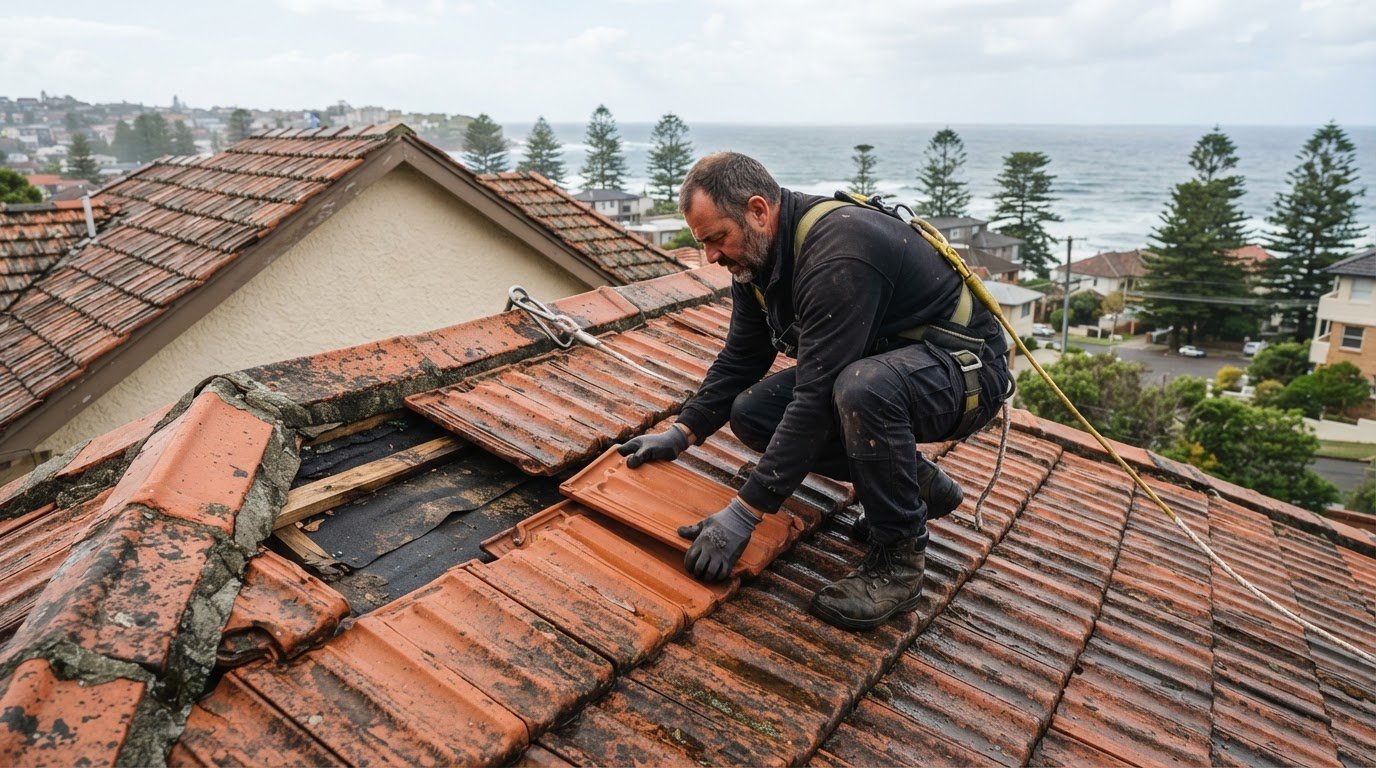
The lowest roof repair quote can leave the most unanswered. Costs depend on the damage, roofing material, repair scope and access, so understanding a roof repair quote means looking beyond the total. A useful estimate clearly sets out the work and what the price includes.
It’s reasonable to want a clear figure before deciding what to do, but two quotes can describe very different jobs. This article explains what affects roof repair costs and how to compare inclusions such as materials, removal and disposal, site protection and clean-up. You’ll also learn how to use an online estimate as a sense-check, weigh repair against replacement, and consider roof type and access when assessing a quote. That context helps you see whether estimates are comparable and what each proposed scope is meant to fix.
Key Takeaways
- Compare the work each quote covers, not just the total, so you can spot differences in scope and exclusions.
- Check how materials, damage, roof pitch and access affect the estimate before judging whether prices are comparable.
- Use an online estimate as a guide to assess a quote, not as a substitute for understanding the proposed repair or restoration work.
- Consider the roof’s condition and the extent of damage when weighing a targeted repair against replacement.
- Look at how labour, materials and job complexity shape the calculation to better understand what drives the final figure.
How much does it cost to repair a roof?
Roof repair costs in Australia depend on the damage, roofing materials, access and work included. The price varies by job and is provided after a quote request; the repair scope and site conditions shape the estimate. Compare quotes by checking that they describe the same tasks and roof area.
Typical repair costs
Repair costs reflect the labour, materials and roof area involved in fixing a particular fault. Understanding these factors helps you assess whether estimates cover comparable work.
A leak repair may involve tracing water entry and sealing the affected area. Flashing repairs address gaps around roof junctions, while tile work may require replacing cracked or displaced tiles. The scope can change if inspection reveals a larger damaged area or related work. A roofer’s estimate should describe the repair, not rely on a broad label such as “minor work”.
Are roof repairs covered by Australian building regulations or state-specific requirements? Requirements can vary between states and territories and may depend on the work. Consider the building and licensing requirements that apply to the location and repair.
Quote exclusions and extra costs
Quote exclusions identify work or costs outside the stated repair scope. They matter because two totals may cover different tasks, even if both estimates address the same leak.
Check whether the estimate includes removal and disposal of damaged materials, site protection, delivery, gutter work, fascia repairs, permits and final clean-up where applicable. It should also identify the roofing system, proposed work, exclusions, approval responsibilities and aftercare. Hidden damage may become visible once work starts and add costs. Additional work arising from hidden damage should be explained and approved by the owner before it begins. This makes changes clear and helps protect your budget.
Quote detail and itemisation
An itemised quote separates repair tasks, materials and related charges instead of showing only one total. That detail lets you compare like-for-like scopes and spot omitted work.
Look for a description of the affected roof area, the damage being addressed, the materials to be used and the work sequence. The estimate should state exclusions and explain how variations are handled. It should also identify removal and disposal, site protection and clean-up where relevant. How can I check whether a roof repair quote is detailed and itemised? Match each task and inclusion to the stated problem, then note any gaps or unclear terms.
Questions and quote variations
Questions about scope, exclusions and changes clarify what the quoted price covers before work begins. Clear written answers help you understand the commitment and manage changes on site.
Ask which damage the work addresses, what materials are included, and whether removal, disposal and clean-up are part of the scope. Clarify which approvals are your responsibility and how additional work will be priced. What questions should I ask a roofer before accepting a repair quote? Ask what is included and excluded, whether any material or workmanship warranty applies, and how changes are documented.
Can a roof repair quote change after work starts, and how should variations be approved? Yes, hidden damage discovered during the job can lead to extra work and cost. The contractor should explain the change and obtain your approval before starting the additional work. Australian Consumer Law provides statutory guarantees for goods and services, including that roofing work must be carried out with due care and skill.
Comparing the scope and inclusions of roofing quotations
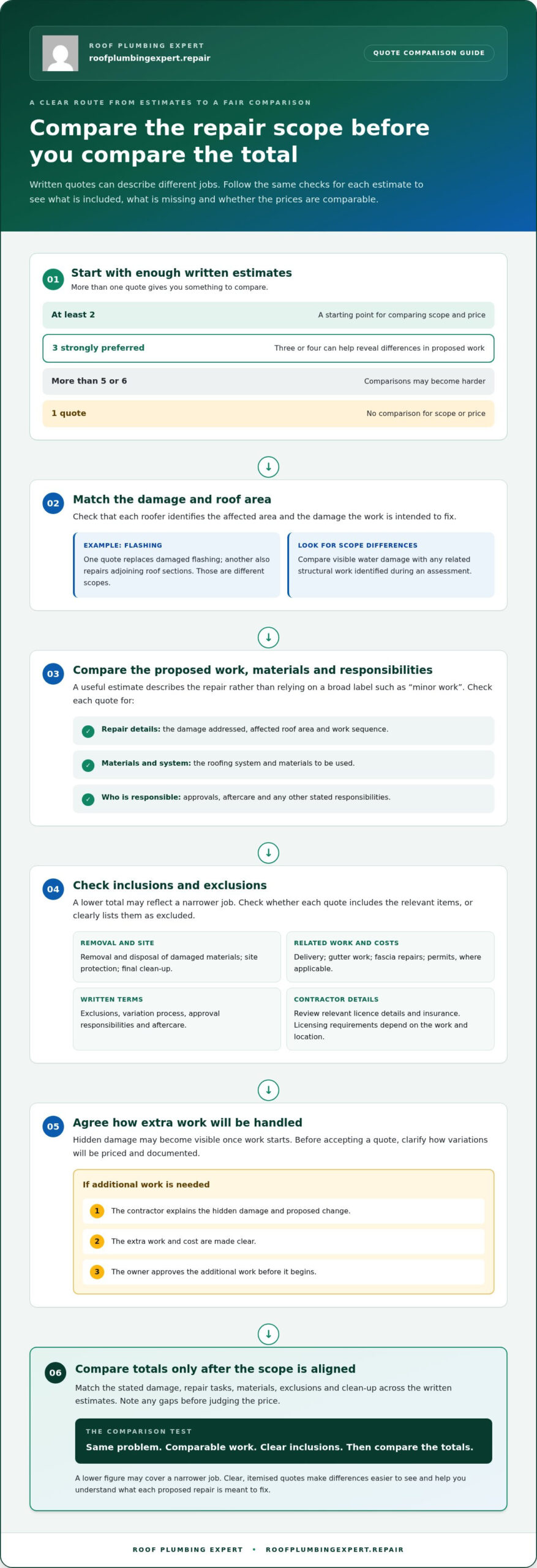
Compare the work proposed, not just the totals. Quotes can address different roof damage or components, even when they appear to cover the same repair. Reviewing three written estimates can help you see where the scopes differ.
Comparing quote scope
Quote scope describes the repairs, materials and responsibilities included in the proposed job. Comparing those details shows whether estimates address the same problem.
Check that each roofer identifies the affected area and explains the work intended to fix it. One estimate might replace damaged flashing, while another includes repairs to the flashing and adjoining roof sections. Those are different scopes. Also compare whether each addresses visible water damage only or includes related structural work identified during an assessment.
How do I compare roof repair quotes from different Australian roofers? Match the stated damage, repair tasks, materials, exclusions and clean-up across the written estimates. Note differences before comparing totals, so you can see whether a lower figure reflects a narrower job.
Get at least two quotes, with three strongly preferred; comparing three or four can help reveal differences in proposed work. Collecting more than five or six may make comparisons harder. A single quote gives you no comparison for scope or price.
Written quote inclusions
Written inclusions set out what the roofer will supply and complete. They matter because omissions can leave you comparing prices for different jobs.
Check the proposed roofing system, work scope, exclusions and variation process. Where applicable, the quote should also address removal and disposal, site protection, delivery costs, gutter work, fascia repairs, permits and final clean-up. It should identify who handles approvals and what aftercare is included. Clear descriptions make it easier to spot tasks one estimate includes and another leaves outside its scope.
What licences, insurance and warranties should an Australian roofing contractor provide? Licensing requirements depend on the work and location, so review the relevant licence details and insurance information alongside the written quote. The quote should distinguish a manufacturer’s material warranty from the contractor’s workmanship warranty, and explain applicable conditions. A stated “20-year warranty” needs to make clear what it covers and what terms apply.
Check how long each quote remains valid, too. A clear validity period gives you time to compare the written scopes and consider your decision. For quotes involving leak diagnosis or flashing work, roof leak detection and repair describes related roofing work.
How repair prices vary by roof and access
Roof pitch, material, damage, job complexity and access all affect repair labour and the estimate. A quote for a clear, reachable section may differ from one involving steep pitches or difficult access.
Roof access and labour
Roof access describes how safely and directly a roofer can reach the damaged area. Restricted access can add labour because workers must move materials and equipment carefully.
A roof with clear access differs from one obstructed by nearby structures or difficult working positions. Labour also depends on job complexity, required expertise and roof age. Compare how each quote accounts for access, rather than assuming two repairs require equal effort. These factors can explain why similar damage produces different estimates.
Access also affects the practical work involved. A repair near an accessible roof edge may be simpler to reach than damage around a hard-to-reach junction. The quote should identify the affected area and describe the work, so you can see how access relates to the proposed labour.
Roof design and repair pricing
Roof design covers pitch, shape and the number of junctions or changes in roof plane. These features matter because they affect how easily the roofer can reach and repair the damaged section.
Estimate tools classify a flat roof pitch as 1-10 degrees and a moderate pitch as 10-45 degrees. A steeper or more complex roof can require more careful access and specialised work. Multiple valleys, skylights or flashing junctions can also make locating and repairing a leak more involved than fixing damage on an open roof plane.
Roofing materials affect the repair method, too. Replacing a tile is different from repairing a metal sheet, and matching existing materials may shape the work. Check that the quote identifies the roof type and repair area. This helps explain differences without treating a higher estimate as automatically excessive or a lower one as automatically better.
Calculating repair costs
Roofers calculate repair estimates by considering materials, labour, damage extent and job complexity. Understanding these components helps you judge what drives the proposed work.
Some larger repair projects are assessed by roof area, while smaller repairs may depend more on the specific task and access. Labour reflects the expertise required, roof age, pitch and ease of access. An online estimate can provide a comparison point, but its assumptions may not match the roof’s actual condition or repair scope.
Compare the calculation basis across written estimates. Check whether each describes the same damaged section, roofing material, access conditions and tasks. A warranty should distinguish between coverage for materials and workmanship. Relevant insurance information can also form part of the contractor paperwork, while the quote itself should make the proposed scope and exclusions clear.
Using an online estimate to assess a roof repair or restoration quote
An online estimate gives homeowners a reference point for assessing a written roof quote. Its usefulness depends on whether the details entered match the roof, repair scope and material being priced.
Use matching roof details
Enter the roof area, material, condition and type of work as accurately as possible. Then compare the estimate with the quote’s stated scope, rather than treating either total as a stand-alone answer.
Roof area matters: Australian estimate examples distinguish a 1500-square-foot roof, about 140 square metres, from a 2000-square-foot roof, about 185 square metres. A larger area can change the estimated scale of restoration or replacement. Check whether the tool asks for roof area or house floor area, since those measurements describe different things.
Material and condition matter, too. Tiled and metal roofs need different repair methods, while restoration involves different work from a targeted leak repair. If an online tool asks you to select “repair” or “restoration”, choose the option that best matches the written scope. A broad selection can produce an estimate that does not reflect the proposed job.
Read the estimate as a comparison
An online estimate is most useful as a comparison point, not a substitute for an inspection and itemised scope. It can highlight questions about the work, but it cannot diagnose damage hidden beneath roofing materials.
Compare like with like. If a quote includes replacing a damaged section, don’t compare it directly with an estimate for patching a small leak. Check whether the proposed work includes flashing, removal of damaged material, gutter work or clean-up. Those items can alter the scope even when both documents use similar labels.
For example, a homeowner assessing restoration should compare the estimate with the restoration tasks listed in the quote. Painting, repointing and repairs are distinct components; an estimate based on a general “restoration” category may not account for each one. Ask how the quoted work relates to the roof’s condition and any identified damage.
Know what an estimator can’t show
A web tool uses the details entered, so it cannot account for every site condition. Access, roof design, local weather exposure and damage discovered during work can affect the job beyond an area-based estimate.
Use the result to identify differences, then examine the written scope. If the estimate and quote diverge, compare their assumptions: roof size, material, repair area and included tasks. A gutter issue, for instance, may be separate from the roof repair unless the quote includes it. Treat the online figure as a sense-check, and judge the quote by its specific work and inclusions.
How do roofers calculate roof repair costs in Australia?
Roofers build an estimate from the fault, repair scope, materials, labour and site conditions. An inspection helps identify the problem and shape a repair plan. Understanding a roof repair quote starts with seeing how those elements connect to the proposed work. The final figure reflects the described scope, not roof area alone.
Assessment and repair scope
The assessment identifies the source and extent of damage before the roofer calculates the work. A leak near a roof penetration, for example, may need different repairs from water entering through cracked tiles. The location and condition of affected components help determine which tasks belong in the scope.
The proposed scope sets out which components need attention. A repair might involve replacing damaged roofing material, addressing flashing or fixing a localised leak. If inspection reveals damage beyond the visible fault, the work may need to expand. Hidden damage can add cost, so any extra work should be explained and approved before it starts.
Roof inspections and assessments help diagnose roofing problems and determine an appropriate repair plan. That diagnosis matters because treating a visible symptom without addressing its entry point can leave the underlying issue unresolved.
Labour, materials and access
Labour reflects the repair’s complexity, required expertise, roof age, pitch and ease of access. Replacing a tile on a straightforward roof differs from working around a difficult junction or restricted area. The time and skill involved depend on both the fault and the route to the repair site.
Material selection also shapes the estimate. Tile, metal roofing and Colorbond require different repair methods and replacement components. Matching existing materials can affect the work, while the size and condition of the affected section determine how much material and labour the job needs.
Site conditions can add further tasks. Permits, disposal and ongoing maintenance may affect overall project costs where they apply. A quote should explain which tasks are included, rather than leaving homeowners to infer them from a single total.
Area-based calculations and the final estimate
Some larger roof projects are priced with reference to roof area, while smaller repairs may be calculated around the specific fault and tasks. Roof repair costs per square metre generally decrease for larger repair projects in Australia. That does not mean the total cost falls: a larger job can still require more materials and labour.
A practical part of understanding a roof repair quote is checking its calculation basis. The estimate should connect the repair area and materials to the work being done. A figure based on square metres won’t explain a separate flashing repair, for example, unless that task appears in the scope.
Ask how the inspection findings relate to each listed task, and how additional damage will be handled. Clear explanations help you judge whether the estimate addresses the fault, its cause and the stated repair work. If a leak needs investigation, arrange roof leak detection and repair to identify the issue and address the affected area.
Roof Plumbing Expert: Gutter & Downpipe Installation
Roof Plumbing Expert can help when a roof issue needs specialist assessment or repair. If a leak’s source is unclear, Roof Leak Detection & Repair addresses the fault; damaged roof drainage may call for Gutter & Downpipe Installation. For worn roof surfaces, Roof Restoration & Repointing may suit the work required, while Colorbond Roofing is relevant to metal roofing needs.
Use the scope of your quote to identify the next step. A specific leak, drainage problem or roof condition gives you a clear starting point for discussing the work and its proposed inclusions.
Contact Roof Plumbing Expert to discuss your roofing needs, or visit roofplumbingexpert.repair.
Make your next roofing decision with confidence
A clear quote gives you a practical basis for deciding what happens next. Before approving the work, consider which roof problem needs attention first and how the proposed repair fits your property’s needs. Understanding a roof repair quote helps turn a technical scope into a decision you can make with confidence.
For a leak, drainage issue or metal roof concern, Roof Plumbing Expert offers Roof Leak Detection & Repair, Gutter & Downpipe Installation and Colorbond Roofing. The right starting point is to explain the issue and discuss the work you’re considering. That conversation helps connect the roof condition with a suitable service, without relying on guesswork.
Take the next step when you’re ready. Contact Roof Plumbing Expert to discuss your roofing needs and move towards a clear plan for protecting your home.
Frequently Asked Questions
How Do Roofing Materials Impact Repair Costs?
Roofing materials affect the repair method, replacement components and labour involved. A tiled roof may need matching tiles and work around individual sections, while a metal roof repair may involve sheets, fixings or flashing. For a Mainly Beach home, the quote should identify the existing roof material and explain how the proposed materials suit the repair. Material differences can help explain why quotes for similar-looking damage aren’t directly comparable.
What should a roof repair quote include in Australia?
A roof repair quote should clearly describe the proposed work, the affected roof area or component, and the materials to be used. It should also set out exclusions, conditions for additional work, and responsibilities for approvals and clean-up where relevant. For a property in Mainly Beach, check that the description identifies the actual roof issue, rather than using a broad label such as “general repairs”. That makes the scope easier to understand.
What materials, labour, access equipment and disposal fees should be listed in a roof repair quote?
The quote should identify the roofing materials and components, describe the labour tasks, and show separate charges for access equipment or disposal where applicable. For example, a damaged section might require replacement sheets, fixings and removal of old material. If access equipment is included, the document should connect it to the work site or task. Clear descriptions help distinguish an included cost from an allowance or exclusion.
What are warning signs of an inaccurate or misleading roof repair quote?
Warning signs include a single total with no clear repair description, missing exclusions, unclear material details or unexplained additions. Be cautious if the proposed work doesn’t match the reported roof damage, or if you’re pressured to decide before reviewing the terms. Full payment up front is also a warning sign. Before accepting, compare the scope with the identified fault and make sure the variation process is understandable and documented.