Arrange a professional roof inspection at least once a year in Australia, ideally in autumn. Use this roof maintenance checklist for homeowners alongside simple checks from the ground and inside the roof cavity. Clearing gutters and spotting small issues early can help prepare your home for heavy rain.
Roof problems can start out of sight, where water drains, flashing meets the roof, or an earlier repair has deteriorated. This guide covers inspection timing and what to look for in gutters, downpipes, roof coverings, flashing and previous repairs.
You’ll also learn when it’s safer to leave the job to a roofing professional. The checks are practical, straightforward and designed to help you spot warning signs before they turn into more extensive damage.
Key Takeaways
- Arrange a professional roof inspection at least once a year, ideally in autumn, and consider more frequent checks in high-risk areas.
- Clear gutters and downpipes twice a year; homes with significant tree coverage may need checks every 3 months.
- Look for loose or damaged flashing, displaced roof coverings and signs of moisture from the ground or inside the roof cavity.
- After heavy storms, check for visible damage and overflowing gutters, but don’t climb onto the roof without proper equipment and experience.
- Address damaged coverings, deteriorating coatings and ridge-capping issues early, and use professional help for repairs that require roof access.
Gutter and downpipe maintenance
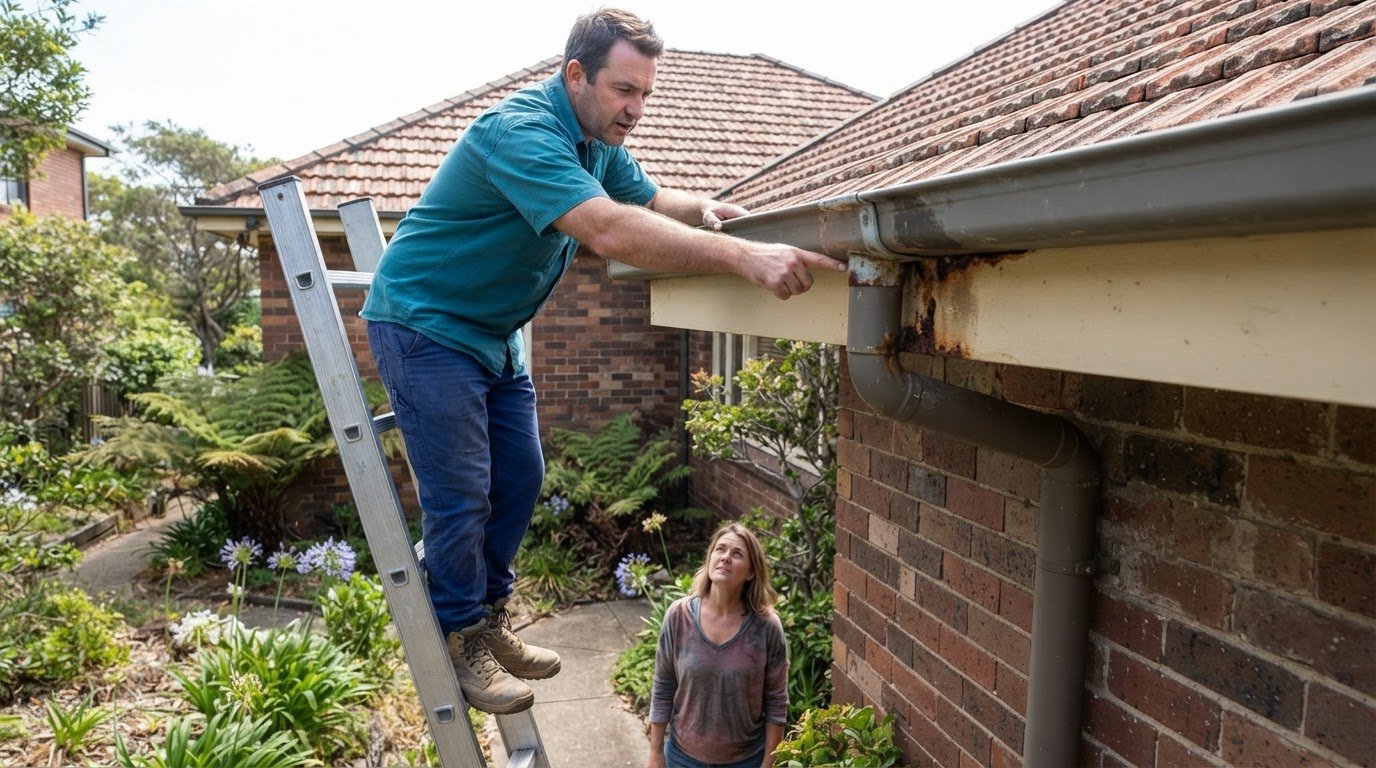
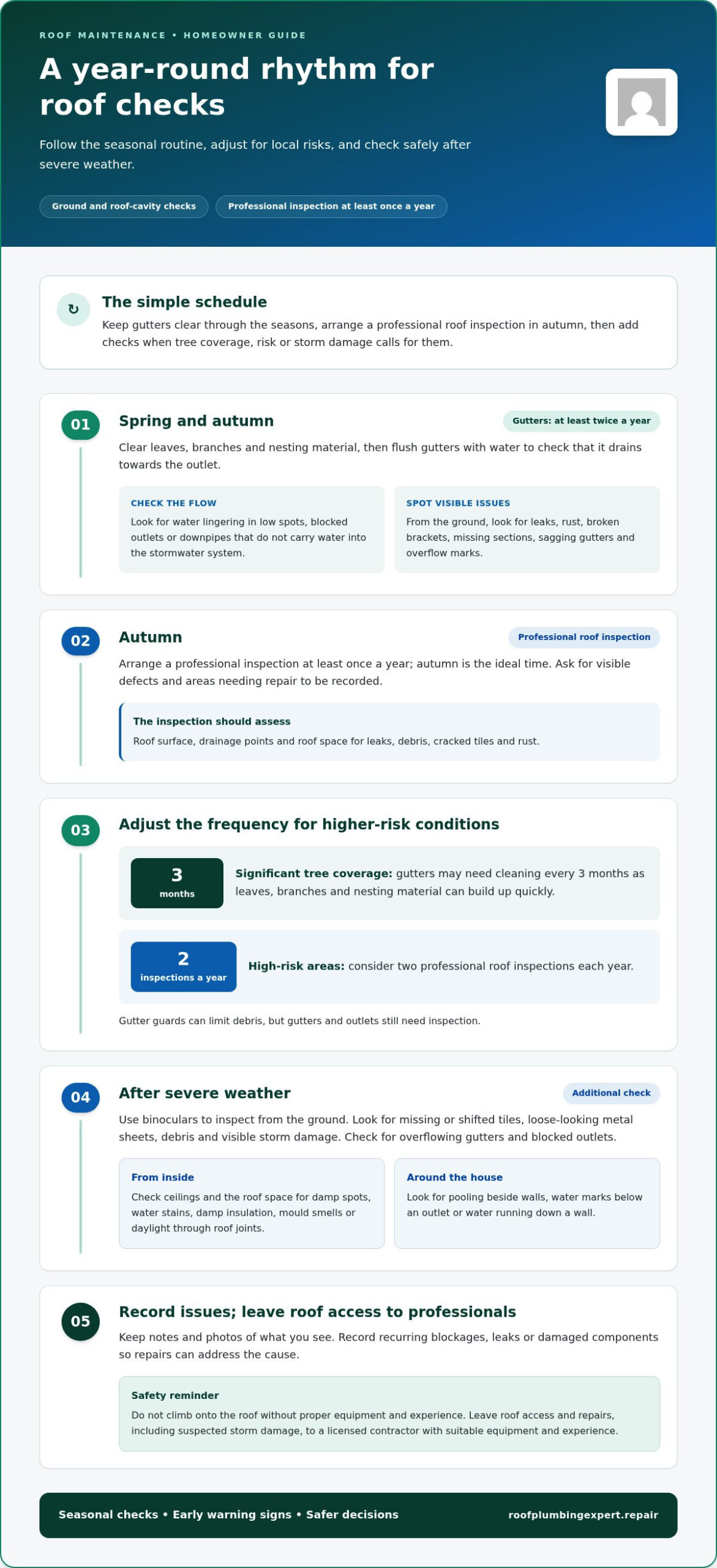
Clear gutters and downpipes at least twice per year, then flush them with water to check drainage. Homes with significant tree coverage may need cleaning every 3 months because leaves and branches can quickly restrict water flow. As part of a roof maintenance checklist for homeowners, include a spring and autumn gutter check.
Debris in gutters can cause water to overflow during heavy rain. From the ground, look for overflow marks, sagging sections and pooling water near exterior walls. Repeat the visual check after heavy storms, when branches or nesting material may have blocked an outlet.
- Remove leaves, branches and nesting material. Debris can block the channel and prevent rainwater reaching the downpipe.
- Flush gutters with water after clearing them. Watch whether water travels towards the outlet or remains in low spots, which can indicate a blockage or poor fall.
- Check each downpipe connection to the stormwater drain. A loose connection or blockage can send roof water down the wall or towards the foundations.
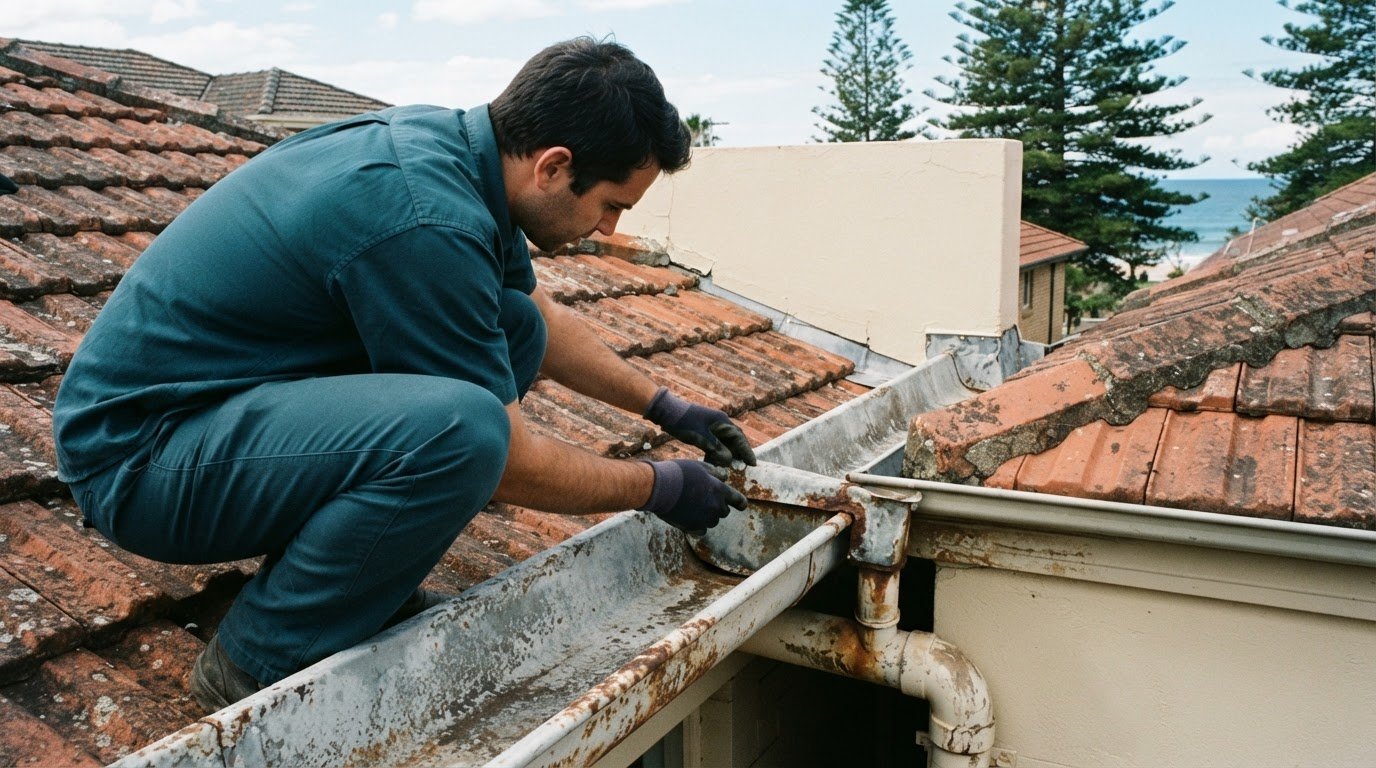
- Look for leaks, rust, broken brackets and missing sections. Drips beneath joints or a gutter pulling away from the fascia can signal damage that needs repair.
- Check where water collects after a storm. Pooling beside walls, overflowing gutters or water marks below an outlet can point to a drainage problem.
- Inspect the roof edge and gutters in spring. Clear seasonal debris before summer weather brings heavy rain, and note damaged components for repair.
Check the outlet as well as the gutter channel. Water should flow towards the outlet without lingering in the trough, and downpipes should carry it into the stormwater system. If water pools near the house after flushing, look for a blockage, a disconnected pipe or a section that isn’t draining properly.
If your home is beneath trees, inspect gutters more often than twice a year. Leaves, small branches and nesting material can build up between scheduled cleans, especially after windy weather. Gutter guards can limit debris, but you still need to inspect gutters and outlets.
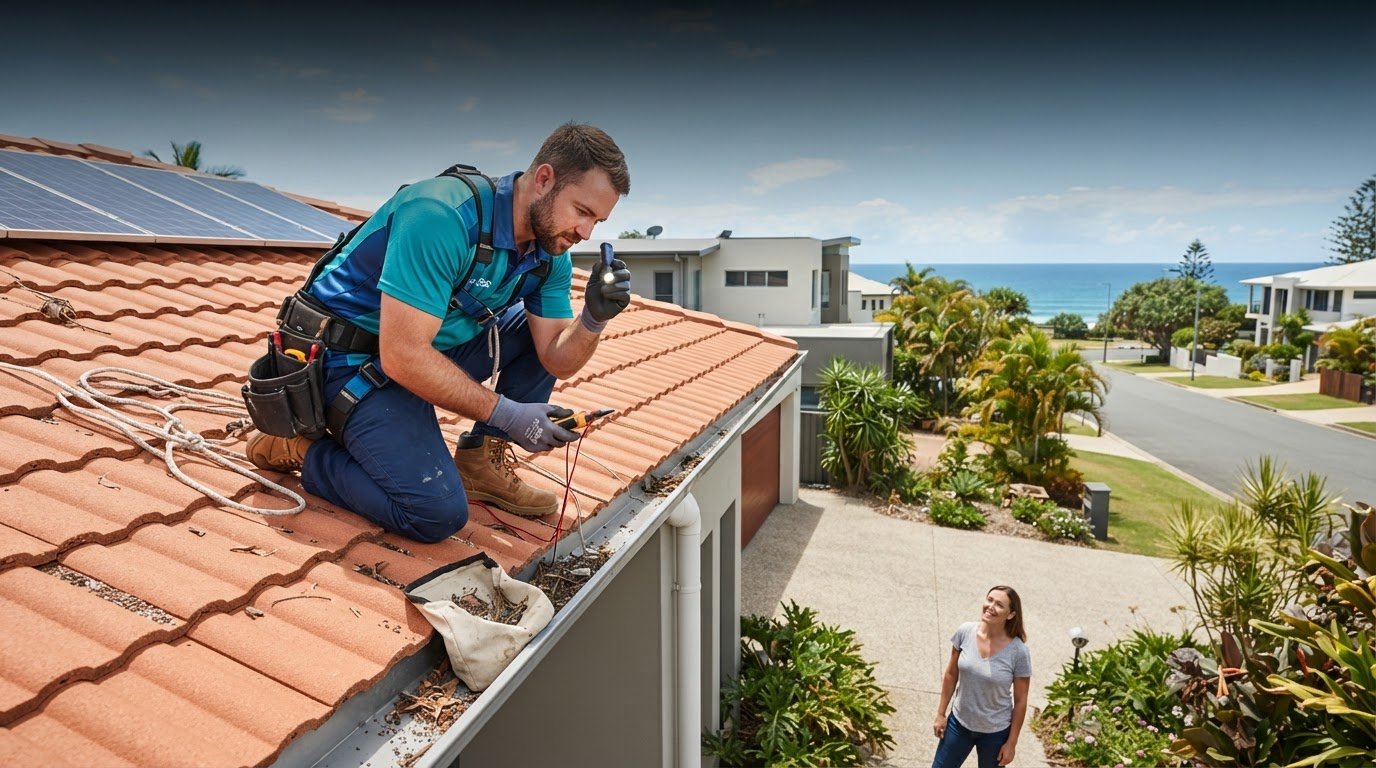
If cleaning from a ladder, use suitable equipment and safety gear. Don’t climb onto the roof without proper equipment and experience. Many checks can be done from the ground. Record broken brackets, leaks and recurring blockages so repairs address the cause, not just the visible debris. Add these notes to your roof maintenance checklist for homeowners to track issues between seasonal cleans.
How often should I have my roof professionally inspected in Australia?
Arrange a professional roof inspection at least once a year, ideally in autumn. Homes in high-risk areas may need two inspections a year, while storm damage calls for an additional check after the event.
A roof inspection should assess the surface, drainage points and roof space for leaks, debris, cracked tiles and rust. Ask for visible defects and areas needing repair to be recorded, giving you a clear reference for future maintenance.
Tile, metal and flat roofs need different visual checks. Look for cracked or displaced tiles on tiled roofs, rust or loose fasteners on metal sheeting, and blocked outlets or pooled water on flat roofs.
After severe weather, use binoculars to inspect the roof from the ground. Look for missing or shifted tiles, loose-looking metal sheets, debris and storm damage. Don’t climb a ladder or walk on the roof without proper equipment and experience.
Australian work-at-height requirements depend on the jurisdiction and the work involved. For homeowners, the safer approach is to inspect from the ground or roof cavity and leave roof access and repairs to people with suitable equipment and experience.
Routine homeowner checks include looking for leaves, visible damage and signs of leaks from the ground or inside the roof cavity. Have a licensed contractor handle roof repairs, including cracked tiles, rusted sheeting and suspected storm damage.
Termites can threaten timber in and around a home, so arrange an annual termite inspection with a reputable, licensed inspector. Keep this separate from your roof inspection: each check looks for different risks.
There is no single average cost for every Australian roof inspection and maintenance job. Prices depend on roof size, access, materials and scope, and are provided after a quote request.
- Check ceilings and the roof space for damp spots. Water stains, damp insulation, mould smells or visible light through roof joints can indicate a leak.
- Record what you see after severe weather. Notes and photos help track changes between inspections and support a clear repair discussion.
Focus roof inspections on identifying problems, not attempting repairs from a ladder. A documented annual check, plus another inspection after damaging weather, can help catch issues before they spread.
Roof surface, flashing and penetration checks
Inspect the roof from the ground and the roof cavity rather than walking on it. Look over tiles or metal sheets for movement, gaps and visible damage, then check ceilings and the underside of the roof for damp spots, stains or daylight through joints.
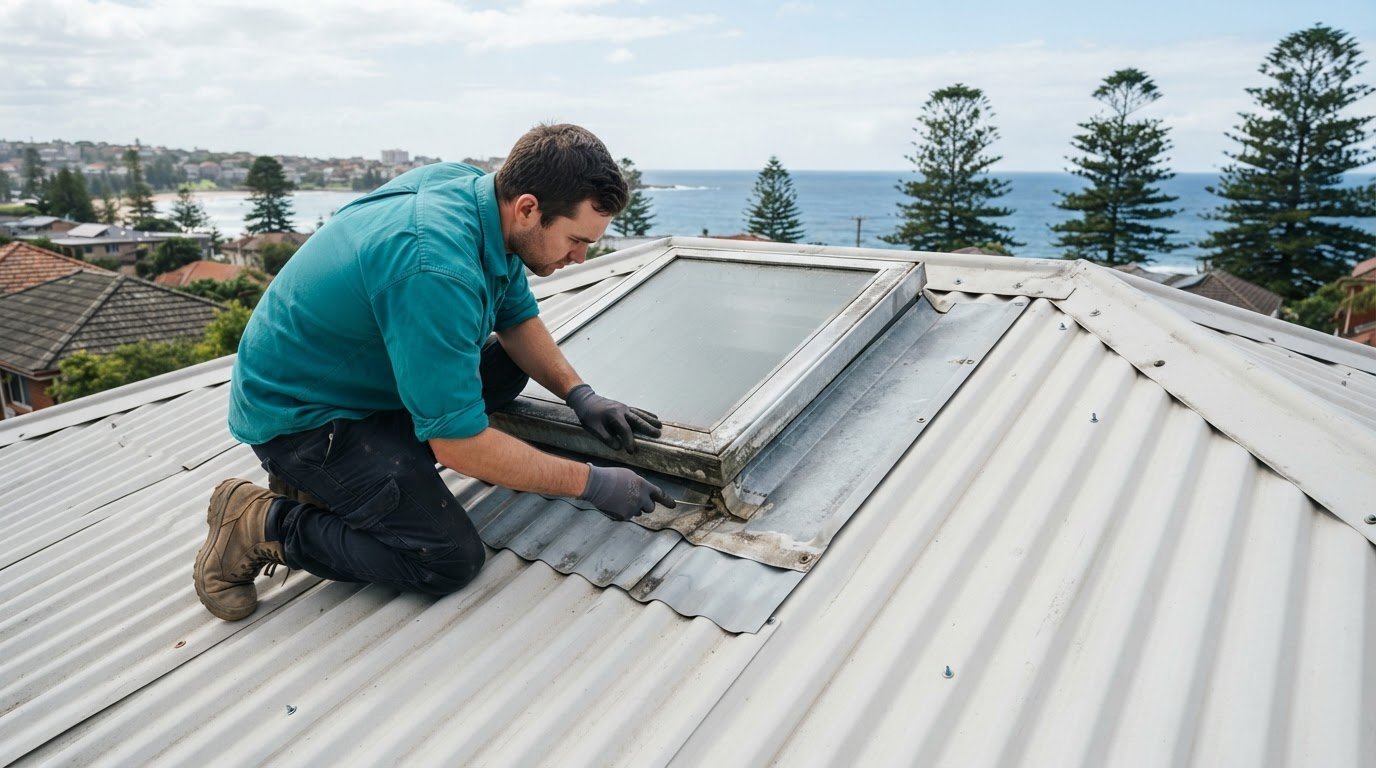
Pay close attention to flashing, which directs water around roof intersections and openings. Check visible edges around chimneys, vents and skylights for gaps, lifting, rust or damaged seals. Even a small opening can let water into the roof cavity when the surrounding roof surface looks sound.
- Scan tiles and sheets from the ground. Look for displaced tiles, loose-looking metal edges or openings between adjoining sections, as these can expose the roof beneath to weather.
- Check flashing around chimneys and vents. Gaps, corrosion or lifted edges can interrupt the watertight junction between the roof and each penetration.
- Inspect skylight surrounds and seals. Cracked or detached seals can allow water to track around the frame and appear inside as a ceiling stain.
- Look for damp insulation and timber in the roof cavity. Moisture, mould smells or rotting timber can indicate water entry above the visible ceiling.
- Compare any ceiling marks after rain. A new stain or a mark that spreads can help identify an active leak or a changing water path.
Use binoculars to examine difficult sections from the ground, including valleys, ridges and areas around openings. Check from more than one angle: a flashing edge may look secure from the driveway but reveal a gap from the side of the house. Don’t climb onto the roof for a closer look.
Inspect the roof cavity only if you can access it safely. Use a torch to check the underside of the roof, insulation and timber near skylights, vents and chimneys. Visible light through a roof joint, damp insulation or a musty smell needs prompt attention, especially if it appears after rain.
Record concerns, such as a stain below a skylight or corrosion beside a vent. Comparing notes and photographs after later wet weather can show whether the problem recurs. If flashing has shifted, seals have failed or water is reaching ceilings, a roofing professional can assess the junction and make suitable repairs. Roof Flashing & Waterproofing addresses vulnerable transitions, while skylight repair may be needed if a leak centres on a frame or seal.
Focus on visible signs rather than attempting DIY repairs at height. Roofing materials and roof openings vary, so a professional assessment can distinguish a failed seal from damage elsewhere along the water path.
Visible damage to roof coverings and fasteners
After heavy storms, high winds or hail, inspect roof coverings from the ground. Look for missing or cracked tiles, lifted metal sheets, damaged ridges and debris lodged in roof valleys. Compare the roofline with earlier photographs to spot changes. Don’t climb onto the roof to investigate; a licensed contractor can assess damage that needs closer inspection.
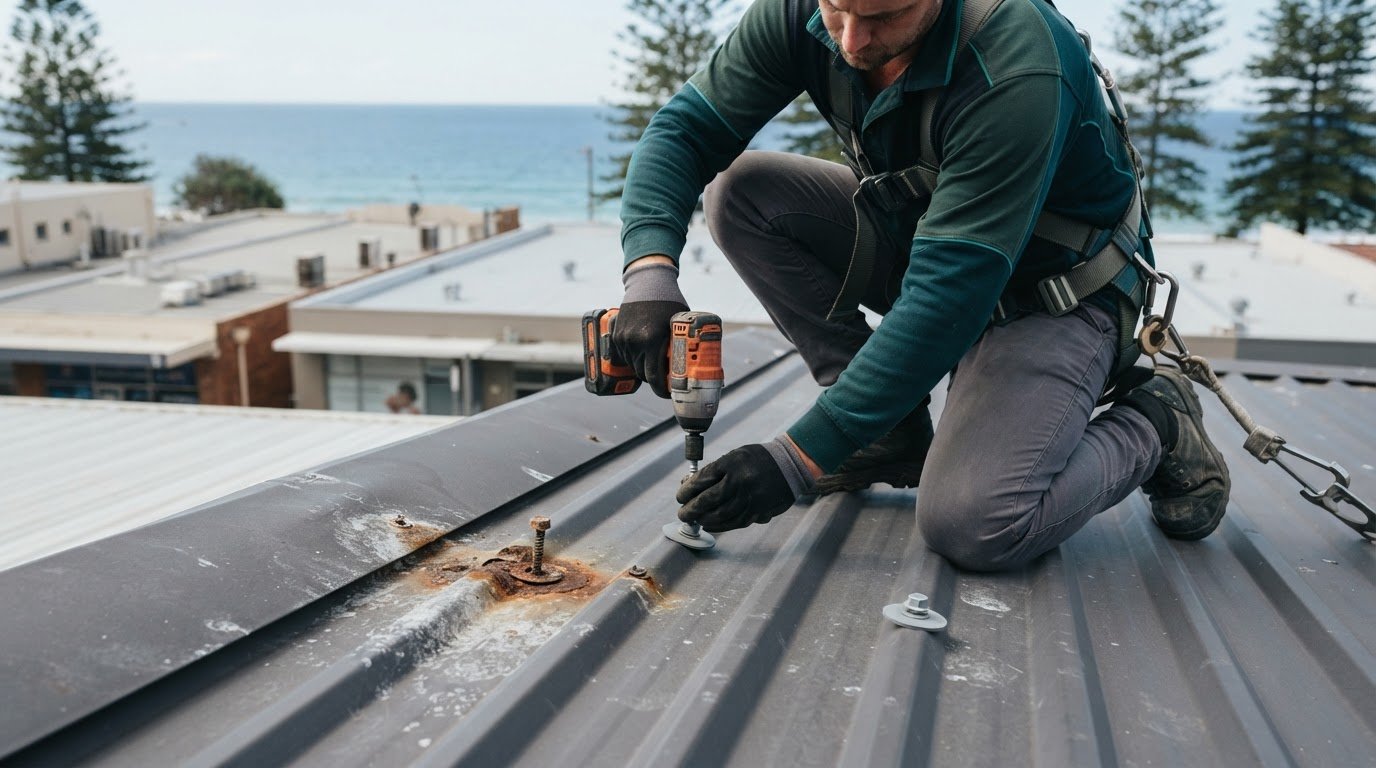
Summer heat can make roofing materials expand and contract, placing strain on sheets, tiles and fixings. Metal-roof screw washers can perish over 10-15 years, creating potential entry points for water. Check for rust around fasteners, loose-looking screws and lifted sheet edges from a safe position below.
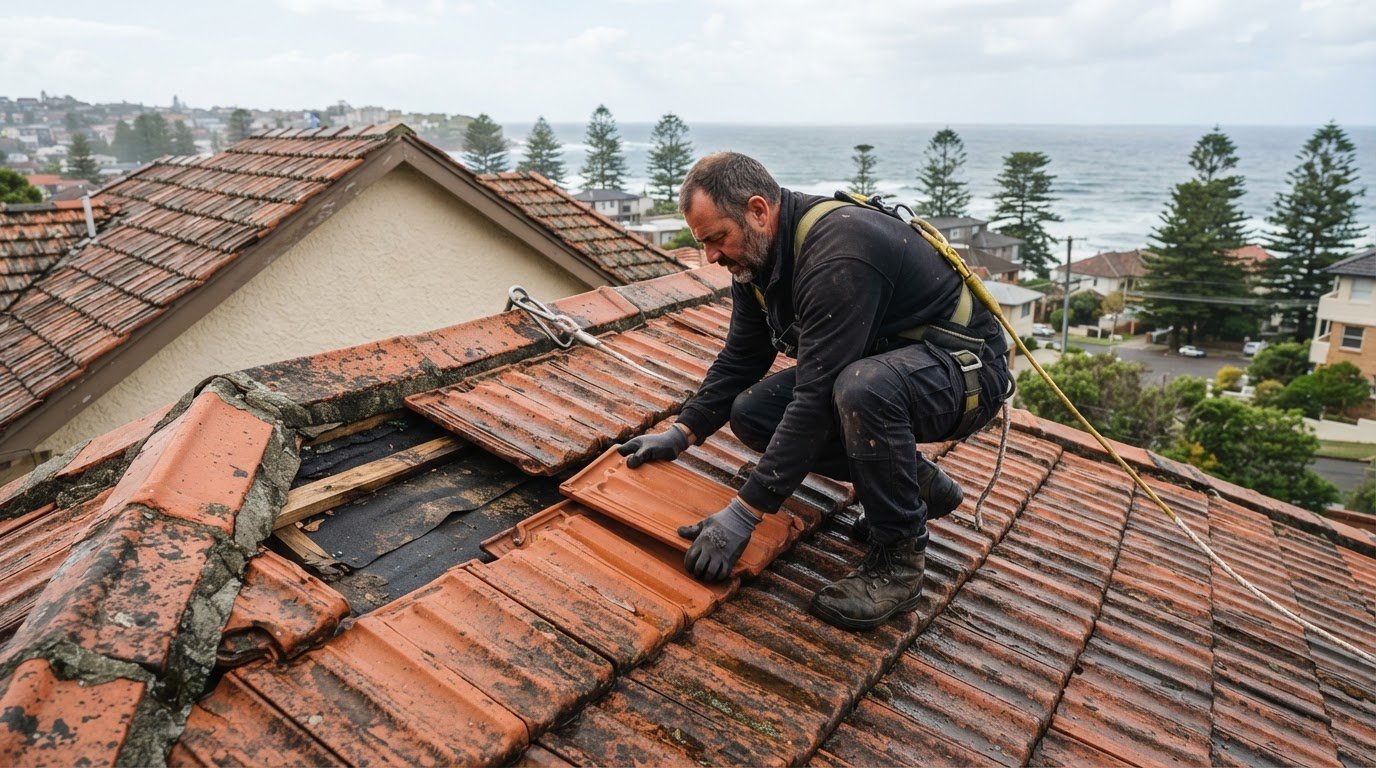
- Look for cracked, missing or displaced tiles. An exposed gap can let weather reach the roof space and damage nearby materials.
- Scan metal sheeting for rust, loose fasteners and lifted edges. Deteriorated screw washers can compromise the seal around a fixing.
- Check roof ridges and valleys for shifted coverings or trapped debris. These areas can reveal damage that’s less visible from the street.
- Look for moss, lichen or algae on roof surfaces. These growths can hold moisture against roofing materials.
- Check the roof space for damp insulation or water marks. Moisture below a damaged section can signal a leak before it appears on ceilings.
- Inspect again after hail or high winds. Impact and wind can loosen coverings or fasteners even when damage isn’t obvious from one viewpoint.
Roof ventilation matters too. Check that vents aren’t visibly blocked and look in the roof cavity for signs of heat build-up, such as damaged or deteriorating roofing materials. Restricted ventilation can allow heat to accumulate and contribute to shingle damage. Don’t enter a roof space if access is unsafe or visibility is poor.
Have moss and lichen assessed before attempting removal. Scraping or walking on roof coverings can break tiles, damage coatings or loosen fasteners. A contractor can determine whether growth is holding moisture and select a suitable cleaning approach for the roofing material.
Record where damage appears and what it looks like, then compare it after the next storm. A sagging roofline, recurring damp patches or daylight through the roof structure needs prompt professional assessment. Have damage repaired by a licensed contractor rather than attempting repairs at height. Replacing a broken tile or securing loose sheeting early can help keep water out of the structure below.
Roof repairs, cleaning and restoration
Repairs should address the source of moisture, not just the visible stain. If a ceiling mark appears during rain, trace the water path from the wet area towards the roof above. The entry point may be a cracked tile, failed flashing, loose ridge capping or a damaged skylight seal.
Arrange prompt repairs for broken coverings and loose roof components. Replace cracked tiles and repair ridge capping where needed, as gaps can let water into the roof structure. On metal roofs, arrange repairs when coating breakdown, rust or loose fasteners expose vulnerable areas. A licensed roofing contractor can assess the damage and select repairs suited to the roof material.
Cleaning also needs care. Moss, lichen and algae can hold moisture against roofing surfaces, but aggressive scraping or pressure can damage tiles and coatings. Remove growth only when the roof is dry, and stay off the roof unless you have suitable equipment and experience. A contractor can assess the growth, roof condition and appropriate cleaning method before work begins.
- Trace damp patches to their likely entry point. Check the roof area above the stain, including joints, flashing and penetrations.
- Replace cracked tiles and repair loose ridge capping. Open joints can admit water and affect nearby roof components.
- Assess metal coatings and fasteners. Peeling coatings, rust or loose fixings can expose the sheet surface and allow water entry.
- Remove moss or algae with a roof-safe approach. These growths retain moisture, while harsh cleaning can worsen surface damage.
- Check concrete-tile ridge-cap mortar every 5-7 years. Deteriorated mortar can loosen ridge capping and create gaps along the roof peak.
- Record repairs and cleaning. Note the location, work completed and any recurring moisture so future inspections can compare changes.
Restoration may suit a roof with widespread wear that remains structurally sound. It can involve repairs, repointing and surface work rather than replacing the whole roof. A professional assessment should consider the roof covering, underlying structure, water entry and extent of deterioration. Repointing addresses ridge-cap joints; it won’t fix a leak caused by damaged flashing elsewhere.
Cleaning alone won’t repair broken tiles, failed seals or rusted fixings. Coating a roof won’t resolve an underlying leak or structural damage either. Identify the fault and complete necessary repairs before deciding whether cleaning or restoration is appropriate. This order helps protect the roof and prevents cosmetic work from hiding active defects.
For a leak, damaged ridge capping or a roof needing restoration, arrange roof leak repair and restoration suited to the problem.
Roof Plumbing Expert: Gutter & Downpipe Installation
Roof Plumbing Expert can help when blocked, damaged or poorly draining gutters need more than routine cleaning. Its Gutter & Downpipe Installation service addresses drainage problems, while Roof Leak Detection & Repair can investigate water entry that continues after gutters are cleared.
For wider roof concerns, Roof Plumbing Expert also provides Colorbond Roofing and Roof Restoration & Repointing. These services can suit homes with worn roof coverings or deteriorating ridge capping. The right work depends on the problem: replacing a damaged drainage section differs from tracing a leak or restoring roof surfaces.
If your checks reveal gutter damage, a recurring leak or roof deterioration, contact Roof Plumbing Expert to discuss the repair. You can also visit roofplumbingexpert.repair.
Turn your inspection notes into a clear next step
A roof maintenance checklist for homeowners is most useful when it leads to a practical decision. Note whether an issue affects water entry, drainage or the roof covering, then prioritise work that protects the home’s structure. Clear records also make it easier to explain what you noticed and where.
If your notes point to damaged drainage, a persistent leak or worn roofing, match the next step to the problem. Roof Plumbing Expert provides Gutter & Downpipe Installation, Roof Leak Detection & Repair and Colorbond Roofing. A focused discussion can help identify work that addresses the cause, not just the visible signs.
There’s no need to wait until a small concern becomes harder to manage. Contact Roof Plumbing Expert to discuss the roof issue you’ve identified and plan a suitable next step. A well-informed repair decision helps you keep protecting your home with confidence.
Frequently Asked Questions
How do I know if my roof needs repointing or just a clean?
Cracked, loose or missing mortar along ridge capping may indicate a need for repointing, while surface grime or lichen alone may call for cleaning. Cleaning won’t secure loose ridge caps or replace failed mortar. From the ground, note whether the ridge line looks uneven or mortar appears to be missing. Don’t climb up to inspect it. A roofing professional can assess whether the issue is limited to the surface or needs repair.
Is lichen on my roof a serious problem?
Lichen doesn’t automatically mean a roof is failing, but it can hold moisture against roofing surfaces. It is more concerning when accompanied by cracked tiles, damaged coatings or recurring damp patches inside. Avoid scraping or pressure-cleaning it yourself, as forceful cleaning can damage roof materials. Note where growth is concentrated, then arrange an assessment if it spreads or appears alongside other signs of deterioration.
What is the average lifespan of a roof in NSW or Queensland?
Roof lifespan depends partly on the material and the condition of the structure beneath it. Concrete tile roofs in NSW and Queensland typically last around 50 years. Terracotta tiles can exceed 100 years if the underlying structure remains sound, while asphalt shingle roofs generally last 20 to 30 years. These are material-specific expectations, not a replacement schedule; visible deterioration and maintenance history also matter.
What should homeowners include in a roof maintenance checklist in Australia?
Keep a record of roof inspections, visible damage, repairs and recurring leaks. For a Mainly Beach home, note where ceiling stains appear and whether they change after rain. Record gutter blockages, loose-looking roof components and completed work, adding dated photos where useful. These details create a practical maintenance history and may help demonstrate upkeep when making an insurance claim.
How often should Australian homeowners inspect and maintain their roof?
Arrange a professional roof inspection at least annually, ideally in autumn; homes in high-risk areas may need two inspections per year. Clean gutters at least twice per year, or every 3 months where significant tree coverage increases debris. Add a ground-level visual check after damaging weather. If you notice a new leak or displaced roof material between scheduled checks, don’t wait for the next annual inspection.
What are the warning signs of roof damage, leaks, or structural problems?
Watch for new ceiling stains, damp insulation, a mouldy smell, rotting timber or daylight through roof joints. Outside, a changed roofline, displaced coverings, rust or damaged ridge capping can signal trouble. A stain that grows after rain or appears in a new room needs attention. Record its location and timing, since the indoor sign may not be directly below the roof entry point.
How should roofs be checked and maintained after storms, hail, or bushfires?
After storms or hail, check from the ground for shifted coverings, impact marks and debris, then look inside for fresh damp patches. After a bushfire, wait until the area is safe before looking for visible heat damage, ash or affected drainage points. Don’t climb onto or clean a potentially damaged roof yourself. Photograph visible changes and arrange a professional assessment if you spot damage or signs of water entry.
Does regular roof maintenance affect home insurance coverage or warranty in Australia?
Inspection and repair records can help demonstrate roof maintenance when making an insurance claim, but they don’t determine whether a claim is covered. Insurance policies and roof warranties have their own terms, so read the documents that apply to your home. Keep invoices, inspection notes and dated photographs together, especially after repairs or damage from severe weather.