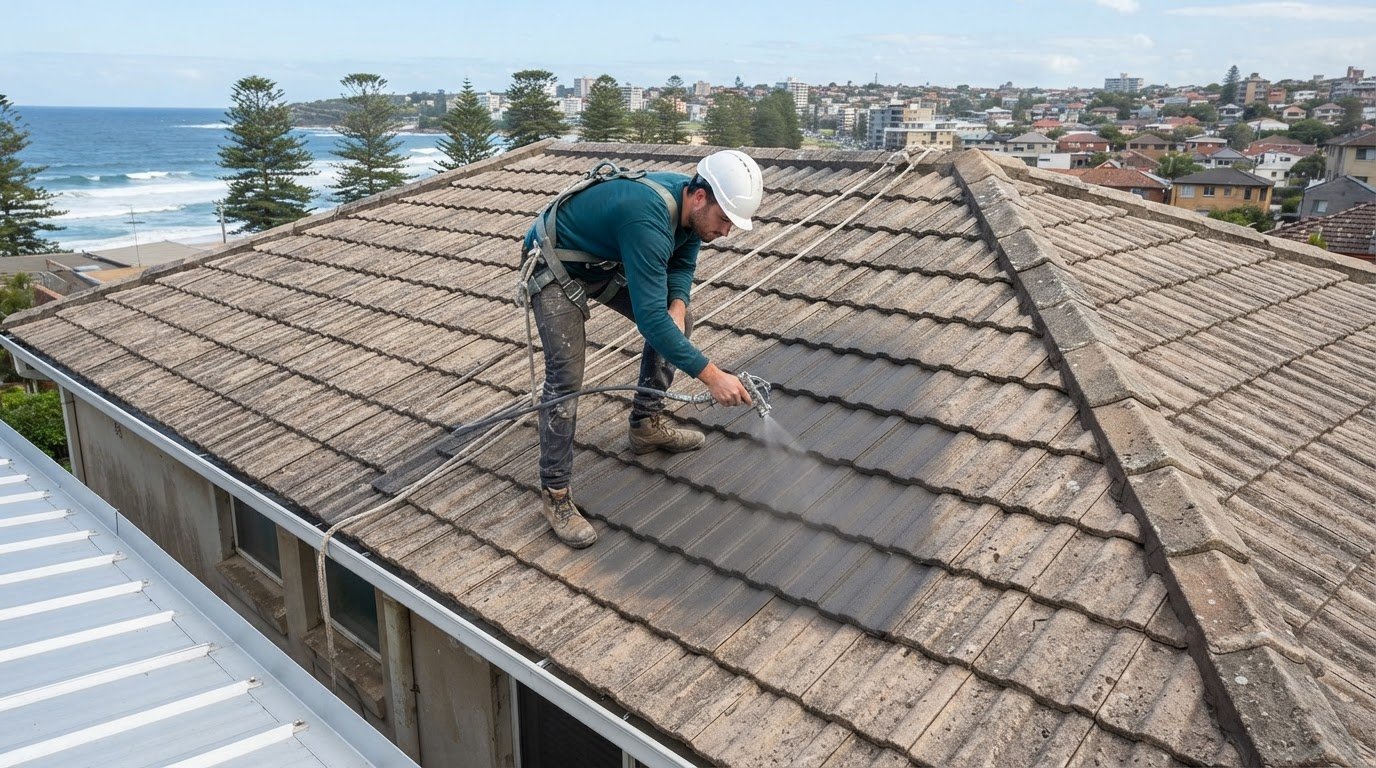
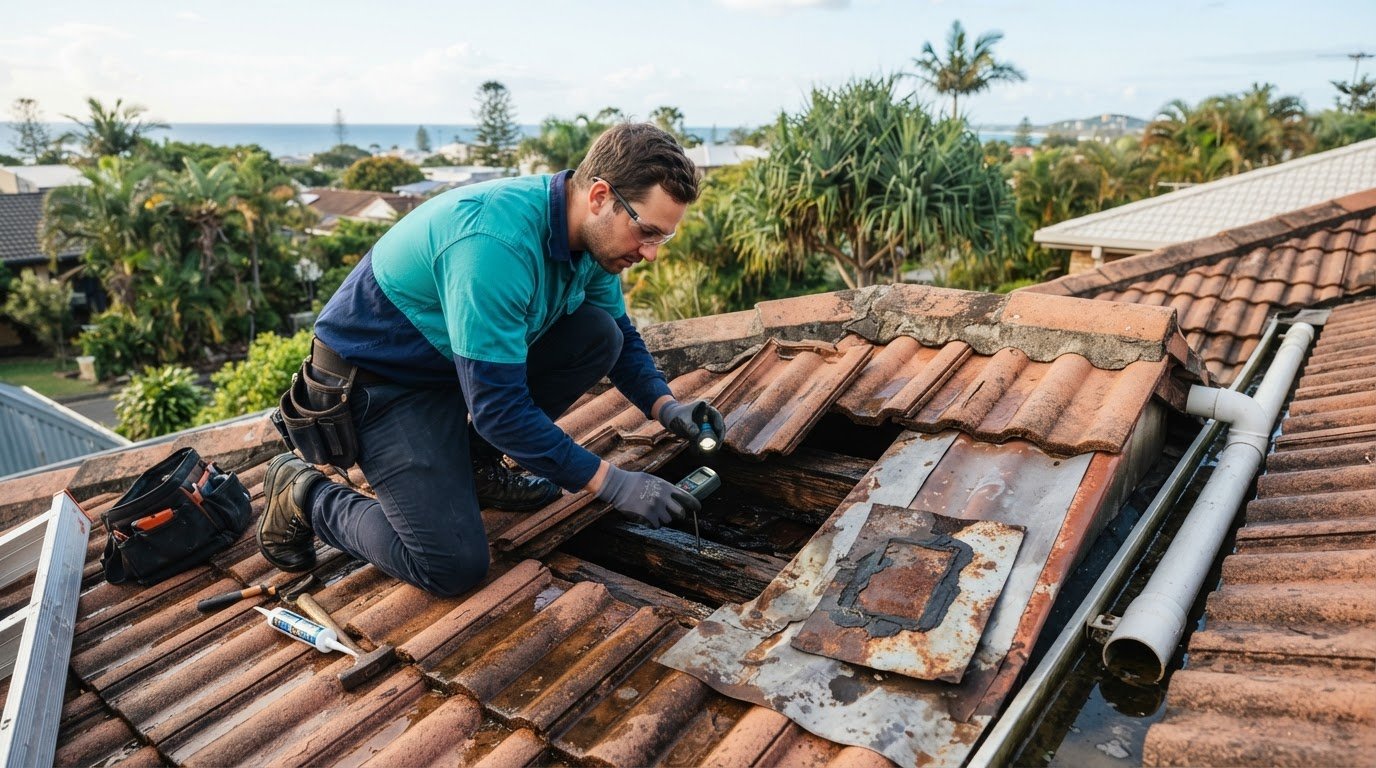
A leak that stops dripping after a quick patch may still be letting water into the roof. The cost to fix a roof leak in Australia in 2026 depends on its cause, roof access and how far the damage has spread, so act promptly: early action within the first 48 hours can affect the repair cost.
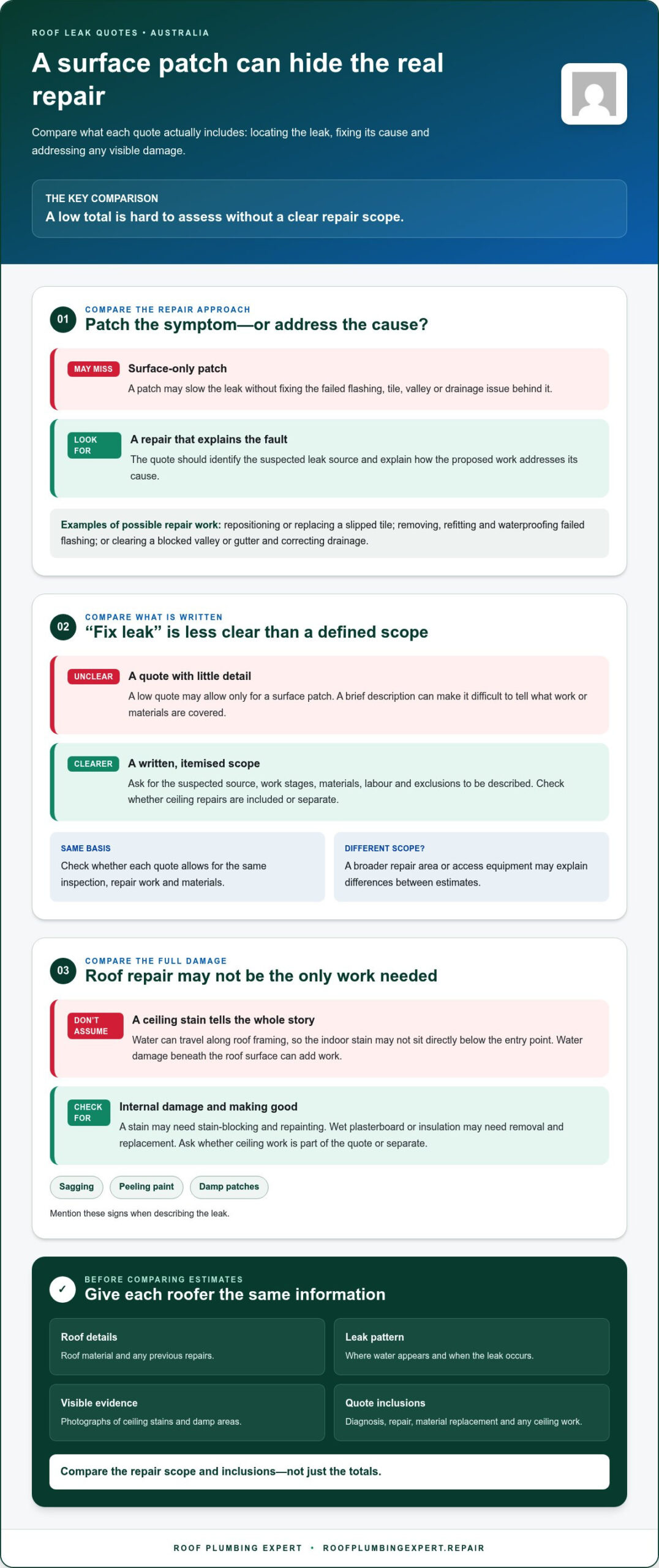
It’s understandable to hope a small stain or occasional drip can wait, but water can travel from the entry point and damage areas you can’t see. A temporary patch may slow the leak without fixing the failed flashing, tile, valley or drainage issue behind it.
This guide explains how roof leak repair scope varies by cause and location in Australia, what distinguishes a temporary fix from a lasting repair, and what to do when water gets inside. You’ll also learn which signs point to a problem that needs more than a quick patch, so you can make a clearer decision about protecting your home.
Key Takeaways
- Repair scope depends on the leak’s cause, roof access and whether water has damaged materials beneath the roof surface.
- Costs can vary between Australian cities, so compare the repair work and inclusions described in quotes, not just the totals.
- A patch that only masks the entry point may not fix the failed flashing, tile, valley or drainage issue behind a recurring leak.
- Photograph the leak and affected areas, and note when the water appears to help describe the problem when requesting a quote.
- For storm-damaged roofs, the State Emergency Service can help with temporary tarping by phone on 132 500, according to qld.gov.au.
Repair costs by leak cause
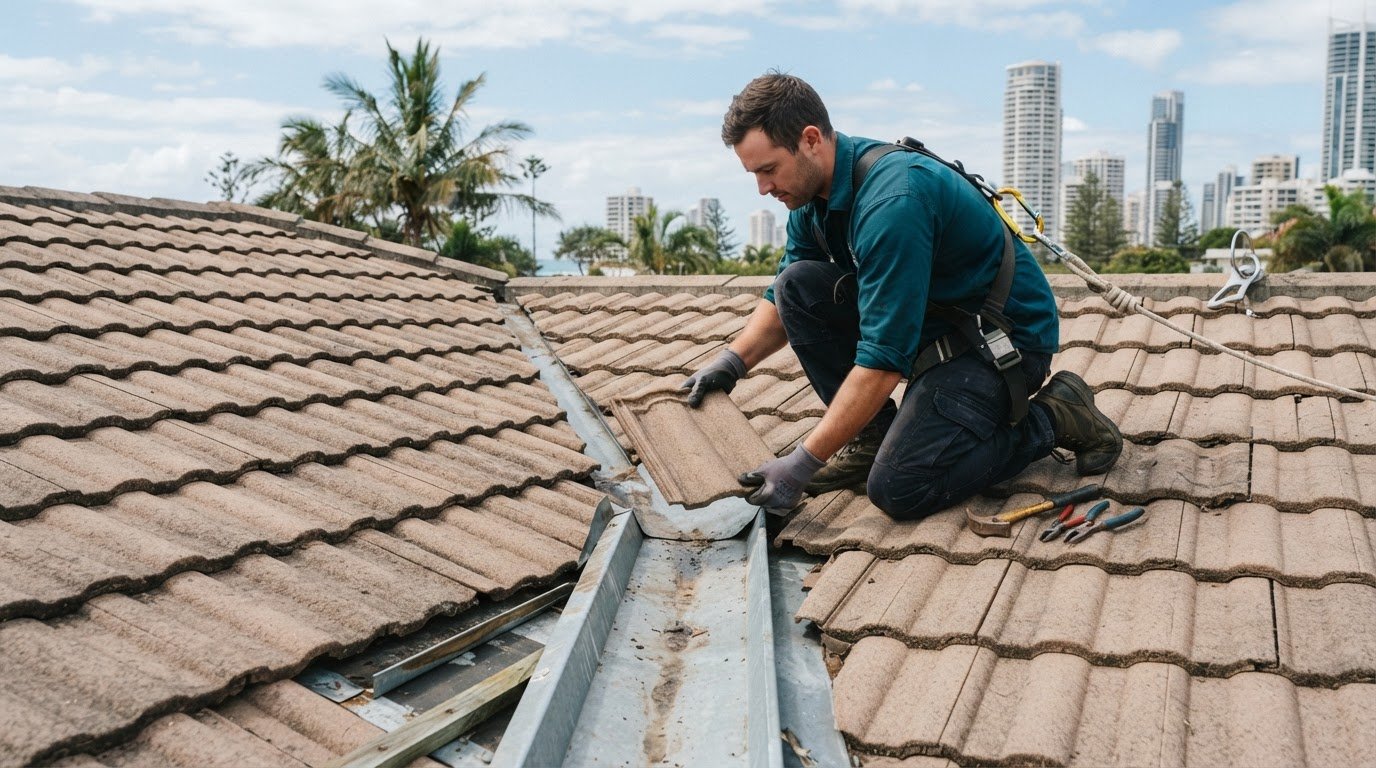
The cause of a roof leak determines the repair work required. A slipped tile may need repositioning or replacement, while failed flashing around a chimney or skylight can require removal, refitting and waterproofing. A blocked valley or gutter may need clearing and drainage correction. The cost to fix a roof leak in Australia in 2026 depends on the fault, roof access and whether water has damaged materials beneath the roof surface.
Start by identifying the likely entry point, but don’t assume the indoor stain sits directly below it. Water can travel along roof framing before appearing on a ceiling. A leak near a skylight, for example, may involve its flashing or nearby roofing rather than the skylight itself. The repair scope changes if inspection finds several defects instead of one localised fault.
Ceiling damage can add work beyond the roof repair. A stain may need stain-blocking and repainting, while wet plasterboard or insulation may need removal and replacement. Mention any sagging, peeling paint or damp patches when describing the problem. These signs help distinguish surface marking from more extensive internal water damage, which may require separate repairs after the roof leak is fixed.
Roof shape and material influence access and repair methods. A steep or high roof can be harder to work on than a low-pitch roof. On a tiled roof, a roofer may need to lift adjacent tiles to inspect sarking or battens. On Colorbond roofing, a corroded sheet, failed fastener or poorly sealed penetration may need attention. Replacing a roof section involves more work than securing one loose component.
Storm damage can affect several areas at once, including lifted metal sheets, broken tiles and blocked drainage. For storm-damaged roofs in Australia, the State Emergency Service can help with temporary tarping by phone on 132 500, according to qld.gov.au. Temporary covering limits exposure while permanent repairs are arranged, but it doesn’t correct the roof defect. Keep clear of damaged roof areas and record which rooms show water entry.
Age-related leaks may signal broader deterioration. Cracked ridge pointing alongside slipped tiles, for example, can indicate that a single patch won’t resolve the full problem. A localised defect may need a targeted repair, while deterioration across connected roof areas may call for broader remedial work. An inspection should identify the cause and specify which damaged materials need replacing.
Roof leak costs in major Australian cities
For a homeowner in Mainly Beach, national estimates are a starting point, not a local quote. The repair scope, roof access, materials and extent of water damage shape the work required. A quote should identify the suspected leak source and explain what the repair includes. Comparing those details is more useful than relying on a city-wide average that may describe a different roof or repair.
Local conditions still matter. The roof’s pitch, height and layout affect access, while the material determines how a roofer approaches the damaged area. A tiled roof may require careful handling around adjoining tiles; metal roofing may need attention to sheet joins or fasteners. Ask for the inspection findings and repair method to be described clearly, especially if the leak has appeared before.
Solar panels can affect access during roof renovation work. The impact depends on the number of panels, access and the roofing work needed beneath them. If panels are present, ask whether the quote includes their removal and reinstatement or treats those tasks separately, so the full scope is clear.
Restoration costs per square metre vary with roof area, shape, material, access and preparation. Cracked tiles, worn pointing and other defects can add repair work before restoration proceeds. A complex roof may involve more handling than a broad, simple roof. For a Mainly Beach property, compare the proposed scope and affected roof areas rather than assuming two homes of similar size need the same work.
Cleaning is separate from leak repair. It may make debris or visible surface damage easier to identify, but it won’t fix failed flashing or a leak beneath the roofing. Keep cleaning separate from repair work when comparing quotes, so it’s clear which problem each task addresses.
Ask for each roofer to state whether the estimate covers diagnosis, repair, material replacement and any ceiling work. Differences between quotes may reflect access equipment or a wider repair area, rather than different prices for the same job. In Mainly Beach, a clear written scope helps you compare estimates on equal terms and understand how the proposed work responds to your roof’s condition.
If deterioration affects several roof areas, roof restoration and repointing may be relevant to the decision. Consider how the proposed work addresses the roof as a whole, not only the visible leak.
Cheap Leak Fix vs Proper Repair: What Are You Really Paying For?
A quote should explain how the roofer will locate the leak, fix its cause and address visible damage. Compare the work included, not just the proposed method.
Comparing contractor quotes
When comparing roof repair quotes, check whether each allows for the same inspection, repair work and materials. A low quote may cover only a surface patch, while another includes replacing failed flashing and checking the ceiling below.
Ask for each quote in writing, with the suspected leak source, work stages, materials, labour and exclusions clearly described. Check whether making good damaged ceiling surfaces is included or separate. A quote explaining how the repair addresses the cause is easier to assess than one that simply says “fix leak”.
Give each roofer the same information: roof material, where water appears, when the leak occurs and any previous repairs. Include photographs of ceiling stains, damp patches or a leaking skylight, plus details of recent storms or gutter overflow. These observations help the roofer assess likely entry points, but the visible ceiling mark may be away from the roof defect.
Ask whether the quote includes a roof inspection, leak diagnosis, labour, materials, site clean-up and any internal ceiling work. Request a written explanation if the inspection identifies more damage than expected. The price depends on the leak’s cause, access, materials and repair scope; a quote provides the exact figure for your case.
Compare quotes line by line. Check that each describes the same repair area and distinguishes temporary weather protection from permanent work. If one roofer proposes replacing a component and another proposes sealing it, ask each to explain how their method addresses the observed defect. Keep the written quotes and inspection notes together, so you can compare recommendations without relying on memory.
Licences, warranties and consumer protections
Licensing, certification and contract requirements vary across Australian states and territories. Victoria, Queensland, New South Wales and South Australia each have rules affecting some roof or building work, so check which requirements apply to the work at your property. Roof Plumbing Expert is Fully licensed and insured, with licensed tradespeople on every job.
Ask for any warranty terms in writing, including what work they cover and how to raise a defect. Consumer protections and contract obligations also matter: keep the signed scope, payment records and messages about changes. These records make it easier to understand what was agreed if the repair fails or the completed work differs from the quote.
For a leaking roof, provide clear access information and identify rooms with water marks. A detailed inspection and written scope help distinguish a temporary patch from a repair that addresses the underlying fault.
Immediate steps to take when a roof leaks
Look for fresh ceiling stains, bubbling paint, damp walls or water dripping indoors. Photograph the affected areas, contain water with a bucket, move belongings and arrange a roof inspection promptly.
Identifying a roof leak
A roof leak is water entering through a defect in the roof or its drainage, then appearing inside the home. Finding visible signs early helps you describe the problem and limit further damage.
Check the ceiling, upper walls and roof-space access area for dampness, discolouration, peeling paint or a musty smell. A cracked tile, rusted metal sheet, damaged flashing or blocked valley can let water in. The ceiling stain may appear away from the roof entry point because water can travel along framing before dripping.
Note when the leak appears. For example, water that shows up during heavy rain may point to a different entry path from moisture that persists after the weather clears. Photograph the stain and any visible roof damage from the ground. Record which room is affected and whether the leak worsens in particular conditions.
Preventing further damage before repairs
Prevent further damage by limiting water exposure indoors while leaving roof access and permanent repairs to a professional. Acting promptly can reduce the chance of a small leak spreading into ceiling, insulation or timber damage.
Move furniture, electronics and stored items away from the drip. Place a bucket beneath active water and use towels to catch splashes. If water is pooling in a ceiling, keep people clear of the area and avoid pressing or puncturing the surface. Photograph the damage before moving belongings, so you retain a clear record.
Don’t climb onto a wet or damaged roof to cover a cracked tile or rusted sheet. A temporary patch applied in the wrong place can redirect water rather than stop it. Keep clear of roof edges and damaged areas, and arrange an inspection to locate the entry point. After storm damage, don’t mistake temporary protection for a permanent leak repair.
Contact your insurer promptly if the leak followed a storm or other sudden event. Keep photographs, note when the water first appeared and retain records of any communication. Check the policy wording for the claims process and evidence requirements. If water reaches a light fitting or other electrical point, keep clear and contact a qualified professional for advice.
Within the first 48 hours after discovering a leak, arrange an inspection and share your photographs, notes and any history of previous repairs. Clear information helps the roofer assess whether the likely cause is a valley, flashing, tile or rusted roofing component, and define the appropriate repair.
Roof leak diagnosis and detection
Accurate diagnosis starts by tracing water from the indoor symptom back to its roof entry point. A ceiling stain under a skylight, for example, may come from failed flashing rather than the glass itself. The distinction matters: repairing the wrong component can leave the leak active and allow moisture to spread through insulation, timber or plasterboard.
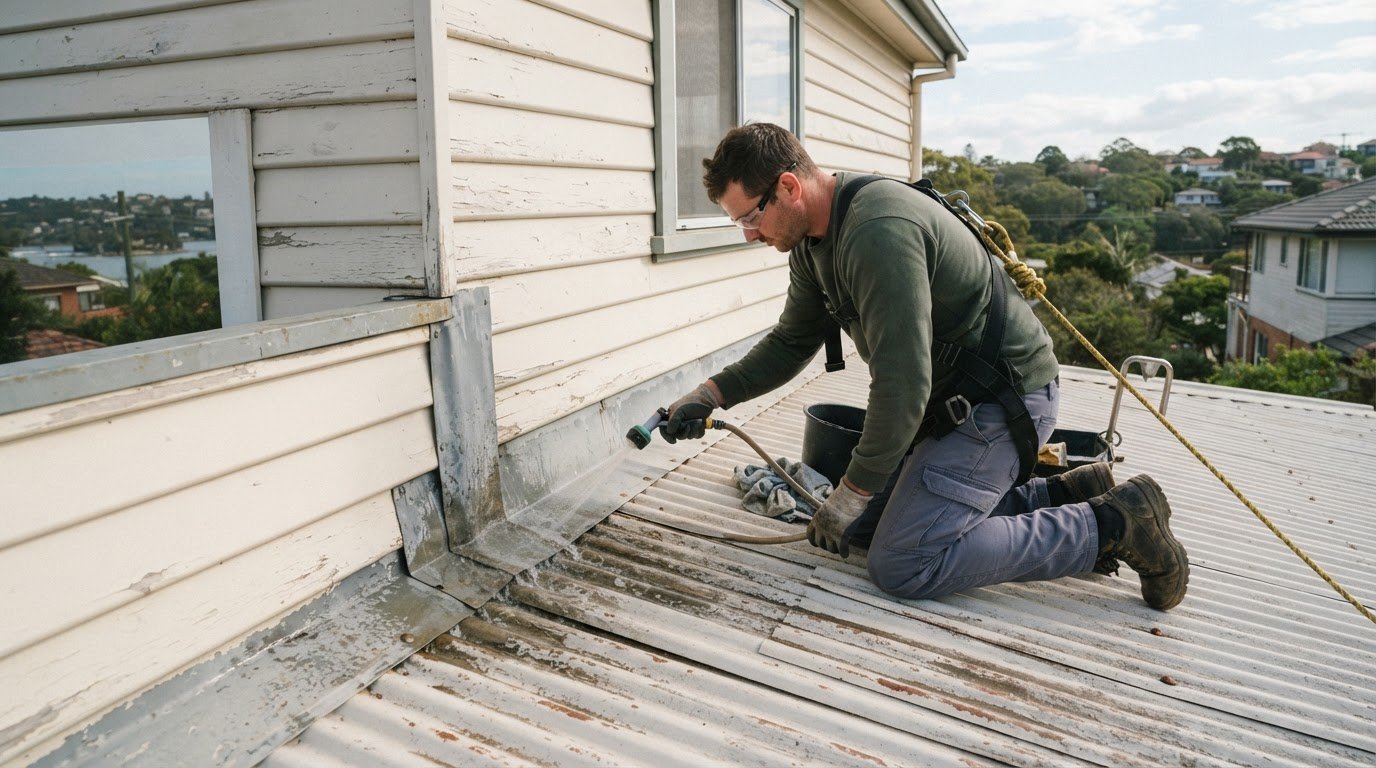
A roofer can compare the location of dampness with the roof features above it. Common inspection points include flashing around chimneys and skylights, valleys where roof planes meet, gutters, downpipes and roof penetrations. On tiled roofs, cracked or displaced tiles may expose the layers below. On metal roofing, attention may turn to sheet joints, fasteners, corrosion and sealant.
Water testing can help trace a leak when a visual inspection doesn’t reveal its source. A professional introduces water to a controlled roof section, then checks whether moisture appears inside. Testing one area at a time helps narrow the entry point. Randomly wetting the whole roof can make results harder to interpret, especially where water travels along framing.
Thermal imaging or moisture mapping can help locate damp areas behind a ceiling or wall surface. These tools support an inspection by showing temperature differences or moisture patterns, but they don’t identify every roof defect on their own. The findings need to be compared with roof details such as nearby flashing, a valley or a gutter connection.
Ask for the diagnosis to connect three things: the observed indoor signs, the suspected roof entry point and the proposed repair. For example, a damp patch beside a skylight should lead to an assessment of its perimeter flashing and surrounding roofing. A written explanation can also distinguish active moisture from older staining, helping clarify the roof leak repair required.
Good detection can prevent repeated patching in the wrong place. If water appears in one room during heavy rain, record the conditions and take photographs before the area dries. Share whether the leak occurs near a chimney, skylight or roof valley. Those details give the inspection a useful starting point without treating the ceiling mark as proof of the exact source.
Diagnosis also helps define whether the work is localised or involves connected components. A blocked gutter can cause overflow, while damaged flashing may allow water behind roofing even when the gutter drains correctly. Repair costs depend on the fault, access and extent of damaged materials, so a clear diagnosis helps define a specific scope rather than a broad guess.
If water keeps appearing after previous patching, arrange a professional assessment rather than applying another surface seal. Arrange roof leak detection and repair to identify the source and define the repair required.
Roof Plumbing Expert: Gutter & Downpipe Installation
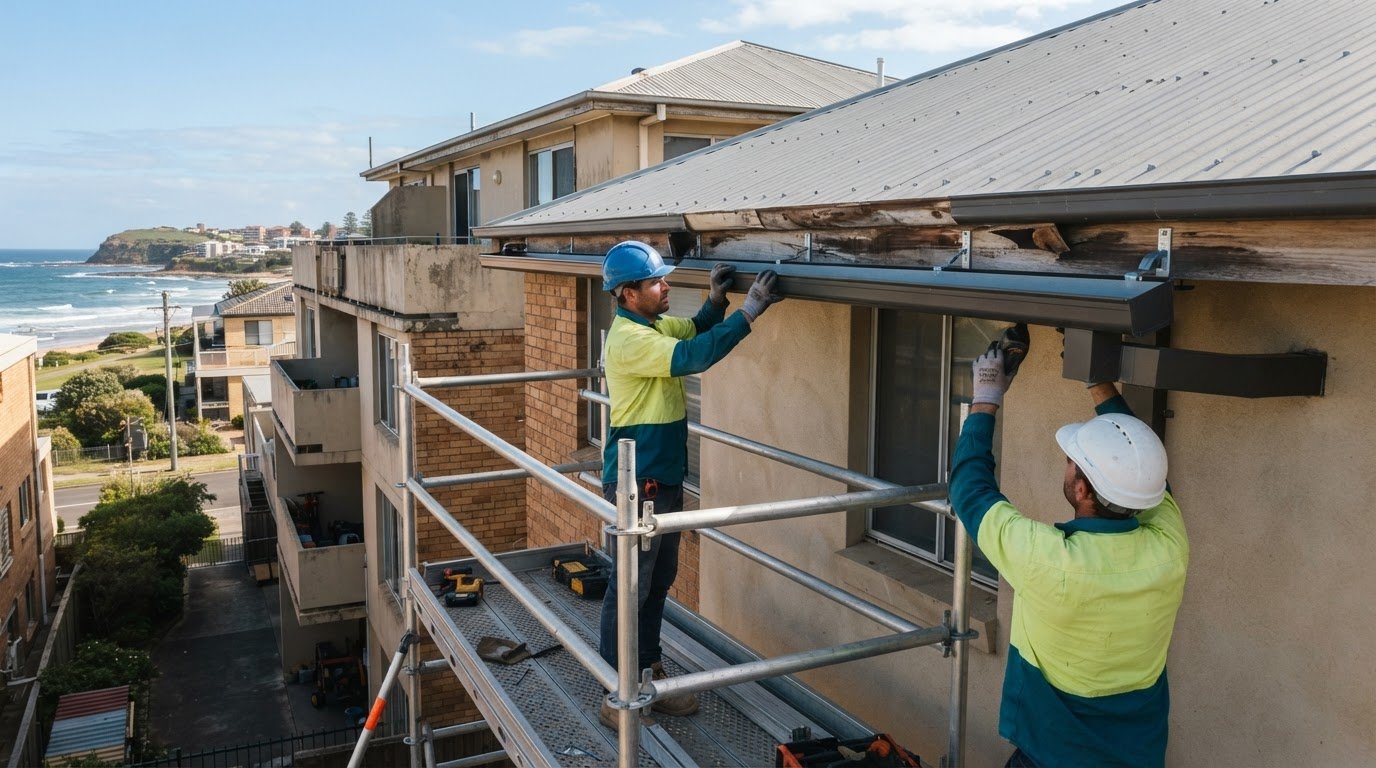
Roof Plumbing Expert helps Mainly Beach property owners with leak diagnosis, roof repairs and drainage issues. Roof Leak Detection & Repair addresses leaks, while Gutter & Downpipe Installation can help when drainage contributes to water entry. The right next step depends on the fault, such as overflowing gutters or a defect in the roof covering.
For recurring leaks or water entering around a roof feature, an inspection can help identify the cause and define the work. Roof Restoration & Repointing may suit deterioration across tiled areas, while Colorbond Roofing covers metal roofing needs.
To discuss a roof leak or drainage concern in Mainly Beach, contact Roof Plumbing Expert.
Make the next repair decision count
A leak is easier to manage when the repair addresses the source, not just the mark it leaves indoors. Use the inspection findings and written scope to decide what needs attention now and what work supports the roof’s longer-term condition. That gives you a clearer basis for weighing the cost to fix a roof leak in Australia in 2026 against the consequences of leaving the underlying fault unresolved.
Roof Plumbing Expert provides Roof Leak Detection & Repair, Gutter & Downpipe Installation and Colorbond Roofing. The right service depends on whether the issue stems from a roof defect, drainage or roofing materials. A clear explanation of the fault and proposed work helps you decide what to do next.
If water is still getting in, or a previous patch hasn’t solved the problem, contact Roof Plumbing Expert to discuss the next step. A sound repair starts with knowing what needs fixing, and you can take that step towards protecting your home.
Frequently Asked Questions
What to do if your roof is leaking?
Limit water damage indoors, document what you can see and arrange a roof assessment. Move belongings away from drips, catch water in a container and take dated photographs of affected rooms. Note which areas leak and whether it happens during particular weather. Don’t climb onto a wet or damaged roof. If storm damage is involved, contact your insurer about its claims process and keep records of your communications.
Will insurance pay for a roof leak?
Insurance may cover a roof leak caused by sudden storm damage, depending on your policy wording and circumstances. Photograph the damage, record when you first noticed it and contact your insurer to understand its claims process. Keep receipts for necessary work and copies of repair assessments. Before arranging permanent work, clarify what evidence your insurer needs and whether it wants to assess the damage first.
Are leaking roofs covered by insurance?
Not every leaking roof is covered. Policies may cover sudden storm damage but often exclude leaks linked to poor maintenance, ageing materials or gradual deterioration. For example, a storm-damaged roof may be treated differently from a long-standing leak around deteriorated flashing. Read the policy wording for exclusions, excesses and claim requirements, then report the damage promptly. Keep photographs and records showing when the leak appeared.
When Does It Make Sense to Stop Repairing and Think Bigger?
Consider broader roof work when repeated repairs haven’t stopped leaks or the damage involves several connected areas. Compare the proposed repair scope with the roof’s overall condition, including damaged battens, sarking and multiple leak points. A written assessment can help distinguish a local fault from a larger roofing problem.
What is the average cost to repair a roof leak in Australia in 2026?
These ranges aren’t a fixed quote: the final amount depends on the leak’s cause, roof access, materials and any damage beneath the roof. A clear inspection scope helps explain where a particular repair sits within those ranges.
What are typical roof leak repair prices for tile, metal, and flat roofs in Australia?
Flat-roof costs depend on the roofing material, drainage design and location of the leak, so the repair scope matters more than the roof label alone. Market estimates aren’t a service provider’s quote.
How much do common roof leak fixes cost, such as replacing tiles, resealing flashing, or repairing gutters?
The exact scope depends on the defect and whether adjacent roofing also needs attention.
What factors increase the cost of roof leak repairs in Australia, including access, roof pitch, and damage extent?
Steep pitches, difficult access and damage beyond the roof surface can increase the work involved. A major repair estimate for a steep-slope roof also exceeds the estimate for a normal-slope roof of the same stated length and height. Multiple leak points, damaged sarking or rotten battens can expand the repair scope.