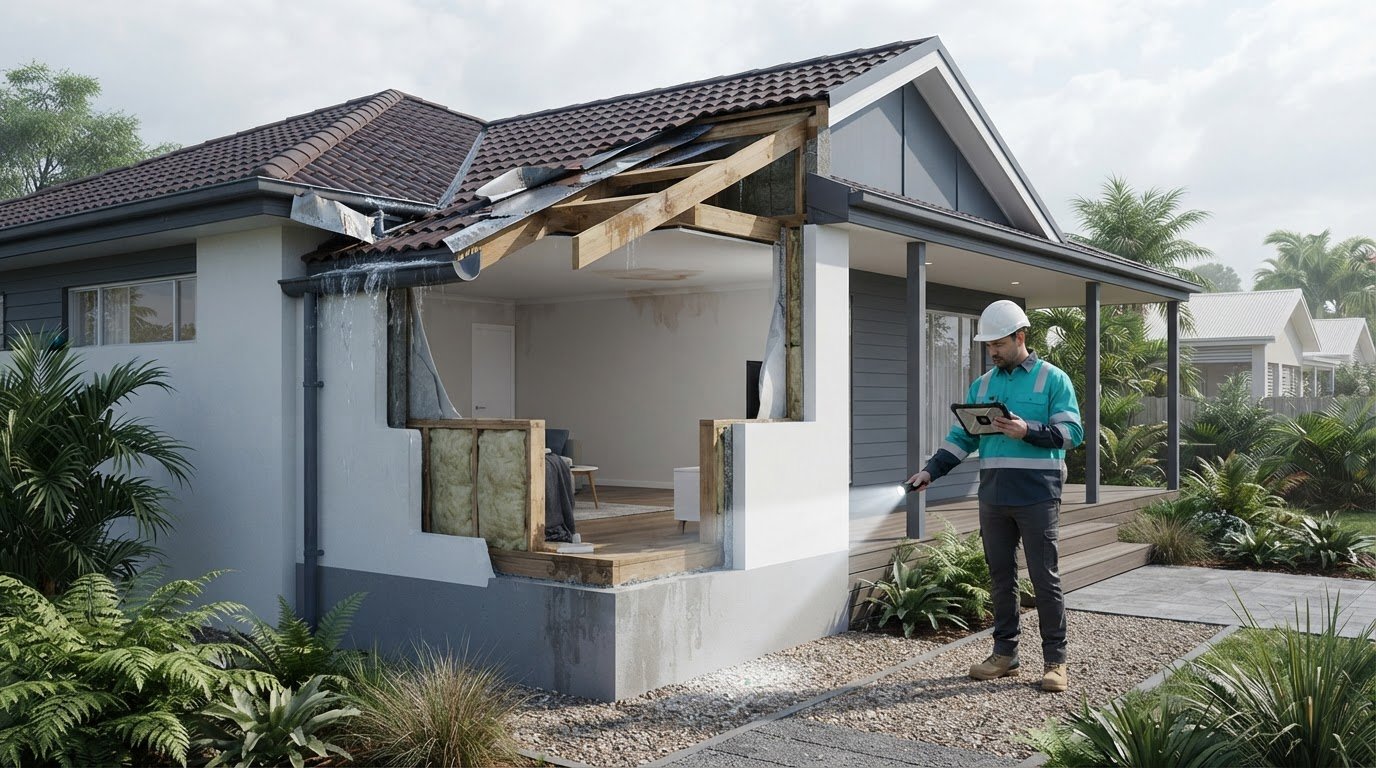
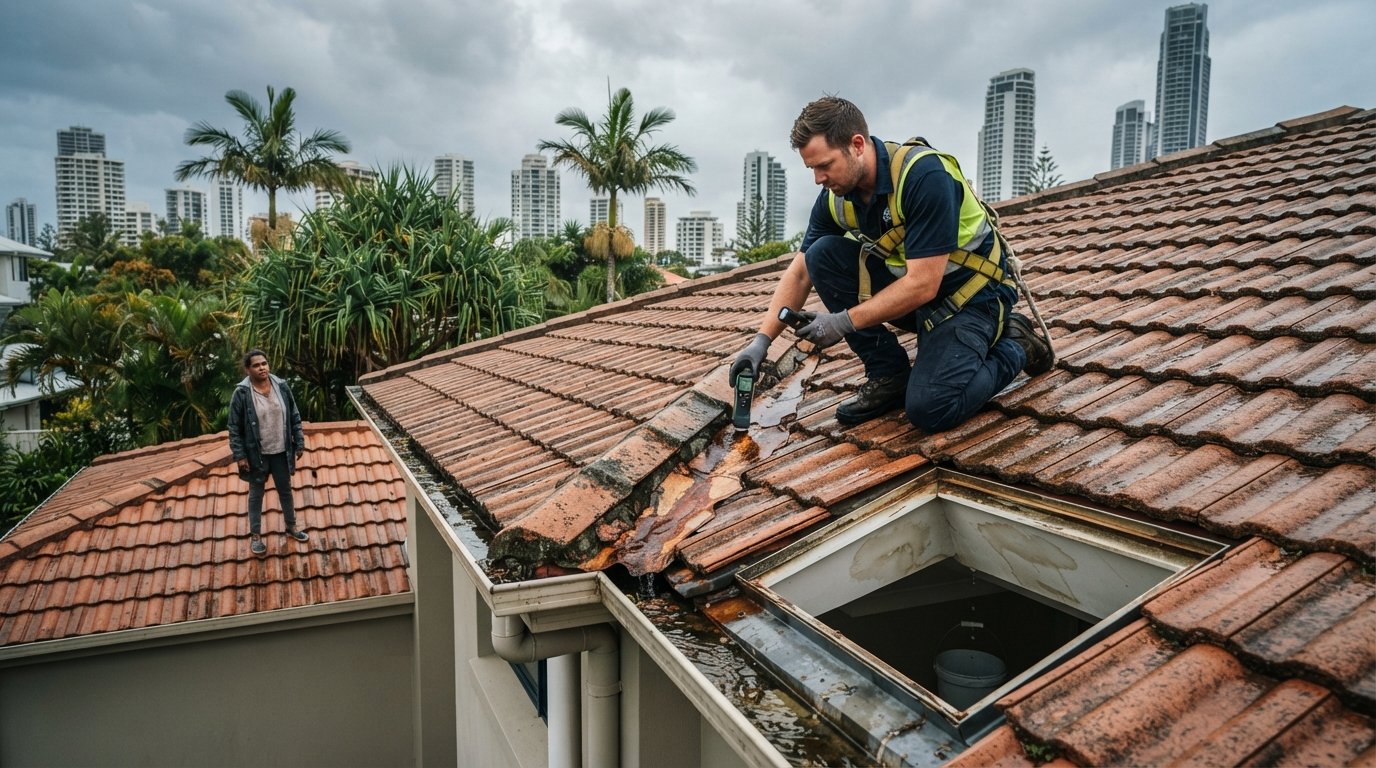
Most ceiling collapses don’t start with a violent storm tearing off roofing sheets. They begin with an unnoticed drainage defect quietly pooling dozens of litres of water directly above your living room. When severe weather hits, preventing water damage from leaking roof plumbing becomes an urgent race against heavy, sagging plasterboard and dangerous electrical short circuits.
It’s completely natural to feel dread at the sound of water dripping into a bucket at midnight. You’re left guessing whether cracked tiles, rusted valleys, or faulty flashings caused the breach, all while worrying whether your insurer will dismiss the damage as gradual wear and tear. Left unaddressed, that trapped moisture triggers mould growth in as little as 24 to 48 hours and quietly rots your structural timber framing.
Fortunately, you don’t have to wait for disaster to strike. You’ll learn how to safely contain an active leak immediately, diagnose the true failure points in your external roof drainage, and establish preventative maintenance that meets Australian standards. Here is your practical roadmap to protecting your ceilings, your structure, and your peace of mind.
Key Takeaways
- Safely manage active leaks by isolating affected electrical circuits and relieving pooling water in sagging ceilings to stop sudden plasterboard collapses.
- Discover why preventing water damage from leaking roof sheets or tiles requires tracing water pathways along sarking and rafters rather than guessing the entry point.
- Learn how quickly trapped moisture triggers hidden timber rot and mould, alongside the maintenance evidence insurers demand to honour storm claims.
- Identify proactive inspection habits for gutters, downpipes, and flashings to catch minor metal and tile defects before severe weather arrives.
- Recognise why licensed roof plumbing compliance under AS/NZS 3500.3 is critical to ensuring your home drainage handles intense Australian downpours.
Emergency Triage: How to Minimise Water Damage from an Active Roof Leak
When water breaches your ceiling cavity during heavy rainfall, immediate containment is your first line of defence. Water entering through displaced tiles or damaged weatherproof roof flashing rarely falls straight down; it tracks along rafters before pooling on interior ceilings. Successfully preventing water damage from leaking roof ingress means controlling the water inside your living space before it compromises structural framing. Crucially, never climb onto an exterior roof during an active downpour. Slippery metal and wet tiles pose severe fall risks, so external repairs must wait until conditions dry out.
Relieving Plasterboard Ceiling Pressure
Plasterboard acts like a sponge, holding saturated insulation batts that quickly accumulate immense weight. If you spot a sagging drywall section or swollen paint blister, a sudden ceiling collapse is a genuine hazard. Relieving that trapped moisture prevents widespread structural failure:
- Position a large bucket or plastic tub directly under the lowest point of the sagging area.
- Use a long screwdriver or awl to pierce a single, clean hole in the centre of the blister.
- Allow the pooled water to funnel down smoothly into the bucket, safely releasing hydraulic weight before adjoining plasterboard seams tear open.
Draining this reservoir in a controlled manner keeps water localised, preventing broad ceiling saturation that demands extensive plaster replacement later.
Protecting Flooring, Furniture, and Electrical Circuits
Ceiling leaks frequently run down internal wiring conduits and pool near recessed downlights, creating immediate electrocution and short-circuit hazards. Go straight to your switchboard and isolate the circuit breakers controlling the affected rooms. Once power is isolated, secure your property:
- Clear timber furniture, rolled-up rugs, and electronics away from the drip zone.
- Spread heavy tarps or plastic drop sheets across flooring, placing thick towels around the base to stop stray splatters from spreading.
- Check adjacent internal walls for bubbling paint or damp skirting boards where hidden water might be tracking.
- Record video of the drip rate and water paths to assist licensed trades during subsequent roof leak detection.
Documenting these early ingress points gives your roof specialist the exact footprint needed to trace hidden entry points on the roof surface later.
Anatomy of a Roof Leak: Where Ingress Begins in Australian Homes
Tracking the source of ceiling moisture requires understanding how water travels across roof assemblies. Stormwater rarely drips straight through to the plaster below; capillary action draws moisture backwards underneath metal laps, while building paper and timber rafters redirect running water metres away from the initial opening. Effectively preventing water damage from leaking roof systems depends on evaluating the exterior flashings, junctions, and drainage capacities where failures actually begin.
Degraded Roof Flashing and Penetrations
Every penetration through your roof cladding creates a seam vulnerable to weather. Metal flashings around brick chimneys, parapets, and roof valleys undergo constant thermal expansion and contraction under the harsh Australian sun. Over time, lead aprons split, skylight perimeter seals perish, and neoprene rubber boots on plumbing vents degrade. Valley irons gather damp leaves and silt, eventually corroding through and allowing heavy runoff to escape beneath tile battens.
Tile Deterioration, Bedding Failure, and Colorbond Corrosion
Roofing surfaces degrade through physical weathering and mechanical fatigue across years of storm exposure:
- Concrete and terracotta tiles: Hairline fractures admit moisture that bypasses degraded sarking beneath. Sand-and-cement ridge bedding naturally cracks after 10 to 15 years, loosening capping tiles during gusty winds.
- Colorbond metal roofing: Neoprene washers on roofing screws harden and perish, letting rain follow screw threads directly into timber purlins. Uncleaned metal shavings (swarf) produce pinpoint rust perforations across profile valleys.
- Uninsulated condensation: Missing thermal blankets beneath metal sheets allow warm interior air to condense into moisture droplets, mimicking an active external leak.
Unchecked dampness from these gradual defects can quickly escalate into hazardous conditions, as detailed in the EPA moisture and mold control guide regarding rapid spore activation.
Gutter Overflows and Inadequate Downpipe Capacity
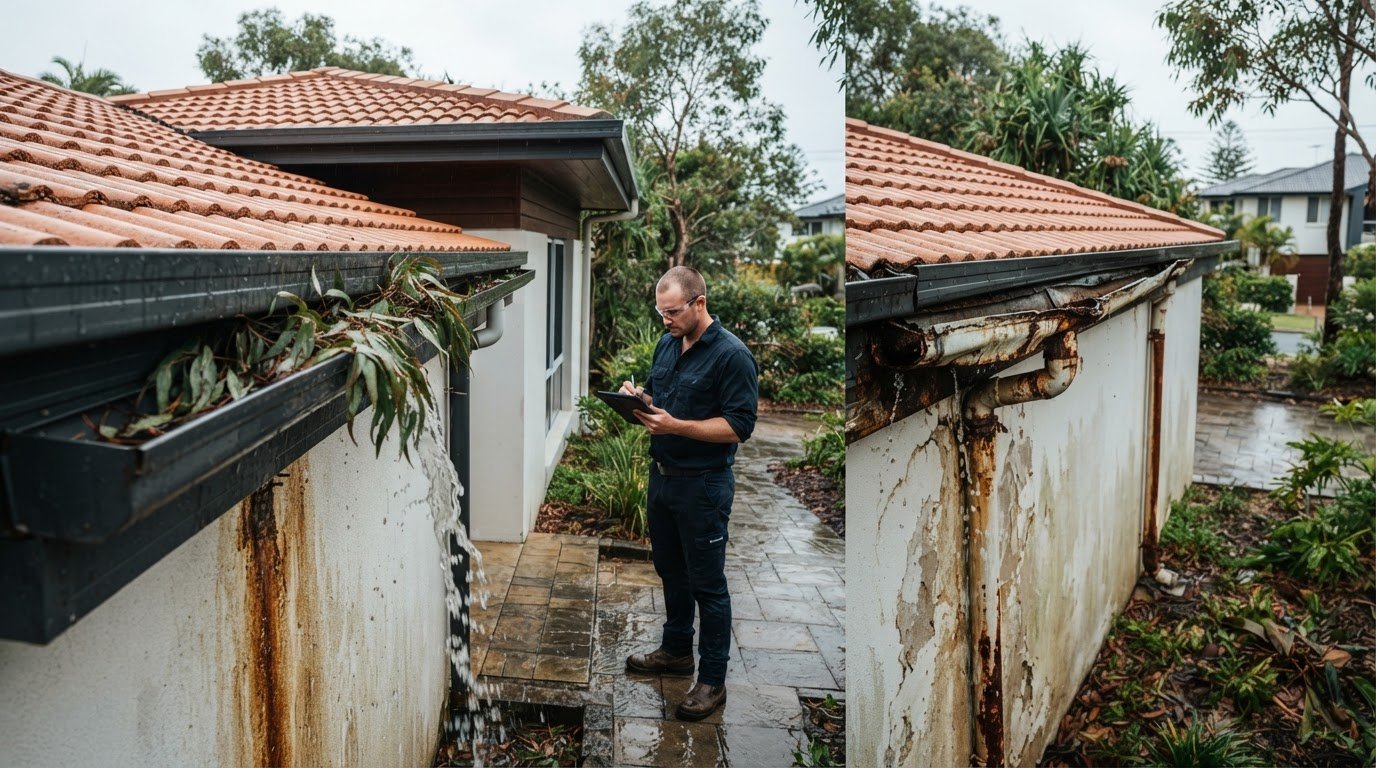
Roof drainage must handle substantial volumes during coastal downpours. When autumn leaves dam external gutter channels, water spills over the internal back edge directly into eaves and ceiling cavities. Concealed box gutters present an even higher risk; without compliant emergency overflow scuppers, any downpipe blockage redirects thousands of litres into the building envelope. If your roof drainage regularly overflows during flash storms, booking a diagnostic inspection from a licensed roof plumbing specialist can resolve hydraulic bottlenecks before internal timbers rot.
The True Cost of Inaction: Long-Term Consequences of Unresolved Leaks
Ignoring an occasional ceiling drip invites deep structural decay. When water trickles past exterior barriers, the damage multiplies quietly inside dark, unvented roof spaces. Effective strategies for preventing water damage from leaking roof cavities require addressing moisture immediately; otherwise, temporary dampness evolves into permanent timber degradation, hazardous fungal blooms, and total claim rejections from your insurer.
Structural Timber Degradation and Termite Risks
Saturated timber loses its load-bearing capacity surprisingly fast. When roof framing remains damp, wood-decay fungi break down the cellular structure of pine and hardwood rafters, causing roof battens to warp and sag under the weight of metal sheets or concrete tiles. Damp framing also releases volatile moisture signatures that actively attract subterranean termites. These pests tunnel into water-softened trusses, hollowing out roof structures from the inside out and turning a simple plumbing fix into an extensive engineering rebuild.
Indoor Air Quality, Mould, and Health Hazards
Ceiling cavities harbour dark, humid microclimates that accelerate biological hazards once moisture enters. As highlighted by the EPA guidelines on moisture control and water damage, dormant mould spores germinate within 24 to 48 hours of water exposure. This contamination escalates rapidly:
- Mould colonies of Aspergillus and Penicillium take root across damp plasterboard backing and paper-faced ceiling batts.
- HVAC ducted systems run through roof cavities, drawing airborne microbial spores straight into bedrooms and family living spaces.
- Glasswool insulation compresses under water weight, losing its thermal resistance permanently and spiking your household heating and cooling costs.
Once deep fungal rot sets in, surface cleaning fails. Remediation requires stripping out ceilings, discarding insulation, and chemically treating the remaining roof framing.
Insurance Complications and Maintenance Exclusions
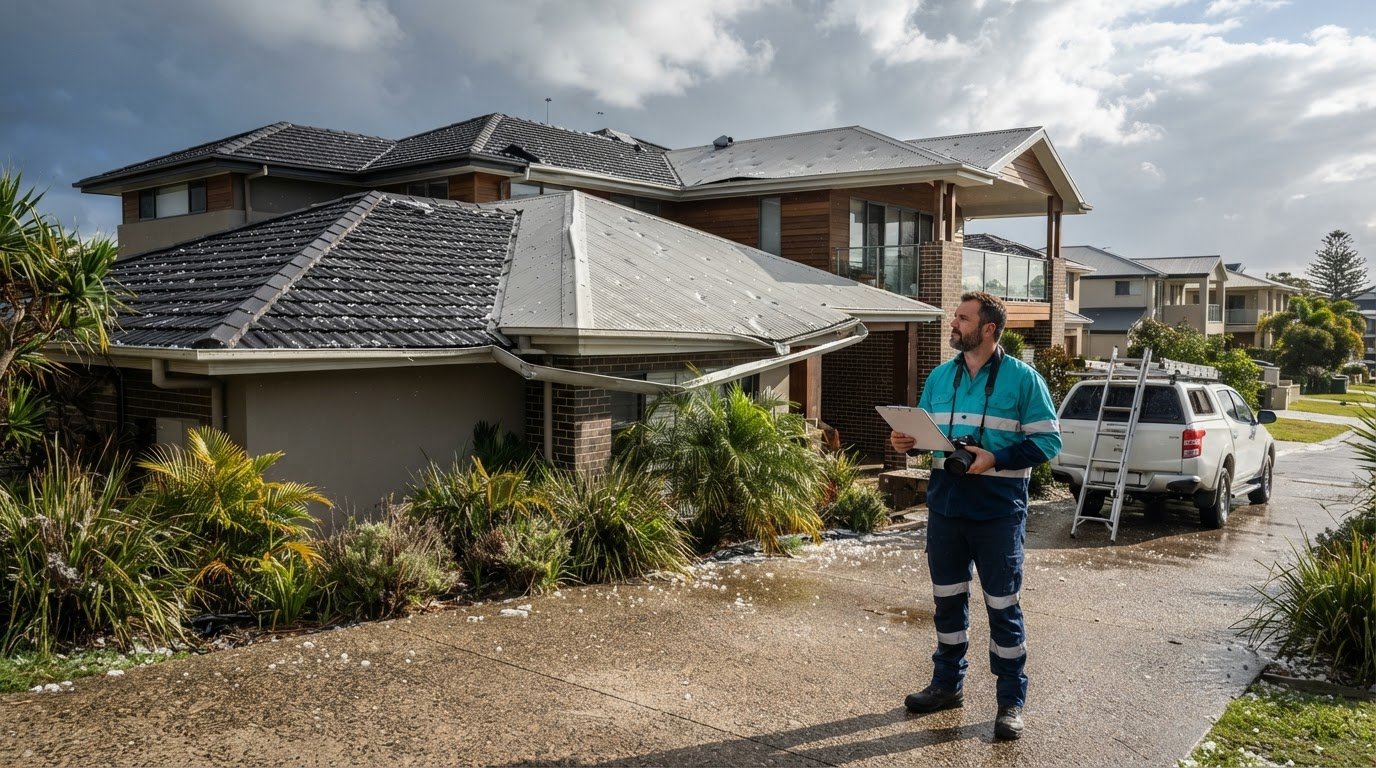
Homeowners often assume insurance policies cover any ceiling water damage. In reality, Australian insurers clearly distinguish between sudden storm impacts and ongoing, preventable decay. Product Disclosure Statements explicitly exclude gradual water seepage, rusted box gutters, deteriorated silicone, and cracked mortar pointing. Insurance assessors look specifically for historical water marks, rust scale, and long-term timber stains. If an assessor determines the breach stems from unaddressed wear rather than a single storm event, the entire claim will be declined, leaving you liable for structural repairs.

Preventative Maintenance: How to Protect Your Roof Before the Storm
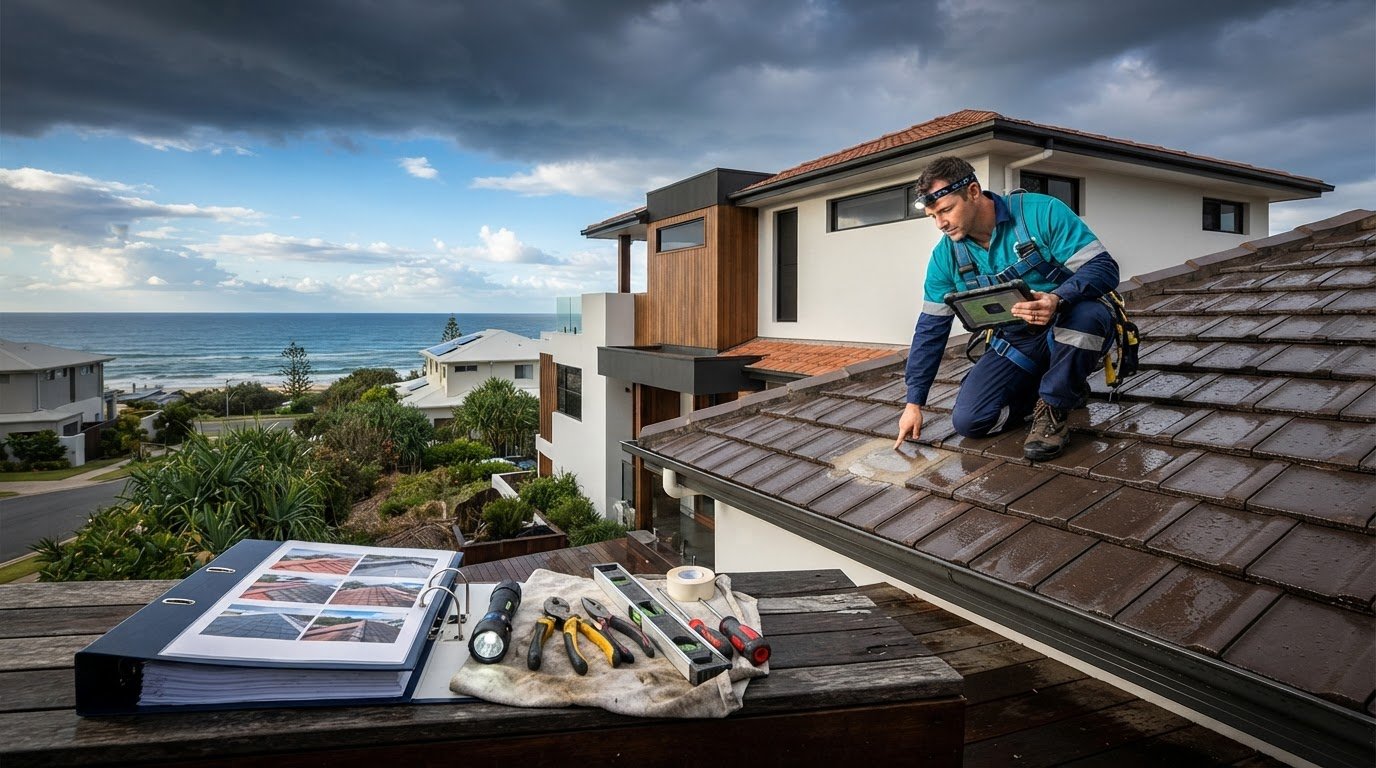
Seasonal maintenance is the single most reliable safeguard against sudden ceiling failures. Industry guidelines recommend a formal assessment every 12 to 18 months, yet routine homeowner vigilance makes an immediate difference. Consistently preventing water damage from leaking roof fixtures means identifying material fatigue before severe storm systems test your home’s drainage envelope.
Gutter, Valley, and Downpipe Clearing Protocols
Unimpeded water velocity keeps runoff moving safely away from vulnerable eaves. Clear eucalyptus leaves, twigs, and settled silt from all valley irons ahead of peak storm seasons. Flush downpipes with a garden hose to verify that water discharges directly into stormwater pipes without bubbling back up through ground inspection points. For properties beneath dense tree canopies, installing compatible gutter guard mesh prevents wet organic dams from forcing overflow into exterior timber fascia.
Roof Surface and Penetration Maintenance
Maintenance requirements differ significantly between tile and metal roof profiles:
- Concrete and terracotta tiles: Swap out chipped, displaced, or cracked tiles immediately to preserve the exterior water barrier. Inspect ridge capping to confirm flexible acrylic pointing remains firmly bonded without separation along the bedding mortar.
- Colorbond metal profiles: Check roofing fasteners to verify neoprene rubber washers remain pliant rather than hardened from UV exposure. Inspect flashing aprons, parapet joins, and skylight surrounds for loose rivets, sealant separation, or signs of surface corrosion.
Safe Ground-Level Visual Inspection Routine
Climbing onto a roof without professional safety harness equipment is dangerous and unnecessary for routine monitoring. Use high-magnification binoculars from ground level on a clear, dry day:
- Scan hips, valleys, and ridge capping for shifted tiles, lifted metal flashings, or misaligned sheets.
- Step outside during steady rainfall to watch for water cascading over gutter corners or backing up behind fascia boards.
- Examine external eaves linings beneath the roof perimeter for bubbling paint, dark water rings, or sagging fiber-cement joins.
Catching these warning signs early saves thousands in emergency repairs. If your visual check reveals damaged flashings, loose sheets, or blocked box gutters, book a comprehensive roof inspection with licensed specialists to secure your home before severe weather arrives.
Why Professional Roof Plumbing Is Essential for Permanent Protection
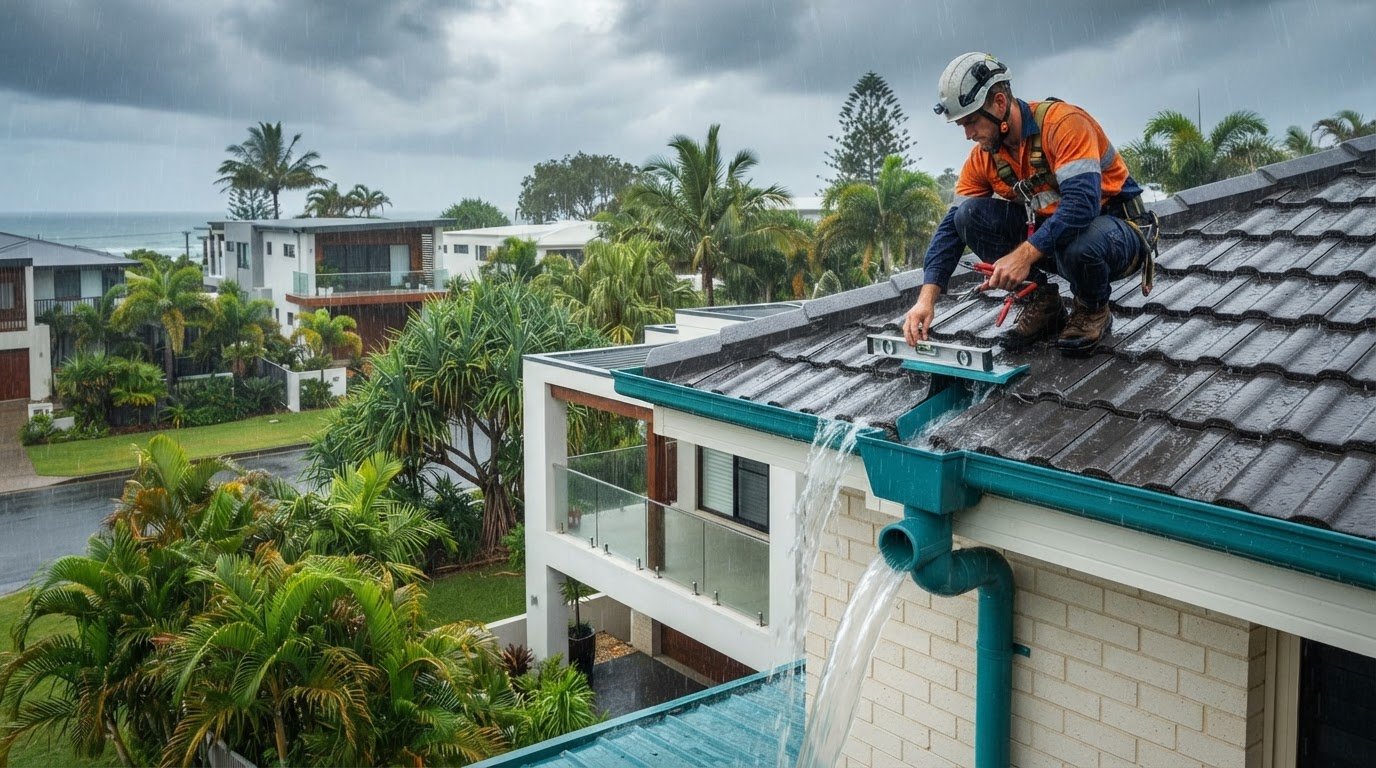
Roof plumbing is a highly specialised trade distinct from standard building work or interior pipe fitting. Managing high-velocity runoff requires precise calculations of catchment areas, roof pitches, and local rainfall intensities governed by AS/NZS 3500.3. When preventing water damage from leaking roof profiles is your goal, general handymen simply lack the statutory qualifications and specialised tools needed to execute code-compliant stormwater drainage.
The Limits of Temporary DIY Fixes
Reaching for a caulking gun often creates worse structural issues down the line. Hardware-store silicone breaks down quickly under harsh Australian ultraviolet radiation, peeling away from metal and tile surfaces within months. This failed sealant forms a hidden lip that traps pooling water directly against timber battens instead of shedding it. Walking across fragile roofing without specialised trade technique also cracks brittle tiles and dents Colorbond sheet pans, creating fresh entry points that void manufacturer warranties.
Comprehensive Solutions from Roof Plumbing Expert
Long-term protection demands trade precision, durable metal fabrication, and verified compliance with Australian building codes:
- Precision leak diagnosis: Licensed specialists track complex, multi-point moisture pathways through valleys, internal flashings, and skylight kerbs rather than guessing from interior water marks.
- Custom metal waterproofing: Aprons, step flashings, and box gutters are folded to measure on site, accommodating building movement and coastal wind loads without relying on surface sealants.
- System upgrades: Gutter and downpipe profiles are correctly sized to meet modern storm burst volumes, preventing high-capacity backflow into eaves.
- Compliance documentation: Licensed trades supply formal compliance certificates that satisfy insurer underwriting standards and safeguard home warranty coverage.
Whether you require targeted flashing replacement, full tile repointing, or complete metal re-roofing, professional remediation eliminates water ingress permanently. Book an inspection with Roof Plumbing Expert to protect your home against future downpours.
Secure Your Roof Drainage Before the Next Severe Storm
A ceiling leak is never an isolated problem; it’s an urgent warning that your exterior waterproofing has failed. Safely containing active leaks relieves immediate hydraulic pressure, but preventing water damage from leaking roof structures requires permanent, trade-certified solutions. Addressing rusted valleys, degraded flashings, and backed-up gutters today prevents catastrophic structural timber rot and protects your home warranty coverage.
You don’t have to navigate structural drainage repairs alone. Across New South Wales, Roof Plumbing Expert delivers comprehensive Colorbond and tile restoration, custom flashing fabrication, and precision leak diagnosis fully compliant with AS/NZS 3500.3 drainage standards. Take control of your home’s defence against unpredictable downpours. Secure your property with a professional roof leak inspection from Roof Plumbing Expert and enjoy genuine peace of mind all year round.
Frequently Asked Questions
Can a leaking roof cause a ceiling to collapse suddenly?
Yes, waterlogged plasterboard loses its structural cohesion and drops under heavy weight without warning. Saturated insulation batts act like heavy sponges, concentrating immense dead weight over plaster screws. When fasteners pull through the wet core material, the entire sheet tears away. Puncturing the lowest point of the sagging area with an awl safely drains this pooled reservoir before the ceiling gives way completely.
Will my Australian home insurance policy cover water damage from a roof leak?
Insurers cover sudden, accidental storm impacts, but they exclude gradual leaks stemming from deferred maintenance. If an assessor discovers that rusted valleys, cracked mortar pointing, or uncleaned gutters caused the ingress, your claim will be denied. Keeping dated maintenance records from licensed trades provides essential proof that you took reasonable steps toward preventing water damage from leaking roof fixture failures.
How do I find where a roof leak is coming from if it is not directly above the stain?
You must trace the moisture pathway backwards along the roof framing rather than looking directly above the interior stain. Stormwater follows rafters, sarking laps, and electrical conduits before dripping onto drywall. Professional roof leak detection isolates external entry points by systematically checking high-risk penetrations, ridge capping, and metal flashing junctions situated higher up the roof pitch.
Is silicone sealant good enough to fix a leaking roof flashing permanently?
No, silicone is merely a temporary fix that breaks down rapidly under intense Australian ultraviolet radiation. Sun exposure causes standard sealants to harden, crack, and peel within months, forming a hidden lip that traps pooling water against timber fascia. Permanent waterproofing requires custom-fabricated metal flashings, mechanical laps, and compliant roof plumbing installations that shed water naturally without relying on topical adhesives.
How often should I have my roof and gutters professionally inspected in NSW?
Schedule a comprehensive roof and gutter assessment every 12 to 18 months, or immediately following severe storm activity. Homes in coastal areas like Mainly Beach face constant salt air, wind gusts, and sudden tropical downpours that wear out fixings and pointing faster than inland properties. Regular servicing ensures your drainage complies with AS/NZS 3500.3, preventing water damage from leaking roof profiles before heavy rain sets in.
What should I do first when water starts dripping through an electrical light fixture?
Immediately isolate power to that specific lighting circuit or your entire home at the main switchboard. Never touch the switch or the fixture directly, as water pooling around internal wiring creates an acute electrocution hazard. Once the power is completely off, position buckets beneath the drip, move furniture away, and arrange for a licensed roof plumber to trace the exterior breach.
Can overflowing gutters cause structural water damage inside my ceiling cavity?
Yes, blocked stormwater regularly overflows the rear edge of gutters directly into eaves and internal walls. When debris dams downpipes, water levels rise above the back fascia rebate. Stormwater runs backward along rafter tails and enters the ceiling cavity, saturating insulation batts and rotting timber wall framing. Installing correctly sized downpipes and clearing drainage channels prevents dangerous hydraulic backflow.