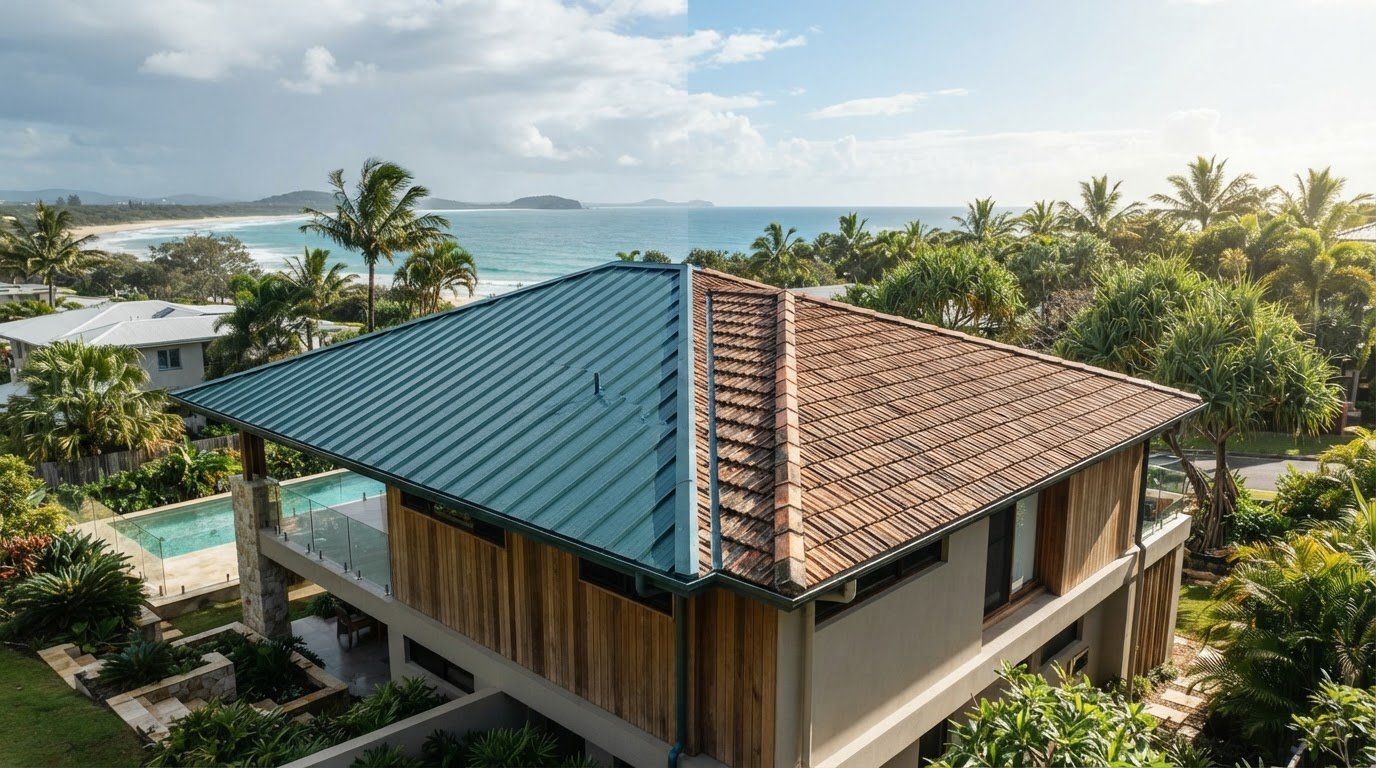
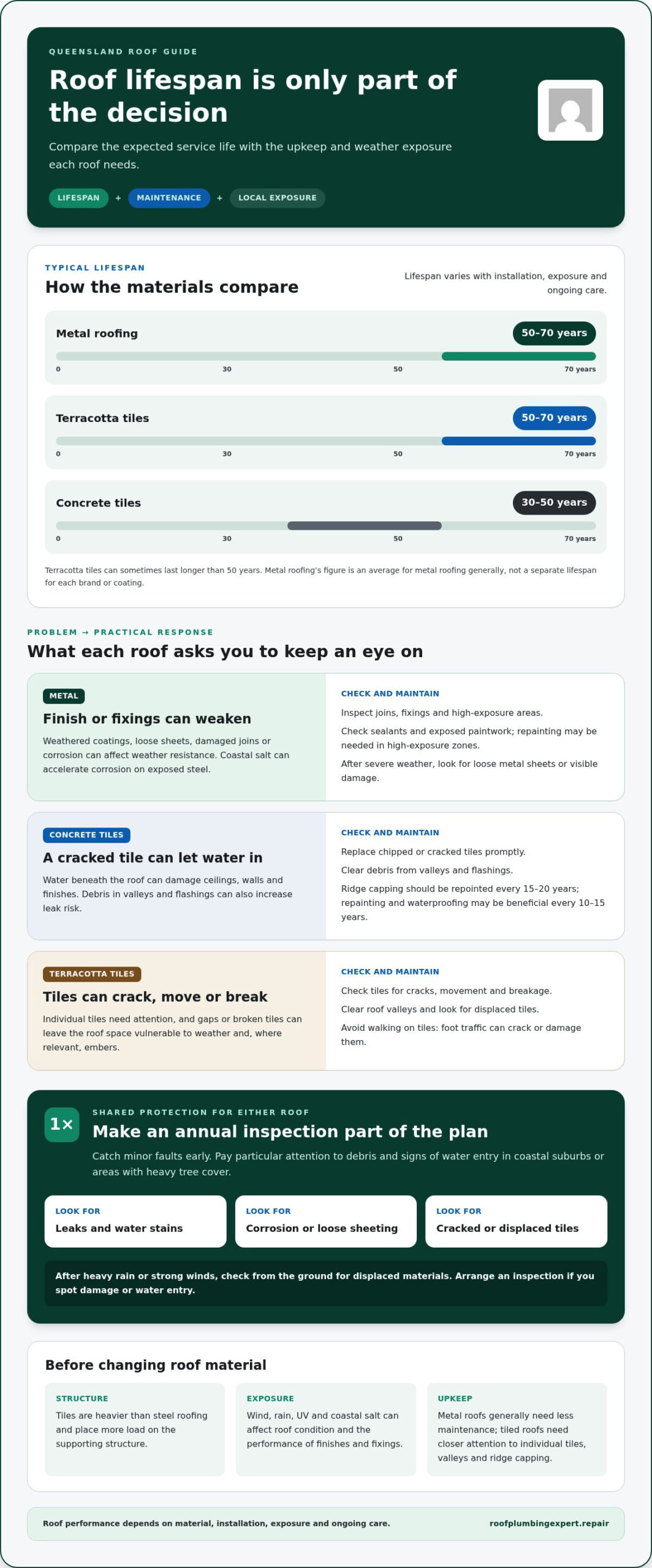
The longest-lasting roof isn’t automatically the best fit for a Queensland home. For metal roof vs tile roof longevity, metal roofing averages 50-70 years, while concrete tiles typically last 30-50 years; terracotta tiles can sometimes last longer than 50 years. The right comparison also depends on maintenance and how each material stands up to local conditions.
It makes sense to weigh more than lifespan alone. Queensland roofs face harsh weather, and choosing between metal and tile affects upkeep as well as how the roof handles strong winds, heavy rainfall and high UV exposure.
This guide compares metal and tile roofing in Queensland, including typical lifespans, weather durability and ongoing maintenance. You’ll see how concrete and terracotta tiles differ from metal roofing, then get a practical guide to assessing which option better suits your home.
Key Takeaways
- Factor ongoing upkeep into your choice: tile roofs need attention to cracked tiles, valleys and ridge capping, while metal roofs generally need less maintenance.
- In Queensland’s harsh weather, sound installation and regular inspections help protect either roof type from wind, rain and UV exposure.
- Compare concrete tiles, terracotta tiles and metal sheeting by more than lifespan alone; roof weight and the maintenance each material needs also matter.
- Use an annual roof inspection to catch minor damage early and decide whether repairs, restoration or a roofing change is the practical next step.
Is Metal Roof Better Than Tile?
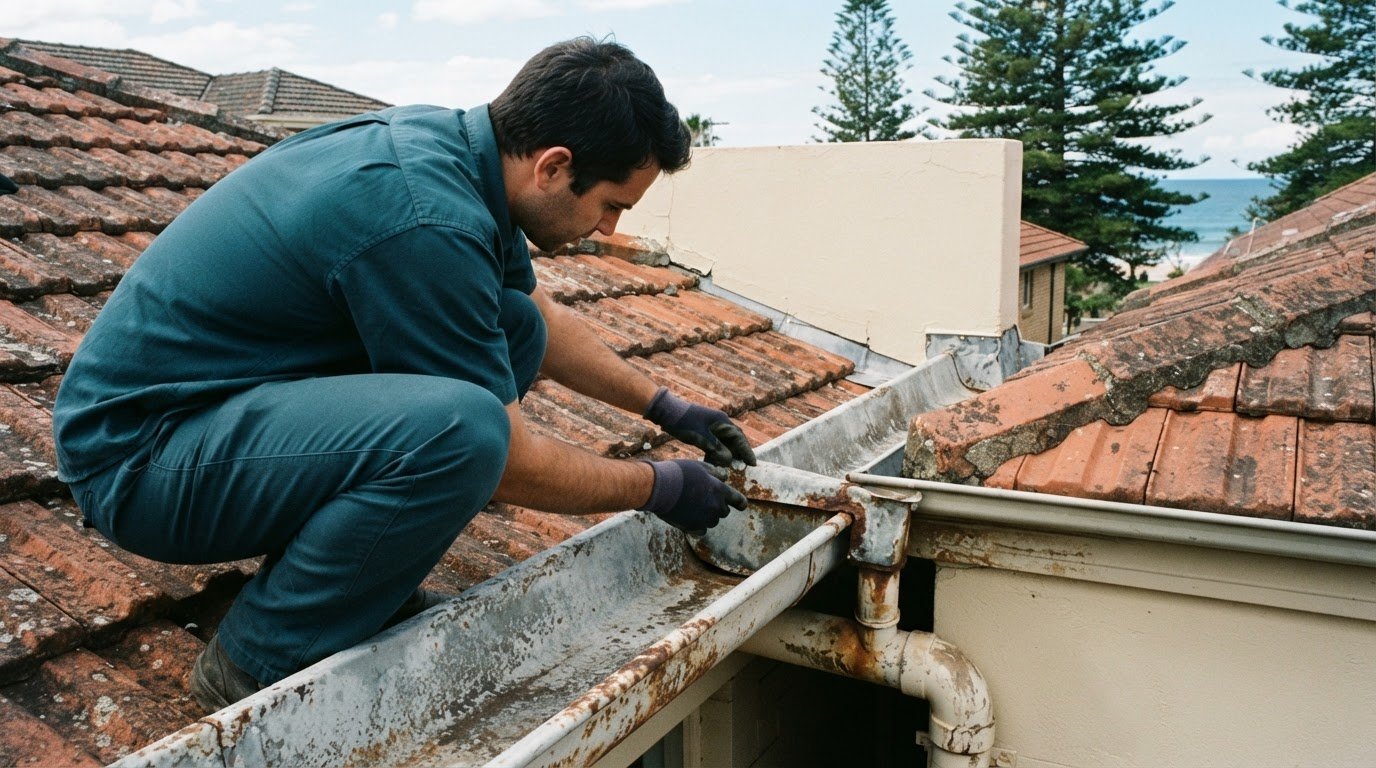
Metal roofs generally need less maintenance than tiled roofs, but both require regular inspections. In Australia, steel roofing usually needs checks of sealants, attention to repainting in high-exposure zones and periodic inspections. For tiles, clear debris from valleys and flashings, and replace chipped or cracked tiles promptly to help prevent leaks.
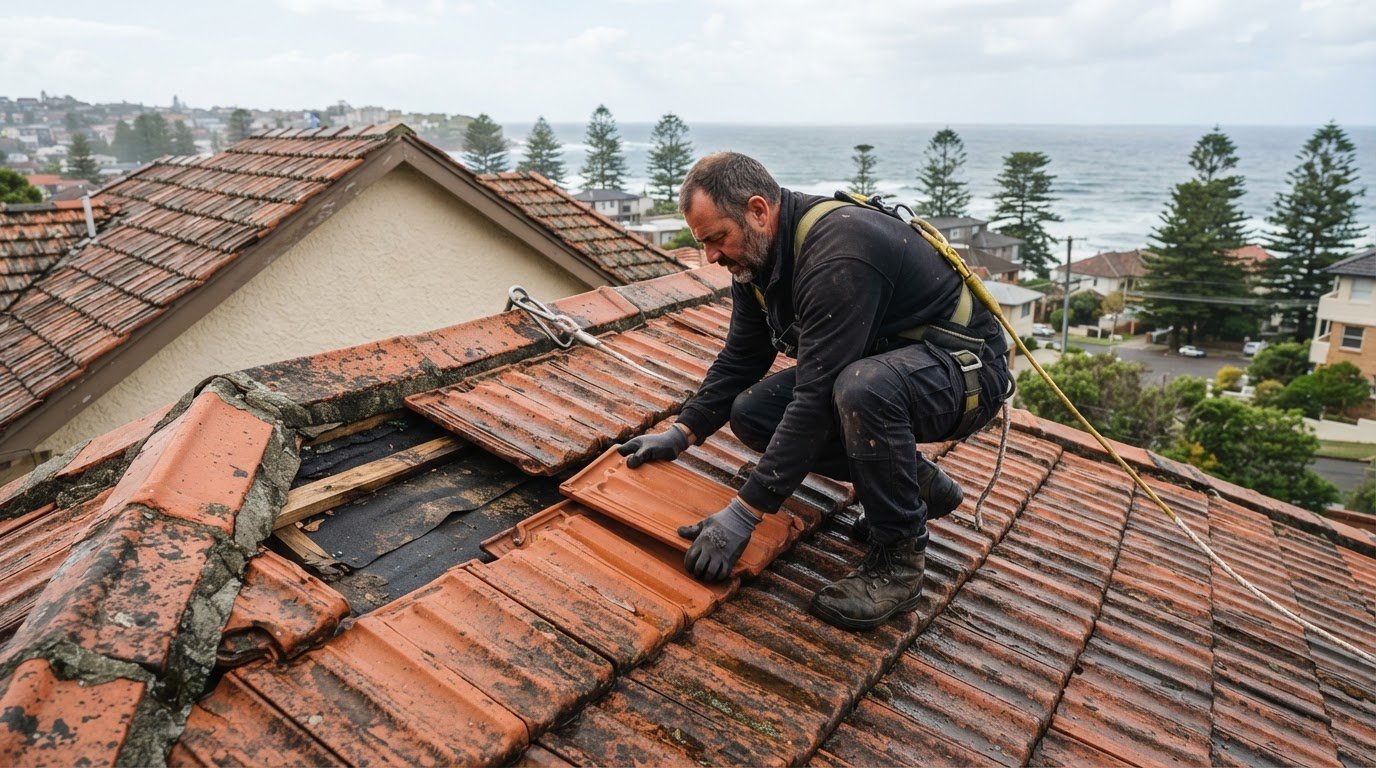
Cracked concrete tiles can let water beneath the roof, damaging ceilings, walls and finishes. Tile valleys and flashings also need clearing to reduce leak risks. Ridge capping should be repointed every 15-20 years, while concrete tiles can benefit from repainting and waterproofing every 10-15 years. Over 30 years, tile roofs typically need more maintenance interventions than metal roofs; a tile roof lasting that long may need significant repairs twice.
Metal roofing’s average lifespan is 50-70 years. Colorbond and Zincalume are coated steel options, but the available lifespan figure applies to metal roofing generally, not separately to each brand or coating. Installation, exposure and ongoing care affect how long the roof performs.
Australian building requirements apply to roof work, while product warranties are separate and depend on their terms. BlueScope offers warranties of up to 36 years on Colorbond steel and paint finish. Read the product warranty for its coverage and conditions, and distinguish it from the building requirements that govern installation.
| Roof option | Typical maintenance focus | Practical inspection step |
|---|---|---|
| Metal roofing | Sealants and exposed paintwork | Inspect joins and high-exposure areas |
| Concrete tiles | Cracks, valleys and ridge capping | Replace damaged tiles; check repointing |
| Terracotta tiles | Cracks, movement and debris | Check tiles and clear roof valleys |
Arrange an annual inspection to catch small faults before they become costly repairs. In coastal suburbs or areas with heavy tree cover, check for debris and signs of water entry. Never walk on the roof, as foot traffic can crack tiles. Insulation can improve indoor comfort and help keep rooms cooler, but it doesn’t replace roof maintenance.
Choose based on the roof’s exposure, the upkeep you can manage and the condition of the existing structure. Metal roofs often mean fewer maintenance tasks than tiles, which need closer attention to individual units and ridge capping.
Metal roof durability in harsh weather
Queensland’s strong winds, heavy rainfall and high UV exposure test roofing materials and installation quality. In Mainly Beach, local exposure is an important factor when assessing roof condition.
Metal Roof Weather Resistance
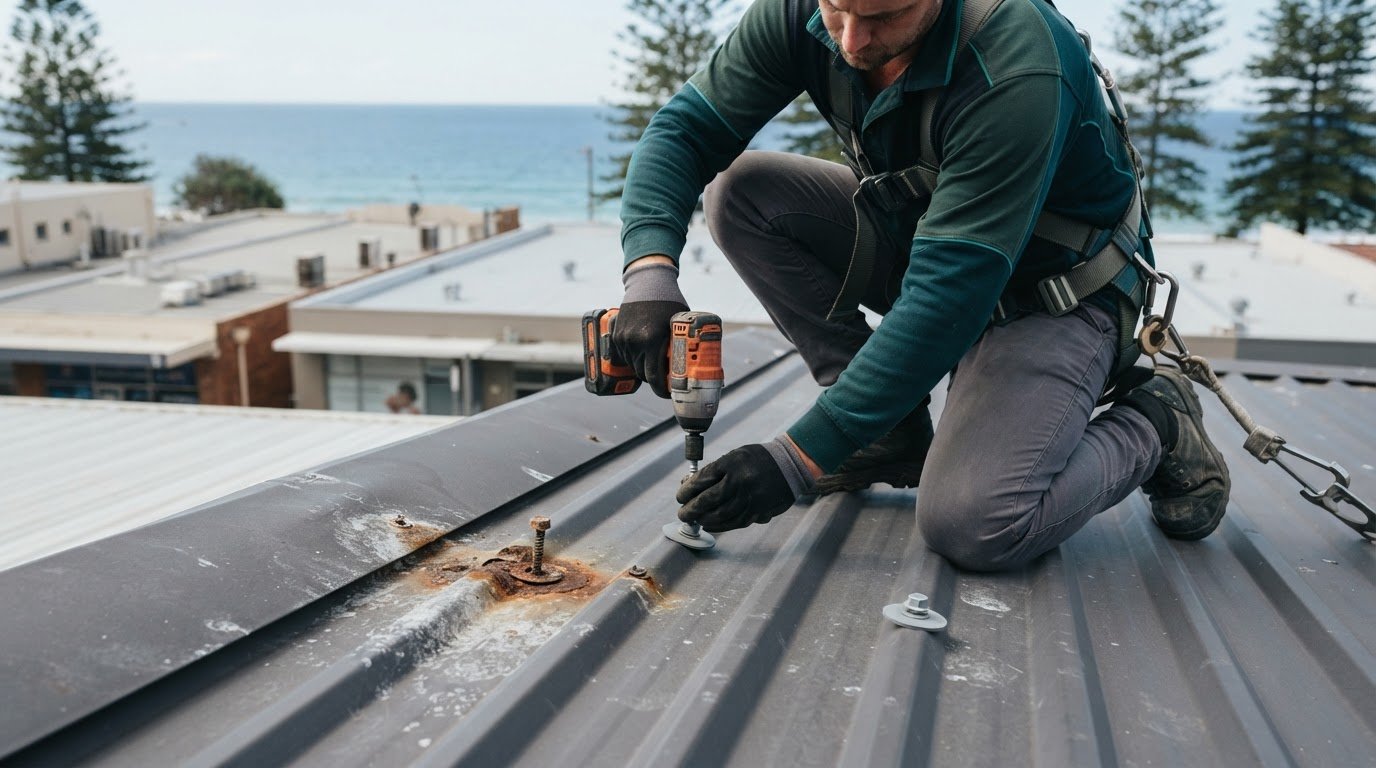
Properly installed steel roofing can withstand strong winds, heavy rainfall and high UV exposure in Australia. Its performance depends on secure fixings, sound joins and a coating suited to the site. Around Mainly Beach, coastal salt exposure can accelerate corrosion on exposed steel surfaces. Check the roof finish and fixings during inspections, especially after severe weather.
A metal roof’s lifespan depends on installation, maintenance and exposure. A damaged finish or loose fixing can reduce weather resistance, even when the roofing material is designed for demanding conditions. Insulation and lighter roof colours can affect indoor comfort, but they don’t replace sound installation or regular checks.
Roof Weathering and Damage
Metal finishes can weather or fade, while terracotta and concrete tiles can crack, chip or shift. Check for visible corrosion, loose metal sheets, cracked tiles and water marks inside the home. Each sign can point to a break in the roof’s protection, although the cause may differ by material. Avoid walking on tiles, as foot traffic can damage them.
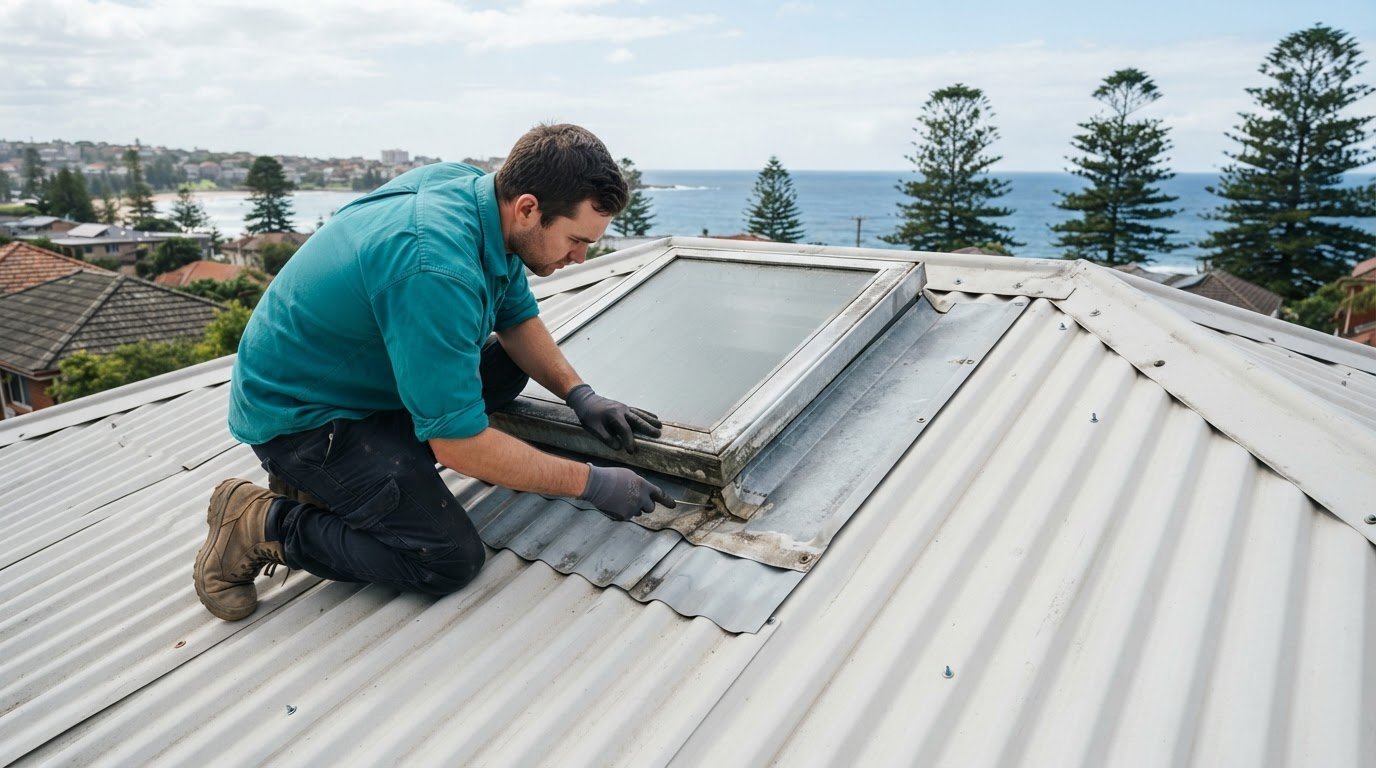
Queensland weather can expose weak points at roof joins and around penetrations. After heavy rain or strong winds, look from the ground for displaced materials, then arrange an inspection if you spot damage or water entry.
Climate and Exposure Effects
Queensland’s UV, rain and wind can wear roof finishes and expose weaknesses in the installation. Coastal salt can speed corrosion on unprotected metal, so inspect exposed edges and fixings. Bushfire exposure also makes roof gaps important: gaps between tiles or broken tiles can allow embers into the roof space if maintenance is neglected.
Roof lifespan depends on material, installation, exposure and ongoing care. Signs that a roof needs repair include leaks, water stains, corrosion, loose sheeting, or cracked and displaced tiles. Extensive or recurring damage can mean replacement is worth considering. Regular inspections help identify problems before they spread.
Metal Sheeting or tiled roofing: which is better?
Concrete tiles, terracotta tiles and metal sheeting differ in weight, lifespan and maintenance. Compare the whole roof system, including the home’s structure and the work needed to install the chosen material.
Terracotta Roofing
Terracotta tiles can last 50-70 years, and some may last longer than 50 years with suitable care. Their long service life can make them a durable option, but individual tiles may crack, move or break. Concrete tiles typically last 30-50 years, so tile type matters when estimating how long a tiled roof may serve.
Tiles are heavier than steel roofing and place more load on the supporting structure. Before changing materials, consider whether the roof structure suits the proposed covering. Tile work may also involve replacing damaged units and attending to ridge capping and valleys. Installation costs vary with the selected material, roof area, access, pitch and the scope of structural or removal work.
Metal Roofing
Modern metal roofing can last 50 years or more with the right installation and care. A properly installed quality Colorbond roof can also last 50 years or more. Steel is lighter than tiled roofing, which can reduce the load on the structure. Its performance still depends on installation quality, exposure, finish and ongoing maintenance.
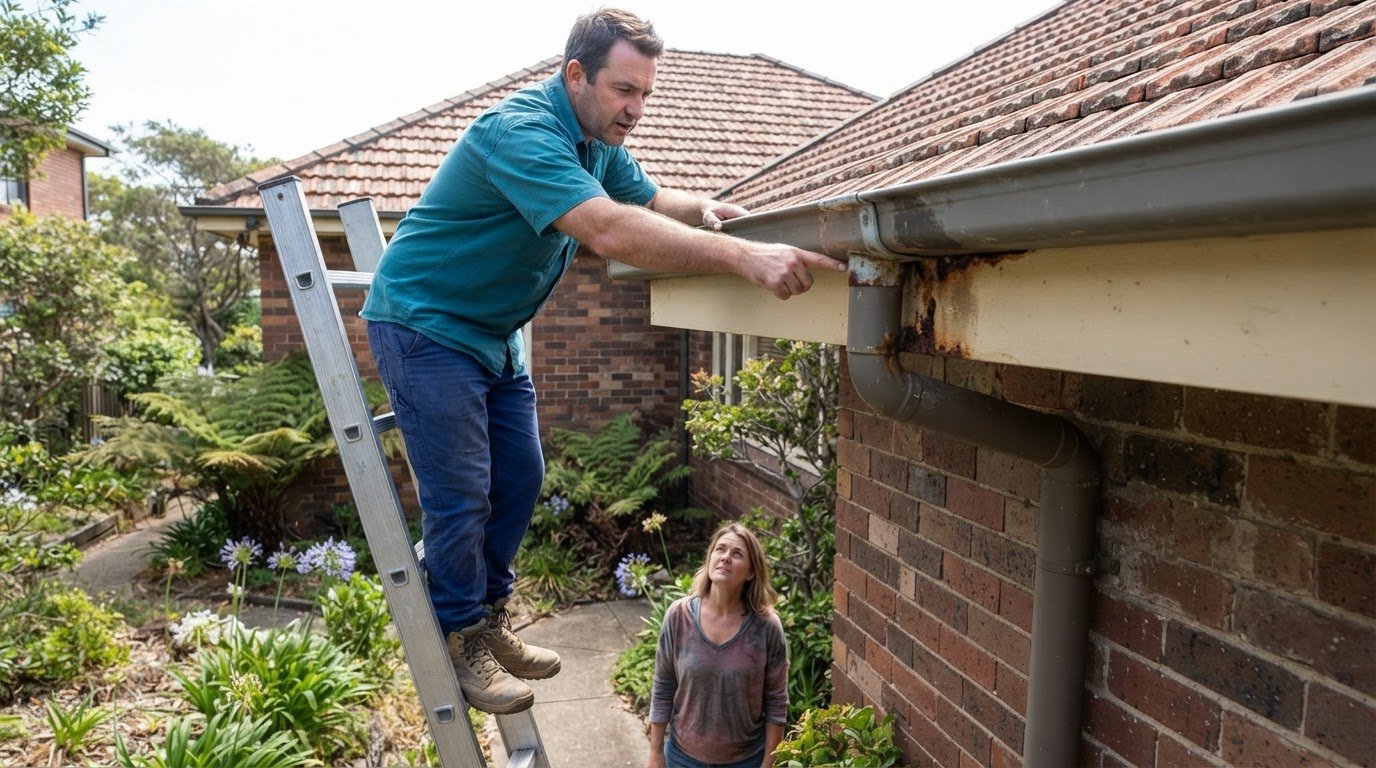
Long-term value means weighing service life against maintenance, repairs and the suitability of the existing roof structure. A material with a longer expected life may not be the best fit if the building needs structural work or its upkeep doesn’t suit the household. Include roof drainage in the assessment, since gutters and downpipes carry rainwater away from the home.
To compare the options, identify the current roof material, inspect its condition and consider the building’s structural requirements. Then weigh concrete, terracotta and metal roofing against the installation scope and future maintenance. This gives you a practical basis for choosing a roof suited to your home in Mainly Beach.
Metal and tile roof longevity in Queensland
Queensland roof longevity depends on material, installation and ongoing care. A longer lifespan is useful, but the roof’s condition and suitability for the house matter just as much when deciding whether replacement is due.
Metal roofing has an average lifespan of 50-70 years, while concrete roof tiles typically last 30-50 years. Terracotta tiles can sometimes last longer than 50 years. These ranges show why the metal roof vs tile roof longevity comparison depends on tile type, rather than treating all tiled roofs as one option.
Metal roofing in Queensland can last up to 50 years with minimal maintenance. Terracotta tiles may outlast that, while individual tiles can still crack, move or break during their service life. Proper installation and maintenance influence how well each roofing material handles Queensland’s harsh weather.
Concrete tile failures show why age alone isn’t enough. Concrete tiles from the building boom that started in 2017-2018 were reported as cracking when only 5-7 years old, as observed in 2023. That report doesn’t define every concrete roof, but it highlights the value of inspecting actual condition before planning replacement.
Use these checks to make the comparison practical for your home:
- Identify whether the existing roof is concrete, terracotta or steel before comparing expected lifespan.
- Inspect tiles for cracks or movement, and metal roofing for visible damage or deterioration.
- Compare the roof’s condition and ongoing maintenance needs with the expected lifespan of a replacement material.
For a Queensland home, Colorbond can be an efficient choice when a lighter steel roof suits the building and the owner wants lower maintenance. Sound terracotta remains a durable alternative, while concrete tile condition deserves close attention. Base the replacement decision on material, installation quality, current damage and the care the roof has received.
Roof Plumbing Expert: Gutter & Downpipe Installation
Roof Plumbing Expert can help protect your roof system with Gutter & Downpipe Installation, Roof Leak Detection & Repair, Colorbond Roofing, and Roof Restoration & Repointing. These services are relevant when damaged tiles, deteriorated roof sections or poor water drainage need attention.
Choose Roof Leak Detection & Repair if you notice water marks indoors or signs of water entering around the roof. If gutters or downpipes aren’t carrying rainwater away effectively, Gutter & Downpipe Installation can address the drainage component. For ageing tiled roofs, Roof Restoration & Repointing can address ridge capping; Colorbond Roofing is an option when considering a metal roof.
A clear assessment of the roof’s condition helps identify work that matches the problem, rather than treating every issue as a full replacement. Contact Roof Plumbing Expert to discuss your roof or guttering needs.
Make your next roofing decision with confidence
The most useful next step is to turn the comparison into a condition-based plan for your home. Before committing to replacement, note where water enters, whether drainage carries rain away, and whether the roof needs isolated repairs or broader work. This keeps the decision focused on the roof you have, not only the material you might choose.
For a Queensland property, comparing metal roof vs tile roof longevity is only one part of a sound decision. Roof Plumbing Expert can address drainage with Gutter & Downpipe Installation, investigate leaks through Roof Leak Detection & Repair, or discuss Colorbond Roofing when you’re considering metal roofing. Matching the work to the roof’s actual condition helps make the next step clear.
If you’re ready to assess your roof, Contact Roof Plumbing Expert today. A clear plan can help you move forward with confidence and protect your home.
Frequently Asked Questions
Which roof is best for your Mainly Beach home?
The best roof is the one that suits your home’s structure, exposure and maintenance needs. In Mainly Beach, consider how coastal conditions affect exposed roof surfaces and fixings. Also check the roof’s current condition, drainage and any signs of water entry. These practical checks help narrow the choice between metal and tile without treating one material as right for every home.
Durability and lifespan: Which one lasts?
Metal roofing can offer a long service life, while tile lifespan depends partly on whether the tiles are concrete or terracotta. The material alone doesn’t determine durability: installation, exposure and care all matter. For example, a roof with loose fixings or cracked tiles needs attention even if its covering is relatively new. Consider both expected lifespan and the maintenance involved before choosing.
Durability: How long does each roof last?
Metal roofing averages 50-70 years, concrete tiles typically last 30-50 years, and terracotta tiles may last 50-70 years. Treat these as general comparisons, not a prediction for an individual roof. Check the roof’s installation and maintenance history, then inspect its joins, flashings and covering for damage. A roof’s current condition helps indicate whether repair or replacement is the more relevant decision.
Need help choosing the right roofing material?
Begin with the problem you need to solve: leaks, damaged roof sections, drainage issues or a planned material change. Roof Plumbing Expert offers Roof Leak Detection & Repair, Colorbond Roofing and Gutter & Downpipe Installation. These services address different parts of the roof system, so matching the work to the issue helps clarify the next step for a home in Mainly Beach.
Which roofing option suits homes in Queensland?
Choose according to the home’s structure, the roof’s exposure and the upkeep you can manage. Queensland’s strong winds, heavy rain and high UV exposure make installation quality and maintenance important considerations. Metal sheeting, concrete tiles and terracotta each have different characteristics. Inspect the existing roof and note any damage or water entry before deciding whether to retain, repair or replace its covering.
How long do metal roofs last in Australia?
Metal roofs average 50-70 years, although individual roof performance depends on installation, exposure and ongoing maintenance. In Queensland, metal roofing can last up to 50 years with minimal maintenance. Inspect the roof finish, fixings and joins for deterioration, and look indoors for water marks after rain. These checks can help identify developing issues before they affect more of the roof system.