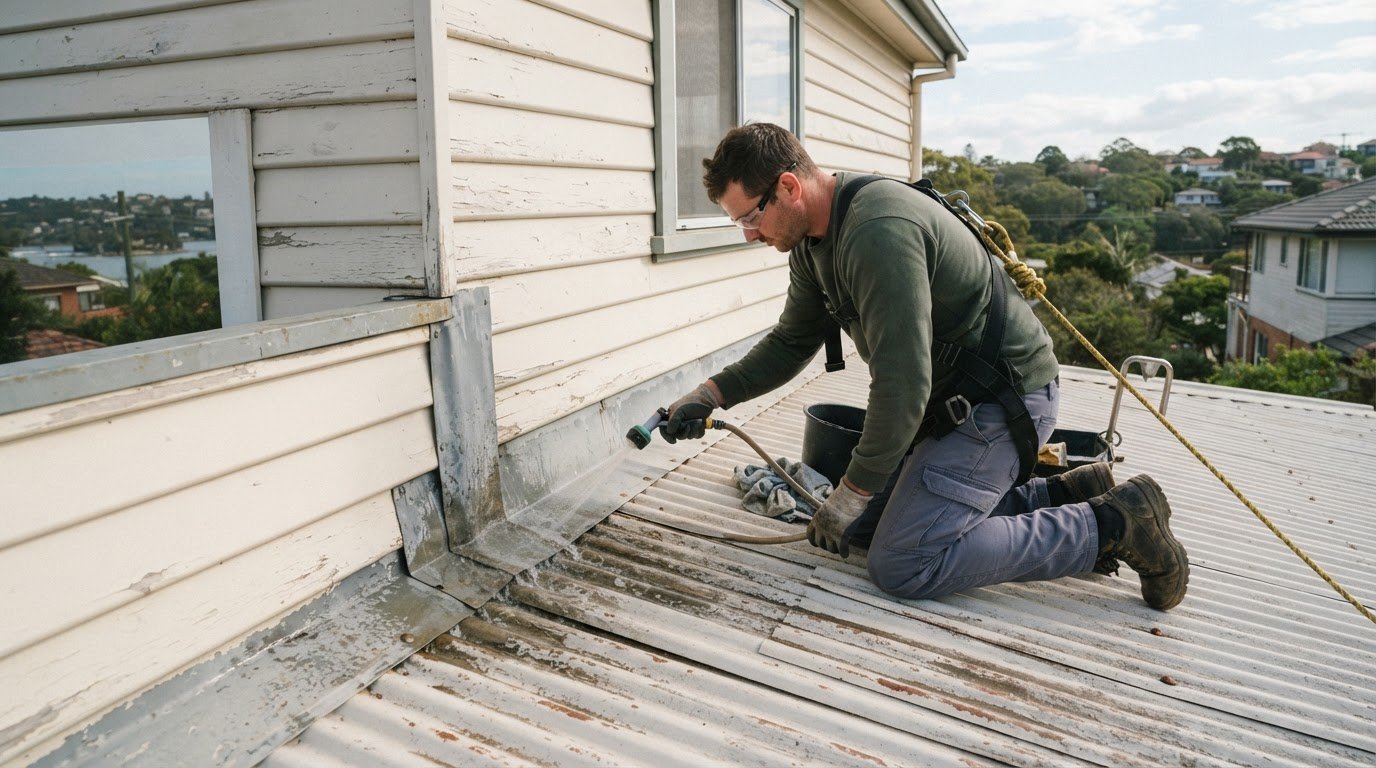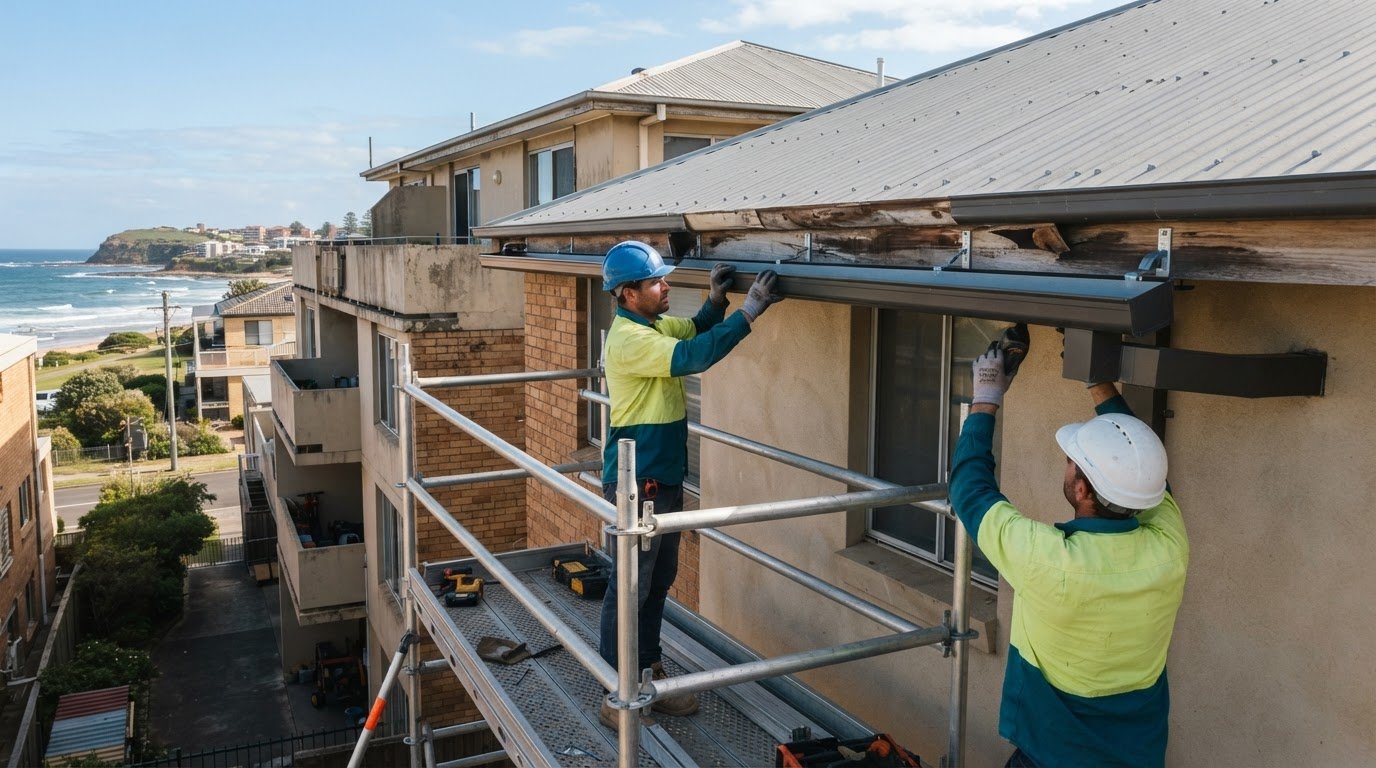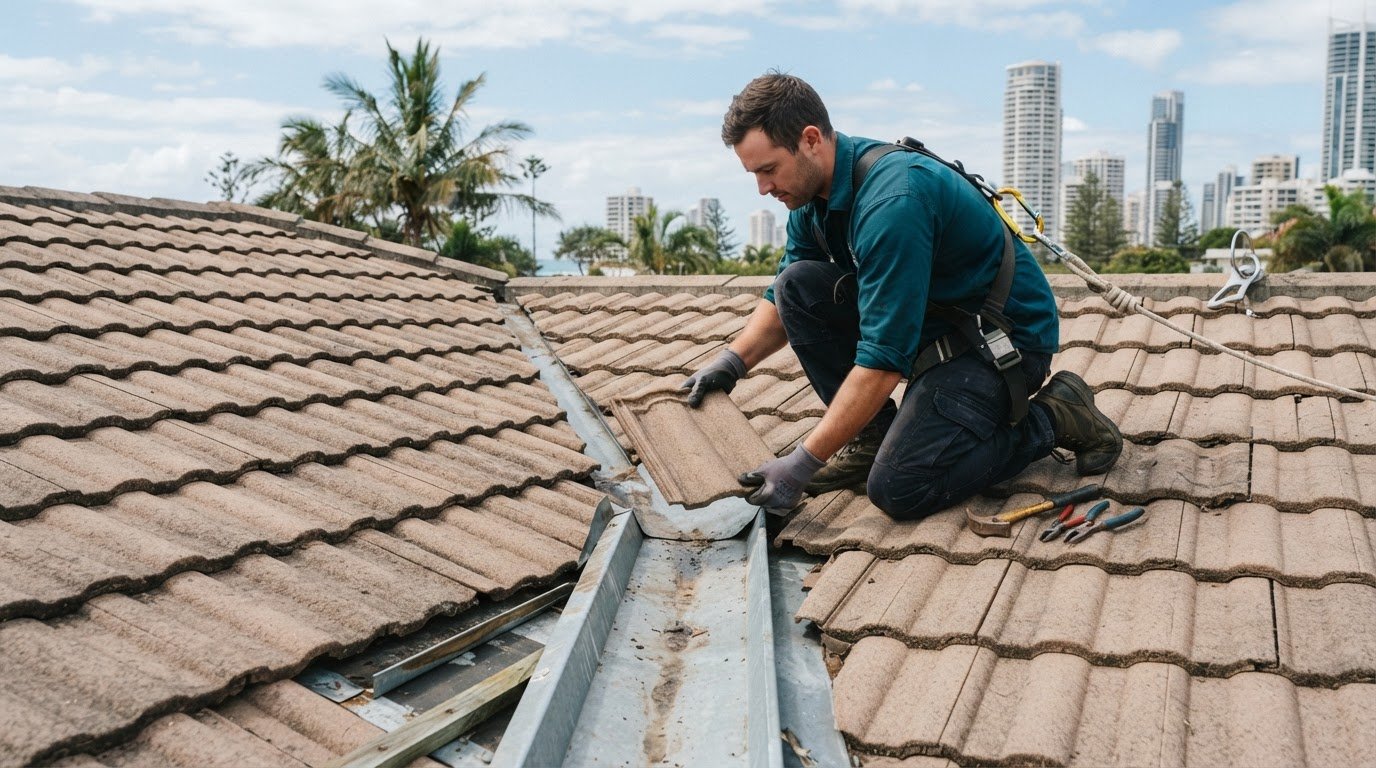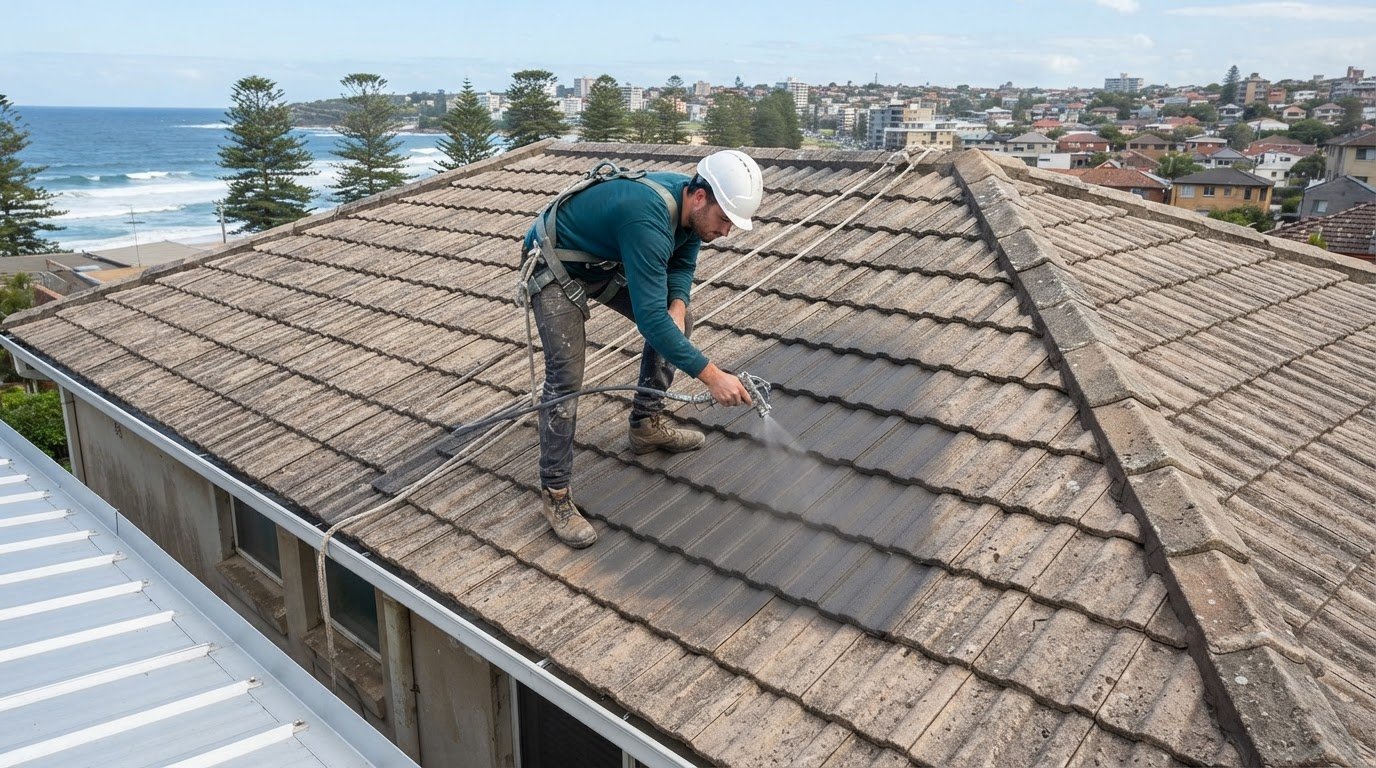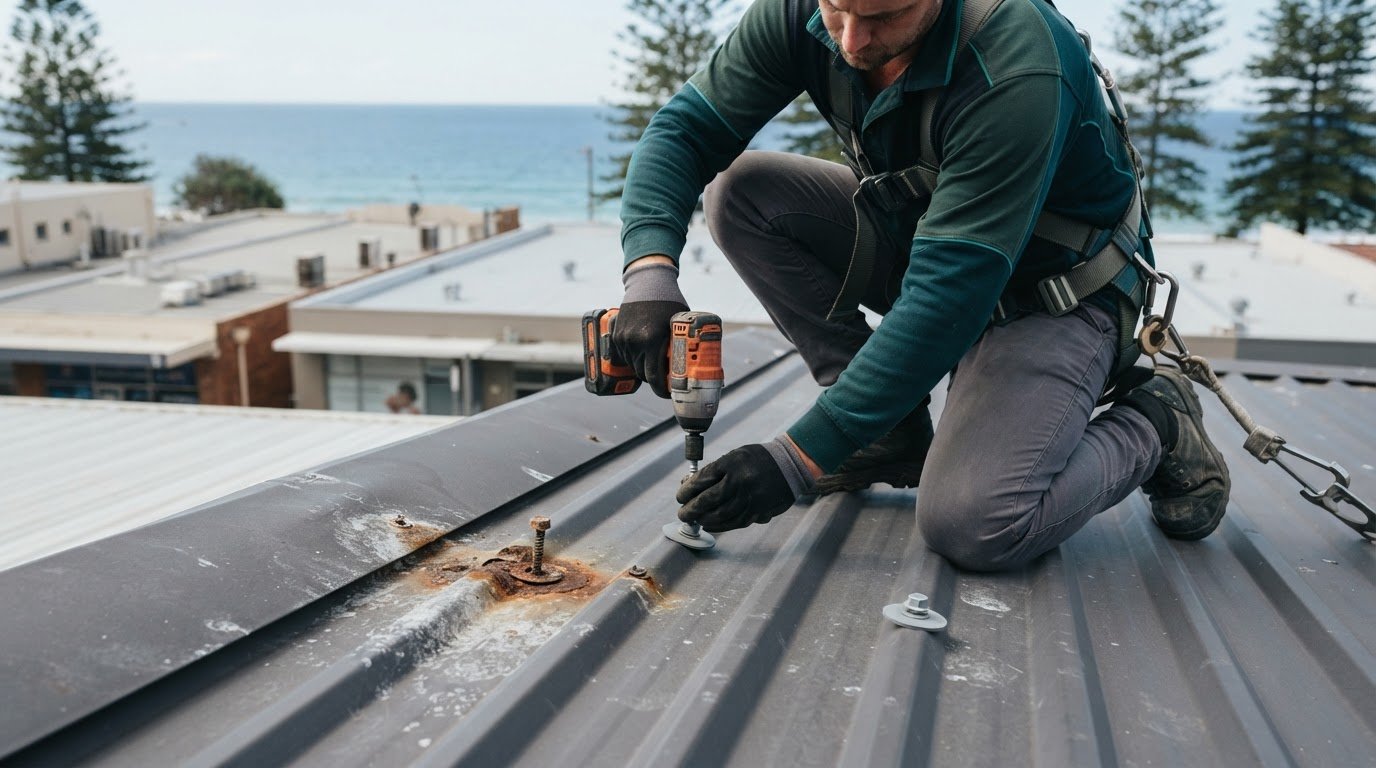
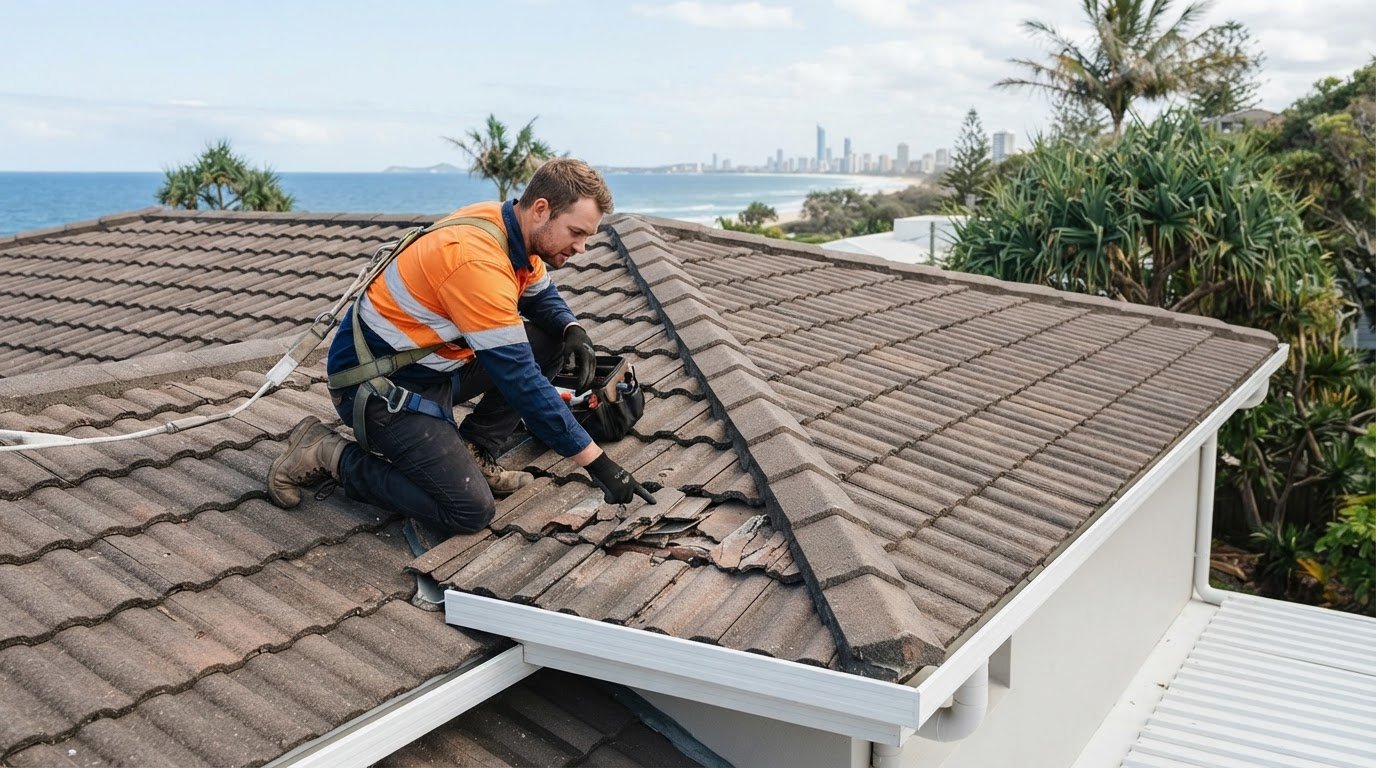
A roof repair is usually worthwhile when damage is isolated and the roof’s structure is sound. When required repairs approach about 40% of the cost of a new roof, replacement is worth considering. So, is it worth repairing an old roof? The answer depends on more than age alone.
It’s understandable to favour a repair when it seems simpler, especially if a leak or damaged section looks contained. But coastal weather can accelerate wear, and a local fix may not address deterioration beneath the surface.
This guide explains how roof age, coastal exposure and the extent of damage affect whether it is worth repairing an old roof. You’ll find practical signs that point towards repair, restoration or replacement, along with a decision guide to weigh the roof’s condition against the work required.
Key Takeaways
- Compare the repair work needed with the roof’s overall condition to judge whether fixing one area makes practical sense.
- Use roof material and age as context: Colorbond and metal-sheet roofs are expected to last 25-40 years, while concrete tile roofs in the Mid North Coast region are expected to last 30-50 years.
- Factor in coastal exposure, as weather can shorten a metal roof’s working life and affect how much value remains in a repair.
- Act on signs of leaks or worsening damage early, and consider how the roof’s full condition could change the decision to repair or replace.
Not sure if your roof needs repair or replacement?
Compare repair, restoration and replacement against the damage, roof condition and full scope of work. Find licensed roofers through your state or territory regulator’s register; council or building approval requirements depend on the work and location, so check local requirements and review licence details, insurance, itemised scope, materials and exclusions before hiring.
Repair and replacement costs
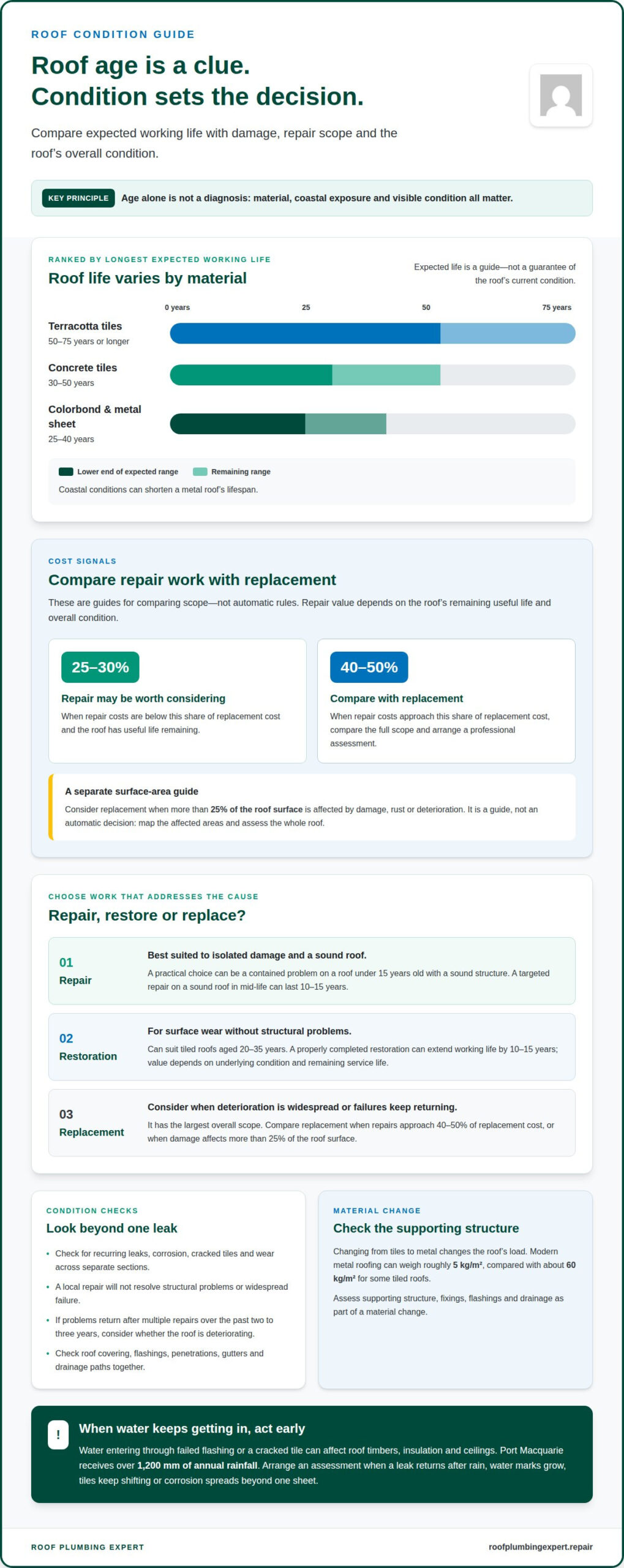
A targeted repair costs less overall when damage is isolated and the rest of the roof remains sound. As a guide, repair is often worth considering below 25-30% of replacement cost when the roof has useful life remaining. If repair costs approach 40-50%, compare replacement and arrange a professional assessment. Full replacement addresses widespread deterioration, but requires a larger scope of work.
Pricing depends on roof size, material, access, damage and the work required, and is provided after a quote request.
Restoration costs and benefits
Restoration sits between a targeted repair and full replacement. It can suit tiled roofs aged 20-35 years with surface wear but no structural problems. Rather than replacing the entire roof, restoration addresses wear across the existing roof surface. A properly completed restoration can extend a roof’s working life by 10-15 years, making its value depend on the roof’s underlying condition and remaining service life.
A local repair won’t resolve structural problems or widespread failure. If the roof also needs extensive repairs, compare the combined scope with replacement before choosing.
| Option | Cost comparison | Best suited to |
|---|---|---|
| Repair | Lower scope; compare with replacement | Isolated damage and a sound roof |
| Restoration | Broader work than a local repair | Surface wear without structural problems |
| Replacement | Largest overall scope | Widespread deterioration or repeated failures |
Choose the option that addresses the underlying condition, not just the visible damage.
How roof age affects repair-versus-replacement decisions
Roof age gives useful context, but material, exposure and visible condition also shape the decision. In Mainly Beach, consider coastal exposure alongside the roof’s age and condition.
Roof age and the repair decision
Expected working life varies by material. Colorbond and metal-sheet roofs are expected to last 25-40 years, although coastal conditions can shorten their lifespan. Concrete tile roofs are expected to last 30-50 years, while terracotta tiles can last 50-75 years or longer.
A roof approaching the end of its expected life may have broader wear than one leak suggests. Check for recurring leaks, corrosion, cracked tiles and deterioration across separate sections. A metal roof under 15-20 years old or a tile roof under 30 years old may suit repair if otherwise healthy. Age is a guide, not a diagnosis.
Restoration and replacement differences
Restoration renews an existing roof with surface wear but no structural problems. Replacement removes the existing roof and installs a new covering, making it the more extensive option when deterioration is widespread.
Changing from tiles to metal also changes the roof’s load. Modern metal roofing can weigh roughly 5 kg/m², compared with about 60 kg/m² for some tiled roofs. Assess the supporting structure, fixings, flashings and drainage as part of any material change. If you’re selling, keep records of completed roof work and materials to help explain its condition to prospective buyers.
The 25% guideline
Consider replacement when more than 25% of the roof surface is affected by damage, rust or deterioration. This is a guide, not an automatic decision. One contained leak differs from deterioration spread across several roof sections.
Map the affected areas, then weigh the roof’s material, age and overall condition. For example, coastal exposure can shorten a metal roof’s lifespan, while sound tiles may remain suitable for restoration. A comparison of roof repair and restoration options can help clarify which work addresses the condition you’re seeing.
When roof repair is worthwhile
A targeted repair makes sense when damage is confined to one area and the surrounding roof remains sound. The key test is whether the repair resolves the cause, rather than briefly covering a symptom.
Conditions favouring roof repair
Repair is a practical choice for isolated damage on a roof under 15 years old with a sound structure. A displaced tile, local flashing fault or one damaged section can often be addressed without disturbing healthy areas. The repair should match the existing roof material and correct the point where water enters.
A targeted repair on a sound roof in mid-life can last 10-15 years. That makes repair worthwhile when the work protects substantial remaining roof life, rather than postponing widespread replacement. Check the roof covering, flashings, penetrations, gutters and drainage paths together. A visible leak may originate away from the ceiling stain.
Risks of delaying roof repairs
Delay can turn a contained defect into damage across more roof components. Water entering through a failed flashing or cracked tile can affect roof timbers, insulation and ceilings. Port Macquarie receives over 1,200 mm of annual rainfall, so an open path for water can face repeated exposure. Arrange an assessment when a leak returns after rain.
Recurring faults also make repeated patching less useful. If roof problems keep returning after multiple repairs over the past two to three years, consider whether the underlying roof is deteriorating. Granule-depleted shingles can be within 2-5 years of structural failure, so surface wear deserves attention before leaks spread.
Act promptly when water marks grow, tiles keep shifting or corrosion spreads beyond one sheet. Note where leaks appear and whether they follow rainfall, then compare those observations with the roof’s overall condition. A repair addresses a specific fault; recurring symptoms in different areas can point to a broader problem. That distinction helps avoid another short-lived fix.
What are the risks of delaying repairs to an old roof?
In Mainly Beach, a damaged roof remains exposed to coastal weather while the fault goes unattended. Water can enter through a cracked tile, corroded sheet or failed flashing, then travel along roof timbers before appearing indoors. A ceiling stain may not be directly beneath the entry point, so treating the stain alone won’t stop the leak.
As moisture reaches the roof space, it can affect timber, insulation and ceiling linings. Damp insulation may lose effectiveness, while ongoing water entry can leave materials soft or stained. A leak near a skylight or roof penetration needs attention at the junction, not only where water becomes visible inside.
Watch for changes such as:
- Ceiling marks that return after rain or spread beyond their original area.
- Musty odours or damp insulation in the roof space.
- Rust or lifting around sheet edges, fixings and flashings.
- Water overflowing from gutters or running beside the roofline.
These signs can point to different faults. A blocked drainage path may cause overflow, while water near a penetration can indicate a flashing issue. A thorough roof inspection assesses the covering, flashings, penetrations, gutters, drainage paths and, where accessible, the space beneath. This helps trace water entry instead of addressing only its visible effects.
Delay can also make it harder to contain the work. If more than 25% of the roof surface shows damage, rust or deterioration, replacement deserves consideration. A roof within 5-10 years of its expected end of life and already showing wear may also need a replacement plan. Note where leaks appear and when they follow rainfall, then arrange roof leak detection and repair to address the source.
Roof Plumbing Expert: Gutter & Downpipe Installation
Roof Plumbing Expert addresses roof faults and related drainage issues through its roofing and guttering services. If a leak keeps returning, Roof Leak Detection & Repair can identify and resolve the source. Where surface wear affects a structurally sound tiled roof, Roof Restoration & Repointing may be suitable. For broader deterioration, Colorbond Roofing offers a replacement option.
Gutters and downpipes also matter when deciding on repairs. Poor drainage can contribute to overflow near the roofline, while damaged roof coverings may let water inside. Gutter & Downpipe Installation addresses drainage as part of protecting the property. The right work depends on whether the problem is localised, linked to drainage or part of wider roof deterioration.
Contact Roof Plumbing Expert to discuss the roof issue and the work required.
Make your next roof decision with a clear plan
Deciding whether it is worth repairing an old roof is easier when you have a record of what’s happening, not just a ceiling stain. Note where leaks appear, what weather preceded them and whether the same area has needed attention before. Keep photos of visible changes and previous repair paperwork together. This gives the roofer useful context and helps you compare the recommended work with the condition you can observe.
Focus the conversation on the cause, affected areas and how the proposed work will address them. Ask for the scope to distinguish local damage from wider deterioration. A clear explanation helps you decide based on your property’s needs, rather than roof age alone.
For a considered next step, contact Roof Plumbing Expert for advice. With clear information and a practical plan, you can move forward confidently and protect your home.
Frequently Asked Questions
How Long Should Your Roof Last in Mainly Beach?
Roof lifespan depends on its material, condition and exposure. In Australia, Colorbond or metal-sheet roofs are expected to last 25-40 years, though coastal conditions can shorten their lifespan. Terracotta tiles can last 50-75 years or longer. In Mainly Beach, consider how exposed the roof is to coastal weather and look for signs of wear alongside its age.
Is roof repair worth it on a 20-year-old roof?
It can be, if the roof is structurally sound and the damage is isolated. To judge whether it is worth repairing an old roof at 20 years, consider its material, coastal exposure and whether faults keep returning. A coastal metal roof of this age deserves a professional assessment by Roof Plumbing Expert, even if it looks acceptable from the ground. A tiled roof’s condition also matters more than age alone.
Quick Decision Checklist: Repair or Replace?
Start by locating the damage, noting recurring leaks and checking whether deterioration appears in separate areas. Compare the repair scope with the work required for replacement. To decide whether it is worth repairing an old roof, consider whether the proposed work fixes a contained fault or addresses repeated problems. Keep photos and notes about leaks to explain what you’ve observed.
What About Roof Restoration?
Roof restoration can suit a tiled roof with surface wear but no structural problems. Unlike a local repair, it addresses wear across the existing roof. It isn’t a substitute for replacing a roof with structural failure. For example, worn mortar may be addressed through repointing, while widespread deterioration calls for a broader assessment of the roof’s condition.
Will Insurance Cover the Work?
Insurance cover depends on the policy and cause of damage. Read your policy and speak with your insurer before arranging non-urgent work. Photograph affected areas, record when you noticed the problem, and keep inspection findings and repair documents. This information can help you describe the damage and proposed work when discussing a claim.
How do you tell whether an old roof needs repair or replacement?
Look for recurring leaks, corrosion, damaged roof coverings and deterioration in multiple areas. A local fault on an otherwise sound roof may suit repair; widespread damage or repeated failures can point towards replacement. Consider the roof’s material, age and exposure to coastal weather. An inspection of the whole roof by Roof Plumbing Expert can help distinguish a contained defect from a broader problem.