A ceiling patch can hide a roof leak, but it rarely fixes the cause. Troubleshooting a persistent roof leak starts with limiting water damage indoors and tracing where it enters. A lasting repair usually requires work on the roof exterior. The stain may be metres from the entry point, so visible damage does not always reveal the fault.
It’s understandable to hope for a quick indoor fix, especially when a leak keeps returning. Indoor steps can limit damage while you arrange an assessment, but sealing the ceiling without locating the entry point can trap moisture in the roof space and leave the underlying problem unresolved.
This guide explains what to do first, which checks are safe from the ground, and how faulty flashing around roof features can let water in. You’ll also learn how professional leak detection can help distinguish roof damage from other sources of moisture, and what factors affect repair costs for homes in Mainly Beach.
Key Takeaways
- Contain water indoors and inspect the roof from the ground; don’t climb onto a wet roof.
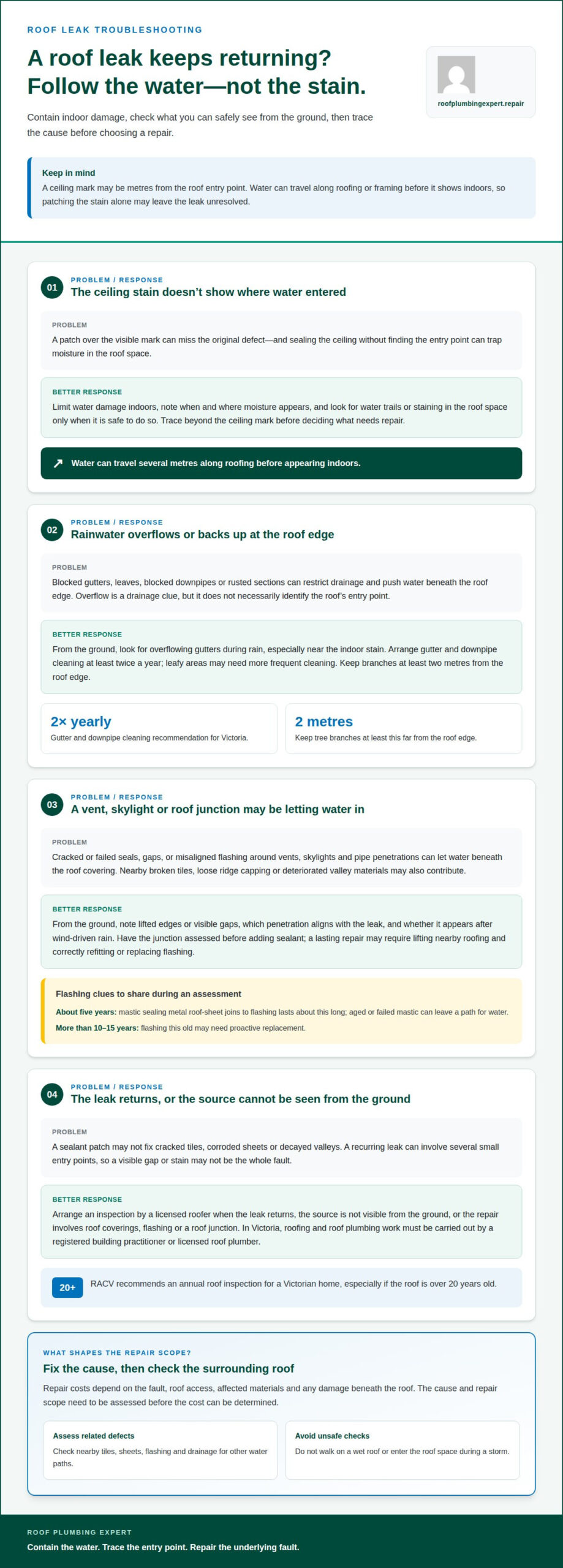
- Trace the leak beyond the visible ceiling mark, as water can travel along roof materials before appearing indoors.
- Check whether blocked gutters or damaged flashing could be directing water beneath the roof covering.
- A professional inspection can identify the source and help define the repair scope that affects the cost.
How much does it cost to fix a leaking roof in Melbourne?
For a Melbourne property, repair costs depend on the fault, roof access, affected materials and any damage beneath the roof. The cost can be determined once the leak’s cause and repair scope have been assessed by Roof Plumbing Expert, with a quote provided after you request one.
- Trace water before choosing a repair. Water can travel several metres along roofing before appearing indoors, so a ceiling stain may sit away from the entry point. Inspecting the roof space for water trails and moisture staining helps separate the visible symptom from the original defect. Misdiagnosis can lead to a patch in the wrong location while water continues entering elsewhere.
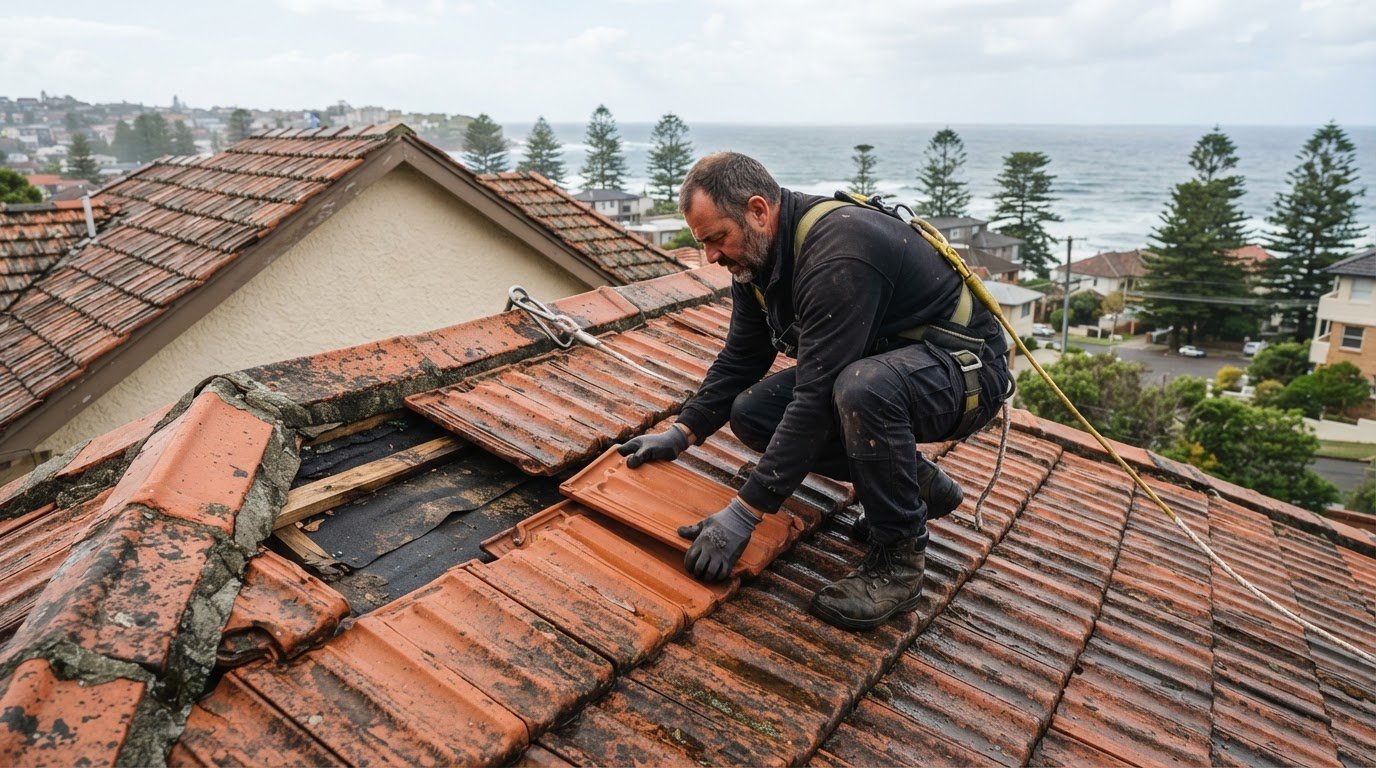
- Compare a patch with a root-cause repair. Sealant over a visible gap may not resolve cracked tiles, corroded sheets or decayed valleys. Recurring leaks can involve several small entry points. For example, a damaged tile beside a valley may coincide with deteriorated valley material, so both areas need assessment.
- Include penetrations and junctions. Failed seals around roof vents, skylights and pipe penetrations can admit water. Misaligned flashing may let it seep beneath roofing materials. The repair scope depends on the affected junction and surrounding materials, not only the indoor stain.
- Consider rules, insurance and safety. Victorian building and state requirements can apply to roof repairs, depending on the work and location. Home insurance generally covers sudden or accidental damage, while gradual wear and age-related deterioration are generally excluded. Don’t walk on a wet roof or enter the roof space during a storm.
- Reduce the chance of repeat leaks. After repairs, assess nearby tiles, sheets, flashing and drainage for related defects. Blocked gutters or damaged roofing beside the original repair can create another water path. Keep a record of when leaks occur and which areas show moisture, particularly after heavy weather.
What should I do first when my roof leaks?
Start with drainage: blocked gutters can send rain beneath the roof edge. Check from the ground, then use the steps below to decide whether a roofer should inspect the roof.
Check gutters and roof drainage
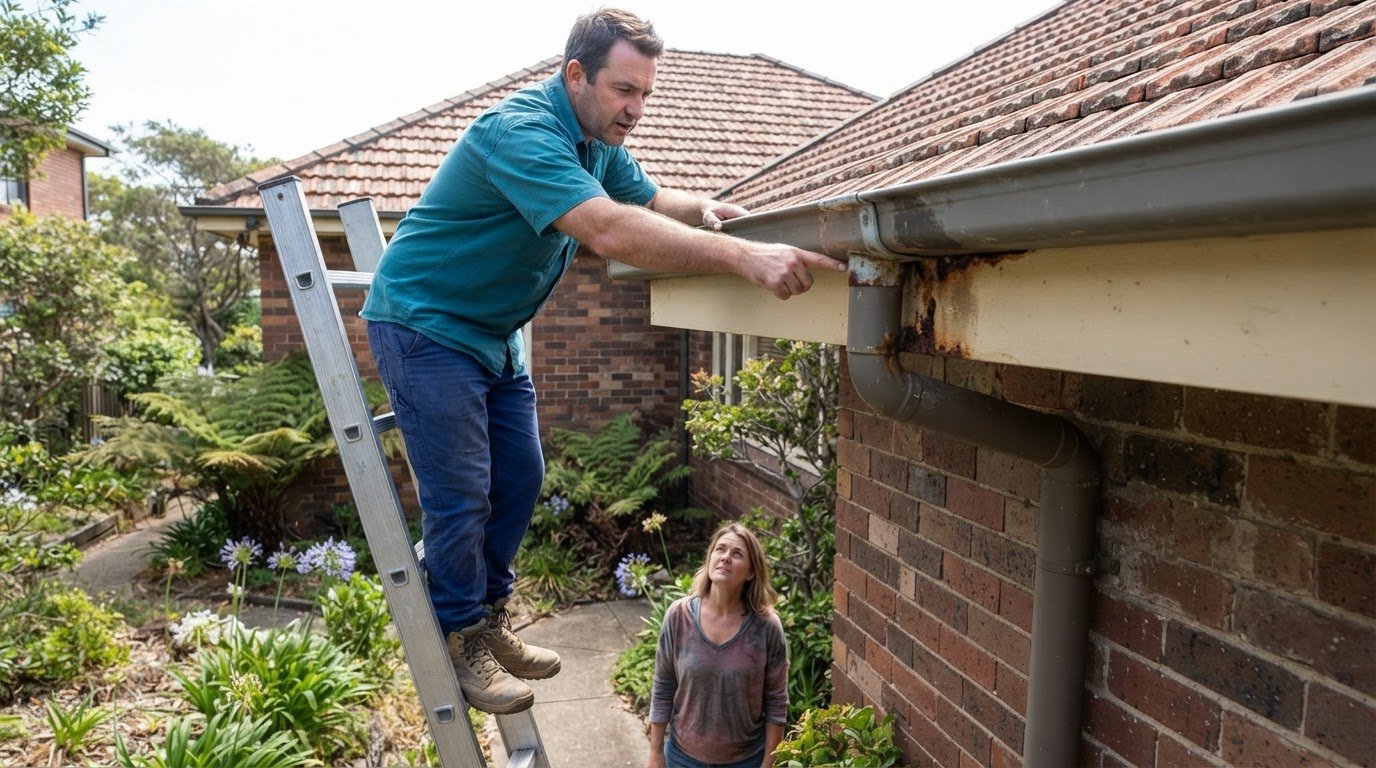
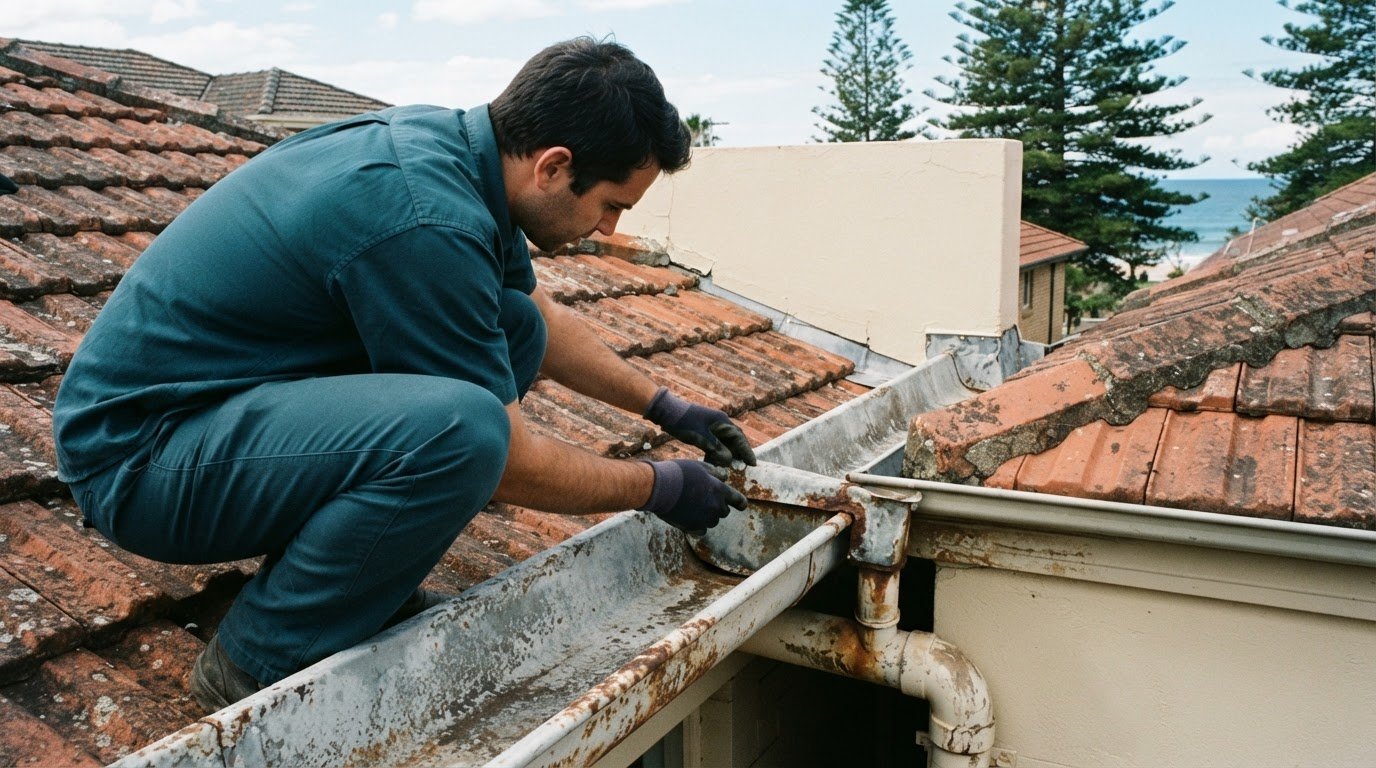
From the ground, look for gutters overflowing during rain, especially near a ceiling stain. Leaves, blocked downpipes or rusted sections can restrict drainage, pushing water beneath the roof edge or into poorly detailed eaves. After a home extension or verandah, consider whether the added roof area is draining into gutters with enough capacity. Recurring overflow indicates a drainage issue, but not necessarily the roof’s entry point.
Clear gutters and manage overhanging branches
Arrange gutter and downpipe cleaning at least twice a year. RACV recommends twice-yearly cleaning in Victoria, with more frequent cleaning in leafy areas. Clear leaves and debris that obstruct water flow, but never climb onto a wet roof. Keep tree branches trimmed at least two metres from the roof edge to reduce leaf build-up and the chance of branches hitting the roof during storms.
Know when to call a licensed roofer
Call a licensed roofer when a leak returns, the source isn’t visible from the ground, or the repair involves roof coverings, flashing or a roof junction. In Victoria, roofing and roof plumbing work must be carried out by a registered building practitioner or licensed roof plumber. RACV recommends a licensed roofing contractor inspect a Victorian home’s roof annually, especially if it’s over 20 years old. For a persistent leak, roof leak detection and repair can help identify the cause.
Troubleshoot metal and Colorbond roofs
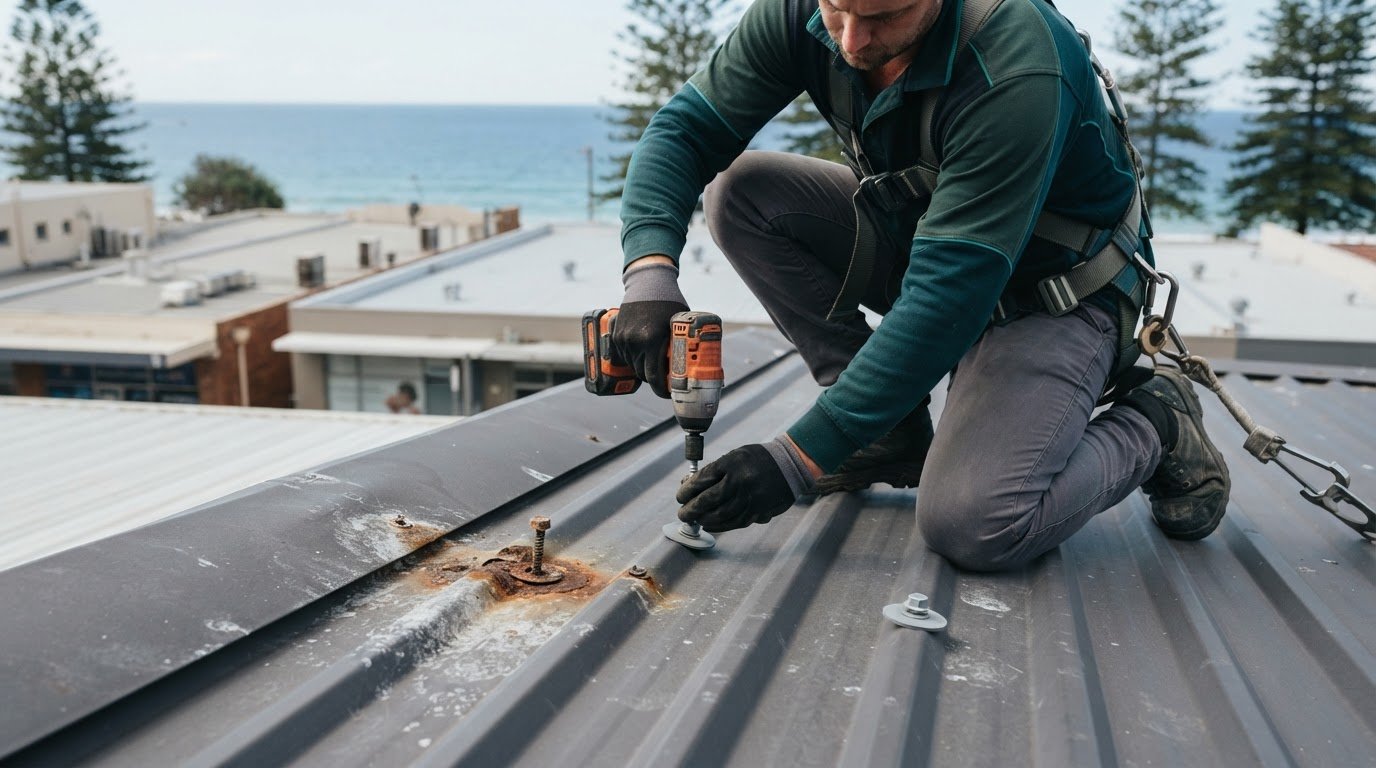
For a metal or Colorbond roof, note when and where water appears, then inspect the area from the ground. Look for damaged sheets or flashing around vents and skylights. Strong winds can drive rain beneath roof laps, and narrow gaps between overlapping sheets can draw water through. Don’t apply sealant to a suspected gap before locating the entry point. A recurring leak needs the affected roofing materials assessed.
Faulty or degraded flashing around roof penetrations
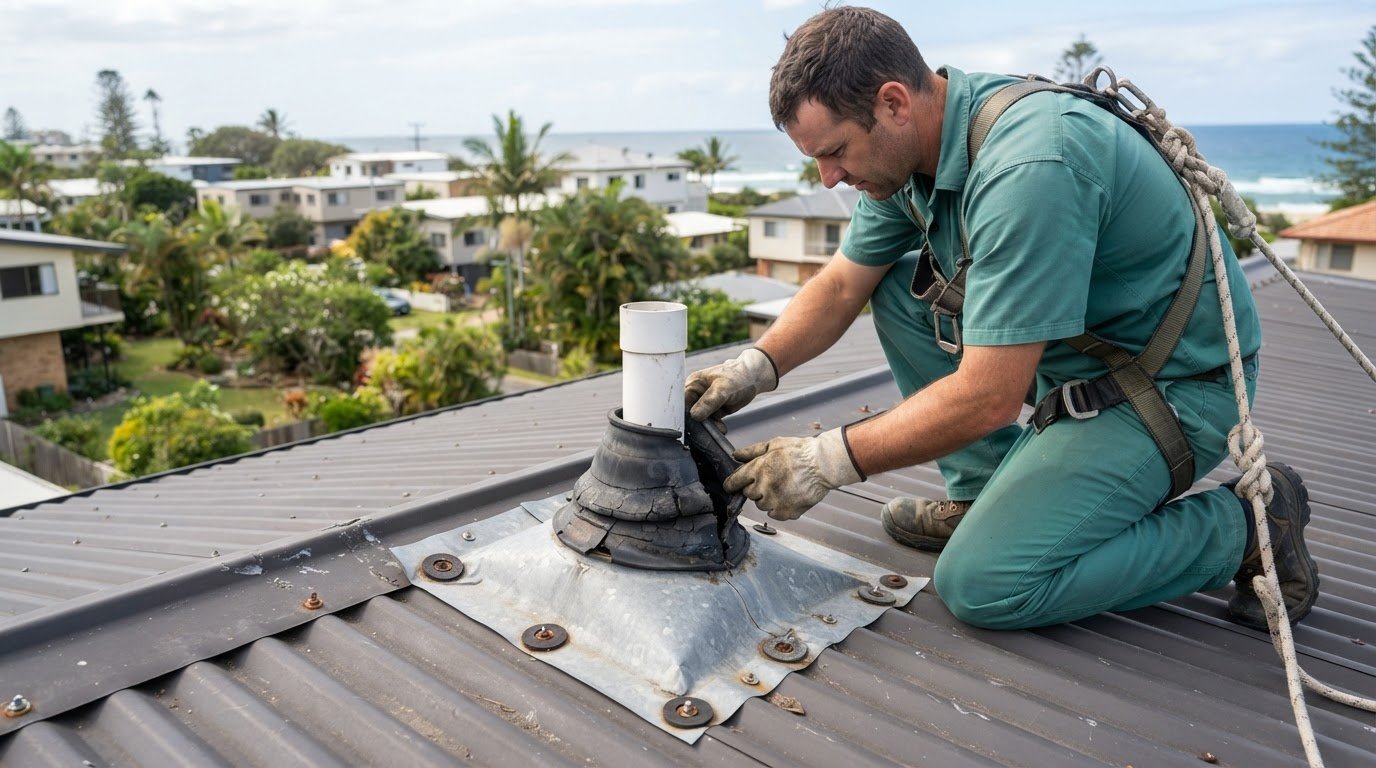
If a leak appears after heavy rain, consider flashing around roof penetrations. A small defect at a vent or skylight can let water beneath the roofing, even if the entry point isn’t visible indoors.
Inspect flashing around roof penetrations
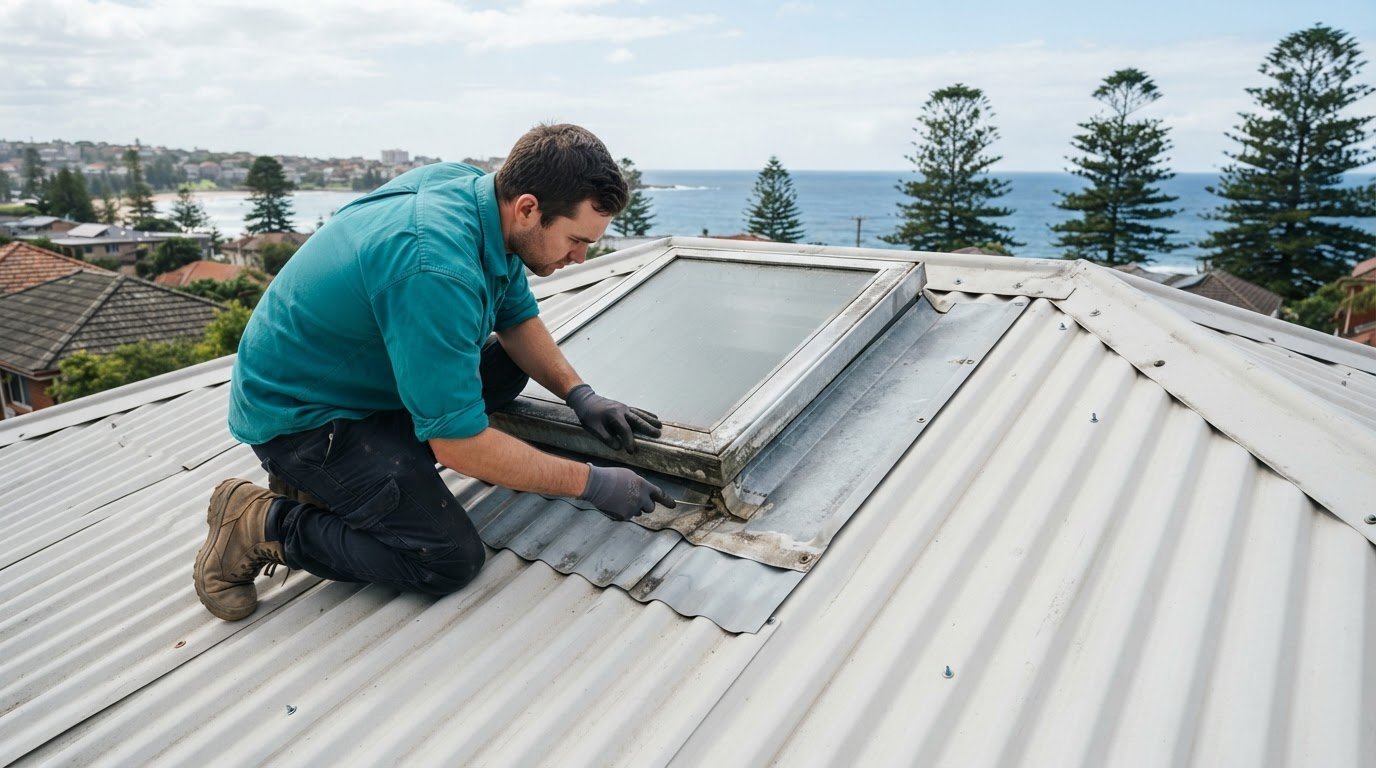
From the ground, look for lifted edges or gaps around roof vents, skylights and pipe penetrations. Cracked, shrunken or failed seals at these junctions can admit water, which may travel along sheets or framing before dampening insulation. Don’t climb onto a wet roof to inspect a suspected defect. Note which penetration aligns with the leak and whether it appears after wind-driven rain.
Identify misaligned flashing
Check whether flashing sits beneath adjoining roofing materials, rather than simply covering the join. Misaligned or incorrectly installed flashing can let water seep underneath, particularly where a roof meets a wall or changes direction. Also look for nearby broken tiles, loose ridge capping or deteriorated valley materials. A leak near one junction may involve several defects, so patching the visible mark can miss the cause.
Repair flashing, membranes and roof vents
Have the affected junction assessed before adding sealant. Mastic sealing metal roof-sheet joins to flashing lasts about five years, and aged or failed mastic can leave a path for water. Flashing more than 10-15 years old may need proactive replacement. A lasting repair usually involves lifting surrounding roofing materials, replacing or correctly refitting the flashing, then reinstating its laps and terminations to manufacturer guidelines.
Include the adjoining membrane, gutter and roof vent in the repair assessment. If water has reached ceiling insulation, the visible stain may not reveal the full extent of the moisture. Addressing the junction and nearby defects helps prevent water from returning along the same route.
Professional leak detection and roof inspections
Troubleshooting a persistent roof leak means looking beyond the ceiling stain. A structured inspection compares indoor moisture with roof defects and drainage paths.
- Inspect the roof cavity and coverings. Trace water marks across rafters and check for damp insulation or daylight through gaps. Outside, assess roof junctions, penetrations, flashing placement and material movement. Compare these signs with the indoor stain, since the entry point may be elsewhere. Also consider whether poor roof-cavity ventilation could be creating moisture that resembles rain ingress.
- Test suspected areas in controlled sections. Targeted water testing can start at the lower roof and move upwards, one area at a time, while someone watches indoors for signs of water entry. This can help isolate a suspected location without wetting the entire roof. Record the section tested and where moisture appears. For troubleshooting a persistent roof leak, a repeatable test can help distinguish a roof fault from unrelated dampness.
- Assess weather exposure and drainage. Compare leak timing with wind direction and rainfall conditions. Check roof junctions, valleys, vents and downpipes for signs of storm damage or overflow. Wind or hail can affect flashing and vents, while inadequate valley or box-gutter capacity can direct water into vulnerable areas. RACV recommends Victorian homeowners arrange a professional roof inspection every eight to 10 years to identify potential issues early.
- Document findings and repair priorities. A roof condition report can record photographs, detailed notes and repair recommendations. This gives owners a clear record for discussions with insurers or a body corporate. Moisture meters, drones or infrared tools can assist with locating hidden leaks. If the source remains unclear, arrange professional roof leak detection to identify the fault and define the repair needed.
Roof Plumbing Expert: Roof Leak Detection & Repair
Roof Plumbing Expert provides Roof Leak Detection & Repair when a leak keeps returning, its entry point is unclear or a temporary patch hasn’t solved the problem. The service identifies the roof fault and carries out repairs suited to the affected materials and junctions.
If the assessment identifies a related issue, repairs may also involve Roof Flashing & Waterproofing, skylight repair or replacement, Gutter & Downpipe Installation, Colorbond Roofing, or Roof Restoration & Repointing. Pinpointing the cause helps distinguish a localised defect from a wider roofing problem, such as multiple damaged areas or failing drainage.
If water is still entering or the leak has returned, contact Roof Plumbing Expert to discuss Roof Leak Detection & Repair for your Mainly Beach property.
Take the next step towards a lasting repair
A recurring leak can make it tempting to keep treating the latest ceiling mark. Instead, consider the roof’s overall condition so the repair addresses the cause, not just the symptom. Keep a brief record of when water appears and which rooms show signs of moisture. These details can help inform a more useful assessment.
Troubleshooting a persistent roof leak is easier when observations lead to a clear diagnosis and repair plan. Roof Plumbing Expert can assess the roof and carry out relevant work, including leak repairs, Roof Flashing & Waterproofing, or Gutter & Downpipe Installation where needed. The right repair depends on the fault identified at the property.
Contact Roof Plumbing Expert to discuss your roof leak and take a practical step towards protecting your home.
Frequently Asked Questions
Can a roof leak be fixed from inside?
An indoor measure can limit immediate damage, but it usually won’t repair the roof’s entry point. Catching drips and moving belongings, for example, can protect the room while the roof remains exposed to rain. Painting over a ceiling mark only hides the evidence. If the mark returns after the next shower, the roof exterior still needs assessment to locate and correct the fault.
Can a roof leak even if there are no visible holes or damage?
Yes. Water can enter through a narrow gap, a concealed roof junction or a failed seal that isn’t obvious from the ground. It may then travel along a sheet or roof framing before reaching the ceiling. Moisture in the roof can also result from poor cavity ventilation rather than rain entering through a hole. The indoor symptom alone cannot confirm the source.
Should I get a report if I suspect a leak?
A roof condition report is useful when you need a clear record of suspected damage or completed repairs. Keep it with dated photos and notes about which rooms show moisture and the weather at the time. This creates a practical timeline if the leak returns and helps explain the issue during insurance or body corporate discussions without relying on memory alone.
What causes a leaky roof?
Common causes include cracked tiles, corroded metal roofing, deteriorated valleys, leaking penetrations and blocked drainage. A leak may also recur when several small defects channel water into the same roof space. For example, a damaged tile near a valley may coincide with restricted water flow. Repairing only the most obvious fault can leave another route for rain.
What is a capillary leak in roofing?
A capillary leak occurs when water moves through a very narrow gap between closely joined roofing materials. On a metal roof, water may track between overlapping sheets; on a tiled roof, it can pass through a tight joint. The opening may be too small to see from below, and water can travel before appearing indoors. That makes the ceiling mark an unreliable guide to the exact entry point.
What is misaligned flashing?
Misaligned flashing doesn’t sit or overlap correctly where roof materials meet, such as beside a wall, vent or skylight. Instead of directing rain over the roof surface, a misplaced edge can let water slip beneath the covering. The flashing may appear to be in place from the ground, yet an incorrect overlap or termination can still leave a path into the roof cavity.