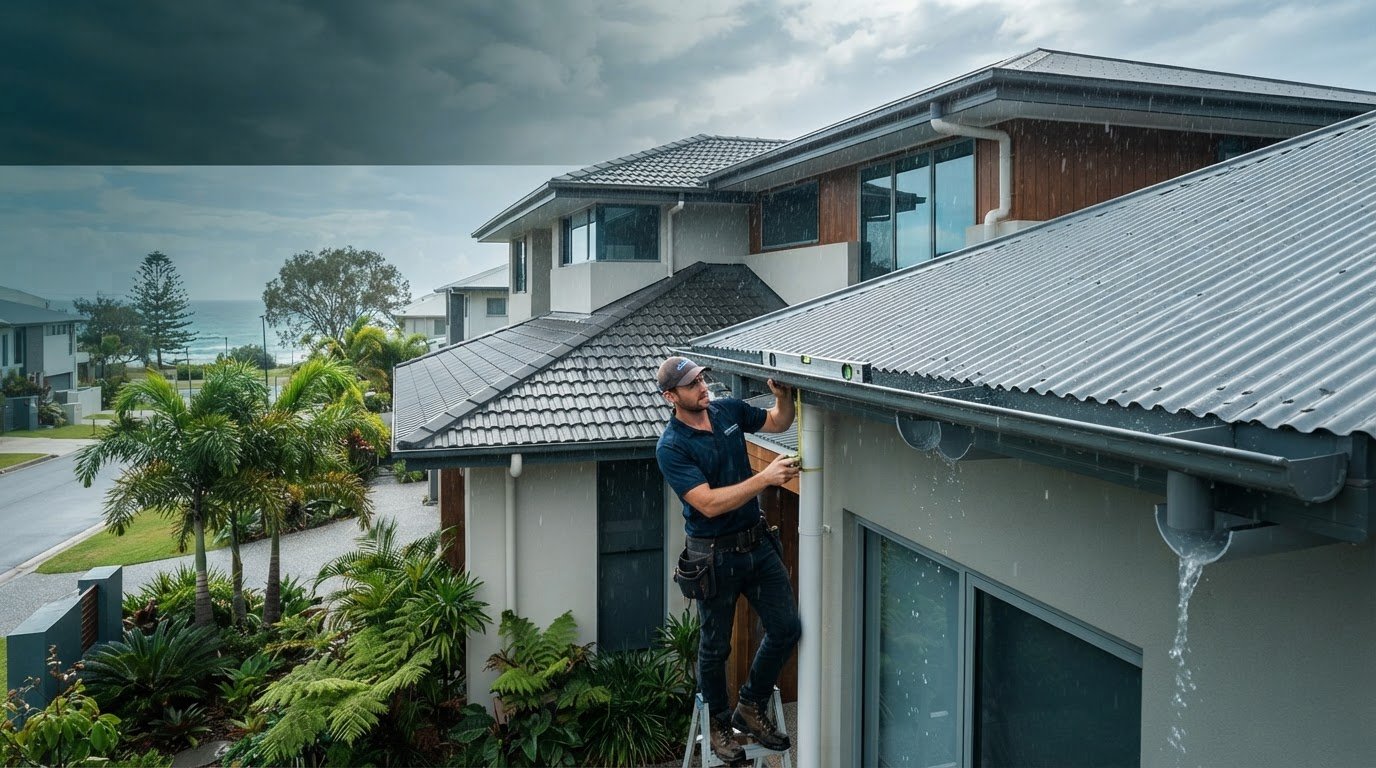
The gutter that suits your home’s style isn’t automatically the best match for its roof or rainfall. Choosing the right gutter profile for my home means weighing roof shape and pitch, local rain intensity, drainage capacity, maintenance and how the gutter fits the existing structure. Half-round profiles have a curved shape that helps water flow and debris move through, while quad gutters suit a range of Australian homes and ogee profiles can complement heritage-style properties.
It’s easy to focus on appearance, but a profile also needs to move roof runoff towards downpipes without overflowing or trapping water. The right choice depends on how your roof sheds rain, how much water the system must carry and whether your current gutters are already causing problems.
This guide compares common gutter profiles and explains how roof style, rainfall, upkeep, budget and existing gutter issues affect the decision. You’ll also learn why replacing a gutter with the same profile may not solve recurring overflow or leaks.
Key Takeaways
- Half-round gutters suit traditional homes, support easy water flow and have fewer corners where debris can collect.
- Match gutter capacity to the roof’s size and pitch, as well as local rainfall intensity.
- Consider your home’s architectural style, maintenance needs and the gutter’s compatibility with the existing roof and fascia.
- Correct gradient towards downpipes and sound installation matter; a suitable profile can still perform poorly if water pools or the system is fitted incorrectly.
- If your gutters overflow or leak, replacing them with the same profile may not address the underlying drainage problem.
What are the different gutter profiles?
Quad gutters come in varied sizes and suit many Australian homes. Half-round gutters are recommended where greater rainfall-carrying capacity is needed. Squareline gutters have a high front that can conceal roof-sheet edges, while their capacity depends on the selected profile and drainage design.
Profile shape affects how a gutter looks beneath the roof edge and how it handles debris and runoff. Comparing the options helps narrow the choice to profiles that suit your home’s roof and appearance.
Australian Gutter Profile Types
Australian gutter profiles include quad, half-round, ogee and box designs, each shaped for different roof edges and architectural styles. Quad gutters are widely used and suit a range of homes. Ogee gutters have a decorative S-shaped front, making them a considered match for heritage properties.
Box gutters are rectangular and concealed within the roofline. They can handle high water volumes across larger roof areas, but need precise installation. Their hidden position can make blockages harder to spot. Squareline gutters suit sheds, carports and patios, and their high front can hide roof-sheet edges.
These distinctions matter because the gutter sits where roof drainage meets the home’s exterior. A visible profile, such as ogee, contributes to the façade; a concealed box gutter integrates with the roofline. The fascia board and roof edge also influence which profile can be fitted.
Half-Round and Quarter-Round Features
Half-round gutters have a curved base and are often chosen for traditional, heritage or character homes. A Half Round gutter in the profile comparison described for Australian homes has a 150 mm diameter. Its rounded channel allows water to flow easily, making this profile a practical consideration for homes needing higher rainfall-carrying capacity.
Cleaning can be simpler because the curve has no sharp angles where leaves and debris can catch. That shape doesn’t remove the need for maintenance, especially beneath overhanging branches. Regularly clearing debris helps keep the channel open and runoff moving towards the downpipes.
Quarter-round gutters have a curved front that forms a quarter-circle, with a flat back against the fascia. Their rounded front can help debris move through the channel, improving self-cleaning. The shape offers a softer appearance than square-fronted profiles, while the flat back provides a different fit against the fascia board.
Profile Capacity and Appearance
Quad, half-round and squareline gutters differ in shape, appearance and available sizing. Quad profiles offer a familiar look across varied Australian house styles, with a wide choice of sizes. Half-round gutters show a curved profile beneath the roof edge. Squareline gutters have a squarer face and a high front that can conceal roof-sheet edges.
Capacity isn’t determined by appearance alone. Quad gutters are available in different sizes, while half-round gutters are recommended for systems needing higher rainfall-carrying capacity. Squareline suitability depends on the selected size and the roof’s drainage requirements. Roof catchment and pitch also affect how quickly rainwater reaches the gutter.
For example, a traditional home may suit the rounded line of half-round gutters, while a shed may suit squareline’s higher front. A quad profile can work across many residential styles. Compare the roof’s water demand with the profile’s fit and finish, rather than choosing by shape alone.
Choosing a gutter profile for roof style and capacity
Match gutter capacity to the roof’s catchment area, pitch and local rainfall intensity. In Australia, metal gutters and downpipes must be manufactured in accordance with AS/NZS 2179.1, and BCA Vol 1 3.5.1.3 requires gutters and downpipes to be compatible with roofing materials.
Roof Size, Pitch and Gutter Capacity
Roof size and pitch indicate how much rainwater can reach a gutter and how quickly it arrives. A larger catchment area feeds more runoff into the system, while a steeper roof can move water rapidly during storms. A profile that suits a small, gently sloping roof may struggle on a larger or steeper one.
Consider the full drainage path, not just the gutter shape. Profile size, downpipe spacing and roof layout all influence water flow. For example, a steep roof with long runs may need greater drainage capacity than a compact roof with a gentler pitch. Local rainfall intensity also affects the volume the system needs to manage.
Higher-Capacity Gutter Options
EMLINE® and FITFAST® gutters are suited to larger roof catchments, long roof runs and locations exposed to intense rainfall. They may be options where the roof directs substantial runoff towards the eaves. The profile still needs to match the roof’s layout and the drainage system serving it.
For a contemporary home with a broad roof area, compare the gutter profile with the length of each roof run and the position of downpipes. QUAD Hi-Front gutters are recommended for steeper roof pitches, heavy summer downpours and homes where overflow control matters. A range of quad sizes can also be supplied with slots to help prevent overflowing.
Water Capacity and Overflow
Square-fronted profiles, including quad and squareline, need suitable sizing and downpipe spacing to support water flow. Squareline’s high front can conceal roof-sheet edges, while quad offers a range of sizes. Neither appearance nor profile name alone determines whether a system can manage the roof’s runoff.
During heavy rain, undersized gutters or poorly spaced downpipes can contribute to overflow. A larger-capacity gutter may help reduce overflow and protect the home’s interior from water damage, but the complete drainage arrangement matters. Assess roof catchment, pitch, gutter dimensions and downpipe positions together. A professional gutter sizing and installation assessment can consider these factors as one system.
Choosing profiles based on architecture, rainfall, maintenance, compatibility and budget
A suitable gutter profile balances the home’s architectural style with roof design, rainfall exposure and maintenance needs. Compare your roof’s drainage demands and material exposure with a profile’s appearance and fit.
Roof slope and drainage requirements are practical factors in profile selection. Coastal exposure also affects material choice: check with a supplier whether COLORBOND® Ultra steel is suitable for coastal or harsher environments.
Architecture and Rainfall Considerations
Architectural style, roof design and local rainfall intensity influence which gutter profiles are appropriate. Ogee profiles can complement Federation-style homes and heritage renovations, while quad gutters suit a range of residential roof styles, including contemporary homes.
Roof catchment and slope affect how much water reaches the gutter and how quickly it arrives. For example, a larger roof area with a steep pitch can send substantial runoff towards the eaves during storms. Consider the roof’s proportions and visible gutter line together, rather than selecting by appearance alone.
Heavy Rainfall Conditions
In areas exposed to heavy rainfall, profile capacity, gutter sizing and downpipe spacing need to work together. Slotted quarter-round gutters are popular in heavy-rainfall areas because pre-punched holes can help reduce overflow when rain exceeds drainage capacity. QUAD Hi-Front gutters are recommended for steeper pitches and heavy summer downpours.
For a Mainly Beach property, assess how each roof section directs runoff into its gutter run. Long runs and large catchment areas can place greater demands on the drainage layout. A higher-capacity profile may help manage runoff, but downpipe positions also affect how water leaves the system.
Profile Maintenance and Common Problems
Maintenance needs vary with profile shape and location. Half-round gutters have no sharp internal angles for debris to catch, while concealed box gutters can clog and need regular cleaning. Ogee gutters are easy to maintain, although blockages can restrict water flow in any profile.
Regularly clear leaves, check for leaks and trim branches hanging above gutters. Gutter guards can reduce debris build-up, but they can’t correct an incorrectly sized or poorly installed system. These checks help distinguish a maintenance issue from a capacity problem before choosing a replacement profile.
Compatibility matters during replacement: a new gutter must suit the existing roof structure, fascia and roofing material. The work may integrate with the current system or require complete reinstallation. Material choice matters too; near the coast, exposure is one factor in selecting a suitable grade and finish.
Consider budget alongside the whole drainage system. Compare material, profile, maintenance needs and compatibility with the roof and fascia. A profile that matches the home’s architecture but leaves recurring blockages or overflow unresolved may not address the underlying issue.
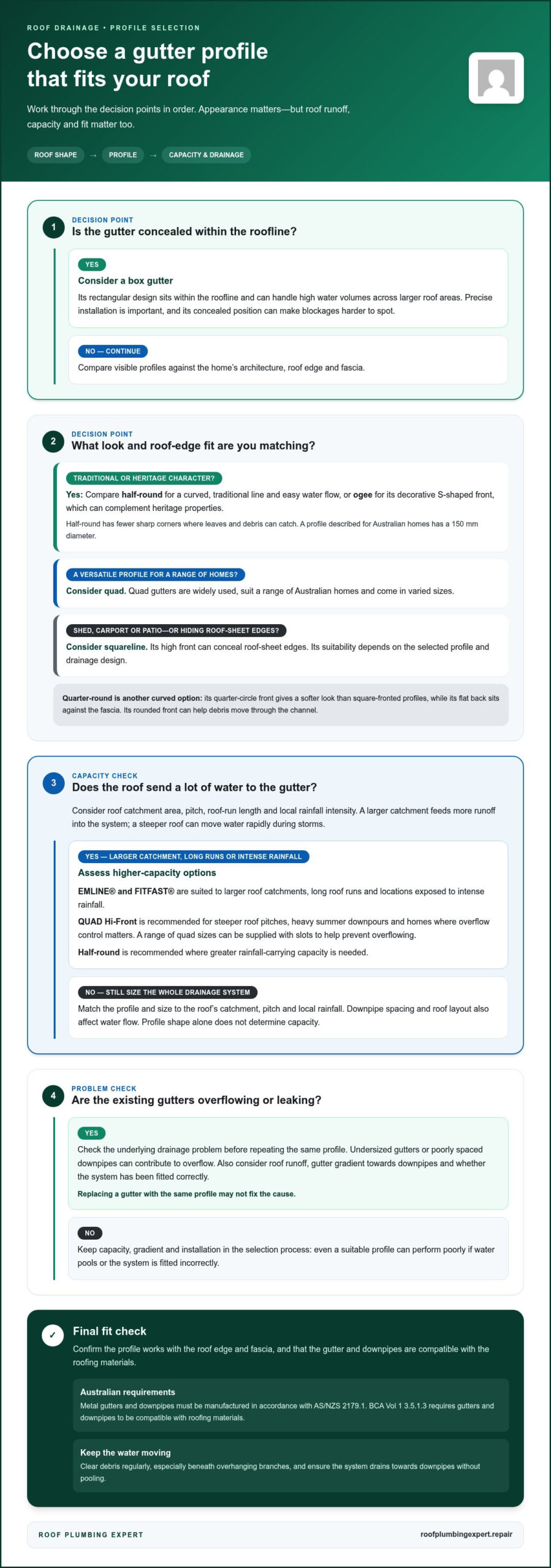
Professional gutter advice and installation
A professional assessment connects profile selection with roof condition, fascia support and the complete drainage path. For replacement work, these details help identify whether the existing system can be integrated or needs reinstallation.
Professional Advice on Gutter Choices
Professional advice considers roof slope, catchment area, material compatibility and the building’s existing structure. These factors help match a profile to drainage needs and appearance, rather than choosing by shape alone.
Smoothline Gutter has a flat back, unlike Half Round Gutter, and is available in 20 Colorbond colours or a Zincalume finish. That distinction can guide selection where the gutter’s fit against the roof edge and the exterior finish both matter. A complete roofing, guttering and fascia system also supports consistent performance and appearance.
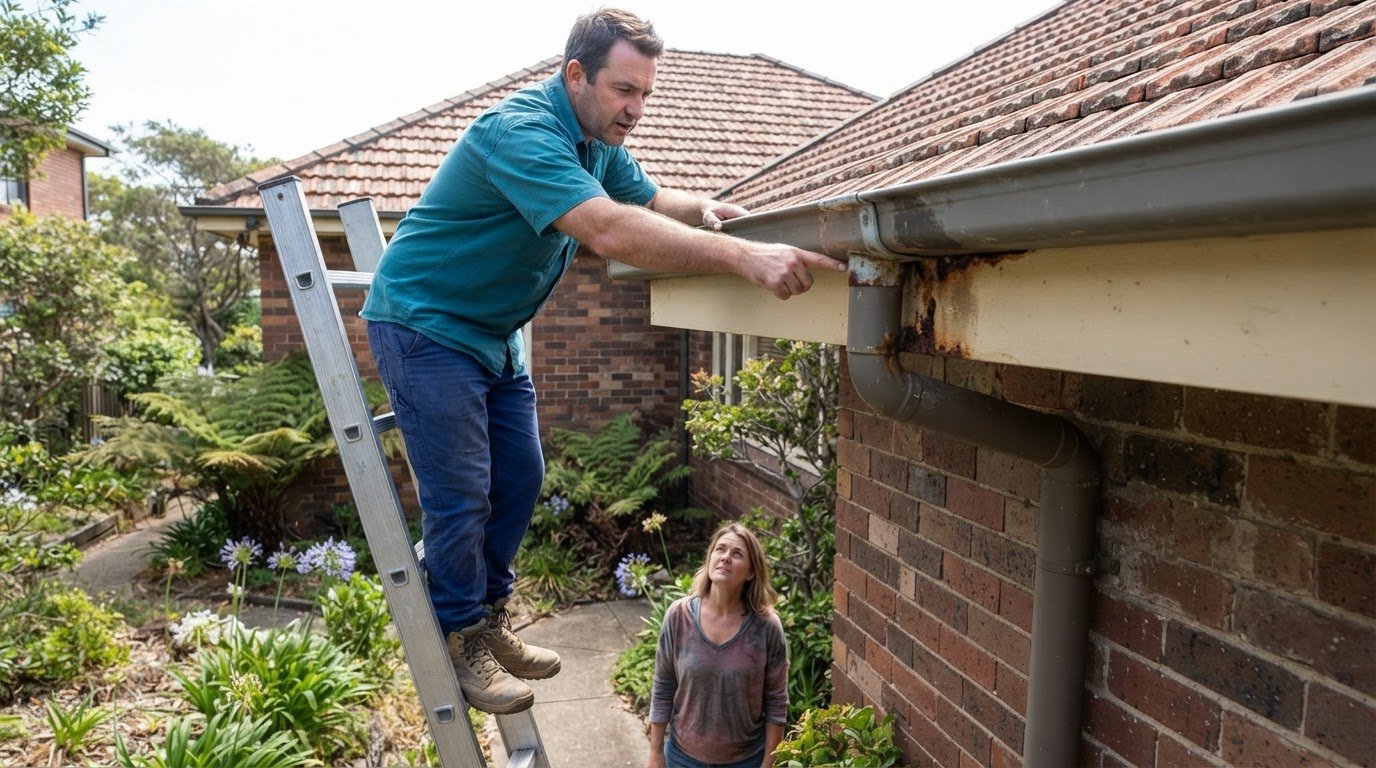
For a replacement, check the fascia before installation. Damaged or deteriorated fascia may need repair to support new guttering. The roof edge, existing gutter and downpipe positions provide practical information for assessing whether the new profile will fit.
Installation Fall and Drainage
Gutters need an appropriate gradient, or fall, towards downpipes so water drains instead of pooling. During installation, the fall must work along the gutter run and direct runoff into the drainage system.
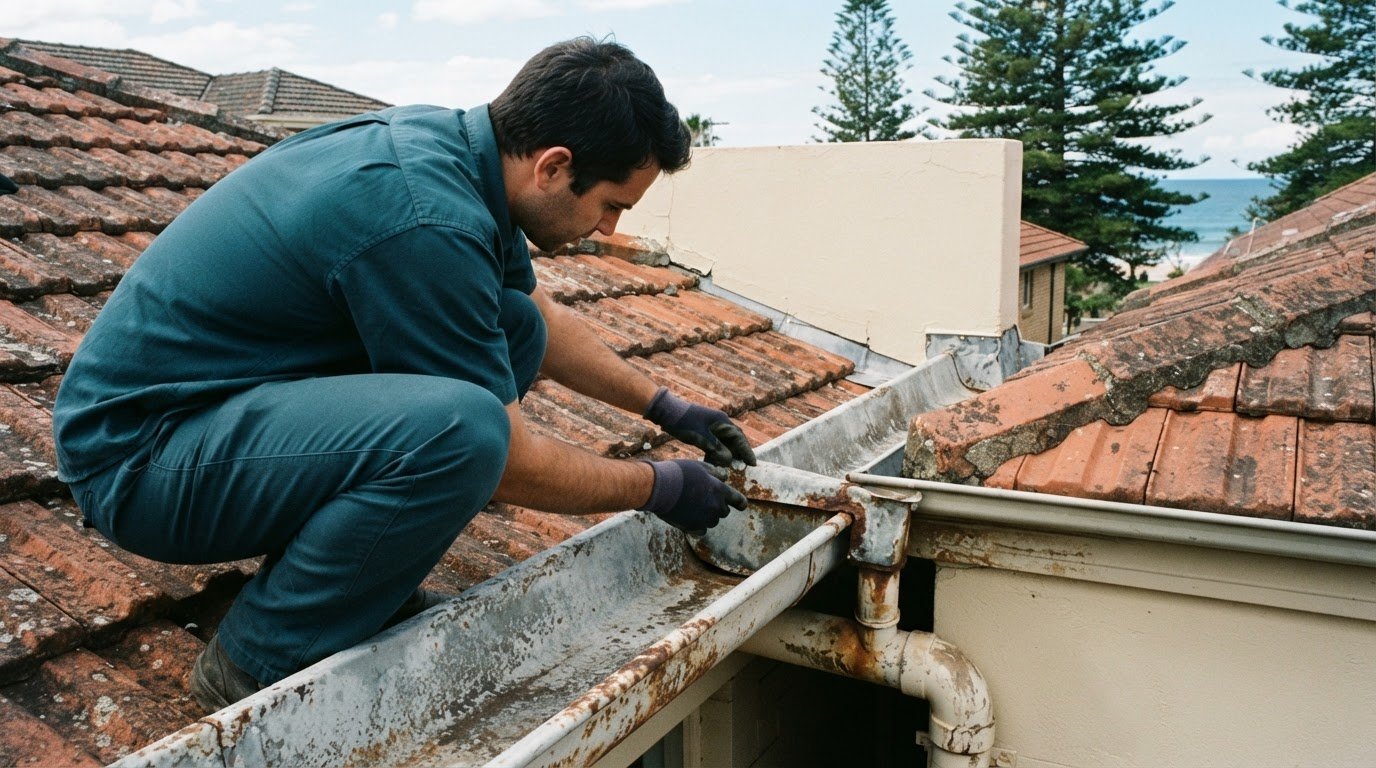
Pooled water can point to inadequate fall, a blockage or an installation problem. It can also create a breeding environment for mosquitoes. If water remains in a section after rain, for example, the gutter’s slope and downpipe connection need attention, not just the visible profile.
Box gutters need particular precision because they sit concealed within the roofline. Their position can make blockages harder to spot, so installation must support reliable water flow and later maintenance. Careful installation helps the gutter drain reliably and reduces the risk of problems.
Installation and Ongoing Maintenance
Correct installation matters even when the gutter is appropriately sized. Poorly installed gutters can overflow, leak or deteriorate prematurely. Before fitting a replacement, removing scotia beneath an old gutter can prevent trapped water. The new gutter should not be sealed to the fascia in a way that traps water behind it.
After installation, regularly remove leaves and debris, check for leaks and trim branches hanging above gutters. Gutter guards can reduce debris build-up, but they can’t compensate for incorrect sizing or poor installation. These maintenance checks help keep water moving through the gutter and towards its downpipes.
Colorbond gutters should also be installed correctly to manage heat expansion. Matching Colorbond across roofing, gutters, fascia and downpipes supports a cohesive exterior finish and consistent colour ageing. A complete system review considers those materials alongside the roof edge, fall and drainage connections.
Choosing a gutter profile based on problems with existing gutters
Recurring overflow or leaks are signs to assess the whole drainage system, not simply copy its existing profile. In Australia, the same gutter shape may continue struggling if roof runoff, gutter capacity, fall, downpipe positions or installation are contributing to the problem.
Read the symptoms before selecting a profile
Start with the pattern of the problem. Overflow during storms can point to insufficient capacity for the roof’s catchment, blocked drainage or poor installation. If water pools instead, inadequate fall towards the downpipes may be involved. Leaks and premature deterioration can also follow poor installation, even when the gutter is correctly sized.
Look at where and when the issue occurs. For example, overflow beneath one roof run may relate to its catchment or nearby downpipe arrangement; water pooling along a gutter points to its gradient. These observations help distinguish a profile-capacity issue from a blockage or installation fault. They also prevent appearance alone from driving the replacement decision.
When the same profile is not the answer
Replacing an old gutter with the same profile isn’t always the best solution when it overflows, leaks or struggles during storms. If the roof’s runoff exceeds the current system’s capacity, a gutter with greater capacity can help reduce overflow and protect the home’s interior from water damage. Gutter sizing and downpipe spacing need to support one another.
A square-fronted gutter may suit the roofing appearance, but its profile still needs appropriate sizing and drainage. A larger option may address capacity, while a new profile won’t resolve inadequate fall or poor installation by itself. Gutter guards can reduce leaf and debris build-up, but can’t make an undersized or badly installed system perform correctly.
Replacement, compatibility and appearance
Before replacing a profile, consider how it meets the roof edge, fascia and roofing material. A new gutter may integrate with the existing structure or require complete reinstallation. Changing from a square profile to a curved one, for instance, can alter the fit at the fascia and the overall appearance, so compatibility matters alongside capacity.
Check the fascia as part of the decision. Damaged or deteriorated fascia may need repair to support new guttering. A profile that matches the home’s style won’t fix a weak mounting surface, just as a higher-capacity gutter won’t correct a drainage layout that traps water.
For recurring overflow or leaks, arrange gutter and downpipe installation that addresses the roof’s drainage needs, profile fit and existing issues together.
Roof Plumbing Expert: Gutter & Downpipe Installation
Roof Plumbing Expert provides Gutter & Downpipe Installation when your existing system overflows, leaks or needs replacement. Its roof plumbing work connects profile selection with gutter sizing, downpipe placement and the roof’s drainage requirements, helping address the system rather than just its appearance.
If a leak persists, Roof Leak Detection & Repair can help identify where water is entering. For projects involving the wider roof, Colorbond Roofing and Roof Restoration & Repointing are also available. This support is useful when gutter work needs to be considered alongside the roofing or roof condition.
For advice about gutter installation or an existing drainage problem in Mainly Beach, contact Roof Plumbing Expert to discuss your home’s needs.
Make your next roof decision with confidence
Choosing the right gutter profile for my home is not only a replacement decision. It can shape how future roof work, maintenance and exterior updates fit together. Before committing, consider how the gutter choice supports the home’s longer-term plans, including changes to roofing materials or the appearance of the roof edge.
Roof Plumbing Expert can help with Gutter & Downpipe Installation, Roof Leak Detection & Repair and Colorbond Roofing. Bringing these needs together can be useful when gutter concerns overlap with a leak or broader roofing work, so the next step addresses the whole roof system rather than one isolated symptom.
Contact Roof Plumbing Expert for advice about your gutter and roof needs. A considered choice can help you move ahead with a clearer plan for protecting your home.
Frequently Asked Questions
What gutter profiles are commonly used on Australian homes?
Quad, half-round, ogee and squareline are familiar profiles for Australian homes. Half-round gutters have a curved channel; ogee’s decorative shape can suit older architectural styles. Squareline has a high, square front, while quad comes in a range of sizes. Box gutters sit within the roofline and are also used on larger buildings. The best shortlist depends on the roof edge, drainage needs and the appearance you want.
How do I choose gutter size and profile for my roof area and local rainfall intensity?
Choosing the right gutter profile for my home starts with comparing the roof area draining into each gutter run against its pitch, local rainfall intensity and downpipe layout. A valley can direct runoff from two roof slopes towards one drainage point, concentrating water there. For a Mainly Beach home, consider each roof section separately rather than treating the whole roof as one catchment. Gutter dimensions and downpipe spacing need to work together; profile width alone doesn’t establish capacity.
What gutter profiles are compatible with different roof styles and fascia types?
Compatibility depends on the roof edge and how the gutter can be supported. Eave or fascia gutters are square-profiled and fixed to the fascia or eave. Fascia gutters combine the fascia and gutter, while vertical fascia gutters have a rear fold that allows installation onto roof cladding. For a roof without a traditional fascia board, that structural difference can narrow the suitable options. Match the profile to the existing edge and roofing material.
What are the typical costs of different gutter profiles in Australia, including installation?
There isn’t one typical installed cost that applies across Australian homes. The price depends on the project and is provided after a quote request. Cost factors include the chosen material and profile, gutter length, downpipe requirements, roof access and whether the fascia needs repair. A replacement that requires changes to the drainage layout can involve different work from fitting gutters to an existing, sound structure.
Which gutter materials and finishes are available, and how do they affect durability and price?
Aluminium, steel and copper are common durable, corrosion-resistant gutter materials; vinyl is another option. Copper costs more than vinyl or aluminium, while offering a distinctive appearance. COLORBOND® steel is designed for Australian conditions, resists UV degradation and accommodates heat expansion when installed correctly. Lighter steel colours can help reduce heat absorption in high-sun environments. Material, finish and exposure all influence how the system performs and its overall cost.
How should gutters be sized and positioned to prevent overflow and water damage?
Size gutters for the roof catchment and pitch, then position downpipes to support drainage across each run. The gutter needs a gradient towards its downpipes; inadequate fall can leave water pooling instead of draining. Check junctions where valleys feed into the system, as concentrated runoff can challenge capacity. Gutter guards may reduce debris build-up, but they can’t correct an undersized gutter, poor fall or inadequate downpipe spacing.
When should I replace gutters, and what signs indicate a profile or capacity problem?
If you’re choosing the right gutter profile for my home after repeated drainage problems, first identify the symptoms. Consider replacement when leaks, recurring overflow or storm-related trouble persist after debris is cleared. Water pooling can point to inadequate fall, while overflow during heavy rain may indicate a capacity or downpipe issue. Look for leaks at joints and signs of water reaching the walls or fascia. Replacing the gutter with the same profile isn’t automatically the answer.
What do Australian building standards and local rules require for gutter capacity and overflow?
Metal gutters and downpipes must comply with AS/NZS 2179.1, and gutters and downpipes must be compatible with roofing materials under BCA Vol 1 3.5.1.3. Capacity, sizing and downpipe spacing should be matched to roof catchment, pitch and local rainfall; slotted profiles can help reduce overflow.