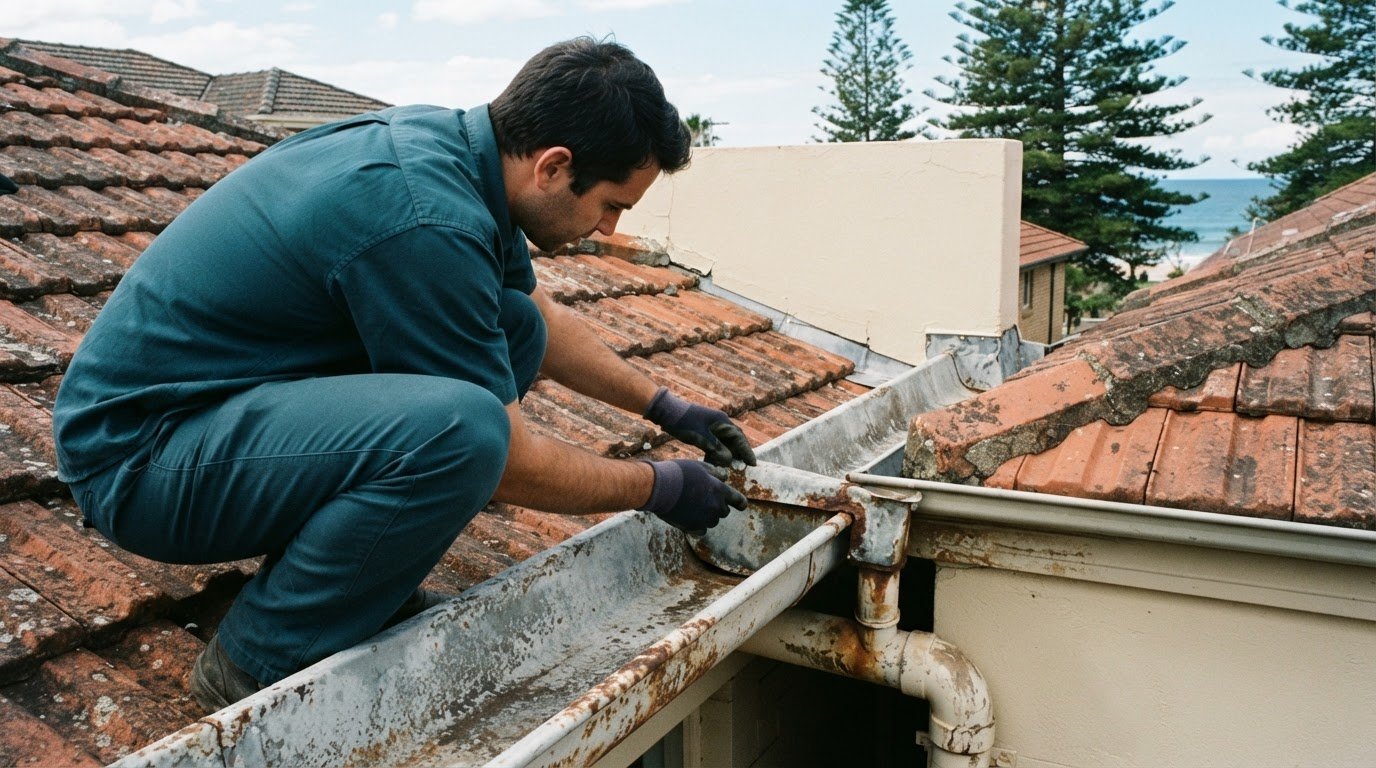
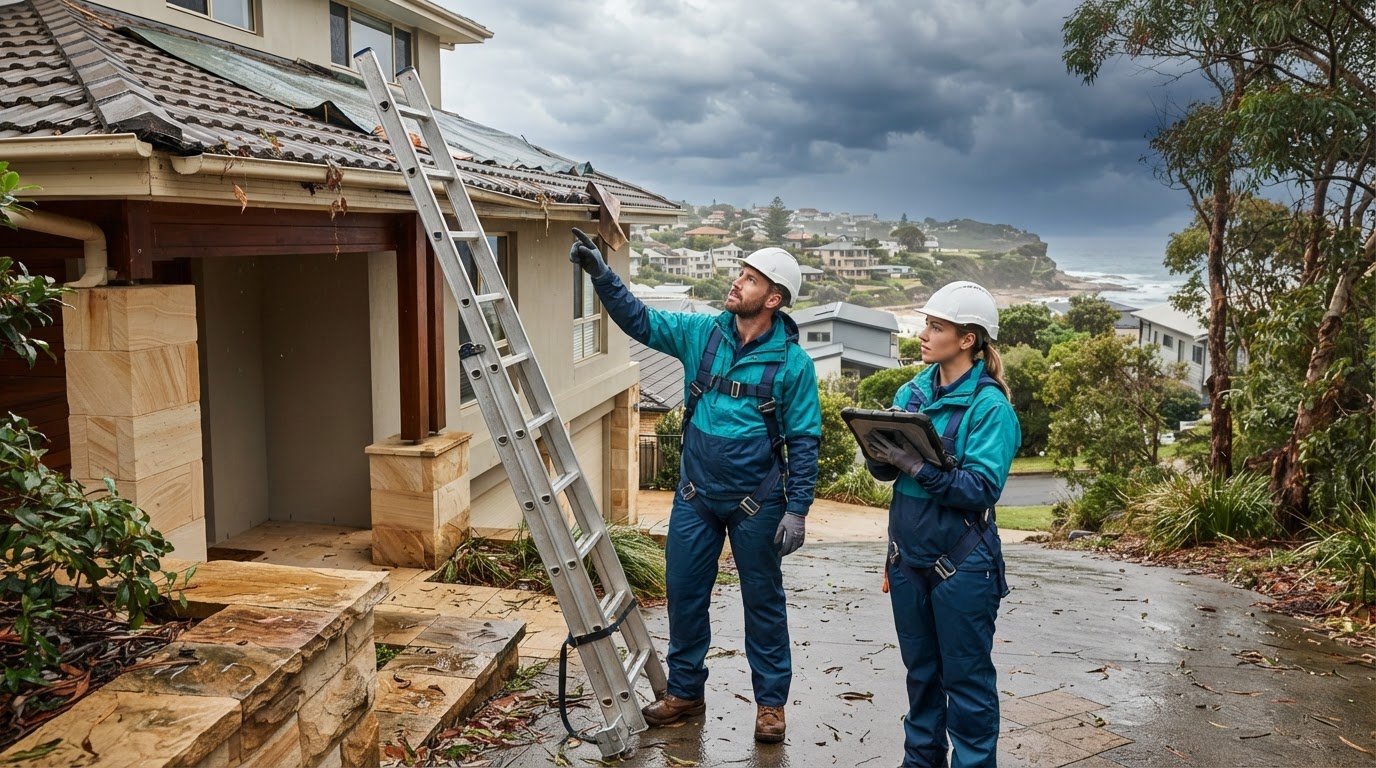
When a coastal storm sends water through the ceiling, the damage may not be visible from the ground. Don’t climb up to investigate: a wet or shifted roof can be unsafe. If you’re searching for an emergency storm damage roofer Manly Beach homeowners can contact, start by keeping people and pets clear of affected areas. Protect belongings only if you can do so safely. Roof Plumbing Expert provides roof leak detection and repair for properties in Manly Beach and across New South Wales.
It’s understandable to want a permanent fix straight away, but storm response often starts with controlling immediate risk. Temporary weatherproofing can limit further water entry, but it doesn’t repair the underlying fault. A thorough assessment considers roof coverings, flashing, gutters and downpipes together, particularly where wind, rain and coastal exposure affect the roof system.
This guide explains what to do safely, what a roofer inspects and repairs, and how to document visible damage for an insurance conversation without assuming a claim outcome. You’ll also learn how to distinguish make-safe work from lasting repairs and plan a clear repair pathway for your Manly Beach property.
Key Takeaways
- Active leaks, loose roof sheets, fallen branches and damaged roof edges need prompt attention and a safety-first response.
- Wind, wind-driven rain, debris and coastal exposure can affect several connected roof components, so the source of water entry needs proper assessment.
- Make-safe work helps limit further exposure, while a separate diagnosis identifies the permanent repairs required.
- Record when water entry began and take dated photographs from safe ground to help explain the damage during an insurance conversation.
- A roofer in Mainly Beach can assess roof coverings, gutters, downpipes, flashing and waterproofing to establish a suitable repair pathway.
Emergency storm damage roofer in Mainly Beach: when roof damage needs prompt attention
Finding a leak, broken tiles or roofing material out of place after a coastal storm can be unsettling. Judge the risk from a safe position rather than climbing up to investigate. Wind and wind-driven rain can affect exposed roof components, but a ceiling drip alone won’t show exactly where water is entering.
Emergency roof repair starts with reducing immediate risk, followed by a careful diagnosis of the roof fault and the permanent work needed to address it. Roof Plumbing Expert assesses storm-related roof damage in Mainly Beach and identifies a suitable repair pathway once conditions allow safe access.
Which signs suggest storm damage needs prompt attention?
Report active water entry, loose or visibly moving roof sheets, broken tiles, detached guttering, fallen branches and roof edges that appear damaged. These signs can indicate an immediate hazard or an opening that may let more water in. Keep people and pets away from affected areas, especially if roofing or debris looks unstable.
A ceiling stain, bubbling paint or dripping water shows that moisture is present, but it doesn’t identify the precise entry point. Water can travel beneath roof coverings before appearing indoors. A leak may also relate to an existing weakness rather than damage caused solely by the latest storm, so avoid guessing at the cause.
Check only from safe ground, through a window or from a sheltered outdoor position. Don’t use a ladder, walk on the roof or touch hanging gutters, loose sheets or fallen branches. If it’s still windy or raining, wait until conditions are safe to observe.
What should Mainly Beach property owners do first?
Work through these immediate checks without approaching unstable areas:
- Protect people and pets. Keep everyone out of rooms beneath a sagging ceiling, active leak or suspected structural damage.
- Take electrical hazards seriously. Don’t touch wet light fittings, switches or appliances, and stay clear of water near electrical fittings. Avoid the affected room if you’re unsure it’s safe.
- Limit damage where safe. Move belongings away from drips only if you can do so without entering a hazardous area. Don’t disturb roofing, branches or debris.
- Record what you can see. Take dated photographs from the ground and note when water entry began. These details can help explain the issue during a repair assessment and an insurance conversation.
Active water entry, loose roofing or falling debris needs prompt attention. A stain with no current dripping or visible instability can be assessed once the weather and access conditions are safe. That doesn’t establish the cause or mean the damage should be ignored. A professional roof assessment can trace the water path and check the relevant external components before the repair scope is decided.
How coastal storms affect roofs around Manly Beach
Coastal storms can affect several parts of a roof at once. Strong winds may lift or shift roof coverings, while wind-driven rain can push water towards joins and edges that are less exposed during ordinary rainfall. Around Manly Beach and Mainly Beach, salt-laden air can also contribute to corrosion of metal components over time. A storm may reveal a weakness, but that doesn’t prove the damage began with that event.
A visible symptom is a useful clue, not a diagnosis. A proper inspection considers how the roof coverings, ridges, edges, junctions and drainage work together before identifying the likely entry path and repair scope.
Where can wind and wind-driven rain affect a roof?
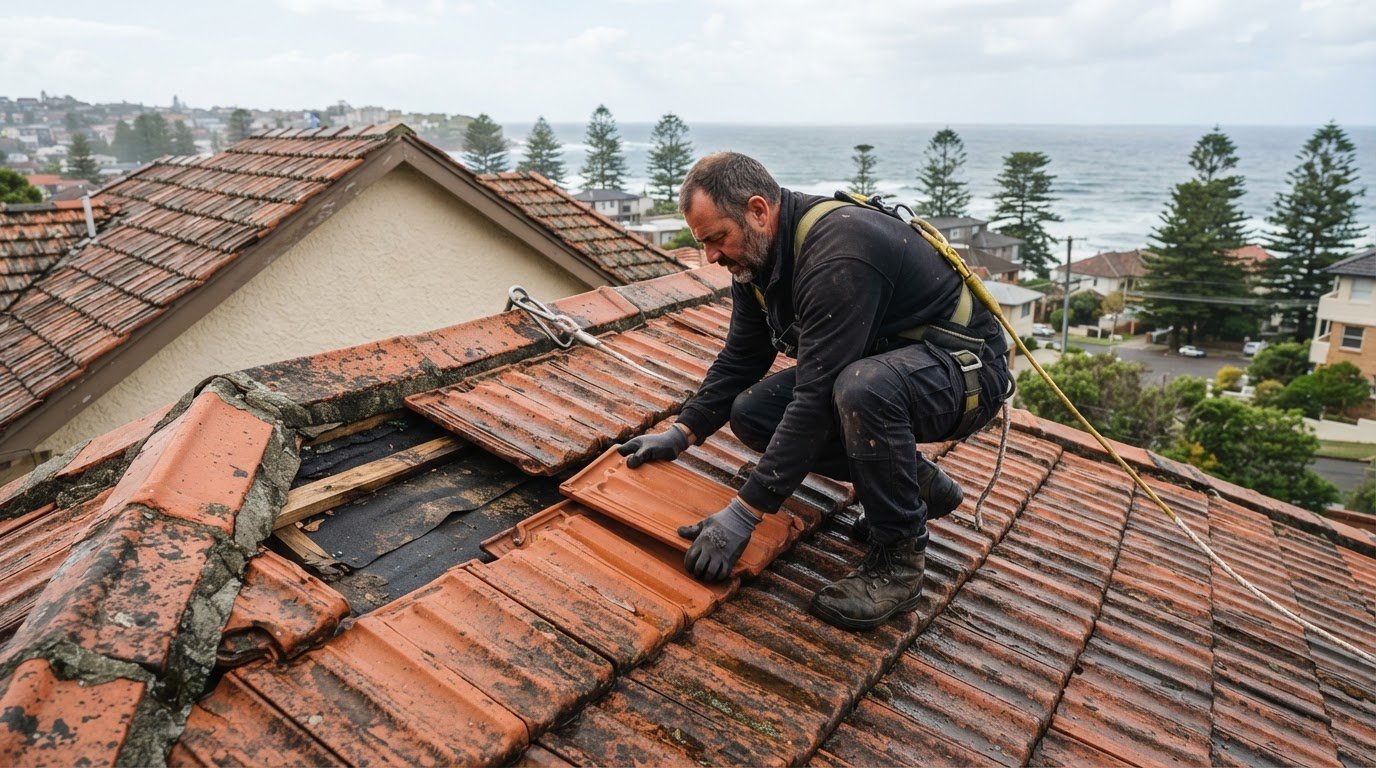
Roof coverings, ridge capping, roof edges and junctions are all areas to inspect after a storm. Wind may displace a tile or sheet, or affect a roof edge. Rain driven beneath or across the roof can then reach the underlay or enter through an opening. These are possibilities to investigate, not causes that can be confirmed from a ground-level photograph.
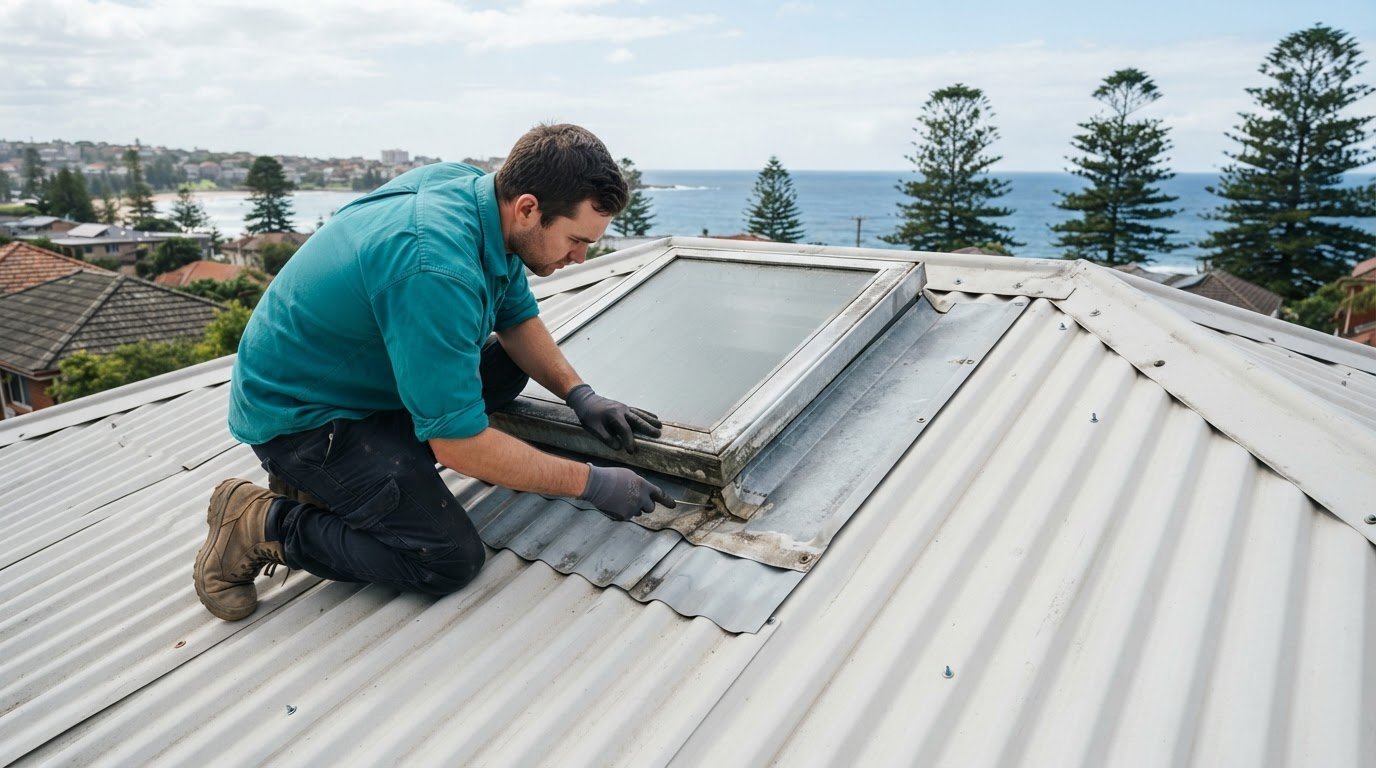
Flashing helps protect junctions, such as where roof sections meet or where a roof meets another structure. If flashing is damaged, displaced or no longer directing water away from a junction, water entry may occur. A stain inside the home can appear some distance from the fault.
Why check gutters, downpipes and flashing after a storm?
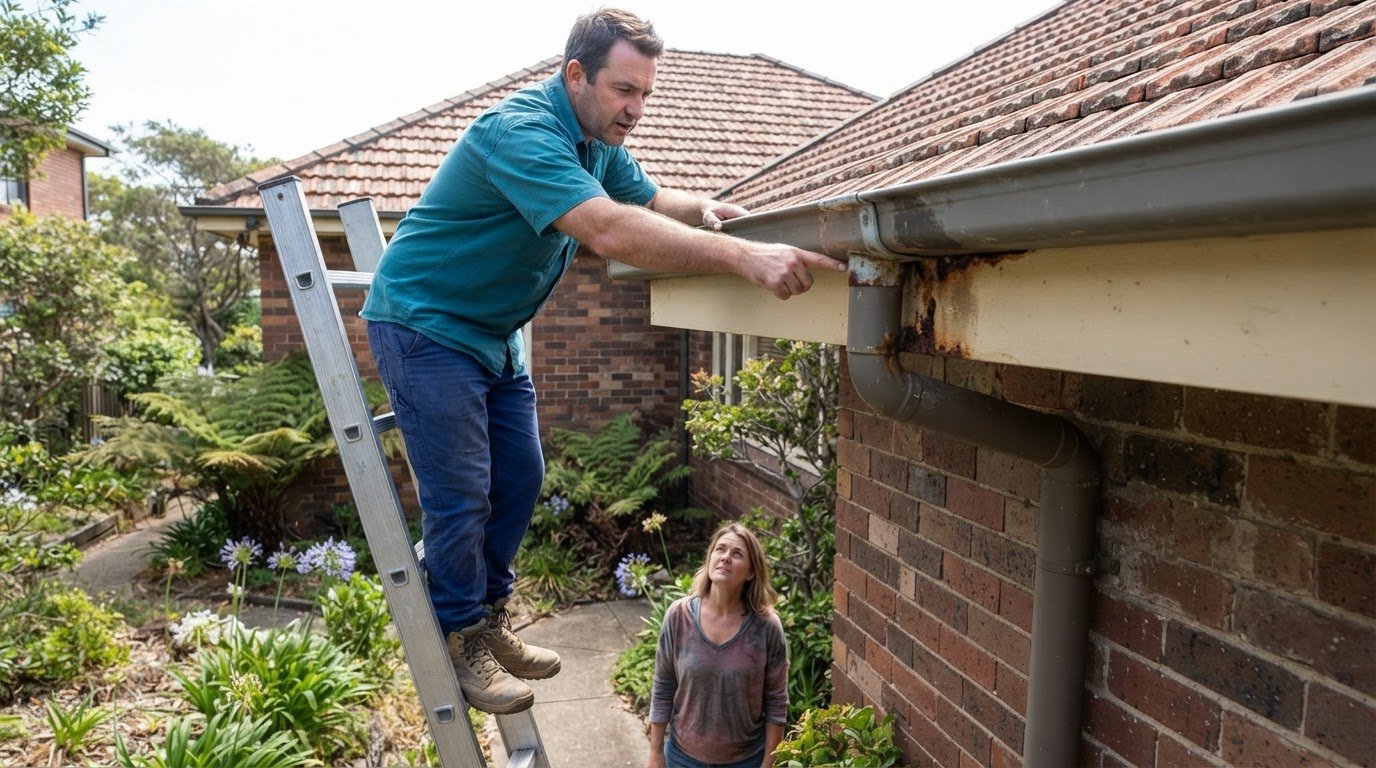
Gutters and downpipes carry roof runoff away from the building. Debris impact or displacement can affect how water enters the gutter or flows through the drainage system. If water overflows or collects where it shouldn’t, it may reach parts of the building that are not designed to manage that flow. This doesn’t automatically mean a blocked or damaged gutter caused a ceiling leak, so the whole external system needs to be considered.
Water can appear on a ceiling far from the roof opening that allowed it in. Rain may travel along roof components before it becomes visible indoors, which is why the stain alone can’t pinpoint the source.
A roof assessment considers coverings, gutters, downpipes, flashing and waterproofing as connected components. For example, a displaced sheet and a nearby junction may both need attention, while a drainage issue could be a separate concern. Inspection helps distinguish these possibilities and identify the appropriate roof leak detection and repair, rather than relying on assumptions about the storm or a photograph.
For background on how roof drainage fits into the wider system, the gutter and downpipe installation guide explains the role these components play around a home. If you’ve noticed signs of storm impact, Roof Plumbing Expert’s storm-related roof damage service assesses affected external components.
Make-safe work or permanent repair: understand the storm damage scope
After a storm, it’s natural to want one visit and one fix. Roof work may need to happen in stages because reducing immediate exposure and repairing the underlying fault are different tasks. The right scope depends on the inspection findings and whether the roof can be accessed safely in the conditions.
| Stage | Purpose | What it means for your roof |
|---|---|---|
| Immediate risk control | Limit exposure to weather or further property damage. | A suitable temporary measure may be used where access and site conditions allow. It may not fix the underlying fault. |
| Inspection and diagnosis | Identify affected components and possible water-entry paths. | The roofer assesses the relevant roof coverings, leaks, flashing and drainage components. |
| Permanent repair | Address the damage identified in the assessment. | The repair scope may involve affected tiles, metal sheets or other roof components. |
What does make-safe work aim to do?
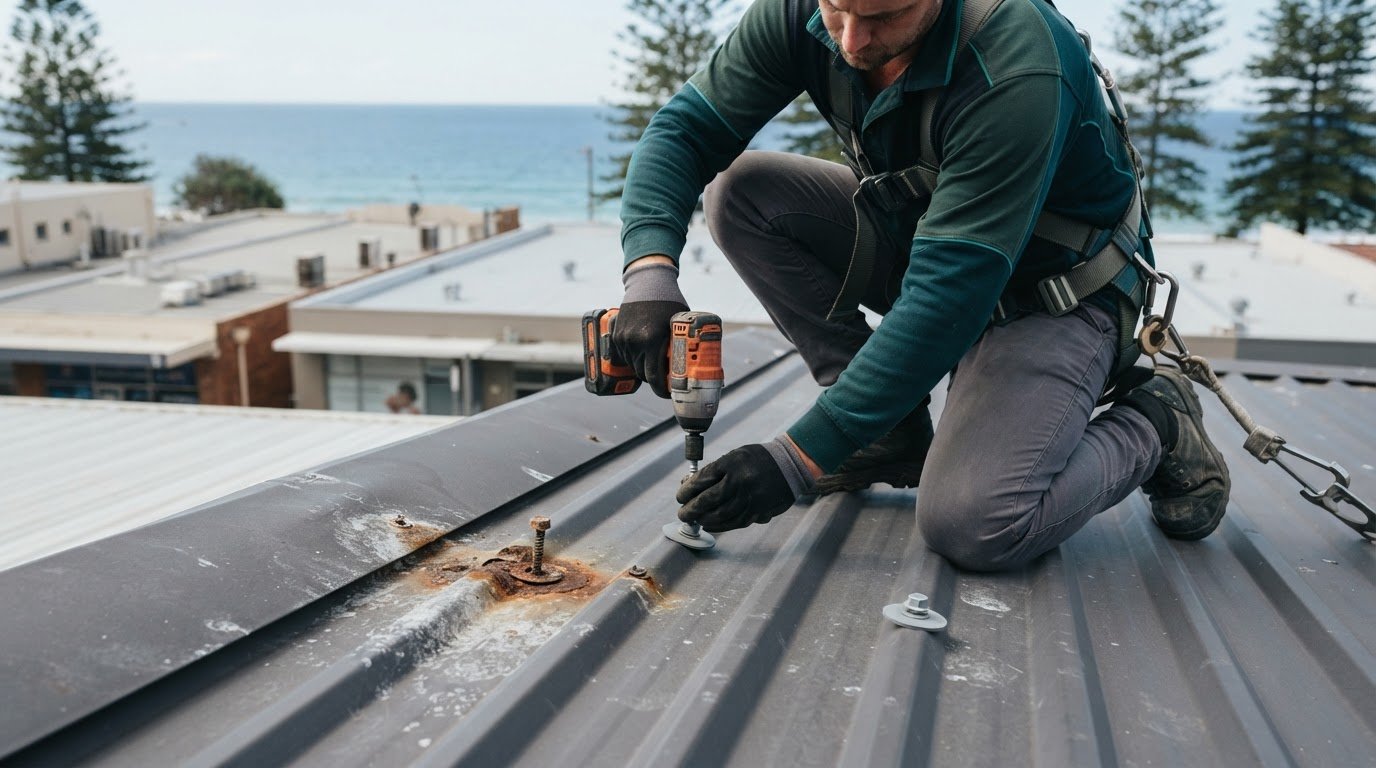
Make-safe work aims to reduce immediate exposure, such as limiting further weather entry through a damaged area. The method depends on the roof, the location of the damage and whether conditions permit safe access. It isn’t a permanent repair by default, and a temporary measure won’t suit every roof or situation. If wind, rain or unstable materials make access unsafe, that affects what work can be undertaken at the time.
How does a roofer determine the permanent repair scope?
Once inspection is safe, the assessment looks beyond the point where water appears indoors. The roofer considers the condition of affected roof coverings, visible leak paths, flashing and drainage components. Findings establish whether repairs to tiles, metal sheets or another roof component are appropriate, or whether the observed condition calls for a broader scope. Replacement is based on the assessment, not an automatic response to storm damage.
A quick patch may reduce water entry at one point, but it can’t be assumed to resolve every storm-related issue. There may be more than one affected area, or water may have travelled from a different part of the roof before becoming visible. Diagnosis helps distinguish the immediate opening from related damage that also needs attention. Roof Plumbing Expert’s roof leak detection guide explains the broader process of tracing a leak and assessing its source.
For Manly Beach property owners, an emergency storm damage roofer Manly Beach assessment can clarify what needs urgent attention, what can wait until conditions are safe and what permanent repair work is indicated. Discussing the visible damage with Roof Plumbing Expert helps establish an appropriate repair scope without assuming a temporary measure or single patch has resolved the whole problem.
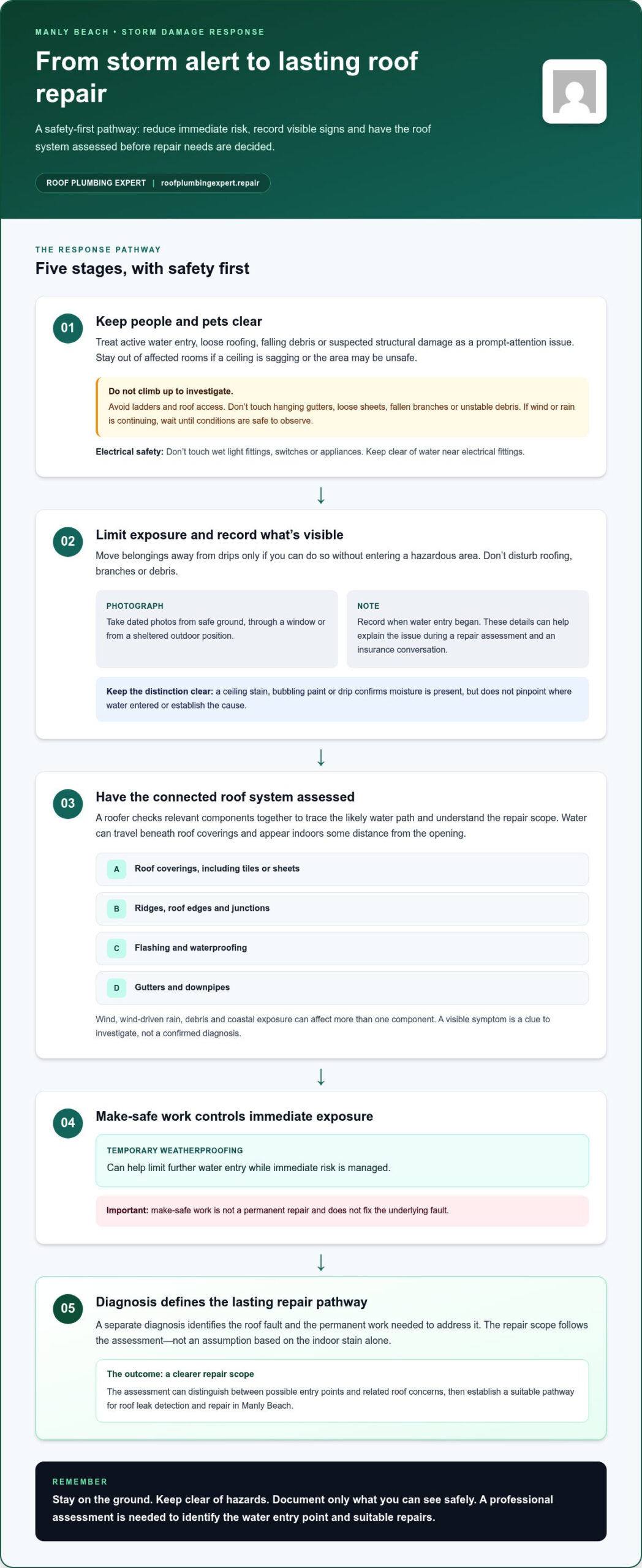
A practical storm damage response checklist for Manly Beach homes
A clear sequence helps you protect people, record what you can see and arrange a useful roof assessment without taking unnecessary risks. Don’t climb onto the roof, move loose materials or attempt repairs while conditions or access are unsafe.
- Put safety first. Keep people and pets away from unstable roof areas, fallen branches and rooms with sagging ceilings. Avoid wet electrical fittings and affected areas if there may be an electrical hazard.
- Limit further exposure indoors. If it’s safe, move belongings away from water entry. Don’t reach into hazardous areas or disturb roofing and debris.
- Record the timing. Note when you first noticed water entry and which rooms or areas are affected. Write down the date and the storm or weather conditions as you observed them.
- Photograph visible damage from a safe position. Capture a wide view of the property and closer images of visible damage, such as displaced materials or affected gutters. Don’t use a ladder or enter an unsafe area for a better angle.
- Speak with your insurer. Ask about your policy’s specific documentation and claim instructions. Keep receipts for reasonable emergency measures if relevant, and follow the insurer’s directions. Documentation doesn’t guarantee cover or a particular claim outcome.
- Arrange a professional roof assessment. Share your observations and photographs so the roofer can understand what you’ve noticed and assess the external roof components when conditions allow.
How can you document damage without getting onto the roof?
Take dated photographs from a safe ground-level position, including a wide property view and closer images of visible damage. Record the date, the weather event as you experienced it, when water entry began and which rooms are affected. Keep relevant receipts for emergency measures, and follow your insurer’s policy-specific instructions about records and claims.
What information helps arrange a useful roof assessment?
Describe the property location, roof type if you know it, what you can see from the ground and whether water is still entering. Mention fallen branches, displaced roofing or affected gutters without touching them. If flashing or a roof junction appears involved, share that observation without assuming it’s the source. The roof waterproofing guide explains how flashing relates to water ingress.
The safest first response is simple: protect people, document visible damage and arrange an assessment. Clear observations help an emergency storm damage roofer Manly Beach homeowners engage understand the situation and assess the appropriate repair pathway. Roof Plumbing Expert’s professional roof assessment service considers the storm damage you’ve observed.
Arrange storm damage roof repairs with Roof Plumbing Expert
Once immediate risks are under control, the next step is to identify which external roof components have been affected and what repair work is appropriate. Roof Plumbing Expert provides roof leak detection and repair for storm-damaged tiles, metal sheets and other roof components. The assessment focuses on the roof’s condition and the likely source of water entry, rather than treating an indoor stain as proof of a particular fault.
Roof components work as a system. A damaged roof covering may be part of the problem, while gutters, downpipes or flashing may also need attention if the assessment identifies an impact on drainage or a roof junction. This helps shape a repair scope around observed conditions instead of assuming every storm leak needs the same fix.
Which roof plumbing services may address storm damage?
The repair pathway depends on the assessment findings. Roof leak detection and repair can address damage to tiles, metal sheets and other roof components. If gutters or downpipes have been damaged or displaced and drainage is affected, gutter and downpipe repairs or replacement can form part of the scope. Flashing and waterproofing repairs address roof junctions and water-entry points that need attention.
These services address external parts of the roof system. They don’t mean every affected component needs replacement or that a single repair will resolve issues beyond the damage identified. Findings guide the work. If a temporary make-safe measure has already been used, it can reduce exposure while the permanent repair scope is assessed, but it doesn’t establish that the underlying fault has been corrected.
What is the next step after visible storm damage?
Describe what you’ve observed, including the property location, roof type if known, visible damage and whether water is still entering. Dated photographs taken from safe ground can help explain the symptoms, but they can’t replace an on-site assessment of affected roof components. Share relevant details about displaced materials, damaged gutters or flashing so the assessment can consider the connected roof system.
Inspection findings inform the repair scope. They help identify which components require attention and whether the work relates to roof coverings, leak paths, drainage, flashing or waterproofing. The assessment provides a practical basis for discussing the work needed without assuming a particular repair outcome, response time or insurance decision.
If your Manly Beach property has visible storm damage or an active roof leak, Roof Plumbing Expert can assess the roof and discuss a suitable repair pathway based on the observed condition. Learn about storm damage roof assessments.
Take the next step towards a clear repair plan
After a storm, uncertainty can linger even when the weather has cleared. A visible symptom doesn’t always reveal the full extent or source of a roof problem. The useful next step is to turn what you’ve observed into a clear discussion about the roof’s condition and the work that may be needed.
For Manly Beach and Mainly Beach property owners, an assessment can replace guesswork with a repair pathway based on the roof components inspected. An emergency storm damage roofer Manly Beach homeowners engage can explain the findings and how they inform the scope, so you can make decisions with a better understanding of the work ahead. Roof Plumbing Expert provides specialist roof plumbing and guttering services across New South Wales, including repairs involving roof leaks, gutters, downpipes, flashing and waterproofing where the assessment identifies a need.
Share the damage you’ve observed and arrange a professional assessment as your next step. Arrange a professional storm damage roof assessment with Roof Plumbing Expert to discuss a clear repair pathway for your property.
Frequently Asked Questions
Can I inspect my roof after a storm?
No. Don’t climb onto the roof or use a ladder to inspect storm damage. Wet surfaces, loose materials and hidden structural damage can make access dangerous, even if the roof looks stable from inside. Check from a safe position on the ground and keep clear of fallen powerlines and unstable debris. Photograph visible damage without touching it, then arrange professional advice if you notice displaced roofing, impact damage or a leak.
What should I do if my roof is leaking during a storm?
Keep people away from the affected area and avoid wet electrical fittings or rooms where water is near electrical equipment. Move belongings only if it’s safe, and don’t stand beneath a ceiling that appears to be sagging. You may catch drips from a safe position, but don’t take risks to protect possessions. Record what you can see and follow your insurer’s instructions about documentation and any claim.
Does storm damage to a roof automatically mean the whole roof needs replacing?
No. Replacement isn’t automatic; the appropriate work depends on the damage and the roof’s overall condition. An inspection may find that particular tiles, metal sheets, flashing or drainage components need repair, while broader work may be considered if damage extends further. A leak or a ground-level photograph can’t establish the full repair scope. Ask for the findings to be explained so you understand which components need attention and why.
Will home insurance cover emergency storm damage roof repairs in Australia?
There’s no universal answer, as cover depends on your policy, the circumstances and your insurer’s assessment. Contact your insurer promptly and ask what records, make-safe work and approvals they require before arranging work, where circumstances allow. Keep dated photographs, notes and relevant receipts. A roofer’s inspection can help document roof condition, but it can’t guarantee that an insurer will accept or pay a claim.
Can a roofer repair a storm-damaged roof while it is raining?
It depends on site safety, weather conditions and the type of damage. Rain or strong wind may make roof access unsafe, so particular inspection or repair work may need to wait until conditions allow. Don’t attempt temporary roof work yourself during heavy rain or strong wind. When seeking professional advice, describe whether water is entering, what you can see from the ground and whether conditions are still hazardous.
What roof damage should I report after a coastal storm in Manly Beach?
Report visible broken or displaced roof materials, impact damage, active leaks, damaged flashing and detached or distorted gutters and downpipes. These details help an emergency storm damage roofer Manly Beach homeowners engage understand what you’ve observed, but they don’t confirm the underlying cause. Take photos from safe ground and note when you first noticed the issue and which parts of the property are affected.