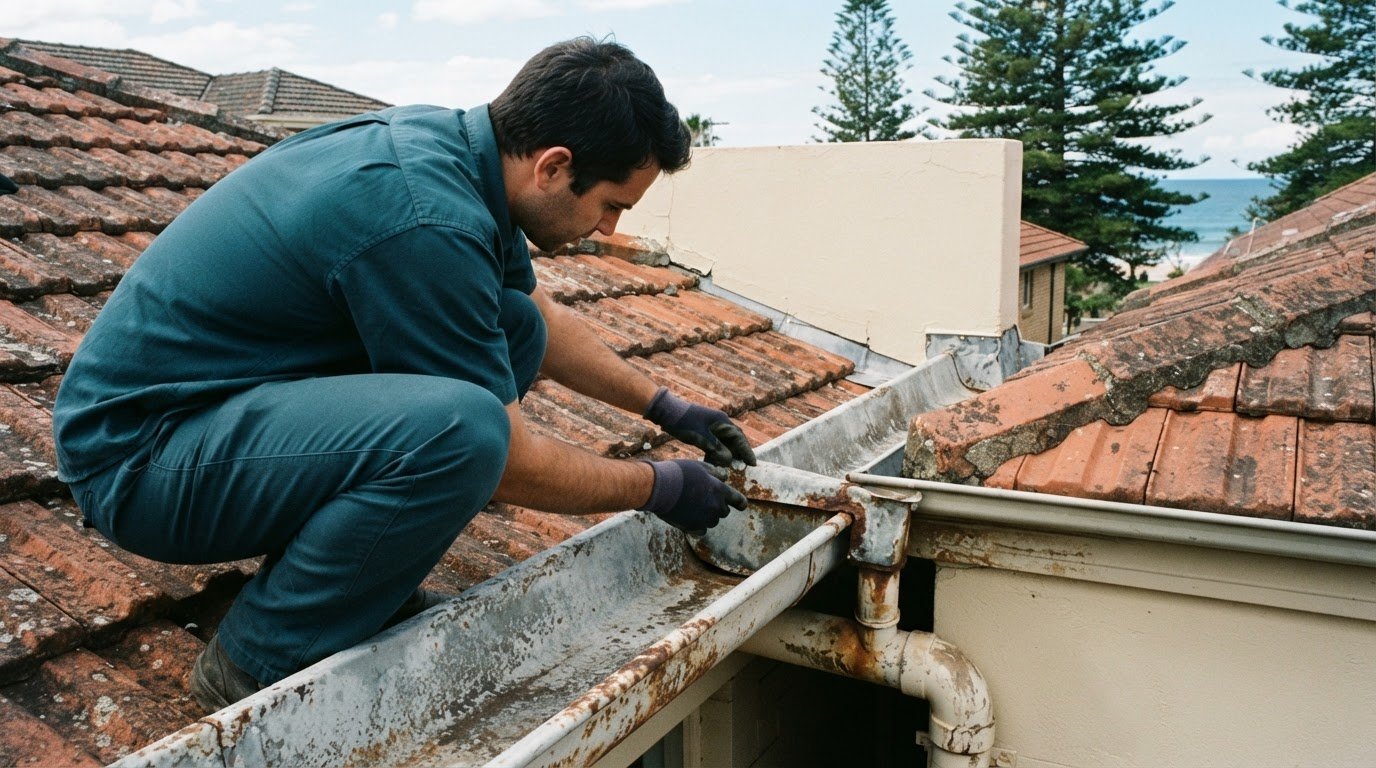
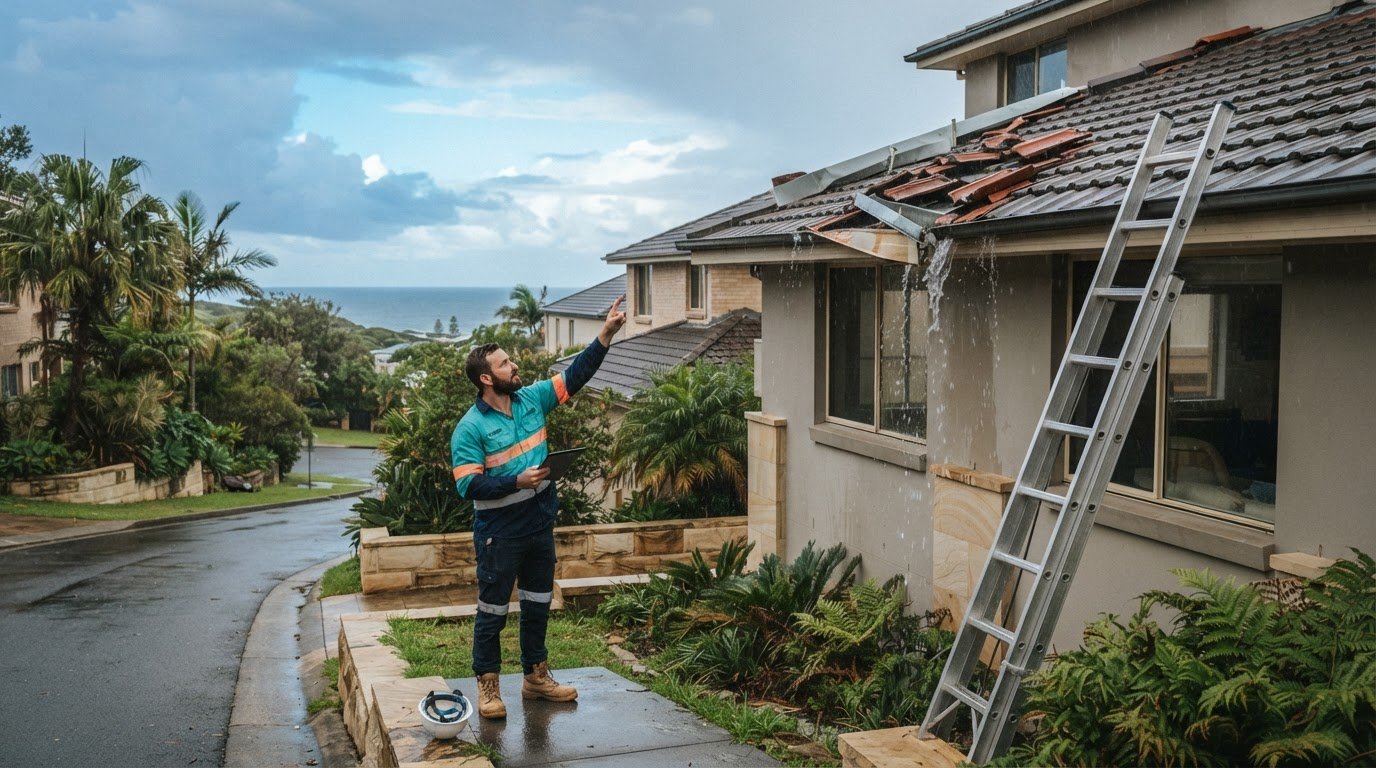
After a storm, a fresh ceiling leak or water spreading indoors can make it hard to judge what’s happening above you. Don’t climb onto the roof to investigate: wet surfaces, loose tiles and damaged metal sheets can make access dangerous. If you’re searching for an emergency roofer Balgowlah, the immediate priority is to keep people clear of hazards and arrange a professional roof assessment. Roof Plumbing Expert provides specialist roof leak detection and repair, including for property owners in Mainly Beach.
It’s understandable to want a leak stopped quickly, especially when you can’t see its source or how far the damage extends. This guide explains what may count as a roofing emergency, how to reduce immediate risks to people and belongings without going onto the roof, and what a professional assessment involves. You’ll also learn how a roof plumber considers water entry and affected components, from tiles and metal roofing to flashing and waterproofing, so repairs address the fault rather than rely on guesswork.
Key Takeaways
- A roof problem may be an emergency when it creates an immediate safety risk or lets water into your property.
- Water stains indoors don’t always reveal where the roof has failed; the source may be another roof component.
- Keep clear of roof access and reduce indoor risks while arranging a professional assessment.
- A roof specialist can trace water entry and match repairs to the affected roof component.
- Roof Plumbing Expert repairs damage involving roof tiles, metal sheets, flashing and waterproofing.
When is a roof problem an emergency in Mainly Beach?
Water on the floor after rain or visible storm damage can be unsettling, particularly when you can’t see where the problem starts. A roof issue needs urgent attention if it creates an immediate safety concern or allows water into the property. Keep people clear of hazards and arrange a professional assessment instead of trying to inspect or repair the roof yourself.
Signs to take seriously include an active leak, water spreading across a ceiling, roofing visibly out of place from the ground, or damaged components around the roofline. The visible clue may not show the full extent of the fault. For example, water can travel from its entry point before appearing on a ceiling or wall.
Which roof problems need urgent attention?
Water entering a living area can damage ceilings, finishes and belongings. If it’s near a light fitting, power point or electrical appliance, keep clear and don’t touch wet fittings or equipment. Displaced tiles, lifted metal sheets and damaged flashing after strong winds also warrant a prompt roof assessment, as openings may let more rain inside.
Suspected structural instability is a safety issue, not a DIY inspection task. If a ceiling is sagging, something appears to be moving, or part of the roof may be coming loose, keep people away from the affected area. Don’t climb a ladder or go onto the roof to confirm what’s wrong.
Why Mainly Beach weather can make roof damage time-sensitive
Heavy rain can enter through a defect that seemed minor in dry conditions. Roof components around Mainly Beach are exposed to wind and rain over time. If tiles have shifted, metal roofing has lifted or flashing has separated, water may get in whenever conditions allow. The longer water enters, the more opportunity it has to affect materials inside the property.
The broader effects of water damage can extend beyond the first wet patch. That’s why an active leak deserves attention even if it appears contained.
Not every roof issue is an emergency. A faded surface, an isolated cracked tile with no water entry, or deteriorating pointing found during routine maintenance may be assessed without the same immediate concern, provided there’s no sign of danger. Arrange an assessment before the issue worsens, but prioritise active leaks, loose components and suspected instability.
To judge the urgency, consider what’s happening now: Is water entering? Is anyone at risk? Is roof material visibly displaced or loose? A “yes” to any of these questions points to urgency. A roof specialist can assess the affected component and identify an appropriate repair, rather than relying on indoor signs alone.
What can happen if roof leaks or storm damage are left untreated?
A leak that seems small can allow water to affect parts of the home beyond the spot where it appears. If water entry continues, it may stain or weaken ceiling materials, dampen insulation, mark wall finishes and damage furniture or other household contents. The extent depends on where water enters, how it travels and how long materials remain wet. These effects are possible, not inevitable, but ongoing moisture is a reason to arrange an assessment.
Visible symptoms can be misleading. A drip in one room doesn’t necessarily mean the roof is damaged directly above it. Water may enter elsewhere, then move along a surface or roof framing before finding a way through the ceiling. A small mark is useful evidence, but it doesn’t establish the source or show whether other roof components are affected.
How roof water can travel beyond the visible leak
Rain entering through a gap in a roof sheet, a displaced tile, failed flashing or a skylight junction can track along framing before it becomes visible indoors. It may emerge at a ceiling joint or around a fitting some distance from the entry point. Note where water appears and whether it happens during or after rain. Don’t open ceilings or enter roof cavities to trace it.
Those observations can help describe the pattern during a professional assessment. Note whether the patch grows, whether dripping is intermittent, and which rooms are affected. These details guide an investigation, but they can’t confirm the source on their own. Prompt diagnosis can direct attention to the roof defect that needs repair and help limit further water entry.
Damage signs to look for from inside the property
From a safe position indoors, look for new ceiling stains, damp patches, active drips or moisture appearing around the edges of a skylight. A musty smell or paint that begins to blister may also indicate persistent dampness. These signs help describe what you’ve noticed, but they don’t identify whether the cause is a tile, roof sheet, flashing or another junction.
- Record the room and area where the stain or drip appears.
- Note when it occurs, such as during heavy rain or after a storm.
- Take photos from a safe position to document changes over time.
A professional roof leak assessment considers these indoor clues alongside the roof components and observed damage. This helps distinguish the visible effect from the likely point of water entry. For a fuller explanation of how leaks are traced, see this roof leak detection guide.
If water is continuing to enter, specialist roof leak detection and repair can help establish the source and an appropriate repair approach. Drying the visible patch alone doesn’t resolve the underlying roof issue.
What does an emergency roofer assess and repair?
A suitable repair starts by identifying the roof component allowing water inside. The stain or drip indoors is a clue, not a diagnosis. A roof specialist considers the leak pattern you describe alongside the condition of tiles, metal sheets, flashing, skylight junctions and, where relevant, drainage around gutters and downpipes. The repair scope depends on the fault found and the roof material.
Roof leak, storm damage or flashing fault: how the issues differ
A cracked or displaced tile, or a damaged metal sheet, may create a direct path for rain. Flashing faults are different: the metal or waterproofed junction around roof edges, penetrations or adjoining structures may let water through even when the main roof surface looks intact. At a skylight, both the opening and surrounding waterproofing need consideration. Repairs should address the affected component, not just the indoor symptom.
These common clues can help explain what a specialist may assess:
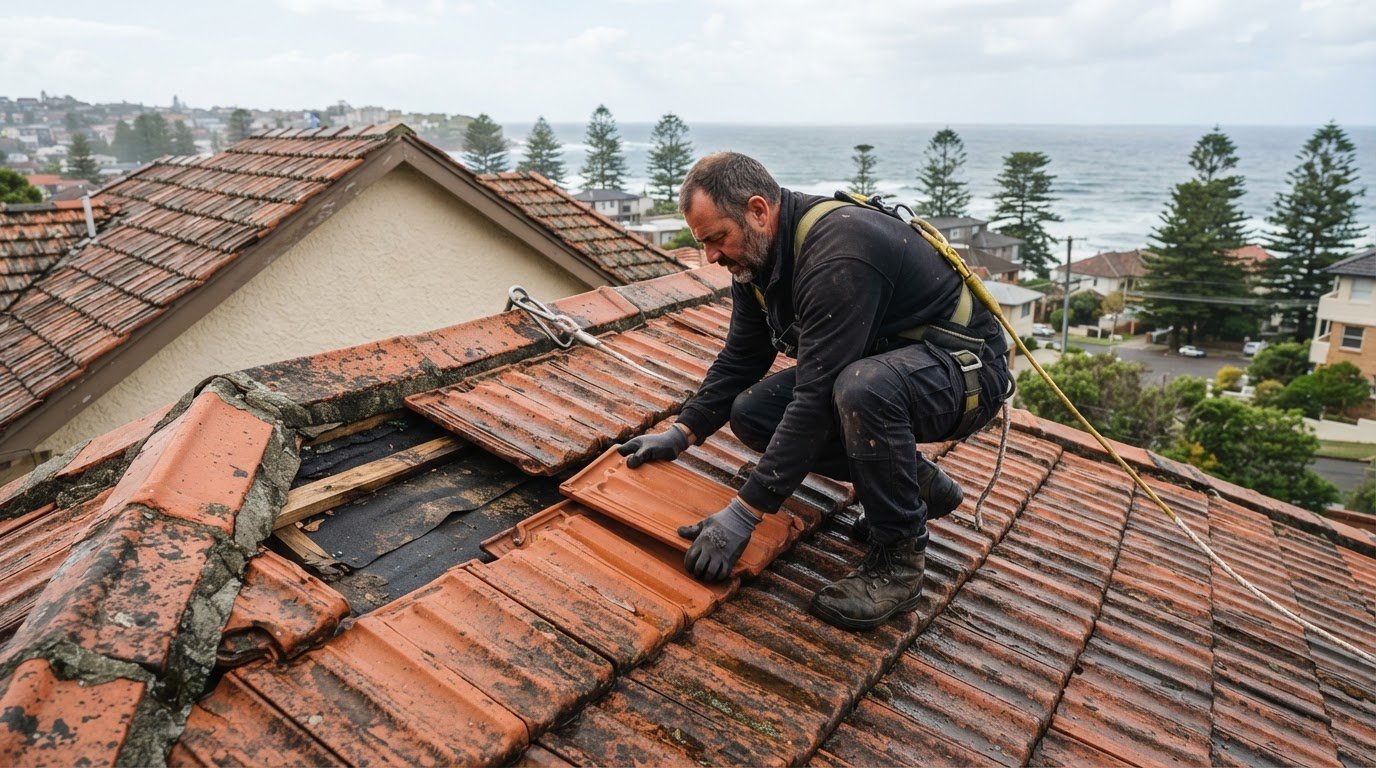
- Roof tiles: A cracked, slipped or missing tile may leave the roof beneath exposed. The repair may involve replacing or repositioning affected tiles and checking the surrounding area.
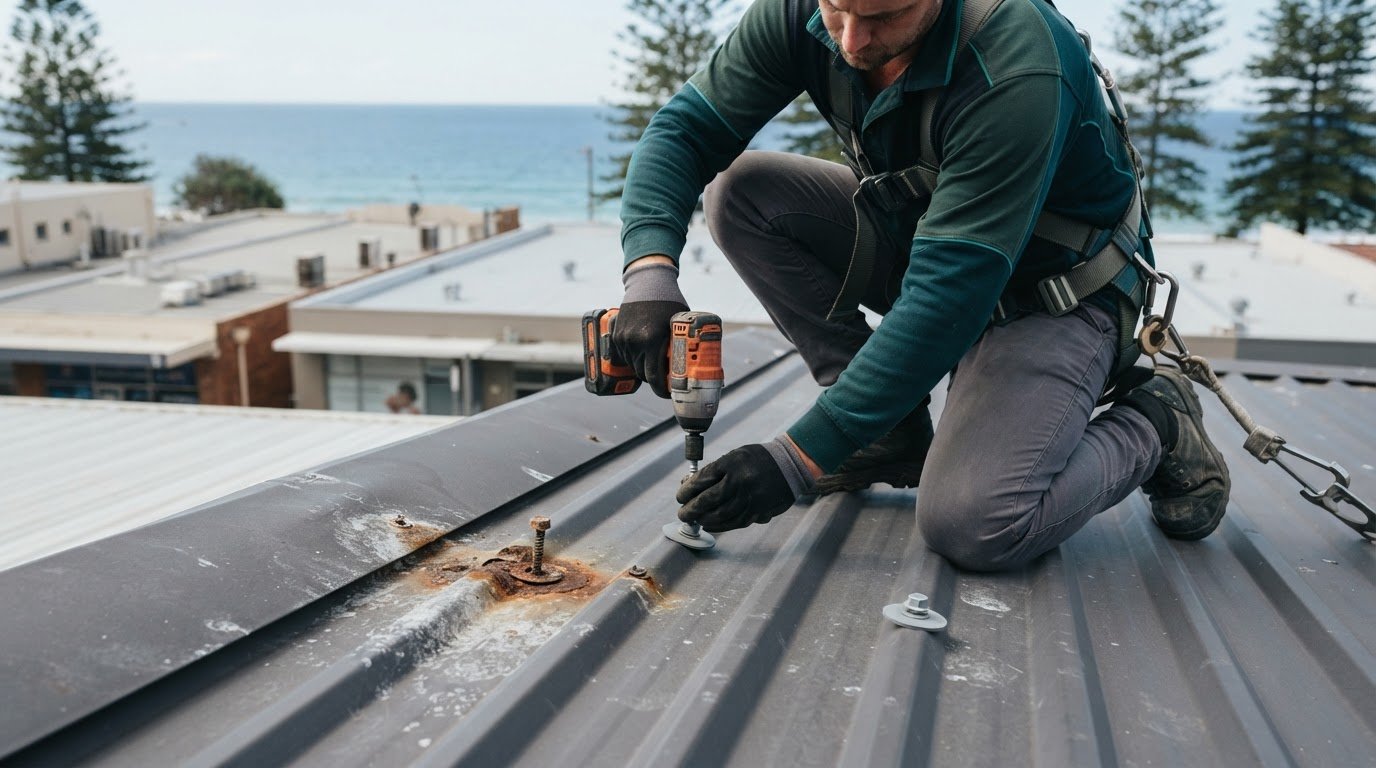
- Metal sheets: A lifted, damaged or poorly joined sheet can create an entry point. The work required depends on the damage to the sheet and its connections.
- Flashing: Water appearing near a roof junction or penetration can prompt an assessment of the flashing and waterproofing detail.
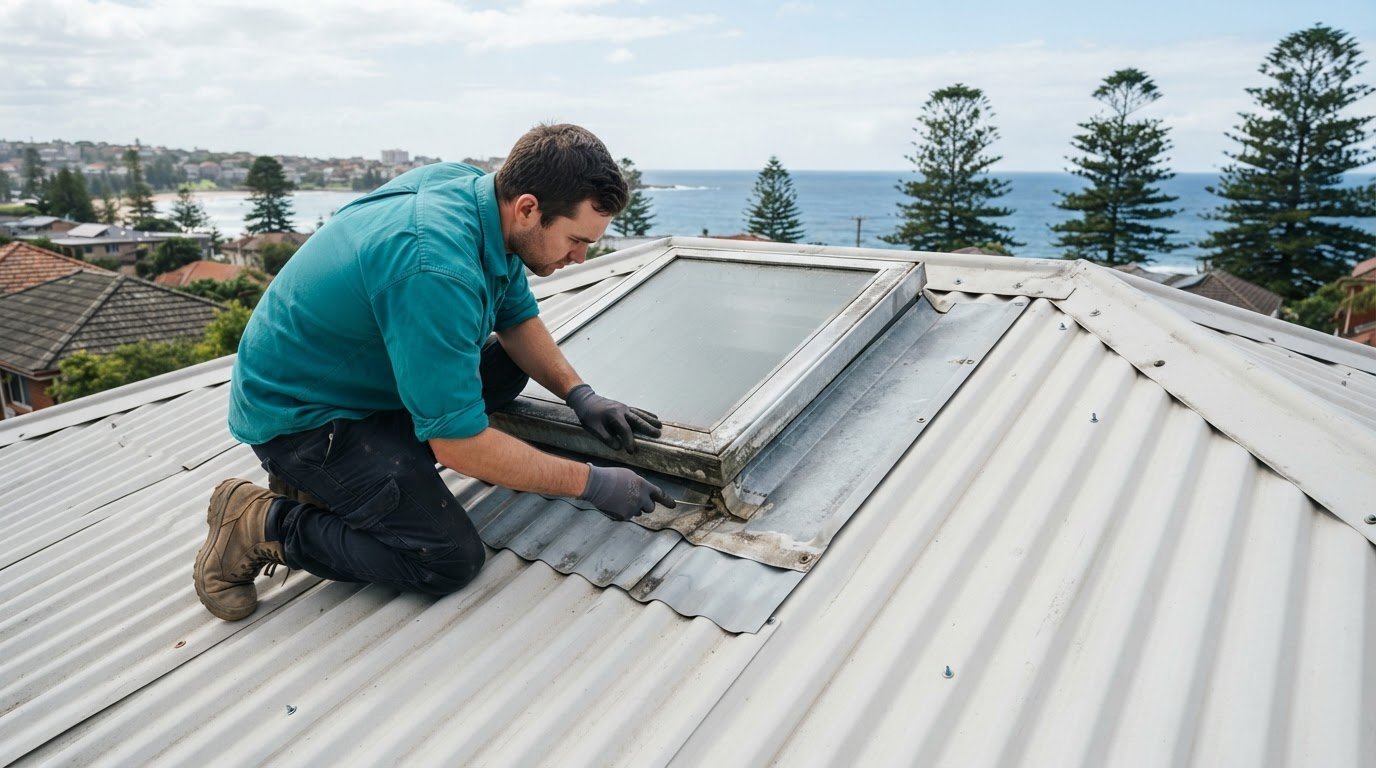
- Skylights: Dampness near the frame may call for inspection of the skylight junction and surrounding roof surface, with repair or replacement depending on the condition.
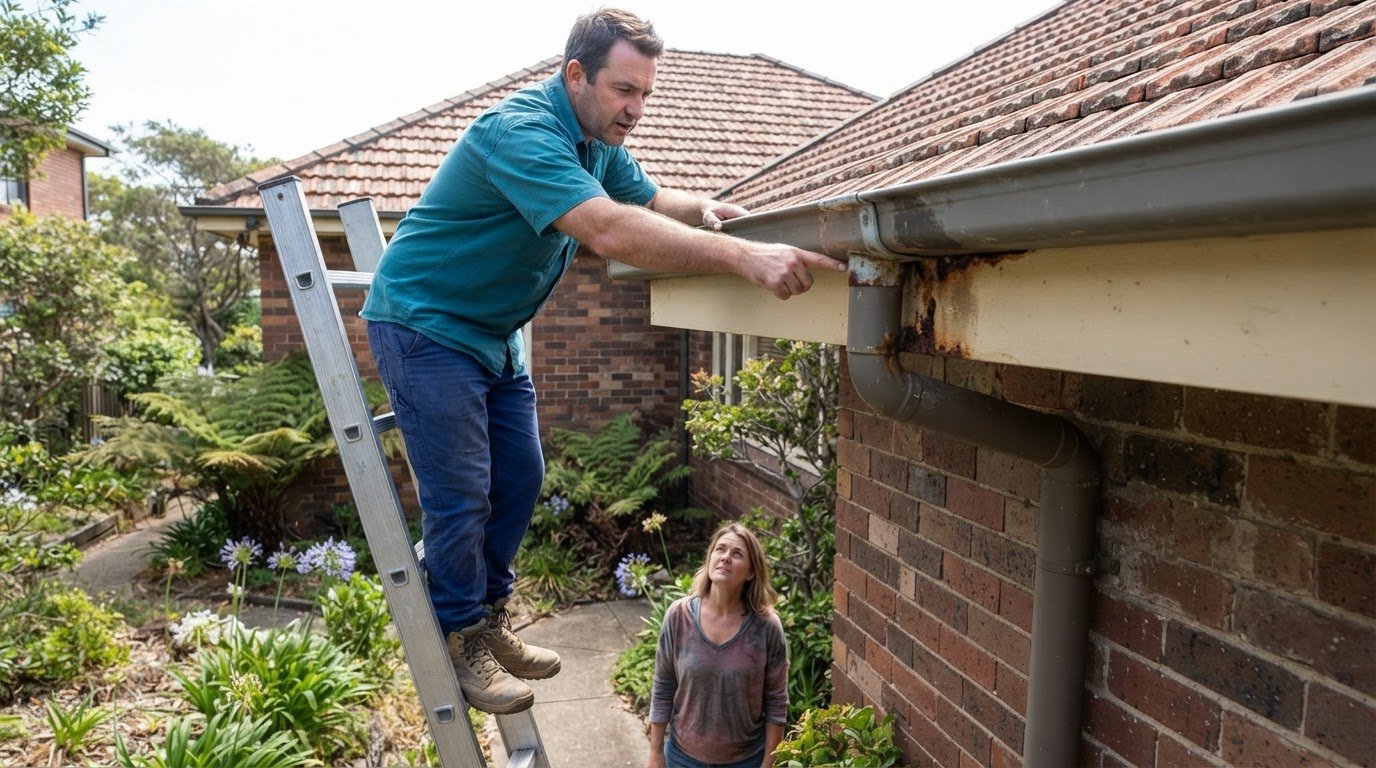
- Gutters and downpipes: Blockage or drainage issues may contribute to water backing up near the roof edge, so these can be considered as related factors.
Why diagnosis should guide the repair
Indoor water can travel before it appears, so a specialist compares the location and pattern of symptoms with the relevant external roof components. An emergency roofer Balgowlah property owners search for should assess the roof material and visible fault, then explain a repair approach suited to the damage. Flashing and junction details matter because sound waterproofing helps manage water where roof surfaces meet openings or adjoining structures.
There isn’t one repair that suits every leak. A damaged tile calls for a different response from a fault in metal roofing or flashing. Repairing or replacing the wrong component may leave the entry point unresolved, so diagnosis should come before deciding on the work. Roof Plumbing Expert provides roof leak detection and repair for issues involving tiles, metal sheets, flashing and waterproofing. For a leak that needs investigation, a roof leak assessment helps identify the source and suitable repair scope.
What should you do while arranging urgent roof repairs?
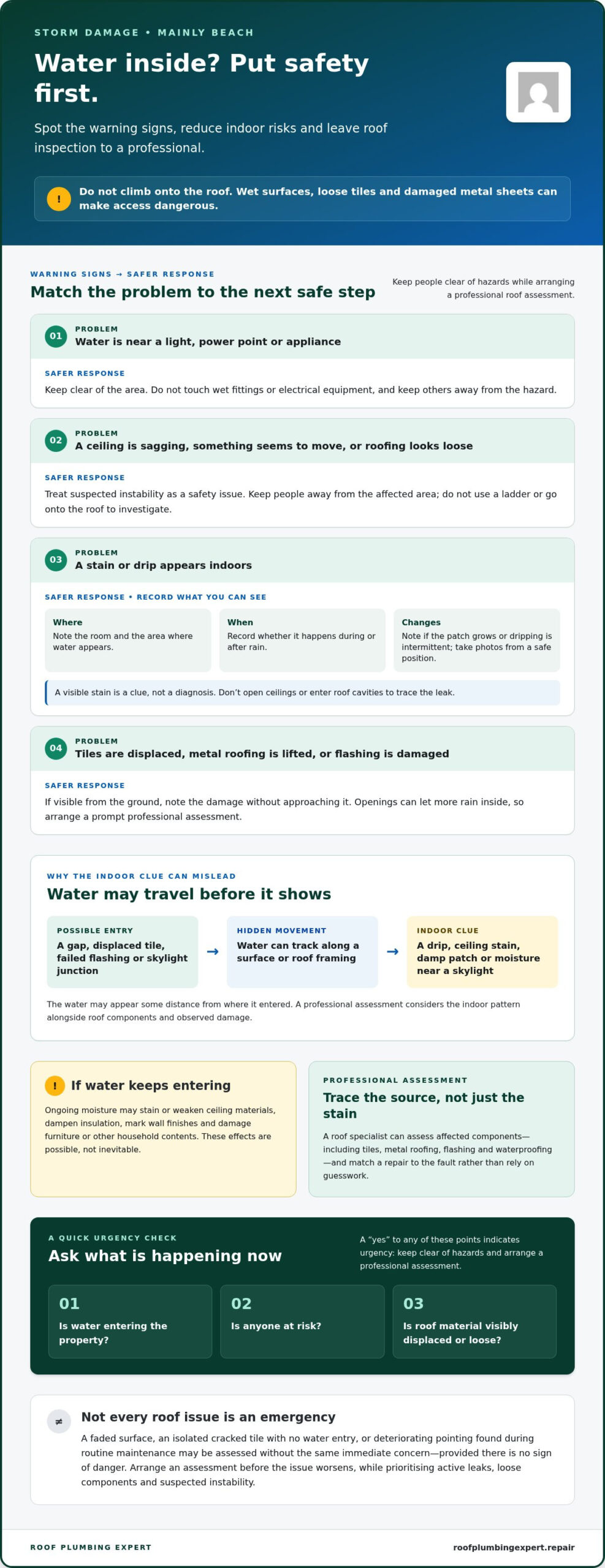
Focus on people’s safety and reducing damage indoors. Don’t climb a ladder or go onto the roof, even if the leak looks close or the rain has eased. Wet surfaces, displaced tiles and storm-damaged sheets can be unstable. Take these steps from a safe position inside the property:
Safe steps inside the property
- Keep people clear of the affected area. Move household members, pets and visitors away from dripping water, damp ceilings or any area where materials appear to be sagging or loose.
- Be cautious around electricity. If water is near a light fitting, power point or appliance, don’t touch the fitting, appliance or switches in the wet area. Keep others away too.
- Protect belongings if it’s safe. Move furniture, rugs and valuables out of the way without walking through water or beneath a visibly damaged ceiling.
- Catch drips carefully. Place a stable container beneath a leak only if the floor and ceiling are safe to approach. Don’t stand on furniture or reach towards a bulging ceiling to position it.
- Record what you observe. Note the room, location and time water appears, and whether it changes during or after rain. Take photographs from a safe, dry position.
A container can catch drips, but it won’t stop water entering through the roof. If a ceiling is sagging, cracking or appears unstable, don’t stand underneath it or try to release trapped water. Keep the area clear and leave the inspection to a professional.
What not to do on a damaged roof
Don’t climb onto wet, steep or storm-damaged roofing. A roof can remain slippery after rain stops, and loose tiles or lifted metal sheets may shift underfoot. Avoid improvised patches using a ladder, plastic sheets or other materials. Accessing the roof can cause a fall, and an unsuitable patch may worsen damage or hide the leak without fixing its source.
You can help the assessment without taking risks. Share your notes and any safe photographs when arranging professional help. Describe when the leak started, where it appears indoors and whether you’ve noticed visible damage from the ground. These details give a roof specialist useful context to investigate the affected components and determine a suitable repair.
If water is entering or storm damage is visible, arrange professional roof leak detection and repair rather than attempting roof access yourself. Roof leak assessment and repair information can help you understand the next step.
Emergency roofer Balgowlah: how Roof Plumbing Expert helps
A roof leak or sudden storm damage calls for a clear assessment, not guesswork. Roof Plumbing Expert specialises in roof leak detection and repair, helping property owners understand which roof component is affected and what repair suits the observed damage. If you’re searching for an emergency roofer Balgowlah, start by noting what you’ve noticed and where water is appearing. Roof Plumbing Expert also provides roof plumbing and guttering services relevant to property owners in Manly Beach.
Roof repair support for Balgowlah properties
Roof Plumbing Expert provides roof plumbing and guttering services across New South Wales. Roof repair work for homes and businesses may involve damaged tiles, metal sheets, flashing or waterproofing. Each component needs a different assessment: a cracked tile is not repaired in the same way as a fault at a roof junction or damage to metal roofing. The repair approach depends on the roof material and the fault identified.
Damage that looks similar from indoors can have different causes above the ceiling. A stain below a skylight, for instance, may call for attention to the opening and surrounding waterproofing, while water entering near a roof edge may lead to an assessment of the roof surface and related drainage. Gutters and downpipes can be relevant where water is not draining as expected, but repairs need to address the specific issue found.
From roof concern to a suitable repair
When describing the problem, share practical details that can guide the investigation. You don’t need to inspect the roof yourself. Explain what you can safely observe from inside or at ground level, including:
- Where the leak or ceiling mark appears, and which rooms are affected.
- When water enters, such as during rain or after a storm.
- Any visible roof damage you’ve noticed from the ground, such as a displaced tile or lifted metal sheet.
- Whether the leak is near a skylight, flashing or roof edge.
These observations provide useful context, but they don’t confirm the source. Roof Plumbing Expert assesses the roof components related to the leak and uses the observed fault to guide the repair. Work may involve repairing or replacing damaged tiles or metal sheets, addressing flashing, or carrying out waterproofing. The scope should match the issue identified, since not every leak needs the same solution.
For a roof leak or storm-related roof concern, learn about Roof Plumbing Expert’s roof repairs.
Take the next step towards a sound roof
Once everyone is safe, a clear repair plan can replace uncertainty with a practical way forward. You don’t need to diagnose the roof yourself. Share what you’ve observed and let a specialist assessment establish which repair is appropriate for the damage. That gives you a sound basis for deciding how to protect the property next.
For homeowners searching for an emergency roofer Balgowlah, Roof Plumbing Expert provides specialist roof leak detection and repair. The work covers roof components including tiles, metal sheets, flashing and waterproofing, with the repair guided by the issue identified. The business also provides roof plumbing and guttering services for property owners in Mainly Beach.
Contact Roof Plumbing Expert about roof leak detection and repair to discuss the roof concern and arrange a suitable next step. Share what you can safely observe, and leave roof access and diagnosis to a specialist.
Frequently Asked Questions
Does a leaking roof count as an emergency?
Yes, a leak needs urgent attention if water is entering the property, creating a slip or electrical hazard, or affecting a ceiling or another building component. For example, water near a light fitting or a growing ceiling bulge needs cautious treatment. The drip may not be directly beneath the roof defect, so don’t climb up to investigate. Keep clear, note what you can see safely and arrange a professional roof assessment.
What should I do if my roof is leaking during heavy rain?
Keep people and belongings away from the leak, and place a stable container under drips only if it’s safe to approach. Don’t touch wet electrical fittings or enter an area where water and electricity may meet. Avoid opening ceiling spaces or accessing the roof. From a dry position, note when the leak occurs and take photographs. These details can help a roof specialist understand the symptoms.
Can I climb onto my roof to check storm damage?
No. Don’t climb onto a wet, steep or storm-damaged roof. Roofing materials may be slippery, loose or displaced, and damage can be difficult to judge even in dry conditions. Instead, look from inside or at ground level, such as for visible changes along the roof edge. Keep clear of areas that appear unsafe, and leave close inspection of the roof components to a specialist.
How does an emergency roofer find the source of a leak?
A roof specialist compares indoor symptoms with the condition of relevant roof components, including tiles, metal sheets, flashing and skylight junctions. Water can travel along surfaces before appearing inside, so the ceiling drip may be some distance from the entry point. Notes about when the leak appears, such as during wind-driven rain, can add useful context. The assessment helps determine which component needs attention.
Can a roof leak cause damage even if the drip seems small?
It can. A small drip may be the visible sign of water reaching ceiling materials, insulation, wall finishes or household items. A leak that appears only during particular rain conditions can also be easy to underestimate. The extent depends on the entry point, how long water gets in and which materials are affected. Don’t assume a small mark means the roof fault is minor.
How much does emergency roof repair in Balgowlah cost?
The repair scope depends on the roof material, the location of the fault and which components are affected. For instance, work involving a roof junction may differ from repair to a damaged tile or metal sheet. A professional assessment is needed to understand the job before its scope can be described. When arranging an assessment, share what you’ve observed and any relevant roof details you know.
Can a roof plumber repair both tiled and metal roofs?
Yes. Roof Plumbing Expert provides roof leak detection and repair for damaged tiles and metal sheets, as well as flashing and waterproofing work. The suitable repair depends on the roof material and the fault identified. Roof Plumbing Expert provides roof plumbing and guttering services across New South Wales, including services relevant to property owners in Mainly Beach. Share the symptoms you’ve noticed without accessing the roof.