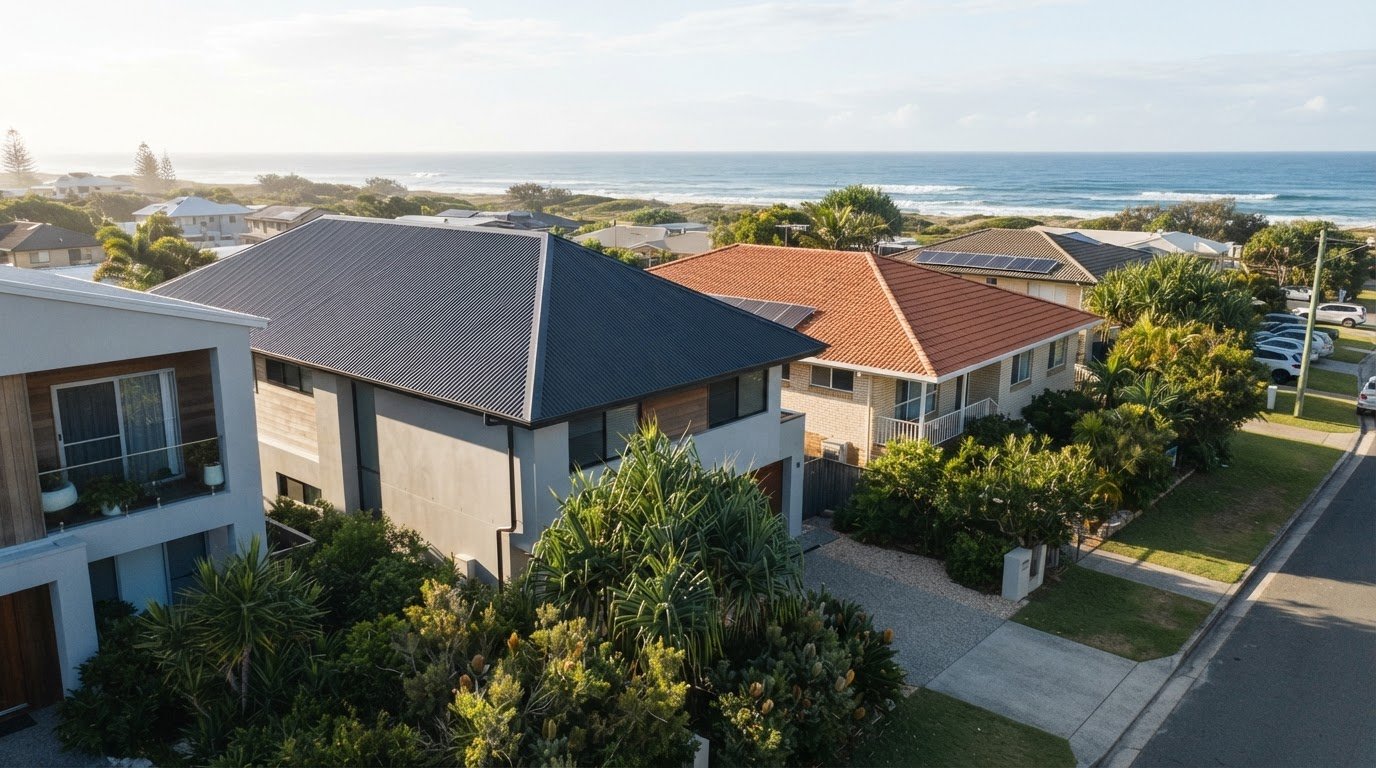
COLORBOND® can be a sound choice for coastal homes, but the right roofing material depends on salt exposure, not appearance alone. Properties within 200 metres of breaking surf face the most aggressive salt-air exposure category. Choosing the best roofing materials for coastal homes means matching the material and its protective finish to the property’s conditions.
Salt particles attract moisture, which can contribute to corrosion if protective coatings are damaged. For homes in coastal areas such as Mainly Beach, roof exposure and upkeep matter alongside appearance and expected lifespan.
This comparison explains how salt air affects roofing and weighs metal, tile and other options for coastal properties. You’ll learn what sets COLORBOND® apart, when tiles may suit a home, and which practical factors to consider before choosing a roof.
Key Takeaways
- Salt exposure can undermine roof coatings and encourage corrosion, so account for how exposed your home is when choosing materials.
- Compare metal, tile and other roofing options by their coastal suitability, expected lifespan and maintenance needs.
- Durable roofing also depends on installation details, including suitable fixings, sound flashing and effective drainage.
- For gutter or downpipe issues affecting roof drainage, Roof Plumbing Expert offers installation and related roof repair services.
Does Saltwater Affect Your Roofing Lifespan?
In Australia, standard COLORBOND® steel is typically suitable for coastal properties roughly 200-500 metres or more from the coast. Salt exposure, humidity and upkeep also affect how roofing materials perform over time.
Salt-air corrosion and roof lifespan
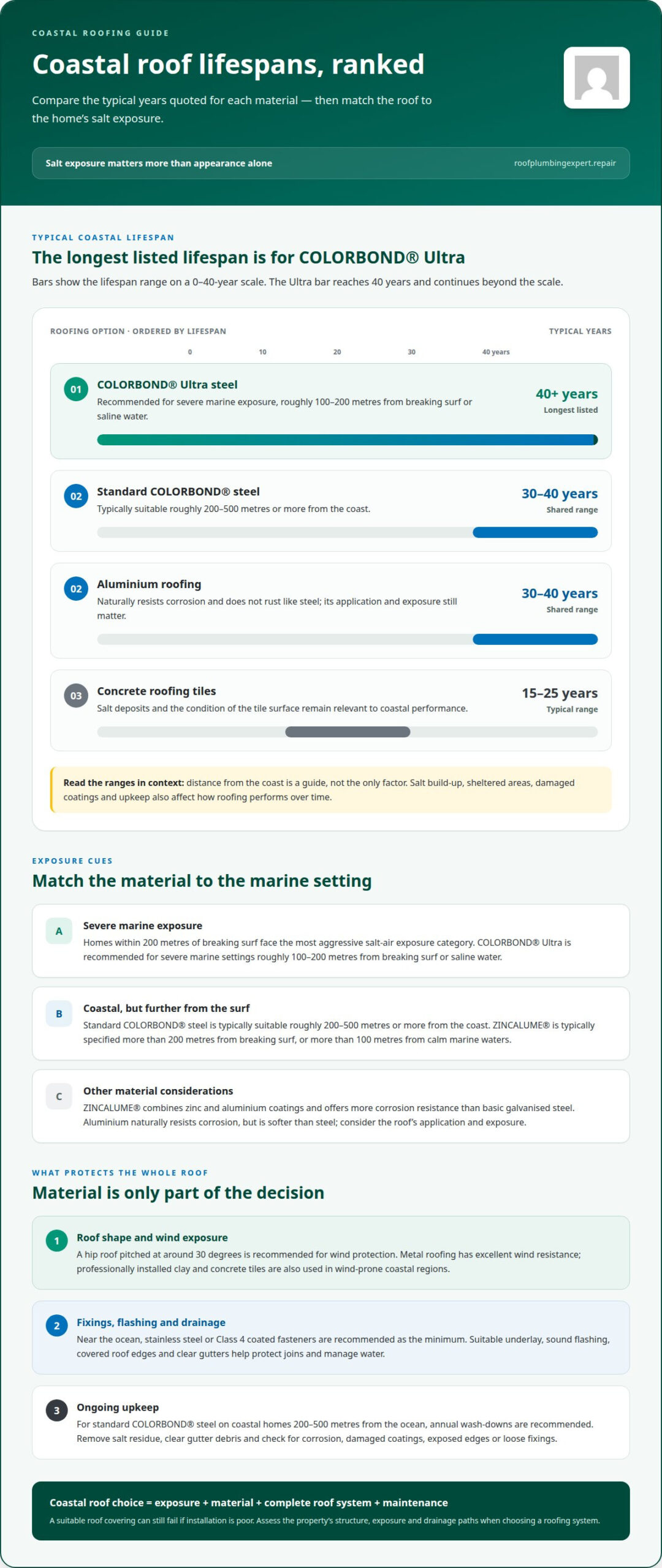
Salt particles settle on roofing and attract moisture, creating conditions for corrosion if protective coatings are compromised. Cut edges, damaged finishes and sheltered areas can hold salt deposits that rain does not wash away. That exposure can shorten a roof’s useful life, so durability depends on both the material and the condition of its protective surface. Concrete tiles have a typical coastal lifespan of 15-25 years, compared with 30-40 years for standard COLORBOND® steel.
Corrosion-resistant roof components
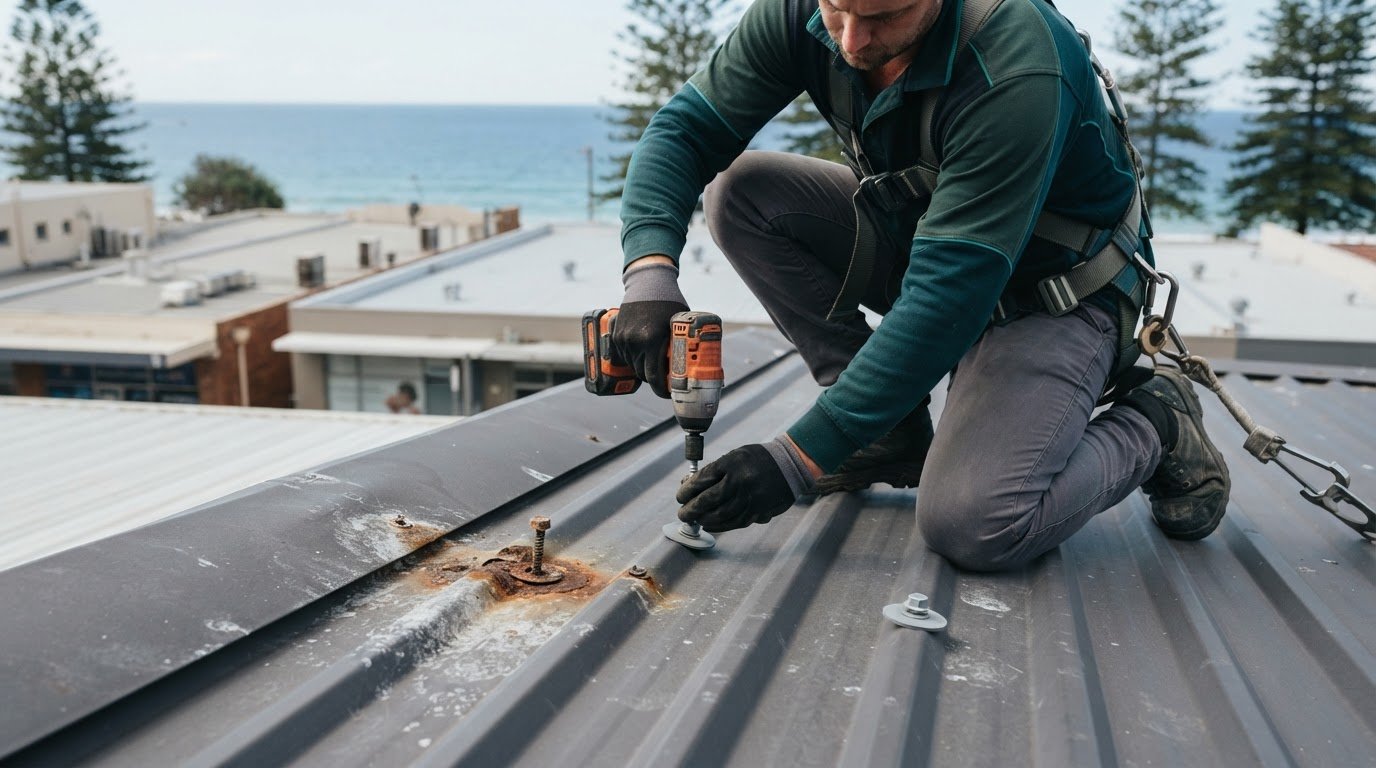
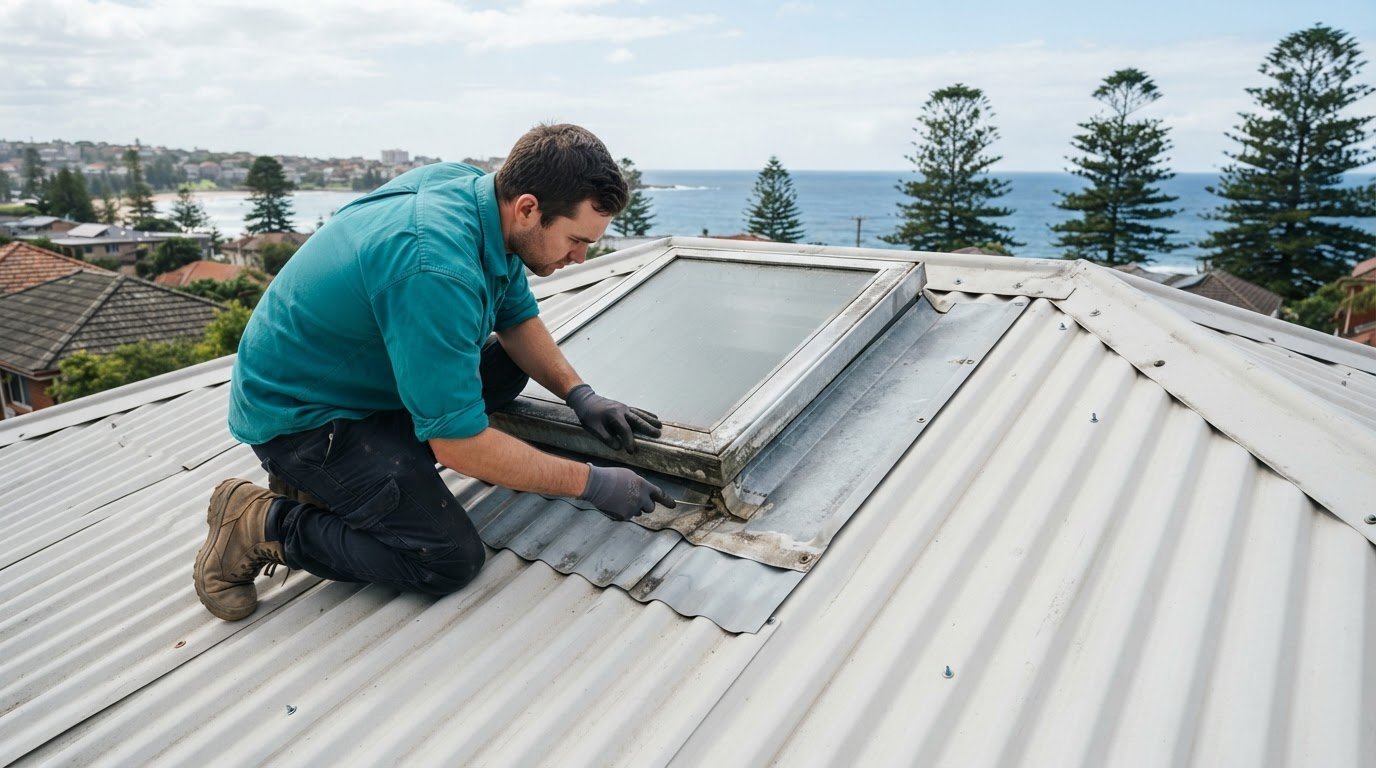
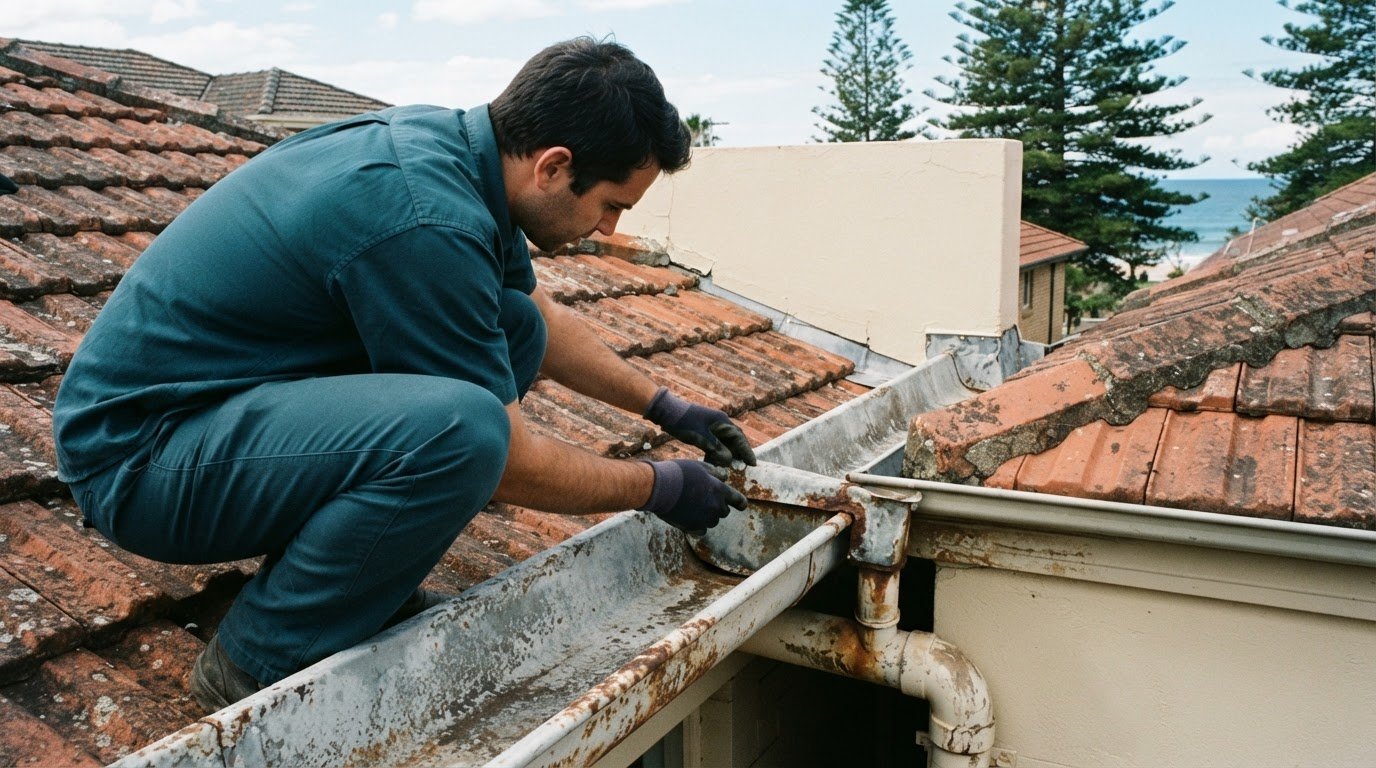
Gutters, flashings and fasteners are vulnerable points because they collect water, debris or salt residue. Stainless steel or Class 4 coated fasteners are recommended as the minimum near the ocean. Keep gutters clear so drainage works, and ensure flashing protects roof joins from water entry. Exposed roofing edges need covering, while edges left exposed should be repaired to help prevent corrosion. These components need attention alongside the main roof material.
Standard metal roofing near the coast
Standard COLORBOND® steel is typically suitable for properties roughly 200-500 metres or more from the coast. For severe marine exposure, COLORBOND® Ultra is recommended in settings roughly 100 to 200 metres from breaking surf or saline water. The listed typical coastal lifespan is 40+ years for Ultra steel. Distance is a useful guide, but sheltered areas, salt build-up and damaged coatings also affect how metal materials withstand coastal weather.
| Roofing option | Typical coastal lifespan | Exposure consideration |
|---|---|---|
| Standard COLORBOND® steel | 30-40 years | Typically suitable roughly 200-500 metres or more from the coast |
| COLORBOND® Ultra steel | 40+ years | Recommended for severe marine settings roughly 100 to 200 metres from surf |
| Concrete roofing tiles | 15-25 years | Salt deposits and surface condition remain relevant |
Choose a roof by matching its material, protective components and maintenance needs to the property’s exposure and coastal conditions.
What is the best roof for homes near the ocean?
The best roofing materials for coastal homes depend on the site’s salt and wind exposure, not shoreline distance alone. In Mainly Beach, as elsewhere, the complete roof system, including its profile, fixings and drainage, needs to suit the property’s conditions.
Coastal roof profiles
A hip roof pitched at around 30 degrees is recommended for wind protection. Its sloping sides differ from a gable roof’s exposed end walls. Metal roofing has excellent wind resistance, while professionally installed clay and concrete tiles are also used in wind-prone coastal regions. Choosing the best roofing materials for coastal homes means weighing the roof profile and material together, rather than treating them as separate decisions.
Coastal roof replacement
Before replacing a roof, assess its structure, exposure and drainage paths. Match the material, underlay and fixings to those conditions, and ensure flashing protects joints from moisture. Even a suitable roof covering can fail if installation is poor, so workmanship and system details matter as much as material choice.
Australian building codes and wind ratings apply according to the site and roof system. There is no single wind-rating figure for every coastal home. Local wind exposure, roof shape, materials and installation details all inform the design requirements.
Coastal roof installation details
Fixings must suit both the roofing material and marine exposure. Stainless steel or Class 4 coated fasteners are recommended as the minimum near the ocean. Proper underlay and flashing protect vulnerable joins, while sound drainage directs rainwater away from the roof. These details help manage moisture and wind-driven rain.
After installation, remove salt residue, clear gutter debris and inspect for corrosion or loose fixings. For standard COLORBOND® steel on coastal homes 200-500 metres from the ocean, annual wash-downs are recommended. Follow the manufacturer’s cleaning instructions and avoid climbing onto the roof. This routine helps maintain performance through coastal weather.
Metal roofing options and protective coatings
Metal roofing varies by base metal and protective finish, so its suitability for coastal homes depends on both. Select a system suited to the site’s salt exposure, then maintain its surface as directed.
Zincalume and coated metal roofing
ZINCALUME® combines zinc and aluminium coatings, offering more corrosion resistance than basic galvanised steel. It is typically specified more than 200 metres from breaking surf and more than 100 metres from calm marine waters. COLORBOND® is pre-painted steel designed for Australian climates. For severe marine settings, COLORBOND® Ultra is recommended roughly 100 to 200 metres from breaking surf or saline water.
Aluminium roofing
Aluminium naturally resists corrosion and doesn’t rust like steel, making it an option for coastal environments. Its typical coastal lifespan is 30-40 years. However, aluminium can be softer than steel, so its application and exposure matter. Compare the roof’s location, structural needs and expected upkeep before choosing it over coated steel. Its corrosion resistance doesn’t remove the need to maintain the surface.
Metal roof impact and wind resistance
Metal roofing can perform well in wind, but performance depends on the installed system, including its fixings and roof design. Impact can damage the protective surface, leaving exposed areas more vulnerable to corrosion in salt air. After severe weather, check coatings and cut edges from the ground, and arrange repairs for exposed edges. Metal roofing can also be noisy during heavy rain without suitable insulation, a practical consideration for bedrooms.
Metal roof installation and upkeep
There is no single salt-spray figure that determines suitability across Australian coastal sites. Use the product’s stated marine exposure limits, coating details and care instructions to guide selection. Near the ocean, stainless steel or Class 4 coated fasteners are recommended as the minimum. Follow the manufacturer’s cleaning and warranty conditions, remove salt residue, and inspect for corrosion. These steps help preserve the coating and roof durability.
Comparison of coastal roofing materials
For a coastal home, compare material lifespan, suitability for the site’s exposure and installed cost together. The figures below offer a starting point, while site conditions and roof design shape the final choice.
Installed costs are typical Australian ranges per square metre. Actual project costs depend on roof size, access, structure and installation details.
| Material | Typical lifespan | Typical installed cost | Coastal consideration |
|---|---|---|---|
| Standing-seam steel | 40-60 years | $120 – $220 per m² | Coating and fixings must suit salt exposure |
| Terracotta tiles | 60+ years | $150 – $250 per m² | Long-lasting, but tiles can crack from impact |
| Natural slate | 80-100+ years | $250 – $400+ per m² | Heavy; the roof structure may need extra support |
| Architectural asphalt shingles | 20-30 years in coastal conditions | $90 – $160 per m² | Some modern products are rated for high winds |
Warranty and insurance cover are separate. A roofing warranty sets product and care conditions, while an insurance policy describes insured events and exclusions. For an exposed coastal property, read both documents for terms covering salt, wind, maintenance and water damage.
Generally, terracotta and slate offer long lifespans, while standing-seam steel provides a lighter metal option. Asphalt shingles may suit some coastal conditions, but their wind rating and installation details matter. Compare the home’s exposure, roof structure and maintenance needs before deciding.
For a coastal metal roof, explore Colorbond roofing options suited to your project.
Roof Plumbing Expert: Gutter & Downpipe Installation
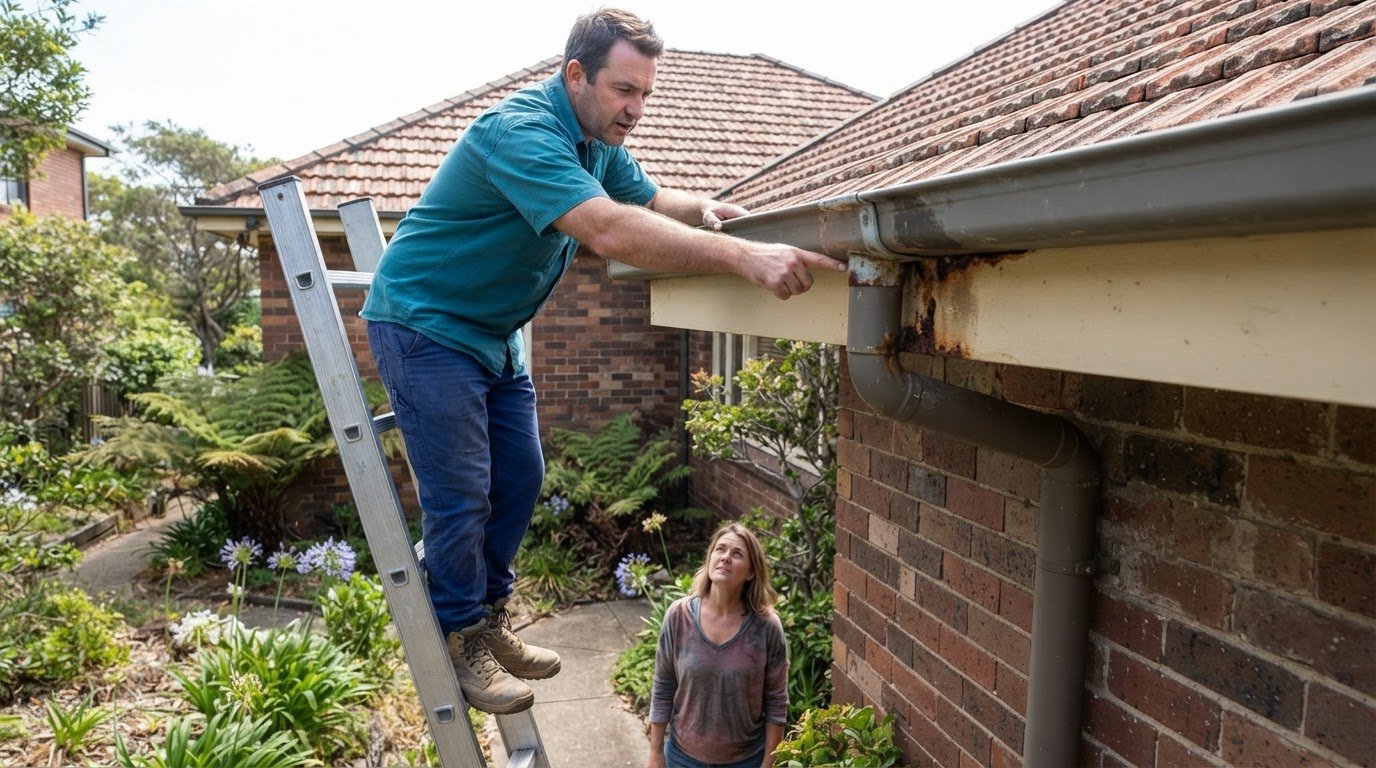
Roof Plumbing Expert can help keep drainage working on coastal homes in Mainly Beach with Gutter & Downpipe Installation. Effective drainage moves rainwater away from the roof, while damaged gutters or downpipes can cause water to pool or spill onto building surfaces.
Turn to Roof Plumbing Expert when gutters need replacing, a roof leak needs attention, or a Colorbond or tiled roof needs care. Services include Roof Leak Detection & Repair, Colorbond Roofing, and Roof Restoration & Repointing. They address practical roofing needs, from tracing water entry to restoring roof components.
When you get in touch, describe the roof material, any signs of damage and your drainage concerns. Contact Roof Plumbing Expert to discuss your roofing or guttering needs in Mainly Beach.
Make your next roofing decision with confidence
Before choosing the best roofing materials for coastal homes, turn your comparison into a practical project brief. Note the property’s exposure, roof structure, preferred appearance and the upkeep you can manage. This gives your decision a clear basis and connects material selection with the work the roof needs, rather than treating the roofing surface as a standalone choice.
Roof Plumbing Expert can help with the next steps for your situation: Gutter & Downpipe Installation for drainage needs, Roof Leak Detection & Repair when water entry needs attention, and Colorbond Roofing when considering a metal roof. These services address different parts of the roof system, so identify the issue or planned change before getting in touch.
Contact Roof Plumbing Expert to discuss your roofing needs and move forward with a plan that suits your home.
Frequently Asked Questions
Is COLORBOND® Good for Coastal Homes?
Yes, COLORBOND® can suit coastal homes when its grade matches the marine exposure. For a Mainly Beach property close to breaking surf, the specified grade and product care instructions matter. Coastal COLORBOND® roofs within 200 metres of the coast are recommended to be washed every six months. Follow the manufacturer’s approved cleaning methods and warranty conditions to protect the coating over time.
How long does a coastal roof last?
Coastal roof lifespan depends on the material, exposure and upkeep. Typical figures include 15-25 years for concrete tiles, 30-40 years for standard COLORBOND® steel and 40+ years for COLORBOND® Ultra steel. Terracotta roofing is listed at 60 or more years. These are material-specific expectations, not a schedule for replacement; inspect for coating damage, leaks and deterioration as the roof ages.
What Roofing Profile Works Best Near the Ocean?
A hip roof pitched at around 30 degrees is recommended for wind protection. Its sloping sides provide a different profile from a gable roof, which has exposed end walls. The right choice also depends on the home’s structure and local exposure. A suitable roof profile must work with the roofing material, fixings and installation, rather than being selected on appearance alone.
Does salt air damage roofs?
Yes, salt air can contribute to roof corrosion. Salt particles settle on roofing and attract moisture; if a protective coating is damaged, corrosion can develop. Cut edges, scratches and sheltered spots that rain does not wash can retain salt deposits. Removing residue and addressing damaged areas helps limit exposure-related deterioration. Avoid climbing onto the roof to inspect it, as working at heights is dangerous.
How to Choose Your Roof for Your Beach House?
Choose by comparing site exposure, roof structure, budget, home style and the maintenance you can manage. Start by noting whether the home faces breaking surf or sheltered saline air, then match the material and protective finish to those conditions. Review product care requirements, too. For safer maintenance, inspect from the ground and arrange a roof inspection rather than climbing onto the roof.
What Causes Damage To Your Roof When Living Beside The Ocean?
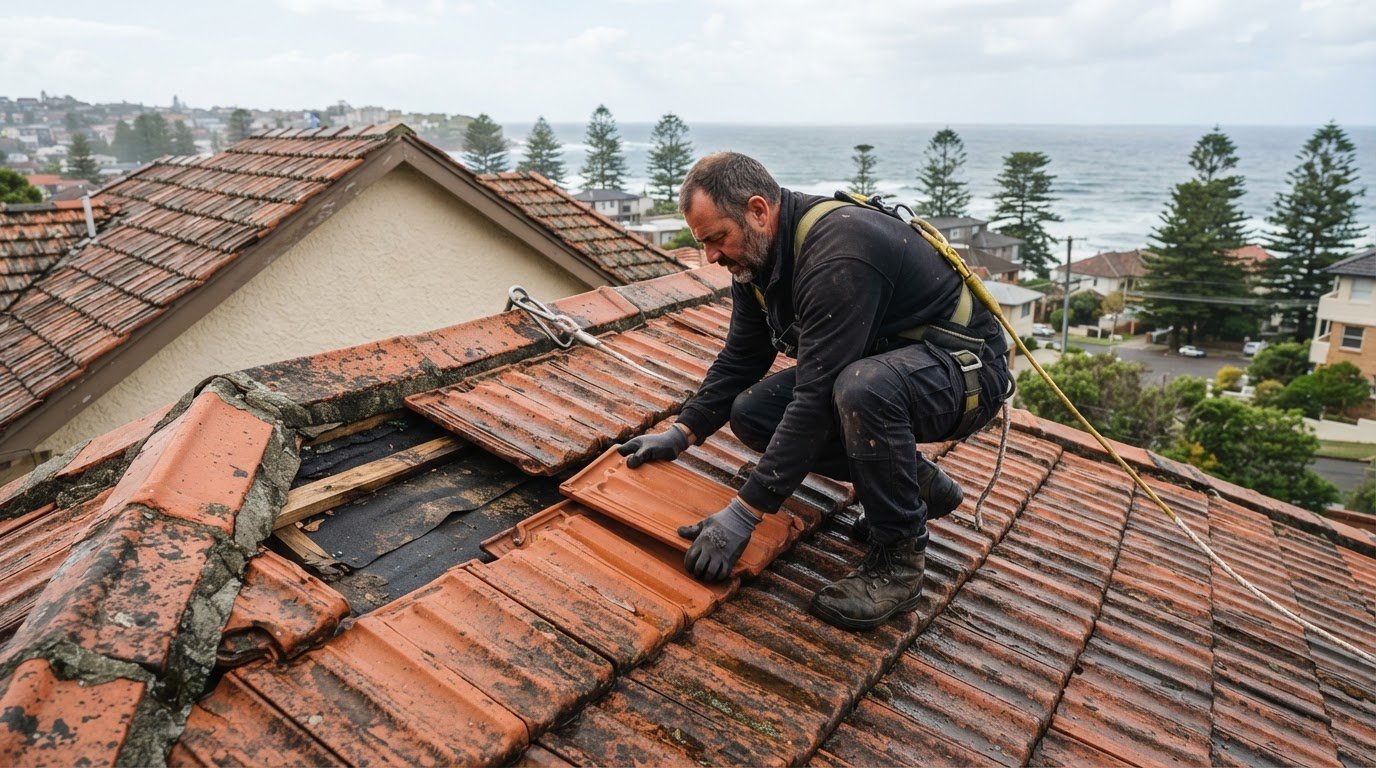
Salt deposits, moisture, strong weather and physical impact can all damage a coastal roof. Salt can collect around cut edges, compromised coatings and sheltered areas, while trapped debris may hold moisture against the surface. Impact can crack clay or concrete tiles. After severe weather, look from the ground for displaced materials, visible damage or blocked gutters, and arrange professional attention if you spot a concern.