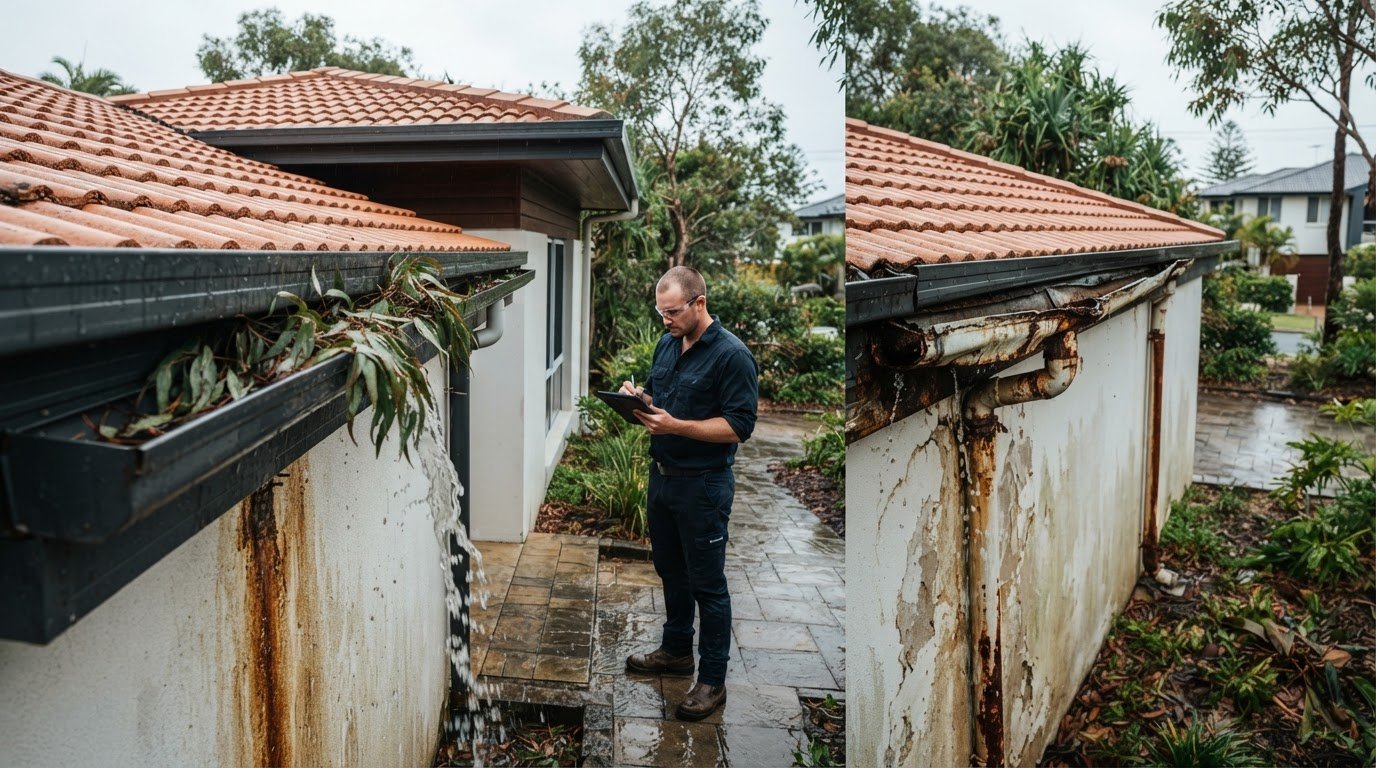

The finest mesh isn’t automatically the best gutter guard for your home. A guard that catches small leaves may suit a tree-lined roof, but its fit, water flow and cleaning needs matter just as much. Choosing the best gutter guards for Australian homes means matching the system to the debris around your property, your roof design and local conditions.
If leaves and debris keep blocking your gutters, it’s understandable to want a solution that reduces the work without causing new problems. Gutter guards can help limit what enters the gutter, but they don’t remove the need for occasional checks and cleaning. The condition of your gutters and the capacity of your downpipes also affect how well the whole system handles rain.
This guide compares common guard types and explains their trade-offs, from mesh and screens to brush and foam options. You’ll learn what to consider for fine leaves, heavy rainfall, roof shape and bushfire exposure, along with what to ask about installation and ongoing maintenance. Whether your property is in Mainly Beach or elsewhere, use these checks to compare options and identify when the wider gutter system may need professional assessment.
Key Takeaways
- The best gutter guards for Australian homes depend on the debris around your property, roof design and how much upkeep you can manage.
- Compare mesh, perforated or louvre-style covers, foam and brush inserts by considering what each may keep out and what could still collect.
- Check the condition of your gutters and the capacity of your downpipes before settling on a guard design.
- Expect to inspect and clean your gutters occasionally, as guards can’t guarantee a blockage-free system.
- Before proceeding, ask an installer about material, roof compatibility, water flow and what preparation and cleanup the quote covers.
Best gutter guards for Australian homes: pros and cons
Gutter guards are covers or barriers fitted over or inside gutters to limit selected debris from entering. They can reduce the amount of material that collects in the gutter, but performance depends on more than the guard itself. Roof shape, nearby trees, gutter condition, local weather exposure and installation all affect how water and debris move through the system.
Gutter guards reduce debris entry; they don’t eliminate the need to inspect and maintain gutters. That distinction matters when weighing up the best gutter guards for Australian homes. A guard may reduce one recurring problem, but it won’t fix every cause of blockage or overflow.
How gutter guards work on an Australian roof
A guard is designed to let roof runoff reach the gutter while limiting certain debris. Its openings and shape influence what it can catch, while a secure, compatible fit helps water enter without leaving gaps for debris to pass through. Poor fit or a design unsuited to the roof can interfere with water flow or allow debris to collect at the edges.
Debris behaves differently, too. Broad leaves may sit on top of a guard; small leaves, dust and fine roof debris may pass through openings or build up on the surface. Seed pods can lodge in openings or gather at corners. The common types of gutter guards include mesh, foam, brush and reverse-curve designs, each with different ways of managing debris and water.
Consider what actually falls on your roof and how rain reaches the gutter. A design that suits broad leaves may not perform the same way with fine debris. Wind-driven rain can also affect how water meets the gutter edge, so assess the conditions at your own property in Mainly Beach rather than relying on a general product claim.
What gutter guards will not fix
A guard won’t clear a blocked downpipe, repair a damaged gutter or correct poor drainage. If water already ponds in the gutter, leaks at a joint or spills over during rain, the cause may be a defect or capacity issue rather than leaves entering the channel.
Check the gutter and downpipes before fitting a guard. Existing damage, poor fall or blockages should be assessed and addressed first. Otherwise, the guard may conceal a problem without resolving it. A professional assessment of the wider gutter system can help determine whether repairs or replacement are needed before you compare guard options.
Even a suitable, well-fitted guard can collect debris on its surface or around its edges, affecting water entry. Plan for periodic inspection and cleaning, and be cautious of claims of zero maintenance, zero blockages or guaranteed overflow prevention.
Gutter guard types compared: mesh, perforated covers and other designs
Gutter guards use different openings and shapes to manage debris and direct rainwater into the gutter. The right fit depends on the roof edge, gutter profile, nearby vegetation and how easily the system can be inspected and cleaned. No design suits every property, so compare the trade-offs rather than relying on broad claims such as “maintenance-free”.
Mesh and perforated gutter guards
Mesh guards use a screen to let water through while limiting some leaves and debris. The size and shape of the openings, along with the material and fit, affect what may pass through and how readily water enters. Fine openings may catch smaller debris, but dust and residue can still build up on the surface. Larger openings may allow more fine material through.
Perforated and louvre-style covers sit over the gutter, using holes or shaped channels to admit water. They may limit larger leaves, but seed pods, fine debris or residue can still collect on top or around the edges. Confirm compatibility with the roof and gutter profile, and ask how the design is expected to handle the debris around your property.
Foam, brush and cover-style guards
Foam inserts sit inside the gutter, while brush inserts occupy the channel and catch debris among their bristles. Both can limit some material entering the gutter, but debris may remain on or within the insert, affecting cleaning access. Cover-style designs sit over the gutter and may be more visible from the ground than an insert. Check how each system is removed or cleaned, and follow the manufacturer’s guidance for fit and upkeep.
| Design | May suit | Key trade-offs | Ask the installer |
|---|---|---|---|
| Mesh | Properties where leaves and smaller debris are a concern | Fine residue can collect on the screen; opening size affects water entry | How does the mesh fit my roof edge, and how will it be cleaned? |
| Perforated or louvre-style cover | Roofs where a cover can be fitted securely over the gutter | Debris may remain on top or gather at edges; check visibility and access | How does rain enter, and what happens to leaves and seed pods? |
| Foam insert | Gutters suited to an insert-style design | Material sits inside the gutter and can affect access for inspection | How do I inspect beneath or remove the insert for cleaning? |
| Brush insert | Gutters compatible with a loose-fill insert | Debris may lodge among the bristles, so cleaning access matters | How is the brush lifted out and maintained? |
When comparing the best gutter guards for Australian homes, match the design to your roof and debris, then check the manufacturer’s fitting and maintenance instructions. If your gutters or downpipes need attention first, a gutter and downpipe system assessment can help clarify the wider system’s condition. Roof Plumbing Expert provides gutter and downpipe installation and replacement, but does not sell or install gutter guards.
How to choose gutter guards for your Australian home and site conditions
A suitable choice starts with what your roof and gutters actually face, not a broad claim that one design suits every home. Use this check in order to compare options against real site conditions and spot issues a guard won’t resolve.
- Identify the debris. Observe what lands on the roof and in the gutters after windy or wet weather. Broad leaves, fine leaf litter, seed pods and wind-blown dust behave differently. Match the guard’s openings and material to the debris you need to manage, while allowing for some material to remain or pass through.
- Inspect the roof profile. Note the roof material and edge, pitch, valleys and existing fixings. A guard must suit the roof-to-gutter junction and be fitted without interfering with how water runs off the roof. Ask how the proposed design works with your specific roof profile.
- Check the gutters and downpipes. Look for damage, loose joints, existing blockages and signs that water doesn’t drain properly. Consider gutter shape and downpipe capacity, too. A guard can’t compensate for a damaged gutter or inadequate drainage, so arrange an assessment if you’re unsure about the system’s condition.
- Compare designs against weather exposure. Consider how heavy rain and wind-driven water reach the gutter at your property. Openings and cover shape influence water entry, but performance depends on the complete fit and installation. Ask how the guard is expected to handle your local conditions and what maintenance access it allows.
- Verify product and fire-related claims. Check manufacturer documentation for roof compatibility, installation requirements and evidence behind any performance claims. If the property may be exposed to bushfire risk, confirm the relevant Bushfire Attack Level (BAL) assessment and consult current authoritative guidance, including whether AS 3959 applies to the proposed work. Don’t rely on a generic “bushfire-ready” label without documentation that relates to your property and the product.
Match the guard to trees, weather and debris
Note which sides of the home collect the most material. A roof beneath trees may receive broad leaves in one area and smaller debris or seed pods elsewhere. Wind can also carry material onto exposed roof sections. This gives you a practical basis for comparing opening size and design, rather than assuming the same guard will suit every gutter on the house. For a property in Mainly Beach, make the comparison using the debris and drainage you observe at your own site.
Check the roof, gutter and bushfire context
Before choosing, ask the installer to explain how the guard will attach to your roof edge and gutter, and how you’ll inspect the downpipes afterwards. Request product documentation and clarify any fire-related rating in context. The best gutter guards for Australian homes suit the site and the existing roof-water system, rather than simply being the products with the broadest claims.
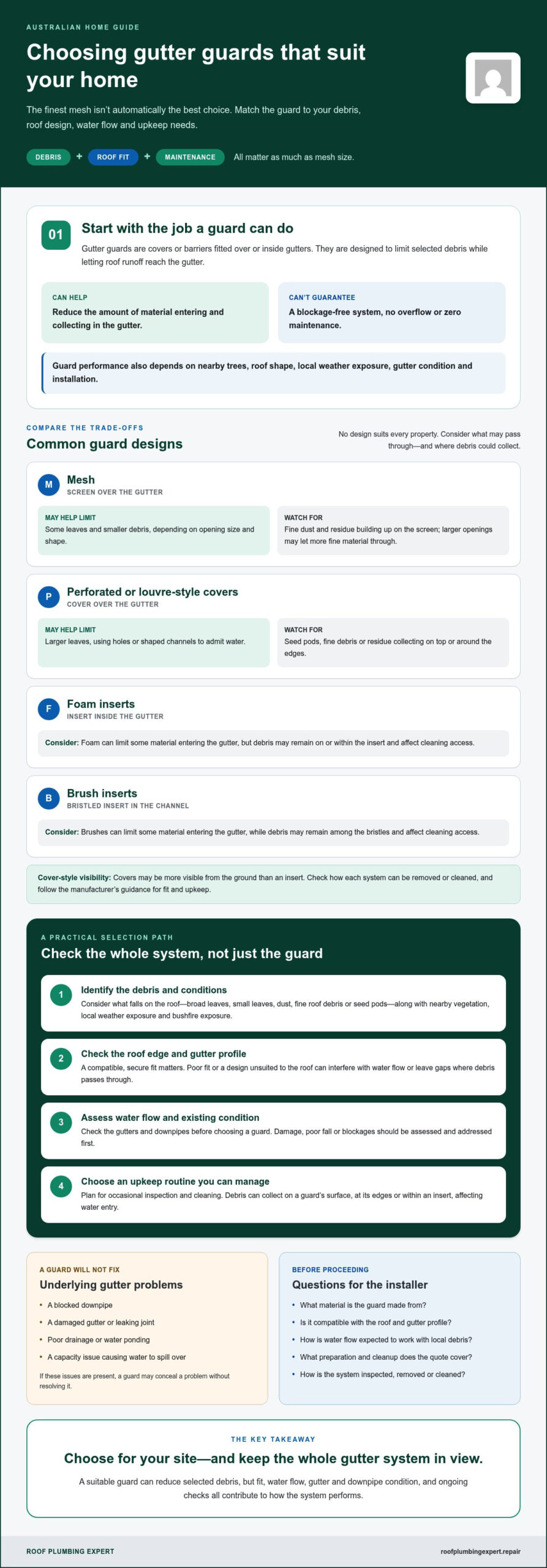
Do gutter guards prevent blockages? Set realistic maintenance expectations
No. A gutter guard may reduce the amount of debris entering a gutter, but it can’t guarantee a blockage-free or maintenance-free system. Leaves and seed pods can sit on the guard or gather at its edges, while dust and fine debris may pass through or build up on the surface. Either can affect how readily rainwater enters the gutter.
Periodic visual checks remain sensible after installation because debris can collect on or around a guard and affect water flow. Check from a safe position after heavy rain or periods of falling leaves. Look for visible build-up, water spilling over the gutter or debris around downpipe openings. Cleaning needs depend on the guard design and conditions at your property.
Common gutter guard trade-offs homeowners should weigh
A guard can reduce debris entering the gutter, but its design may influence cleaning access and water entry. Some systems allow easier access to the gutter than others; some can catch debris on their surface or within an insert. Fit and installation matter, too. A poorly matched guard may leave gaps or interfere with runoff, while changing site conditions can affect how much material accumulates. Don’t assume every design offers the same level of protection or requires the same upkeep.
When an inspection or repair should come first
Check for warning signs before adding a guard. Sagging sections may point to a support or alignment issue. Corrosion, leaks or overflow marks can indicate damage or poor drainage, while a blocked downpipe may prevent water leaving the system even if the gutter is clear. A guard won’t correct these faults.
- Sagging or misaligned gutters: have the gutter condition and drainage assessed.
- Corrosion or leaks: identify the source before covering the gutter.
- Overflow marks or blocked downpipes: check whether the system is draining properly.
Resolve existing gutter or drainage faults before choosing a guard. If you’re unsure about the condition of your gutters or downpipes, seek guidance on identifying overflow causes and downpipe blockages. Roof Plumbing Expert provides gutter and downpipe installation, replacement and repair across New South Wales, but doesn’t sell or install gutter guards.
For help assessing your gutter system in Mainly Beach, request a gutter and downpipe assessment.
Choosing a gutter guard installer: questions to ask before you proceed
A clear quote should explain why a particular guard suits your roof and site, not just name a product. Ask the installer to connect the recommendation to the debris you see, your roof and gutter profiles, and how water will enter and drain from the system. This helps you assess whether the proposal fits your property, rather than relying on broad performance claims.
Questions to ask before accepting a quote
- What debris is this design intended to manage? Ask how it may perform with the leaves, seed pods or fine material around your home, and what could still collect.
- How will you check compatibility? Confirm that the assessment covers the roof edge, gutter shape, existing fixings, downpipes and drainage.
- How will water flow be maintained? Ask how the design admits rainwater and whether the roof profile or exposure could affect water entry.
- What does the quote include? Request a written scope covering gutter condition checks, preparation, installation, removal of waste and site clean-up. Ask what is excluded.
- What documentation is available? Request the product name, material details, manufacturer instructions and maintenance guidance in writing. Check any stated warranty terms directly with the provider, including what is covered and any conditions.
The best gutter guards for Australian homes aren’t simply the ones with the strongest sales claims. A useful recommendation should explain the trade-offs, cleaning access and ongoing checks you can expect. If an installer can’t clearly describe the product, its fit or the work included, pause and clarify those points before proceeding.
When to seek a roof plumbing assessment
If gutters leak, sag, overflow or appear to need replacement, address the underlying issue before adding a guard. A guard won’t correct poor drainage, damaged guttering or a downpipe fault, and covering a problem can make it harder to identify. For more background, consult the guides How to Fix Overflowing Gutters During Heavy Rain and Blocked Downpipe Repair Sydney.
Roof Plumbing Expert provides gutter and downpipe installation, replacement and repair across New South Wales. The business can assess the wider gutter system where existing faults may need attention, but doesn’t sell or install gutter guards. If your gutters or downpipes need work in Mainly Beach, contact Roof Plumbing Expert to discuss the system and an appropriate next step.
Choose a guard that fits your roof and routine
The best gutter guards for Australian homes are selected for the debris around the property, roof and gutter design, water flow and the maintenance you’re prepared to manage. Mesh, covers and inserts each have trade-offs, and no guard can promise a blockage-free system. Check that the gutters and downpipes are in sound condition first, and ask for clear product details, compatibility information and maintenance guidance before agreeing to an installation.
If gutters leak, sag or overflow, deal with those issues before adding a guard. The wider drainage system matters just as much as the cover itself. Roof Plumbing Expert provides roof plumbing services for residential and commercial properties across New South Wales, including gutter and downpipe installation, replacement and repair. The business doesn’t sell or install gutter guards, but can assess the gutter and downpipe system where repairs or replacement may be needed.
Arrange a professional gutter and downpipe assessment to discuss the condition of your system and suitable next steps in Mainly Beach. With the right information and a realistic maintenance plan, you can make a considered choice to help protect your home.
Frequently Asked Questions
What type of gutter guard is best for Australian homes?
There isn’t one guard that suits every home. For the best gutter guards for Australian homes, match the design and opening size to the debris on your roof, then check roof profile, gutter shape, downpipe capacity and cleaning access. Mesh, foam, brush and cover-style designs each have different trade-offs. In Mainly Beach, start by observing the debris and drainage at your property before comparing options.
Do gutter guards stop gutters from overflowing in heavy rain?
No, gutter guards can’t guarantee that gutters won’t overflow in heavy rain. They may reduce debris entering the gutter, but material can collect on the guard or around its edges and restrict water entry. Overflow may also be caused by a blocked downpipe, damaged gutter, poor drainage or a roof-water issue. If water spills over during rain, investigate the cause rather than assuming a guard will fix it.
Are mesh gutter guards better than foam or brush inserts?
Not automatically. Mesh sits over the gutter and uses openings to admit water while limiting some debris. Foam and brush inserts sit inside the gutter, where material may collect within or among them and affect cleaning access. The suitable option depends on the debris, roof and gutter compatibility, water flow and how the guard can be inspected or cleaned. Compare manufacturer instructions and ask how each design fits your property.
Do gutter guards need to be cleaned or inspected?
Yes. Gutter guards still need periodic inspection, and cleaning may be needed if debris builds up. Leaves can remain on top or gather at edges, while fine material may collect on or pass through the guard. Check for visible build-up, overflow or water not draining properly, particularly after heavy rain or periods of falling debris. Follow the product’s maintenance guidance and arrange a safe inspection if access is difficult.
Can gutter guards be fitted to every roof and gutter type?
No. A guard’s fit depends on the roof edge, roof profile, gutter shape, existing fixings and the way water runs off the roof. Some designs may not suit a particular roof-to-gutter junction or could make inspection and cleaning difficult. Ask the installer to confirm compatibility with your specific roof and gutter, explain how the guard will be secured, and provide the relevant product and installation information before work proceeds.
Are gutter guards suitable for bushfire-prone areas?
They may be suitable, but the right material and product claims depend on your property’s bushfire context. Check your assessed Bushfire Attack Level (BAL), then consult current authoritative guidance and ask the installer for documentation supporting any fire-related claim. Don’t rely on a general “bushfire-ready” description alone. Confirm that the proposed guard, materials and installation are appropriate for your site before making a decision.
Should I repair or replace my gutters before installing gutter guards?
Yes, address existing gutter or drainage faults before fitting a guard. Sagging sections, corrosion, leaks, overflow marks or blocked downpipes can signal problems that a guard won’t correct. Have the gutter condition and drainage assessed, and determine whether repair or replacement is needed first. Roof Plumbing Expert provides gutter and downpipe installation, replacement and repair, but doesn’t sell or install gutter guards. An assessment can help clarify the wider system’s condition.