Could a single hailstorm or a week of 40-degree heat be the ultimate test your home isn’t ready for? When weighing up the Colorbond vs tile roof Sydney debate, most homeowners worry about whether metal roofs will keep them awake during a downpour or if tiles will simply crack under the pressure of a summer storm. It’s a valid concern. Sydney’s micro-climates, from the salt spray of the coast to the intense heat of the western suburbs, demand more from a roof than just curb appeal.
We understand that choosing a roofing material is a significant investment in your property’s lasting security. This comparison cuts through the confusion to help you decide which material withstands our local conditions while adding the most value to your home. You’ll gain a clear understanding of maintenance requirements, thermal efficiency under the 2025 National Construction Code standards, and exactly how each option performs when the weather turns nasty. We provide a professional breakdown of lifespans and durability. This ensures you can move forward with total confidence in your choice.
Key Takeaways
- Learn how Sydney’s unique micro-climates, from coastal salt spray to inland humidity, impact the long-term performance of different roofing materials.
- Compare the durability of a Colorbond vs tile roof Sydney during severe hail storms and understand why precision flashing and guttering are your best defence against leaks.
- Discover the truth about thermal efficiency and how modern reflective coatings can keep your home cooler than traditional tiles during 40-degree summer days.
- Evaluate the total cost of ownership by weighing initial installation prices against long-term maintenance requirements and property resale value.
- Get a definitive verdict on which material provides the best structural protection and aesthetic fit for your specific architectural style and local environment.
Choosing the Right Roof for the Sydney Climate: Colorbond vs Tiles
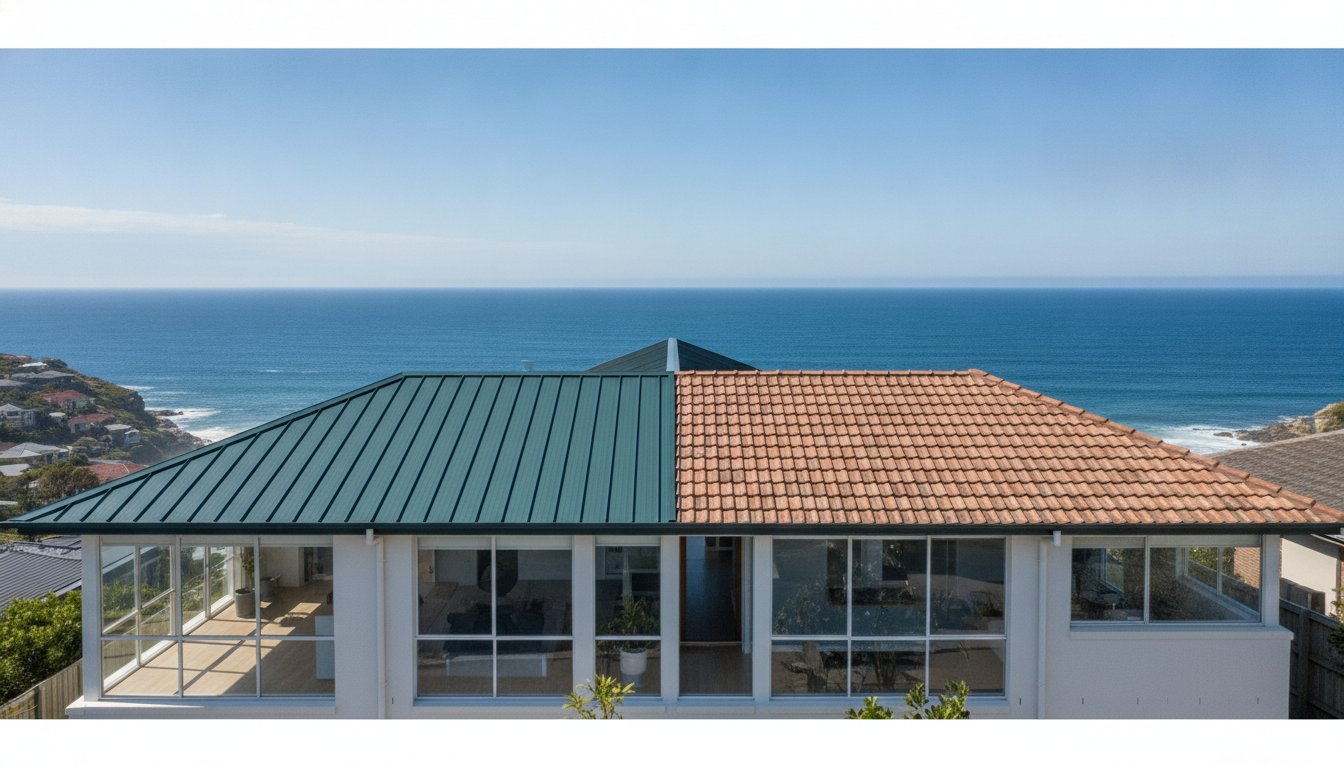
Sydney homes face a unique set of environmental challenges. From the salt-heavy breezes of the Northern Beaches to the blistering heatwaves in the west, your choice of roofing material determines how well your property ages. In New South Wales, the debate over Colorbond vs tile roof Sydney often comes down to a balance between tradition and modern performance. Both materials are staples of the Australian skyline, yet they behave differently when the mercury hits 40 degrees or when a southerly buster rolls through.
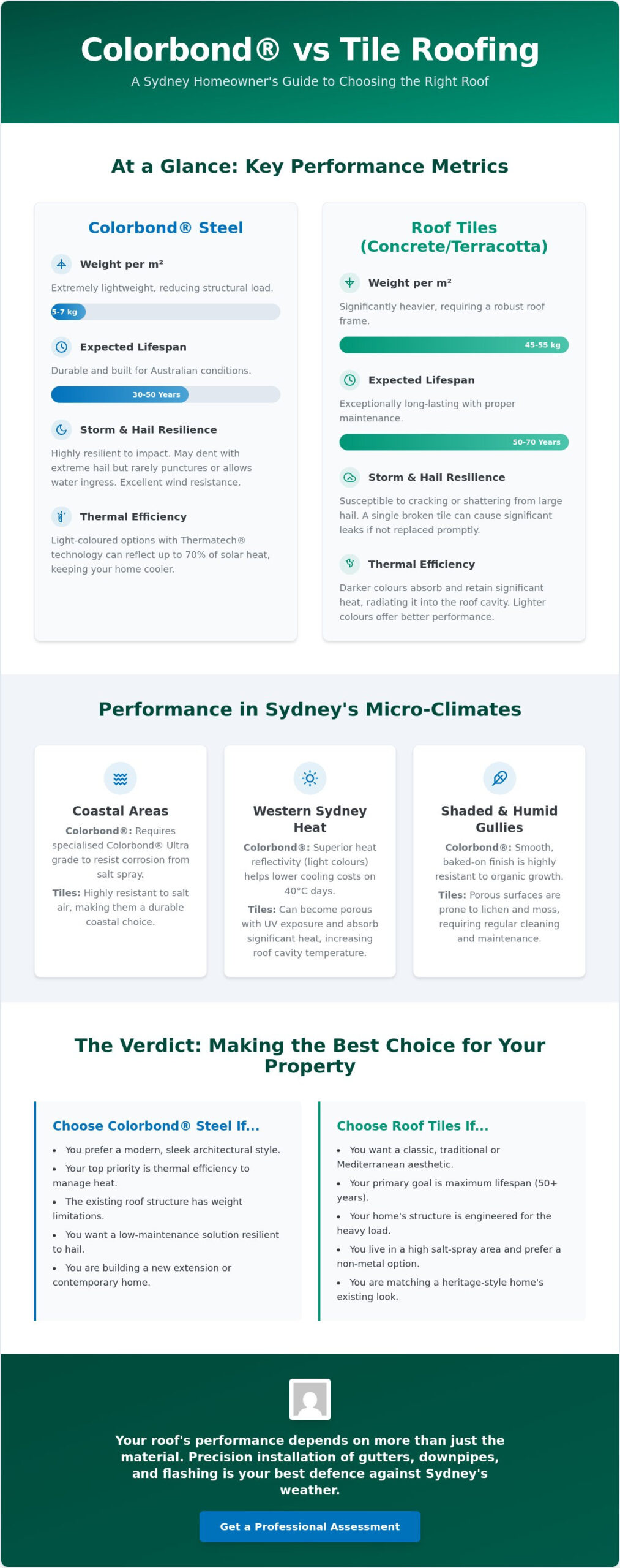
One of the most significant technical differences is the load your house must carry. Concrete and terracotta tiles are heavy, weighing between 45 and 55 kg per square metre. This requires a robust structural frame to ensure the building remains stable over decades. In contrast, metal roofing systems like Colorbond are remarkably light, coming in at just 5 to 7 kg per square metre. This reduced weight often makes steel the preferred choice for modern extensions or when replacing an old roof where the existing timber structure might struggle with the mass of new tiles.
Aesthetics also play a major role in the selection process. While tiles offer a classic, textured appearance suited to heritage and Mediterranean-style homes, Colorbond provides the sleek, clean lines favoured in contemporary Australian architecture. With 22 standard colours available in 2026, including newer options like Dover White and Southerly, homeowners can easily coordinate their roof with the rest of their external finishes.
Sydney Coastal vs. Inland Performance
Suburbs like Manly or Cronulla require specialised protection. Standard steel can corrode quickly in salt-rich environments, which is why Colorbond Ultra is essential for homes near the ocean. This grade is specifically engineered to resist the corrosive effects of salt spray. Moving inland to Western Sydney, the challenge shifts to UV exposure. While concrete tiles handle the sun well, they can become porous over time. In shaded, humid gullies like those found in the North Shore, tiles are also prone to lichen and moss growth. This often necessitates professional roof restoration and repointing to keep the surface sealed and prevent moisture from seeping into the roof cavity.
Quick Comparison Table: At a Glance
Choosing between these materials involves looking at both immediate performance and long-term durability. The following data points reflect current 2026 industry standards for the Sydney market.
- Lifespan: A well-maintained tile roof can last 50 to 70 years, while Colorbond has an expected lifespan of 30 to 50 years.
- Weight: Colorbond is significantly lighter at 5 to 7 kg per square metre, compared to 45 to 55 kg for tiles.
- Maintenance: Tiles require periodic checking for cracks and repointing. Colorbond is generally low maintenance but requires clear gutters and downpipes to prevent water pooling.
- Solar Reflection: Light-coloured Colorbond roofs can reflect up to 70% of solar radiation, whereas dark tiles tend to absorb and hold heat.
Durability and Maintenance: Which Stands Up to NSW Storms?
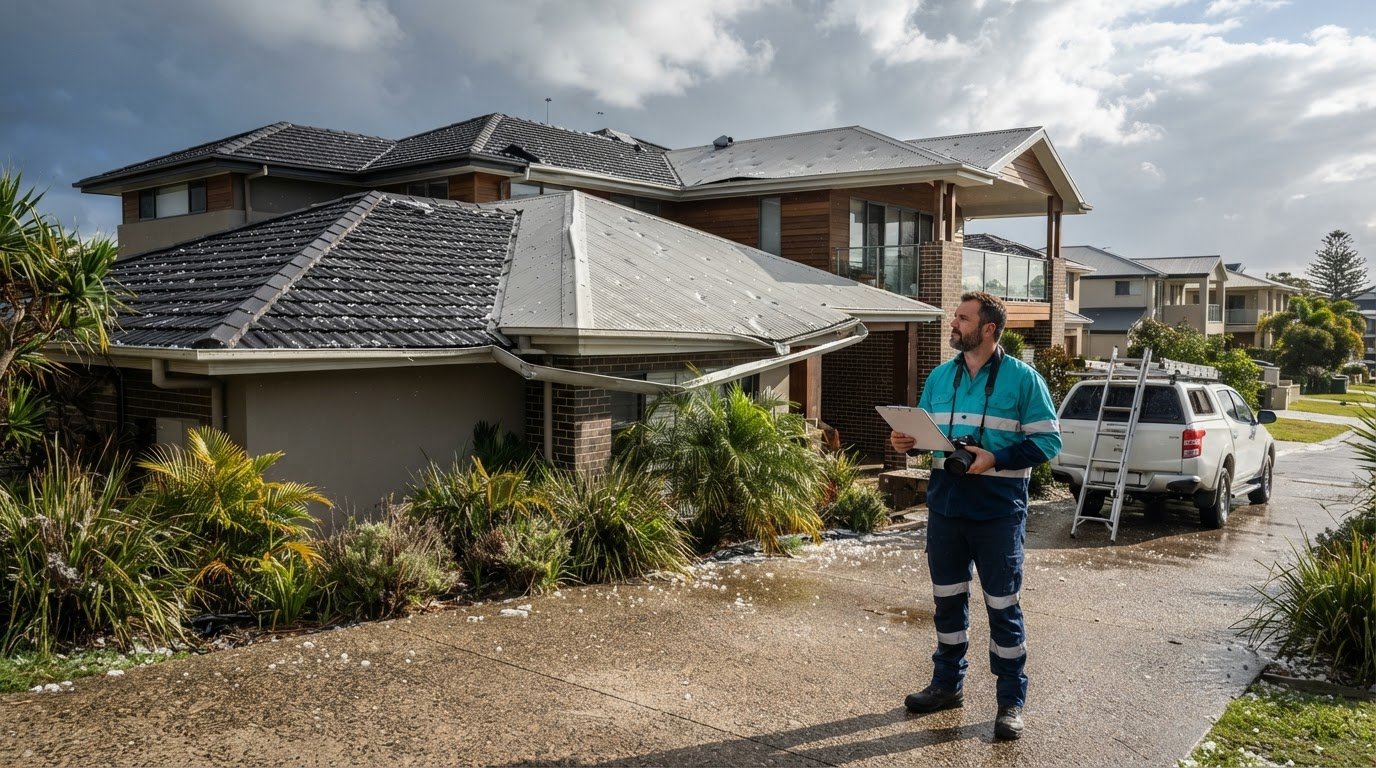
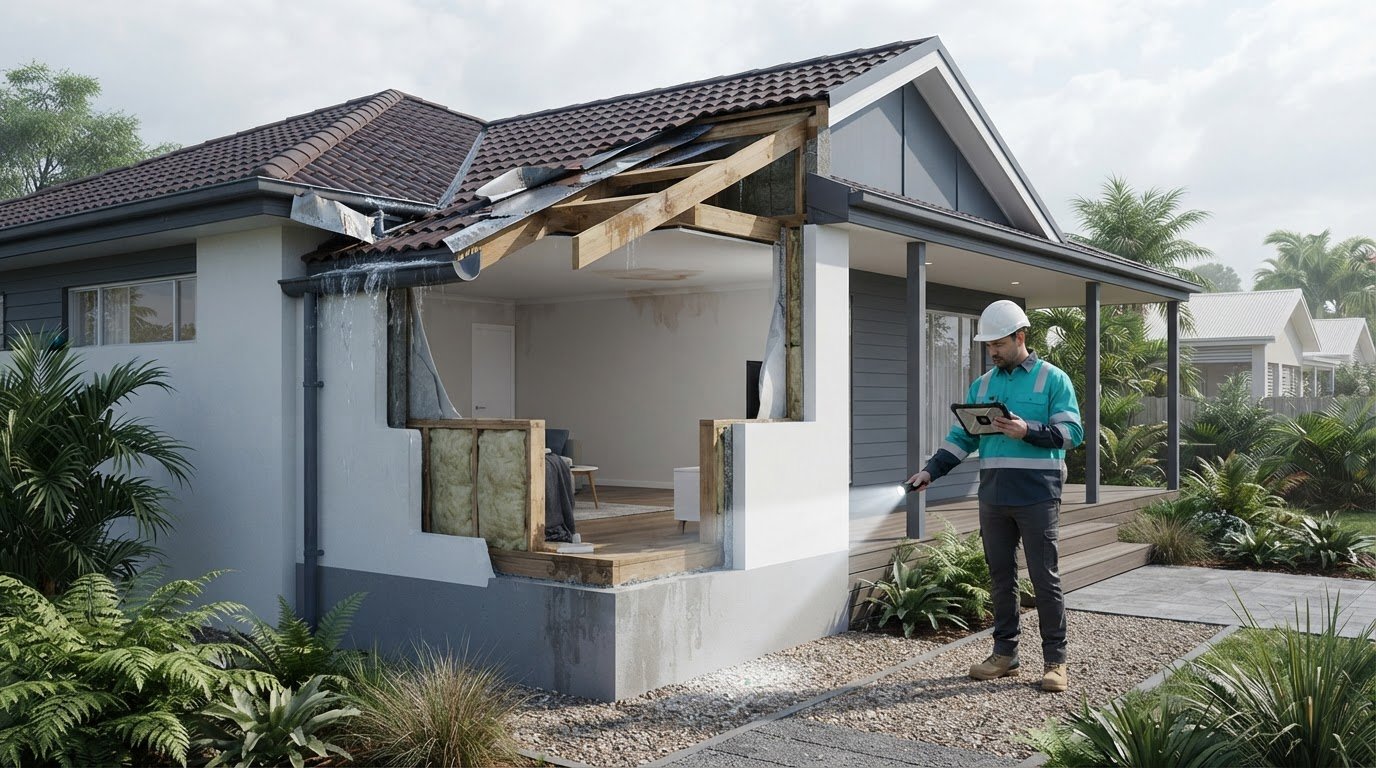
Sydney storm seasons are notoriously unpredictable. When comparing a Colorbond vs tile roof Sydney, the most critical factor is how each material handles high winds and impact. During a severe hailstorm, terracotta and concrete tiles are susceptible to cracking or shattering. A single broken tile can compromise your home’s structural integrity by allowing water to bypass the sarking. In contrast, Colorbond steel is incredibly resilient. While extreme hail might cause minor cosmetic indentations, the sheets rarely puncture or shift. Because the metal panels are screwed directly to the roof purlins, they offer superior resistance against lifting during the intense wind gusts common in the June storm season.
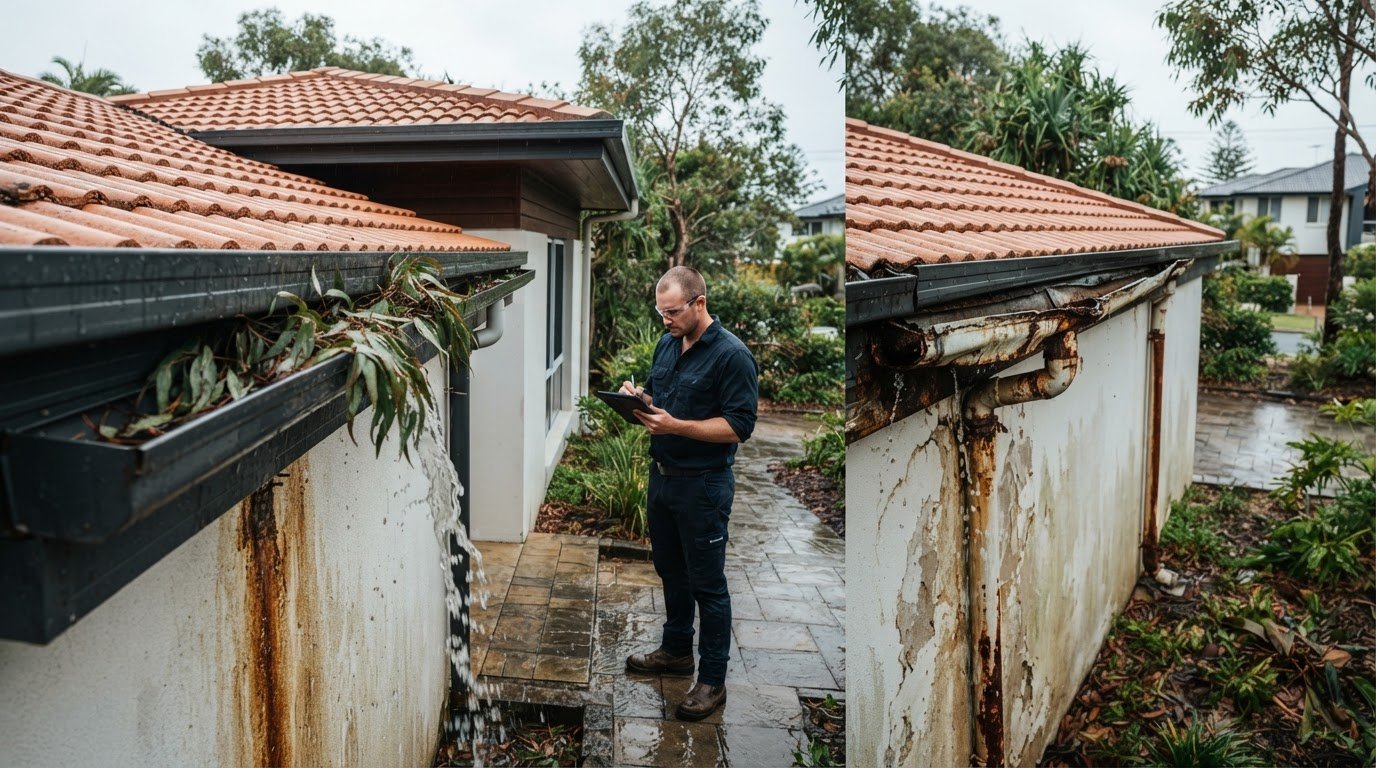
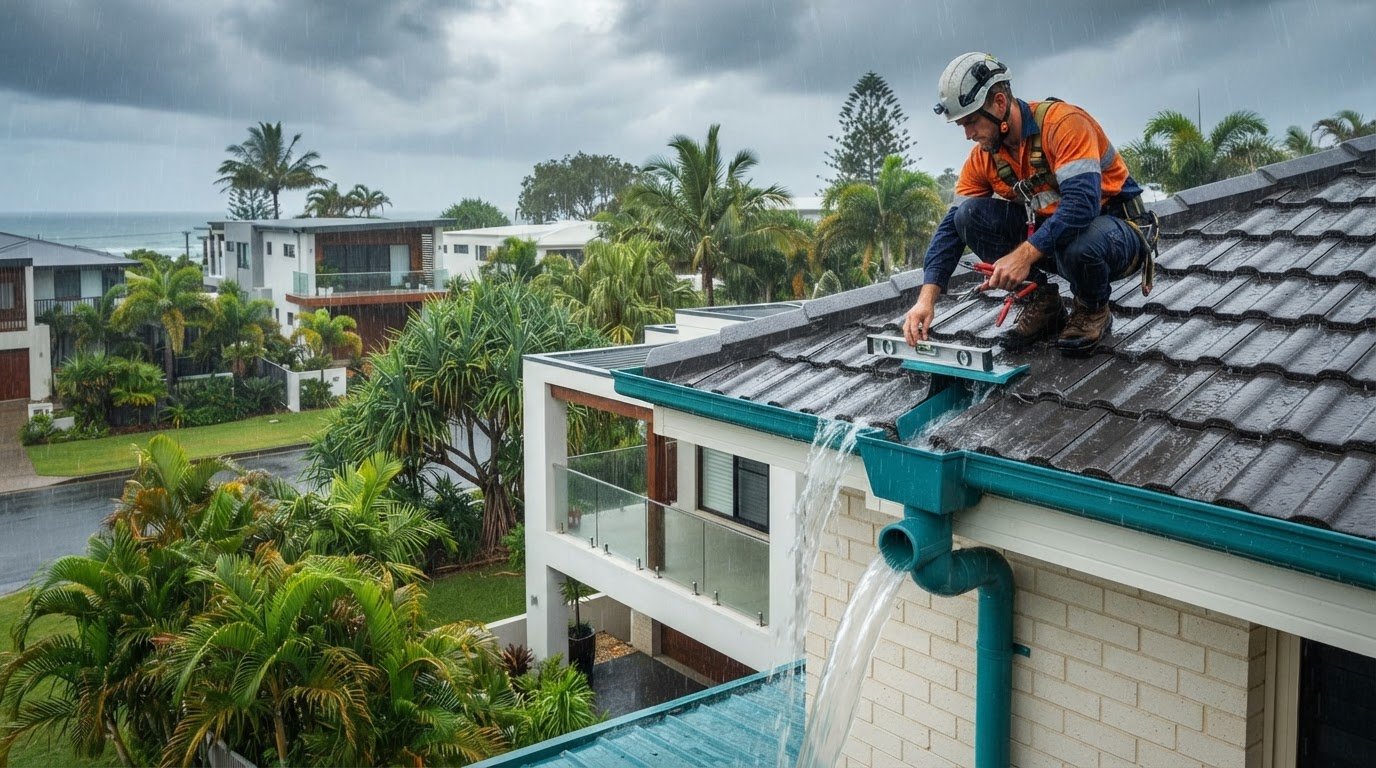
The performance of your roof is only as good as the plumbing system supporting it. Gutters, downpipes, and flashing are the frontline of defence against water ingress. If your flashing is poorly installed or your downpipes are undersized, even the highest quality material will fail. Many Sydney homeowners overlook the fact that while the material itself is durable, the thermal efficiency of cool roofs and their long-term health depend on precision drainage. Poorly maintained gutters can lead to water pooling against the edge of metal sheets or under tile eaves, causing accelerated wear that most warranties won’t cover.
The Reality of Tile Maintenance
Tiles are famous for their longevity, often lasting over 50 years, but they aren’t “set and forget.” The mortar used for bedding and pointing naturally degrades over 10 to 15 years due to Sydney’s temperature fluctuations. When this mortar cracks, tiles become loose and prone to sliding. If you notice debris in your gutters or visible gaps in the ridge capping, it’s time to consider a professional roof restoration Sydney. Catching these issues early prevents the costly timber rot associated with slow, undetected leaks.
Colorbond Resilience and Longevity
Colorbond is engineered for the Australian climate and doesn’t crack, peel, or chip under normal conditions. However, “low maintenance” doesn’t mean “no maintenance.” The most important task for a metal roof owner is ensuring gutters stay clear of leaf litter. Debris traps moisture against the underside of the sheets, which can lead to corrosion over several years. For older metal roofs showing signs of surface wear, a Colorbond roof restoration Sydney can refresh the protective coating and extend the lifespan of the steel significantly. If you’re concerned about the current state of your roof after a heavy downpour, booking an expert roof leak detection service is a practical first step to ensure your home remains watertight.
Thermal Efficiency and Noise: Keeping Your Home Comfortable
A common misconception among homeowners is that metal roofs make a house significantly hotter. While steel is a conductor, modern technology has flipped this narrative. When comparing Colorbond vs tile roof Sydney performance during a January heatwave, the results often surprise those used to traditional materials. Modern Colorbond sheets incorporate Thermatech technology. This is specifically designed to reflect more of the sun’s heat. Light-coloured options can reflect up to 70% of solar radiation. This prevents that energy from ever entering your roof cavity and keeps your cooling costs manageable.
Tiles operate on a different principle known as thermal mass. They are excellent at absorbing heat. This is a benefit in cooler climates but can be a drawback during a Sydney summer. Once tiles soak up the sun’s energy all day, they continue to radiate that heat into your living spaces long after the sun has gone down. This often means your air conditioning has to work harder well into the evening to combat the “oven effect” created by a hot tile roof. It’s a heavy heat that lingers.
Energy Efficiency in the Sydney Summer
The choice of colour is just as important as the material itself. A light-coloured steel roof stays significantly cooler than a dark-tiled one. To maximise this advantage, we always recommend high-quality sarking and proper ventilation. Installing whirlybirds or ridge vents allows trapped hot air to escape. This ensures your insulation isn’t overwhelmed. This combination of reflective surfaces and active airflow is the most effective way to manage the 40-degree days we frequently experience in the western suburbs.
Acoustics and Soundproofing
Noise is the other major hurdle for those considering a switch to metal. The sound of rain on a tin roof is a nostalgic Australian sound for some. For others, it’s a sleep-disrupting nuisance. It’s a myth that you have to settle for a noisy home with Colorbond. By installing an acoustic blanket or high-density insulation directly under the sheets, we can dampen the sound of rain and hail to levels comparable to a tile roof. It effectively silences the “drum” effect.
You might also notice occasional ticking or creaking sounds with a metal roof. This is simply the material expanding and contracting as the temperature changes. While tiles are generally silent in this regard, the peace of mind offered by a lightweight, leak-resistant system often outweighs these minor acoustic quirks. Proper installation ensures these sounds are minimised by allowing for natural thermal movement in the fasteners and flashing.
Cost Analysis and Long-Term Value in the Sydney Market
When comparing the financial outlay of a Colorbond vs tile roof Sydney project, looking past the initial quote is essential. Concrete tiles often present the lowest upfront cost for materials. However, this doesn’t always translate to the cheapest project. Because tiles weigh up to 55kg per square metre, the underlying timber structure must be significantly stronger. If you’re building a new home or converting from a metal roof, the cost of additional structural reinforcement for rafters and purlins can quickly erase any savings on the tiles themselves. Colorbond is a premium product with a higher material price point, but its lightweight nature often simplifies the installation process and reduces structural labour costs.
Property resale value in Sydney is another major consideration. Modern buyers frequently associate Colorbond with contemporary design and low maintenance, which can provide a competitive edge in high-value suburbs. Insurance companies also take note of your roofing material. In areas prone to severe storms, metal roofs are often viewed as a lower risk because they don’t shatter or shift during high-wind events. This can sometimes lead to more favourable premium structures compared to older tile roofs that may have compromised bedding or loose ridge capping.
Bushfire Zones and Compliance (BAL)
For homeowners on the fringes of the Sydney basin, such as the Sutherland Shire or the Northern Beaches, bushfire compliance is a non-negotiable legal requirement. Colorbond is the preferred choice for high Bushfire Attack Level (BAL) zones. The large, continuous steel sheets provide a superior seal against ember attack. Unlike tiles, which have thousands of small gaps where wind-borne embers can enter the roof cavity, a well-flashed metal roof creates a tight envelope. This level of protection is a critical part of meeting NSW building regulations in fire-prone areas.
Maintenance ROI Over 25 Years
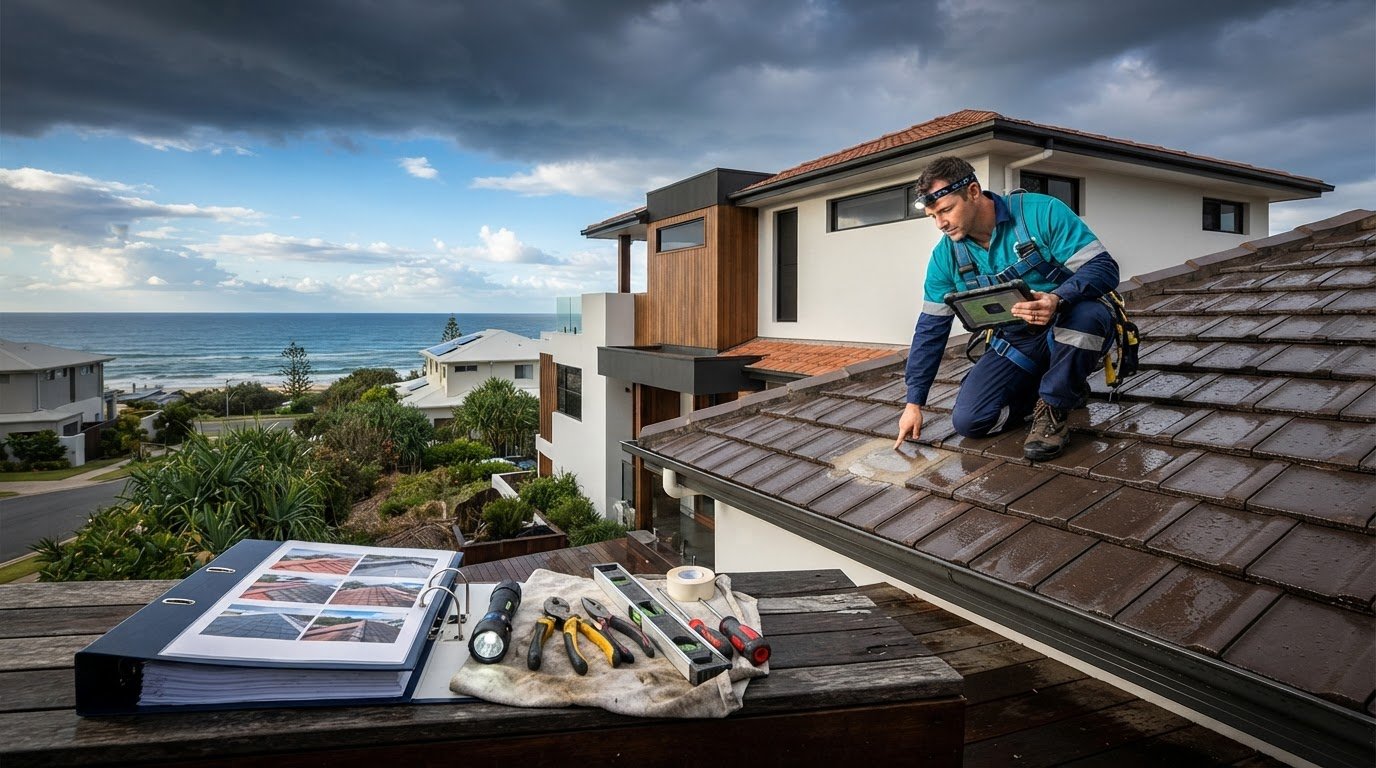
The true value of your roof reveals itself over two decades of ownership. A tile roof requires periodic maintenance that many homeowners fail to budget for. Mortar bedding and pointing naturally crack and degrade every 10 to 15 years, requiring professional attention to prevent leaks. While tiles have a longer total lifespan, the recurring cost of repointing adds up. A professionally installed metal roof requires very little beyond regular gutter cleaning. For those living in nearby regions, the Colorbond roofing Central Coast experience mirrors Sydney’s, where the long-term ROI is driven by durability and minimal repairs. If you want to ensure your investment is protected for the long haul, booking a professional roof inspection can help you identify potential savings before they become expensive problems.
The Verdict: Making the Best Choice for Your Sydney Property
Deciding between a Colorbond vs tile roof Sydney depends on your property’s specific location and your long-term maintenance goals. Tiles remain the preferred choice for heritage homes where traditional aesthetics and high thermal mass are essential. They provide a classic look that many homeowners in established suburbs still value. On the other hand, Colorbond is the definitive solution for modern builds, steep pitches, and homes in bushfire-prone fringes. Its lightweight profile and 30-year paint warranty from BlueScope make it a practical, high-performance alternative that suits the fast-paced Sydney lifestyle. If you’re ready to make the switch, our comprehensive Colorbond roof replacement Sydney buying guide covers everything from selecting the correct coastal-grade steel to meeting the latest National Construction Code requirements.
A professional roof plumbing assessment is your most important first step. You cannot simply look at a roof and determine its structural health or how it will interface with your existing drainage. A licensed specialist will evaluate the condition of your timber framing and the capacity of your downpipes. This ensures that whatever material you choose, the entire system works together to shed water efficiently. Choosing a qualified professional is not just about the installation; it is about guaranteeing the long-term security of your biggest asset against the elements.
Questions to Ask Your Roof Plumber
Before you sign a contract, you need clear answers on technical compatibility. We recommend asking these specific questions during your on-site consultation:
- Is my existing roof structure strong enough for a tile-to-metal conversion? While moving from heavy tiles to light metal is usually straightforward, the spacing of your battens and purlins may need adjustment to meet current safety standards.
- What grade of Colorbond is best for my distance from the ocean? If you’re within 200 metres of the surf, standard steel won’t cut it. You’ll likely require Colorbond Ultra to prevent premature corrosion from salt spray.
- How will the new roof integrate with my current guttering system? A new roof often changes the speed and volume of water runoff. Your roof plumber should confirm if your current gutters and downpipes can handle the flow during a heavy downpour.
Take the Next Step for Your Sydney Home
DIY roofing is an immense risk, especially with the unpredictable nature of the Sydney storm season. A minor error in flashing or a poorly sealed fastener can lead to thousands of dollars in internal water damage. At Roof Plumbing Expert, we focus on providing a watertight finish that respects the specific requirements of your chosen material. We handle everything from leak detection to full structural replacements with precision and transparency. Don’t leave your home’s protection to chance. Book a specialist roof inspection with Roof Plumbing Expert today! and get a definitive answer on the best roofing solution for your property.
Secure Your Home Against the Sydney Elements
Your roofing choice is a long-term investment in your property’s safety and market value. Whether you prefer the modern resilience of steel or the traditional weight of tiles, the key is matching the material to your specific micro-climate. A well-installed roof acts as your first line of defence against the intense storm seasons and blistering summer heatwaves we face every year. The Colorbond vs tile roof Sydney decision ultimately comes down to your home’s structural capacity and your long-term maintenance preferences.
As local trade authorities, we specialise in precise Colorbond installation and expert leak detection for all roof types. We ensure your flashing, gutters, and downpipes are engineered to handle the heaviest downpours without fail. Our team provides the technical expertise needed to secure your asset and improve its thermal performance. Don’t leave your property’s protection to chance. Get a Professional Roofing Quote from the Sydney Experts. Protecting your home starts with a professional assessment, and we’re here to ensure your roof stands strong for decades to come.
Frequently Asked Questions
Is Colorbond roofing more expensive than tiles in Sydney?
The initial material cost for Colorbond is generally higher than for standard concrete tiles. However, the total project cost often balances out because the lightweight nature of steel requires less structural timber reinforcement. You should also consider the long-term ROI, as metal roofs don’t require the periodic repointing and rebedding costs associated with tile maintenance.
Can I change my tile roof to Colorbond?
Yes, converting from tiles to metal is a common and straightforward process for many Sydney properties. The transition involves stripping the heavy tiles, inspecting the existing timber rafters, and installing new steel battens to support the Colorbond sheets. This process significantly reduces the structural load on your home’s frame while providing a modern, watertight finish.
Does a Colorbond roof make the house hotter in summer?
No, a light-coloured Colorbond roof actually keeps your home cooler by reflecting up to 70% of solar radiation. While tiles have high thermal mass and hold heat long after sunset, steel cools down almost immediately when the sun goes down. This prevents heat from radiating into your living spaces during the evening.
How long does a Colorbond roof last compared to concrete tiles?
Concrete tiles have a potential lifespan of 50 to 70 years, while Colorbond typically lasts between 30 and 50 years. While tiles may last longer in total years, they require much more frequent maintenance to remain functional. Colorbond’s durability is backed by a 30-year paint warranty from BlueScope, making it a reliable choice for the Colorbond vs tile roof Sydney comparison.
Which roofing material is better for Sydney hail storms?
Colorbond is the more resilient option during severe weather events. While extreme hail might cause minor cosmetic indentations on a metal surface, the sheets will not crack or allow water to enter your home. Tiles are brittle and can shatter upon impact, which often leads to immediate leaks and structural water damage during a storm.
Is a metal roof noisier when it rains?
A bare metal roof is louder, but modern installation techniques effectively silence the noise. By using high-quality acoustic blankets and high-density ceiling insulation, we can dampen the sound of rain to levels comparable to a tile roof. Most residents find the remaining sound of rain on a well-insulated roof to be quite soothing rather than disruptive.
Do I need different gutters for a Colorbond roof vs. a tile roof?
The gutter profiles themselves can be similar, but the drainage capacity must match the runoff speed. Metal roofs are smoother than tiles, meaning rainwater reaches the gutters much faster during a downpour. It’s critical to ensure your downpipes and gutters are sized correctly to prevent overflowing and water backing up into your eaves.
What is the best roof colour for a house in Sydney?
Light colours are the most effective choice for managing Sydney’s intense UV levels. Shades like Dover White, Southerly, or Surfmist reflect the most heat and help your home meet modern thermal efficiency standards. Darker colours may suit certain architectural styles, but they’ll absorb significantly more heat, which can increase your summer cooling costs.