A roof claim isn’t automatically the best way to pay for repairs. To work out how to handle a roof repair insurance claim, report storm damage promptly, document what happened and weigh the repair cost against your excess. Policies typically require claims to be filed within 30 to 60 days, so check your policy’s time limit.
When a roof leaks after a storm, it’s understandable to want a clear answer, especially if the damage has affected the inside of your home. This guide explains when a claim may make sense, how your excess affects the decision, and why an insurer may reduce or deny a claim.
You’ll learn what can influence approval and turnaround times, what to document, and how a roof inspection and written report can clarify the damage. Whether the issue followed a sudden storm or points to maintenance, understanding the evidence can help you decide what to do next.
Key Takeaways
- Separate sudden storm impacts from gradual wear and maintenance issues when deciding whether roof damage may be claimable.
- Weigh the likely repair scope against your policy excess before deciding whether to claim.
- Keep clear records of the damage and understand how delays or damage exclusions may affect the insurer’s decision.
- Allow for inspections and possible revisions, as claim approval times depend on the insurer’s process and the evidence provided.
1. When should an insurance claim be made for roof repairs?
Consider making a claim when a sudden event, such as a storm, causes roof damage covered by your policy. Contractor requirements vary between Australian states and territories, depending on the work and location. The insurer assesses the claim against your policy terms and the evidence. To understand how to handle a roof repair insurance claim, start by identifying what caused the damage.
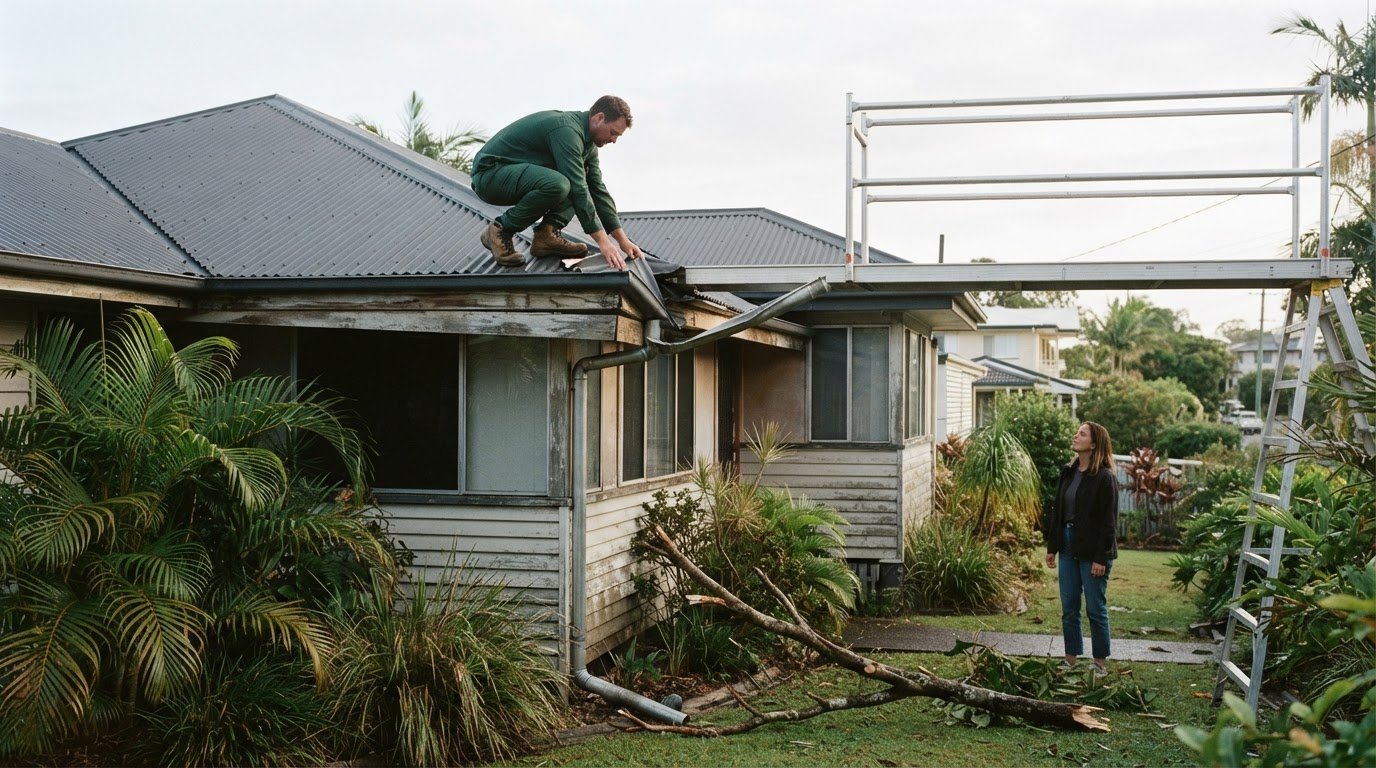
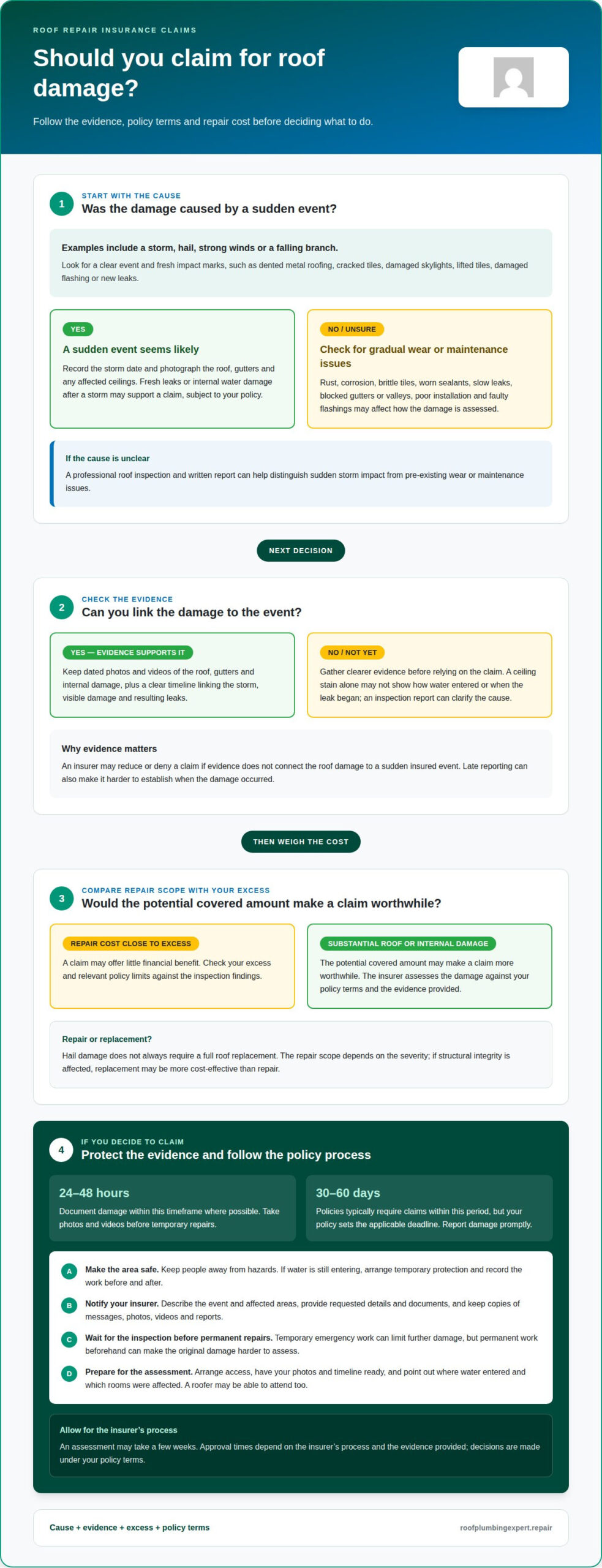
Storm damage has a clear event and fresh impact marks. Hail may dent metal roofing, crack tiles or damage skylights. Strong winds can lift or displace tiles, damage flashing, or tear roof materials away. Falling branches may also strike the roof. Fresh leaks or internal water damage after a storm can support a claim, subject to the policy. Photograph the roof, gutters and ceilings, and record the storm date. Document damage within the first 24-48 hours where possible, and report it promptly.
Wear and tear develops over time, rather than from one sudden event. An assessment may identify rust, corrosion, brittle tiles, worn sealants or slow leaks. Blocked gutters or roof valleys, cracked or faulty flashings, a low roof pitch, poor installation and undersized box gutters can also indicate maintenance issues. Your policy may treat these conditions differently from storm damage. A professional roof inspection and written report can help clarify the cause.
Policies typically require claims within 30 to 60 days of damage, but the applicable deadline is set by the policy. Take photos and videos before carrying out temporary repairs, and avoid permanent work before the insurer’s inspection. This preserves evidence while limiting further water entry.
Hail damage doesn’t always require a full roof replacement. The repair scope depends on the severity of the damage; if structural integrity is affected, replacement may be more cost-effective than repair. If a storm has left a ceiling stain, assess the damage and check your policy terms rather than assuming what the insurer will approve. Evidence of the storm, its impact on the roof and any resulting internal damage helps the insurer assess the claim.
Roof repair contractor requirements depend on the state or territory, the work and the location. Your claim is assessed against your policy terms, including its deadline and the evidence of damage.
2. Assessing excess costs and whether to claim
Compare the likely repair scope with your policy excess before deciding whether to claim. If the repair cost is close to the excess, making a claim may offer little financial benefit. If storm damage has caused substantial roof and internal damage, the potential covered amount may make a claim more worthwhile. Check your excess and relevant policy limits, then weigh them against the inspection findings.
After roof damage, keep people away from hazards, photograph visible damage and note the storm date. Contact your insurer promptly to lodge a claim and provide the requested details and documents. Temporary emergency work can help limit further damage, but avoid permanent repairs until the insurer has inspected the roof. Permanent work beforehand can make it harder to assess the original damage.
For an Australian roof repair claim, notify your insurer, describe the event and affected areas, and submit evidence through its claim process. Keep copies of messages, photos, videos and inspection reports. An insurer’s assessment may take a few weeks. Roof age can affect the inspection: an older roof may show deterioration, but the assessor still needs to consider whether the damage resulted from a sudden event or gradual wear.
Prepare for the inspection by arranging access to relevant areas and having your photographs and timeline ready. Being present lets you point out where water entered and which rooms were affected. If possible, have a roofer attend too, so roof components and reported damage can be discussed during the assessment. A clear account helps distinguish storm impact from pre-existing issues.
If water is still entering, arrange temporary protection and document the work before and after. For a leak that needs locating, roof leak detection and repair can address the source and roof damage. Send the insurer the inspection findings and receipts for temporary work, then keep communication in writing. This gives the assessor a clearer record while preserving the evidence needed to consider the claim.
3. Common reasons claims are denied or reduced
An insurer may reduce or deny a claim if the evidence doesn’t link the roof damage to a sudden insured event. Reporting the damage late can make it harder to establish when it occurred and may give the insurer grounds to limit cover. A clear timeline linking the storm, visible roof damage and resulting leaks helps explain what happened.
Maintenance issues can also affect the assessment. Examples include blocked gutters or roof valleys, rust, corrosion, brittle tiles and worn sealants. Slow leaks, poor installation, incorrectly fitted flashings, a low roof pitch and undersized box gutters may indicate an underlying maintenance problem rather than sudden storm damage. If a storm exposes an existing weakness, the insurer may distinguish resulting damage from the pre-existing condition.
Different parts of the same incident may receive different coverage decisions. An insurer may approve repairs to storm-damaged roofing but reject insulation or ceiling repairs linked to the same leak. The decision may depend on your policy and whether the evidence shows that each item resulted from the insured event. Ask the insurer to specify which damage is accepted and which is excluded.
Incomplete or unclear documentation can leave parts of a claim unsupported. Photos of a ceiling stain alone, for example, may not show how water entered or when the leak began. Provide dated images of the affected roof area, gutters and internal damage, along with a written inspection report distinguishing storm impact from wear. Keep the storm date and repair records together.
If the insurer’s initial decision seems inconsistent with the evidence, compare its reasons with your policy and the inspection findings. Send additional photos, a clearer timeline or a written explanation of the disputed damage. If roof repairs are accepted but ceiling damage is declined, ask the insurer to explain why. Keep copies of every submission and response to maintain a complete claim record.
4. Insurance claim approval and turnaround times
Roof claim approval depends on the insurer’s requirements and the evidence connecting damage to an insured event. Following severe weather events, insurance companies have strict requirements before approving funds for roof repairs. Clear photographs, an inspection report and a consistent account of the event help show what happened. The insurer also assesses whether the requested work relates to covered damage.
Inspection queues can affect the wait. One roof damage example involved a homeowner waiting about 6-8 weeks for an inspection. An assessor may take a few weeks to inspect a claim, while a complete claim can take from a few weeks to a few months, depending on the insurer and its turnaround. These stages are separate, so an inspection date doesn’t mean a final decision is imminent.
Good preparation helps the inspection address the right questions. Keep the storm date, photos, repair records and written findings together. Point out the damaged roof areas and explain when leaks or ceiling marks appeared. If possible, attend the visit and have a roofer there too, so the assessor can examine the roof and discuss relevant observations.
Approval may involve revisions rather than one decision. A claim may go through 1-2 revisions before final approval, particularly if the insurer needs clarification or further evidence. Respond to requests promptly, label additional photos clearly and keep each message with the claim record. If the first decision excludes part of the damage, review its reasons and provide relevant clarification.
Internal repairs may also depend on roof work being completed first. An insurer may require the homeowner to repair the roof at their own cost before approving repairs to internal ceilings and walls. Ask for the required sequence and keep records of the roof work. To document the source of a leak, arrange a roof leak assessment before internal repairs proceed.
Roof Plumbing Expert: Colorbond Roofing
Once the damage and next steps are clear, Roof Plumbing Expert can help with the roof work. If an assessment identifies storm-damaged roofing, Colorbond Roofing may be relevant; a leak or damaged flashing may call for Roof Leak Detection & Repair. Gutter & Downpipe Installation and Roof Restoration & Repointing address other roof and drainage needs.
Keep the insurer’s findings and any approved work scope handy when discussing repairs. The right solution depends on the identified damage, whether the issue is an isolated leak or affects a wider roof area, and the work needed to restore the roof’s function. Roof Plumbing Expert handles roofing and guttering work, while insurance decisions remain with your insurer.
For help with roof repairs or Colorbond Roofing in Beach, contact Roof Plumbing Expert.
Plan the repair with confidence
Once you’ve decided how to proceed, treat roof repairs as a practical decision separate from the insurance outcome. A claim decision describes what your policy covers; the roof’s condition determines what work is needed to protect the property. Keeping these considerations separate helps you plan the next steps and account for the home’s longer-term needs.
A practical way to handle a roof repair insurance claim is to match the repair scope to the damage identified. Roof Plumbing Expert provides Roof Leak Detection & Repair for leaks, Gutter & Downpipe Installation for drainage needs, and Colorbond Roofing for roofing work. The right service depends on the issue requiring attention.
For help with the roof work, contact Roof Plumbing Expert to discuss your repair needs. A clear next step can make it easier to move forward and care for your home.
Frequently Asked Questions
When should an insurance claim be made for roof repairs?
Lodge a claim when you have reason to believe an insured event damaged the roof, rather than waiting for the full repair scope to be settled. Tell your insurer what happened and ask for a claim reference. Keep it with your policy details and messages so you can track the claim and link later documents to the right case.
Can a hail-damaged roof be repaired?
Yes. A hail-damaged roof can be repaired if the affected areas can be restored without replacing the whole roof. The approach depends on the roofing material and the extent and spread of the damage. A roofer can identify whether the work concerns isolated sections or connected components, then document the required repairs for the insurer’s assessment.
Does this affect my premiums?
There is no single premium increase for every Australian roof claim. Your renewal premium depends on the insurer’s pricing approach and the details of your policy and claim. Before lodging a claim, ask your insurer how it could affect your renewal, then weigh that against the excess and likely repair scope. Don’t assume that making a claim automatically changes your premium by a set amount.
How long will it take?
Timing depends on the insurer’s workload, inspection arrangements and whether it needs more information. The inspection, coverage decision and repair authorisation are separate stages, so progress at one stage doesn’t mean the next is complete. Keep a record of outstanding requests and follow up through the insurer’s claims channel if you’re still waiting for a decision or inspection date.
What exactly is the role of claims handling?
Claims handling involves recording a claim, assessing it against the policy and communicating next steps. The insurer or its claims representative reviews the details, arranges an assessment where needed and explains what damage or work is accepted. Keep correspondence together and ask for written clarification if the decision doesn’t explain how a particular roof component was assessed.
What is a storm-related roof repair?
A storm-related roof repair addresses damage attributed to a storm, rather than deterioration caused by ordinary ageing or maintenance issues. The work might involve restoring a roof section affected by the event and addressing the point where water entered. If storm damage and an older roof issue are both present, the assessment should distinguish their causes and repair scopes.