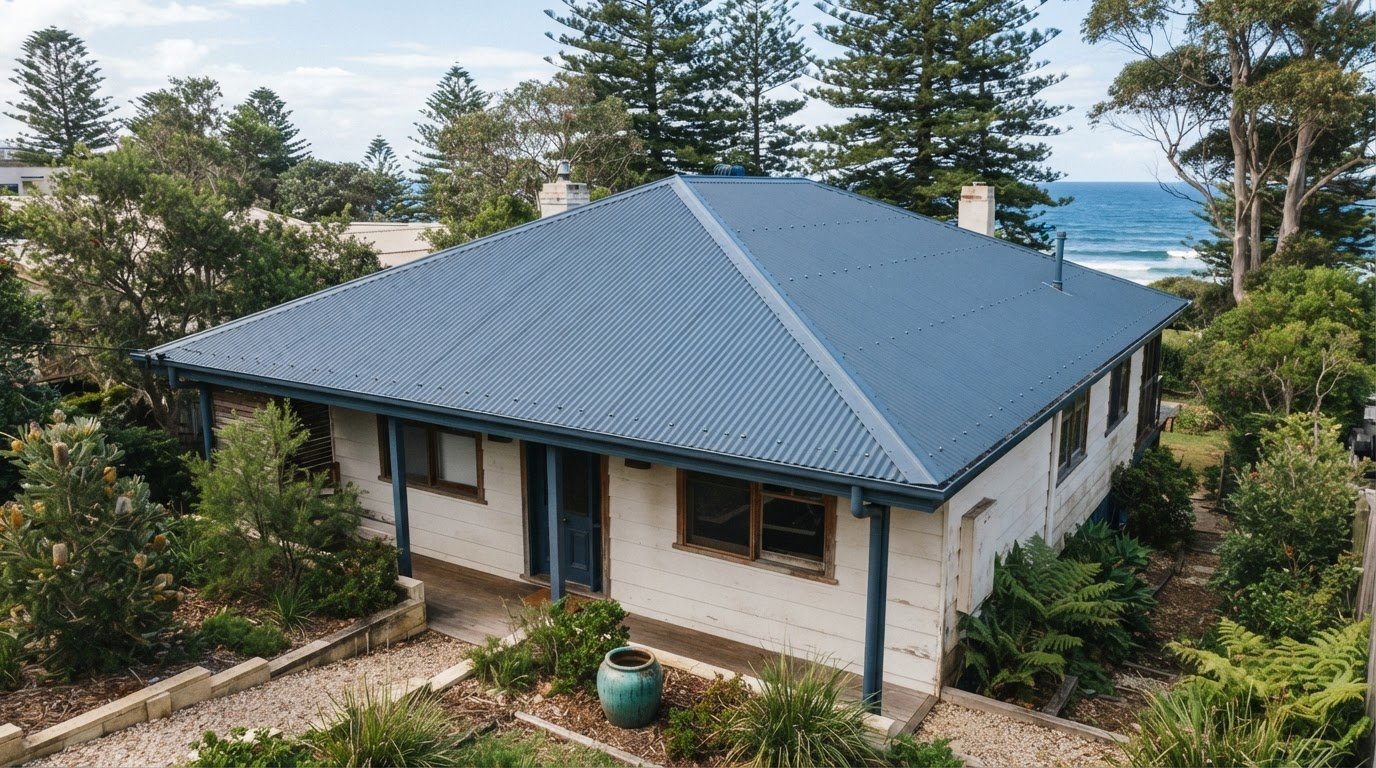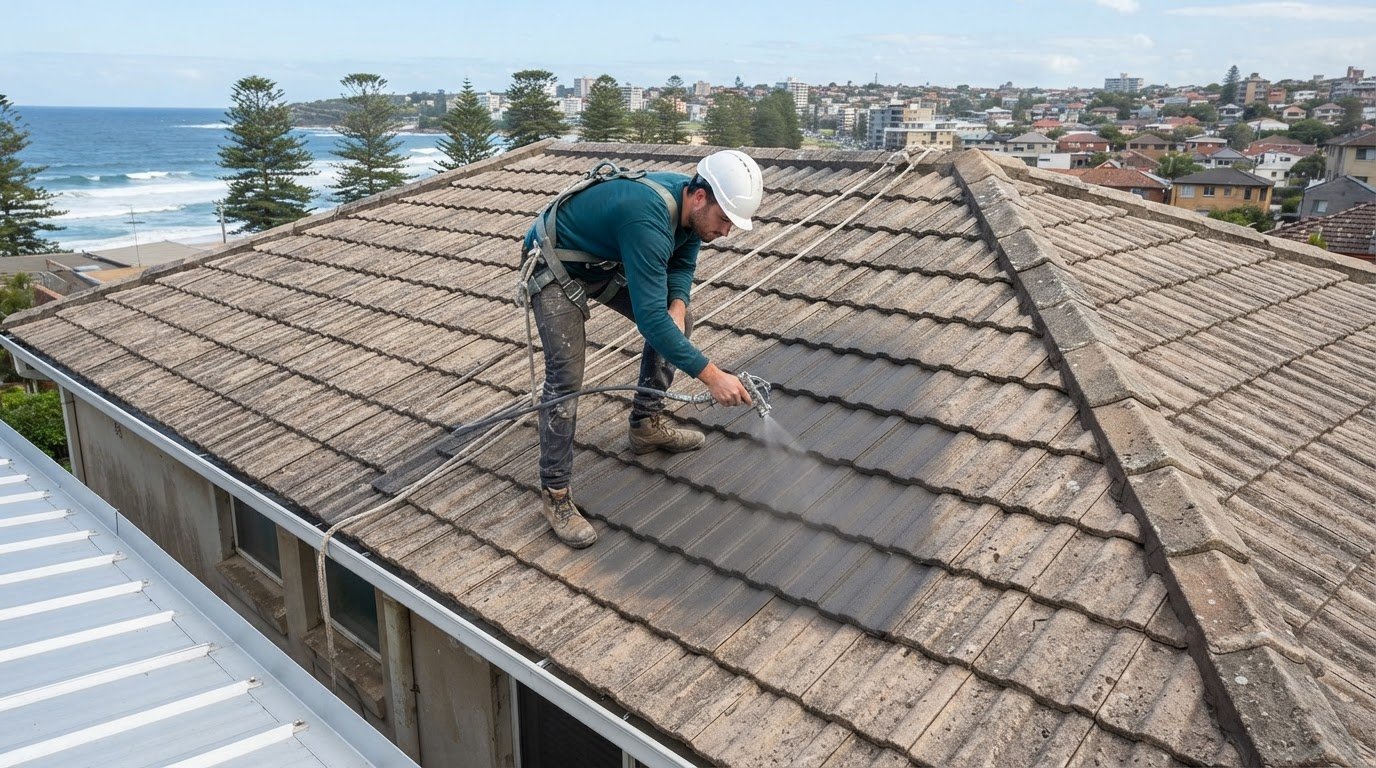
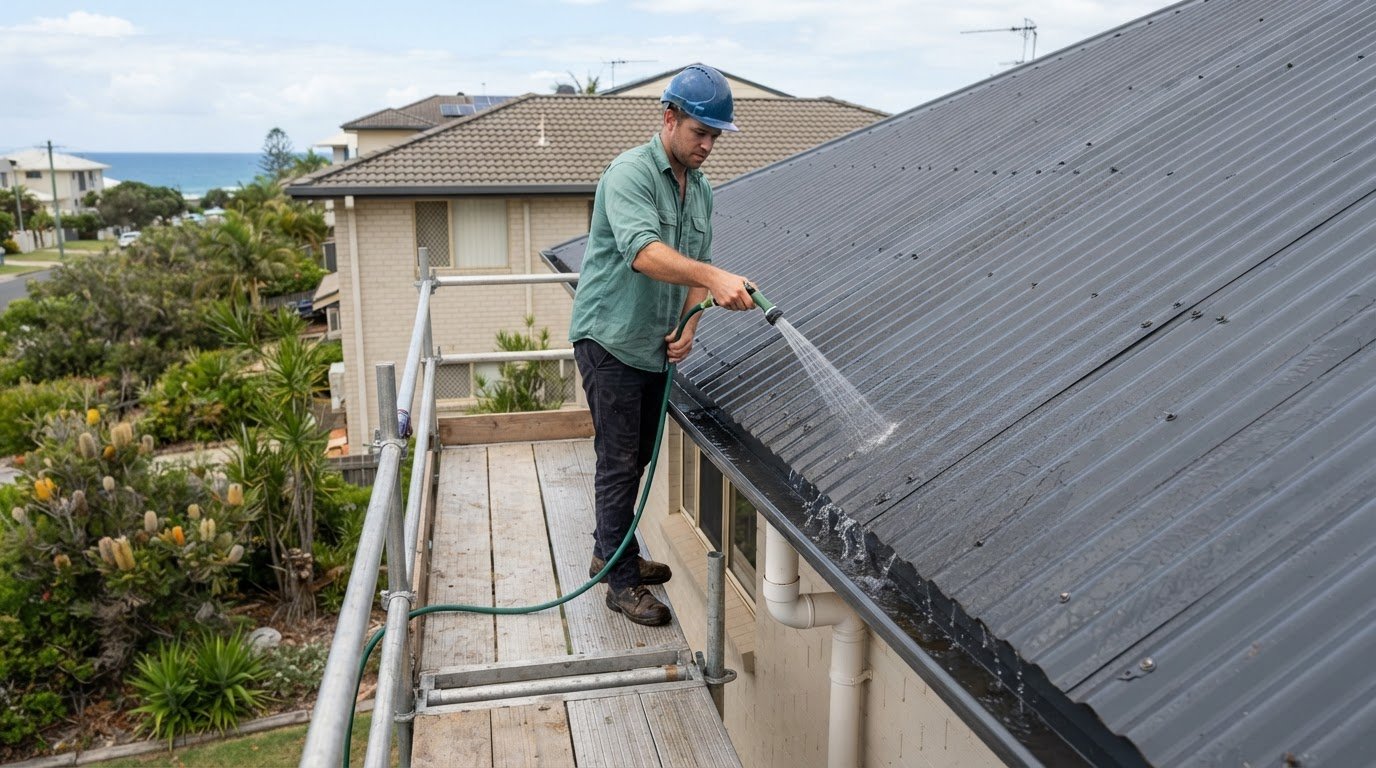
Knowing how to maintain your new Colorbond roof starts with an annual clean for most homes. If your roof is regularly exposed to coastal salt spray, rinse it every three months to remove salt before it builds up. A gentle wash with clean water is usually enough.
Rain washes some dirt from a roof, but sheltered areas, salt spray and debris can still need attention. This guide covers cleaning frequency and suitable methods, as well as managing salt, moss, lichen and other buildup. You’ll also find practical checks to help protect the roof’s finish and keep water draining properly.
Key Takeaways
- Spot early signs of roof wear by looking for loose fasteners, corrosion, debris and panel damage during visual checks.
- Choose gentle cleaning methods that protect the Colorbond coating, and avoid abrasive tools or harsh chemicals.
- Adjust roof washing for coastal exposure so salt does not accumulate on sheltered surfaces and fittings.
- Recognise when moss, lichen or mould may be affecting drainage, and address the buildup before moisture lingers.
1. How Often Should I Clean My Colorbond Roof?
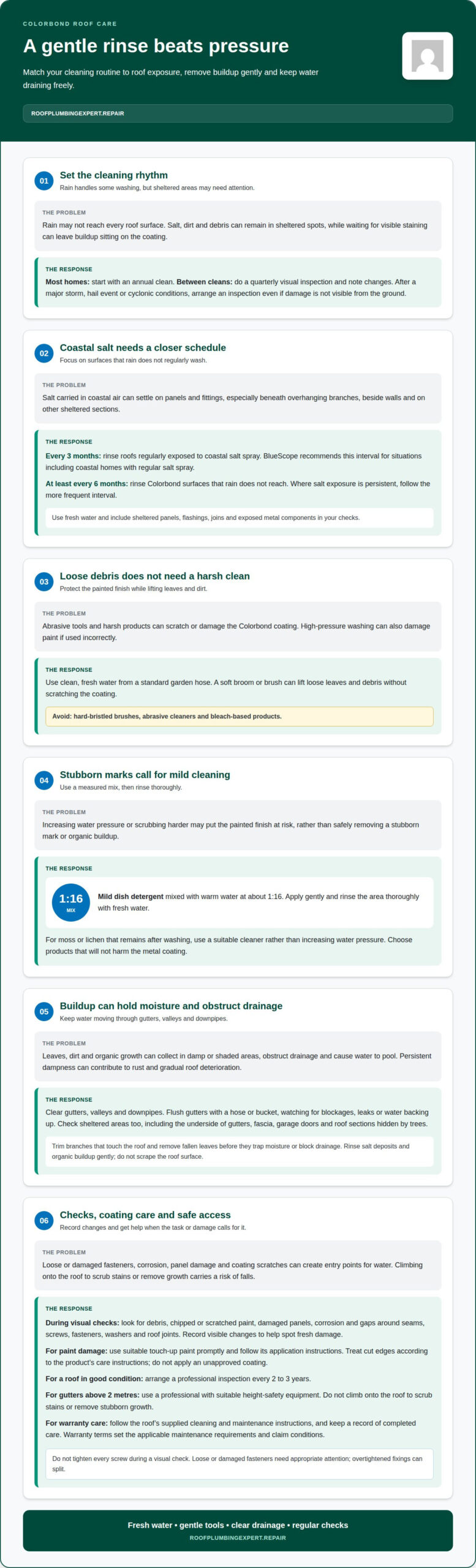
Regular cleaning and maintenance checks can help keep a Colorbond roof in good condition. Add a quarterly visual inspection to spot changes between cleans. After a major storm, hail event or cyclonic conditions, arrange an inspection even if damage isn’t visible from the ground. A practical routine for how to maintain your new Colorbond roof starts with regular checks.
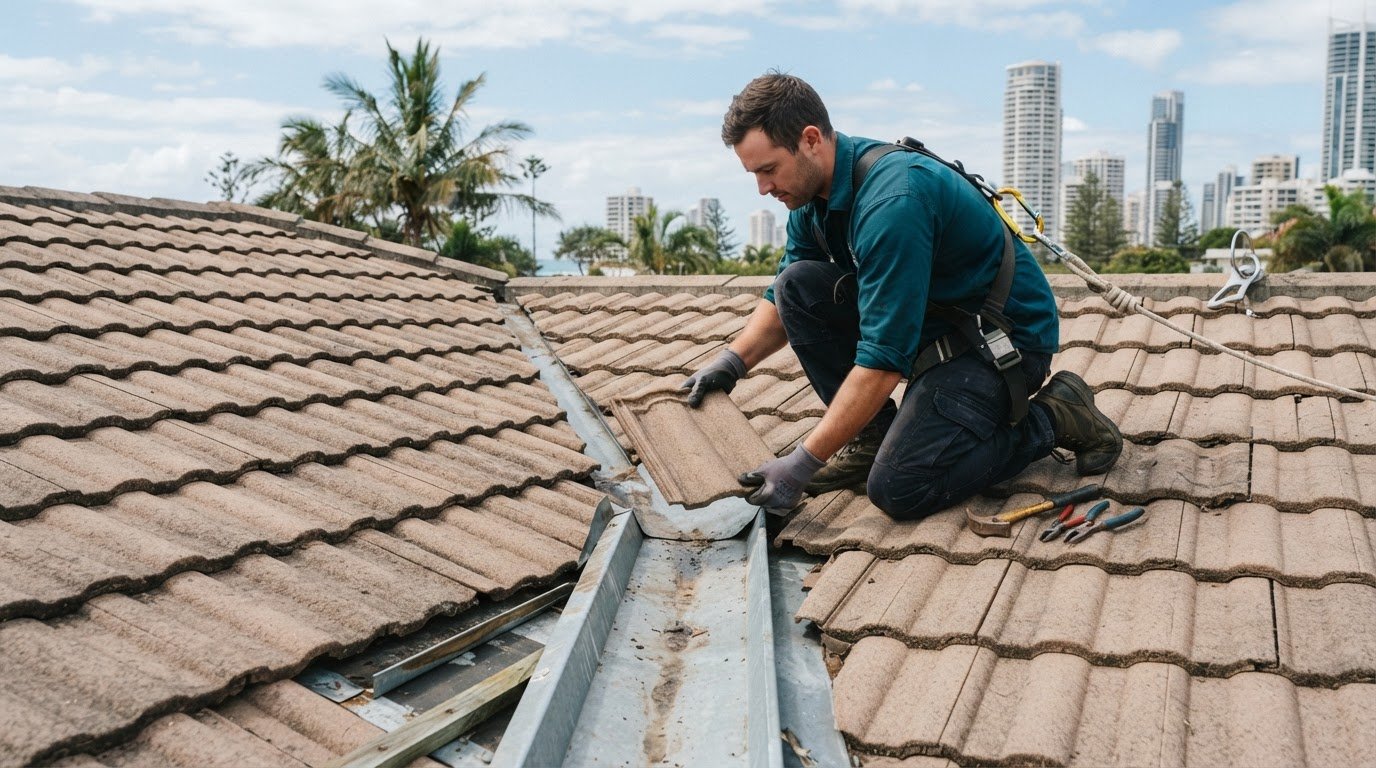
Look for leaves, branches, dirt and other debris on the roof. Check for chipped or scratched paint, damaged panels, corrosion and gaps at seams. Pay close attention around screws, fasteners, washers and roof joints, where corrosion or movement may let water in. Trim branches that touch the roof, as they can scrape the coating and drop debris.
Colorbond expands and contracts as temperatures change. This movement can separate seams, while fasteners and washers may loosen or tighten over time. Loose fixings can let in water and dirt, while overtightened ones can split. Don’t tighten every screw during a visual check. Loose or damaged fasteners need appropriate attention to avoid making the problem worse. Knowing how to maintain your new Colorbond roof also means recognising when a fixing needs professional attention.
To maintain warranty validity, follow the cleaning and maintenance instructions supplied for your roof, and keep a record of completed care. The warranty terms set the applicable maintenance requirements and conditions for a claim.
For scratches, chips or worn paint, use suitable touch-up paint promptly and follow its application instructions. Treat cut edges and other paint damage according to the product’s care instructions, rather than applying an unapproved coating.
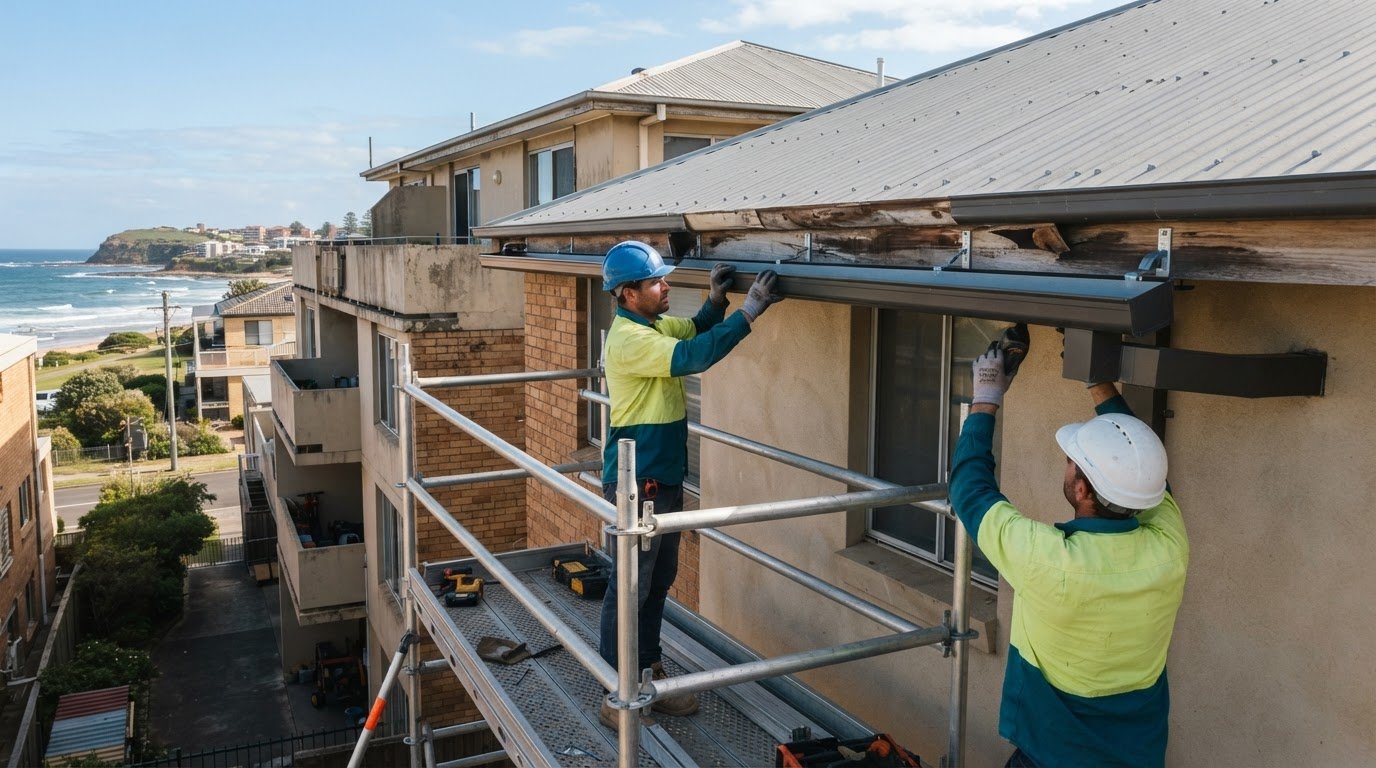
Keep gutters and valleys clear of leaves and debris so water can drain freely. Check flashings and roof fasteners for visible gaps, corrosion or movement. Blocked drainage can cause water to back up, while damaged flashing or loose fixings can create entry points.
Record visible changes during each quarterly check, such as new corrosion near a screw or a mark on a panel after hail. Comparing notes helps distinguish old blemishes from fresh damage and highlights areas that need closer assessment.
2. Pressure washing and suitable cleaning methods
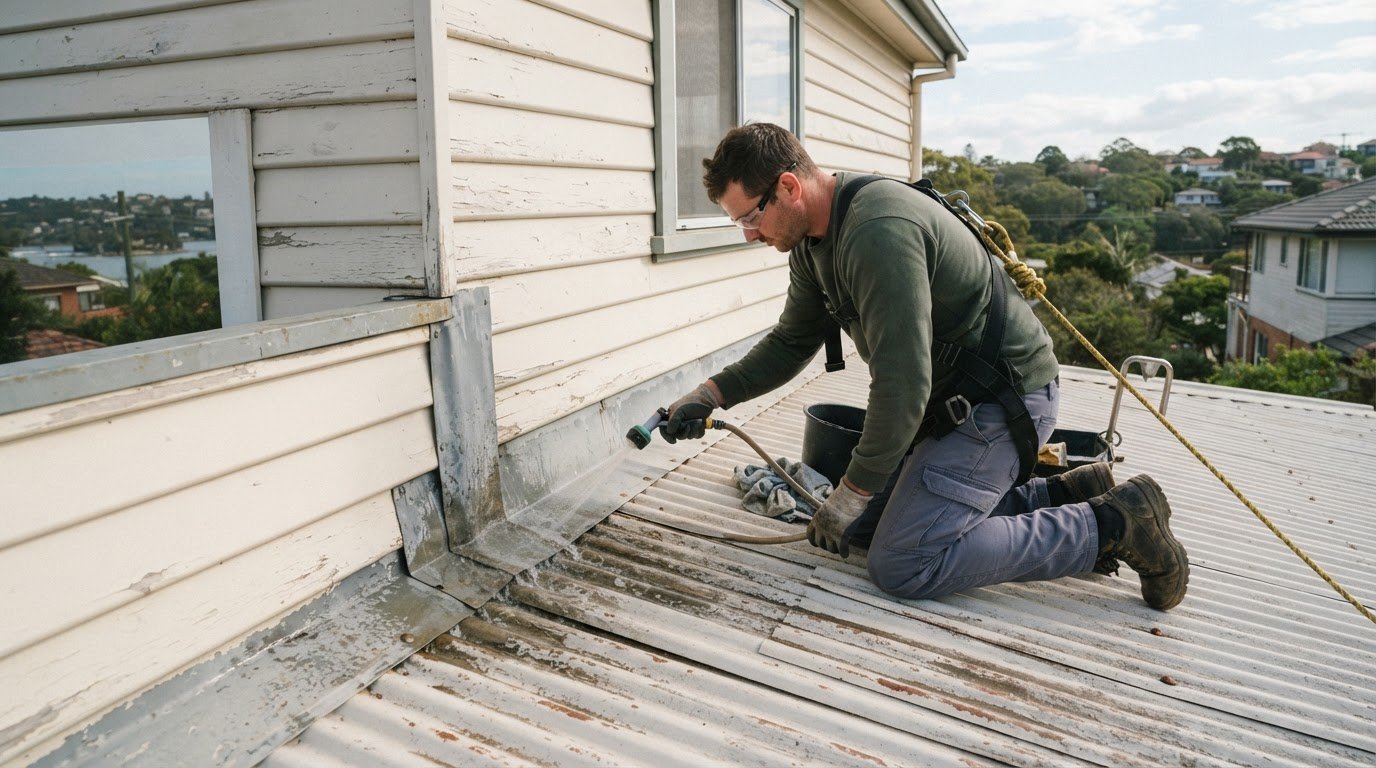
Rain naturally washes many Colorbond roof surfaces, so routine washing may not be needed. When cleaning is necessary, use clean, fresh water from a standard garden hose. A soft broom or brush can lift loose leaves and debris without scratching the coating. Avoid hard-bristled brushes, abrasive cleaners and bleach-based products, which can damage the painted finish.
For stubborn marks, use mild dish detergent mixed with warm water at about 1:16. Apply it gently, then rinse the area thoroughly with fresh water. Choose products that remove dirt, lichen or mould without harming the metal coating. High-pressure washing can damage the paint if used incorrectly, so a garden hose is the safer choice for routine rinsing.
Clear leaves and dirt from gutters and downpipes so water can drain freely. Flush them with a hose or bucket, watching for blockages, leaks or water backing up. Check sheltered areas too, including the underside of gutters, fascia, garage doors and roof sections hidden by trees. These areas may not get rinsed by rain.
During seasonal inspections, look for new debris or buildup after heavy rain and storms. Arrange a professional inspection every two to three years if your Colorbond roof is in good condition. Roof work carries a risk of falls. For gutters above two metres, use a professional with suitable height-safety equipment. Don’t climb onto the roof to scrub stains or remove stubborn growth.
Salt deposits and organic buildup should be rinsed or removed gently, without scraping the roof surface. If moss or lichen remains after washing, use a suitable cleaner rather than increasing water pressure. Where cleaning reveals a leak or damaged coating, roof leak detection and repair can address the underlying issue before water causes further damage.
3. Coastal roof maintenance and salt exposure
Salt carried in coastal air can settle on exposed roof panels, including areas rain doesn’t regularly wash. Rinse Colorbond surfaces that rain doesn’t reach with clean water at least every six months. BlueScope recommends washing Colorbond roofs every three months in situations including coastal homes regularly exposed to salt spray. Follow the more frequent interval where salt exposure is persistent.
Pay attention to sheltered sections, such as roof areas beneath overhanging branches or beside walls. Salt can build up where rain has limited access and remain on the surface between showers. A freshwater rinse helps remove residue before it sits on the coating for an extended period. Include flashings, joins and other exposed metal components in your visual check.
After rinsing, inspect the panels and nearby fittings for corrosion, chipped paint or scratches. Check around fasteners and roof joints, where coating damage can expose the metal. Salt buildup may be less obvious than leaves or dirt, so look for residue on sheltered surfaces rather than relying only on the roof’s appearance from the ground.
Keep branches from touching the roof and remove fallen leaves before they trap moisture or block drainage. Check gutters for salt residue and debris, then make sure water can flow towards the downpipes. Lichen and other growth on damp, shaded sections also need attention because they can hold moisture against the surface.
Make coastal exposure part of your regular maintenance schedule, rather than waiting for visible staining. Note which roof sections receive little rain and include them in each freshwater wash. After severe weather, inspect for new scratches, loose fittings or panel damage that may need repair. Consistent rinsing and targeted checks help limit salt buildup and reveal early signs of corrosion.
4. Moss, lichen, mould and dirt buildup
Moss, lichen and dirt can collect where a Colorbond roof stays damp or sheltered. Overhanging branches, shaded sections and debris-filled channels can hold moisture against the coating. This buildup can obstruct drainage and cause water to pool on the roof. Standing water and persistent dampness can contribute to rust and gradual roof deterioration.
Check gutters, valleys and downpipes for leaves, dirt and organic growth. Moisture trapped in blocked gutters can encourage moss, lichen and mould, while dampness around the gutter edge can contribute to fascia rot. Clear accumulated material so water can drain freely. Also prevent soil and mulch from building up against COLORBOND® steel products, where retained moisture can affect adjacent surfaces.
Remove loose leaves and dirt gently with clean water and, where appropriate, a soft brush. Avoid scraping growth with sharp tools or applying excessive pressure, as either can damage the protective coating. Don’t use bleach or harsh chemicals on Colorbond roofing. If lichen or mould remains after gentle cleaning, use a product suitable for the metal coating and follow its directions. Stubborn or widespread growth needs careful assessment before more intensive cleaning.
Look for recurring growth in the same valley, gutter or shaded panel after cleaning. Its return can point to ongoing moisture retention, poor drainage or nearby vegetation, rather than a surface-cleaning problem alone. Address the cause, then check for corrosion or paint damage beneath the buildup. Moss or lichen by itself doesn’t establish that roof replacement is needed; the condition of the panels, coating and drainage matters. For persistent deterioration, arrange an assessment of your Colorbond roofing and the affected roof areas.
Roof Plumbing Expert: Colorbond Roofing
Roof Plumbing Expert can help if cleaning reveals damaged panels, persistent leaks or deterioration that needs more than routine maintenance. Its Colorbond Roofing and Roof Restoration & Repointing services address roofing concerns, while Roof Leak Detection & Repair can investigate water entry. Gutter & Downpipe Installation can help when drainage needs attention.
Consider professional help if corrosion is spreading, paint damage keeps returning, or moss and moisture point to ongoing drainage problems. A roofing assessment can identify whether the issue needs a repair, restoration or other roofing work, rather than more cleaning. This is especially helpful when damage is difficult to inspect safely from the ground.
Contact Roof Plumbing Expert for help with your Colorbond roof.
Make roof care part of your home routine
A simple maintenance record can make future decisions clearer. Note the date of each inspection, where you spotted a change and whether it returned after cleaning. Photos taken from the same safe viewing point can help you compare roof areas over time. This turns “how to maintain your new Colorbond roof” into a practical routine, rather than a one-off task.
If cleaning alone won’t resolve a change, assess the underlying roof condition. Persistent water entry, recurring dampness or visible damage may need attention beyond surface maintenance. Roof Plumbing Expert can help determine the next step for your Colorbond roof and related drainage concerns.
Keep your notes handy so you can clearly describe what you’ve observed. Contact Roof Plumbing Expert to discuss your roof and move forward with a clear plan for its care.
Frequently Asked Questions
How Often Should I Clean My Colorbond Roof?
For a typical home, plan an annual clean, then adjust for salt, shade and debris. In Mainly Beach, consider whether sea spray reaches exposed roof sections or sheltered areas stay dirty after rain. Those conditions may call for more frequent rinsing. Keep a brief maintenance record so you can spot changes in buildup and tailor the routine to your roof.
What Does Good Maintenance Look Like Year-Round?
Good maintenance means responding to changing conditions, not relying on one annual clean. After autumn leaf fall, check whether roof valleys and gutters are collecting debris. Following severe weather, look for new damage from the ground. In coastal locations, consider salt exposure between scheduled washes. A dated note or photograph can help track whether a concern changes over time.
What Happens If You Neglect Your Roof?
Neglected debris can restrict drainage, while trapped moisture may encourage organic growth and contribute to corrosion. Damage to a small area can go unnoticed until water enters through a joint or fastener. In Mainly Beach, salt deposits can remain on surfaces sheltered from rain. Spotting changes promptly helps distinguish a simple cleaning issue from damage that needs repair.
What Should You Do During Routine Maintenance?
Use each maintenance visit to note the roof’s condition, not just remove visible dirt. From a safe position on the ground, record changes in panels, joints, gutters and downpipes. Note where shade, overhanging branches or sheltered sections coincide with recurring buildup. If you find a new leak or damaged roof component, arrange an assessment rather than attempting a repair that could make the problem worse.
How often should a new Colorbond roof be cleaned and inspected in Australia?
For most Australian homes, clean the roof and complete a thorough maintenance check once a year. A quarterly visual inspection can help identify new issues between checks. Coastal homes regularly exposed to salt spray need more frequent washing, with a three-month interval recommended for these conditions. After a major storm or hail event, arrange an inspection even if damage isn’t visible from the ground.
What is the recommended way to wash and rinse a Colorbond roof?
Use clean, fresh water from a standard garden hose for routine rinsing. For stubborn marks, gently apply mild dish detergent mixed with warm water at about 1:16, then rinse the area thoroughly. A soft brush can help lift dirt without abrading the coating. Avoid bleach, abrasive cleaners and hard-bristled brushes, and don’t use high pressure that could damage the finish.