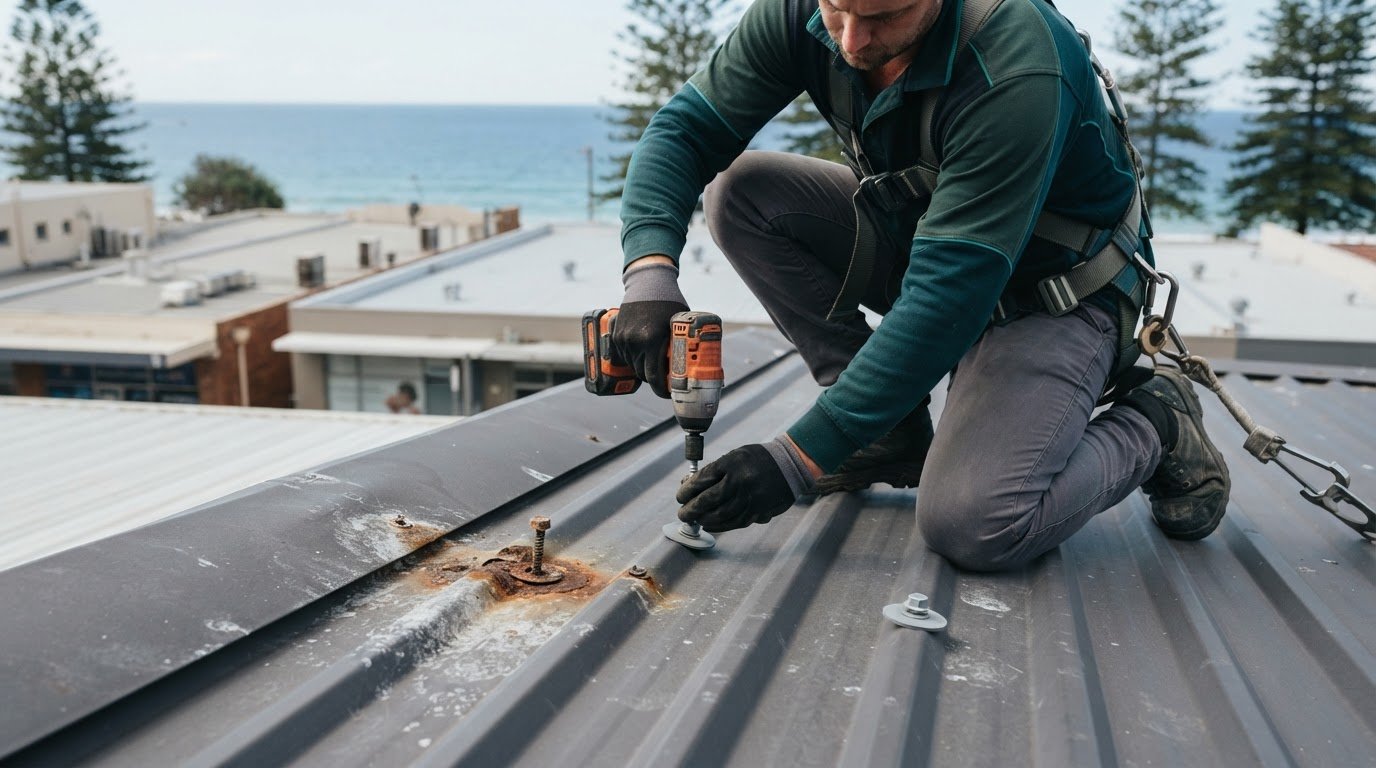
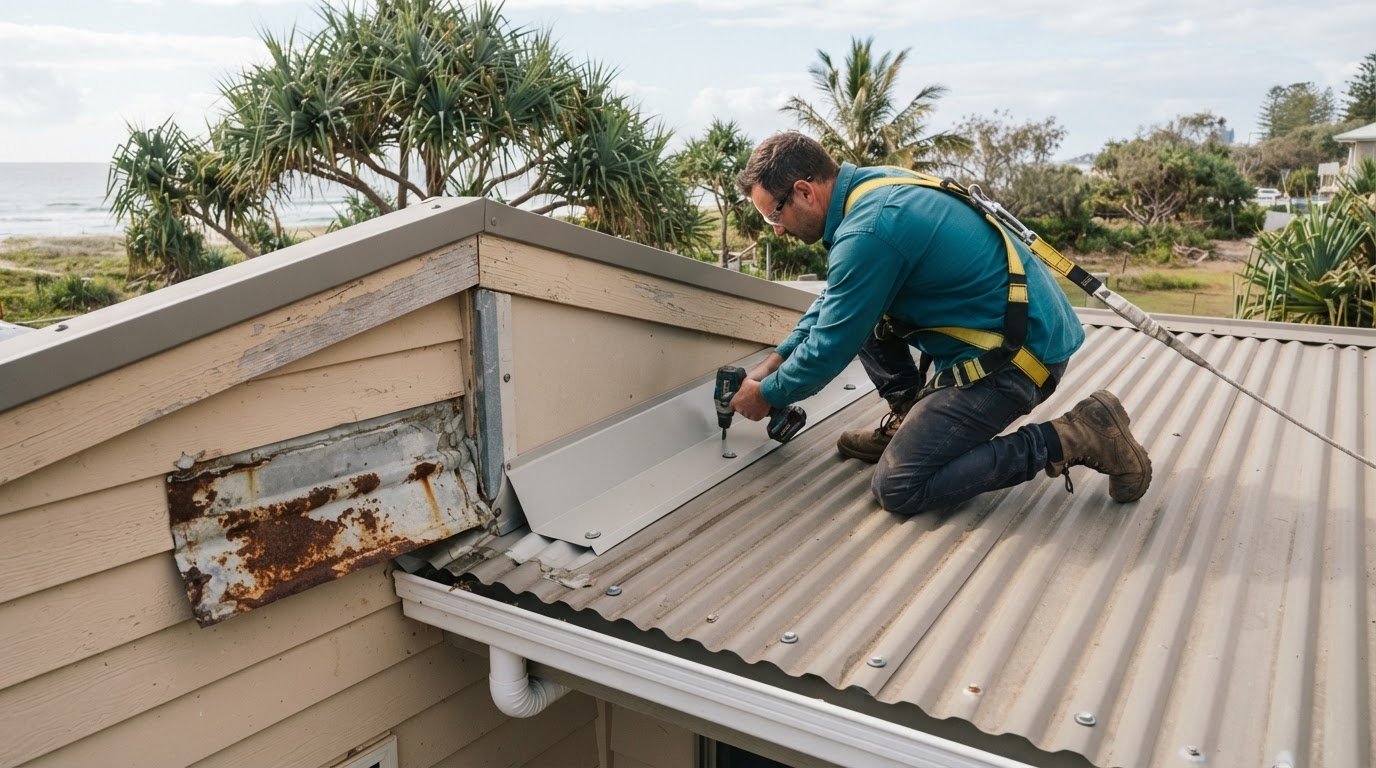
A patch can stop a drip without preventing another leak. Long term solutions for a leaking roof start by finding the source, then repairing the affected tiles or metal sheets, flashing or other damaged parts. A standard repair for a localised leak usually takes between 2 and 5 hours once the repair team is on site.
It’s understandable to want long term solutions for a leaking roof, not another temporary patch. For homeowners in Mainly Beach, identifying the cause and extent of the damage helps determine whether a targeted repair or broader work is needed.
This guide explains how leaks in tiled and metal roofs are repaired, what can cause them and how to tell whether a local repair or restoration is the better long-term approach. You’ll also learn what affects repair time and how maintenance can help reduce recurring leaks.
Key Takeaways
- Identify where water is entering before repairing a tiled or metal roof, so the fix addresses the source rather than just the visible damage.
- Use the repair scope to understand how long roof work may take, and act promptly to limit damage to ceilings, insulation and timber.
- Assess the roof’s age and the extent of deterioration to decide whether targeted repairs or broader restoration is the more practical approach.
- Keep gutters clear and arrange regular roof inspections to help catch wear early and reduce the chance of leaks returning.
Can you repair roof leaks in both tiled and metal roofs?
Yes. Leaks in tiled and metal roofs can both be repaired, but lasting results depend on finding the source first. Australian building codes and standards can apply to repairs and replacement; requirements depend on the work and its location.
Find and Repair the Underlying Cause
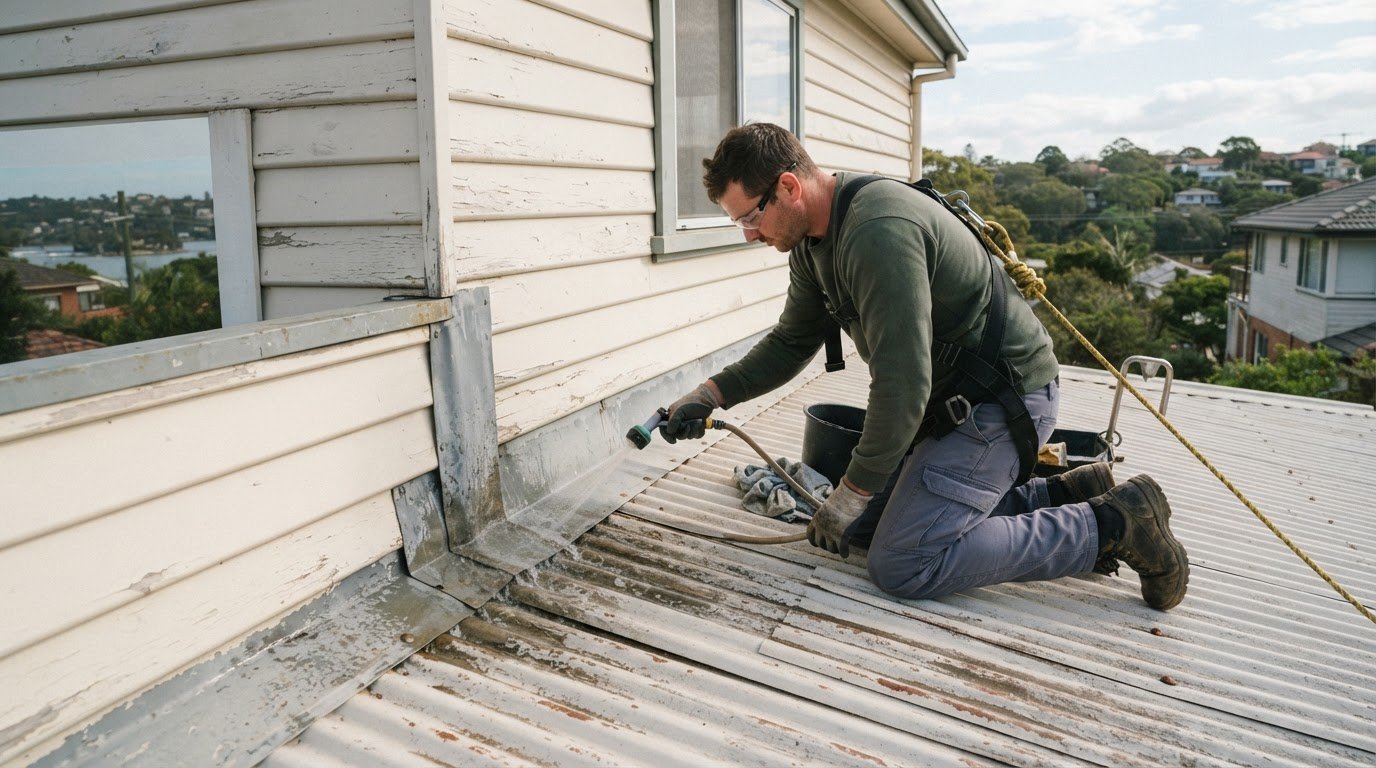
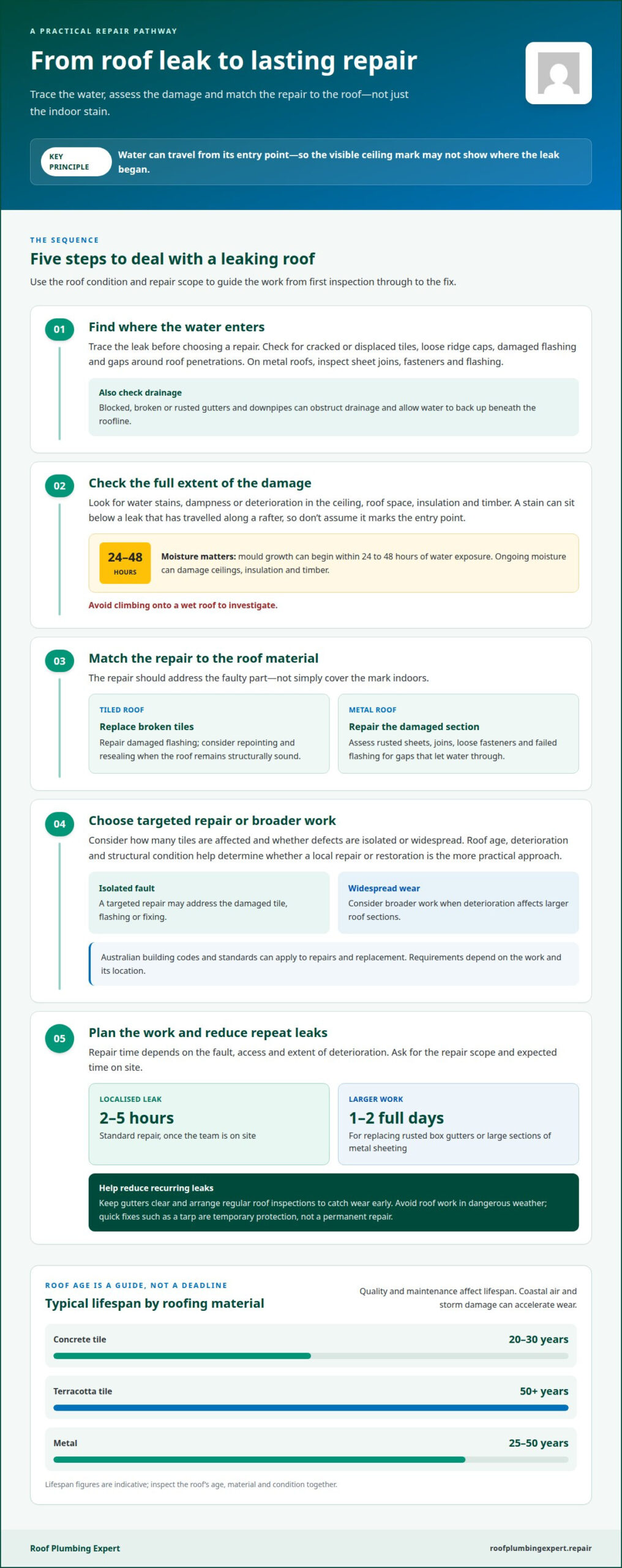
Trace the leak before choosing a repair, because water can travel from its entry point. Look for cracked tiles, loose ridge caps, damaged flashing and gaps around roof penetrations. On metal roofs, check sheet joins, fasteners and flashing for damage or deterioration. Inspect gutters too: blockages can push rainwater beneath tiles or sheets during heavy rainfall. Replacing a broken tile or repairing damaged flashing addresses the fault, unlike patching only the indoor stain.
- Compare common causes across roof materials. On tiled roofs, including terracotta, broken or displaced tiles and defective ridge caps can let water through. Metal roof leaks can start at damaged sheets, joins, fasteners or flashing. Blocked, broken or rusted gutters and downpipes can obstruct drainage, allowing water to back up under the roofline. Clear obstructions, then look for separate faults such as cracked tiles or failed flashing.
Assess Damage From Leaking Roofs
Check the ceiling, roof space, insulation and timber for water stains, dampness or deterioration. A ceiling mark can sit below a leak that has travelled along a rafter, so don’t assume it shows the entry point. Persistent moisture can damage building materials and create conditions for mould; growth can begin within 24 to 48 hours of water exposure. Avoid climbing onto a wet roof to investigate.
- Choose a repair method that matches the damage and roof condition. For tiled roofs, long-term options include replacing broken tiles and repairing damaged flashing. If the roof remains structurally sound, restoration work such as repointing and resealing may also be suitable. Consider how many tiles are affected and whether defects are isolated or widespread. These signs help distinguish a targeted repair from broader work.
- Consider applicable Australian building codes and standards for repairs and replacement. Requirements depend on the work and its location, so a small repair and a roof replacement may involve different considerations. Include the roof material and scope of work when planning the job.
Repair durations and the consequences of ignoring leaks
Repair time depends on whether the leak is localised or affects larger roof sections. Use the repair scope and visible water damage to identify what needs attention first.
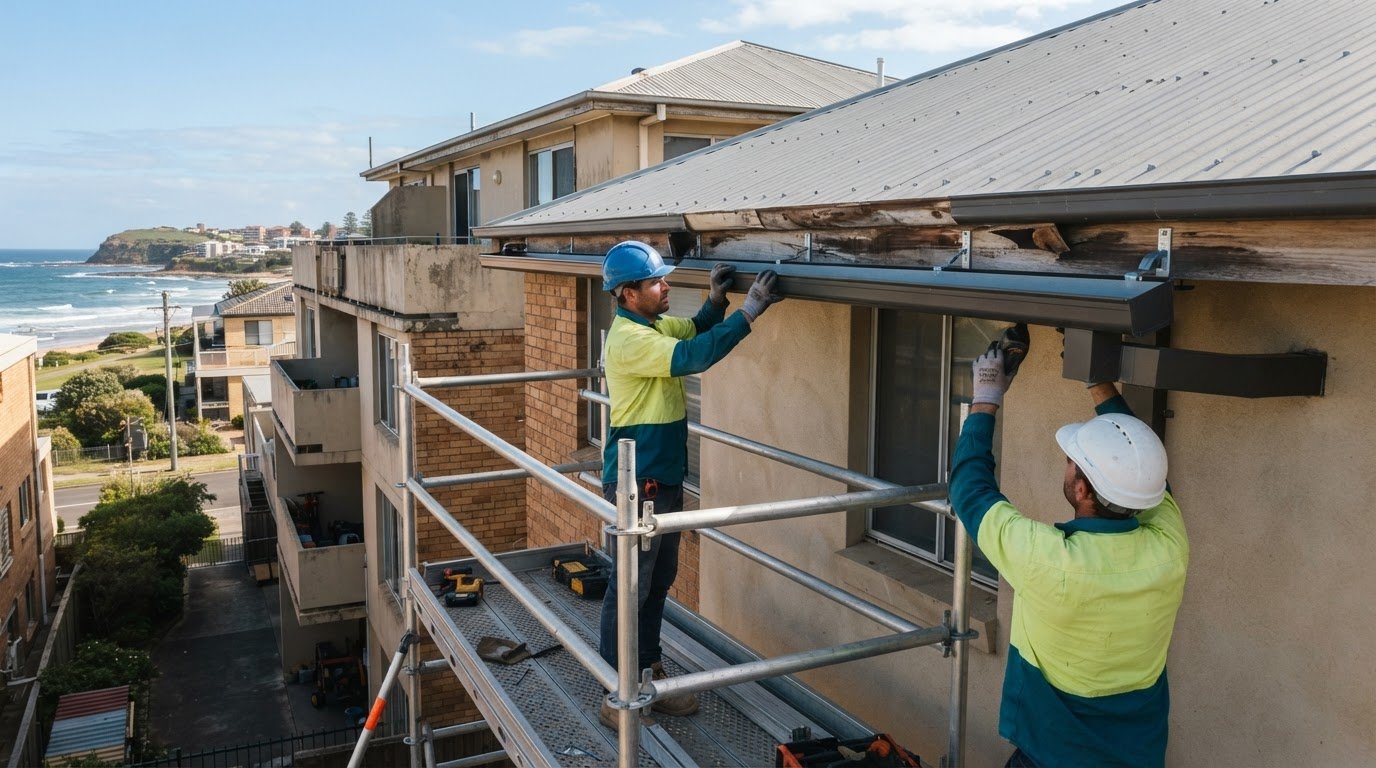
- Ask for the repair scope and expected time on site. A standard repair for a localised roof leak usually takes between 2 and 5 hours once the repair team is on site. Replacing rusted box gutters or large sections of metal sheeting may take 1 to 2 full days. Access, the extent of deterioration and the underlying fault all affect the work required.
Repair Rusted Sheets and Loose Fixings
Have damaged metal sheets and loose fixings assessed as part of the repair. Rust can weaken a sheet, while loose fasteners or failed flashing can leave gaps for water. Replacing a damaged section may take longer than securing an isolated fixing. Make sure the repair addresses the water entry point, not just the stain inside.
Avoid DIY Repairs and Quick Fixes
Stay off a wet roof and avoid roof work in dangerous weather. Roofing is hazardous, and a misjudged step can cause injury or further damage. Roofing cement or silicone sealant may temporarily seal a small, identifiable leak during a dry period between rainfall, but it won’t fix a hidden fault. A tarp offers temporary protection, not a permanent repair.
- Arrange an inspection and ask for a written quote that explains the repair scope, materials and likely duration. Don’t assume an inspection or quote is free; confirm any fee and what it covers before booking. Professional assessment can help identify whether damaged sheets, flashing, gutters or downpipes need attention. For a persistent leak, roof leak detection and repair can help locate the underlying cause.
- Act promptly when water reaches interior materials. Mould growth after water exposure can begin within 24 to 48 hours, while ongoing moisture can damage ceilings, insulation and timber. Record where stains appear and when they worsen, then share those details during the inspection. That information can help distinguish an active roof leak from older water damage.
What causes most roof leaks in Adelaide homes?
Coastal exposure, storms and hot weather can contribute to roof wear. Use the roof’s age, damage and structure to decide whether leak repair, restoration or replacement makes sense.
Check the Lifespan of Roofing Materials
Compare the roof’s age with its material and condition, rather than treating lifespan as a deadline. According to industry figures, concrete tile roofs typically last 20-30 years, terracotta tile roofs 50+ years, and metal roofs 25-50 years, depending on quality and maintenance. Local coastal air and storm damage can accelerate wear, so inspect for rusted metal, cracked tiles and recurring leaks.
- Arrange an inspection that checks the whole roof, not only the ceiling stain. Coastal exposure, winter storms and hot summers can combine with worn roofing components, while rusted sheets or cracked tiles provide direct entry points. A leak appearing after a storm may expose existing deterioration rather than damage only one spot. Record where water appears indoors and compare it with visible roof damage.
Replace Cracked or Broken Roof Tiles
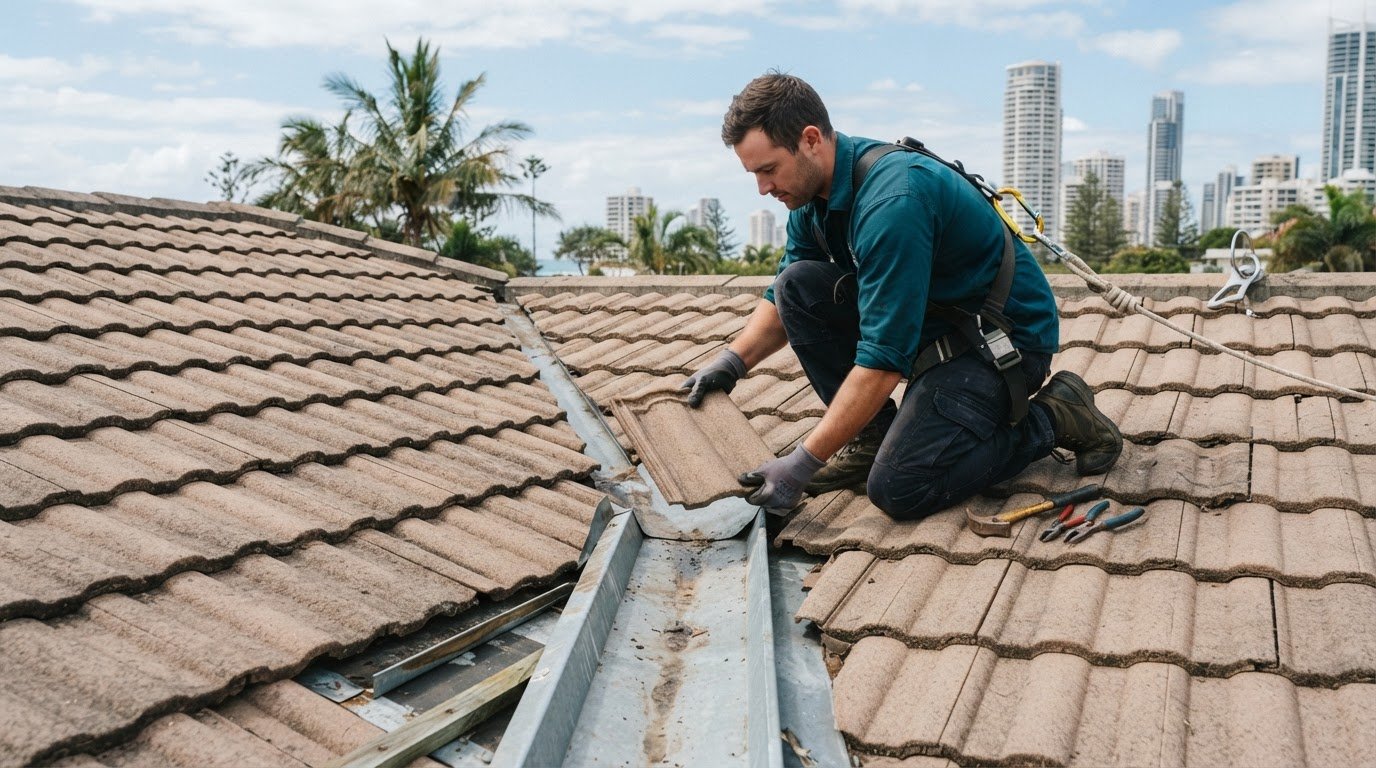
Replace cracked or broken tiles and assess how widespread the damage is. Individual tile replacement becomes less economical when more than 15-20% of tiles are damaged or deteriorating. If damage is limited, replacing affected tiles can address the entry points. If it is widespread, weigh broader restoration or replacement against repeated individual repairs.
Consider Full Restoration
Consider full restoration when a roof is 20+ years old and has multiple issues. If a concrete tile roof is older or a metal roof approaches 40 years, ongoing repairs may become a false economy. These are decision points, not automatic replacement rules: structural condition, the number of faults and the extent of deterioration matter.
Evaluate New Roof Installation
When installing a new roof, removing the old one can support a longer-lasting result. Installing new roofing over an extensively damaged roof can add too much weight to the sub-roof, and the covered roof may rot over time. Include the sub-roof’s condition in the replacement decision rather than judging by the outer surface alone.
Roof restoration and long-term prevention
Restoration can help reduce recurring leaks when the roof’s structure remains sound. For long term solutions for a leaking roof, match preventive measures to the roof’s condition and drainage needs.
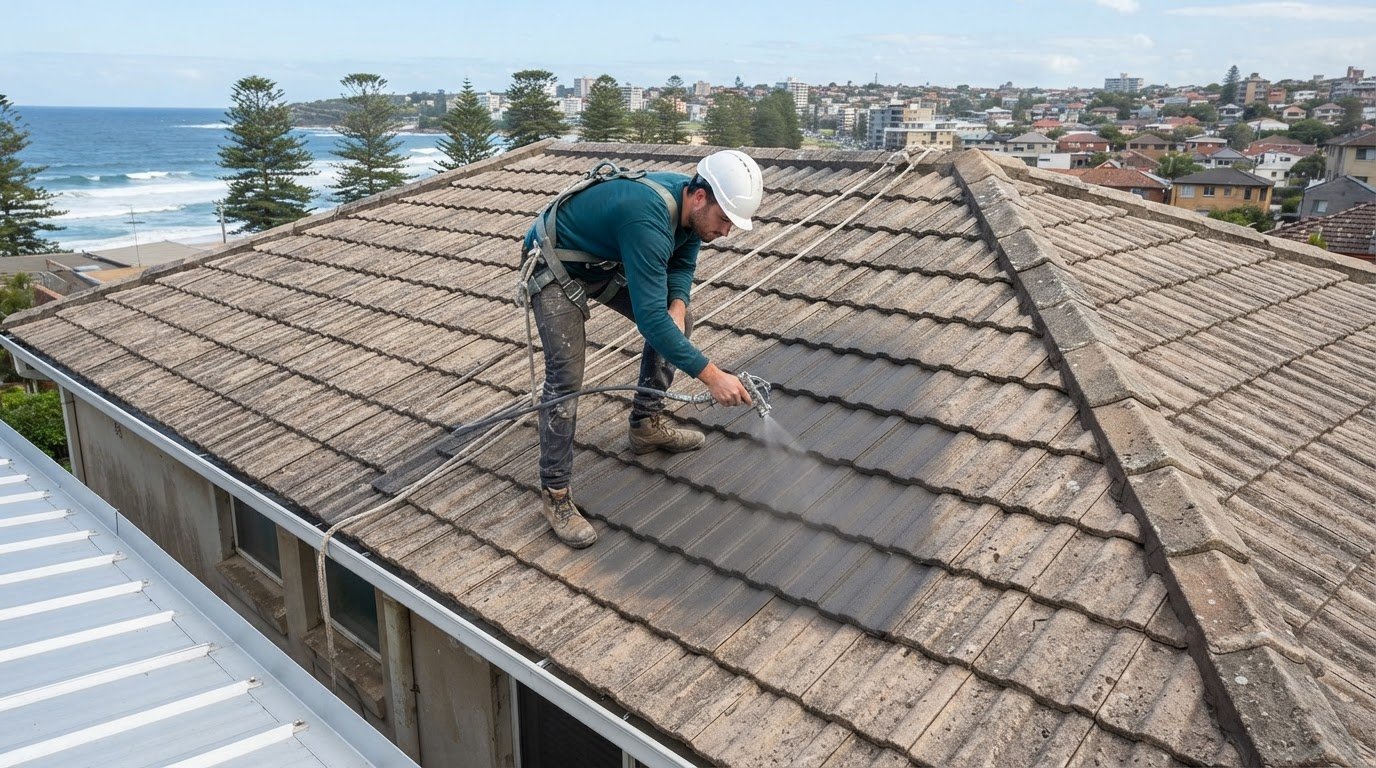
- Assess whether restoration addresses the roof’s actual defects. A sound structure with surface deterioration may suit cleaning, repairs, repointing, resealing or repainting. Restoration can renew the roof surface, but it won’t correct structural damage or an unresolved leak source. Make sure the work scope identifies which faults it addresses and which components need separate repair.
- Arrange a professional inspection before storm season, then use its findings to plan maintenance. Focus on areas prone to water entry, including flashing, roof penetrations and junctions. If a ceiling stain returns after certain weather, record when it appears and where it spreads. Those observations can help distinguish a recurring fault from a newly exposed weak point.
- Keep water moving off the roof by maintaining gutters and downpipes. Leaves and debris can obstruct drainage, allowing water to back up beneath the roofline during heavy rain. If trees overhang the roof, check gutters more often for fallen material. This simple maintenance step supports long term solutions for a leaking roof by addressing drainage before water backs up.
- Plan for roof emergencies without taking unnecessary risks. Don’t climb onto a wet roof or attempt repairs in dangerous weather. If a leak starts during a storm, move belongings away from drips and contain water indoors where safe. Leave roof access and temporary covering to people equipped to work safely in those conditions.
- Use restoration as part of an ongoing prevention plan, not as a substitute for repairing active faults. Record completed work and inspection findings so changes in the roof’s condition are easier to spot later. If you’re considering restoration or repointing, request roof restoration advice and describe the areas needing attention.
Roof Plumbing Expert: Gutter & Downpipe Installation
Roof Plumbing Expert can help when a leak keeps returning, roofing materials are deteriorating or poor drainage sends water back beneath the roofline. Roof Leak Detection & Repair focuses on finding and addressing the source, while Gutter & Downpipe Installation can improve rainwater drainage away from the roof.
For widespread wear on a structurally sound roof, Roof Restoration & Repointing can address surface deterioration and ridge mortar. Colorbond Roofing is an option when metal roofing work is needed. The right service depends on the inspection findings, including roof material, damaged areas and drainage condition.
To discuss a recurring leak or roof restoration for your Mainly Beach home, contact Roof Plumbing Expert.
Take the next step towards a sound roof
A recurring leak is a good reason to look beyond the latest patch. Before arranging work, note where water appears indoors, whether it follows heavy rain, and any changes around the roof or drainage. These details can help focus the discussion on the source and the repair that suits your home.
Choosing long term solutions for a leaking roof means treating the cause, not simply hiding the signs. Start with a clear assessment of the affected area and the roof’s condition, so you can make an informed decision about the work needed.
For help discussing your roof concerns, contact Roof Plumbing Expert. A considered repair plan can help you move forward with greater confidence and protect your home through changing weather.
Frequently Asked Questions
Does Insurance Cover a Leaking Roof?
Insurance cover for a leaking roof depends on the policy terms and the cause of damage. A sudden event and ongoing wear can be treated differently, so read the policy for exclusions, excess and claim notification steps. Photograph interior damage and keep records of maintenance and previous repairs. For a Mainly Beach home, note when the leak first appeared and what weather preceded it.
How do I find exactly where my roof is leaking?
Start inside: note where water first appears, then check whether the mark changes after rain or wind. Look for patterns rather than assuming the ceiling stain sits directly below the entry point. From the ground, record visible damage near roof edges, valleys and penetrations, such as a skylight. Don’t climb onto the roof; share your observations and photos with a roofing professional.
How much does it usually cost to fix a roof leak in Brisbane?
There isn’t one reliable price for every Brisbane roof leak. The cost depends on the roof material, access, the location of the fault and whether the repair involves flashing, sheets, tiles or drainage components. A price for this work depends on the case and is given after a quote request. The assessed scope and materials determine the estimate, not just the visible ceiling mark.
How quickly should a roof leak be repaired?
Arrange a repair as soon as you identify the leak, especially if water is spreading or reaching electrical fittings. While waiting, move belongings away from drips and place a container beneath active leaks. If water is near lights or wiring, avoid touching wet fittings and switch off affected circuits at the switchboard if it’s safe to do so. Don’t enter a wet roof space.
What are the most common causes of a leaking roof in Australia?
Common causes include failed flashing, damaged roof coverings, loose fixings and blocked or faulty drainage. The precise fault varies with roof design: a skylight junction, valley or sheet connection can each provide a path for water. After heavy rain, note which areas show signs of leakage and whether the problem recurs under similar conditions. This record can help narrow down the cause.
How can I identify the source of a roof leak?
Compare indoor clues with the roof’s layout rather than tracing a stain straight upwards. Water can travel along framing before it drips, so note nearby roof features such as a valley, skylight or junction between materials. Check whether the leak appears during wind-driven rain or steady rainfall. A roof inspection can then focus on the likely water path and assess the relevant components.