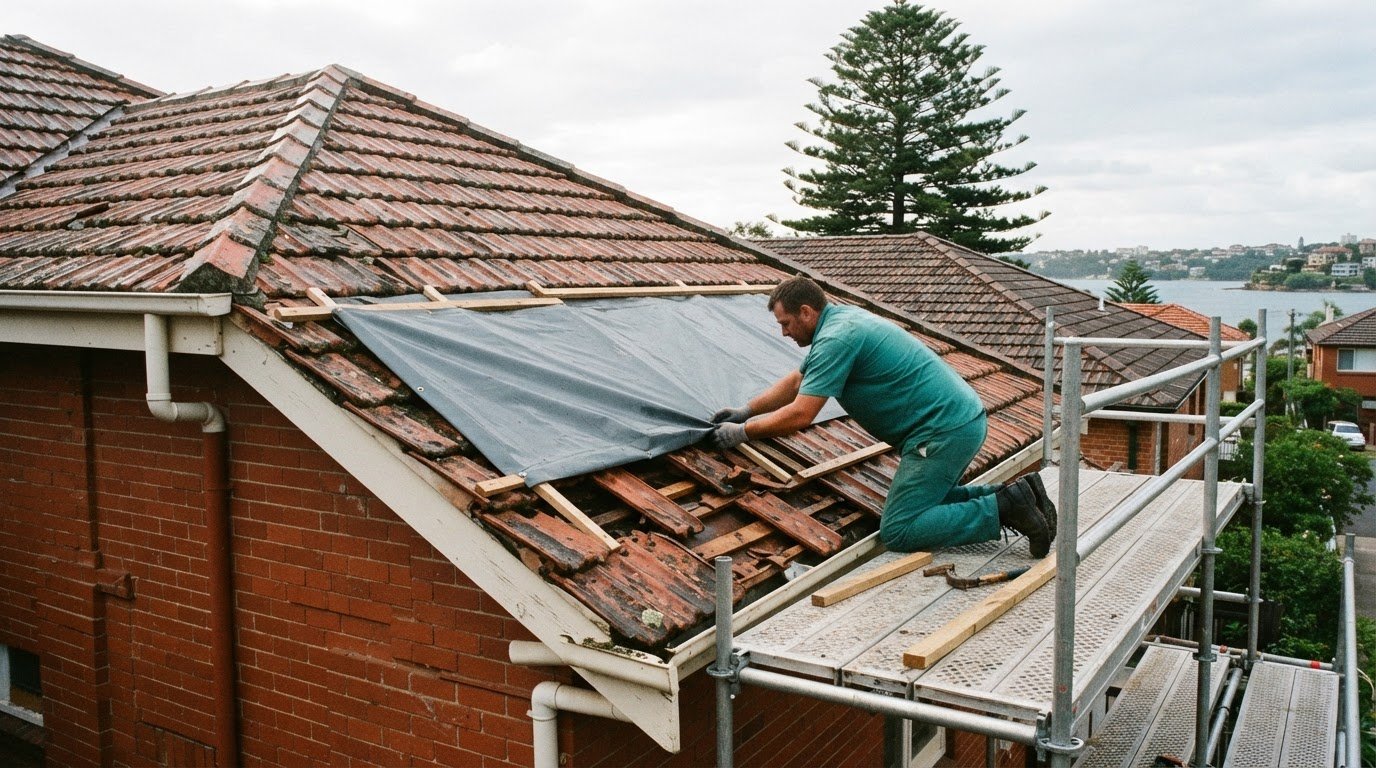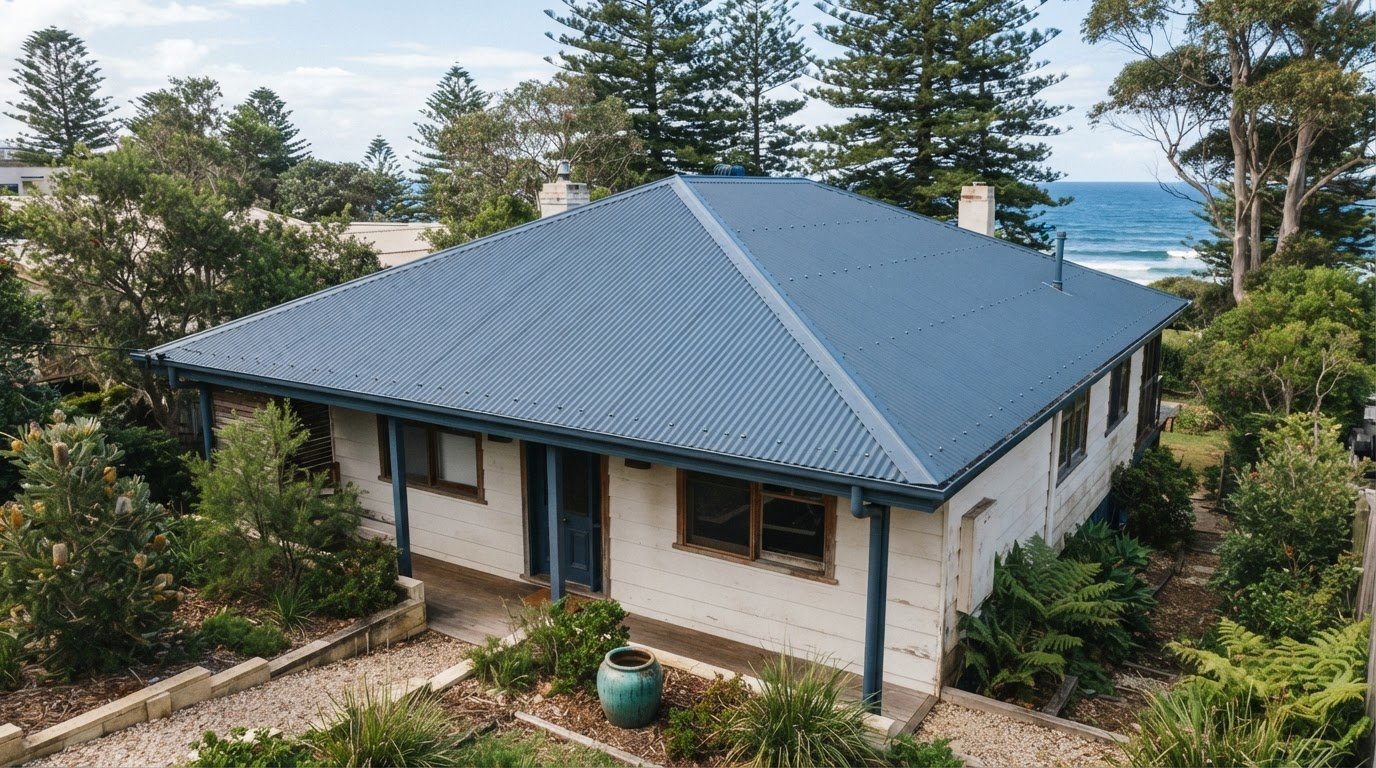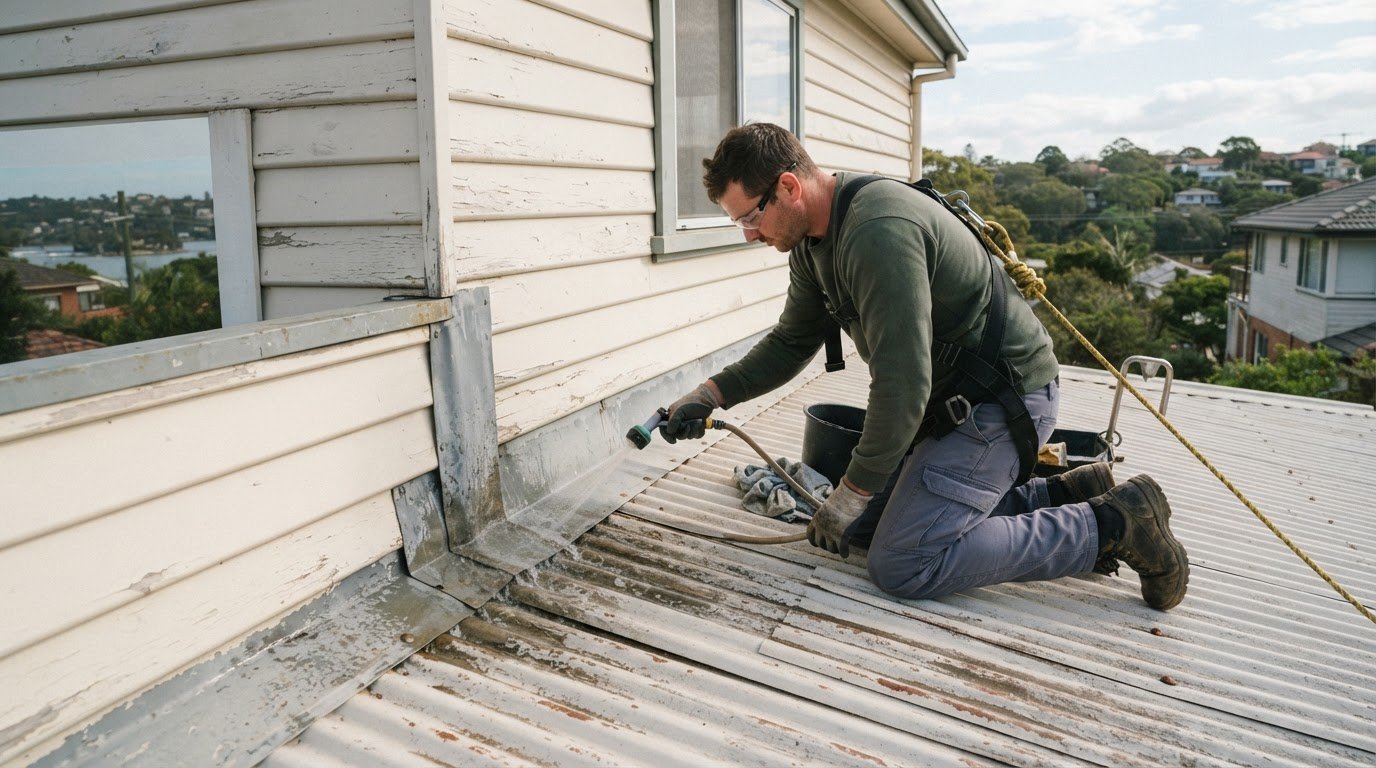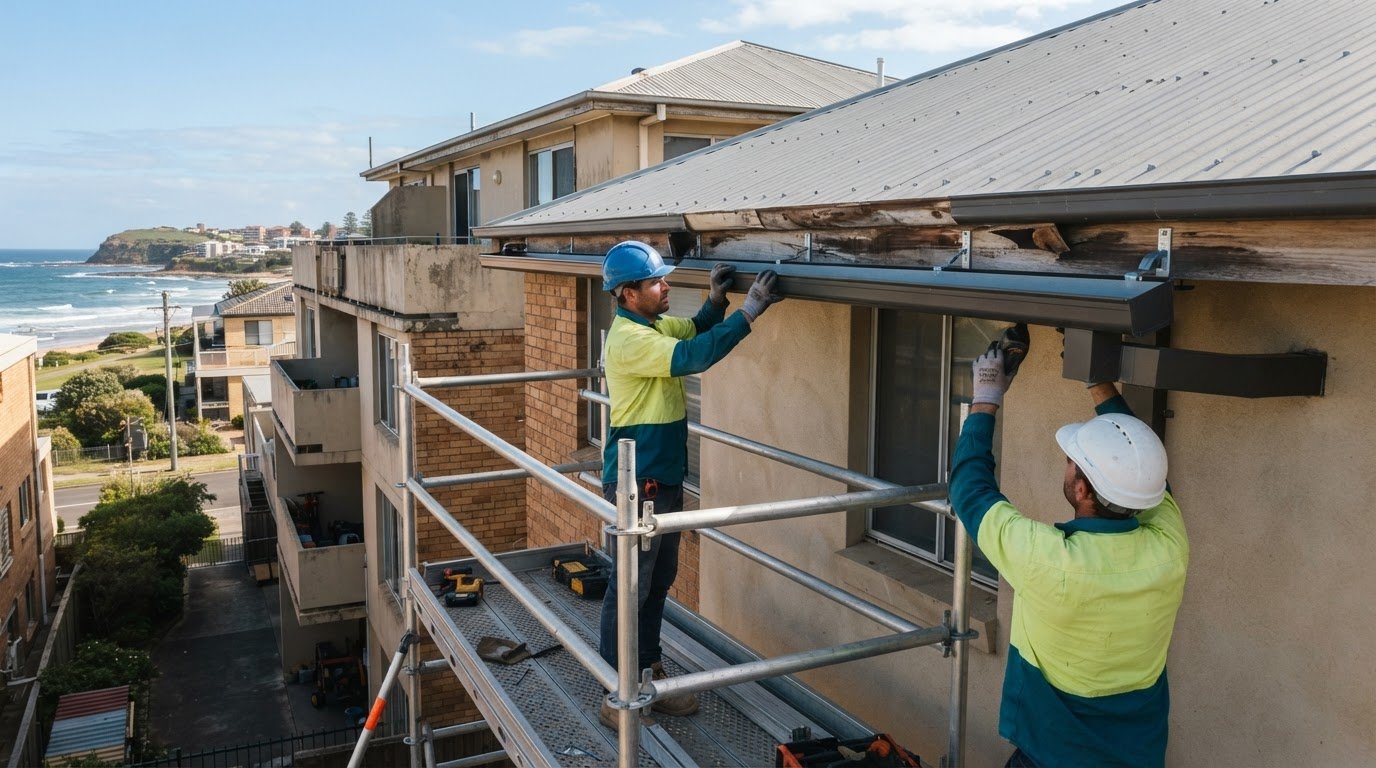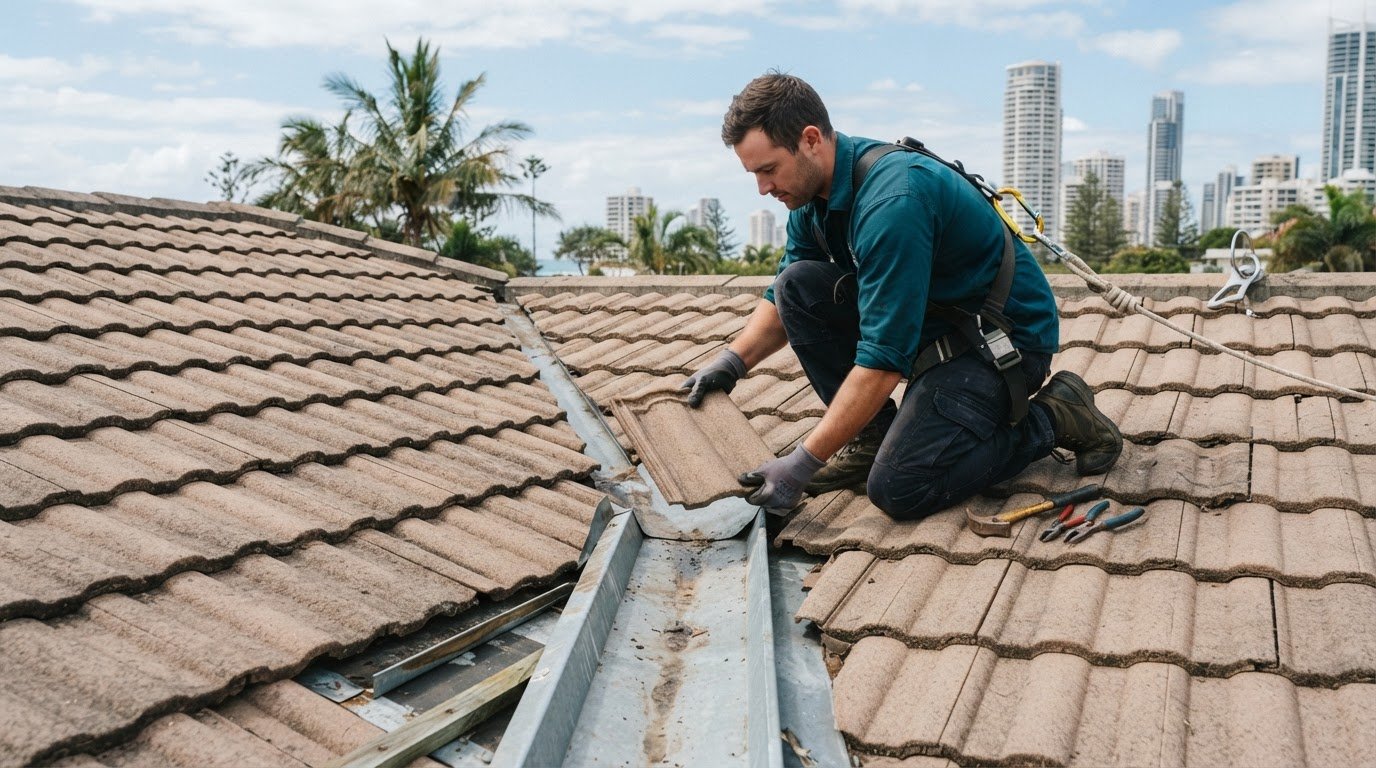
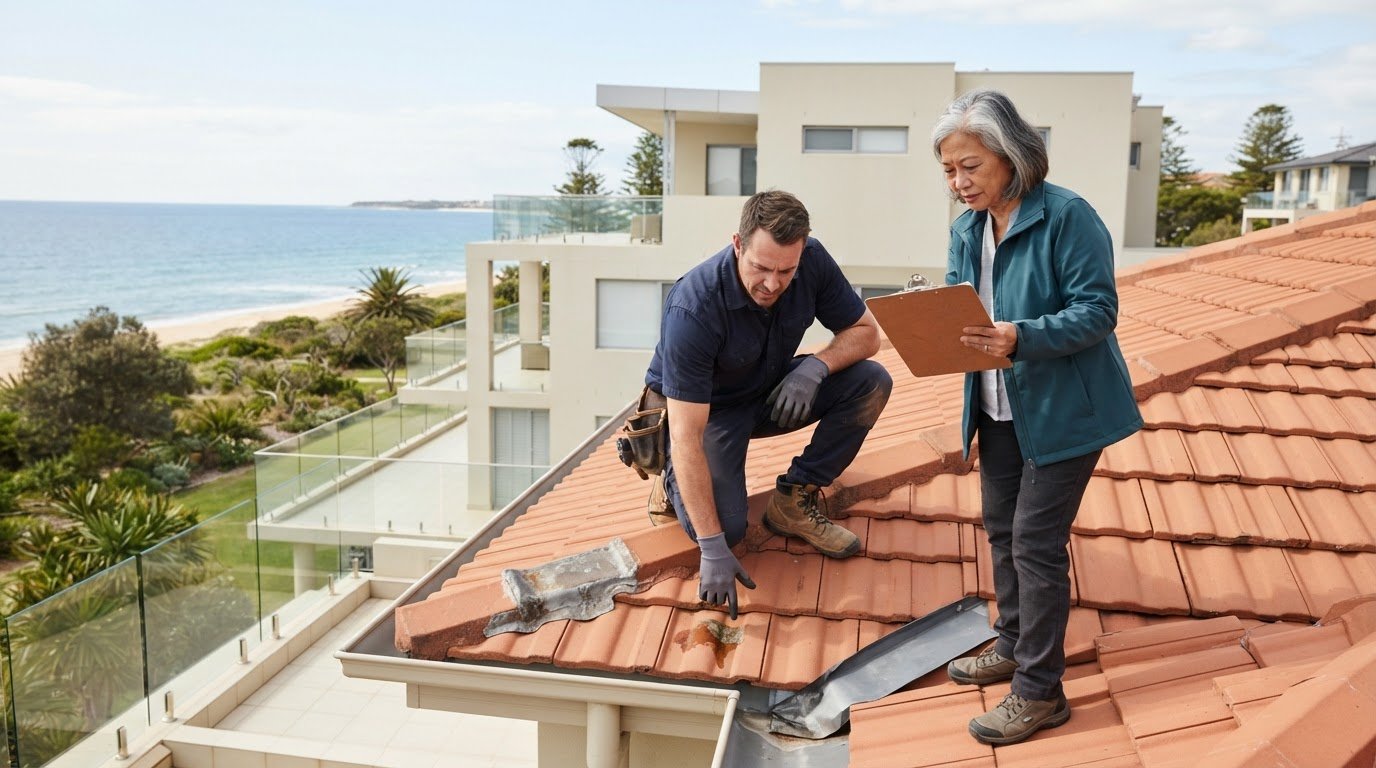
A strata roof leak is usually the owners corporation’s responsibility because the roof is common property, and the owners corporation generally pays for repairs from its capital works fund. Getting strata approval for roof repairs starts by notifying the strata manager or committee so an inspection can be arranged. A major roof replacement requires a special resolution, with at least 75% of owners approving.
It’s understandable to be unsure whether a small repair to your unit needs committee approval or whether you can arrange it yourself. The key question is whether the work affects common property, your lot, or both, as well as what the scheme’s by-laws say and how extensive the work will be.
This guide explains who arranges and pays for roof leak repairs, how approval can differ for minor and major works, and what information helps a renovation application move forward. You’ll also see how funding decisions fit into the process, so you can raise the issue clearly and help protect the building from further water damage.
Key Takeaways
- Report a roof leak to the strata manager or committee so the source and repair responsibility can be assessed.
- Check the scheme’s by-laws before arranging work on your lot, and provide clear scope details and contractor quotes for committee consideration.
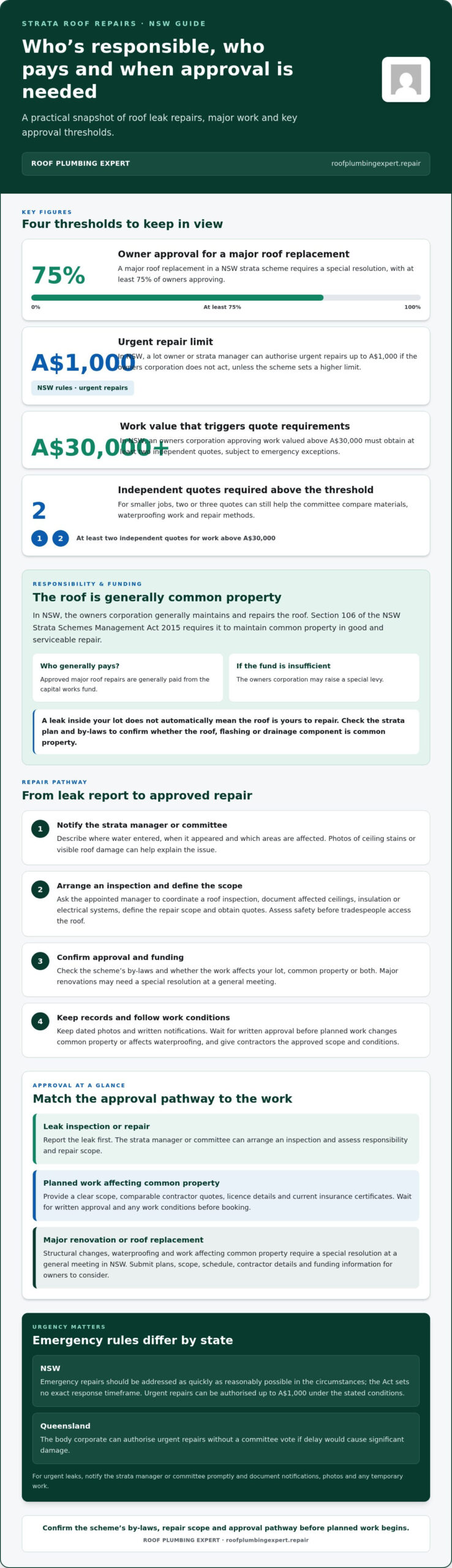
- A major roof replacement in a NSW strata scheme requires a special resolution, with at least 75% of owners approving.
- Identify whether proposed work is cosmetic, a minor renovation or a major renovation, as each category has different approval requirements.
Roof Leak Repairs in Strata: Who’s Responsible and Who Pays?
In NSW, the owners corporation generally maintains and repairs the roof because it is common property. Report a roof leak to the strata manager or committee before arranging permanent repairs yourself.
Establish responsibility for common-property roof repairs
Check the strata plan and by-laws to confirm whether the roof, flashing or drainage component is common property. Section 106 of the NSW Strata Schemes Management Act 2015 requires the owners corporation to maintain common property in good and serviceable repair. Ask the strata manager to arrange an inspection and document any affected ceiling, insulation or electrical systems. Avoid assuming that a leak inside your lot means the roof is yours to repair.
Check rules for heritage-listed strata buildings
Ask the strata manager to identify any heritage listing and the relevant approval pathway before proposing roof work. Strata repair responsibilities must be considered alongside controls that may apply to a listed building. Requirements depend on the listing and the proposed work. Include any changes to visible materials, colour or roof form in the scope, rather than treating them as an ordinary like-for-like repair.
- Notify the strata manager or committee promptly, and describe where water entered, when it appeared and which areas are affected. Photos of ceiling stains or visible roof damage can help explain the issue and support an inspection.
- Ask the appointed manager to coordinate a roof inspection, define the repair scope and obtain quotes. Temporary work can limit further water damage, but a safety assessment should come before tradespeople access the roof.
- Confirm how the owners corporation will fund approved work. Major roof repairs are generally paid from the capital works fund; if funds are insufficient, the corporation may raise a special levy.
- If urgent action is needed and the owners corporation does not act, NSW rules allow a lot owner or strata manager to authorise urgent repairs up to A$1,000, unless the scheme sets a higher limit. Keep records of the leak, notifications and repair work.
Do I need strata committee approval for small roof repairs on my own unit?
First identify whether the repair affects your lot, common property or both, then check your scheme’s by-laws. Starting work before approval can create disputes about responsibility, costs and damage to shared areas; unauthorised work may also breach agreed conditions.
Gather contractor quotes and check insurance
Give the committee a clear scope and comparable roofing quotes before work is arranged. In NSW, an owners corporation approving work valued above A$30,000 must obtain at least two independent quotes, subject to emergency exceptions. For smaller jobs, two or three quotes can still help the committee compare proposed materials, waterproofing work and repair methods. Include the contractor’s licence details and current insurance certificates with the application.
Check emergency repair exceptions
Report an urgent leak to the strata manager or committee first, and explain the risk of delay. In NSW, emergency repairs should be addressed as quickly as reasonably possible in the circumstances, although the Act sets no exact response timeframe. In Queensland, the body corporate can authorise urgent repairs without a committee vote if delay would cause significant damage. Keep dated photos and written records of notifications and any temporary work.
Understand the risks of starting work early
Wait for written approval before planned repairs change common property or affect waterproofing. Work started without approval can lead to disputes over costs, reinstatement or damage to shared areas. The strata committee may also set conditions, such as protecting hallways or using approved access routes. Ask the strata manager to give the roofing team the approved scope and conditions before work starts.
- Send the committee the leak location, photos, proposed scope and contractor documents.
- Wait for the approval and any work conditions before booking planned repairs.
- For active water ingress, notify the strata manager promptly and document temporary measures.
Clear evidence helps the committee assess the repair and choose the right response. For a roof inspection that can clarify the leak source and repair scope, consider roof leak detection and repair.
Major renovations and general meeting approval
In NSW, structural changes, waterproofing and work affecting common property require a special resolution at a general meeting. Prepare the proposal and funding details before asking the owners corporation to vote.
Seek general meeting approval for major renovations
- Ask the strata manager to place the renovation proposal before a general meeting. Include detailed plans, the scope of work, the proposed schedule, and contractor licence and insurance details. Explain how the work affects the roof, structural elements, waterproofing and other lots. Clear documents help owners understand what they are approving and any conditions needed to protect shared areas during the work.
Obtain approval for major roof replacements
- Submit a roof replacement proposal as work affecting common property, not as a routine repair to your own unit. In a NSW strata scheme, a major roof replacement requires a special resolution, with at least 75% of owners approving. A change from tiles to Colorbond also changes the roof system and common property. Set out the proposed materials and scope so owners can assess the change before voting.
Use special resolutions for major renovations
- Confirm the voting threshold and meeting process with the strata manager before the resolution is considered. In NSW, a major renovation special resolution passes when no more than 25% of votes cast are against the work. In a two-lot scheme, both owners must agree for a major renovation special resolution to pass. Do not arrange the work until approval is granted and the required funds are raised.
Approval categories for strata renovations
In NSW, the owners corporation considers roof repair proposals through the strata committee or a general meeting, depending on the work category. When getting strata approval for roof repairs, first establish whether the work is cosmetic, a minor renovation or a major renovation.
Identify the renovation approval category
- Describe the proposed work and what it affects before seeking approval. Cosmetic work, such as painting or replacing internal fixtures, generally needs no formal approval. Minor renovations, including hard flooring, air-conditioning or a kitchen update, usually require written strata committee approval. Roof work may affect common property even when a leak appears inside one lot, so explain its location and scope rather than calling it a private repair.
- Check the scheme’s by-laws and ask the strata manager to confirm the correct category. Explain whether the work changes the roof structure, waterproofing or appearance, and whether residents or other lots may be affected. This helps the committee assess the request consistently and set any conditions before work starts.
Put roof repairs to a committee or general meeting
- Send the strata manager the repair scope, inspection details and proposed schedule. The manager can refer the request to the committee or arrange consideration at a general meeting, depending on the work and the scheme’s process. NSW strata schemes must hold at least one meeting per year, so submit proposals early and ask how the item will be considered.
- If a minor renovation is submitted to a strata meeting, it needs more than 50% of votes cast to pass. If the committee refuses a minor renovation application, it must give written reasons within three months. Keep the decision and any conditions with your records, then ensure the contractor follows the approved scope and protects common areas.
For a roof leak, include inspection findings that help the owners corporation distinguish a local fault from a wider roof issue. Getting strata approval for roof repairs is easier to manage when the committee receives a clear repair scope. Arrange a roof leak inspection to support the strata approval process.
Roof Plumbing Expert: Gutter & Downpipe Installation
Once the owners corporation has approved the work and defined its scope, Roof Plumbing Expert can help carry it out. For a leak linked to roof drainage, Gutter & Downpipe Installation can address the affected system; Roof Leak Detection & Repair can help locate and resolve the source.
Share the approved scope with the roofing team, including access arrangements or conditions set by the strata committee. This keeps the work aligned with the decision and helps prevent changes to common property beyond what owners approved. Roof Plumbing Expert also provides Colorbond Roofing and Roof Restoration & Repointing when these works form part of an approved project.
For an approved roof or drainage project in Mainly Beach, contact Roof Plumbing Expert or visit roofplumbingexpert.repair.
Keep the approved repair moving
Once the decision is recorded, keep the approval, agreed scope and completion details together in one project file. This gives owners a clear reference if the same roof area needs attention later or future maintenance planning calls for a closer look. A concise record also helps distinguish the approved work from any changes proposed during the job.
The practical next step for owners is to coordinate the approved scope with the strata manager and keep communication open as work proceeds. Clear records make getting strata approval for roof repairs easier to manage, from the initial request through to completion, especially when work affects shared building elements.
If you need roofing work carried out within an approved scope, contact Roof Plumbing Expert to discuss the next step. A well-organised repair process helps protect the building and gives residents a sound basis for planning ahead.
Frequently Asked Questions
Can I arrange roof repairs myself and bill the owners corporation?
Urgent common-property repairs should generally be coordinated with the owners corporation, and owners should not assume they will be reimbursed for work they arrange themselves. Notify the strata manager first where possible, and keep dated messages, photos and invoices. This exception concerns urgent repairs, not planned upgrades. Send the records to the owners corporation and request reimbursement rather than assuming payment is automatic.
Can strata committee members force emergency repairs if the committee neglects its duties?
Individual committee members can press for action, but the owners corporation holds the maintenance obligation for common property. In NSW, Section 106 of the Strata Schemes Management Act 2015 requires it to maintain common property in good and serviceable repair. Record the leak and prior requests in writing, then ask the strata manager to escalate the issue through the scheme’s decision-making process.
How long can renovation approvals take?
In NSW, there is no fixed legal response deadline for non-urgent roof repairs. Approval timing depends on the work category and when the relevant committee or general meeting can consider it. For a minor renovation, a refusal requires written reasons within three months; that is not a general approval deadline. Submit complete plans and scope details to help the committee assess the request efficiently.
Is an owners’ corporation required to notify council for emergency roof repairs?
Strata approval and council planning requirements are separate considerations. Ask the strata manager to establish whether the proposed work needs council involvement under controls that apply to the building. This is particularly important if permanent work changes the materials, appearance or form of a heritage-listed roof. Keep any council correspondence with the strata records, and don’t treat committee approval as council consent.
What do I need to do?
Send the strata manager a written report stating where water entered, when it appeared and which rooms or building areas are affected. Attach clear photos, note any damage to belongings, and say whether water is still entering. Request an inspection and a written record of the next decision. Keep messages and documents together so owners can follow the issue and its resolution.
What if I am in a two lot scheme?
For a major renovation in a NSW two-lot scheme, both lot owners must agree for the special resolution to pass. Give the other owner the proposal, plans and funding details before the vote so they can consider the full scope. Roof maintenance remains the owners corporation’s responsibility; keep that ongoing duty separate from the approval threshold for a major renovation.