Could waiting for a leak to appear mean a small roof fault has already become a bigger problem? If you’re wondering how often should you get your roof inspected, the answer depends on your roof’s age, condition and exposure to local weather, not just a fixed calendar reminder.
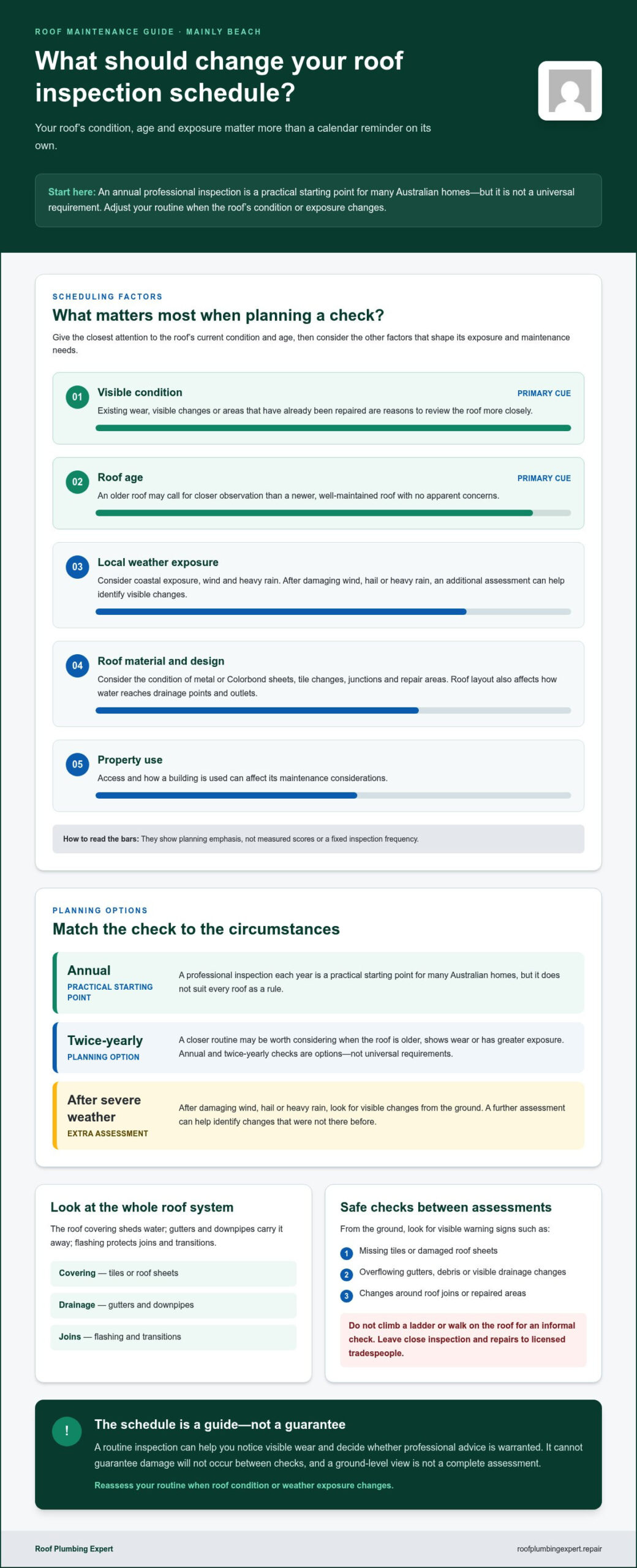
An annual professional inspection is a practical starting point for many Australian homes, but it isn’t a universal requirement. Older roofs, properties with visible wear and homes exposed to severe weather may need closer attention. In Mainly Beach, include local weather exposure in your maintenance planning. After damaging wind, hail or heavy rain, an additional assessment can help identify visible changes that weren’t there before.
You can look for warning signs from the ground, such as missing tiles, damaged roof sheets or overflowing gutters. Climbing onto the roof can be dangerous and may cause damage, so leave close inspection and repairs to licensed tradespeople. This guide explains how to set a practical inspection routine, when storms call for an extra check, and which signs warrant professional attention. You’ll also learn how roof age, local exposure and drainage affect your schedule, so you can act on concerns early.
Key Takeaways
- When deciding how often should you get your roof inspected, use your roof’s age, visible condition and exposure to guide the schedule, rather than treating one interval as right for every home.
- Annual or twice-yearly checks are planning options, not a universal statutory requirement. Reassess your routine if the roof’s condition or exposure changes.
- After severe weather, look for visible changes from the ground and note when they occurred, so concerns can be assessed promptly.
- Check roof surfaces and drainage from a safe ground-level position. Don’t climb a ladder or walk on the roof during an informal check.
- Leaks, flashing concerns and drainage issues may need qualified attention. Roof Plumbing Expert provides Roof Leak Detection & Repair, Roof Flashing & Waterproofing, and Gutter & Downpipe Installation.
How often should you get your roof inspected, and why does timing matter?
There isn’t one inspection interval that suits every roof. The right timing depends on its age and condition, the materials and details it uses, its exposure to weather, and how the property is used. If you’re asking how often should you get your roof inspected, start with those factors instead of treating a calendar interval as a rule for every home.
A routine roof inspection is a planned condition check, not a repair. It helps identify visible wear and maintenance concerns, but it can’t guarantee that damage won’t occur between checks. The guidance here offers a practical way to plan, not a universal or statutory interval. A professional assessment is needed to understand an individual roof’s condition.
Is there one inspection interval that suits every roof?
No. Roof age is one consideration, but it doesn’t tell the whole story. A newer roof that’s been maintained and has limited exposure may need a different routine from an older roof with visible wear or more complex junctions. Materials also differ, and roofs can face varying levels of wind, rain, salt air and shade.
Property use matters, too. A roof over a home with limited access or a building used for different purposes may have different maintenance considerations from a straightforward residential roof. Use these details to decide whether to plan checks closer together or further apart, then reassess if the roof’s condition or exposure changes. General guidance can help you plan, but it can’t replace an assessment of the particular roof.
What is the purpose of a routine roof inspection?
A routine inspection gives you a planned opportunity to notice visible wear or maintenance concerns before they’re overlooked. A change doesn’t automatically mean a repair is needed, but recording it and getting appropriate advice can help you decide what to do next. Comparing observations over time can also help distinguish a new concern from an existing mark or feature.
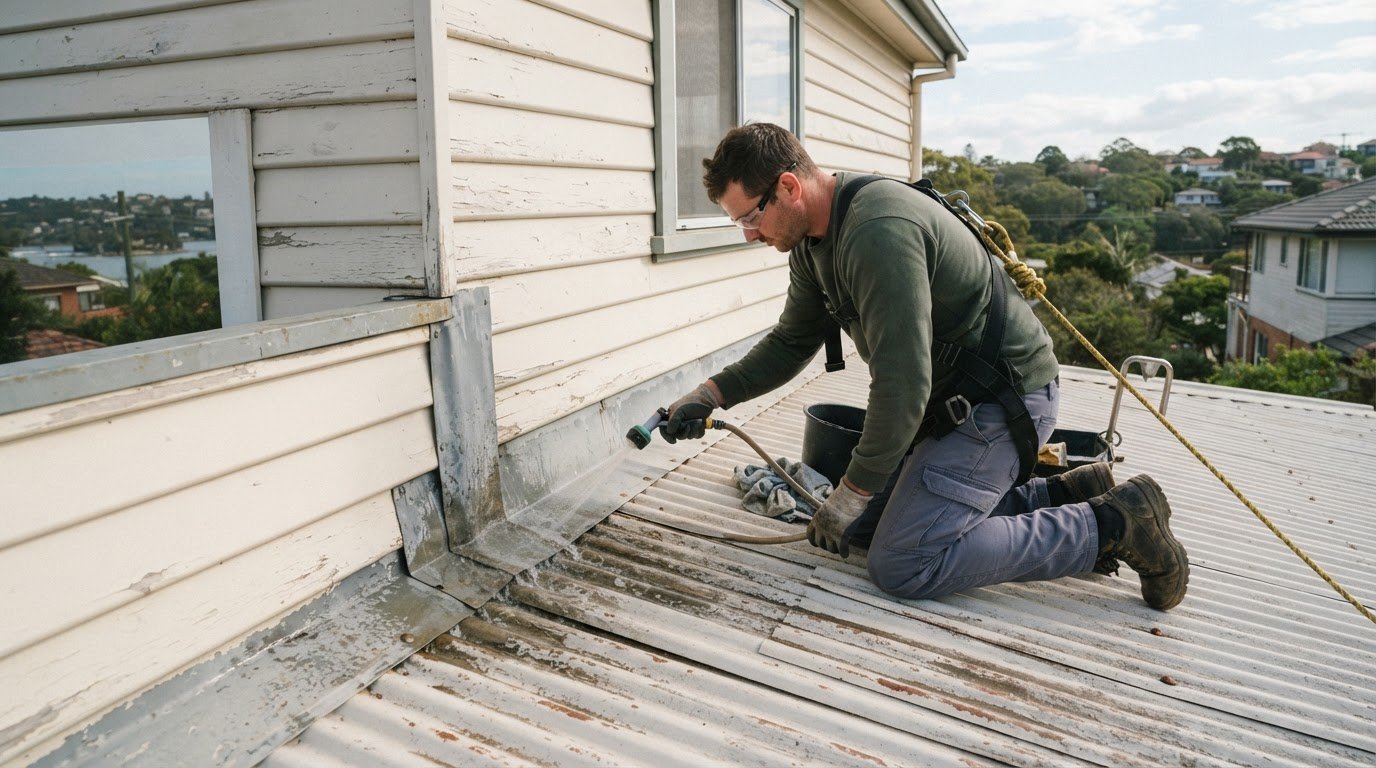
A roof works as a system. Its covering sheds water, while gutters and downpipes carry it away. Flashing helps protect joins and transitions where water could enter. These connected components of a roof can each affect how well the exterior performs, so an inspection shouldn’t focus on roof sheets or tiles alone.
Regular observation is useful because a minor visible change can be easy to miss if you only look up after a leak appears. A planned check helps you note concerns, consider whether conditions have changed, and decide if a professional assessment is warranted. It doesn’t mean climbing onto the roof or attempting repairs yourself. Start by considering which features of your roof and NSW surroundings may call for a closer inspection routine.
Which roof conditions and NSW coastal factors should change your inspection schedule?
A roof’s age and visible condition can be more useful scheduling clues than a standard calendar interval. A newer, well-maintained roof may need a different level of attention from one with ageing materials, previous repairs or areas that already show wear. The practical question is not just how often should you get your roof inspected, but what conditions could change the answer for your property in Mainly Beach.
Set your inspection schedule around condition, age, material, exposure and property use. These factors work together. An older roof with repaired junctions and greater weather exposure may warrant closer observation than a newer roof with no apparent concerns. That doesn’t establish a fixed inspection frequency. It helps you decide when to review the roof’s condition and reassess your routine.
How do age, material and roof design affect timing?
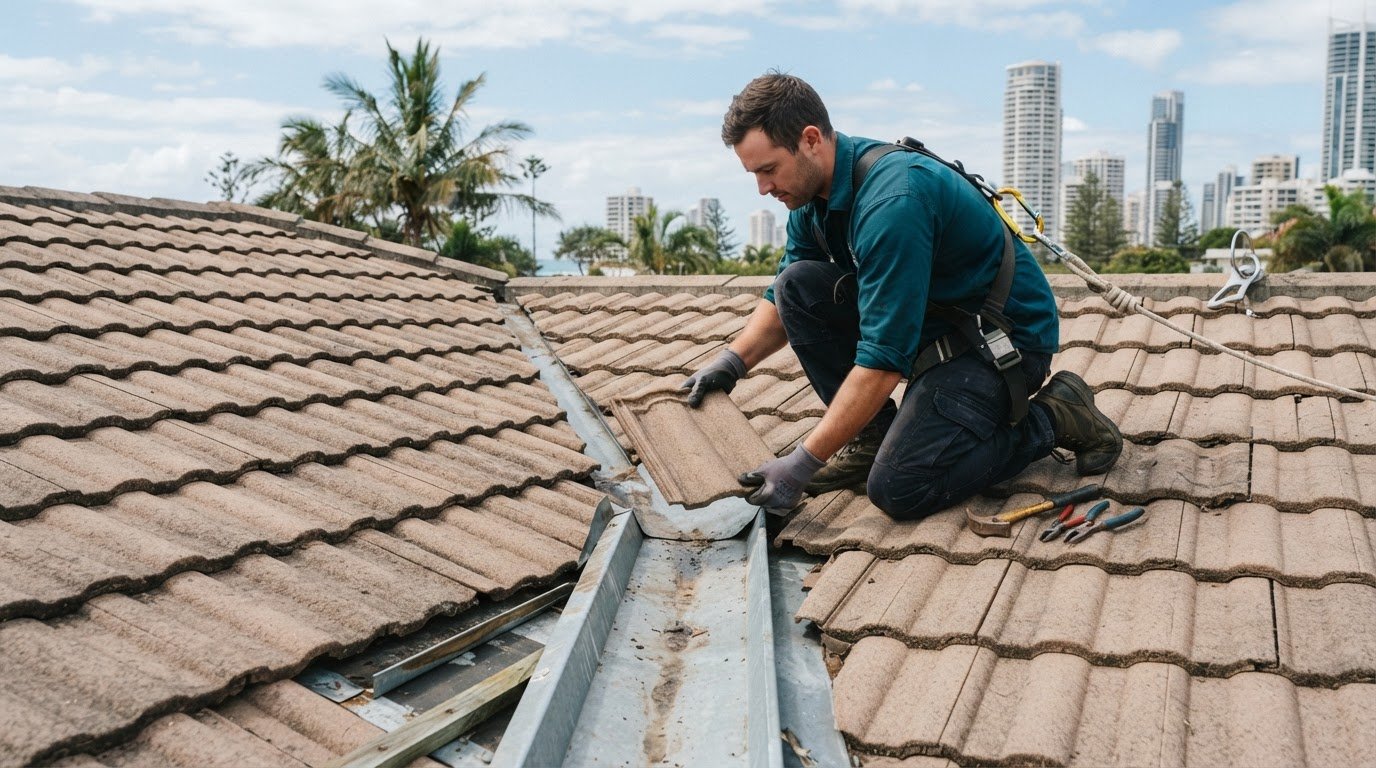
Ageing coverings and previously repaired areas deserve attention because changes can appear around joins, edges or the repair itself. For metal and Colorbond roofs, consider the condition of the sheets and junctions. For tile roofs, look for visible changes to tiles and the areas where roof planes meet. The relevant issue is what’s happening on your roof, not an assumed lifespan for its material.
Design also affects what needs observation. Pitched roofs direct water towards eaves and drainage points, while flat or low-slope layouts rely on their own drainage paths and outlets. In either case, note visible pooling, debris or changes near junctions, but don’t treat a ground-level view as a complete assessment. A roof’s age, repair history and design can help indicate whether closer professional attention is sensible.
What does coastal exposure mean for Mainly Beach homes?
For homes in Mainly Beach, coastal exposure, wind and heavy rain may affect how exposed roof components wear. The effect varies with a property’s position and roof condition, so living in a coastal area alone doesn’t set an automatic inspection interval. Include local exposure in your maintenance planning and reassess after weather that may have affected the roof.
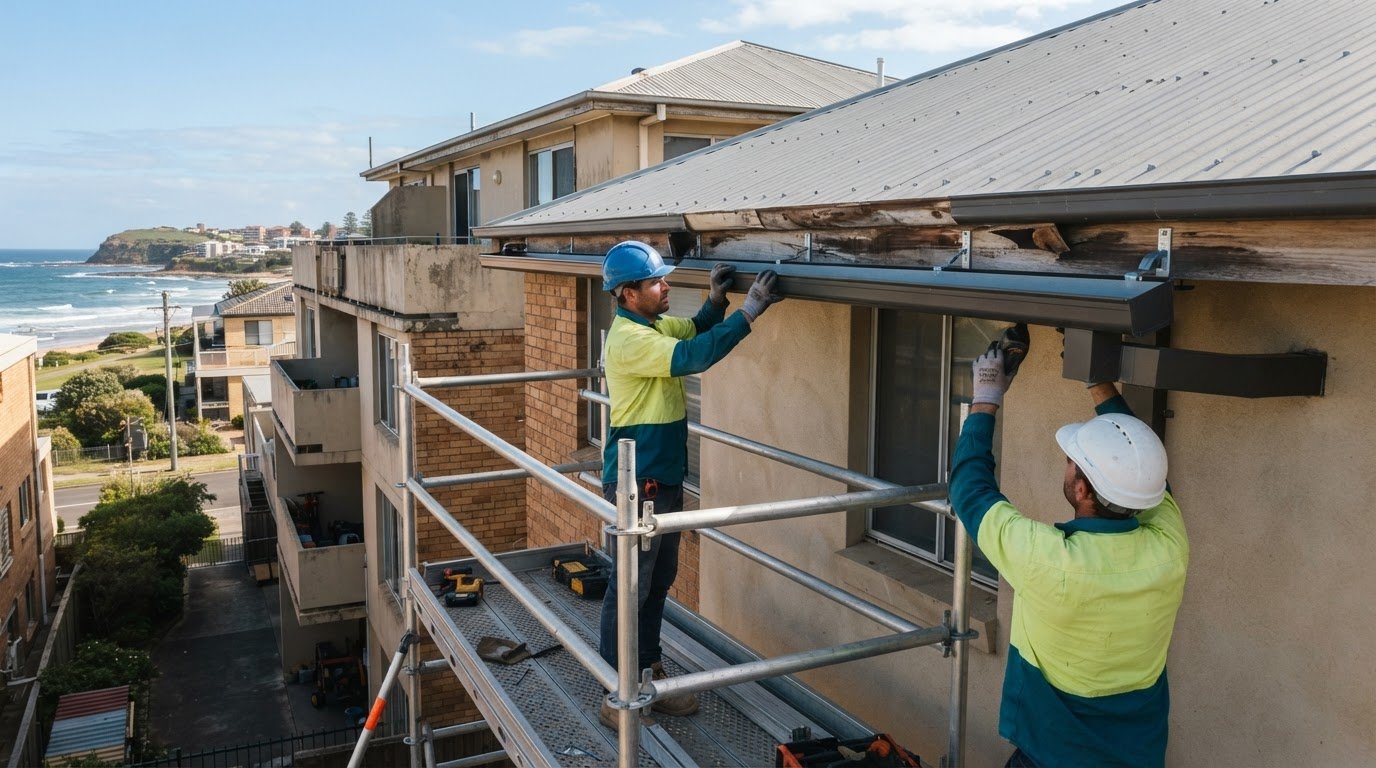
Include the whole external system in your maintenance plan, not just the roof covering. Gutters and downpipes need to carry water away, while flashing protects vulnerable joins and transitions. Debris or a visible change around these areas is a reason to take a closer look from a safe position and consider professional assessment. This is especially relevant if the roof has a history of leaks or repairs.
Roof Plumbing Expert provides Roof Leak Detection & Repair, Roof Flashing & Waterproofing, and Gutter & Downpipe Installation. The business is Fully licensed and insured, with licensed tradespeople on every job, and works with Honesty, quality, and reliability. If an observation raises concern about a leak or vulnerable junction, Roof Leak Detection & Repair can address the roof plumbing issue.
Annual, twice-yearly or after a storm: which roof inspection schedule makes sense?
Choose a routine schedule that reflects the roof’s condition and exposure, then treat severe weather or a new concern as a separate reason to reassess. An extra check after a damaging event doesn’t replace planned maintenance, and a scheduled date shouldn’t delay attention to visible damage or a leak.
Annual and twice-yearly checks are useful planning options, not universal requirements. Use this comparison to choose a starting point, then adjust it as the roof’s condition changes.
| Schedule option | May suit | When to reassess |
|---|---|---|
| Annual routine check | Owners who want a regular record of roof condition and maintenance concerns. | Reconsider if the roof shows wear, has a history of repairs or faces higher exposure. |
| Twice-yearly routine checks | Roofs with more noticeable age or condition concerns, repeated maintenance issues, or greater exposure to weather. | Review whether the closer schedule remains appropriate as the roof’s condition and repair history change. |
| Additional check after severe weather or a new concern | Any roof that may have been affected by damaging wind, hail or heavy rain, or where a leak or apparent damage is noticed. | Arrange professional attention promptly if there’s a leak or visible damage. Don’t wait for the next routine date. |
When might a routine annual check be a practical starting point?
An annual check can provide a regular condition record and help owners keep maintenance on the calendar. It’s a planning option, not a guarantee against damage or the right interval for every property. A roof that’s ageing, already showing concerns or exposed to harsher conditions may need closer attention. Reassess the interval if observations or repairs suggest the roof’s condition is changing.
When should you reassess after severe weather?
Once conditions are safe, look for visible changes from the ground, such as displaced roof coverings or a new sign of water entry. Don’t climb a ladder, walk on the roof or inspect during unsafe weather. A new leak or apparent damage calls for prompt professional attention, not a wait until the routine check. Note what you observed and when, which can help explain the concern during an assessment.
The table is a decision aid, not a fixed rule. For example, if an annual routine is your starting point but a leak appears between checks, respond to the leak rather than holding off until the next date. Repeated concerns may also signal that the schedule needs review. An extra assessment after a storm is event-based; it doesn’t automatically mean every property needs twice-yearly routine checks.
In short, decide on a routine based on the roof’s condition and exposure, then make room for timely attention when circumstances change. The practical answer to how often should you get your roof inspected is a schedule that reflects the roof you have today, with an additional professional assessment when damage or a new concern warrants it.
What can you check safely between professional roof assessments?
A ground-level check can help you notice visible changes between professional assessments. It isn’t a substitute for a roof inspection and can’t reveal hidden faults. Keep your feet on the ground: don’t climb a ladder or walk on the roof, even if a tile or sheet looks out of place. Never check outside during unsafe weather.
What signs can you look for from the ground?
Choose a safe spot with a clear view of the roof and drainage. Look for changes rather than trying to work out what caused them. This short routine can help you make consistent observations:
- Scan the roof covering. Look for tiles or sheets that appear displaced, missing or visibly damaged compared with your last observation.
- Check the roofline. Note any apparent sagging, uneven edges or changes around the eaves and ridges.
- Observe gutters and downpipes. Look for visible blockages, overflow marks or water escaping from a joint or outlet during rain.
- Look at the surrounding areas. Check for new water marks on exterior walls or under the eaves, which may be a reason to investigate further.
- Record what you see. Note the date, weather conditions and location of each visible change. Don’t reach up, remove debris or attempt a repair as part of this check.
These are observations, not a diagnosis. A roof can appear sound from the ground while a fault remains out of view. An apparent change doesn’t confirm a structural problem, either. A qualified assessment is needed to determine what’s happening and whether repair is required.
How can you keep a useful roof maintenance record?
A simple record helps you compare what you see over time and explain a concern clearly. Include the date, the area you observed and any relevant weather context, such as heavy rain or strong wind. If you take photographs, do so from a safe ground-level position. Don’t move closer or use a ladder to get a better angle.
Keep notes factual. For example, write “water visible at the downpipe joint during rain” rather than guessing why it happened. If a leak appears indoors, note where and when you noticed it, and whether it followed rainfall. Share these details when arranging roof leak detection or repair.
A new leak, visible damage or water escaping from drainage areas is different from a routine observation. Don’t wait for your next scheduled check if you suspect active damage. Keep clear of affected areas if they may be unsafe and arrange professional attention. Roof Plumbing Expert provides Roof Leak Detection & Repair for roof plumbing concerns. For help with a suspected leak, arrange Roof Leak Detection & Repair.
How Roof Plumbing Expert can help with roof maintenance and repair
A sensible inspection routine helps you notice when a roof concern needs attention. If a ground-level check or professional assessment points to a leak, drainage issue or vulnerable junction, have that specific roof plumbing concern assessed. Roof Plumbing Expert provides repair and maintenance for these external roof components. A routine condition check doesn’t automatically mean a repair is needed.
Which roof plumbing concerns can professional support address?
A leak may not appear directly beneath the point where water enters, so describe where and when you noticed it. Roof Leak Detection & Repair addresses leak concerns. If water is overflowing or escaping around drainage points, Gutter & Downpipe Installation addresses drainage needs. Roof Flashing & Waterproofing is relevant around roof junctions and penetrations, where weatherproofing helps protect vulnerable transitions.
These services address different parts of the roof system. Sharing what you observed, such as water entering after rain or a visible change near a junction, helps focus attention on the concern. It doesn’t replace an assessment, and a visible symptom alone may not show the source.
How to take the next step in the stated service areas
Roof Plumbing Expert serves Mainly Beach. The business is Fully licensed and insured, with licensed tradespeople on every job. Its stated licensing phrase is Licensed, Insured & Guaranteed, and its approach is guided by Honesty, quality, and reliability.
If you’re considering how often should you get your roof inspected, remember that routine planning and repair support are separate decisions. Keep a record of visible changes and use it to explain a concern, but don’t climb onto the roof to investigate. A suspected leak, apparent damage or recurring drainage issue deserves timely professional attention rather than waiting for the next routine date.
When you get in touch, describe what you’ve noticed, where it appears and whether it followed particular weather. That gives a clear starting point for discussing the relevant roof plumbing work. If a leak or visible roof issue is concerning you, contact Roof Plumbing Expert about roof plumbing concerns.
Make your next roof check part of your home routine
A roof maintenance plan is most useful when it’s easy to keep up. Choose a time to review your notes and visible observations, then adjust your plans if the roof’s condition or exposure changes. That gives you a clear point to reconsider how often should you get your roof inspected, without relying on a calendar reminder that ignores what’s happening at your property.
If you’ve spotted a leak, visible damage or another roof plumbing concern, don’t wait for your next planned check to act. Share what you noticed and where it appeared so the issue can be discussed clearly. For help with a roof concern, contact Roof Plumbing Expert about roof plumbing concerns.
A steady, informed approach can make roof maintenance more manageable. Keep observing safely, record changes and seek professional attention when something doesn’t look right. Your next step is simple: make a note of any concern and contact Roof Plumbing Expert for support with roof plumbing work.
Frequently Asked Questions
How often should you get your roof inspected in Australia?
A professional roof inspection at least once a year is a commonly recommended Australian baseline, not a legal interval that suits every property. Roof age, condition, material and exposure can all change the plan. A newer roof with no known concerns may need a different approach from one with recurring leaks or visible wear. Treat the baseline as a prompt to plan, then adjust based on the roof’s actual condition.
Should I get my roof inspected every year?
An annual professional check can be a practical way to maintain a record of your roof’s condition, but it isn’t automatically necessary for every home. Consider whether the roof is ageing, has a history of repairs or faces harsh weather. If those factors apply, closer attention may make sense. If you keep an annual routine, use it as a review point, not a reason to ignore new concerns that appear sooner.
Should I get my roof inspected after a storm?
Arrange professional attention if a storm is followed by a leak, visible damage or a change in the roof’s appearance. Wait until conditions are safe before looking from the ground, and don’t climb onto the roof to investigate. Record when the weather occurred and what you noticed afterwards. If there’s no obvious change, continue with your planned maintenance routine while staying alert to leaks or other signs that emerge later.
Can I inspect my roof myself?
You can make basic observations from a safe position on the ground, but that isn’t a full roof inspection. Don’t climb a ladder or walk on roof sheets or tiles, which can be dangerous and may damage the covering. You can also look indoors for new ceiling stains or damp patches, then note where they appear. A professional assessment is needed to investigate roof areas you can’t safely see.
Do coastal homes need more frequent roof inspections?
Coastal exposure can make closer attention sensible, especially to metal components and roof junctions. Salt air may contribute to corrosion, while damp conditions can encourage mould or algae. For property owners around Mainly Beach, consider the home’s specific exposure rather than assuming every coastal roof needs the same schedule. Note any visible change and seek professional advice if you’re concerned about corrosion, moisture or damage.
What happens if I do not get my roof inspected regularly?
Without planned checks, gradual wear or a developing maintenance issue may go unnoticed until it becomes more apparent, such as through water entering the home. The consequences depend on the roof and the fault, so it’s not possible to predict a particular outcome. If you notice recurring damp patches, a leak or a worsening visible concern, arrange an assessment rather than waiting for a routine maintenance date.
What should I look for during a roof check?
From the ground, look for changes in the roofline, missing or displaced coverings, visible damage around edges, and signs that water is escaping from gutters or downpipes. Indoors, note new ceiling stains or damp patches, including which room they’re in and when they appeared. Compare observations with earlier notes if you have them. These clues help describe a concern, but they don’t confirm its cause.