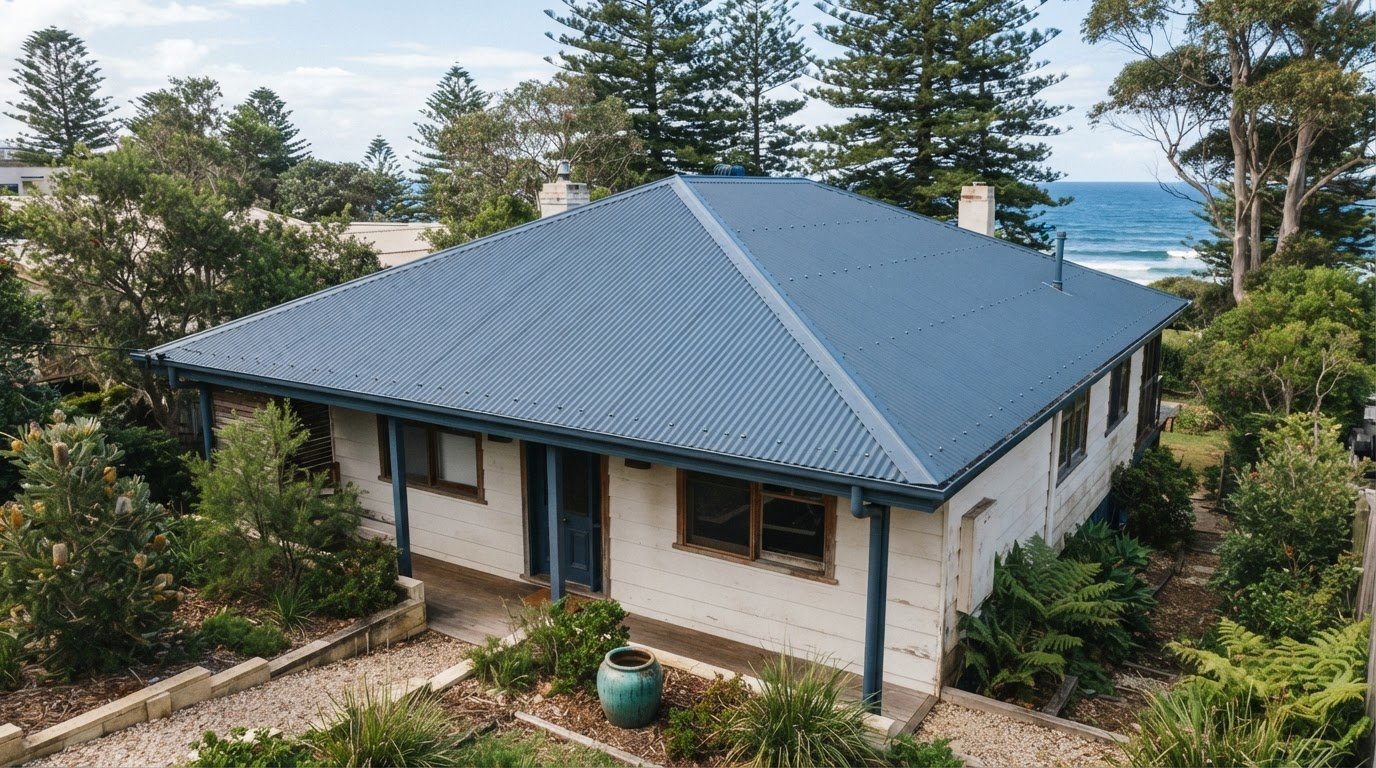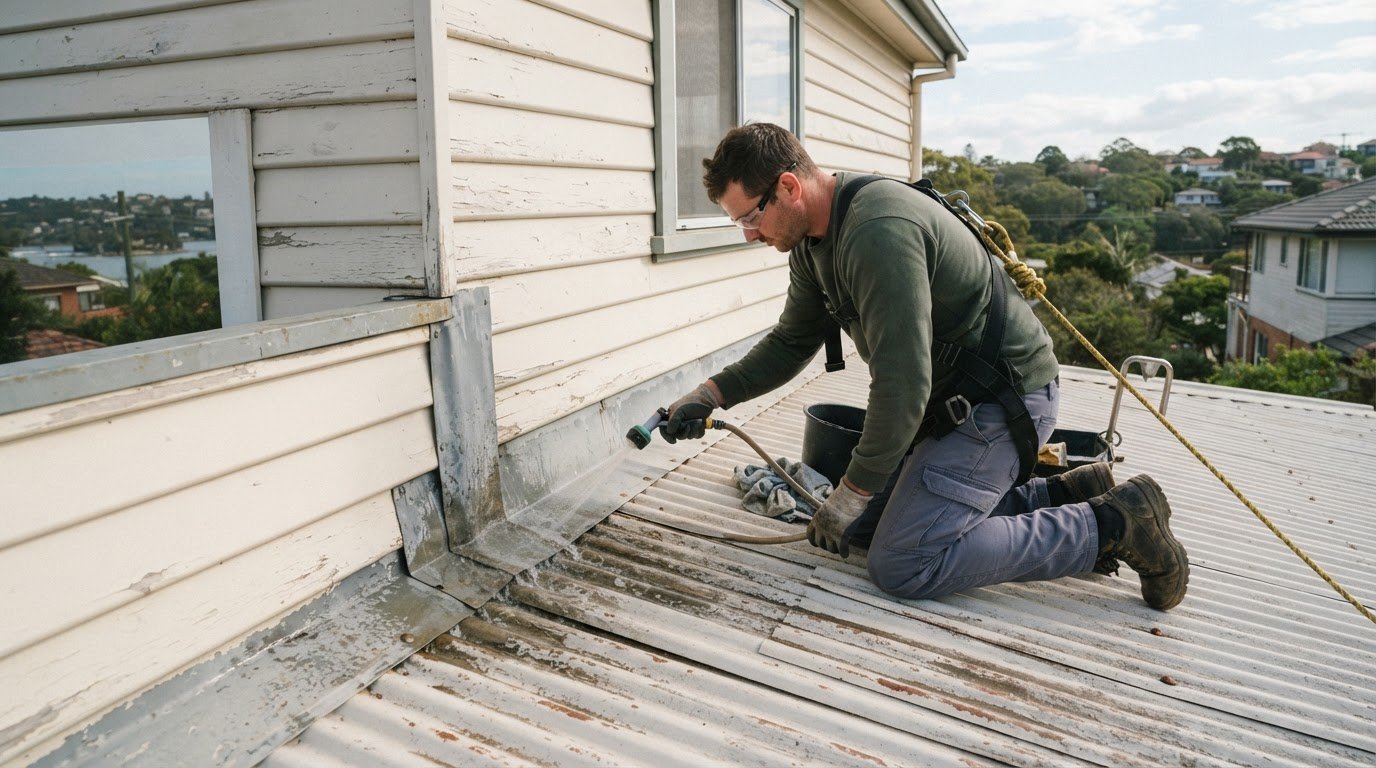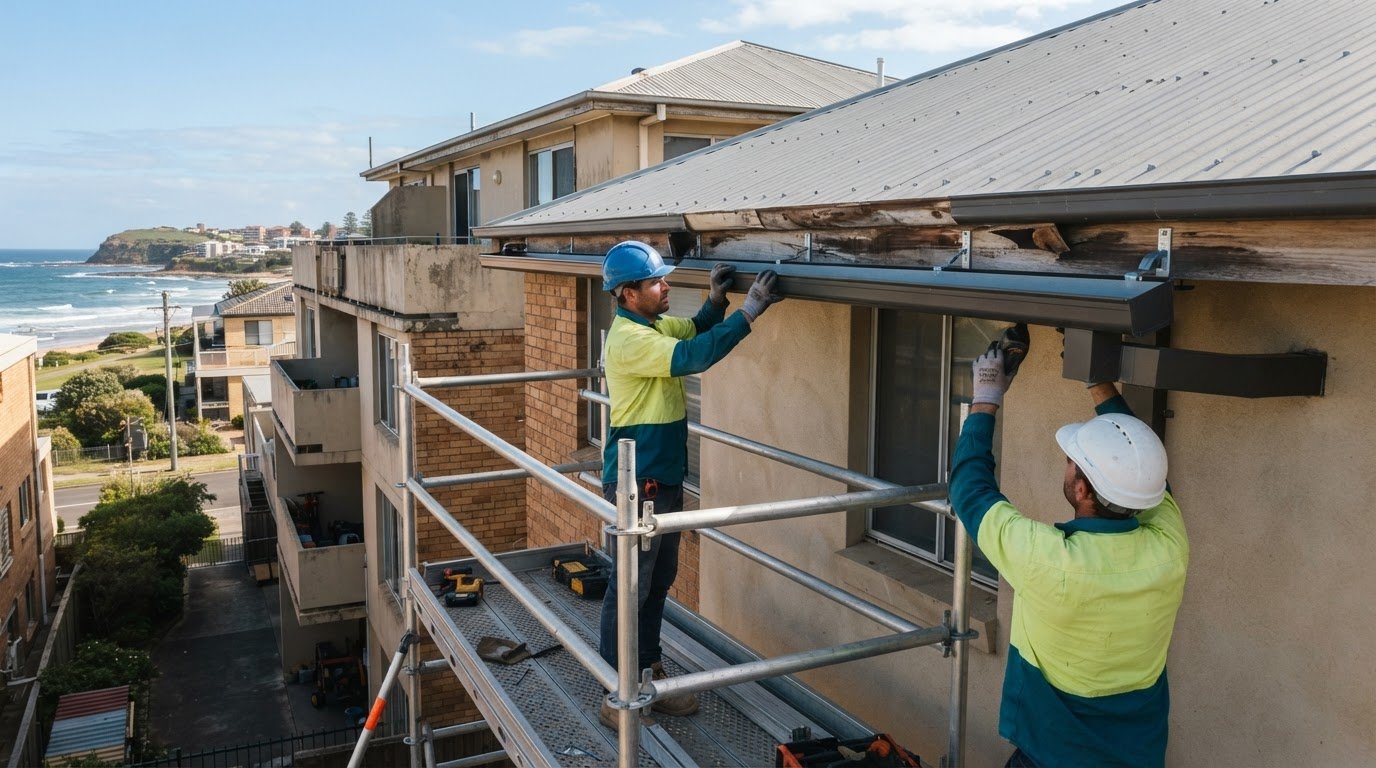
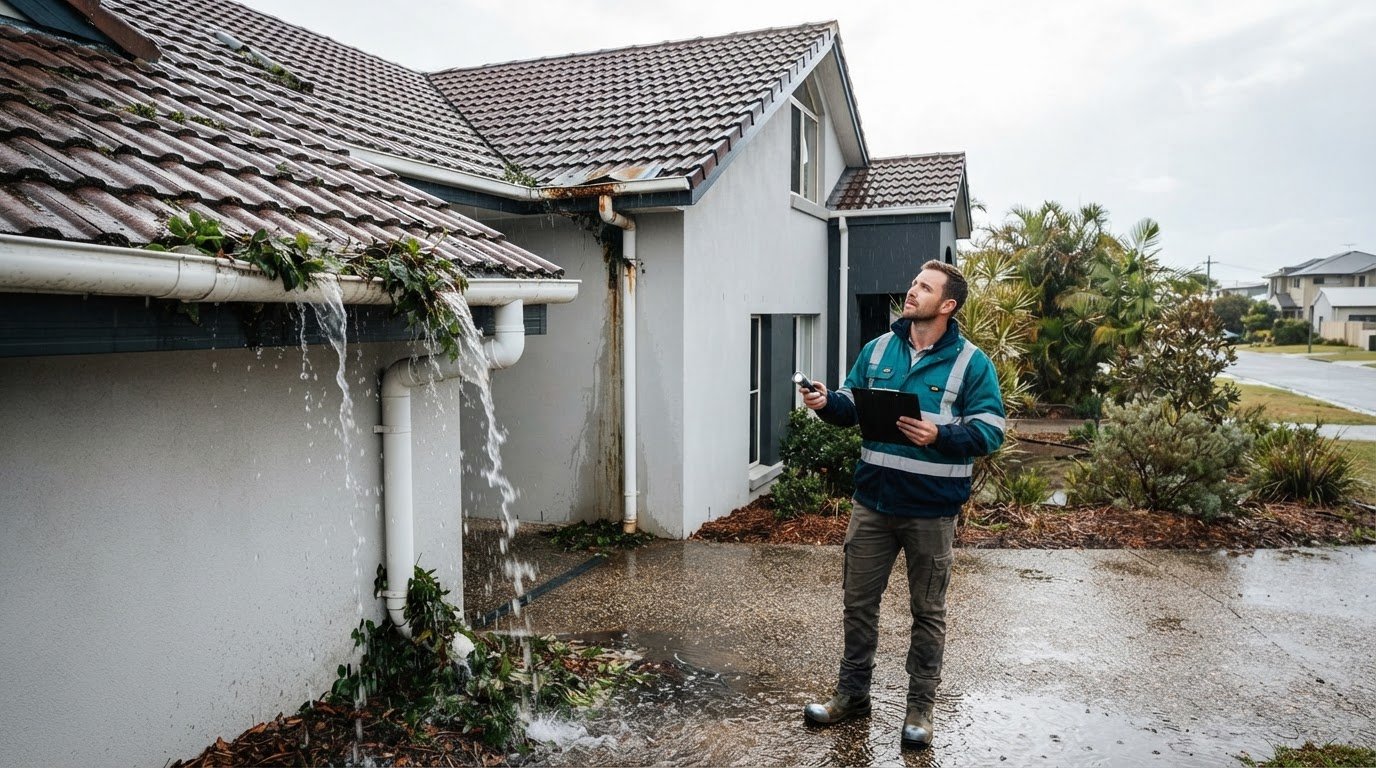
An overflowing gutter can be a sign of a wider roof drainage problem. The common roof plumbing mistakes to avoid often happen when gutters, downpipes, flashing and roof surfaces are treated as separate parts instead of one connected water-management system. A blockage, poor drainage path, damaged flashing or unsuitable repair can redirect rainwater and allow it to enter the roof or walls.
A ceiling stain or water spilling from a gutter can be difficult to interpret, especially if an earlier repair hasn’t stopped the problem. This guide explains how roof plumbing mistakes can lead to leaks and drainage issues, which warning signs you can observe safely from the ground, and when a specialist assessment is a sensible next step. You’ll learn what to look for after rain, why connected roof details matter, and how leak detection, gutter and downpipe work, or flashing repairs can address the source rather than just the visible symptom. Roof Plumbing Expert provides roof plumbing and guttering services for property owners in Mainly Beach and across New South Wales. Don’t climb onto the roof to investigate; leave close-up checks to a professional.
Key Takeaways
- Understand how roof surfaces, gutters, downpipes and discharge points work together to manage rainwater.
- Learn why unsuitable gutter capacity, downpipe placement or gutter falls can disrupt drainage and leave water or debris behind.
- Recognise how surface-only repairs and poorly matched materials can allow roof leaks to return.
- Use the common roof plumbing mistakes to avoid as a guide to spotting early warning signs and knowing when to arrange an assessment.
- See how a connected inspection of roof, gutter, downpipe, flashing and waterproofing details can help identify the source of recurring problems.
Common roof plumbing mistakes to avoid before water damage starts
Poor water management can turn ordinary rainfall into damage to roof materials, eaves, ceilings and walls. Water that cannot drain freely may overflow, pool or find a path through a weak junction. A damp patch indoors is not always directly below the point where water entered. It can travel along roof framing or other surfaces before becoming visible.
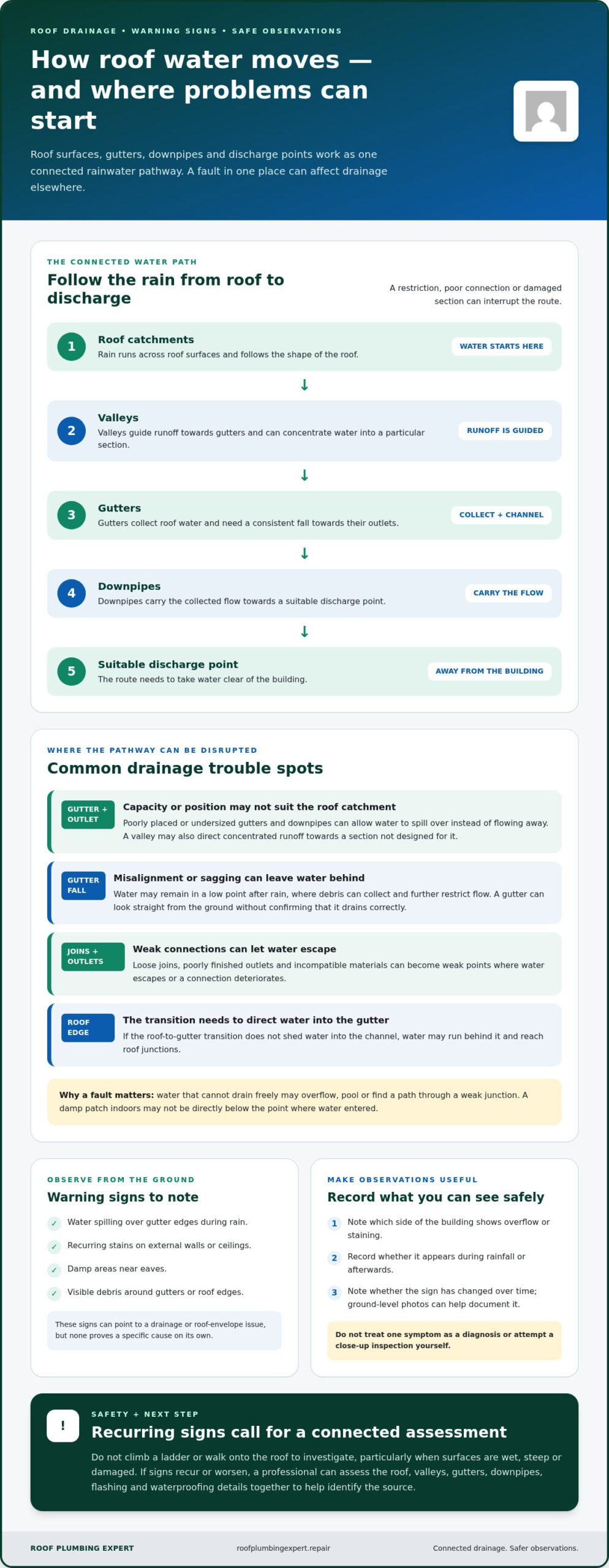
Roof plumbing is a connected system that captures rainwater from roof surfaces and directs it through gutters and downpipes to suitable discharge points. Each part needs to work with the next. A fault at one point can affect drainage elsewhere, even if the first sign appears far from the cause.
Why roof plumbing works as one connected system
Rain runs across roof catchments, follows the roof’s shape into valleys, then flows into gutters and downpipes. From there, it needs a clear route away from the building. A restriction, poor connection or damaged section can interrupt that path. Water may back up at a valley or gutter, spill over an edge, or reach roof junctions that should remain weather-resistant.
Roof plumbing concerns this external rainwater pathway. Interior plumbing carries water and waste within the building, so it is a separate system. A ceiling stain alone can’t confirm where water entered. For a useful description of the problem, note what you can see outside as well as where moisture appears indoors.
Early warning signs homeowners can notice safely
Watch for water spilling over gutter edges during rain, recurring stains on external walls or ceilings, damp areas near eaves, or visible debris around gutters and roof edges. These signs can point to a drainage or roof-envelope issue, but none proves a specific cause on its own. Note when and where they occur, especially if they return after rain.
Observe from a safe position on the ground. Don’t climb a ladder or walk onto the roof to inspect it, particularly when surfaces are wet, steep or damaged. If signs recur or worsen, arrange a professional assessment so the connected roof and drainage details can be examined.
Record what you can see without putting yourself at risk. Note which side of the building shows overflow or staining, whether it appears during rainfall or afterwards, and whether it has changed over time. Photos taken from the ground can help document those observations. Avoid treating one symptom as a diagnosis or applying a quick fix to an area you can’t safely inspect.
Tracing water entry may mean looking beyond the damp patch. Roof surfaces, valleys, gutters, downpipes, flashing and waterproofing details can all affect how rainwater moves and where it may enter. A connected inspection can help distinguish a local blockage from a wider drainage or roof-envelope concern. In Mainly Beach, as elsewhere, recurring signs are worth addressing before ongoing moisture has more opportunity to affect building materials.
Roof plumbing design and installation mistakes that disrupt drainage
A roof drainage layout needs to suit the way water reaches it. If gutters or downpipes are poorly placed, too small for the roof catchment, or incorrectly connected, water may spill over instead of flowing away from the building. The result can be repeated overflow, wet eaves or water finding a path into roof junctions.
There isn’t one sizing formula that suits every property. Roof area and shape, valleys that concentrate runoff, outlet positions and local rainfall conditions all influence how a system should be planned. Australian building requirements can also depend on the project and its location, so avoid relying on a generic online rule. Regulatory references should be checked against the requirements that apply to the specific work.
Undersized or poorly positioned gutters and downpipes
A gutter needs to collect water from the roof area draining into it, while downpipes need to carry that flow towards a suitable discharge point. If outlets are poorly located, water may have to travel too far along a gutter or collect at a low point. A valley that directs concentrated runoff towards a section not designed for it can also contribute to overflow.
These issues aren’t always obvious from a brief ground-level look. A professional assessment considers the roof catchment and drainage layout together, rather than treating a gutter or downpipe as an isolated part. Roof Plumbing Expert provides gutter and downpipe installation in NSW, including for properties in Mainly Beach.
Poor falls, joins and roof-to-gutter transitions
Gutters need a consistent fall towards their outlets. If a section is misaligned or sags, water can remain in the channel after rain and debris may collect there. The added obstruction can further restrict flow. A gutter that looks straight from the ground may still have a local low point, so visible appearance alone can’t confirm that water is draining correctly.
Connections matter too. Loose joins, poorly finished outlets and incompatible materials can become weak points where water escapes or the connection deteriorates. At the roof edge, the transition from roof surface to gutter needs to shed water into the channel, not behind it. These details should be assessed together, particularly if overflow or staining keeps returning.
Some common roof plumbing mistakes to avoid begin during installation, but homeowners don’t need to diagnose the technical fault themselves. From the ground, look for a gutter that appears bowed, gaps at joins or water spilling from one recurring spot. Treat these as useful observations, not proof of a particular cause.
Roof access and repair requirements need proper assessment. Wet, steep or damaged surfaces can be hazardous, and inspecting a gutter from a ladder may not reveal the full drainage layout. A roof plumbing specialist can assess the catchment, falls, outlets, connections and roof-to-gutter details as a system, then determine whether gutter and downpipe work or related roof repairs are appropriate.
Repair and maintenance shortcuts that let roof plumbing problems return
A quick patch can make a damp mark disappear for a while without resolving how water entered the building. If the underlying fault remains, the next period of rain may bring the leak back, sometimes in a different spot. A lasting repair needs to address the source and water path, not only the stain.
Water can travel along roof framing, under roofing materials or across other surfaces before it reaches a ceiling or wall. The visible damage may sit some distance from a failed flashing detail, roof junction, skylight or connection. Reapplying sealant directly above a stain may miss the entry point and obscure what needs proper repair.
Patching a leak without tracing its water path
Recurring dampness deserves investigation rather than another surface patch. The pattern can offer useful clues: note where the mark appears, whether it returns after rain and whether it changes over time. These observations help describe the issue, but they can’t establish the source. Roof leak detection and repair can help trace water entry and identify related roof or flashing concerns.
Repairs also need to suit the materials and the detail being addressed. An incompatible material or an unsealed connection can fail to shed water as intended, leaving a weak point in the roof envelope. Applying a product without understanding the surface, junction or water path may only cover the symptom. Don’t attempt repairs that require roof access or work around flashing and connections without the right trade expertise.
Neglecting debris, corrosion and changing roof conditions
Leaves, twigs and other debris can gather in gutters, valleys and around outlets. As material builds up, it may slow drainage or obstruct the path water needs to follow. From the ground, watch for visible debris, overflow during rain or changes in the condition of roof edges, but don’t climb up to clear or inspect the roof.
Roofing and drainage details can also change over time. Movement, wear or corrosion may affect joins, flashing and roof materials, while an earlier repair can become a weak point if its connection loosens or deteriorates. If a roof has been altered or repaired, reassess how its components work together when new drainage or leak problems appear.
Routine observation is useful; roof work is different. Keep a record of recurring overflow, staining, dampness or visible deterioration, and note when you first spot a change. If signs persist or worsen, arrange a professional assessment. A specialist can examine the roof and drainage system safely, trace likely water paths and determine whether leak repair, flashing or waterproofing work is appropriate.
Common roof plumbing mistakes to avoid include relying on a patch without locating the source, overlooking debris and deterioration, or treating maintenance as a reason to access an unsafe roof. Careful observation from the ground, followed by an assessment when warning signs recur, gives you a clearer path to a durable repair.
Avoid roof plumbing mistakes and respond to warning signs
A safe, useful inspection starts from the ground. You don’t need to identify the fault yourself; clear observations can help a roof plumbing specialist understand what’s happening and when it occurs. Keep your distance from damaged areas, and don’t climb onto a wet, steep or damaged roof. Roof surfaces and ladders can be hazardous, especially after rain.
Use this simple sequence when you notice overflow, a leak or dampness:
- Observe from the ground. Look towards the roof edges and gutters from a safe position. Note visible overflow, sagging sections, displaced components or water marks.
- Record what you see. Write down where the sign appears and when it happens, such as during rainfall or shortly afterwards. A photo taken safely from the ground can help document changes.
- Limit exposure. Keep people away from unsafe areas and avoid touching wet electrical fittings, cables or equipment. Don’t enter a space if water is near a potential electrical hazard.
- Arrange an assessment. If signs persist, worsen or return, have the roof and drainage details assessed rather than attempting a repair from an unsafe position.
What to check from the ground after rain
Look for water spilling over a gutter, a section that appears to sag, a visibly displaced component or fresh water marks on an exterior wall. Notice which part of the roof edge is affected and whether the sign occurs during heavy rain or continues afterwards. These details are helpful, but one symptom can’t confirm the cause. Don’t approach fallen components or wet electrical equipment.
When a roof plumbing specialist should assess the issue
Recurring leaks, repeated gutter overflow and visibly damaged roof or drainage components warrant professional attention. Assessment may involve related roof surfaces, gutters, downpipes, flashing and waterproofing, because the source of water entry may not be directly above the visible stain. If you suspect water is entering around flashing or a roof junction, have that detail assessed as part of the wider water path.
Recording a pattern can make the next step clearer. Note whether overflow always comes from the same gutter section, whether a damp mark grows after rain, or whether a roof edge looks different from earlier observations. Don’t treat these clues as a diagnosis or try to test the roof by climbing up. They help explain the issue while a specialist checks the connected components safely.
Persistent or recurring overflow, leaks or damp signs are a sensible reason to arrange professional assessment. Early investigation can help identify whether the concern involves drainage, a roof leak, flashing or waterproofing, rather than relying on a temporary patch. If you’re seeing these warning signs, read about roof plumbing assessment and repair to understand how the issue can be investigated. Responding to warning signs is one practical way to avoid common roof plumbing mistakes.
How Roof Plumbing Expert helps prevent recurring roof plumbing mistakes
A recurring leak or drainage problem can involve more than the spot where water becomes visible. Roof Plumbing Expert provides roof plumbing and guttering services in Mainly Beach and across New South Wales, including roof leak detection and repair, gutter and downpipe installation, and roof flashing and waterproofing. An assessment considers how relevant roof and drainage details work together, helping identify the concern before deciding on an appropriate repair.
A connected assessment for roof leaks and drainage concerns
Roof leak detection looks beyond the visible stain. Roof surfaces, gutters, downpipes, flashing and waterproofing details can all affect how water moves around a property. A leak may relate to one component or to how several details meet. Each fault needs to be assessed on its own merits, so there isn’t one repair that suits every roof.
For example, repeated overflow may call for attention to guttering or downpipes, while water entry around a roof junction may make flashing or waterproofing relevant. These are possibilities to assess, not assumptions based on one symptom. Considering the connected roof envelope and drainage path helps clarify which issue needs attention and what service is appropriate.
Practical next steps for property owners in New South Wales
Before arranging an assessment, prepare a short account of what you’ve noticed. Include:
- The location of the leak, dampness or overflow, described from inside or outside the property.
- When it occurs, such as during rainfall or after a period of rain.
- Whether the sign has returned, changed or appeared alongside another concern.
- Any safe observations or photos taken from the ground, without climbing onto the roof.
This information gives a useful starting point for discussing the concern. If the issue appears connected to drainage, gutter and downpipe installation may be relevant. If water is entering around a roof detail, flashing and waterproofing may need consideration. Roof Plumbing Expert also provides roof leak detection and repair, helping property owners in Mainly Beach and across NSW address roof plumbing concerns with a clearer understanding of the issue.
Understanding the common roof plumbing mistakes to avoid is a useful first step, but recurring symptoms deserve more than guesswork. A professional assessment can consider the roof, drainage and water-entry details together, then identify a suitable next step without assuming every fault has the same cause.
If leaks, drainage concerns or roof damage keep returning, read about Roof Plumbing Expert’s roof plumbing services. A clear description of what you’ve observed can help start a practical conversation about assessment and repair.
Take the next step towards a more reliable roof
Use what you’ve noticed as a starting point, not a reason to take risks on the roof. Keep a record of recurring symptoms and arrange an assessment before another quick patch leaves the underlying issue unresolved. Understanding the common roof plumbing mistakes to avoid can help you make a more informed decision about protecting your property.
Roof Plumbing Expert provides specialist roof plumbing and guttering services in Mainly Beach and across New South Wales, including gutter and downpipe installation, roof leak detection and repair, and flashing and waterproofing. An assessment can help clarify which details need attention, based on your property and the signs you’ve observed.
Arrange a roof plumbing assessment with Roof Plumbing Expert to discuss recurring leaks, drainage concerns or roof repairs.
Frequently Asked Questions
What are the most common roof plumbing mistakes?
Common mistakes include choosing gutters or downpipes that don’t suit the roof layout, leaving poorly aligned sections, and using quick patches that don’t resolve the underlying fault. To describe a concern, note whether it appears near a valley, roof edge, outlet or previous repair. These clues can help a specialist assess the system, but they don’t confirm the cause on their own.
Can blocked or poorly positioned downpipes cause roof leaks?
Yes. A blocked downpipe can restrict the route water takes away from a gutter, while an unsuitable outlet position may make drainage less effective. Water can then overflow or place extra pressure on nearby joins and roof-edge details. That doesn’t mean every leak is caused by a downpipe. If overflow repeatedly occurs near the same outlet, record its location and timing for a roof plumbing assessment.
How can I tell if my gutters have been installed incorrectly?
Ground-level clues can include a gutter that appears to sag, water spilling from the same section, or a visible gap where components meet. After rain, note whether water remains in one area once conditions have cleared, but don’t use this alone to judge the installation. The gutter’s fall, outlet connections and relationship to the roof edge need a closer assessment to determine whether installation or another fault is involved.
Is it safe to fix roof plumbing problems myself?
Stay off the roof, especially if it’s wet, steep or damaged. From the ground, you can document overflow, visible displacement or staining, but repairs involving roof access, flashing or gutter connections require appropriate trade expertise. Don’t reach towards electrical equipment or attempt to apply sealant to a surface you can’t safely inspect. If you’re unsure whether an area is safe, keep clear and arrange a professional assessment.
What happens if I ignore a recurring roof leak?
A recurring leak can keep exposing roof or building materials to moisture, potentially extending damage beyond the first visible stain. Water may also travel before appearing indoors, so the affected area can be larger than the mark suggests. Delaying assessment can make it harder to understand how far the issue has spread. Record changes in the stain or dampness and arrange roof leak detection if it returns.
How often should roof gutters be checked for problems?
There isn’t one inspection interval that suits every property. In Mainly Beach, consider the building’s surroundings and roof conditions when planning routine checks, and look from the ground after heavy rainfall or when you notice overflow. Visible debris, sagging or repeated water marks are reasons to arrange a closer assessment. Don’t climb a ladder or onto the roof to check or clear gutters.
Can roof flashing mistakes cause water to enter the house?
Yes. Flashing helps manage water at roof junctions and around features such as skylights. If it’s damaged, poorly fitted or no longer sheds water effectively, moisture may enter the roof space or building. A ceiling mark doesn’t reveal the exact entry point, so avoid assuming the flashing directly above it is responsible. A roof assessment can check flashing alongside nearby roof surfaces and connections.